REVIEW · LIGURIA
Levanto: Pesto-Making Class
Book on GetYourGuide →Operated by Arbaspaa Tour Organizer · Bookable on GetYourGuide
Want pesto lessons with real wine? Levanto’s Laboratory of Pesto turns a popular Ligurian sauce into a hands-on class, tied to a shop that’s been doing this since 1976. You’ll start with tastings in Levanto’s historic center, then roll up your sleeves and make your own.
I especially love the mortar-and-pestle method, because it forces you to feel the texture change as the basil and pine nuts break down. I also like the small group size (max 8), which keeps the pace friendly and makes it easier to ask questions while you’re working.
One drawback to plan around: this is not a full meal. With no lunch or dinner included, you’ll want to eat after, especially if you’re arriving hungry.
In This Review
- Key Points You’ll Notice in Levanto’s Pesto Class
- Enter Il laboratorio del Pesto in Levanto’s Historical Center
- The Tasting Start: Bruschetta, Olive Oil, and Sparkling Wine
- Modern Pesto vs Traditional Mortar: What You Really Taste
- The Hands-On Pesto Method: Basil, Pine Nuts, Garlic, Parmigiano, Olive Oil
- Wine, Local Bites, and the Lesson That Ends in Flavor
- Price and Value: Is $52 a Good Deal in Levanto?
- Who This Class Suits Best (and Who Should Skip)
- Practical Tips Before You Go to Make Pesto
- Should You Book This Levanto Pesto-Making Class?
- FAQ
- Where is the meeting point for the pesto class?
- How long is the Levanto pesto-making class?
- How much does it cost?
- What’s included in the price?
- Is there wine included?
- How many people are in the class?
- What languages are the instructors?
- Is the class wheelchair accessible?
- Is this activity suitable for children?
Key Points You’ll Notice in Levanto’s Pesto Class
- Since 1976 at Il laboratorio del Pesto, in Levanto’s historical center
- Small group (up to 8) for more hands-on guidance
- Modern-method vs traditional mortar technique so you taste the difference
- Hands-on pesto building: basil, salt, pine nuts, garlic, Parmigiano, and extra virgin olive oil
- Wine + olive oil tasting paired with local bites, including bruschetta
- Instructor-led step-by-step coaching (often led by Georgia in English and Italian)
Enter Il laboratorio del Pesto in Levanto’s Historical Center
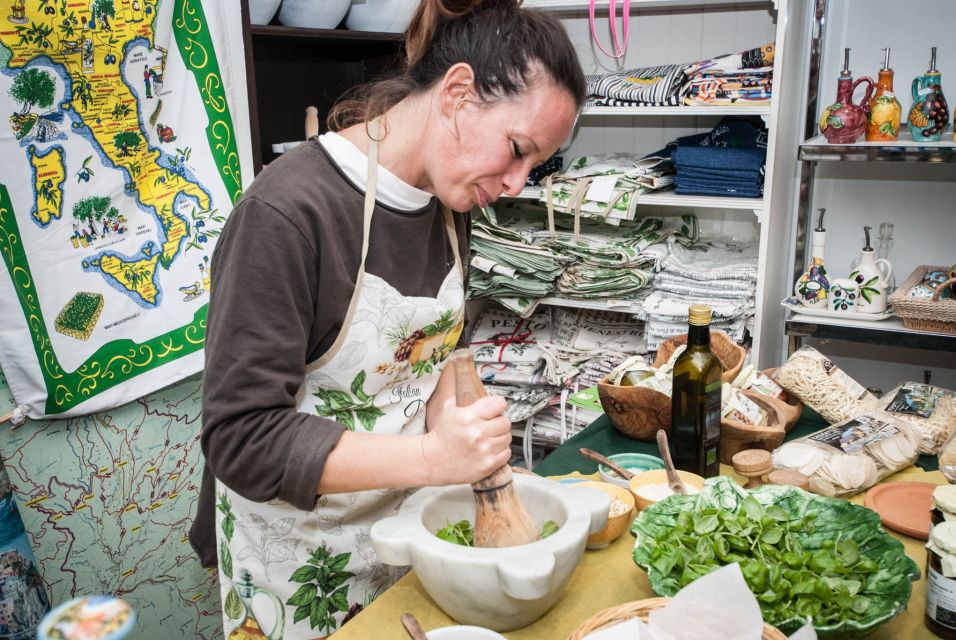
This class is built around a simple idea: pesto isn’t a jar product. It’s a balance of ingredients and technique, and you learn it where Liguria takes food seriously.
You’ll meet your instructor at Il laboratorio del Pesto (the shop is called Laboratory of Pesto) inside Levanto’s historical center. The setting matters more than you might expect. Being in a working food shop gives the class a practical feel, not a demo-for-tourists vibe. And because the shop has been preparing pesto since 1976, you’re learning a routine that’s been refined for decades.
The class runs about 1.5 hours, which is just enough time to taste what’s “good” and then make your own version without dragging on. Expect your instructor to guide you through both the modern and traditional ways, so you can understand not just what to do, but why it matters.
One more plus: the instructor speaks Italian and English, and the group stays intentionally small (up to 8). That means if you’re nervous about kitchen basics, you won’t feel lost. If you love detail, you’ll get it.
You can also read our reviews of more tours and experiences in Liguria.

The Tasting Start: Bruschetta, Olive Oil, and Sparkling Wine
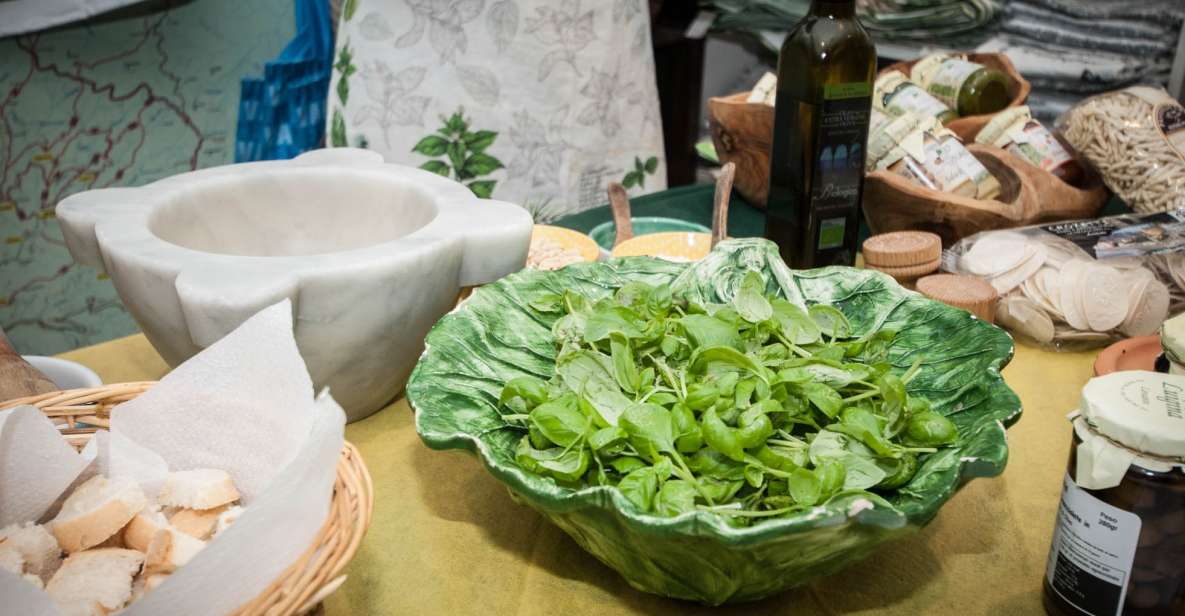
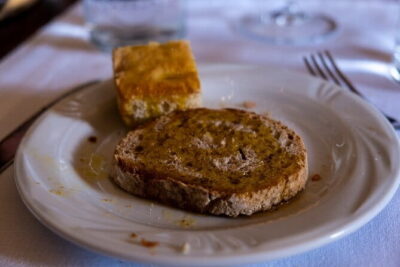
The experience begins with you settling into the flavors before you touch a pestle. First comes a glass of sparkling wine, paired with local extra virgin olive oil on bruschetta. It’s a smart warm-up. Olive oil is one of the core ingredients in pesto, so tasting it early helps you notice what you want later.
Then you’ll sample pesto again before making your own—this includes tasting pesto made with a more modern approach. The goal here is not just “try a food.” It’s comparison training. You learn what changes when you blend versus grind, and what that does to aroma, texture, and how the basil tastes once it’s broken down.
If you enjoy learning through your palate, this sequence works well. You’ll go from bread + oil to pesto tasting, then straight into making pesto. By the time you start your own bowl, you’re not guessing what the end result should feel like.
In addition to the wine and pesto samples, you’ll have local bites during the class. Some offerings you may see include olives and bruschetta with anchovies, depending on the flow. Several guests also mention finishing the experience with lemon cake and lemoncino (a lemon liqueur), which gives the session a bright, Ligurian finish.
Modern Pesto vs Traditional Mortar: What You Really Taste
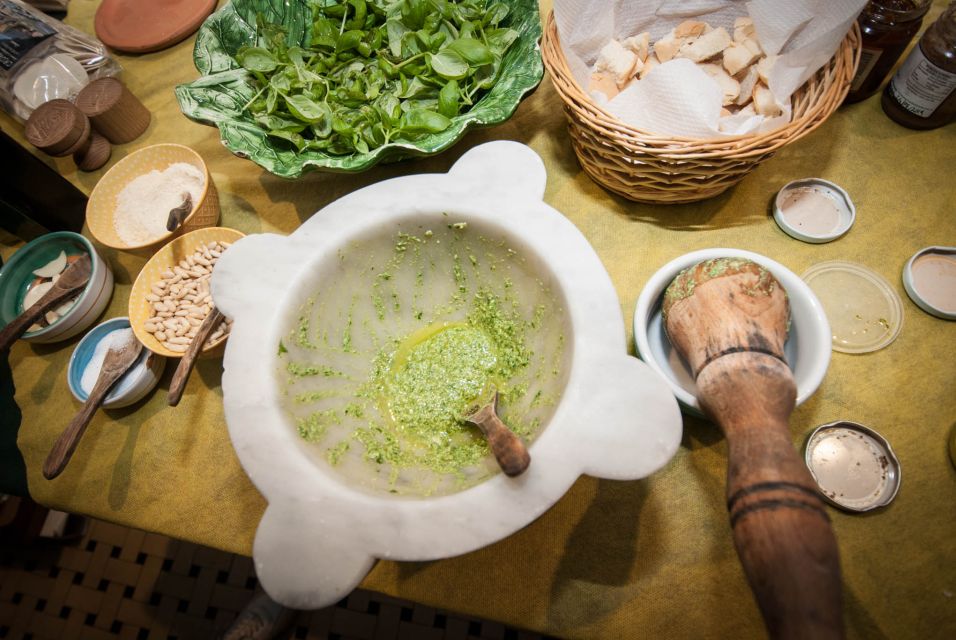
A big theme of this class is the difference between handmade and store-bought pesto. But the more useful lesson is how technique changes the sauce.
You’ll start by tasting pesto made with a more modern method. Then your instructor shows you the traditional way using a mortar. The difference isn’t just “one is better.” It’s about how the ingredients interact.
When you grind in a mortar, you crush and release oils and aromatic compounds from basil, garlic, and nuts. That tends to create a pesto that feels thicker and more cohesive. Blender pesto can taste good, but grinding is more forgiving for learning texture cues: how it looks as basil breaks down, how the paste thickens, and when the mix turns fragrant rather than just green.
Your instructor explains the stages, and many guests note that the teaching feels clear and interactive. You’ll also get recipes and variations, which is helpful if you want to recreate the method later at home (or adjust it to your tastes).
One practical tip: pay attention to salt and garlic levels. Several guests specifically mentioned noticing differences like more garlic or less salt while sampling and comparing. That’s the kind of real-world insight you’ll want when you’re trying to match Ligurian flavor at your own table.
The Hands-On Pesto Method: Basil, Pine Nuts, Garlic, Parmigiano, Olive Oil
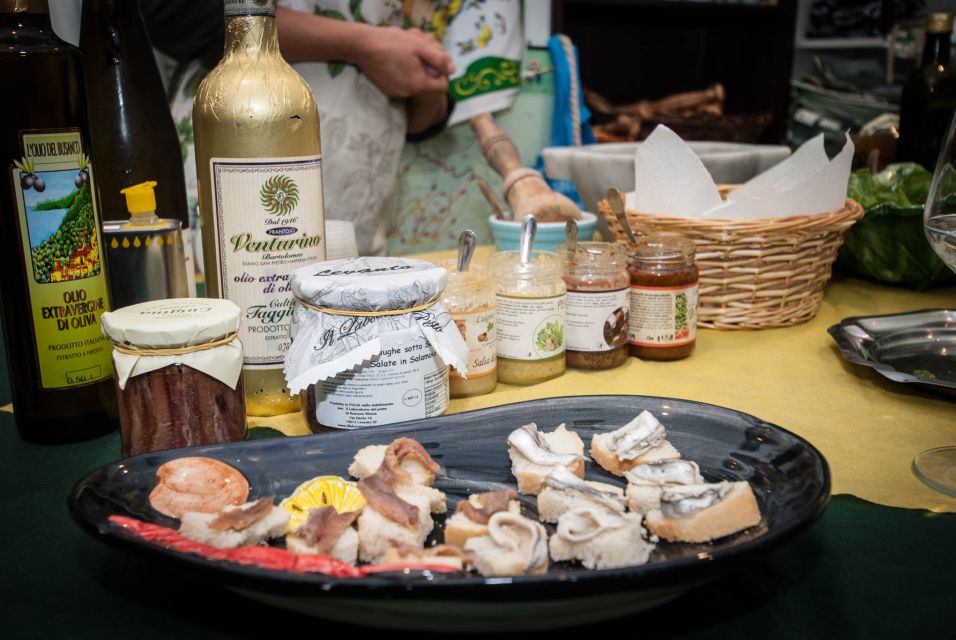
Now for the fun part: you make pesto yourself.
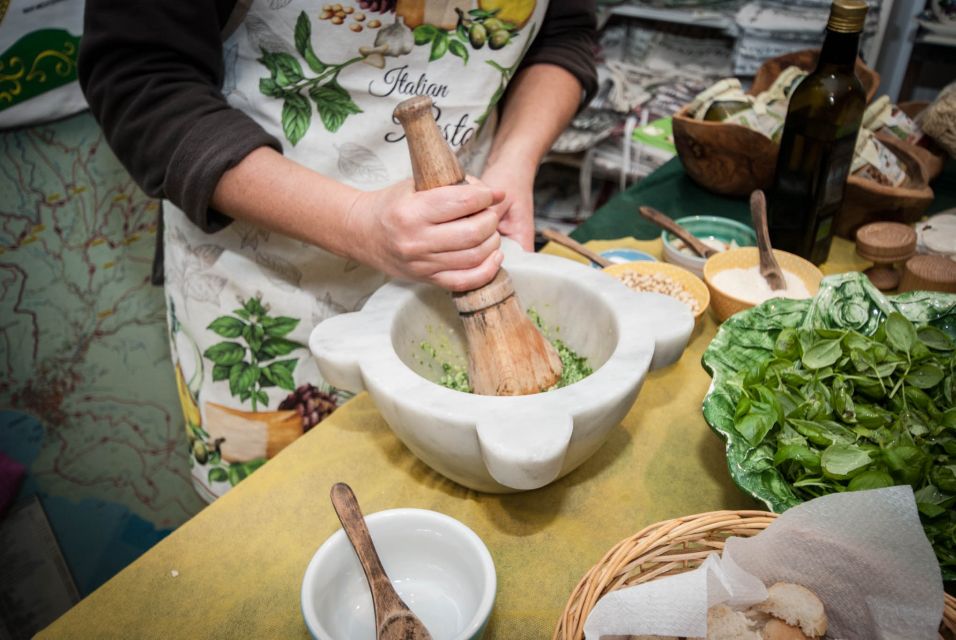
The traditional process starts with basil. You’ll wash and dry the leaves, then pound them with salt, pine nuts, and garlic in the mortar. Dry leaves matter because water can thin out the paste and mute flavor. You’ll also feel how the basil changes as it breaks down and releases its oils.
Once the basil-nut-garlic mixture becomes a paste, you add Parmigiano cheese and extra virgin olive oil. Parmigiano brings structure and saltiness; olive oil brings the final texture and aroma. The finished pesto should smell intensely herbal and nutty, with a thick consistency.
This is where the class earns its keep. A pesto class isn’t just about producing a sauce. It’s about learning the order of operations and the role each ingredient plays. When you grind basil first, you build a base flavor that the cheese and oil can then marry.
Most people leave with two wins:
1) A jar-level result that tastes fresher than you expected.
2) An understanding of how to get there without relying on store brands.
If you have allergies, don’t ignore the ingredient list. This method uses pine nuts, garlic, basil, and Parmigiano. If any of those are an issue, ask ahead or be prepared to modify.
Wine, Local Bites, and the Lesson That Ends in Flavor
After you make your pesto, you don’t just pack it up. You taste it as the class intended: in context.
You’ll enjoy your homemade pesto with a glass of white wine and additional local products. Common examples include olives and bruschetta with anchovies. The point is to see how pesto plays with salty and briny flavors, not only with plain bread.
A lot of people come to this class for the food part, but the tasting is what teaches you how pesto should behave. It’s both herb-forward and rich. Pairing it with wine and local bites helps you lock in what “balanced” tastes like.
Some guests also mention that the instructor shares extra finishing touches like lemon cake and lemoncino. That matters more than it sounds. Lemon helps reset your palate after basil and cheese richness, so you remember the pesto’s aroma instead of just feeling full.
Also, one small but real value: the group experience is intimate enough that your instructor can notice what you’re doing. Several guests mentioned taking photos during the session, and that kind of attention helps if you’re traveling solo or just want a nice memory without awkward staging.
Price and Value: Is $52 a Good Deal in Levanto?
At $52 per person for 1.5 hours, this class sits in the “worth it” category for people who care about technique.
Here’s why. You’re paying for more than tasting. You get:
- A guided class where you actively make pesto
- Wine (sparkling at the start, white later)
- Local appetizers
- An olive oil tasting
- A small group setting (max 8), which means more coaching time
Many food experiences charge for tasting only. This one charges for learning. And learning in a mortar-based method is hard to replicate perfectly without someone showing you what “right” looks like. If you’ve ever bought pesto jars and thought they all taste the same, this is the kind of session that explains why.
One more value point: you leave with a repeatable framework. Even if you don’t remember every measurement, you’ll understand the texture targets and the ingredient roles. That makes the experience useful on a future weeknight, not just a one-time souvenir.
Who This Class Suits Best (and Who Should Skip)
This class is ideal for food lovers who want a hands-on experience in a small group. You’ll enjoy it if you:
- Like Ligurian cuisine and want real technique for pesto
- Prefer learning with your hands, not just watching
- Enjoy wine pairings with savory bites
- Want a calmer activity in Levanto’s historic center that doesn’t require a big time commitment
It’s also a solid pick on a rainy day, because it’s indoor-focused and compact.
You might consider skipping if:
- You want a longer meal-based experience. No lunch or dinner is included.
- You’re traveling with kids under 10, since it’s not suitable for children under that age.
- You’re very sensitive to garlic, nuts, or strong herb flavors. The ingredients are central, not optional.
If you’re traveling solo, you’re likely to feel comfortable. The small-group format and hands-on tasks keep you from feeling like you’re standing around.
Practical Tips Before You Go to Make Pesto
A few details can help you get the most from the Laboratory of Pesto experience.
- Wear clothes you don’t mind getting a little messy. Pesto is thick and fragrant, and you’ll be working with a mortar.
- Arrive a few minutes early so you can settle in and start tasting without rush.
- If you have dietary needs, ask about alternatives. One guest with a gluten allergy noted they provided gluten-free bread and even gluten-free chocolates for dessert. That doesn’t guarantee every need will be handled the same way, but it’s a good sign worth checking.
- Bring questions. This is the kind of class where simple questions can unlock better results at home, especially around texture and seasoning.
Should You Book This Levanto Pesto-Making Class?
If you want an authentic, hands-on way to understand Ligurian pesto, this is a strong choice. For $52, you’re not just tasting—you’re learning a mortar-based method, getting wine and olive oil tastings, and walking away with a clear sense of what makes pesto taste like it belongs in Liguria.
Book it if you:
- enjoy cooking with structure and guidance
- want a small-group food experience in Levanto
- like pairing fresh food with wine
Skip it if you’re only chasing a light snack or you need a full meal included. Also, if ingredients like pine nuts or garlic are a problem, check carefully before you go.
FAQ
Where is the meeting point for the pesto class?
Meet your instructor at Il laboratorio del Pesto.
How long is the Levanto pesto-making class?
The class lasts about 1.5 hours.
How much does it cost?
The price is $52 per person.
What’s included in the price?
You get the pesto-making class, a glass of wine with local appetizers, and an olive oil tasting.
Is there wine included?
Yes. You’ll have sparkling wine at the start and then white wine later with your pesto and local products.
How many people are in the class?
It’s a small group limited to 8 participants.
What languages are the instructors?
The instructor speaks Italian and English.
Is the class wheelchair accessible?
Yes, it’s listed as wheelchair accessible.
Is this activity suitable for children?
It’s not suitable for children under 10 years.