REVIEW · MILAN
Milan: Leonardo’s Last Supper and Michelangelo’s Pietà Tour
Book on GetYourGuide →Operated by AUTOSTRADALE VIAGGI SRL · Bookable on GetYourGuide
Two Renaissance masterpieces in three controlled hours. I like this tour because it strings together Leonardo’s Last Supper and Michelangelo’s Pietà Rondanini, then places both inside Milan’s real power spots: Sforza Castle and Santa Maria delle Grazie.
I love two things most. First, you get reserved entrance to the Last Supper so you’re not gambling with sold-out tickets. Second, the Sforza Castle side of the day means you also walk away with an art-heavy castle visit and can use the included ticket to return later and keep exploring on your own.
The main drawback is time tension at the end. Even with a reserved slot, there can be some standing around before entry, so plan to stay flexible and bring water for warm days.
In This Review
- Quick hits before you book
- Sforza Castle courtyards first: why you start with a fortress
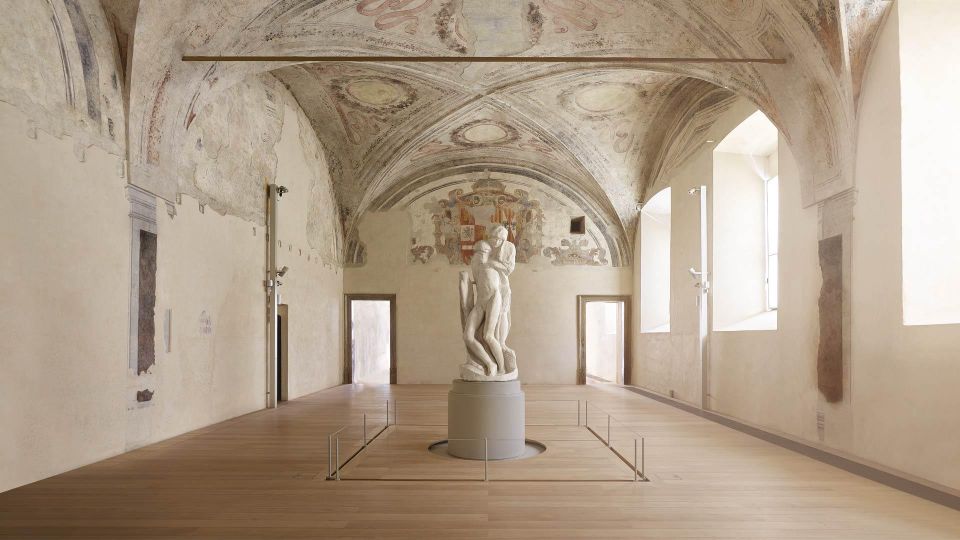
- Pietà Rondanini at the castle: Michelangelo’s unfinished shock
- Santa Maria delle Grazie: the Bramante detail you’ll actually remember
- Leonardo’s Last Supper: how reserved entry changes the experience
- A practical way to enjoy it
- The one snag to plan for
- What the guide actually adds (and why groups rave about it)
- Price and value: what $105 buys you in Milan
- Who this tour suits best (and who might want a different plan)
- Should you book this Milan pairing?
- FAQ
- How long is the Milan Leonardo and Pietà tour?
- Is the tour guided in English?
- Do I get reserved entrance to the Last Supper?
- What will I see during the tour?
- Do I need to wear specific clothes for the church?
- Can I return in the afternoon to other Sforza Castle museums with the same ticket?
- What identification do I need for the Last Supper ticket?
- What if I need to cancel?
Quick hits before you book
- Reserved access to Leonardo’s Last Supper in the refectory setting tied to Santa Maria delle Grazie
- Pietà Rondanini at Sforza Castle, Michelangelo’s last unfinished work in a museum context
- Santa Maria delle Grazie inside access, with a key Renaissance detail by Bramante: the octagonal tribune
- Headsets included, which helps a lot when you’re in echo-y church spaces
- Same Sforza ticket for an afternoon return, so you can tack on more museums later
- English live guide and wheelchair accessibility, plus a tight 3-hour schedule
Sforza Castle courtyards first: why you start with a fortress
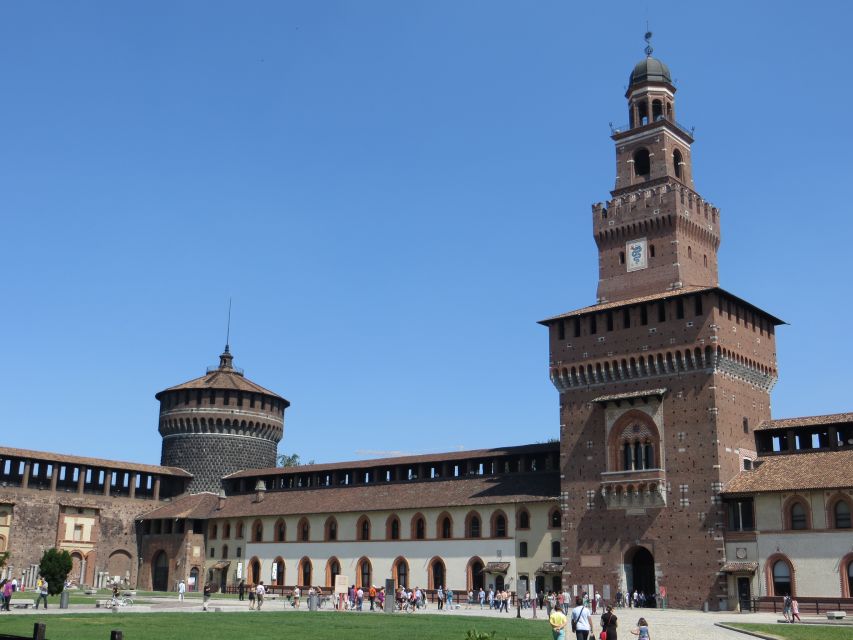
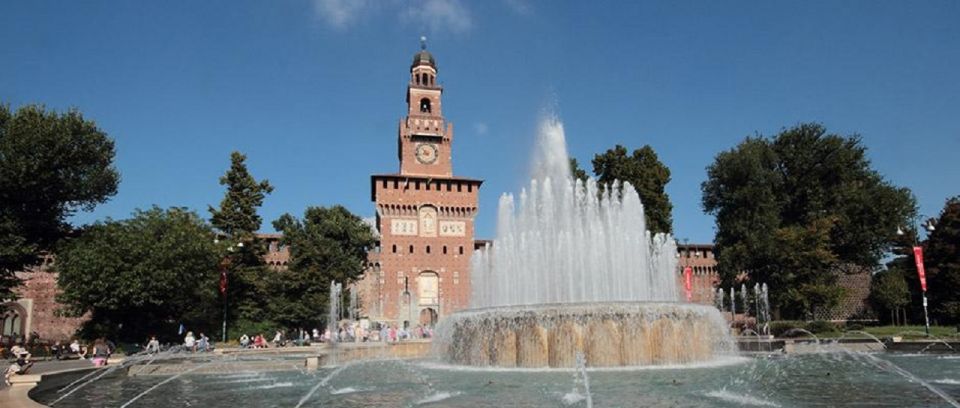
You begin at Piazza Castello, then head straight into Castello Sforzesco—the fortress at the heart of Milan’s ducal power. This matters because it sets the tone. Before you get to the masterpieces, you’re learning how this city organized wealth, defense, and status, so the art doesn’t feel like random museum pieces.
Expect a guided walk with photo stops and time to look around. The pace is designed to keep momentum: 40 minutes inside the castle gives you enough structure to understand what you’re seeing without turning the day into a half-day commitment. If you’re the type who likes a story that connects buildings to people, this opening usually lands well.
Also pay attention to the surroundings. The courtyards and monumental scale of the castle help explain why Milanans took pride in collecting art and building institutions for generations.
You can also read our reviews of more tours and experiences in Milan.
Pietà Rondanini at the castle: Michelangelo’s unfinished shock
Next, you move to the Rondanini Pietà Museum portion inside the castle grounds. This is where the day takes a darker turn. Michelangelo’s Pietà Rondanini is his last unfinished work, and it hits differently when you can stand close and study it without rushing.
Why schedule it here? Sforza Castle is a calmer “container” than the church-fresco environment. You get time to reset your eyes before the Last Supper, and you also get context for Michelangelo beyond the postcard version. If Leonardo is all about a single iconic moment, Michelangelo here is about the gravity of a work that never fully settles.
You’ll get guided time for this stop, then a walk on foot toward Santa Maria delle Grazie. That walking break is short, but it helps you transition—especially if you’re visiting on a hot day.
Santa Maria delle Grazie: the Bramante detail you’ll actually remember
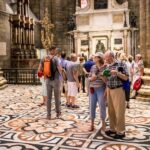
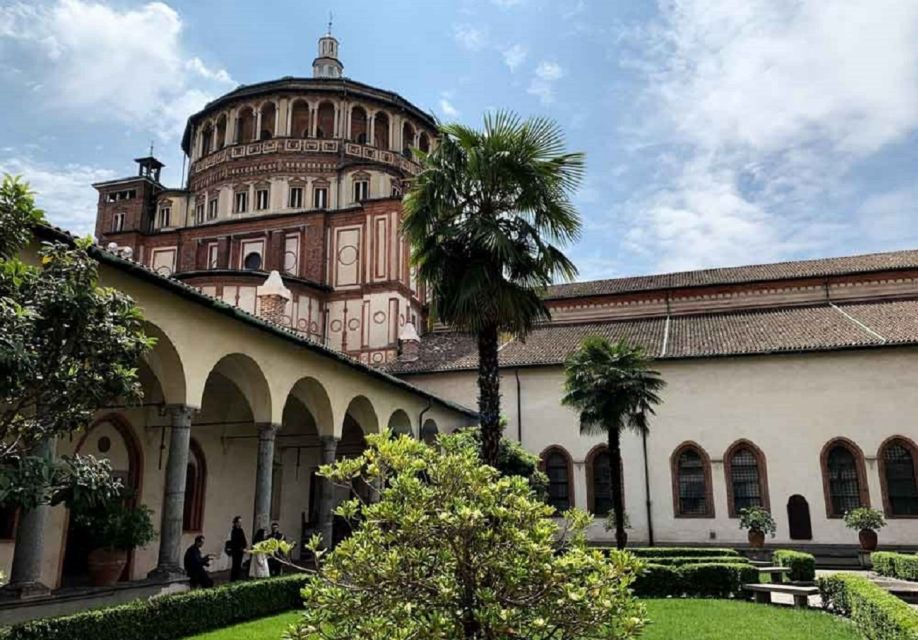
Santa Maria delle Grazie is one of those places where the architecture tells you what matters. You’ll visit the Renaissance church for a focused stop, plus a photo moment outside. Inside, the big named detail is the octagonal tribune designed by Bramante, and the guide should help you spot what makes that space significant.
This stop also has a practical side: church rules are real. Knees and shoulders must be covered for entry. If you show up in shorts or a sleeveless shirt, you may not get in at all. I’d rather you treat this as part of the experience than a last-minute hassle.
There’s one more thing to know: if there’s a religious service, the visit to Santa Maria delle Grazie may be suspended. That’s not something a tour operator can fully control, so it’s worth accepting that rare timing issues can happen.
If you want to maximize what you learn, do the mental exercise the guide suggests: don’t just look for pretty details. Look for how this church and its refectory setup shaped what Leonardo painted—and why the Last Supper is still seen as sacred art as much as masterpiece art.
Leonardo’s Last Supper: how reserved entry changes the experience
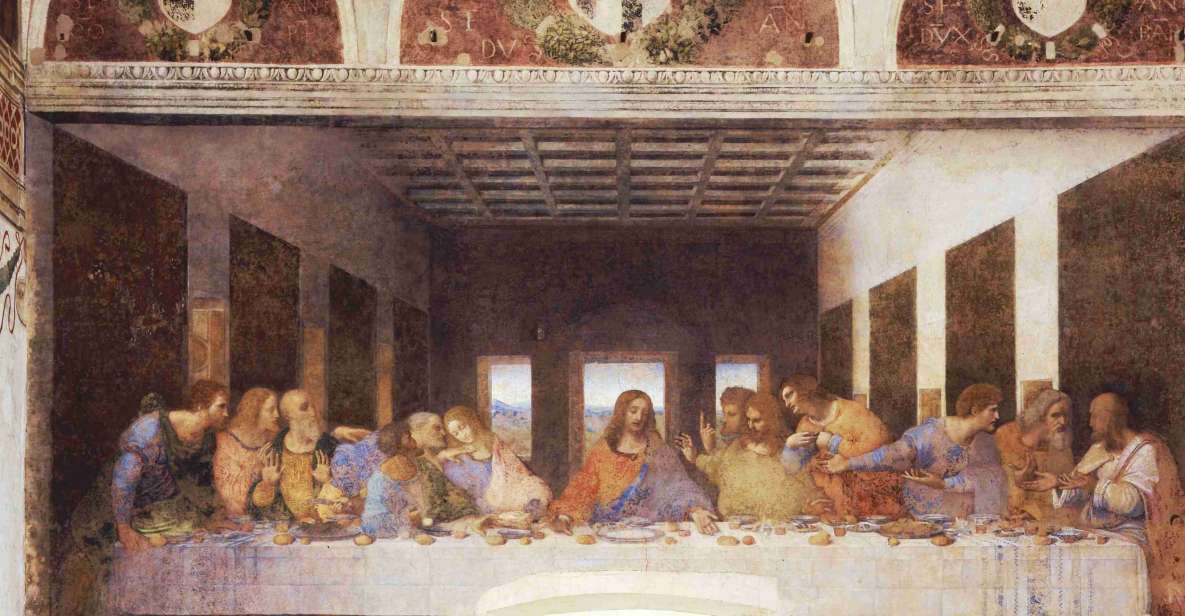
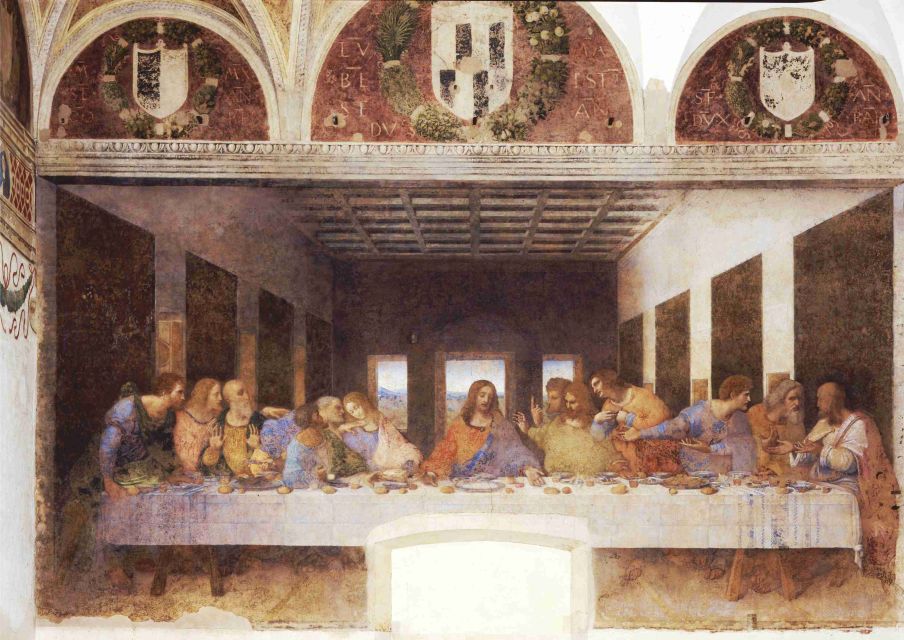
Leonardo’s The Last Supper is one of the world’s most famous paintings, and the reason it feels so intense is partly technical and partly human. It’s UNESCO World Heritage, located in the refectory of the adjacent church, Santa Maria delle Grazie. When you finally stand in front of it, the setting matters as much as the brushwork.
This tour gives you a guided visit with reserved entrance, which is the real value. The Last Supper is notoriously hard to get into on your own because timing slots sell out. With a reservation secured for your group, you can plan your Milan day with less stress and more certainty.
Your guide should point out details—faces, gestures, spatial cues—and connect them to Leonardo’s time in Milan while he worked on the painting. You’ll also hear about painting technique, plus the history and mysteries and legends that have grown around the masterpiece over centuries. Even if you don’t consider yourself an art-history person, this kind of guided noticing is often the difference between looking at a famous image and understanding why it’s famous.
A practical way to enjoy it
If you can, keep your expectations simple: you’re not there for a quick glance. You’re there to read the scene like a story. Start with the overall composition, then let the guide direct your eyes toward specific moments. That’s when the work stops feeling like a static icon and starts feeling like a designed event.
The one snag to plan for
Even with reserved entry, there can be waiting time before you go in. Some groups report longer waits than they expected. If you’re traveling with kids, older adults, or anyone who dislikes standing, pack patience and water, and wear comfortable shoes.
What the guide actually adds (and why groups rave about it)
In a 3-hour tour, the guide has to do three jobs at once: manage timing, translate art into plain language, and keep the group moving without rushing. That’s why guide quality shows up in the ratings.
I noticed a pattern in the experience descriptions: guides are often singled out by name, and the common thread is crisp explanations and strong pacing. People have praised guides like Barb, Marta, Marilena, and Davide for keeping the day organized and the stories engaging. Some also call out how the guide handled heat—stopping in shade, taking breaks, and making sure people had what they needed to keep going.
You’ll also use headsets, which helps a lot in spaces where sound bounces. On an art day, audio clarity is not a small thing; it’s how you avoid missing the exact detail the guide is pointing to. If you notice the sound system acting up, tell someone quickly so it can be fixed while you’re still at earlier stops.
Finally, this itinerary gives you a structure that prevents museum fatigue. Two longer “think stops” (Sforza and Last Supper) get your mental attention, while Santa Maria delle Grazie and the photo moments keep things moving.
Price and value: what $105 buys you in Milan
At $105 per person for about 3 hours, this isn’t a bargain. But it’s not just paying for walking and entry. You’re paying for a locked-in plan around two of Milan’s hardest-to-do sights: the Last Supper and a castle visit that includes Pietà Rondanini.
Here’s where the value usually clicks:
- Reserved Last Supper entrance saves you from the most common Milan planning disaster: sold-out dates and time slots.
- Sforza Castle time and access isn’t just a quick look at walls. You get a guided castle portion plus the Pietà Rondanini museum visit.
- Same ticket return later is a smart bonus. With that ticket, you can go back in the afternoon to explore more of the castle museums by yourself, including the Museum of Ancient Art and an Art Gallery featuring works by artists such as Andrea Mantegna, Giovanni Bellini, Lorenzo Lotto, Correggio, Tintoretto, and Canaletto. You’ll also find one of Europe’s largest collections of musical instruments here.
If you were going to spend half a day around Sforza anyway, the paid tour becomes easier to justify. Even better: you get a guided framework first, then you can wander later with more confidence.
Still, be honest with yourself. If you hate guided tours and prefer slow, self-directed museum time, you might feel the 3-hour structure is too tight. This is built for people who want a guided story and a guaranteed entrance.
Who this tour suits best (and who might want a different plan)
This works well if you:
- Want masterpiece access without dealing with sellout stress
- Prefer a guide to help you see what to look for in the Last Supper
- Like a Milan day that mixes art with real city power history at Sforza Castle
- Want the option to return in the afternoon to keep exploring the castle museums
It may be less ideal if you:
- Get impatient with the idea of waiting in line areas before the Last Supper slot
- Have mobility or stamina challenges related to standing time and church entry requirements
- Prefer total freedom over a fixed 3-hour flow
For families, it can still work, but bring the basics: covered clothing, comfy shoes, and a plan for keeping everyone calm during potential waiting.
Should you book this Milan pairing?
If you care about the Last Supper and you’re visiting during a season when tickets are scarce, I think booking is the smart move. The reserved entrance removes the biggest risk in Milan art planning, and the guide support turns your time in front of the fresco into a real learning moment instead of a photo stop.
Also, the extra value of Sforza Castle—especially Pietà Rondanini plus the chance to return later for more museums—helps justify the price. If you show up dressed for church entry and accept a possible wait before the fresco, you’ll likely leave with that rare feeling of seeing two major works in one connected story.
FAQ
How long is the Milan Leonardo and Pietà tour?
It lasts 3 hours.
Is the tour guided in English?
Yes, it’s a live tour guide in English.
Do I get reserved entrance to the Last Supper?
Yes. The tour includes Last Supper reserved entrance.
What will I see during the tour?
You’ll visit Castello Sforzesco, the Rondanini Pietà Museum, Santa Maria delle Grazie, and Leonardo’s The Last Supper.
Do I need to wear specific clothes for the church?
Yes. Knees and shoulders must be covered for entry to the church, and shorts, short skirts, and sleeveless shirts are not allowed.
Can I return in the afternoon to other Sforza Castle museums with the same ticket?
Yes. With the same ticket, you can return in the afternoon to visit the other museums of the Sforzesco Castle by yourself.
What identification do I need for the Last Supper ticket?
You must present a valid passport or ID card at the ticket check. A copy is accepted.
What if I need to cancel?
Free cancellation is available up to 24 hours in advance for a full refund.