REVIEW · MOUNT ETNA
Mount Etna: Guided Volcano Summit Hiking Tour with Cable Car
Book on GetYourGuide →Operated by Sicilying S.R.L. · Bookable on GetYourGuide
Etna feels close enough to touch. This summit hike takes you up by cable car and then over volcanic terrain to the highest point allowed, with a guide who helps you read the mountain as you walk.
I love the expert volcanic guides who pace the group with smart safety sense, and I love how the day builds from easy cable car sightseeing into a real on-foot summit experience.
The possible downside: this is a true hike at altitude with uneven ash and volcanic sand, and the route can change (or the tour can cancel) with weather or volcanic conditions.
In This Review
- Key points worth knowing before you go
- Why Etna’s summit hike feels different from a typical sightseeing day
- Cable car to 2,504 m: your first views and your best altitude advantage
- The main hike: northwest through 2002/2003 lava terrain
- Crater-time: Barbagallo stop and the “highest allowed” summit rule
- Valle del Bove: the 9,000-year panoramic basin moment
- Walking surfaces, gear, and why the helmet requirement is real
- Guide quality: what names like Jaccopo, Giuseppe, and Edoardo tell you
- Price and value: why $124.61 can make sense for Etna
- Timing and duration: a 5 to 6 hour day that still feels full
- Getting to the meeting point and handling Catania logistics
- Who should book this Etna summit hike (and who should skip it)
- Quick packing list that matches the reality of Etna
- Should you book this guided Mount Etna summit hike?
- FAQ
- Where do I meet the guide for the Etna summit tour?
- How long does the Mount Etna guided summit hike last?
- Is the cable car ticket included?
- Is hotel pickup included?
- What languages are available for the live guide?
- What should I bring for the hike?
- Is this tour suitable for kids or pregnant travelers?
- Can the itinerary change on the day?
Key points worth knowing before you go
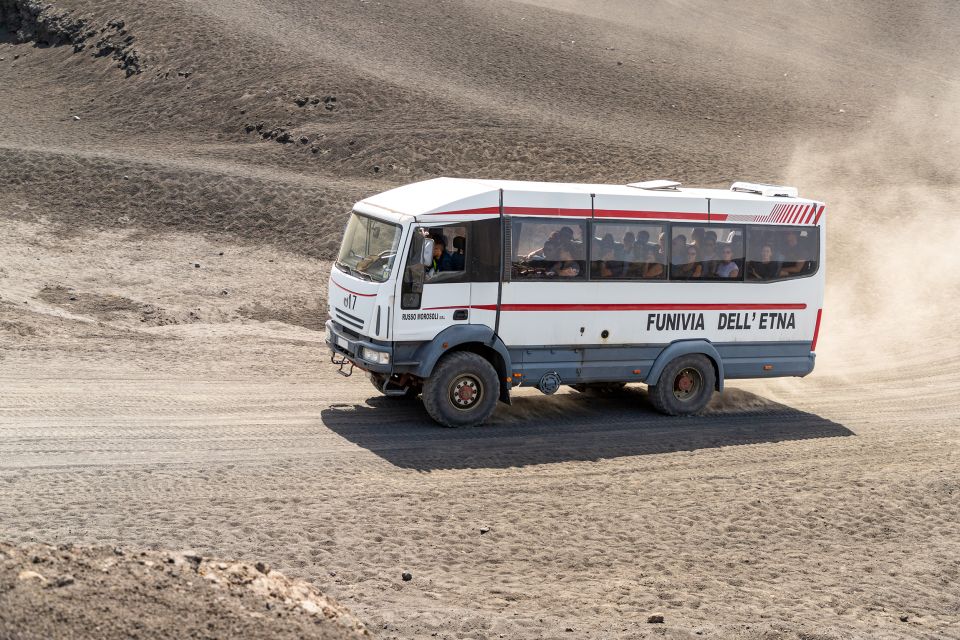
- Small-group hiking with live guides who explain what you’re seeing on active volcano terrain
- Cable car up to about 2,504 meters, giving you huge views before the first steps
- A real Etna walk, including areas affected by the 2002/2003 eruption and crater-crossing time
- Highest point is monitored for safety, so you’ll go as far as conditions allow
- Valle del Bove belvedere gives you the best panoramic payoff, with a depression that’s roughly 9,000 years old
- Practical guidance from guides like Jaccopo, Giuseppe, and Edoardo who keep stops frequent and the mood light
Why Etna’s summit hike feels different from a typical sightseeing day
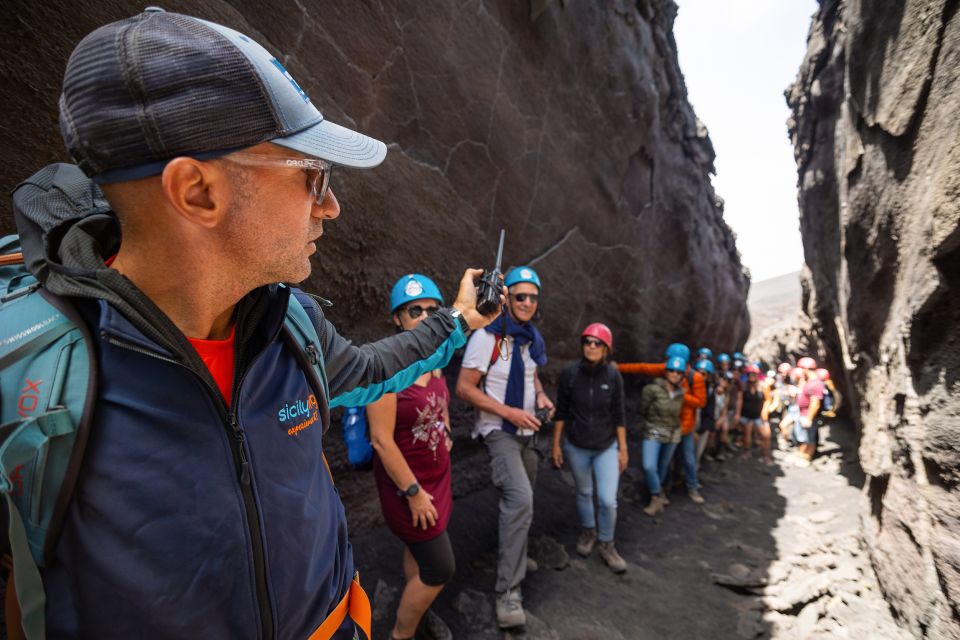
This tour is built around one simple idea: you shouldn’t just look at Mount Etna from a distance. You should walk on it. That difference matters because Etna is not “one view.” It’s layers—lava flow channels, crater rims, ash slopes, and then that wide-open sky that makes the whole island feel smaller.
A big part of the value is how the hike is shaped by real-time safety monitoring. You head toward the summit area and you reach the highest point permitted that day, based on volcanic activity checks. That means you get the experience without pretending the mountain is predictable.
Also, this isn’t a rushed “take photos and run” tour. Long breaks are part of the plan for resting and shooting pictures, which matters when you’re dealing with altitude and surfaces underfoot.
You can also read our reviews of more tours and experiences in Mount Etna.
Cable car to 2,504 m: your first views and your best altitude advantage
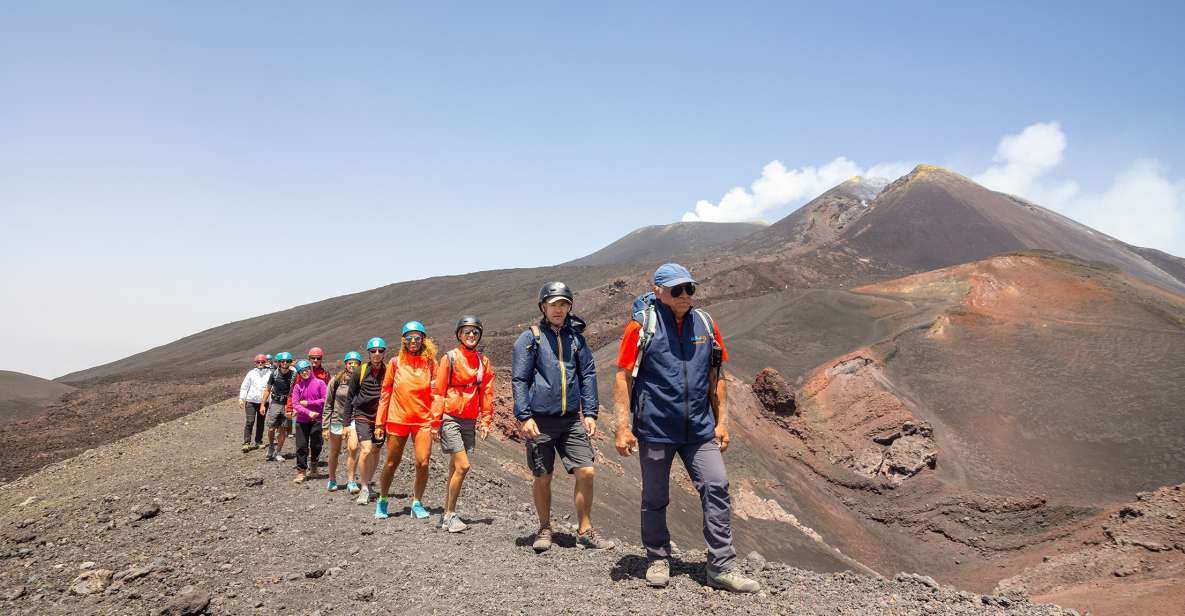
You start at the Rifugio Sapienza area and meet your guide at Bar Monte Gebel, on the right side of Rifugio Sapienza. After that, you take the Etna South cable car up to about 2,504 meters. The cable car portion is short—around 15 minutes each way—but it does two useful things for you.
First, it gets you high fast, so your summit day doesn’t turn into a slow climb from sea level. Second, it gives you a dramatic preview of what you’ll be walking through: moon-like volcanic terrain and crater surroundings before your boots ever hit the ground.
The cable car return ticket is included, so you’re not thinking about logistics mid-hike. And there’s a skip-the-line element, which helps when timing is tight around summit windows.
Practical note: views from the cabin can be spectacular, but the mountain can still feel cold or windy at elevation, even when you’re in shorts at sea level. Bring layers you can handle for quick changes.
The main hike: northwest through 2002/2003 lava terrain
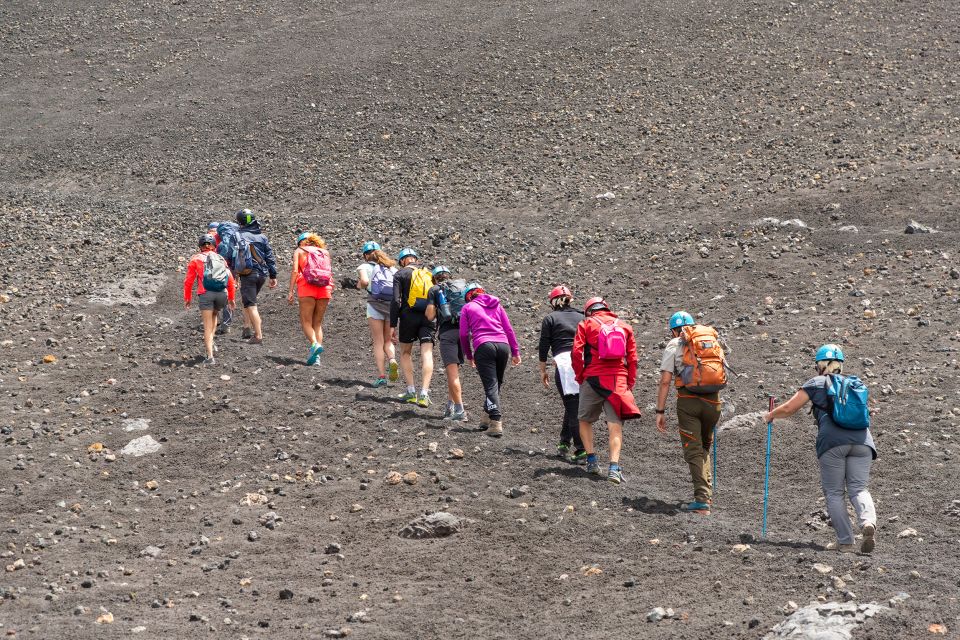
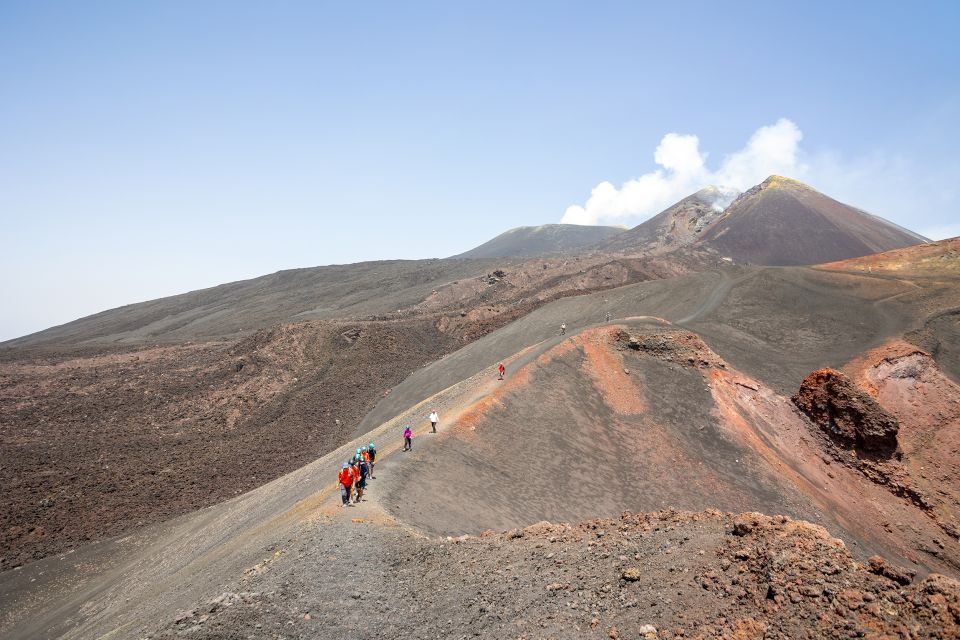
Once you’re up, you start trekking northwest. The route takes you through sections affected by the major 2002/2003 eruption, which is where Etna starts to feel like a planet surface—not because it’s “weird,” but because it’s raw and recent. You’ll move across areas where lava once flowed, and you can see how the terrain was reshaped.
This is also where a professional guide earns their place in your day. A good guide doesn’t just narrate facts. They guide your pace, pick safer footing lines, and handle route changes when conditions shift. If you’re lucky enough to be with guides like Edoardo or Giuseppe, you’ll notice the emphasis on explanation plus humor—because you’re going to be tired, and that makes the atmosphere matter.
You’ll have photo and rest breaks built in. That’s important because the terrain can be uneven, and volcanic ash and sand don’t behave like normal trail dirt. Even when the hike pace feels manageable, your legs still notice altitude.
Crater-time: Barbagallo stop and the “highest allowed” summit rule
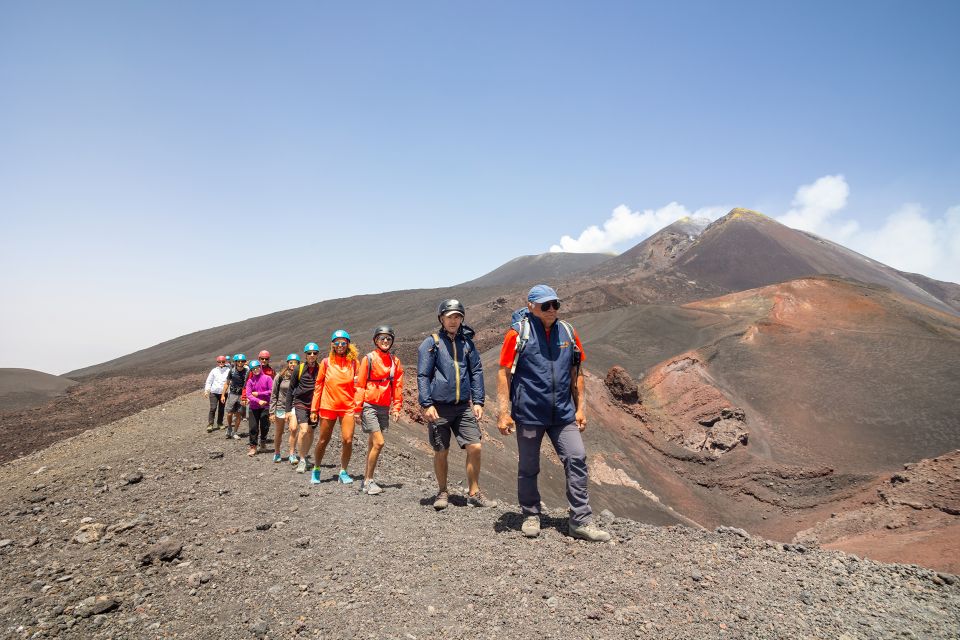
On the way to the top area, your itinerary includes a crater-focused stop at Barbagallo Crater, with time for photos and a guided visit. This part matters because you’re not just walking near craters—you’re learning how to look at them.
The summit area itself works on that monitored safety rule. You proceed to the highest point permitted based on volcanic activity monitoring. In plain terms: your goal is real, but your exact endpoint is conditional on what the mountain is doing that day.
If weather is favorable, the payoff can be huge. You may enjoy views stretching along the eastern coast—from Calabria toward Taormina and onward as far as Syracuse. When visibility is good, the whole hike feels like it has a second purpose: not just exercise, but a big “map” moment where you can orient yourself in Sicily.
The tradeoff is weather. If the day is hazy or windy, your summit photos might be more about textures and craters than sweeping coastline views. Either way, being close to active volcanic features is a special experience.
Valle del Bove: the 9,000-year panoramic basin moment
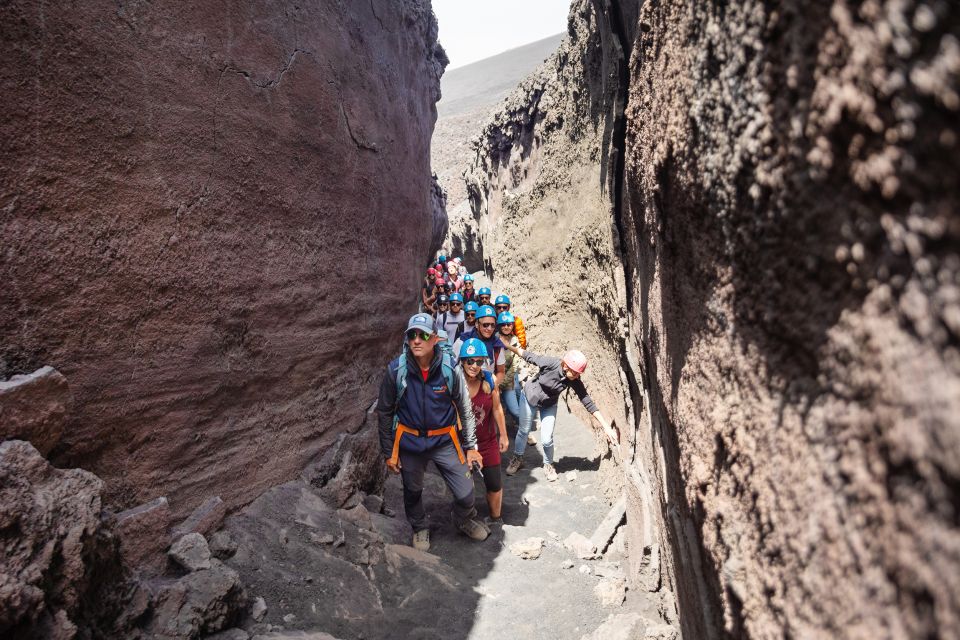
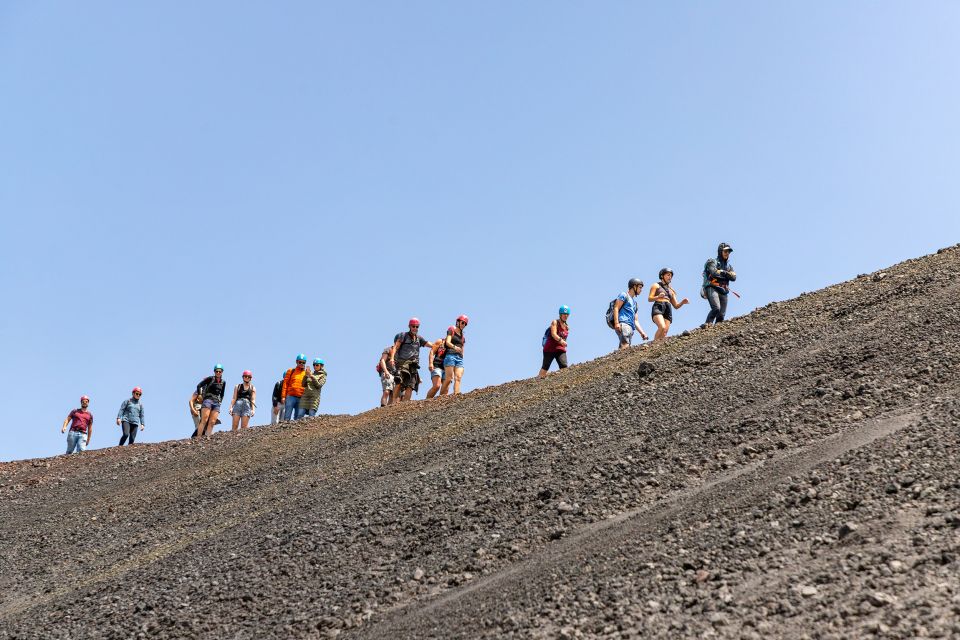
After spending time around the craters from the 2002/2003 eruption, you descend on volcanic sand and head toward the Valle del Bove area. This is considered one of the best panoramic points on Etna.
Valle del Bove is a huge volcanic depression that dates back roughly 9,000 years. The scale hits you as you walk down into it and then find your viewing angle. It’s the part of the tour where many people stop thinking about “hiking” and start thinking about “wow, this is enormous.”
This stop includes photo time plus a guided visit (about 30 minutes). You’ll likely appreciate the extra minutes here because you’re tired from walking and you want space to let the views sink in without feeling rushed.
A small caution: descending on volcanic sand can be slower than you expect. You’ll feel it in your knees and calves. That’s exactly why you’ll want the right shoes and a steady pace.
Walking surfaces, gear, and why the helmet requirement is real
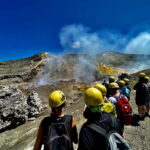
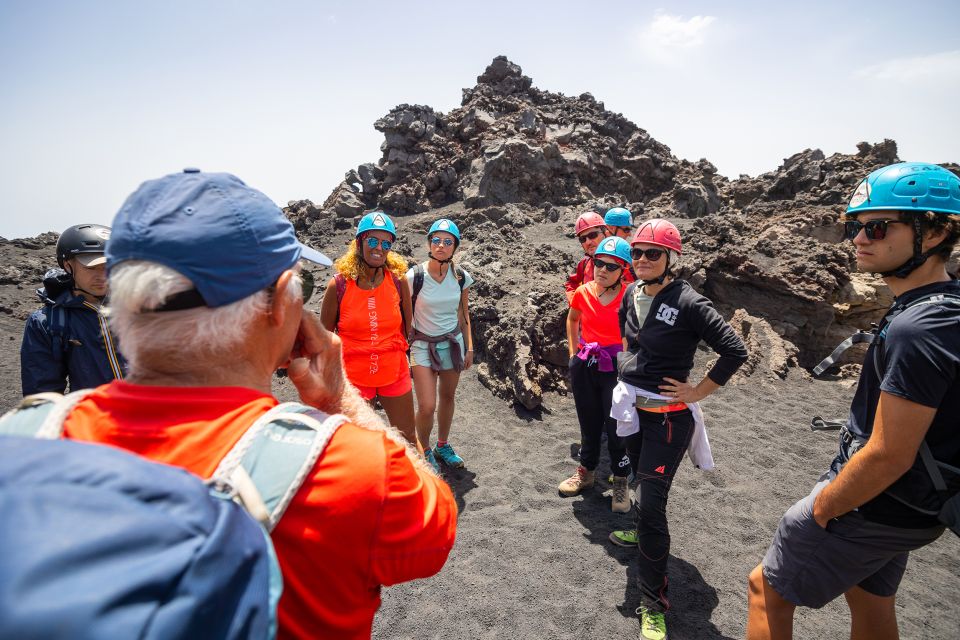
The hike is outdoors and it’s volcanic. That means you’ll deal with surfaces that can shift underfoot, plus dust or ash depending on conditions. The tour includes hiking equipment based on availability, and you’ll be required to wear a helmet.
Comfortable shoes are not optional here. The tour recommends sports shoes or comfortable shoes, and for safety reasons the terrain needs stable footwear. If you’re offered equipment like poles or boots (when available), it can help a lot with balance on sandier or uneven sections.
Also, remember you’re at altitude. Even when the hiking part feels “not too hard,” breathing can feel different. Guides frequently build in breaks so the group stays together and so you don’t burn out before the crater area.
One more point from the way guides described the day in practice: good guides keep an eye on the group’s needs, slowing down when needed, and making sure people can warm up between sections when the weather turns.
Guide quality: what names like Jaccopo, Giuseppe, and Edoardo tell you
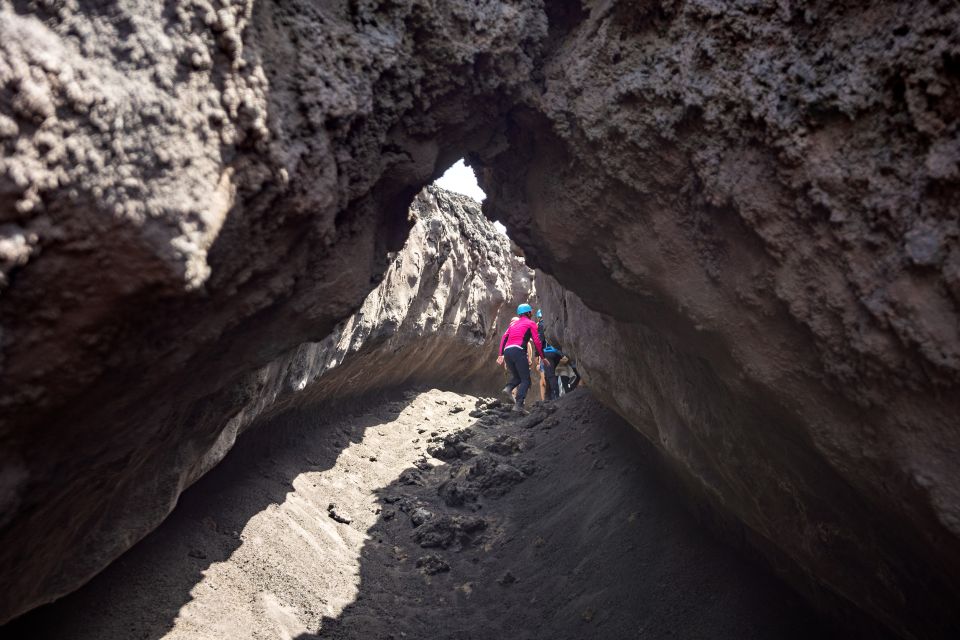
Guide names pop up again and again in the kind of experiences that earn top marks, because the job is hard. You’re walking on a volcano, your route can change, and everyone has different fitness levels. The best guides do three things well:
1) They explain what you’re looking at in a way you can actually remember.
2) They manage pace and breaks so you don’t get left behind.
3) They keep everyone safe without turning the day into a lecture.
In this tour, English, French, and Italian guides are available, and you may also notice that certain departure times offer specific language options (for example, an 11:00 option that is only Italian or English). If language matters to you, it’s worth matching your booking time to the language you want.
You might also see volcanologist-style expertise on some departures. That kind of guidance tends to make the summit experience feel more meaningful, because you’re not just admiring craters—you’re understanding what you’re seeing.
Price and value: why $124.61 can make sense for Etna
At $124.61 per person, you’re paying for more than transportation. You’re paying for:
- a guide trained for volcanic terrain
- a cable car return ticket
- helmet requirement handling
- hiking equipment when available
- insurance
For Etna, the “value” part is that you’re buying safety and interpretation, not just altitude photos. DIY can be cheaper on paper, but you give up the real-time monitoring logic and the pacing that prevents everyone from turning the day into a sprint-and-suffer situation.
This also helps if you want the summit experience without figuring out the day’s timing and route decisions yourself. The tour’s structure—cable car, guided crater walk, Valle del Bove belvedere, then return—keeps the day coherent.
The main cost risk is weather and volcanic conditions. The tour can be subject to change or cancellation. If that happens, your value depends on choosing dates when conditions are likely to be workable and being flexible.
Timing and duration: a 5 to 6 hour day that still feels full
The tour typically lasts 5 to 6 hours, including cable car segments and breaks. That’s an honest duration for a summit hike with crater time and panoramic walking.
If you’re planning the rest of your Sicily day, give yourself buffer time afterward. Your head might be clear while you’re up there, but the legs feel it later—especially after descending on volcanic sand and walking back to the cable car area.
The tour includes stops that make the time feel “worth it,” not just hiking nonstop. You get time for photos at multiple points, plus guided context at key viewing areas.
Getting to the meeting point and handling Catania logistics
You’ll meet your guide at Bar Monte Gebel, on the right side of Rifugio Sapienza, and the activity ends back at the meeting point.
Hotel pickup is optional (and included only if you select that option). If you’re staying in Catania, that pickup can reduce stress a lot—especially if you’re dealing with early morning timing and you’d rather not negotiate buses or parking on your summit day.
If you’re using the AST bus from Catania central around 8:15, plan for bus ticket demand. A practical tip: tickets can sell out quickly, so it helps to get tickets the day of departure early (for example, around 7:00). If you’re traveling in peak season, treat early access as part of your preparation.
Who should book this Etna summit hike (and who should skip it)
This tour is best for people who want a guided summit hike and don’t mind physical effort on volcanic terrain. You’ll probably enjoy it most if:
- you like structured hiking with frequent stops
- you want crater-level views, not just roadside photos
- you appreciate guides who explain what you’re seeing
- you’re okay with day-to-day route adjustments based on safety monitoring
It’s not suitable for children under 6, and it’s not recommended for pregnant women. It’s also prohibited for people with heart problems and not suitable for those with respiratory issues. Because you’ll be at altitude and moving on uneven ground, those conditions are a bigger risk than you might expect.
If you have asthma, heart concerns, or breathing issues, this is one you should skip for your safety.
Quick packing list that matches the reality of Etna
The tour asks for simple basics: comfortable shoes and weather-appropriate clothing. I’d add a few “just in case” items in your mind, because Etna weather changes fast at elevation.
Bring:
- sturdy shoes with grip for ash and volcanic sand
- layers (for cold or wind at 2,500+ meters)
- a hat or something to protect from sun when it’s clear
- something to keep your energy up, since food and drinks are not included
And yes, the helmet requirement means your headgear plan is covered. Still, you’ll want to think about comfort so you can keep it on for the whole hike.
Should you book this guided Mount Etna summit hike?
Book it if you want the real Etna experience: cable car to altitude, guided crater walk, and Valle del Bove panoramic payoff, all shaped by expert safety monitoring. At this price, you’re not paying mainly for the view—you’re paying for a trained guide and a structured route on a living volcano.
Skip or reconsider if you have heart or respiratory issues, or if the idea of altitude plus uneven volcanic surfaces makes you uneasy. Also think twice if you hate route changes on principle, because the mountain can force plan shifts due to weather or volcanic activity.
If you’re healthy, prepared, and okay with the day being partly in the hands of the mountain, this is a strong choice for your Sicily trip. You’ll come away with crater memories that feel more like a walk through a science lesson than a standard tour stop.
FAQ
Where do I meet the guide for the Etna summit tour?
You meet your guide at Bar Monte Gebel, on the right side of Rifugio Sapienza. The tour ends back at the same meeting point.
How long does the Mount Etna guided summit hike last?
The duration is about 5 to 6 hours. Exact starting times vary, so you’ll want to check availability for the departure you want.
Is the cable car ticket included?
Yes. The tour includes a cable car return ticket, and you’ll take the cable car up to about 2,504 meters.
Is hotel pickup included?
Hotel pickup and drop-off are included only if you select the option. Without that option, you meet at the stated meeting point.
What languages are available for the live guide?
The live tour guide is available in English, French, and Italian.
What should I bring for the hike?
Bring comfortable shoes (sports shoes are also recommended) and weather-appropriate clothing.
Is this tour suitable for kids or pregnant travelers?
It is not suitable for children under 6 years old and not suitable for pregnant women.
Can the itinerary change on the day?
Yes. The itinerary can change for safety reasons based on volcanic activity and weather. It can also be canceled in case of adverse weather conditions, and sometimes changes occur for seismic reasons.