REVIEW · NAPLES
Naples and Pompeii: Half-Day Tour
Book on GetYourGuide →Operated by Project Napoli Service · Bookable on GetYourGuide
Naples wakes you up fast, then Pompeii knocks you back. I like the small-group feel, and I also really enjoy the way the day mixes Naples landmarks with big Pompeii set pieces. You get a guided look at cathedral stops like the Treasure Chapel and San Restituta Basilica, then a guided walk through places such as the Forum and Vetti’s house.
The main thing to watch is logistics: if pickup timing or the return bus location is off, you can lose valuable sightseeing minutes in Naples or end up with extra walking at the end.
In This Review
- Key things to know before you go
- Naples and Pompeii in Six Hours: is it really enough?
- The 08:15 pickup and the Naples walking loop
- Cathedral stops: Treasure Chapel and San Restituta Basilica
- Plebiscite Square, San Francesco di Paola, and Royal Palace front
- Posillipo terrace views: your Naples reset button
- The drive to Pompeii: why the guide matters here
- Pompeii highlights you’ll actually remember
- The Forum
- Thermal Baths
- Vetti’s house
- The Lupanare
- How to protect your Pompeii experience: language and group mix
- Logistics and comfort: the part that can make or break a half-day
- Is this tour worth $94? The value math that matters
- Who should book this Naples and Pompeii half-day tour?
- Should you book it? My honest call
- FAQ
- What is the duration of the Naples and Pompeii half-day tour?
- What time does the tour pick you up?
- Where are pickups available?
- How many people are in the group?
- Are Pompeii admission tickets included?
- What Pompeii stops are included?
- What languages are the live guides available in?
- What should I bring?
- What if the tour doesn’t meet the minimum number of participants?
- FAQ
- Is the tour refundable if I change my plans?
- Is the tour wheelchair accessible?
Key things to know before you go

- Small group (up to 15) means easier pacing and more time for questions.
- Skip-the-ticket line at Pompeii helps you start walking sooner.
- Naples “top hits” in 2 hours covers cathedral, major squares, and a Posillipo viewpoint.
- Pompeii focus on major areas like the Forum, Thermal Baths, Vetti’s house, and the Lupanare.
- Multi-language guiding (Spanish, English, Italian, French) sounds great, but language match can matter in mixed groups.
Naples and Pompeii in Six Hours: is it really enough?
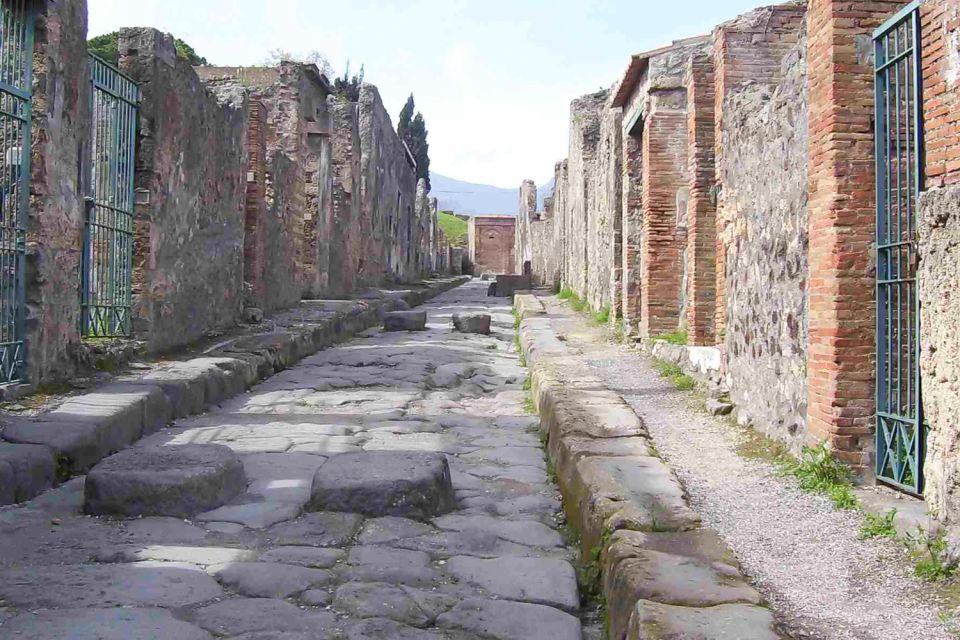
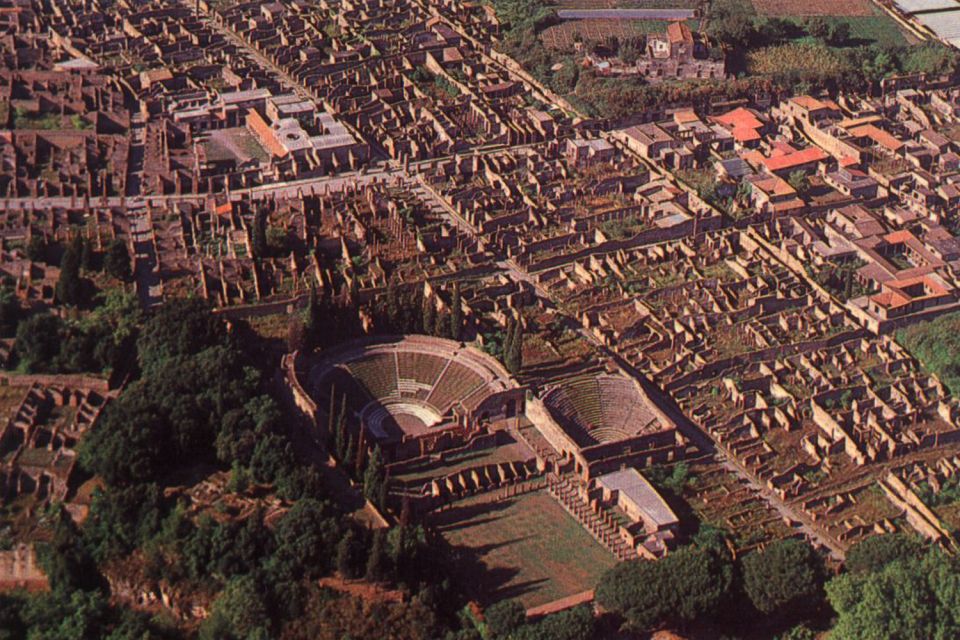
This half-day tour is built for people who want two big hits in one go: classic Naples city life, then Pompeii’s eruption-still-on-the-ground effect. At $94 per person for about 6 hours, the value comes from what’s included: transportation from Sorrento or Naples, a live guide, admission to Pompeii, and skip-the-ticket entry.
That said, this is a highlights program, not a full Pompeii day. Pompeii can swallow time fast when you’re staring at rooms, mosaics, wall art, and street layouts. You’ll see the “greatest hits” and the guide will steer you through the most meaningful areas, but you won’t cover every corner. If you’re the type who wants long, slow wandering, you may wish you had more time.
Still, the itinerary is smart: you get a guided Naples primer first, then you travel to Pompeii before your attention starts to fade.
You can also read our reviews of more tours and experiences in Naples.



The 08:15 pickup and the Naples walking loop

Your day starts after pickup at 08:15, with pickup possible from your accommodation or cruise terminal (meeting point can vary based on what you booked). From there, you go straight into the Naples part of the tour with about a 2-hour sightseeing walk.
The Naples segment is not just random street strolling. It’s organized around a handful of places that help you understand the city’s “layers” right away:
- You start at the cathedral area and get time at the Treasure Chapel and San Restituta Basilica.
- You then head to major showpiece squares and monuments.
- Finally, you end with a viewpoint at Posillipo so you can step back and see Naples spread out.
Why this matters: if you’ve only got half a day, you don’t want to waste it trying to figure out where the important stuff is. This walking loop gives you bearings fast.
Practical drawback: any delay at pickup can shorten what you actually see on foot in Naples. One travel experience shared that a chauffeur not being at the intended meeting point cost them time and made the Naples portion feel thin. If you book, be very strict about being ready at your pickup details and keep your contact info handy in case there are changes.
Cathedral stops: Treasure Chapel and San Restituta Basilica

The tour starts in the cathedral complex with two focused visits: the Treasure Chapel and San Restituta Basilica. These are the kinds of stops that work well with a guide because they’re easy to overlook if you’re only rushing through photos.
What I like about this plan is that it helps you connect Naples to real history beyond just the street scenes. Churches in this part of Italy aren’t just architecture; they’re part of local identity. A guided visit also helps you notice the details you’d otherwise miss—where the art sits, what each space is known for, and how it ties into the city’s long timeline.
Tip for you: if you prefer outdoor sights over indoor ones, this portion may feel like more “church time” than you expected. But if you want a Naples snapshot that isn’t all facades and viewpoints, this is a good choice.
Plebiscite Square, San Francesco di Paola, and Royal Palace front
After the cathedral area, you head to Plebiscite Square (Piazza del Plebiscito), where you’ll see the front of the Royal Palace and the Neoclassical church of San Francesco di Paola. This is one of Naples’ big civic stages—wide space, dramatic scale, and a layout that makes it easy to understand why rulers and public life wanted grand settings here.
This is where the tour shifts from “religious Naples” to “official Naples.” Even if you don’t go inside the palace (the tour description focuses on the front), the sightline and architecture give you the mood.
Then you move to Town Hall Square, home to the New Castle built by the French family of Anjou. That detail is useful because it reminds you Naples didn’t evolve in a single Italian bubble. The French connection helps explain why you see mixed influences in the buildings and styles around the city center.
One small consideration: these are exterior-focused stops. If you’re hoping for deep museum-style visits in Naples, this won’t be that kind of day. It’s designed to get you moving and set you up for Pompeii.
Posillipo terrace views: your Naples reset button
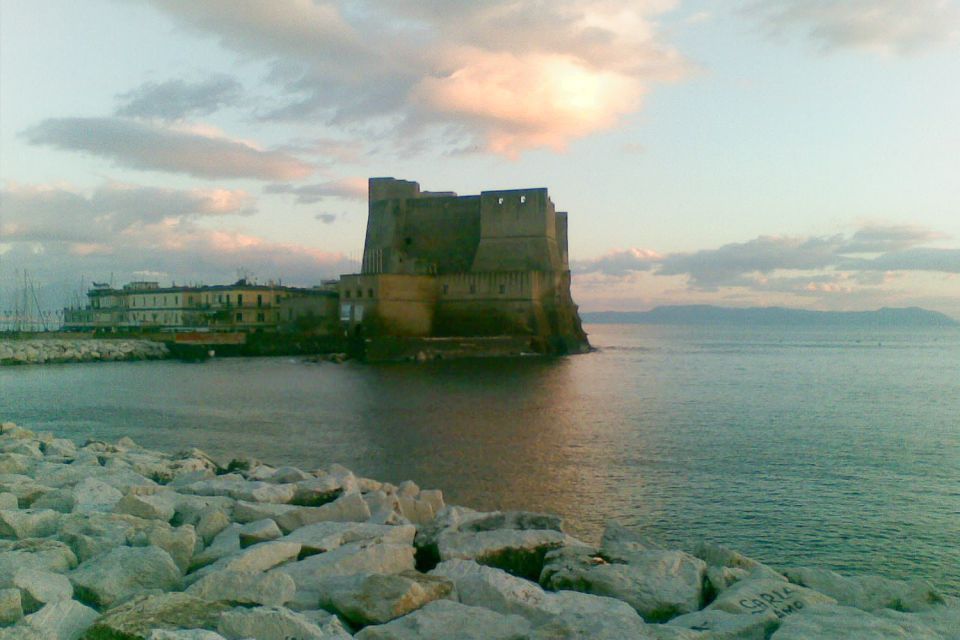
Before you leave Naples for Pompeii, the tour ends with a terrace stop at Posillipo. This is the “pause” moment. You go from street level to a wide view over the city, which helps your brain organize the day.
I like this kind of timing. After walking around the historic center and seeing big squares, you’re ready for perspective. Also, once you get on the road toward Pompeii, your attention changes—Pompeii is not about city views. It’s about what humans built, lived in, and how the eruption froze it.
From a practical angle, note that time on foot is real. One experience described two hours of walking in the sun before reaching the bus at the end. So Posillipo can be great, but don’t assume the day is comfortable just because it’s a “half-day.”





The drive to Pompeii: why the guide matters here
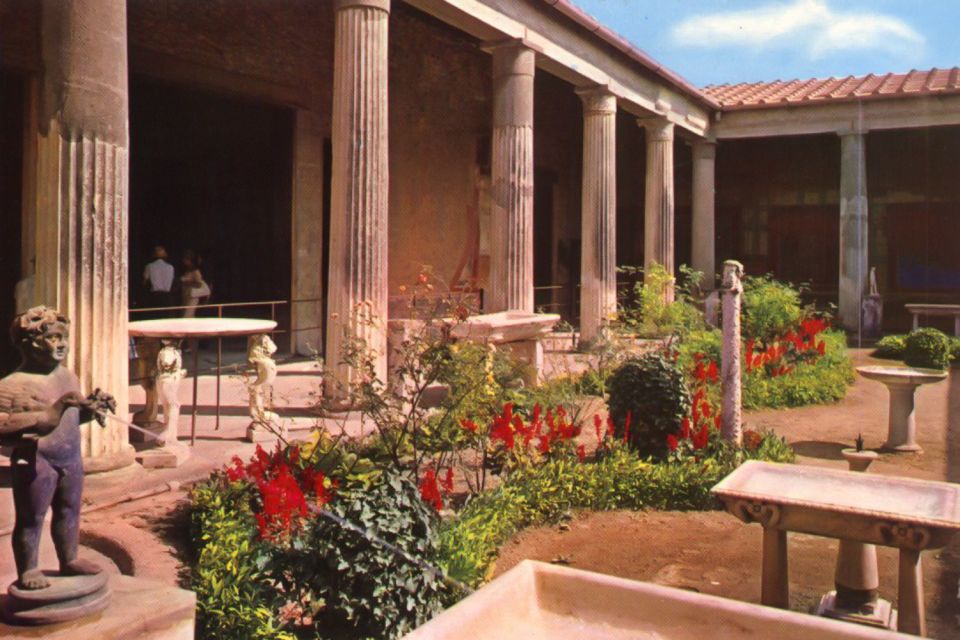
Once you arrive in Pompeii, you don’t just get a map and free time. Your guide leads you to key areas, including the Forum, Thermal Baths, Vetti’s house, and the Lupanare. These are major stops because they show different sides of Pompeian life: public space, daily routines, homes, and the underbelly of the city.
Here’s the value of having a live guide: Pompeii is packed with scenes that can feel similar if you’re walking alone. A guide helps you connect what you’re seeing to how people lived, how the city functioned, and why volcanic burial mattered.
You can also see real differences between guides. One experience credited Patricia with a strong grasp of Pompeii and the region, with the guide living there—so the details felt grounded and well explained. Another experience described a less satisfying approach in the Naples part with Elisa, while a Pompeii guide named Jerry was described as more prepared and correct. In other words: in Pompeii, good guiding makes the experience. In Naples, the guide style affects how much you enjoy the time spent on the walk.
Pompeii highlights you’ll actually remember

The tour’s Pompeii plan focuses on places that give you a clear picture without requiring a full-day sprint.
The Forum
The Forum is the beating heart of public life—where civic business and community identity showed up in stone and space. If you’ve only ever seen Pompeii in photos, the Forum helps turn images into context: why streets funnel people here, what this area tells you about power and daily action, and what the city’s layout suggests.
Thermal Baths
Thermal Baths help you grasp routine. This isn’t just “Roman architecture.” It’s how people met, relaxed, washed, and passed time. Guided attention makes a big difference because baths can look like walls and floors until someone explains what spaces were used for what.
Vetti’s house
Vetti’s house is the kind of place you want a guide for. Homes in Pompeii aren’t only about beauty—they’re also about how wealth, taste, and social messaging played out. If the guide is solid, you’ll understand why certain rooms are memorable and how the house fits into the neighborhood’s story.
The Lupanare
The Lupanare is one of the sharper, more human side stops. It helps complete the picture of Pompeii as a real city, not a preserved postcard. You’ll hear how the site’s role relates to the city’s culture, and why it’s still discussed so widely today.
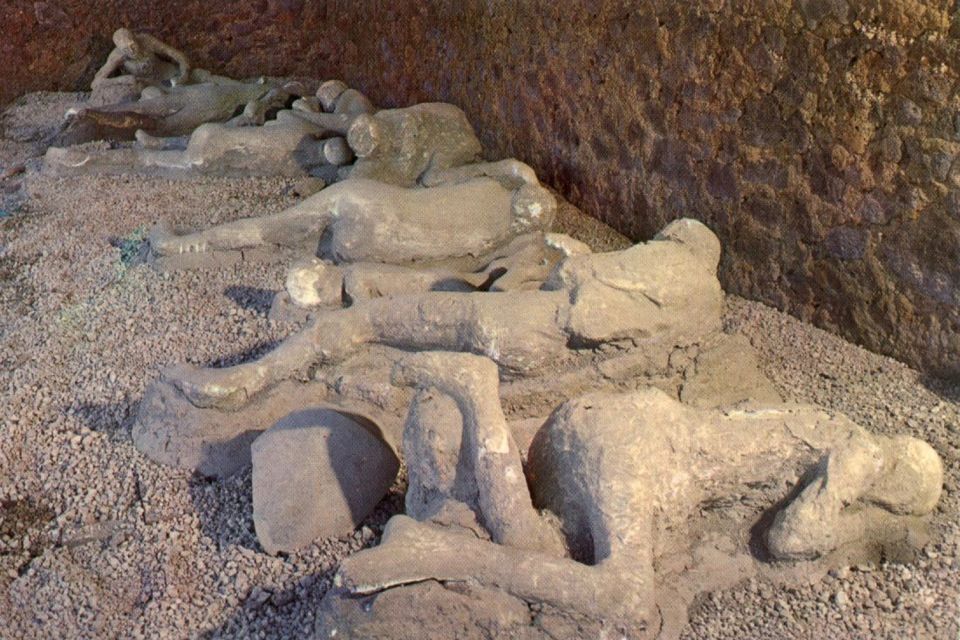
Important context you’ll get from the guide: these areas were burnt, covered, and preserved by volcanic ashes during the massive eruption in 79 A.D. That preservation is why Pompeii feels so immediate—structures didn’t just collapse. They were sealed in place.
How to protect your Pompeii experience: language and group mix

This tour runs in multiple languages—Spanish, English, Italian, and French. That’s a strong plus for you if you want accurate explanations rather than just wandering.
Still, one note matters: if you’re the only participant who speaks a language different from the rest of the group, explanations in your language might not be guaranteed. That means the real-life experience can depend on who else booked and which language the guide ends up using most comfortably.
If language is a top priority for you, consider booking with a clear expectation: you’ll have a live guide in one of the listed languages, but mixed-group dynamics can affect what you hear.
Logistics and comfort: the part that can make or break a half-day
Most people coming for Naples and Pompeii are fine with walking. The issue is not walking—it’s timing.
Two logistics themes showed up in experiences: pickup accuracy and bus access at the end.
- Pickup accuracy: one experience said the chauffeur wasn’t at the meeting point they expected and the Naples walk lost time.
- Return bus access: another experience described needing to walk an extra kilometer after Pompeii, with no warning, after time spent in the sun.
So what should you do?
- Double-check your pickup details during booking (the tour asks you for them).
- Plan for walking stretches beyond what you expect, especially near the end of the day.
- If you have mobility limits, treat this as a caution flag rather than a guaranteed smooth experience. The tour is also marked not suitable for wheelchair users.
For comfort basics, the tour’s guidance is simple: bring comfortable shoes. That’s not fluff. It’s the main way you’ll enjoy the day instead of just getting through it.
Is this tour worth $94? The value math that matters
Let’s talk value in plain terms.
You’re paying for:
- Transportation and pickup from Sorrento or Naples
- Pompeii admission plus skip-the-ticket line
- A live guide
- A small group (limited to 15)
If you tried to DIY this with tickets and timed entry plus guide-level interpretation, you’d likely spend time managing logistics and lose the benefit of someone steering you to the right Pompeii areas.
Where the value drops is when your day doesn’t flow: missed pickup points, unclear return pickup locations, or a guiding style that doesn’t work for the group. Even a good Pompeii guide can’t fully fix lost time in Naples if the schedule gets knocked.
So I’d judge it like this:
- If you want an efficient highlights plan and you prefer guided context, the price makes sense.
- If you want maximum coverage of monuments in both Naples and Pompeii, the half-day format might feel tight.
Who should book this Naples and Pompeii half-day tour?
Book it if you:
- Want a guided overview that combines Naples landmarks and Pompeii’s top areas.
- Prefer a small group experience rather than a huge bus crowd.
- Like the idea of Naples context before you head into Pompeii’s world.
You might skip it if you:
- Need a fully accessible day plan. The tour isn’t suitable for wheelchair users.
- Are very sensitive to pacing, extra walking, or schedule slips.
- Want long museum-style time. This is a walk-and-see itinerary.
And one more practical note: if guide quality is everything for you, pick your booking times carefully and be ready to speak up early if language matching is a problem. A guide who can keep the group together matters a lot at Pompeii where crowds can tangle routes.
Should you book it? My honest call
I think this tour is a solid choice for travelers who want two destinations—Naples and Pompeii—handled with a guide and a clear route in a single half day. The combination of cathedral stops, major squares, and a Posillipo viewpoint gives Naples enough structure, and the Pompeii selection (Forum, Thermal Baths, Vetti’s house, Lupanare) hits the places that help the city “make sense.”
But go in with your eyes open about logistics. This is the type of day where pickup accuracy and end-of-tour bus access can affect how satisfied you feel. If you’re comfortable with walking and you’re booking for highlights over completeness, it’s worth it. If you need a smoother, more controlled experience with minimal waiting and minimal extra walking, you may want to look for a different format.
FAQ
What is the duration of the Naples and Pompeii half-day tour?
The tour lasts 6 hours.
What time does the tour pick you up?
The scheduled pickup time is 08:15.
Where are pickups available?
Pickup is available from your accommodation or cruise terminal in Naples (and also from Sorrento, depending on the option booked).
How many people are in the group?
This is a small group limited to 15 participants.
Are Pompeii admission tickets included?
Yes. Admission fees to Pompeii are included, and you skip the ticket line.
What Pompeii stops are included?
The guided Pompeii portion includes the Forum, Thermal Baths, Vetti’s house, and the Lupanare.
What languages are the live guides available in?
The live tour guide is available in Spanish, English, Italian, and French.
What should I bring?
You should bring comfortable shoes.
What if the tour doesn’t meet the minimum number of participants?
The tour requires a minimum of 2 participants every day to operate. There is a possibility of cancellation after confirmation if there are not at least 2 participants.
FAQ
Is the tour refundable if I change my plans?
Yes, you can cancel up to 24 hours in advance for a full refund.
Is the tour wheelchair accessible?
No, it is not suitable for wheelchair users.