REVIEW · NAPLES NATIONAL ARCHAEOLOGICAL MUSEUM
Naples: National Archaeological Museum of Naples Guided Tour
Book on GetYourGuide →Operated by Askos Tours · Bookable on GetYourGuide
Naples’ biggest museum fix is only 2 hours. This guided walk through the National Archaeological Museum of Naples turns scattered artifacts into a clear story, with Farnese Collection highlights and Pompeii-to-Vesuvius masterpieces. You start outside the ticket office and head straight in, then let an archaeologist guide you room by room.
I especially love the skip-the-line part, because the museum is big and you don’t want to burn time waiting. And I really like the way the tour focuses on the objects you came for: the Farnese sculptures, plus frescoes and mosaics tied to Pompeii and Herculaneum and the Vesuvius eruption of 79 AD.
One consideration: the tour rules are strict. Oversize luggage, strollers, and large bags aren’t allowed, and it’s not suitable for wheelchair users or people with mobility impairments.
In This Review
- Key Things to Know Before You Go
- Getting In Fast at the Museo Archeologico Nazionale di Napoli
- Why the 2-Hour Guided Format Works (and What It Leaves Time For)
- Farnese Collection: Hercules and Toro Farnese Up Close
- Pompeii and Herculaneum Frescoes and Mosaics From 79 AD
- Greek and Roman Corridors: Busts, Gods, Coins, and Wall Paintings
- The Most Valuable Part: How the Guide Changes What You Notice
- Price and Value: What You’re Really Paying For
- Practical Tips for a Smooth Museum Walk
- Who This Tour Suits Best in Naples
- Should You Book This Naples Museum Tour?
- FAQ
- How long is the Naples National Archaeological Museum guided tour?
- Where do we meet for the guided tour?
- Does this tour include skip-the-line entry?
- What’s included in the tour price?
- What languages is the tour offered in?
- Are large bags or strollers allowed inside the tour?
- Is this tour suitable for wheelchair users or people with mobility impairments?
- Can I cancel for a refund, and can I pay later?
Key Things to Know Before You Go
- Skip-the-line entry saves time at a museum that can feel endless.
- Farnese Collection includes signature works like Hercules and the Toro Farnese.
- Pompeii and Herculaneum art is the main event: frescoes and mosaics tied to 79 AD.
- Roman and Greek figure galleries help you see myth, power, and daily life in context.
- Archaeologist guides can connect museum pieces directly to what you’ll see around Naples.
Getting In Fast at the Museo Archeologico Nazionale di Napoli
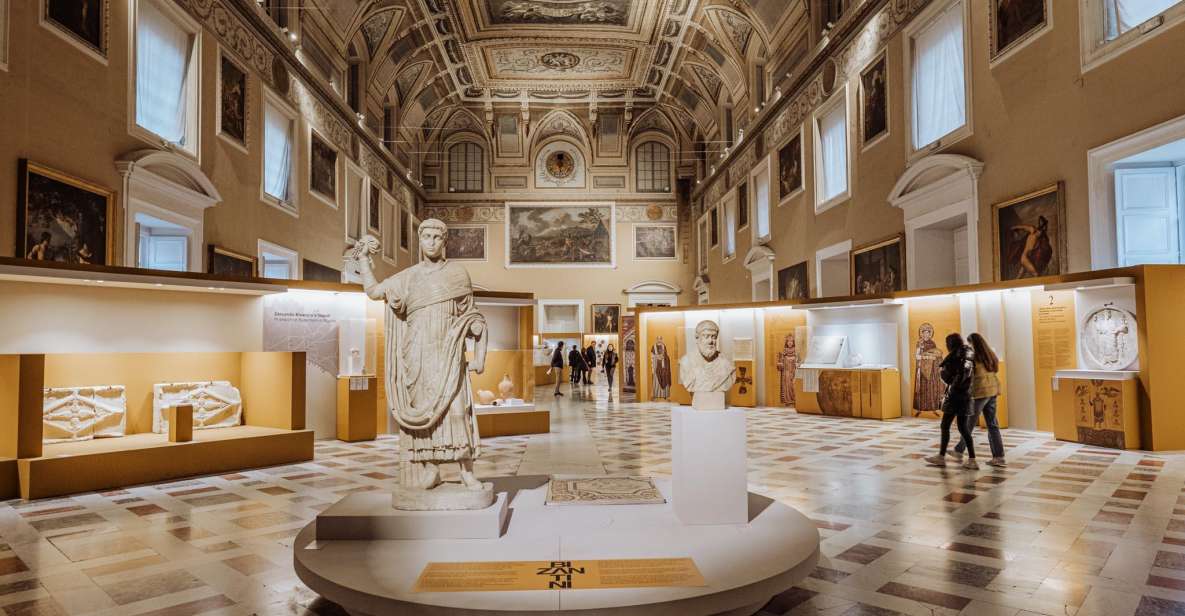
This tour starts at the Museo Archeologico Nazionale di Napoli, outside the ticket office. You’ll spot the guide holding an ASKOS TOURS sign, which helps when you’re arriving on your own and the museum façade is doing its best impression of a maze.
The practical win here is simple: you’re going in with a plan. The museum is famous, but it’s also large, and walking it without guidance can turn into a “cool things, next room” blur. With a guide, you get to the points that matter and learn how to look at what you’re seeing.
Also, do your packing like an adult in an old Italian building. The tour doesn’t allow oversize luggage, strollers, or luggage/large bags. If you’re traveling with a big suitcase, you’ll need a different day for this museum. A small day bag is your friend.
You can also read our reviews of more tours and experiences in Naples National Archaeological Museum.
Why the 2-Hour Guided Format Works (and What It Leaves Time For)
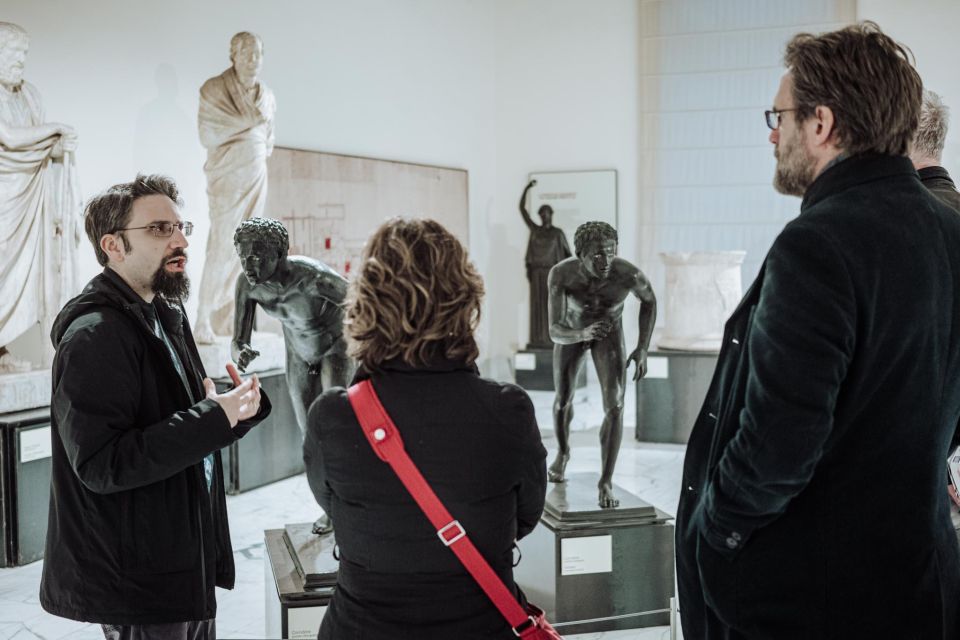
This is a 2-hour guided walking tour, and that duration is honestly a sweet spot for this specific museum. In less time, you’d miss too much of what makes the National Archaeological Museum so good. In more time, you might feel overloaded, especially if you’re also planning Pompeii and Herculaneum.
The best thing about the format is that it gives you a guided “map” for what you’ll want to revisit on your own. Even with a guide, you won’t see everything in two hours. That’s not a failure; it’s how museums like this stay enjoyable. The guide’s job is to help you understand the highlights deeply enough that your self-guided wandering afterward becomes more satisfying.
There’s one more angle: the museum pieces here connect to the Bay of Naples story. If you’ve already visited Pompeii or Herculaneum, the tour helps you place those discoveries into a bigger artistic and cultural picture. If you haven’t gone yet, it acts like a preview that makes your later ruins visit easier to read.
Farnese Collection: Hercules and Toro Farnese Up Close
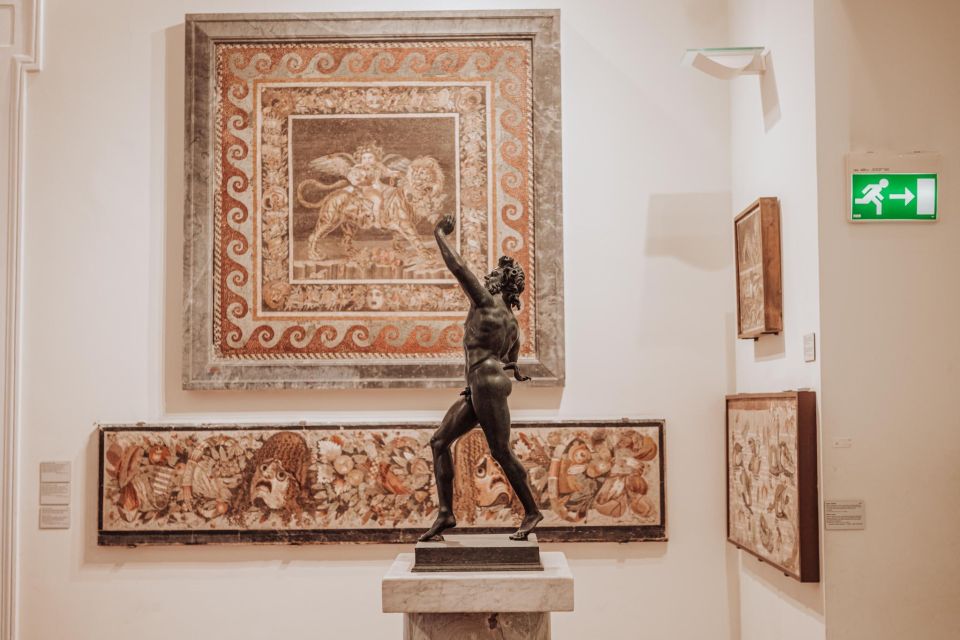
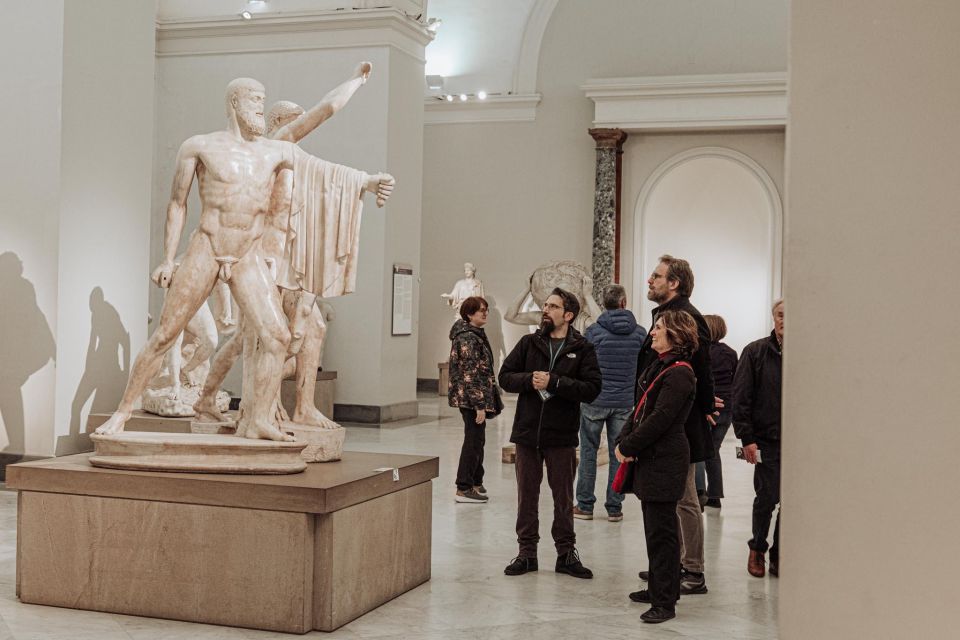
If you want one section that anchors the entire visit, it’s the Farnese Collection. This is where the tour’s energy usually spikes, because these are the sculptures people mention when they try to describe why classical art still feels alive.
You’ll hear about major works from the collection, including Hercules and the Toro Farnese. These aren’t just famous names on a wall label. With a guide, you get the reasoning behind why the pieces mattered to collectors and how Roman taste reshaped Greek themes. That context changes the way you look at details like posture, expression, and how bodies were designed to communicate power.
This is also a good time to slow down. The galleries can be visually loud: marble bodies, myth scenes, polished surfaces, and visitors all pointing at the same few objects. The guide helps you read it instead of just staring at it.
Pompeii and Herculaneum Frescoes and Mosaics From 79 AD
The tour’s second big focus is Pompeii and Herculaneum art—especially frescoes and mosaics. These are the objects that make the past feel painfully specific. Pompeii and Herculaneum weren’t just places where people lived; they were places where art sat on walls and floors. When the eruption of Mount Vesuvius happened in 79 AD, many works survived in ways that feel almost impossible today.
You’ll see mosaics tied to that eruption era, and the guide’s explanations make them more than decoration. You learn how techniques, materials, and subject choices reflected wealth, taste, and even ideology. Frescoes work a bit like time machines: they show you what people wanted their rooms to look like—myth on plaster, scenes that made everyday spaces feel grand.
One practical tip: if you’re the type who likes to take photos, you can still do it, but keep your eyes on the guide during the explanation. The real payoff is understanding why a particular mosaic or painting is famous, not just seeing a pretty image.
Greek and Roman Corridors: Busts, Gods, Coins, and Wall Paintings
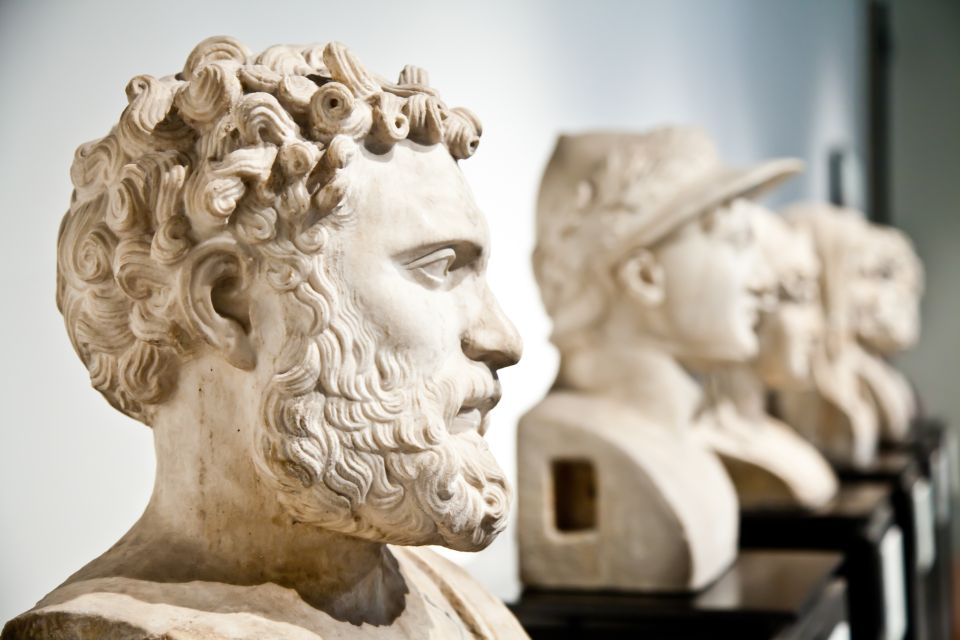
Between the museum’s major showpieces, the experience becomes a guided walk through how Romans borrowed from Greek culture—and how they displayed it. In corridors lined with busts of Roman and Greek gods and figures, you get a “who’s who” feeling for myth and power.
And it’s not only sculpture and mosaics. The museum also features coins and wall paintings. This matters, because it widens your sense of what museums do. They’re not just holding art; they’re holding evidence—tools, economy, symbolism, and everyday imagery—collected from legendary sites across the region.
If you’re trying to understand how Naples fits into the ancient world, this part of the tour is your glue. You stop treating Pompeii-style objects as isolated finds. Instead, you begin to see the Bay of Naples as a cultural crossroads where Greek and Roman traditions tangled together in real objects.
The Most Valuable Part: How the Guide Changes What You Notice
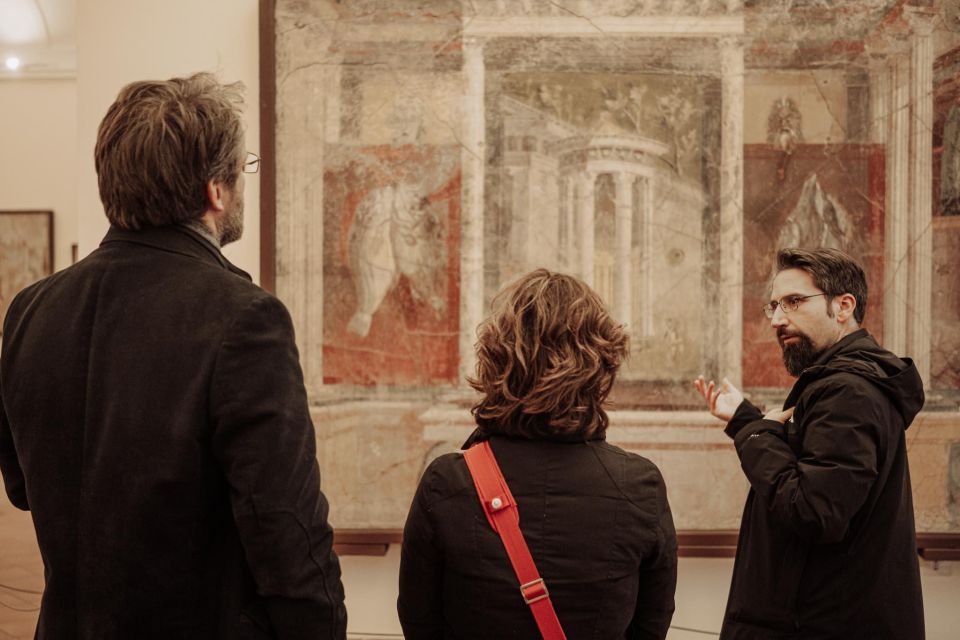
Here’s the real value of this tour: the guide helps you look correctly. The museum is packed with artifacts, and without a guide you’ll likely skim. With a guide, you learn which details are worth your time—like what a figure’s expression might signal, why certain subjects were popular, and what artistic choices reveal about the period.
What I like is that the guiding style varies by person, but the goal stays the same. You might hear from guides who are not just tour professionals, but archaeologists involved with the region’s work. Some tours have been led by people like Carmine, Nicoletta, Nikkola, Gennaro, Vincent, Maria, Sylvia, Annalise, and Adele. Names aside, the pattern is consistent: the explanations come with real-world archaeological thinking, not just memorized facts.
One nice bonus that shows up in the experience: headsets or ear pieces can be provided, which helps if you’re hard of hearing or sitting farther away. That’s not a small thing in a museum where sound can bounce around.
Price and Value: What You’re Really Paying For
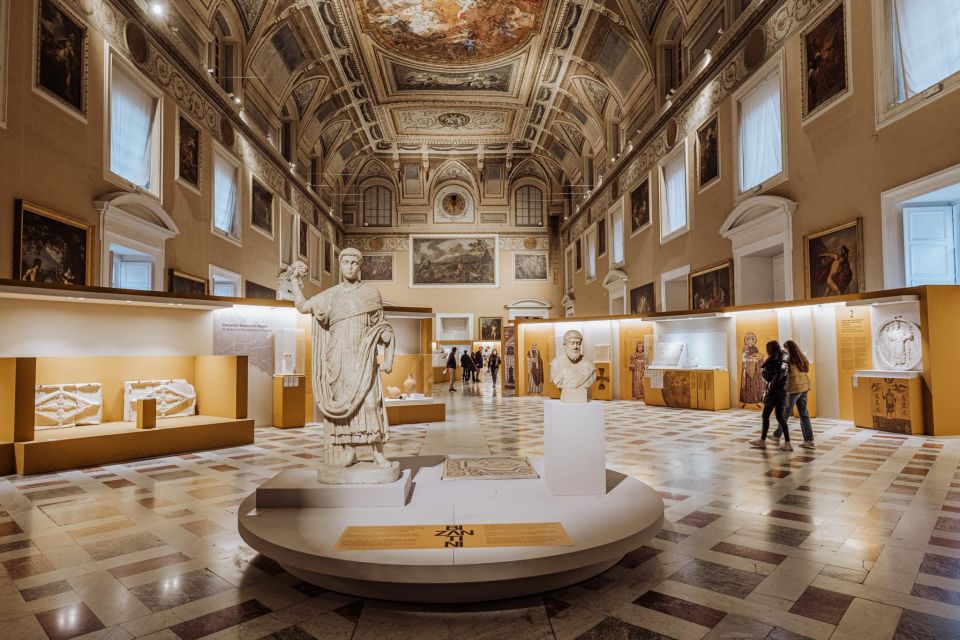
The tour price is $52 per person for a 2-hour guided visit, with museum entry included. You’ll also be paying for expert interpretation, not just access. The museum itself has an adult ticket price listed at 20 euros (and a reduced rate for certain EU residents), and that admission is part of the tour cost.
So the math becomes less about the ticket and more about the guide time. If you love history but find big museums overwhelming, this is one of the more sensible ways to spend money in Naples. You get a fast, structured overview and a better sense of what to return to on your own.
Is it always the cheapest route? No. On the first Sunday of the month, the museum has been reported as free for all visitors. If your timing lines up and you’re comfortable touring solo, you could compare costs. But even then, the guide may still be worth it if you want the objects explained in a way that helps you connect them to the region.
Practical Tips for a Smooth Museum Walk
Keep your day simple, because the museum experience is the main event.
- Bring small bags only. Oversize luggage, strollers, and large bags aren’t allowed.
- Plan for crowds. This is a top museum in Naples, and it draws people who know what they want to see.
- Wear comfortable shoes. You’re walking and stopping often, and the museum layout is not designed for quick power-walking.
- If you’re hearing sensitive, plan for audio help. Some groups have reported ear pieces provided, which is a big quality-of-life upgrade.
Timing matters too. Two hours is a focused sweep, so pair it with a day plan that gives you space afterward. If you still want more, you may be able to keep exploring beyond the guided portion—so build in time to linger.
Who This Tour Suits Best in Naples
This tour is a great fit if:
- you’re excited by the art of the Bay of Naples—especially Pompeii and Herculaneum
- you want the Farnese Collection explained in a way that makes it easier to understand
- you’d rather spend your Naples time learning than wandering with a vague plan
It’s less of a fit if:
- you need wheelchair access or have mobility limitations, since it’s not suitable for wheelchair users
- you’re carrying oversize luggage, since the rules are strict
- you want a full, do-every-gallery visit in one go (two hours won’t cover everything)
Should You Book This Naples Museum Tour?
I’d book it if you want the National Archaeological Museum to feel like a coherent experience instead of a room-by-room test of stamina. For $52, you’re buying skip-the-line entry plus an archaeologist-led story connecting the Farnese sculptures to the Pompeii and Herculaneum frescoes and mosaics tied to 79 AD.
Skip it only if you’re traveling light, you’re fine touring solo, and you already know exactly which sections you want to target with confidence. If that’s you, you might time your visit for the first Sunday and decide based on your comfort level.
FAQ
How long is the Naples National Archaeological Museum guided tour?
The tour lasts 2 hours.
Where do we meet for the guided tour?
Meet outside the ticket office of the Archaeological Museum of Naples. The guide holds an ASKOS TOURS sign.
Does this tour include skip-the-line entry?
Yes. The tour includes skip-the-line access to the Archaeological Museum of Naples.
What’s included in the tour price?
Included is the tour, an archaeologist guide, and entry to the museum.
What languages is the tour offered in?
The live guide is available in English and Italian.
Are large bags or strollers allowed inside the tour?
No. Oversize luggage, baby strollers, and luggage or large bags are not allowed.
Is this tour suitable for wheelchair users or people with mobility impairments?
No. It is listed as not suitable for people with mobility impairments and for wheelchair users.
Can I cancel for a refund, and can I pay later?
Yes. You can cancel up to 24 hours in advance for a full refund, and there is a reserve now & pay later option.