REVIEW · PADUA
Padova: Baptistery of the Cathedral & Museum of the Diocese
Book on GetYourGuide →Operated by Kalatà s.r.l. · Bookable on GetYourGuide
Padua’s frescoes tell a full salvation story. I love how this visit turns UNESCO-level art into a clear, guided walk, and I especially like the way the frescoes are explained as a connected story, not random wall paintings. One possible drawback: if you’re expecting a specific audio language, it can be wise to confirm the option is available when you arrive, since there can be surprises.
This is a 1-hour experience built around a narrator and headset, so you don’t have to hunt for context on your own. You get to enter the Baptistery as the audio guide leads the pacing, and you’ll hear the key names tied to the commission and symbolism.
You’re also visiting a bigger complex than just one room: Piazza Duomo holds the cathedral area and the bishop’s palace, where the Museum of the Diocese (including the Bishops’ Hall) is part of what you can explore. Just keep in mind the museum portion may be tied to an extra guided visit, so don’t assume you’ll see everything in the same hour.
In This Review
- Key highlights at a glance
- Why the Baptistery in Padua is worth your time
- Giusto de’ Menabuoi’s frescoes: who made them and why it matters
- The story on the walls: Genesis to Revelation, then Paradise
- Entering and exploring with headsets: what the 1-hour experience feels like
- Piazza Duomo: the cathedral complex around the Baptistery
- Museum of the Diocese and Bishops’ Hall: what to expect from the extra stop
- Price and value: is $17 a good deal?
- Logistics that matter: meeting point, vouchers, cameras, and animals
- Who this tour suits best (and who should skip it)
- Should you book this Baptistery & Diocese Museum visit?
- FAQ
- How long is the Baptistery of the Cathedral and Diocese Museum experience?
- Where do I meet for the tour?
- What languages are available for the audio guide?
- Is the tour wheelchair accessible?
- Are cameras allowed inside?
- Can I bring animals?
- What is the price and cancellation policy?
Key highlights at a glance
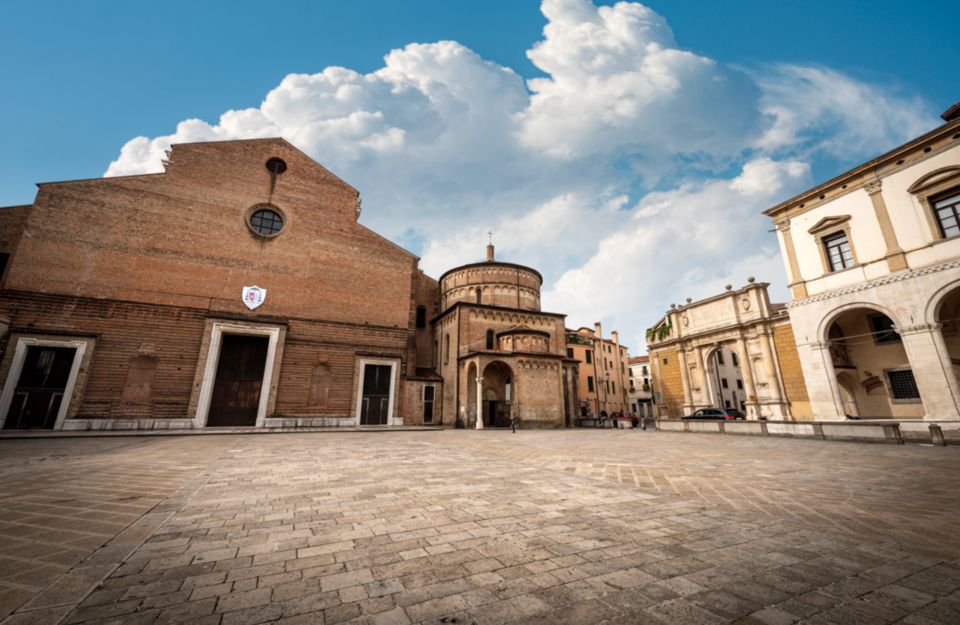
- UNESCO World Heritage experience at Padua’s Baptistery
- 14th-century fresco cycle explained through a narrated audio story
- Genesis to Revelation interpretation, ending with the dome’s Paradise
- Guided entry and exploration using headsets you receive on site
- Piazza Duomo complex includes the Diocese Museum and the bishop’s palace area
Why the Baptistery in Padua is worth your time
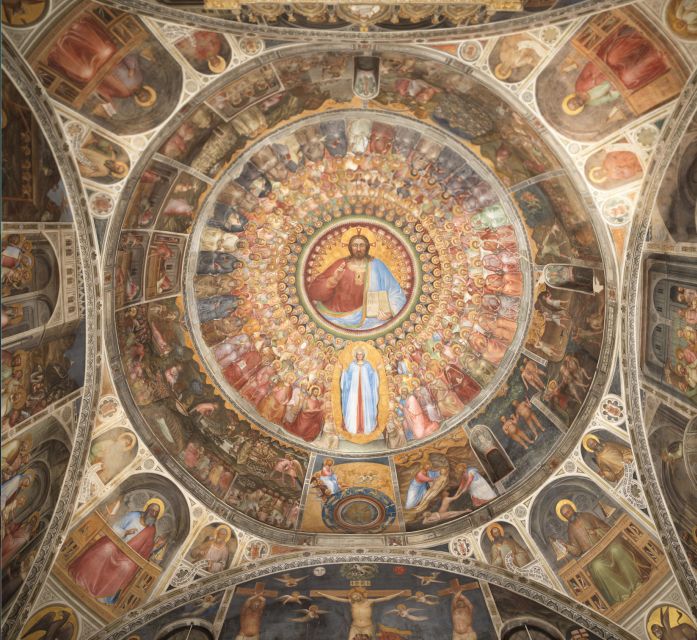
Padua’s Baptistery sits in Piazza Duomo, and it feels like the kind of place that deserves more than a quick look. That’s exactly what this experience is set up to do. For the price of about $17 per person, you’re not paying for a long guided group tour. You’re paying for a structured, narrated way to read the building—especially the painting program—without needing to be an art historian.
What makes it hit is the match between scale and time. You get only an hour, but the audio tour is designed to give you enough story and visual direction that the frescoes start making sense fast. The result is a visit that feels satisfying instead of rushed.
And you’re not just looking at old paint. You’re seeing a high-point of Italian 14th-century art, created for a very serious religious purpose. That combination—worship space plus masterful art—keeps the experience grounded.
You can also read our reviews of more tours and experiences in Padua.

Giusto de’ Menabuoi’s frescoes: who made them and why it matters
When the audio guide starts explaining what you’re looking at, it anchors the story in real people and real politics, not vague “art appreciation.” The frescoes in the Baptistery were commissioned to painter Giusto de’ Menabuoi by Fina Buzzaccarini, the wife of Francesco da Carrara, known as il Vecchio, Lord of Padua.
That matters because it changes how you view the walls. If you know the patrons, you can sense the intention: this wasn’t decoration for decoration’s sake. It was a statement of belief and identity, placed in the heart of Padua’s cathedral complex.
Also, this is where the 14th-century detail pays off. The Baptistery’s paintings represent one of the highest expressions of Italian 14th-century art. Even if you only spend a short time inside, you’ll leave understanding why people protect this site so carefully. One review specifically praised the Baptistery as something you should visit absolutely and linked its UNESCO status to why it feels so “worth it.”
The story on the walls: Genesis to Revelation, then Paradise
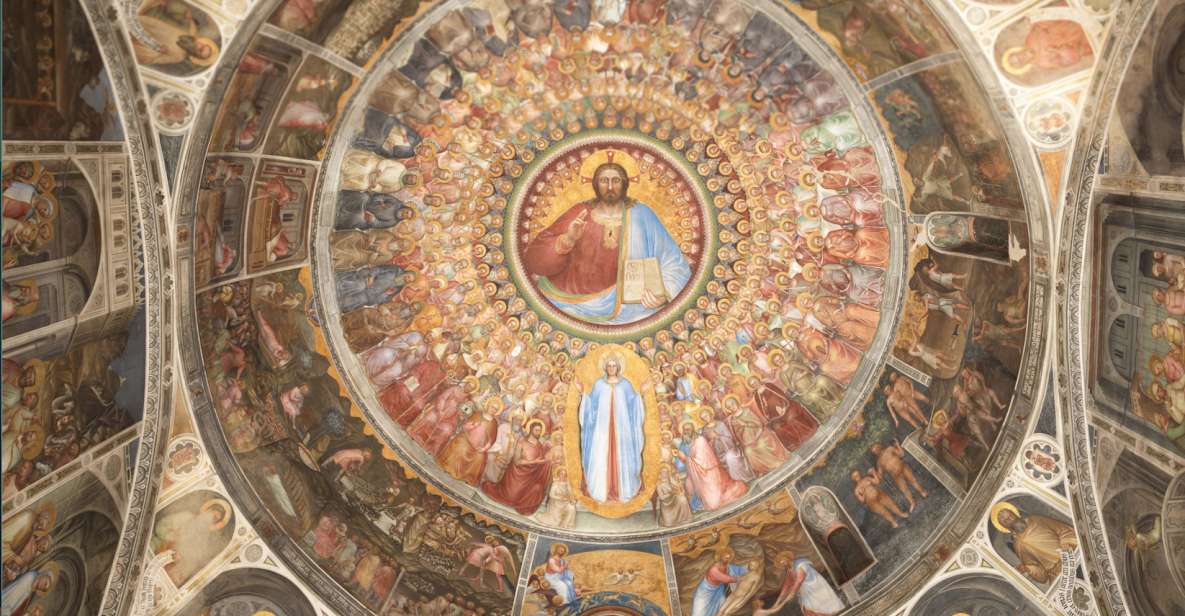
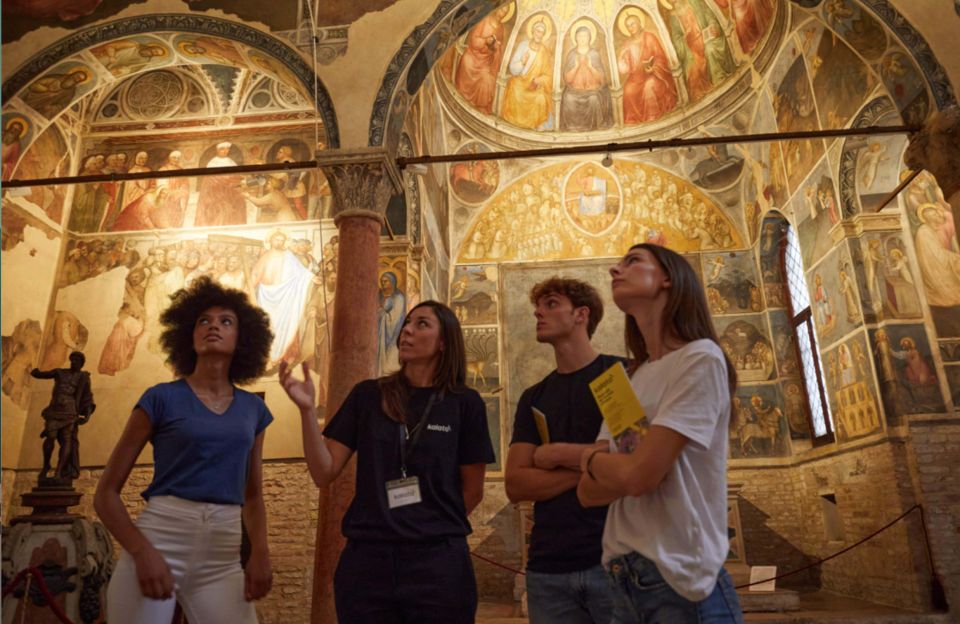
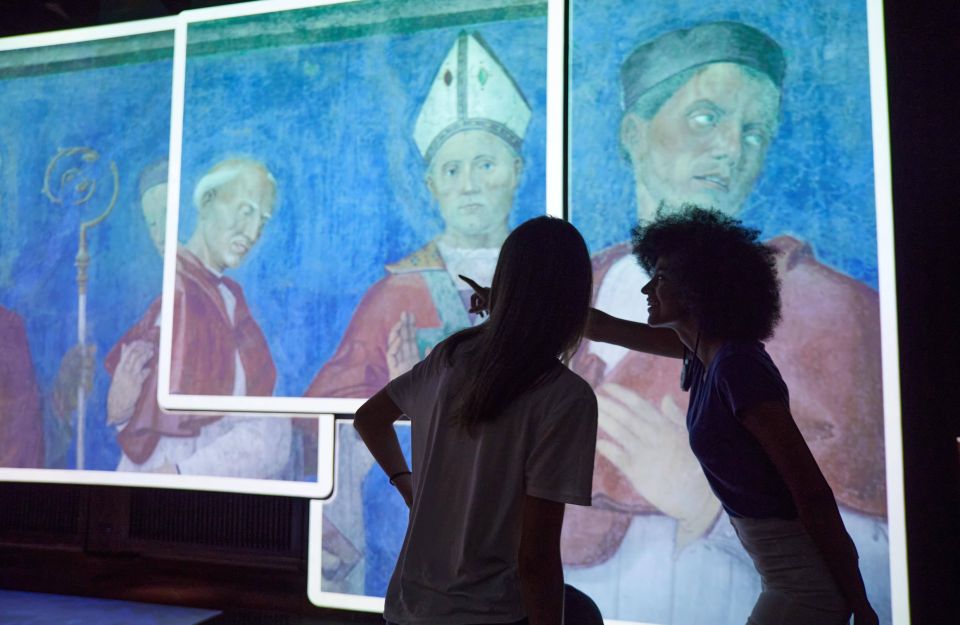
The audio narration doesn’t treat the frescoes as separate scenes. It guides you through a single storyline about Salvation, starting with the Book of Genesis and moving all the way to the Book of Revelation. Then it builds toward what dominates the dome: Paradise.
That structure is the secret sauce. Frescoes can overwhelm you if you stare at them like a museum poster. But when someone puts the scenes in order—spiritual order, not just artistic order—you start recognizing patterns. You also get a sense of how the artwork is meant to be experienced in a religious space: as a journey, not a checklist.
If you like when a visit gives you “a way to read the room,” this will work. You’ll spend less time wondering what you’re seeing and more time noticing how the scenes connect.
Entering and exploring with headsets: what the 1-hour experience feels like
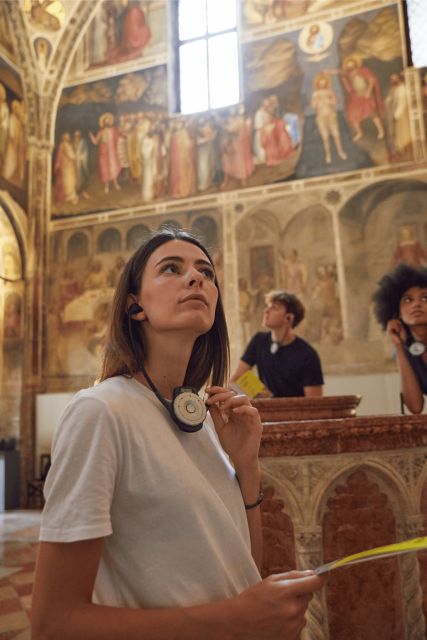
This isn’t a slow, meandering stroll. It’s a guided experience led by an audio narrator, and you use provided headsets while you enter and explore the Baptistery.
In practical terms, you should plan to focus. The headset is your main guide, and the narration is doing the heavy lifting of interpretation. I like tours like this when I’m visiting on a tight schedule. You don’t have to coordinate with a live group, and you can still get direction.
The tour languages include Italian, English, French, Spanish, and German, and the host or greeter covers those languages too. That said, here’s the balanced note: one confirmed booking review in Spanish complained that the expected Spanish option wasn’t ready on arrival and that they had to wait for a new pass they didn’t use. So if language is important to you, treat it as something to verify when you exchange your voucher.
Piazza Duomo: the cathedral complex around the Baptistery
The Baptistery isn’t isolated. The monumental complex of Piazza Duomo includes the Cathedral and the Bishop’s palace. That means your visit sits inside a larger religious center with millennial traditions in Padua.
Even if your main focus is the Baptistery frescoes, you’ll get a better sense of why the area matters. The Bishop’s palace and cathedral zone create context: this is a living hub of Christian history in the city, not a standalone monument parked beside a parking lot.
If you enjoy architecture and urban rhythm, Piazza Duomo rewards a pause before or after your ticketed time. The building complex has that “you can read it even from outside” feeling, because the religious function shows up in the layout.

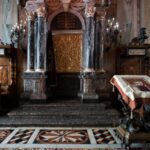
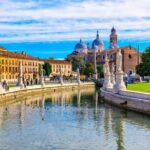
Museum of the Diocese and Bishops’ Hall: what to expect from the extra stop
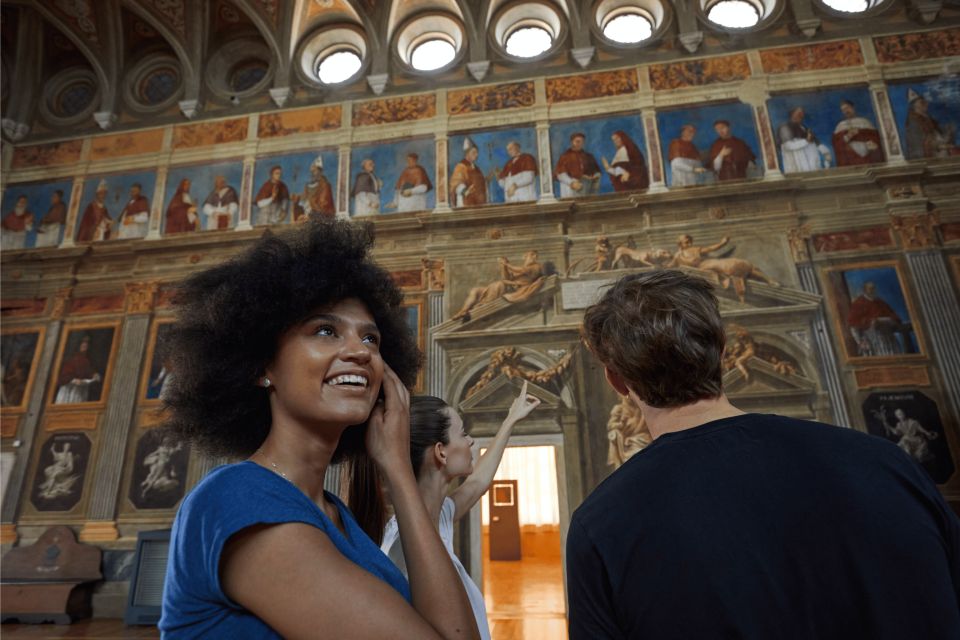
Inside the bishop’s palace is the Museum of the Diocese, including a space called the Bishops’ Hall. The information about this experience notes that you can visit the Bishops’ Hall by taking an unusual guided tour too.
Here’s how I’d think about it: the core hour is about the Baptistery and the fresco story. The Diocese Museum portion is mentioned as part of the broader complex visit, but it’s framed as a guided add-on. So if you want the museum highlights, don’t assume they’re automatically included in the exact same flow of the 1-hour Baptistery audio tour.
What’s still valuable, though, is that the experience points you toward more than one “type” of culture. You get art and worship in the Baptistery, then you have a path toward ecclesiastical collections and rooms connected to the diocesan story.
Price and value: is $17 a good deal?
At $17 per person for a 1-hour audio experience, this is priced in the middle range for UNESCO-type visits. The best way to judge value here is to look at what’s included and what you’re getting for your attention.
You get:
- Headsets so you can follow the narrator clearly
- A guided structure for understanding the fresco program (Genesis to Revelation, Paradise in the dome)
- A focused experience that’s easier to fit into a busy Padua day than a longer guided tour
For me, the value comes from interpretation. Frescoes without context can turn into “pretty ceilings” fast. Here, the audio tour is meant to give you a map for what to notice and how the scenes connect. That’s the part you can’t easily DIY quickly, especially if you want to move efficiently.
But I’ll also be honest: if you end up with the wrong language, or you arrive and the language you expected isn’t ready, that can make the price feel steep for what you receive. The Spanish review you have here is a real reminder that audio language availability can affect satisfaction.
Logistics that matter: meeting point, vouchers, cameras, and animals
Plan to start at the ticket office: Piazza Duomo 12, Padova. You’ll need to exchange your voucher at the ticket counter before the tour begins. This is the kind of step that’s easy to forget until you’re standing there, so give yourself a little buffer time.
Cameras are allowed, as long as your camera has a safety strap. If you want to bring a phone, assume it’s fine, but the key rule provided is about safety straps on camera equipment.
Animals are not allowed. The only exception listed is assistance dogs for people with disabilities. So if you’re traveling with a pet, you’ll need to make other arrangements.
Wheelchair accessible is explicitly noted, which is great for planning. If you use a wheelchair, it’s worth arriving early so staff can direct you smoothly to the right entrance flow.
Who this tour suits best (and who should skip it)
This audio tour is a strong match if you:
- Want a high-quality fresco-focused experience without booking a long, complicated tour
- Like guided interpretation that helps you understand a religious art program quickly
- Prefer independent pacing but still want structure
It may be less ideal if:
- You’re very sensitive to language accuracy and you’re traveling expecting one specific language
- You’re the type who wants a live guide to answer questions in real time (this is headset narration, not a Q&A)
It’s also a solid choice if you’re visiting Padua and want one “anchor” ticketed experience that gives you a lot of payoff in only an hour.
Should you book this Baptistery & Diocese Museum visit?
Yes, I think you should book it if you want Padua’s Baptistery experience to feel guided and meaningful rather than random. The combination of a UNESCO site, a 14th-century fresco cycle with clear narrative structure, and a headset-led tour is exactly how you get value out of a short visit.
I’d book especially if you’re curious about Giusto de’ Menabuoi’s fresco program and how the imagery moves from Genesis to Revelation and culminates in the dome’s Paradise. And if you’re traveling in English, German, French, Italian, or Spanish, you’ll likely be in good shape—just treat the language availability as something to confirm at the ticket exchange point so your experience matches your expectations.
If language isn’t a big deal for you, or you’re flexible, this is the kind of experience that turns one beautiful building into a story you can actually follow.
FAQ
How long is the Baptistery of the Cathedral and Diocese Museum experience?
The duration is 1 hour.
Where do I meet for the tour?
The meeting point is the Ticket Office at Piazza Duomo 12, Padova. You must exchange your voucher at the ticket counter before the tour begins.
What languages are available for the audio guide?
The audio guide is available in Italian, English, French, Spanish, and German.
Is the tour wheelchair accessible?
Yes, wheelchair accessibility is listed.
Are cameras allowed inside?
Cameras are allowed as long as they are equipped with a safety strap.
Can I bring animals?
Animals are not allowed. Assistance dogs are the only permitted exception.
What is the price and cancellation policy?
The price is $17 per person, and free cancellation is available up to 24 hours in advance for a full refund.