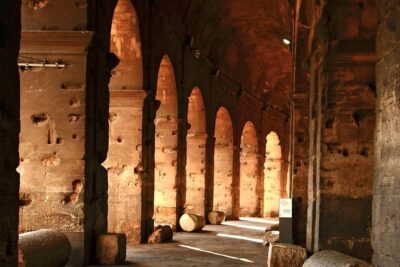
REVIEW · NAPLES
Pompeii: Private Tour with an Archaeologist
Book on GetYourGuide →Operated by Askos Tours · Bookable on GetYourGuide
Pompeii hits different when you have a real archaeologist talking. This private tour focuses on the western side of the city and turns the ruins into a walk through everyday Roman life, with stops like the Forum, baths, theaters, and standout houses. I especially like how the guide connects the buildings to the people who used them, and how you get time to ask questions instead of just following a crowd. One thing to plan for: Pompeii is a long, intense walking experience, and the 3-hour loop covers a lot on cobblestones and uneven ground.
I also like that you get practical “see-this-next” guidance. The itinerary is built to cover major sights without wasting time, and the skip-the-line admission is a real stress saver at peak hours. A possible drawback is that there’s a bit of a safety-and-comfort reality check: one person flagged a mismatch between the archaeologist promise and the actual guide, so it’s smart to confirm you’re getting the archaeologist-led version you want.
In This Review
- Key highlights to look for
- Starting at Porta Marina Superiore: your Pompeii front door
- The first stretch: Porta Marina and the Temple area
- Forum stops: Foro Civile di Pompei and Basilica
- Houses of Menander and everyday Pompeian life
- Forum Baths and the Lupanare: public pleasure and uncomfortable truths
- House of the Faun and the House of the Vettii: art, wealth, and layout
- Theaters and amphitheater: Large Theatre and the Amphitheater of Pompeii
- Plaster casts of victims: the moment the city becomes personal
- What “western Pompeii” means for your time
- Price and value: $508.15 for a private archaeologist
- Guide languages and why it matters more than you think
- Logistics that actually affect your comfort
- Who should book this Pompeii private tour?
- Should you book it?
- FAQ
- FAQ
- How long is the Pompeii private tour with an archaeologist?
- Where do I meet my guide for this Pompeii tour?
- Does this tour include skip-the-line admission?
- What is included in the price?
- How much does the tour cost?
- What languages are available for the guide?
- Is the tour wheelchair accessible?
- Is there free entrance on any days?
- What should I bring or plan for in bad weather?
Key highlights to look for
- Archaeologist-led private pacing across Pompeii’s western highlights, so you don’t feel rushed
- Skip-the-line admission included, which matters on a busy site
- Public + private life in one route, from civic buildings to houses, baths, and the Lupanare
- Sharp focus on what daily Romans did, not just dates and disasters
- Frequent “small detail” explanations, the kind that make carvings and layouts click
- Many language options, including English, Japanese, Spanish, Italian, German, French, Portuguese, Chinese, Russian
Starting at Porta Marina Superiore: your Pompeii front door
Your tour meets at Porta Marina Superiore, at the main gate, in front of the bar-restaurant called Hortus (look for the building with lemons and oranges hanging outside). This matters because Pompeii can feel like a maze if you don’t start with orientation. Your guide starts you off with context right away, so the first streets and thresholds don’t feel random.
From the start, expect a walking-first experience. Pompeii isn’t set up for “sit and learn,” so bring comfortable shoes and be ready for a steady pace. The upside is that as the walking continues, the city starts to feel like a place with neighborhoods, routines, and rhythms.
You can also read our reviews of more tours and experiences in Naples.


The first stretch: Porta Marina and the Temple area
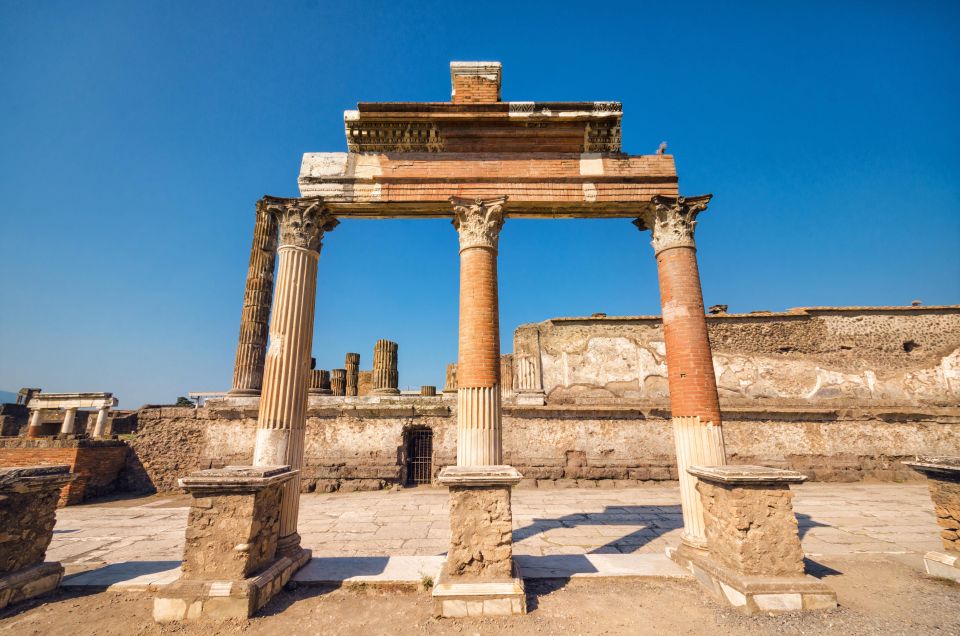
The tour begins at Porta Marina, then moves into the religious heart of the area with a stop at the Temple of Apollo. Gates and temples are a smart early pairing because they set the tone for how Pompeii worked: entry points for movement and commerce, then sacred spaces for community life.
At the Temple of Apollo stop, you’ll get the kind of explanation that turns stones into meaning. Instead of treating it like a photo stop, your guide can help you connect why this location mattered to worship and civic identity. If you’re the kind of person who likes to know what you’re looking at—where you’re standing and why a layout was built a certain way—this is exactly the sort of stop that rewards your attention.
Forum stops: Foro Civile di Pompei and Basilica
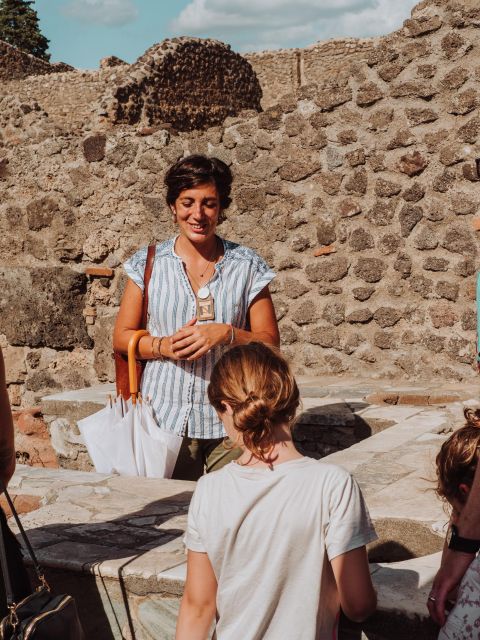
Next up is the civic center: Foro Civile di Pompei, followed by the Basilica. This is where Pompeii feels most like a working city rather than a museum. You’re moving through spaces tied to public decisions, business, and gatherings, so it’s easier to picture how people spent their days.
The Forum is especially valuable because it gives you the “city machine” view: where people would show up, where disputes might be handled, where the social mix happens. The Basilica adds the architectural and social layer—this is a building style Romans used for public life, and it helps you understand why Pompeii wasn’t just pretty buildings. It was a place where practical needs drove design.
The potential drawback here is crowd pressure. Even with a private guide, Pompeii is busy, and these central areas can get packed. The good news is that private guiding usually helps you move with purpose, rather than standing around waiting for a group tour bottleneck to clear.
Houses of Menander and everyday Pompeian life
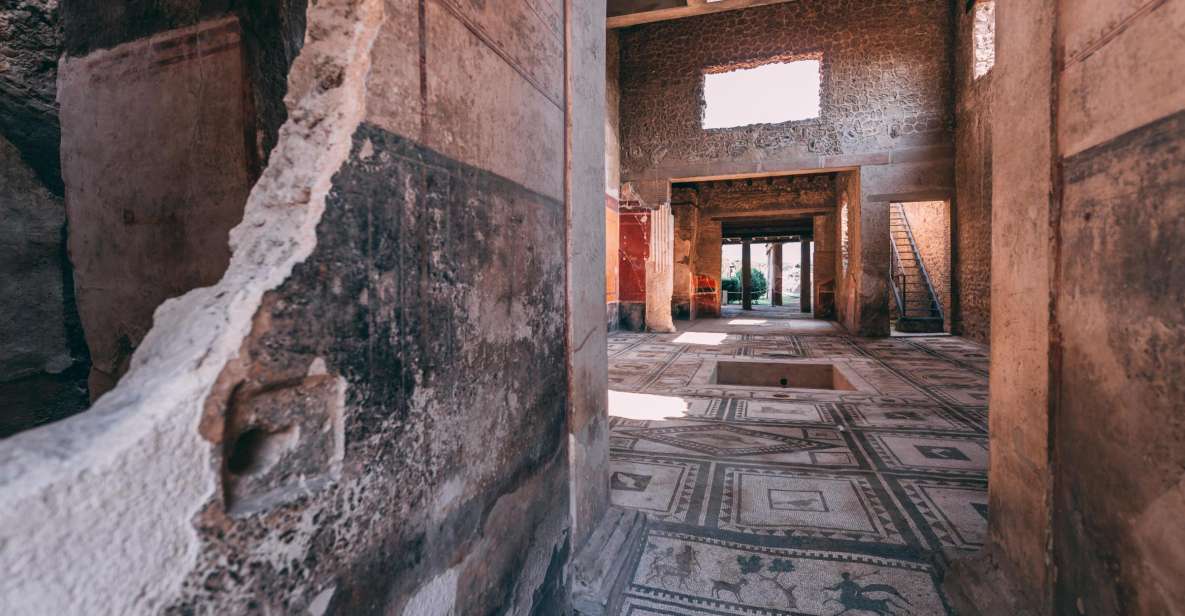
Then the tour swings toward private life with a stop at the House of Menander. This is one of those Pompeii locations where a “house” actually becomes a lesson in status, taste, and daily routine. You’re not just seeing rooms—you’re seeing how space flows for greeting visitors, moving through the home, and showing off wealth.
The House of Menander stop tends to be a highlight for people who love details. You can often read character and priorities from what’s displayed and how the layout is used. Your guide can point out what makes this home distinct, and why those design choices mattered to the people living there.
If you’re traveling with teens or kids, this kind of stop can hold attention better than a purely monumental viewpoint. You can talk about real human behavior: hosting, spending, decorating, and social hierarchy.
Forum Baths and the Lupanare: public pleasure and uncomfortable truths
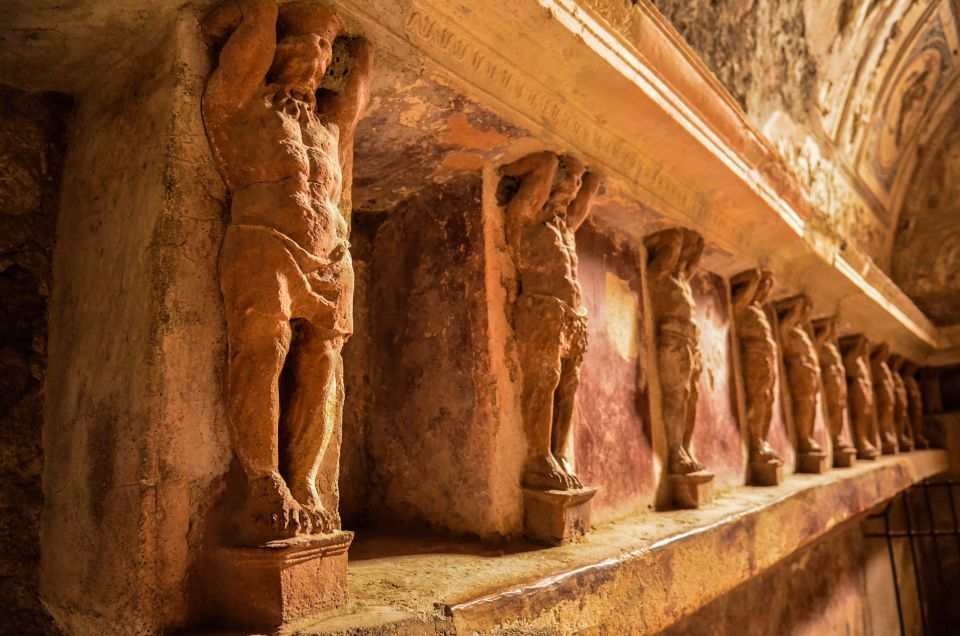
Two of the most talked-about stops are the Forum Baths and the Lupanare. These sections are important because they show how Romans balanced public life with private desire, hygiene, and entertainment. Pompeii didn’t erase the messier parts of human culture, and that’s part of why the site hits so hard.
The Forum Baths give you a sense of routine. A bath complex isn’t just a place to wash; it’s where you pass time, socialize, and keep up appearances. When your guide connects the building layout to how people likely moved through it, you’ll start to understand the city as an engine of everyday habits.
Then comes the Lupanare, Pompeii’s well-known brothel. It’s a heavy subject, and your guide’s framing matters. The value here isn’t gossip—it’s learning how Pompeian society functioned, including spaces that modern visitors might prefer to skip. If you have sensitive sensibilities, you might want to mentally prep for this stop, because it’s a direct look at commerce and exploitation.




House of the Faun and the House of the Vettii: art, wealth, and layout
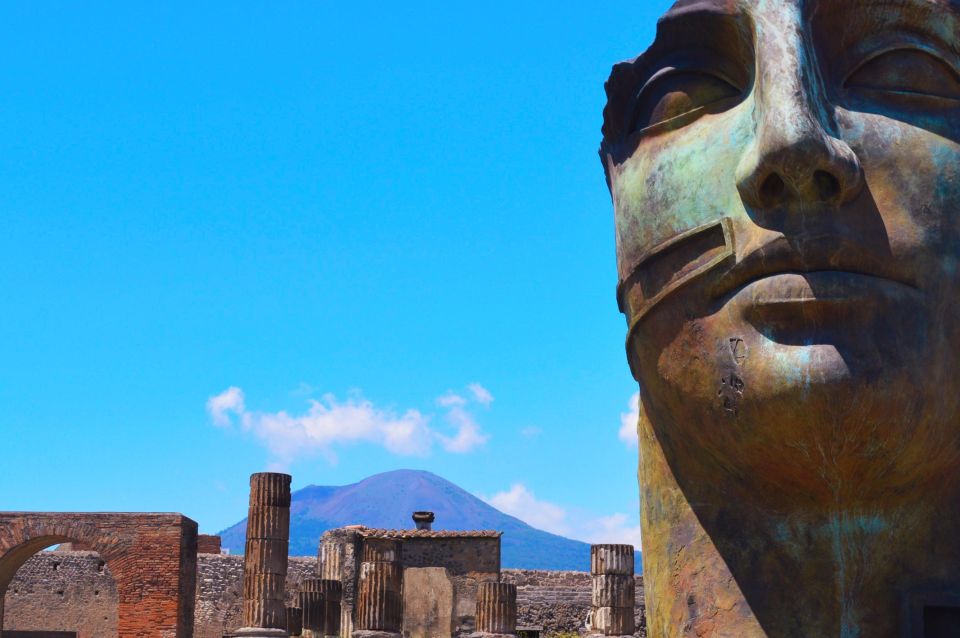
After that, the route goes to the House of the Faun, then later to the House of the Vettii. These homes are where Pompeii becomes architectural and artistic. The walls, courtyards, and room arrangements help you see how status and style showed up in real, lived space.
I like the way these stops work together. The House of the Faun can help you picture grander scale and how space feels when you’re inside a wealthy home. The House of the Vettii brings the lesson closer to lifestyle, letting you understand how wealth expressed itself through decoration and how families used different parts of the house.
One practical consideration: homes in Pompeii often involve looking closely at surfaces while also navigating uneven ground outside the rooms. So keep your eyes up and your footing steady. This is one of those times when good shoes aren’t optional.
Theaters and amphitheater: Large Theatre and the Amphitheater of Pompeii
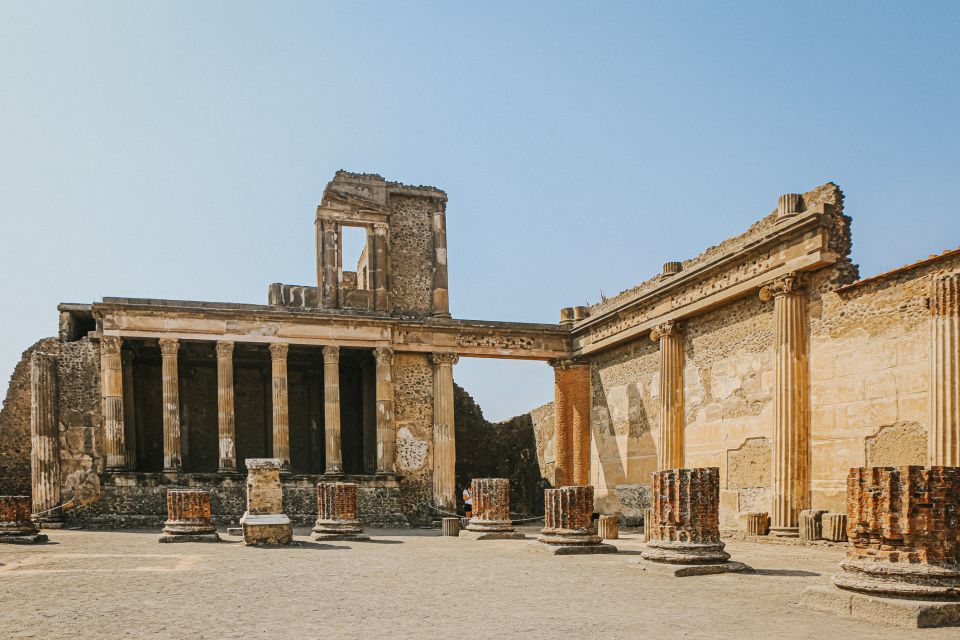
Next the tour moves into performance spaces: the Large Theatre and the Amphitheater of Pompeii. This is where you get a feel for civic entertainment—how Romans came together for public spectacle.
The Large Theatre helps explain how sound, seating, and sightlines were part of the design. Even ruins can communicate function if your guide points out the right details. If you like to connect architecture with human behavior, this stop often clicks fast.
Then the Amphitheater adds a different energy: large-scale events and crowd dynamics. It helps you understand why these buildings were worth building in stone. They were social events as much as they were entertainment, and the scale tells you Pompeii was meant to gather people.
Plaster casts of victims: the moment the city becomes personal
The tour’s highlights include plaster casts of the victims. This is the emotional core for many people, because it turns the volcanic disaster from a distant headline into a human snapshot. A good archaeologist guide can help you understand what you’re seeing without turning it into shock value.
Even if you’ve seen photos before, the difference on-site is scale and placement. You’re physically in the space where tragedy unfolded, and the explanations help anchor the casts in context: what happened, why bodies ended up in certain areas, and how archaeology preserves evidence.
This stop is also a reminder that Pompeii is not just an impressive site. It’s a warning, but also a record—one that you read through careful interpretation.
What “western Pompeii” means for your time
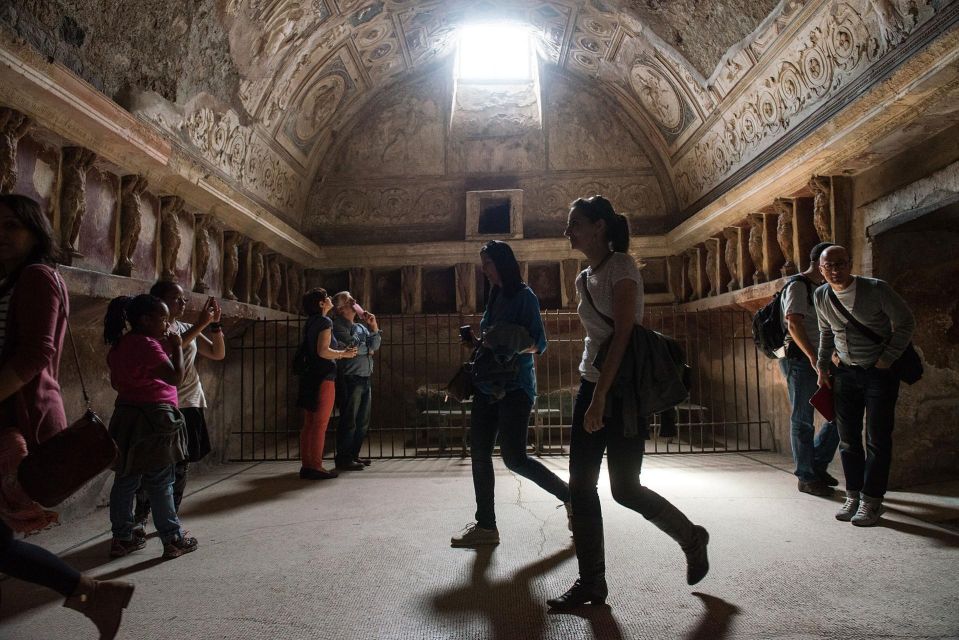
This tour focuses on the western part of Pompeii, including the gate, Forum areas, baths, brothel area, and both theaters. That route choice is a big deal if you want more than one type of experience in one go. You get the civic center, you get daily routines, and you get entertainment and leisure.
In practical terms, 3 hours is short compared with the size of Pompeii. So you’re paying for prioritization: the guide keeps the focus on the major hits and the connections between them. If your goal is a “best of” route with explanations that help it all make sense, this is a strong match.
If your goal is slow wandering and deep reading of every corner, you might find 3 hours tight. But that’s the trade: you’re buying structure, not total freedom.
Price and value: $508.15 for a private archaeologist
The price is listed as $508.15 per group up to 1, with 3 hours of guided time. On paper, that can sound steep until you break down what’s included.
You’re getting:
- a certified archaeologist-guide
- skip-the-line admission fees included
- a full guided loop across major sights
- private pacing where you can ask questions and get tailored explanations
If you’re traveling solo, this price is basically the cost of having your own lesson plan. If you’re a couple or traveling as a pair, you’ll want to check how the operator defines group size for your booking, since the listing indicates up to 1 in the group price line you provided. Value improves when you can share the cost, because private guiding is what usually reduces wasted time and improves your understanding per minute.
Also, Pompeii is not a place where you always know what you’re looking at. An archaeologist guide can turn “I see ruins” into “I understand the function and human behavior behind this.” That’s the kind of value you notice quickly.
Guide languages and why it matters more than you think
This tour lists guide languages including English, Japanese, Spanish, Italian, German, French, Portuguese, Chinese, Russian. If you’re not a confident speaker in Italian or if you want accurate nuance, a language-matched guide can make the difference between “cool ruins” and real understanding.
Language also affects how comfortably you can ask questions. Pompeii invites questions—about daily life, religious meaning, building design, and the eruption. When a guide can respond clearly, you get more of the site’s story in your head instead of missing it.
Logistics that actually affect your comfort
A few rules affect how you plan your gear and pace.
- Umbrellas are not allowed. Yet the tour also notes rain planning by bringing a small umbrella and/or a raincoat. The safe move is to pack a raincoat and keep your umbrella situation simple, following the guide’s instructions on the day.
- Pets are not allowed.
- The tour runs in any weather condition, so expect the plan to continue even if the sky turns.
- Bring comfortable shoes because the walking is intense.
There’s also a note about wheelchairs that you should not ignore. The activity description says wheelchair accessible, but it also states it is not suitable for wheelchair users. If you’re booking for someone who needs wheelchair access, contact the provider ahead of time and get a clear, practical answer for the specific route.
Who should book this Pompeii private tour?
This tour is a great fit if you want:
- a guided walkthrough that covers major western Pompeii highlights in 3 hours
- a guide who can explain what you see and answer questions
- a private format that helps you avoid the most chaotic pacing
- stops that cover Roman life broadly: civic spaces, houses, baths, theaters, and even the darker corners like the Lupanare and victim casts
It may not be the best match if:
- you hate walking and want a very low-movement experience
- you need wheelchair-ready route certainty without any ambiguity
- you prefer to roam without structure and build your own custom route
Should you book it?
If you’re coming to Pompeii for the first time and you want the city to feel understandable, this is an easy yes. The private archaeologist format is the value engine here: you’re not just touring ruins, you’re learning how and why people lived, worked, worshiped, and entertained in a city that froze in time.
I would book it especially if you like asking questions and you want your time to count. Just do one smart check before you go: confirm that the guide you’re scheduled with is truly the archaeologist-led version promised, since one booking note in the provided information questioned that fit. If that checks out, you’ll likely leave with Pompeii feeling less like a photo album and more like a place with real people inside it.
FAQ
FAQ
How long is the Pompeii private tour with an archaeologist?
The tour duration is 3 hours.
Where do I meet my guide for this Pompeii tour?
Meet your guide at Porta Marina Superiore in front of the bar-restaurant called Hortus, which has lemons and oranges hanging outside.
Does this tour include skip-the-line admission?
Yes. Skip-the-line admission fees are included.
What is included in the price?
Included items are the guided tour of Pompeii by a certified archaeologist-guide, and disposable earphones for bigger groups.
How much does the tour cost?
The price is listed as $508.15 per group up to 1.
What languages are available for the guide?
The tour lists guide languages: Japanese, English, Spanish, Italian, German, French, Portuguese, Chinese, Russian.
Is the tour wheelchair accessible?
The activity description lists wheelchair accessible, but it also notes it is not suitable for wheelchair users. If this applies to you, it’s best to confirm with the provider before booking.
Is there free entrance on any days?
Yes. On the first Sunday of each month, entrance is free of charge, but tickets can’t be reserved ahead of time, so entry is not guaranteed.
What should I bring or plan for in bad weather?
The tour runs in any weather condition. The information recommends a small umbrella and/or a raincoat, and the tour also states umbrellas are not allowed, so bringing a raincoat is the most straightforward option.