REVIEW · NAPLES
Pompeii: Small-Group Guided Tour with Skip-the-Line Ticket
Book on GetYourGuide →Operated by Walks In Europe · Bookable on GetYourGuide
Pompeii feels close up and personal. This small-group guided tour uses skip-the-line access and a focused route through the city’s top sights. You’ll get expert guidance that turns scattered ruins into a believable 79 AD city.
I especially like the way the tour makes Pompeii readable in a short window, from the big public spaces to the intimate homes. One thing to consider: it’s not suitable for wheelchair users, and once the tour starts you can’t join mid-way—so plan to arrive a few minutes early.
In This Review
- Key highlights you’ll actually care about
- Why Pompeii hits harder with a real guide
- Skip-the-line value: what you gain in 2 hours
- Meeting at Piazza Immacolata: find the sign fast
- Pompeii Archaeological Park: your first 10 minutes set the tone
- Amphitheater of Pompeii: gladiator theater, minus the guesswork
- House of the Faun: mosaics and the private side of power
- Temple of Apollo: religion as street-level architecture
- Vetutius Placidus House and Thermopolium: everyday food, not just statues
- Garden of the Fugitives: the human story behind the ruins
- Foro Civile di Pompei: ending at the city heart
- What “small-group” usually means in practice
- Price and value: is $282.08 per group fair?
- Guide quality: names you might meet
- What to bring so the tour stays comfortable
- Who should book this Pompeii tour (and who might not)
- Should you book this Pompeii small-group tour?
- FAQ
- How long is the Pompeii small-group guided tour?
- Is there skip-the-line entry?
- Where do I meet the guide?
- What’s included in the price?
- Is hotel pickup included?
- What should I bring?
- Do I need ID to enter Pompeii?
- Is this tour wheelchair accessible?
Key highlights you’ll actually care about
- Skip-the-line entry means less time stuck at gates and more time walking the streets
- Private small-group feel often keeps things relaxed and question-friendly
- A human-scale route covers major stops without making you rush through everything blindly
- Guides tailor the pace and can adjust the walk to reduce time in heavier crowds
- You end ready to continue on your own, with practical tips for what to hit next
Why Pompeii hits harder with a real guide
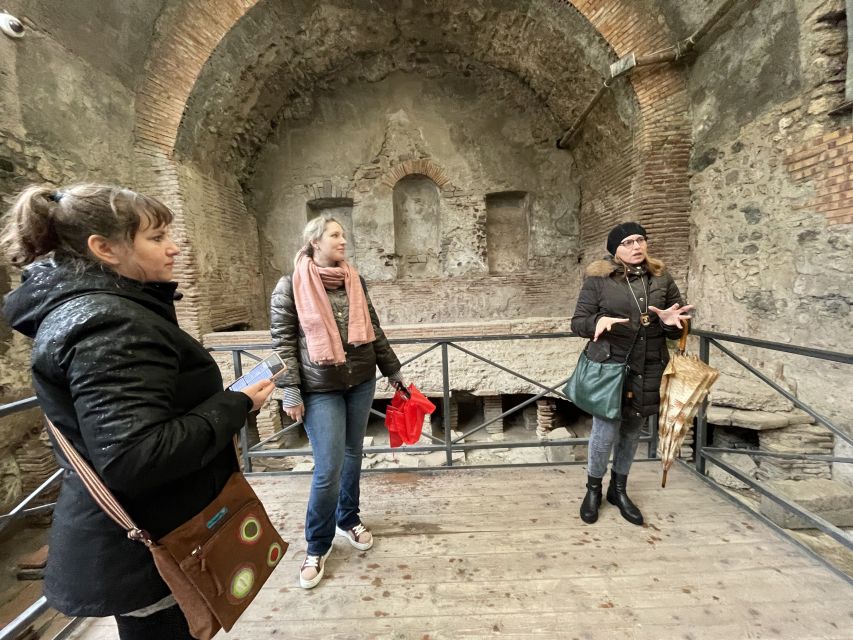
Pompeii isn’t just a big museum site. It’s a town plan with neighborhoods, daily routines, and social life carved into stone. Without help, it can turn into a lot of walking and guessing: What was this room used for? Why does this mosaic matter? What does a collapsed doorway tell you?
A good Pompeii guide does two jobs at once. First, they help you locate yourself in the city layout—so you stop feeling lost inside the ruins. Second, they explain what you’re seeing in plain terms, including how volcanic ash preserved buildings and people when Mount Vesuvius erupted in 79 AD. That’s the difference between seeing artifacts and understanding a lived environment.
You can also read our reviews of more tours and experiences in Naples.


Skip-the-line value: what you gain in 2 hours
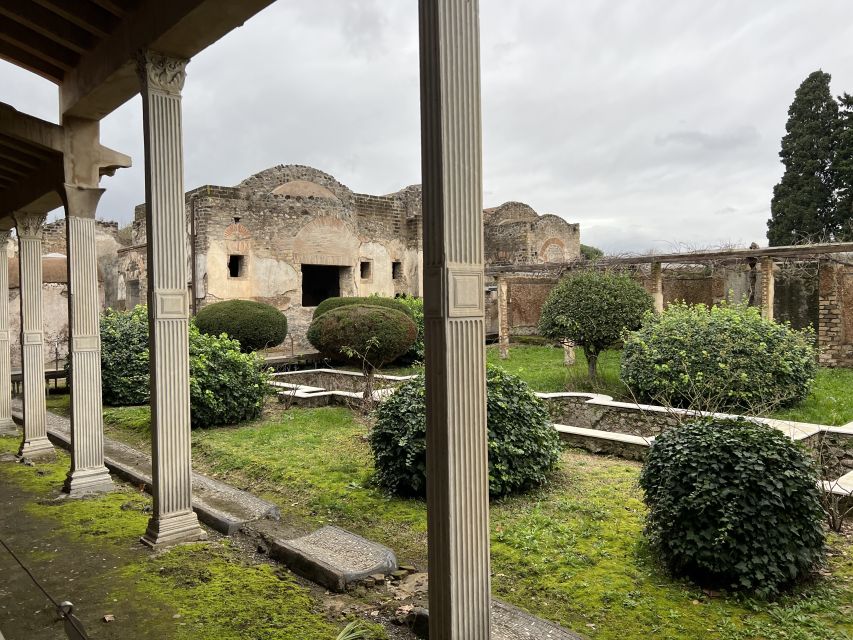
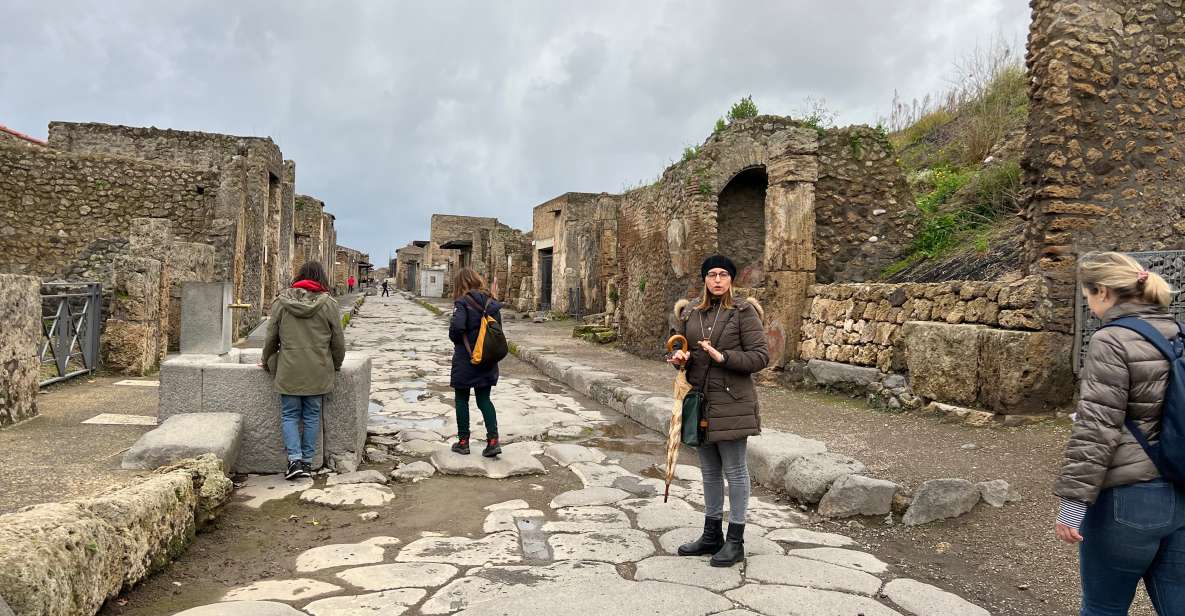
Pompeii is huge, and lines can eat your energy. This tour includes pre-reserved tickets plus skip-the-line entry through a separate entrance. That matters because you’re buying back your most limited resource: usable time inside the park.
At about 2 hours, the tour is short on paper but practical in reality. You’re not trying to “do everything.” Instead, you’re covering the standout landmarks and the themes that connect them—public entertainment, religion, private homes, and everyday services like the snack-and-drink spots (think thermopolia). Then you have a second phase: keep exploring at your own pace after the guided portion ends.
Meeting at Piazza Immacolata: find the sign fast
The tour meets at Piazza Immacolata, just opposite the entrance gate of Piazza Anfiteatro. Your guide will be near a statue of the Virgin Mary holding a sign that says Walks In Europe.
Arrive 5 to 10 minutes early. This isn’t just for etiquette. The tour is time-sensitive, and it’s not possible to join after it starts. If you’re coming from Naples or Sorrento, pad your transit time so you’re not sprinting to find your group.
Pompeii Archaeological Park: your first 10 minutes set the tone
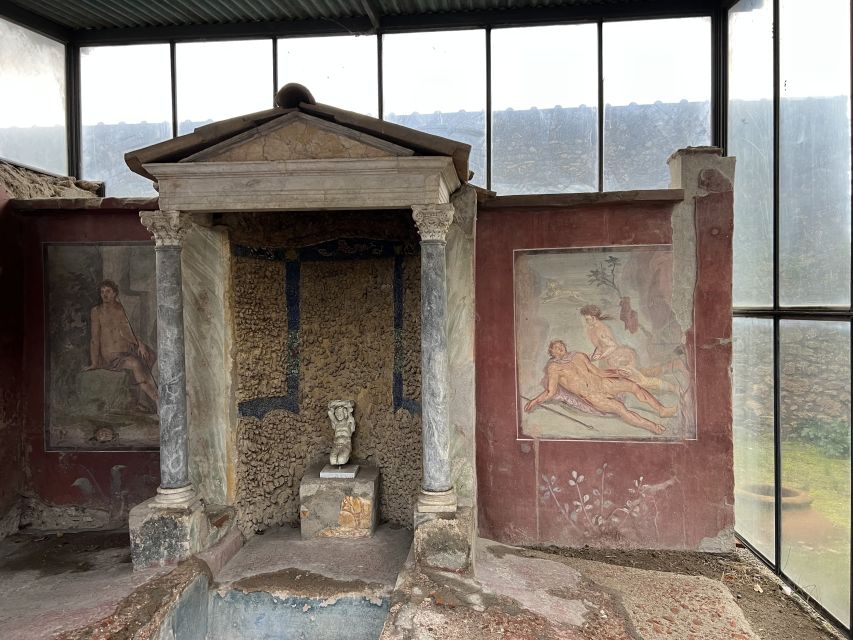
At Pompeii Archaeological Park, you get an initial guided orientation plus a short walk to settle into the site. This is where your guide typically helps you understand how the town is laid out and what to focus on.
A big advantage of starting with a structured route: you don’t waste your first minutes wandering into the “wrong” parts of the city for the story you want. You’ll also learn what to look for in preserved features—floor mosaics, doorways, and the way streets open up into public squares.
Amphitheater of Pompeii: gladiator theater, minus the guesswork
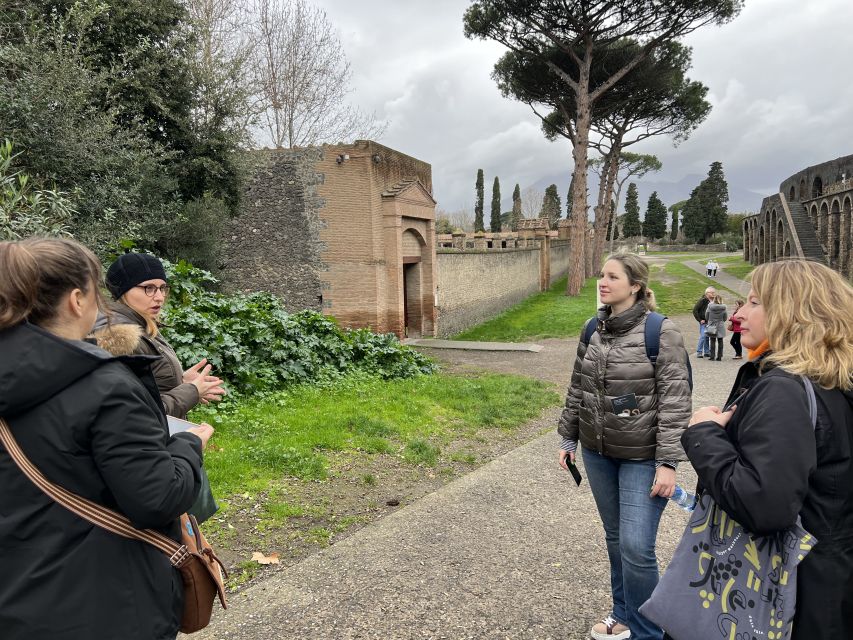
The first major stop after your entry walk is the Amphitheater of Pompeii. This is the place where crowds imagined spectacle—gladiators, music, and the roar of a packed venue. Your guide brings the space to life by explaining what this arena meant socially, not just architecturally.
What you’ll enjoy most here: the scale. Even in ruin, the amphitheater layout communicates how the city used entertainment as a public bond. You’ll also get a better sense of how Pompeii’s streets connected back to large gatherings.
Possible drawback: the amphitheater is outdoors and can be exposed. Wear sun protection and be ready for steady walking right after entry.




House of the Faun: mosaics and the private side of power
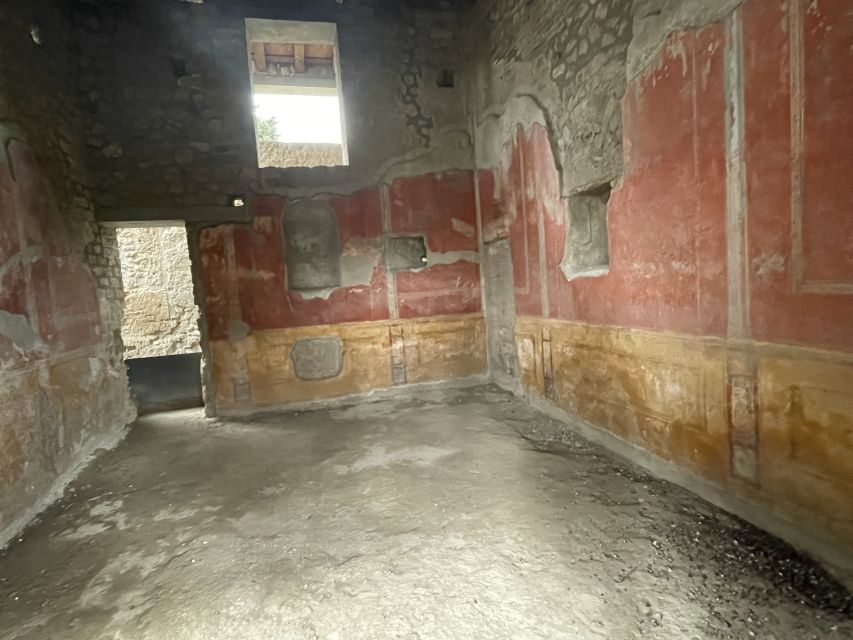
Next up is the House of the Faun, one of the most famous residences in Pompeii. This stop shifts the mood. Instead of civic space, you’re looking at wealth, taste, and daily routines behind a doorway.
The big draw is how homes show status. Floor plans, entrances, and decorative elements like mosaics communicate a lifestyle—how people entertained visitors and how private space worked. Your guide’s explanations help you read those details quickly so you don’t just admire pretty floors without context.
Why it’s worth it: it’s the easiest way to see that Pompeii wasn’t only temples and streets. It was also private life—family rooms, guest spaces, and artistic expression.
Temple of Apollo: religion as street-level architecture
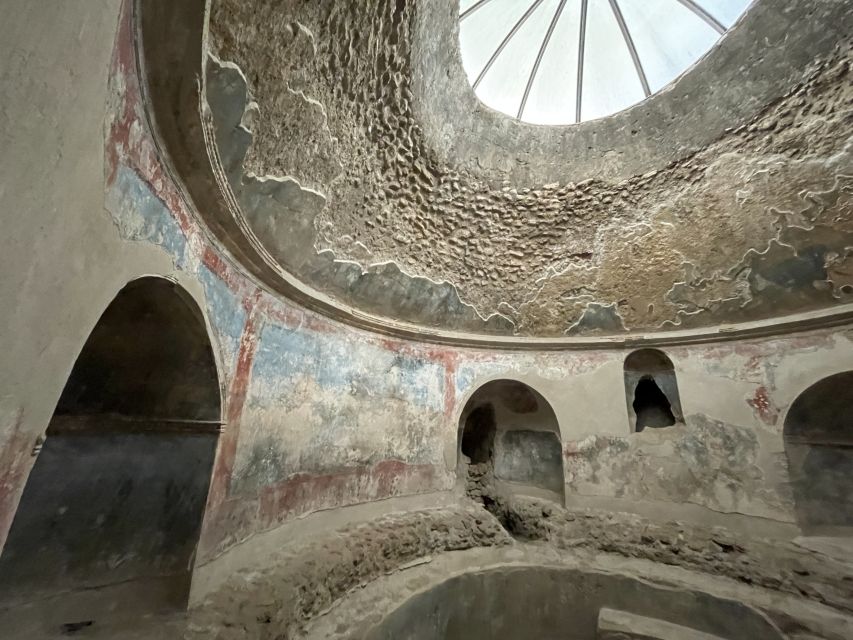
The Temple of Apollo is a key religious stop, and your guide connects it to the wider town. This is where Pompeii feels like a functioning city, not a pile of stone.
You’ll likely spend around 20 minutes here, and the guidance matters because temples can look similar until someone points out what makes this one significant—its setting, purpose, and the way religious practice shaped public life.
What to watch for: how the temple relates to the surrounding street network. Your guide helps you connect the idea of worship with the movement of people through the city.
Vetutius Placidus House and Thermopolium: everyday food, not just statues
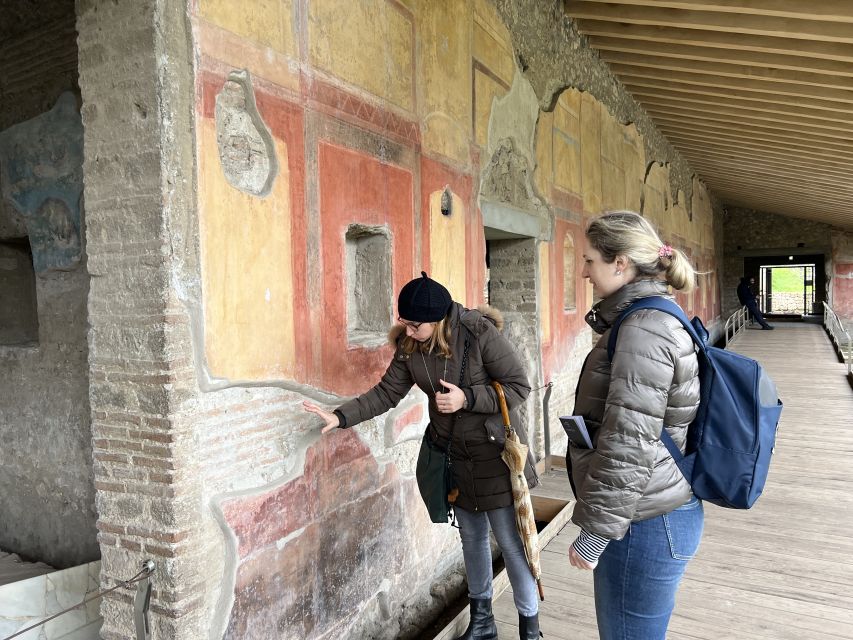
This is a smart stop because it’s about routine. The Vetutius Placidus House shows domestic architecture, while the thermopolium gives you a glimpse into places where people ate and bought ready-to-go food.
Even if you’re not a “food history” person, this part is memorable because it’s practical. You start thinking like a resident: Where would someone grab a bite? How did they socialize? How did commerce work at street level?
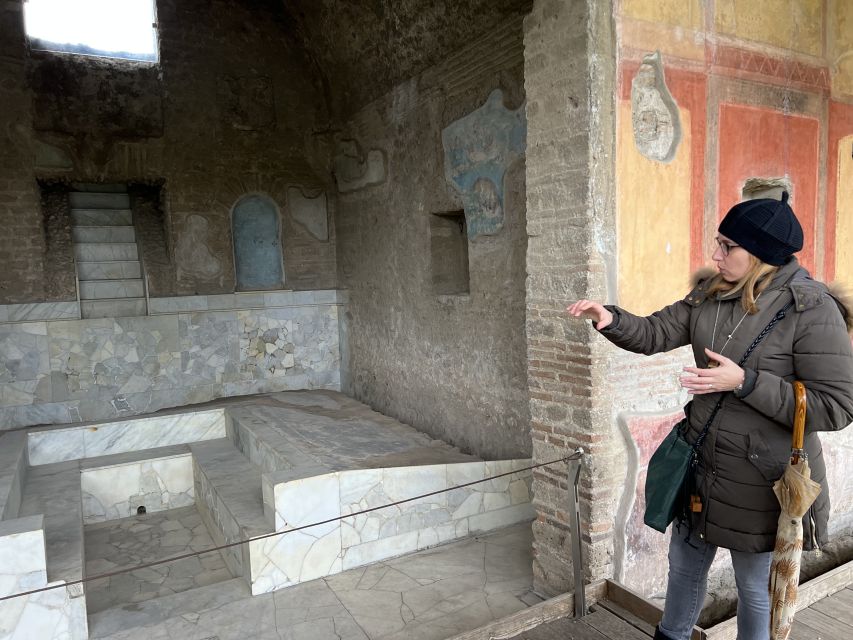
If you like details: some guides point out features that people miss, like the function of rooms and the clues left by daily transactions. It’s the kind of stop that makes Pompeii feel real.
Garden of the Fugitives: the human story behind the ruins
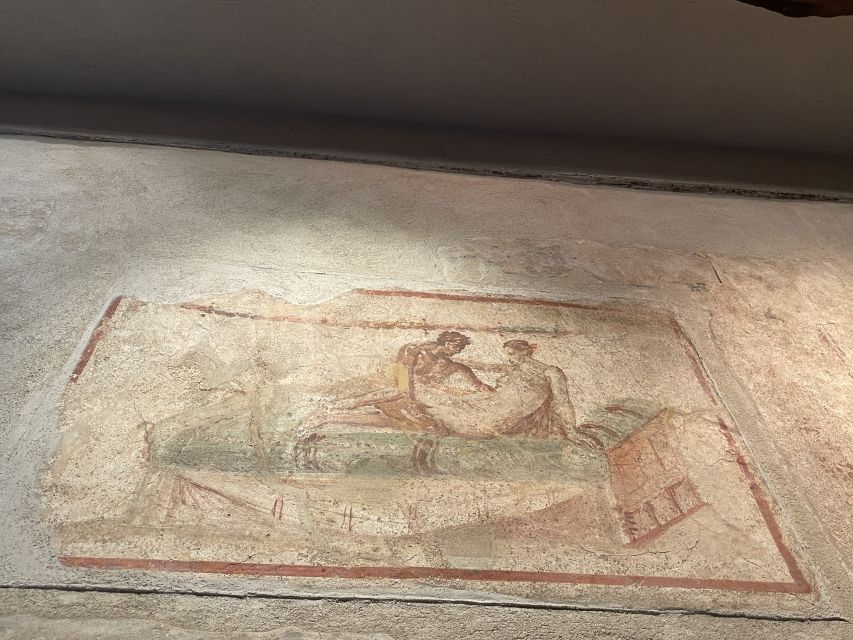
The Garden of the Fugitives is one of the most emotionally heavy places in Pompeii, and a guide’s tone matters. This stop helps explain what happened in 79 AD and why victims and their final moments became part of the site’s lasting record.
Your guide will connect the volcanic ash preservation to the visible remains—explaining not only what you’re seeing but why it matters. That’s the difference between viewing dramatic remains and understanding the tragedy as part of a city history.
Practical note: this area can feel crowded depending on the day. Keep an eye on your footing and be patient when people stop for photos.
Foro Civile di Pompei: ending at the city heart
You finish with the Foro Civile di Pompei, the civic heart of town life. Ending here is a smart way to close the loop. You’ve seen entertainment, wealth, religion, and daily services. Now you’re back at the place where public power and civic identity came together.
In about 20 minutes, your guide walks you through the spaces that made Pompeii work as a community. Expect explanations that tie architecture to social meaning—what people did there, why the forum mattered, and how it anchored the city’s rhythm.
What “small-group” usually means in practice
This is a private group experience, and the tour is described as a small-group guided tour with skip-the-line tickets. In real life, that usually translates to a calmer walk and more back-and-forth time with your guide.
Some guides are also known for adapting the route to your group’s interests and the day’s crowd pattern. If your guide mentions an alternate path or a slightly different order of stops, it’s not random. It’s often a way to keep you moving efficiently through Pompeii’s biggest bottlenecks.
Price and value: is $282.08 per group fair?
The listed price is $282.08 per group, up to 2 people, for a ~2-hour guided visit. That price is less about “cheap history” and more about paying for three things you’ll feel immediately:
- Time saved from skip-the-line entry
- A guide who makes sense of the ruins, so you don’t lose your day to confusion
- A tight route that hits major landmarks without requiring you to master Pompeii’s layout on your own
If you were to do Pompeii independently, you could save money on the guide fee—but you’d also likely spend more time figuring out what matters and how the pieces connect. For many first-timers, a guided format is the better value because you leave understanding the city instead of just collecting photos.
Where it really shines: if you care about details like mosaics, public entertainment, and what everyday places (like the thermopolium) reveal about daily life.
Guide quality: names you might meet
Guide styles can vary, and it shows. This tour’s reviews highlight strong communication from guides including Glauco, Vito, Alicia, Alessia, Laura, and Kiara. Common threads across their feedback: clear explanations, good English, a sense of humor, and a willingness to answer questions.
One useful example: Vito has been known to share practical ideas for where to walk next, including a recommendation to use a platform area while archaeologists work. That kind of detail is exactly why a guided start helps—you get a smarter follow-up visit instead of stumbling around afterward.
What to bring so the tour stays comfortable
This is an outdoor walking experience at a major archaeological site. Bring:
- Hat
- Water
If you run hot easily, plan for sun and uneven terrain. Your tour is only 2 hours, but it’s still a solid amount of walking right after you enter.
Also keep your expectations realistic: the tour is not suitable for wheelchair users.
Who should book this Pompeii tour (and who might not)
You’ll get the best value if you:
- want the main Pompeii highlights without planning a route yourself
- prefer a guided explanation over wandering
- like mosaics, public buildings, and the story of daily life in Roman times
- travel with a partner or small group and want a more personal pace
You might skip this format if you:
- are extremely price-driven and prefer self-guided exploring
- need accessibility accommodations beyond what’s supported here
- want a long, slow visit. This is 2 hours of guided structure, then you’re on your own.
Should you book this Pompeii small-group tour?
Yes, if you’re visiting Pompeii for the first time and you want to understand what you’re seeing fast. The skip-the-line access plus a guide-led route through major landmarks is a straightforward way to avoid wasting your limited time in queues and uncertainty.
If you’re going, my advice is simple: arrive early at the meeting point near the statue of the Virgin Mary with the Walks In Europe sign, bring a hat and water, and think of the tour as your foundation. Once you finish at the forum, you’ll be in a great position to keep exploring with far better context than you’d have from a self-guided start.
FAQ
How long is the Pompeii small-group guided tour?
The guided tour lasts about 2 hours.
Is there skip-the-line entry?
Yes. The tour includes skip-the-line access with priority tickets and entry through a separate entrance.
Where do I meet the guide?
Meet at Piazza Immacolata, just opposite the entrance gate of Piazza Anfiteatro. The guide is by the statue of the Virgin Mary holding a sign that says Walks In Europe.
What’s included in the price?
You get entry ticket access to Pompeii plus a guided tour, with pre-reserved tickets that include skip-the-line access.
Is hotel pickup included?
No. Hotel pickup and drop-off are not included.
What should I bring?
Bring a hat and water.
Do I need ID to enter Pompeii?
Yes. All visitors, including children, must provide a valid ID upon entry to the Pompeii Archaeological Site.
Is this tour wheelchair accessible?
No, it is not suitable for wheelchair users.