REVIEW · TRIESTE
Private Trieste Sightseeing Tour
Book on Viator →Operated by Discover Friuli · Bookable on Viator
Trieste reveals itself in a single uphill walk. This private sightseeing route links the Roman roots of the city with the Byzantine-and-medieval treasures of San Giusto, then drops you into neighborhoods shaped by trade, empire, and the sea. I especially like the way the guide keeps the story moving stop to stop, and I love the included cafe break at Caffè Tommaseo—an easy way to slow down without losing momentum.
There is one real consideration: expect hills and curving streets. If you’re not comfortable walking uphill (even for short stretches), plan for slower steps and good shoes, since this itinerary climbs from the waterfront up to San Giusto.
In This Review
- Key points to know before you go
- Getting your bearings at Piazza Unità d’Italia
- Colle di San Giusto: Roman forum, castle exterior, and a cathedral with mosaics
- Richard’s Arch and the Roman Theatre: quick stops with big payoff
- Arco di Riccardo
- Teatro Romano di Trieste
- The Jewish ghetto area: walking through a tough chapter of city life
- Piazza dell’Unità’s “grand square” energy and the old trade center
- Borgo Teresiano: the Theresian district and its mix of streets and churches
- Teatro Verdi and Caffè Tommaseo: opera outside, coffee inside
- Greek Orthodox Church of Saint Nicholas and the sea finish at Molo Audace
- The private guide experience: pacing, tailoring, and real personality
- Price and value for $133.03 per person
- Dress code and practical walking tips that actually help
- Who should book this tour (and who might skip it)
- Should you book this Private Trieste Sightseeing Tour?
- FAQ
- How long is the private Trieste sightseeing tour?
- What is the price per person?
- Is this tour private or shared?
- Is hotel or port pickup included?
- Is there a dress code?
- What if I need to cancel?
Key points to know before you go
- A tight 2.5-hour highlights loop that hits ancient, medieval, and 18th–19th century Trieste without long detours
- San Giusto hill views and top sights: castle exterior, the cathedral’s mosaics, and Roman ruins
- A stop-by-stop feel with small “anchor” monuments like Arco di Riccardo and the Roman theatre
- Culture in layers: Jewish ghetto area, Greek Orthodox St. Nicholas, and opera-house Trieste
- Caffè Tommaseo is part of the experience, not an afterthought
- Finishes with sea air at Molo Audace, with sunset-friendly views back to the city
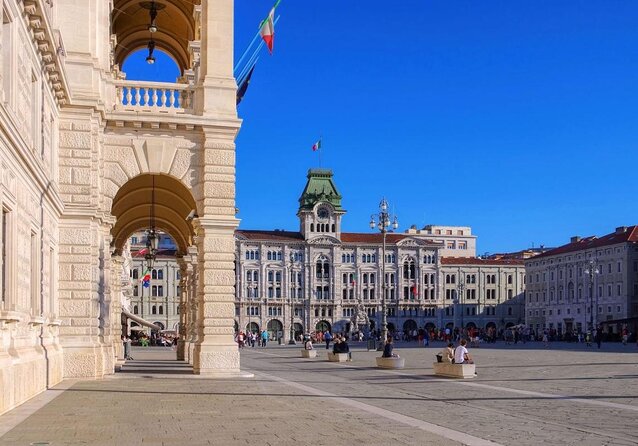
Getting your bearings at Piazza Unità d’Italia
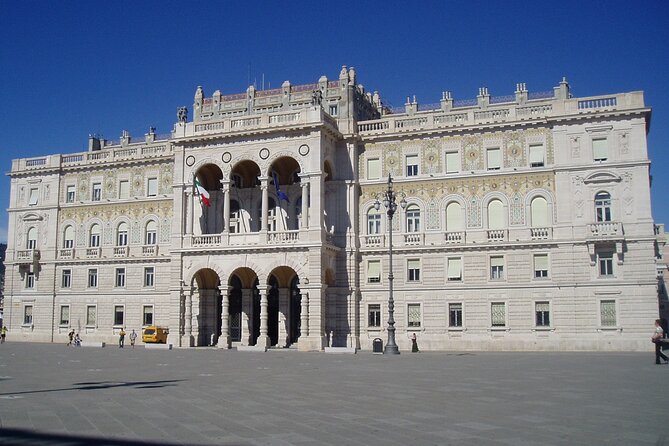
Your tour starts in Piazza Unità d’Italia (right by the waterfront). This big, dramatic square gives you an instant sense of Trieste: classic elegance up front, sea views right there, and a city that always seems to be looking outward.
From the start, the format is built for first-timers. You’re not just “seeing points on a map.” You’re learning how they connect—why these buildings sit here, and why this city grew the way it did.
You can also read our reviews of more tours and experiences in Trieste.
Colle di San Giusto: Roman forum, castle exterior, and a cathedral with mosaics
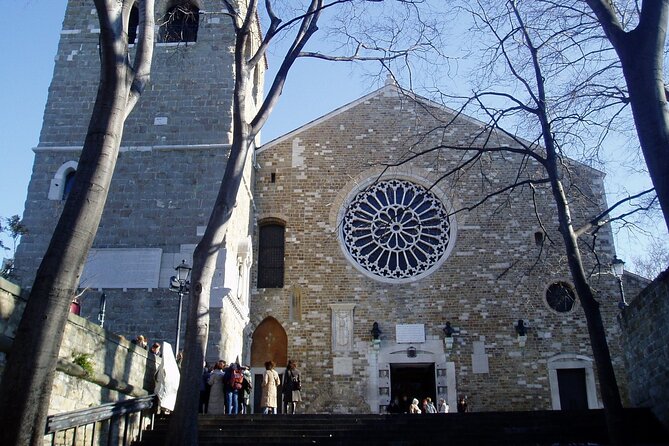
The climb up to Colle di San Giusto is the heart of the route. This hill is Trieste’s old backbone—Roman ruins, medieval power, and religious art all stacked in one place.
At San Giusto, you’ll spend about 30 minutes taking in:
- The ancient Roman ruins, including the ancient Civil Basilica and the forum area
- The medieval castle exterior (you’re viewing the structure, not doing a deep interior tour here)
- The Cathedral of San Giusto, known for Byzantine mosaics and medieval frescoes
What I like about this stop is the contrast. You go from Roman stone foundations to medieval church art that feels almost transported from another world. And the location is practical: even without trying, you get a strong “why Trieste is shaped like this” perspective.
Richard’s Arch and the Roman Theatre: quick stops with big payoff
After the cathedral area, the tour keeps a good rhythm with smaller monuments.
Arco di Riccardo
Richard’s Arch is brief but memorable—the most ancient monument in Trieste, set in the older parts of town. In a tour that’s 2.5 hours total, this kind of stop matters. It gives you a “checkpoints” feeling so your brain can file the city into eras fast.
Teatro Romano di Trieste
Then comes the Roman theatre (dating to the 1st century), described as one of Trieste’s most impressive archaeological sites. Even if you don’t know Roman architecture, you’ll come away with a sense of scale and design—this wasn’t a tiny outpost.
These two stops work especially well back-to-back because they share a theme: Trieste wasn’t always “Trieste.” It had a role in a much older network.
The Jewish ghetto area: walking through a tough chapter of city life
Next is the Jewish Ghetto of Trieste. It’s only a short stop, but it’s not a throwaway detail. This is one of those places where the goal isn’t just a photo—it’s context.
I like that the itinerary includes it without rushing past it. The area helps you understand Trieste as a port city with complex communities, not just an Italian sightseeing stop.
If you’re sensitive to heavy historical themes, give yourself a moment here. Even a brief visit can help you connect what you’re seeing to the stories you’ll hear from the guide.
Piazza dell’Unità’s “grand square” energy and the old trade center
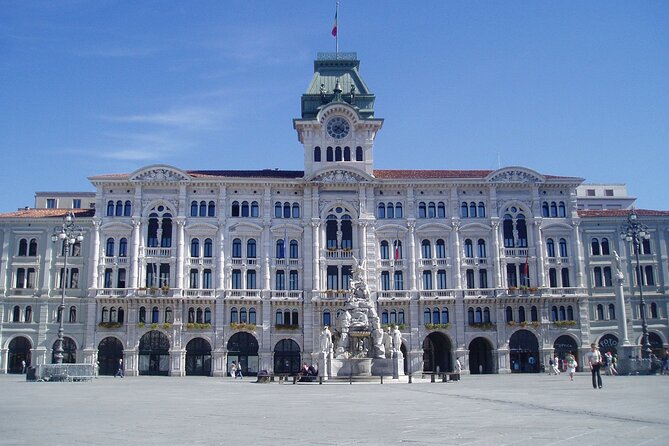
Trieste’s main square is more than pretty architecture. It’s a social and civic stage, with historic cafés and elegant buildings facing the sea.
From there, the tour moves to Borsa Vecchia (Piazza della Borsa), dominated by the Old Stock Exchange building. This was the city’s trade center throughout the 19th century.
This stop is valuable because it explains why Trieste feels different from many other Italian towns. The city’s identity is tied to commerce and cross-border influence—more than just agriculture or small-town rhythms. You end up understanding the “why” behind the buildings, not just admiring them.
Borgo Teresiano: the Theresian district and its mix of streets and churches
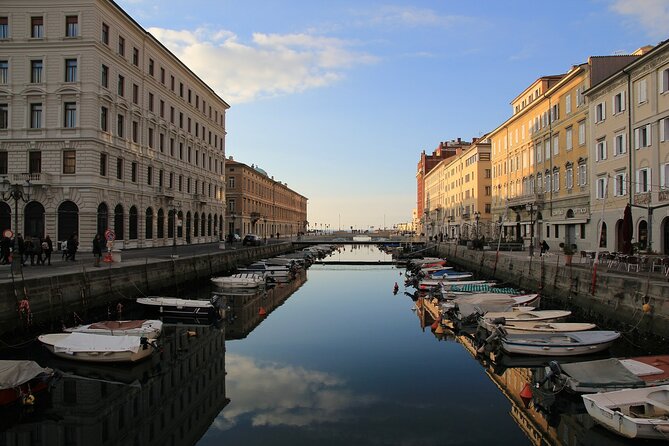
About halfway through, you shift to Borgo Teresiano, the Theresian district. Expect a long-feeling neighborhood stroll (around 30 minutes), focused on the district’s shape and character.
What makes this area interesting is the layout and the mix of religious architecture:
- An orthogonal street network (straight lines, planned urban feel)
- Elegant buildings
- Greek and Orthodox churches
- Historic cafés
- A lively sense of everyday life
This is a great section if you like walking where locals walk. You’ll also get the “Trieste is layered” theme again: different communities, different faiths, all within one city fabric.
Teatro Verdi and Caffè Tommaseo: opera outside, coffee inside
Trieste’s opera world shows up at Teatro Verdi, built at the end of the 18th century. It’s one of the oldest running opera houses, and even a quick stop tells you the city took performance seriously long before it became a tourist habit.
Then comes the included cafe moment: Caffè Tommaseo. It’s famous as the oldest café in Trieste, founded in 1830. The setting is part of the draw, with elegant interiors and refined details.
This cafe stop is more than a break on paper. In real life, it helps you reset your pace. After Roman stones, mosaics, and ghetto streets, you’ll appreciate sitting down for a coffee and taking in the harbor-side energy.
In particular, I’d plan to order something light if you’re hungry. The tour is set up so the cafe fits as a pause—not a full meal interruption.
Greek Orthodox Church of Saint Nicholas and the sea finish at Molo Audace
The route ends with one of Trieste’s best “wow” interiors: the Greek Orthodox Church of Saint Nicholas. Built at the end of the 18th century, it features a neoclassic façade and an interior rich with gilded icons and impressive paintings.
Even if churches aren’t usually your thing, this stop can work because the itinerary gives it time to land. You aren’t rushing from one exterior view to the next—you’re ending with a moment of visual richness.
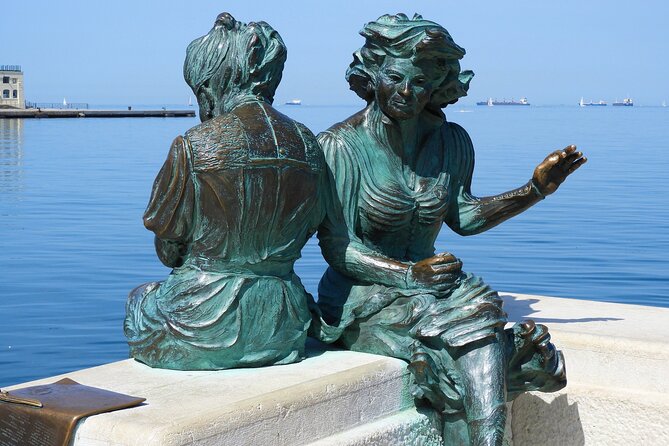
Finally, you wrap up at Molo Audace (Molo S. Carlo). This pier sits opposite the main square, with views back toward the city seafront. It’s also a classic place for sunset vibes over the Gulf of Trieste.
The ending is smart. You’ve built Trieste’s story inland first, then you finish where the city breathes: by the water.
The private guide experience: pacing, tailoring, and real personality
This is a private walking tour, meaning it’s just your group. That matters more than it sounds. When the guide can adjust to your pace and interests, the stops feel connected instead of like a checklist.
Guides associated with this experience (including Sonia/Sonja/Sonya, Christina, Gabriella, and Jerome) have been praised for story-driven explanations and good pacing. I like that they also take special interests into account when you book—art, architecture, history, culture—so you’re more likely to hear what you actually care about.
If you’re traveling with kids (11 and under), they can be free when accompanied by a paying adult. That’s useful for families who want city context without paying full price for everyone.
Price and value for $133.03 per person
At $133.03 per person, the price is clearly meant for people who want guidance and convenience—not just a self-guided walk.
Here’s where the value shows up:
- You’re paying for a professional guide who connects sites across centuries
- You get hotel/port pickup to start smoothly
- You get an included cafe stop (so you don’t have to plan that break on the fly)
- You’re doing a dense route in about 2.5 hours, which is helpful if you have limited time in Trieste
Is it the best deal if you’re on a tight solo budget and love maps? Probably not. But if you want a clear orientation fast—especially if you care about art, architecture, or city history—this price can feel fair.
Also, the itinerary includes stops where entry is listed as free on the route. That reduces the “surprise costs” feeling you sometimes get with guided city tours.
Dress code and practical walking tips that actually help
This tour has a dress code for places of worship and selected museums: no shorts or sleeveless tops, and knees and shoulders must be covered for both men and women.
So if you’re visiting in summer, pack light layers. It’s the kind of rule that can ruin your plan if you’re caught off guard.
A few other practical ideas:
- Wear supportive shoes. The route climbs up to San Giusto.
- Bring water, especially in warmer months, since it’s walking and exposed at parts.
- If you need a slower pace, tell the guide early. Private tours can adjust, and you’ll enjoy it more when you’re not rushing.
Who should book this tour (and who might skip it)
I think this tour suits:
- First-time visitors who want a smart overview fast
- People who like architecture and art (mosaics, icons, church interiors)
- Travelers who want Trieste’s mix of Roman, Jewish, Greek Orthodox, and Austro-Hungarian-era influences in one pass
- Couples and small groups who want flexibility with a private guide
You might skip it if:
- You prefer a long, unguided wander with no structure
- You dislike hills and don’t want to modify pace
- You want lots of interior museum time (this route focuses on guided stops across multiple areas within a tight window)
Should you book this Private Trieste Sightseeing Tour?
If you want Trieste to make sense quickly, I’d book it. The itinerary is efficient, the sights are varied, and the pacing is designed for a two-and-a-half-hour orientation: hilltop beginnings at San Giusto, old-city monuments, cultural stops, then a calm finish by the sea at Molo Audace.
If your idea of a great day is getting context while you walk—without spending hours planning—this is a strong choice.
FAQ
How long is the private Trieste sightseeing tour?
It runs about 2 hours 30 minutes.
What is the price per person?
The price is $133.03 per person.
Is this tour private or shared?
It’s private. Only your group participates.
Is hotel or port pickup included?
Yes. Hotel/port pickup is offered, and the tour ends back at the meeting point. Hotel drop-off is not included.
Is there a dress code?
Yes. For places of worship and selected museums, knees and shoulders must be covered. Shorts and sleeveless tops are not allowed.
What if I need to cancel?
You can cancel for a full refund up to 24 hours in advance of the experience’s start time.