REVIEW · VENICE
Private Venice Canal Cruise: 2-Hour Grand Canal and Secret Canals
Book on Viator →Operated by Avventure Bellissime · Bookable on Viator
Water taxis in Venice feel like time travel. This 2-hour cruise is a smart first-weekend orientation, mixing the big postcard views with quieter neighborhoods like Cannaregio and the Jewish Ghetto. You also pass through Porta dell’Acqua to reach the Arsenale shipyard area, then end up on the Grand Canal with a view of Rialto from the water.
What I really like is the route balance. You get the skyline moments (St Mark’s area and Doge’s Palace from the water) plus practical street-level context when you step off in the Ghetto for 15–20 minutes. I also love the mix of Venice past and present: you see Venice’s shipyard legacy at the Arsenale and then a working gondola craft setting in Dorsoduro.
One possible drawback: the boat is small, so seating and sightlines can get tight depending on how many people are aboard at the open-air parts. If you’re picky about photos, plan to stand where you can see, and accept that you might not have a perfect view from every seat.
In This Review
- Key Things to Know Before You Go
- First-Day Venice Wins: Why This Route Feels Efficient
- Getting on Near St Mark’s: Where Your Trip Starts Matters
- St Mark’s Area to Rialto Bridge: Your Big Views, Without the Crowds
- Porta dell’Acqua and the Arsenale: Venice’s Shipyard Power Zone
- The Jewish Ghetto Stop: Brief Walk, Strong Context
- Cannaregio Back Canals: Seeing Venice Beyond the Main Loop
- Dorsoduro and the Gondola Workshop: Craft, Not Just Boats
- The Grand Canal Finish: Opulence, Scale, and Rialto Under Your Feet
- Price and What You’re Really Paying For (Including $521.33)
- Boat Comfort, Hearing the Guide, and How to Avoid Frustration
- Who This Tour Fits Best
- Should You Book This Private Venice Canal Cruise?
- FAQ
- How long is the Private Venice Canal Cruise?
- Where does the tour meet and end?
- Is the tour offered in English?
- What stops are included during the cruise?
- How much time do you spend in the Jewish Ghetto?
- Is pickup from your hotel included?
- What happens if the weather is bad or there is high water?
Key Things to Know Before You Go
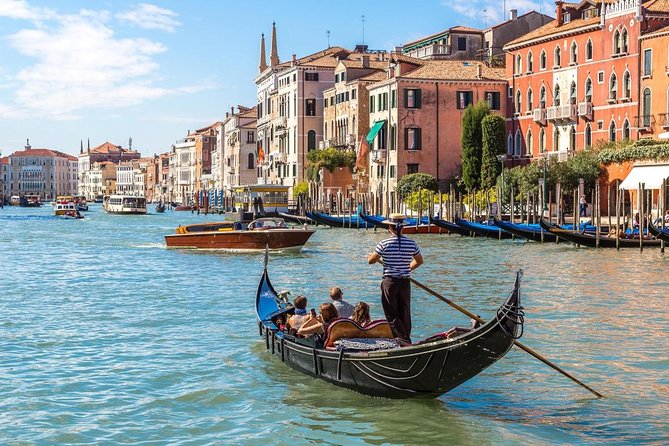
- St Mark’s departure with views from the water: you skip the slog and start with a clean waterfront perspective.
- Porta dell’Acqua + Arsenale shipyard area: a rare-feeling look at a place tied to Venice’s maritime power.
- Jewish Ghetto walk time: short enough to fit the cruise, long enough to orient yourself and take meaningful photos.
- Dorsoduro gondola workshop stop: you see craft in action, not just boats as scenery.
- Grand Canal finale under Rialto: you still get the iconic stretch, just with better context first.
- Small-group feel (often around 8–9): that’s good for conversation, but it can mean tighter viewing.
First-Day Venice Wins: Why This Route Feels Efficient
Venice can overwhelm you fast. Streets twist, landmarks feel far apart, and you spend more time figuring out where you are than appreciating what’s around you. This cruise tackles the biggest problem by moving you by boat, then pairing boat views with two short on-land moments where you can actually register what you’re seeing.
The itinerary is built around “city understanding,” not just sightseeing. You start near St Mark’s, then you slide away from the usual camera path into districts that feel more like lived-in Venice. When you finally reach the Grand Canal segment, it lands better because you already understand how Venice’s neighborhoods relate to its water routes.
Also, the tour is offered in English, and the plan is designed for a smooth flow: boat to shipyard zone, boat to Ghetto, short walk, then back to canals and the Grand Canal finish.
You can also read our reviews of more tours and experiences in Venice.
Getting on Near St Mark’s: Where Your Trip Starts Matters
Your meeting point is Giardini Reali, P.za San Marco. That’s close enough to St Mark’s Square that you can feel oriented right away, even before you start walking through the busiest areas. The tour ends back at the same meeting point, so you’re not left far from where you started.
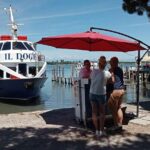
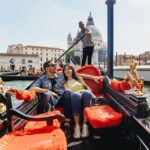
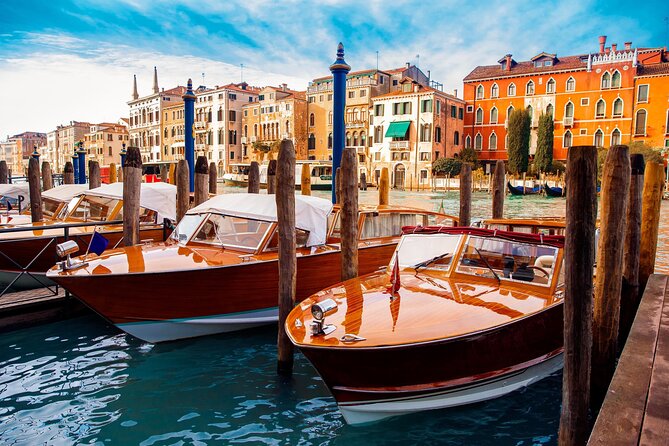
You’ll board a luxurious motor-launch (the same size category that Venice uses for water taxi-style touring). Expect a compact setup where the best views are usually from the open-air sections, while the cabin is there for weather or comfort.
One practical tip: dress for the day you’ll actually get. The tour runs in all weather conditions, and during high water they may adapt the route based on conditions. Even if the forecast looks calm, Venice water can be sneaky, so bring layers you can adjust quickly.
St Mark’s Area to Rialto Bridge: Your Big Views, Without the Crowds
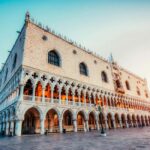
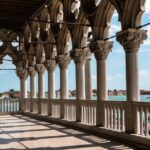
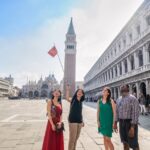
From the water, the St Mark’s area reads differently. You see the waterfront geometry first, then the skyline shapes come into focus—more coherent than trying to piece them together from street-level angles. Part of the plan includes viewing St Mark’s Square and Doge’s Palace from the water, which is an efficient way to get your bearings fast.
As you move along, you’ll also pass by and learn about the Rialto Bridge. Rialto is famous, yes, but the real value here is timing: you experience it as part of a water route rather than as a bottleneck you stand in. From the boat, you can scan the banks and notice which churches and buildings sit right at the waterline.
If you’re a photo person, keep your camera ready during the Grand Canal segments—there are several passes that offer “look up and frame it” moments.
Porta dell’Acqua and the Arsenale: Venice’s Shipyard Power Zone
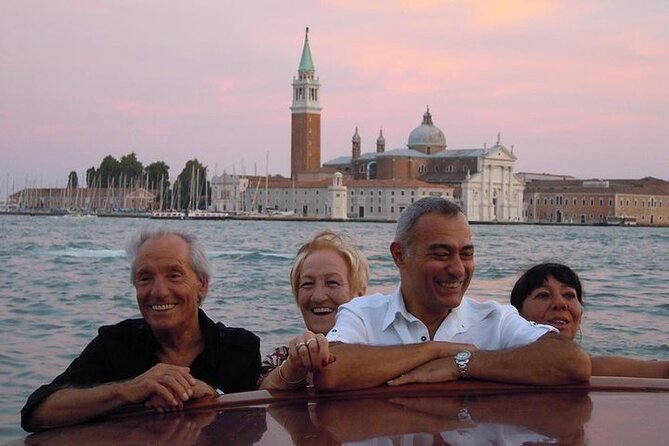
One of the most distinctive parts of this cruise is that you enter via Porta dell’Acqua into the Arsenale area. The Arsenale is Venice’s historic shipyard and naval depot, dating back to the 12th century. It’s the kind of place that sounds like pure history until you realize how much Venice depended on ships, labor, and water logistics to be a maritime superpower.
What I like about this stop is that it changes the story. Instead of Venice as art and romance only, you get Venice as an engineering and workforce city. The boat approach also helps: you’re moving through the space like a sailor or dock worker would, not like a tourist trying to “cover it all” on foot.
If you enjoy theme-based travel—history, industry, and how places worked—this section is a strong reason to choose this cruise over a standard Grand Canal ride.
The Jewish Ghetto Stop: Brief Walk, Strong Context
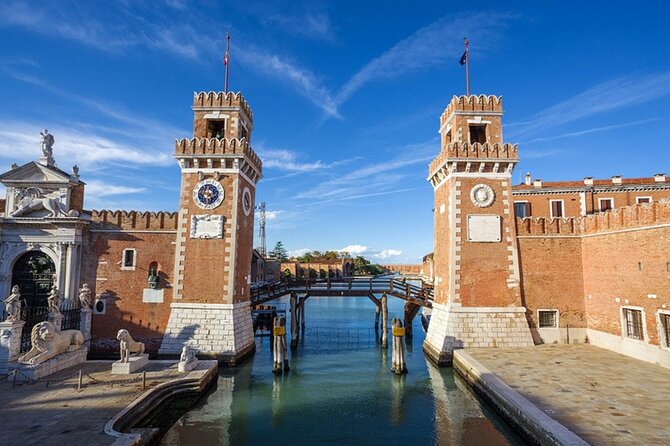
The tour includes a stop at Ghetto Ebraico for 15–20 minutes. That time window is enough for orientation and a quick photo moment around the main square area, without turning your afternoon into a long museum appointment.
This is one of the best spots for doing a little mental preparation before you board. The Ghetto is not just a visual landmark; it carries deep historical meaning tied to Venice’s governance and community life over centuries. A short guided walk helps you understand what you’re looking at before you scatter on your own.
From the tour experience described here, the guide also uses the time to explain how the area came about and how it changed over the years. That kind of explanation matters because the Ghetto can feel confusing if you only see it as a postcard stop.
Practical note: since you’re only on land for a short period, wear shoes you can move in. You’ll want to walk calmly but with purpose, then return to the boat on time.

Cannaregio Back Canals: Seeing Venice Beyond the Main Loop
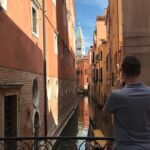
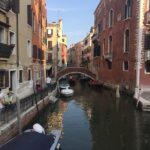
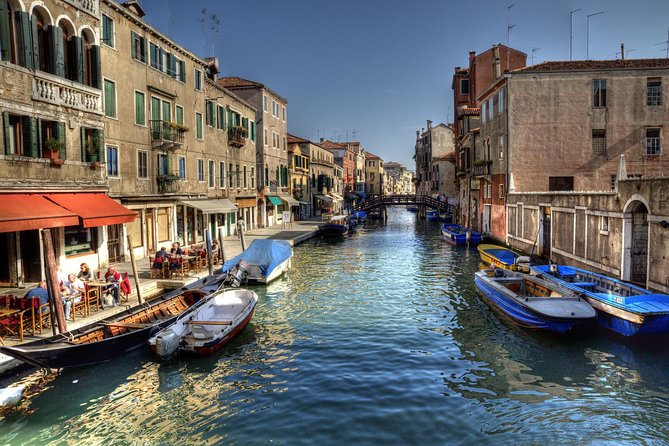
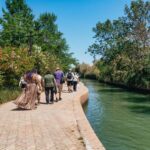
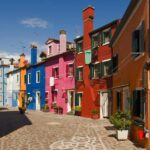
After the Ghetto, the cruise keeps you in “less main-route” territory by moving through canals of Cannaregio and other quieter zones. Cannaregio is a good example of why Venice feels like more than one city. It’s not just the famous sights—you get the everyday canal atmosphere that makes Venice feel like a living waterworld.
A key detail: this part of the route is described as “secret canals,” but practically that means off the most direct tourist corridors. You’re still going to see canals that plenty of people would miss simply because they are not on the standard walking map. In other words, the magic isn’t that Venice hides streets like a spy movie; it’s that you’re routed differently.
If you’re hoping for constant dramatic turns every few seconds, you might find the pace steadier than a headline promise. But if you’re aiming for real perspective—how narrow waterways link neighborhoods—this is the right time of the trip to appreciate it.
Dorsoduro and the Gondola Workshop: Craft, Not Just Boats
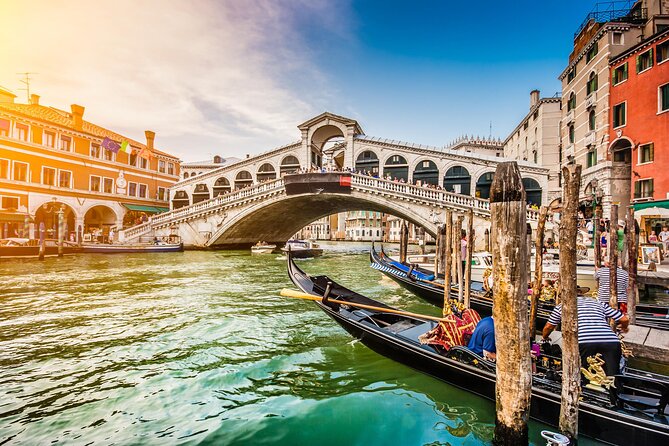
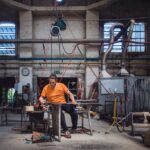
One highlight in the plan is a stop by a gondola shipyard in Dorsoduro. Venice is full of boats, but seeing the craft side—where gondolas are carefully carved and finished by hand—adds a different kind of value.
This stop is where the tour shifts from scenery to process. Instead of treating the gondola as a symbol you pose with, you see it as a crafted object with a workshop workflow. It’s also a good district choice because Dorsoduro is more relaxed than the immediate St Mark’s bubble.
This is also where some guides have been especially praised for storytelling. Names that come up in the experience include Cristina and Christina, who were noted for excellent English and for keeping the right balance of details so you learn without feeling overloaded.
If you’re visiting Venice for the craft culture, make sure you look closely at what’s happening in the workshop area—not only the final gondola shape.
The Grand Canal Finish: Opulence, Scale, and Rialto Under Your Feet
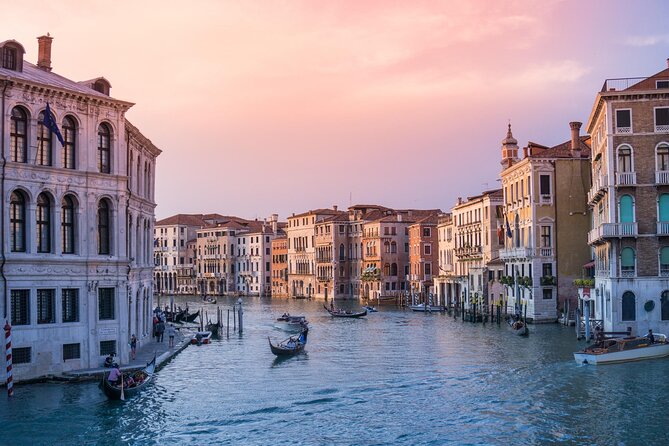
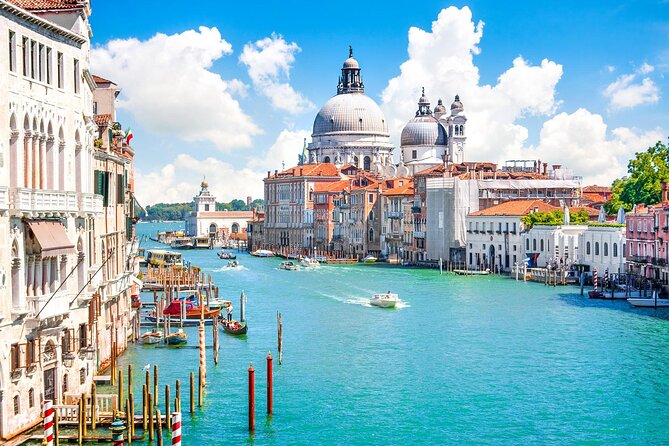
Once the cruise reaches the wider waters, you get that classic Venice impact. The Grand Canal segment includes passes that let you see churches and monumental buildings lining the waterway banks. There’s also a run that takes you past areas such as the Accademia gallery and bridge.
You’ll also pass Ponte degli Scalzi near the train station area. That bridge doesn’t always get top billing, but it’s useful as a landmark because it reminds you the Grand Canal is not one long museum view—it’s part of how the city works.
The cruise also includes sights like Santa Maria di Nazareth, described as a Baroque church you’ll see while cruising down the Grand Canal. Then, near the end, you’ll pass Squero San Trovaso, one of the oldest and still active places where gondolas are built.
This is where the timing of the itinerary pays off. Instead of doing only Grand Canal, you’ve already seen the shipyard legacy and the craft side. So when you get to the opulence stretch, it doesn’t just look pretty—it connects to why Venice built, worked, traded, and traveled by water.
Price and What You’re Really Paying For (Including $521.33)
At $521.33 per person, this is not a cheap add-on. The value is in three things that add up:
First, you’re paying for guided movement plus interpretation. Venice tours that start with a boat but stop at narration-only can feel thin. Here, you have multiple distinct zones—St Mark’s area views, Arsenale/Porta dell’Acqua, a Ghetto walk, canal districts, and then the Grand Canal finale—with an English-speaking guide tying it together.
Second, you get a small boat experience. The tour is described as small-group (often around 8/9 people) and also sold as private for your group. In practice, that tends to mean you get more personal interaction than large-group cruises.
Third, you’re paying for variety in a short time. Two hours in Venice can evaporate fast if you’re walking and getting lost. This itinerary keeps you moving, then gives you a couple quick “land moments” where information sticks.
Still, keep your expectations aligned. This is a cruise, not a full-day tour. You’ll see a lot, but you won’t have time for long museum-style stops. If you want extended time in the Ghetto or a deeper dive into shipyard history on foot, you’d pair this with another visit later.
Boat Comfort, Hearing the Guide, and How to Avoid Frustration
Boat comfort in Venice is a game of tradeoffs. You want open-air views for photos, but open-air space can be limited when the group is packed into a small launch.
Some experiences note that seating and sightlines depend on where you are on the boat. At times, the outside area can feel crowded when everyone tries to stand for the best views. If you know you get uncomfortable in tight spaces, plan for a mix of standing and sitting, and focus on catching the key angles rather than trying to photograph everything continuously.
Hearing can also be affected. One issue mentioned in experience feedback is a driver or person aboard speaking loudly on a phone early in the tour, which made it harder to hear commentary until it stopped. If you notice sound problems right away, alert the guide so they can manage the situation if possible.
Also, be aware that in at least one case the tour time shifted shorter (to about an hour) with advance notice. The plan is listed as about two hours, but Venice logistics can tighten schedules, especially with weather.
Who This Tour Fits Best
This cruise is a strong match if you:
- Want first-day orientation without spending your entire afternoon walking and re-routing.
- Care about more than the main tourist circuit and want to see Venice’s neighborhood water life.
- Like guided context for major sites like the Rialto area, plus meaningful stops like the Jewish Ghetto.
- Are interested in craft history, especially gondola building connected to places like Squero San Trovaso and the Dorsoduro workshop.
It can be a little less ideal if you:
- Expect a long, slow, totally uncrowded countryside-style boat drift.
- Want nonstop “secret canal drama” at every turn.
- Plan to sit the entire time and still get perfect photos from one fixed angle.
Should You Book This Private Venice Canal Cruise?
I’d book this if your goal is smart coverage with real city context in only a couple hours. The combination of Porta dell’Acqua + Arsenale, a Jewish Ghetto walk, and then the Grand Canal finish gives you a story arc, not just scattered highlights. Guides mentioned in the experience—like Georgia, Cristina/Christina, and Sergio—were repeatedly praised for strong English and for making the city feel understandable fast.
Before you commit, I’d also think about your personal comfort level with small boats and shared space. If you’re very photo-driven, go in with a flexible plan: stand when the view is best, sit when you need a breather, and accept that sightlines may shift.
If you want a Venice cruise that helps you understand the city instead of only showing it, this one earns a spot on your list.
FAQ
How long is the Private Venice Canal Cruise?
The duration is listed at about 2 hours.
Where does the tour meet and end?
The tour meets at Giardini Reali, P.za San Marco, 30124 Venezia VE, Italy, and it ends back at the same meeting point.
Is the tour offered in English?
Yes, it is offered in English.
What stops are included during the cruise?
You’ll pass and view areas such as the St Mark’s area and Doge’s Palace from the water, cruise the Grand Canal and minor canals, pass Rialto Bridge, view the Arsenale, stop at the Jewish Ghetto for a walk, and include canal cruising through multiple districts. The route also includes views of places like Ponte degli Scalzi, Santa Maria di Nazareth, and Squero San Trovaso, plus a gondola shipyard stop in Dorsoduro.
How much time do you spend in the Jewish Ghetto?
The Jewish Ghetto stop is around 20 minutes for walking.
Is pickup from your hotel included?
No, hotel pickup and drop-off are not included.
What happens if the weather is bad or there is high water?
The tour operates in all weather conditions. During high water, the tour will take place but may be partly adapted to weather conditions.