REVIEW · RAVENNA
Ravenna: Highlights and Mosaics Guided Tour with Tickets
Book on GetYourGuide →Operated by Walks In Europe · Bookable on GetYourGuide
Ravenna mosaics hit different. This 2.5-hour small-group walk helps you read the city’s Christian and Byzantine artwork fast, with reserved entry to the big sights. I love how the guides explain what you’re seeing, not just what’s there, and I especially like the way you hear symbolism and politics woven into the images at each stop. The one drawback to plan for: you’re on your feet for a solid stretch, and some parts are timed, so you’ll want to arrive early and stay with the group.
I also like the small max-12 group size, because you can actually ask questions while you’re standing inside churches where sound carries and distractions pop up. Guides such as Rita, Marina, and Chiara get singled out for making the mosaics feel clear and personal, even when you’re not already a medieval-art person. And you get a mix of “wow” sites plus a self-paced moment at the Neonian Baptistery.
One consideration before you book: this tour isn’t a casual stroll and it isn’t designed for everyone. It’s not suitable for wheelchair users or people with mobility impairments, and it isn’t aimed at pregnant travelers. If that applies to you, it’s worth looking for a different format or a shorter option.
In This Review
- Key things I’d circle before you go
- Why Ravenna mosaics need a guide (and a small group)
- Starting at Sant’Apollinare Nuovo: your first big page of mosaics
- Dante’s Tomb: the poetry detour that actually makes sense
- Basilica of San Francesco and its underwater mosaics
- Galla Placidia’s mausoleum: where color does the talking
- San Vitale: Byzantine power in an octagonal building
- Neonian Baptistery time on your own (plus a museum add-on)
- How long you’ll walk and stand (and how to stay comfortable)
- Price and value: what you’re actually getting for $70
- Who this tour fits best (and who should rethink it)
- Should you book Walks In Europe’s Ravenna mosaics tour?
- FAQ
- How long is the Ravenna Highlights and Mosaics guided tour?
- What sites are included in the guided portion?
- Is the Neonian Baptistery visit guided?
- Where do we meet, and what time should we arrive?
- Are there any clothing or item restrictions?
- What booking and cancellation options are available?
Key things I’d circle before you go
- Small groups up to 12 so your questions don’t get lost in the crowd.
- Reserved/timed tickets help you skip the usual ticket-line chaos at major sites.
- A guided route through the core monuments: Sant’Apollinare Nuovo, Dante’s Tomb, San Francesco, Galla Placidia, and San Vitale.
- Self-guided Neonian Baptistery time so you can slow down where your eye wants to linger.
- Guides like Rita, Marina, and Chiara are praised for turning mosaic details into understandable story.
- Real-world pacing limits: 2.5 hours walking and standing, with churches where shade and breaks may be limited.
Why Ravenna mosaics need a guide (and a small group)
Ravenna is famous for mosaics, but the difference between looking at them and understanding them is huge. These churches weren’t built for casual sightseeing. They were built for worship, messages, and power. When a guide puts the images into context—who commissioned what, what themes show up where, and how symbols work—you start seeing patterns instantly.
This tour keeps the group tight (max 12), which matters in old town streets and inside echo-y church interiors. You’re not forced into that “watch the leader disappear” rhythm. Instead, you can ask questions and get answers while you’re still facing the art.
Also, this is not a long day. At 2.5 hours, you’ll cover multiple UNESCO-listed monuments without turning Ravenna into a marathon. That time limit can be a blessing, because it gives your brain a structure: you’ll move from site to site like chapters in a book.
You can also read our reviews of more tours and experiences in Ravenna.
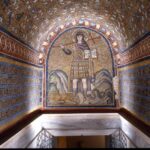
Starting at Sant’Apollinare Nuovo: your first big page of mosaics
You begin at the Basilica di Sant’Apollinare Nuovo, meeting in front of the main entrance. Your guide holds a signboard that says Walks In Europe, so it’s easy to spot the group before you step inside.
Sant’Apollinare Nuovo is where the tour starts teaching you how to “read” Ravenna’s mosaics. You’ll focus on mosaic panels set in the nave that tell biblical stories from both the Old and New Testaments. The guide’s role here is practical: you’ll learn what to look for—figures, scenes, and arrangement—so the church stops being a blur of gold and becomes a sequence of meaning.
A bonus: starting here first helps you build momentum. If you see the visual storytelling style early, everything you visit later lands with more clarity. The downside is simple: because the entry is timed, you’ll want to be there early and ready to go. The tour also runs on the idea that you can’t join once it’s started.
Dante’s Tomb: the poetry detour that actually makes sense
Next up is Dante’s Tomb, a national monument built in 1781 in central Ravenna. It’s not a mosaic site, but it’s a smart stop because it reminds you that Ravenna kept its cultural spotlight long after the Byzantine period.
You’ll spend around half an hour with a guided visit here, and the value is how the guide links eras—medieval religious art, later memory of Dante, and Ravenna’s ongoing role as a place people come to for story. If you only want mosaics and nothing else, you might see this as a detour. But if you like understanding why places matter to later generations, this stop adds texture.
Basilica of San Francesco and its underwater mosaics
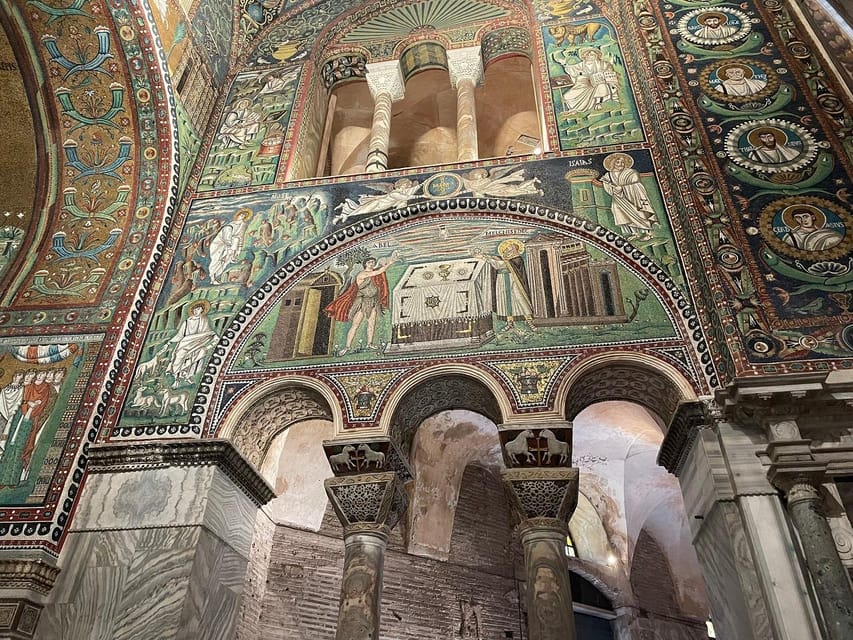
Then you shift into Basilica of San Francesco. This is one of those Ravenna moments that feels almost impossible until you see it: underwater mosaics are part of the attraction, which means you’re getting art that isn’t framed like you’d expect.
With about 30 minutes guided here, you’ll be listening for what makes the mosaics special and what the guide wants you to notice. The main payoff is that you’re not just checking off another church—you’re learning why this particular site is tied to Ravenna’s cultural layers.
Practical note: churches can be cool and lighting can be uneven. Bring your eyes for detail, not your phone for constant snapping. The mosaic effect is real, but it’s easiest to appreciate when you pause, look slowly, then move on.
Galla Placidia’s mausoleum: where color does the talking
Your next guided stop is the Mausoleum of Galla Placidia, a UNESCO World Heritage site. This is an early Christian monument known for mosaics in walls and ceiling, and the building’s design helps the art feel enclosed—like the architecture is there to frame the message.
Expect a guided walkthrough of the mosaic scenes, including the famous mosaic of the Good Shepherd. The tour format keeps this from becoming just “pretty ceiling work.” You’ll get the symbolism and what those images meant in the 5th century.
The lighting here can be low compared to brighter churches, so the guide’s pointing and explanation becomes even more important. If you’re the kind of visitor who gets impatient with slow looking, this is the one place you’ll want to resist rushing. These mosaics reward the extra 30 seconds you take to actually focus.
San Vitale: Byzantine power in an octagonal building
Basilica di San Vitale is the crown jewel for many first-timers, and the tour sets you up well to enjoy it. It’s an octagonal church with a tall dome, and the mosaics cover major parts of the interior—walls and ceilings—so your brain won’t have trouble filling the frame with details.
Here, you’ll focus on the biggest mosaic “anchors” the guide highlights. That includes the apse mosaic of Emperor Justinian and his court, and the striking mosaic of Empress Theodora. The guide’s job is to help you connect portraits to purpose: who is shown, how power is presented, and why the imagery looks the way it does.
Is the experience overwhelming? It can be, but in a good way. If you come in with no context, you may only register “cool church.” With context, you’ll understand why these images were political as well as devotional.
Neonian Baptistery time on your own (plus a museum add-on)
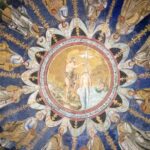
After the main guided circuit, you’ll get self-guided time at the Neonian Baptistery. This part is worth planning for because it’s your chance to linger. Not everything will be explained in the same way as the guided stops, so use this time to slow your pace and pick one or two mosaic areas to examine closely.
The tour also includes access to the Archiepiscopal Museum on your own time, if that’s part of your ticket experience. If you have energy left after the churches, this can be a smart way to keep the story going in a more relaxed pace.
A small planning tip: you don’t get unlimited time everywhere. The tickets are timed and they expire within about 5 to 10 minutes, so during your self-guided window, you’ll want to choose what you care about most and avoid over-wandering.
How long you’ll walk and stand (and how to stay comfortable)
This tour runs 2.5 hours and includes multiple stops. You’ll be moving between churches and spending time looking up and around, often with pew seating inside. One review note that matters in real life: there’s often limited shade and not a lot of time to sit back during the talking stops, so plan to pace yourself.
Here’s how I’d manage it:
- Wear shoes you can stand in comfortably for a couple hours.
- Don’t pack a big bag. Large luggage isn’t allowed, and you don’t want to carry extra weight through church entrances.
- Keep your water or snack strategy simple. The tour is short, but hunger can make you rush the art in a way you’ll regret later.
Sound can also be a factor outside. One review mentioned it was sometimes hard to hear the guide over street noise. If you’re sensitive to that, try to position yourself where the guide’s voice carries best, and bring a focused attention rather than expecting every word to land perfectly.
Price and value: what you’re actually getting for $70
At $70 per person for about 2.5 hours, the price isn’t just “a guide.” You’re paying for reserved admission and timed access to the key sites, which can save a lot of hassle when ticket lines are busy.
Value comes from three things working together:
- You get tickets included for major monuments, which means less time worrying about entry rules and fewer surprises once you’re there.
- The guided explanation saves you guesswork. Ravenna mosaics can look similar if you’re not given the story behind each panel.
- The route is efficient. You don’t have to plan a self-guided circuit across multiple UNESCO sites and figure out what to prioritize.
So if you’re only in Ravenna for a short window, this tour is a strong way to make that time count. If you already know Ravenna well and you prefer full independence, you might choose a self-guided approach. But for first-timers, the included ticketing plus expert commentary tends to feel like the fastest route to real understanding.
Who this tour fits best (and who should rethink it)
This experience works best if you:
- Love mosaics, symbolism, or religious art that has a clear storyline.
- Want a structured walk through several major monuments without getting lost.
- Prefer small groups where you can ask questions.
It also helps if you’re traveling as a couple or solo traveler who’s happy to follow someone else’s pacing.
It’s not a match if you have mobility limits or need wheelchair access; it’s not suitable for wheelchair users or people with mobility impairments. It’s also not suitable for pregnant women, based on the activity guidelines.
Finally, come prepared for a church dress code. You can’t wear shorts, sleeveless shirts, and you should dress respectfully for sacred spaces. Also, the rules say no luggage or large bags.
Should you book Walks In Europe’s Ravenna mosaics tour?
Book this tour if you want the big Ravenna names—Sant’Apollinare Nuovo, Dante’s Tomb, San Francesco, Galla Placidia, and San Vitale—in one efficient half-day, with reserved entry and a guide who can translate mosaic imagery into story.
Skip it (or look for another style) if you need a slower pace with more sitting time, have mobility constraints, or you’re trying to cover Ravenna on very loose timing. Also, if you hate timed entries and you know you won’t arrive early, this structure will annoy you.
If you go, arrive at the meeting point about 15 minutes early so the timed ticket window doesn’t cut into your start. Then let the guide do what guides are best at: point, explain, and help you see what your eyes would normally miss.
FAQ
How long is the Ravenna Highlights and Mosaics guided tour?
The tour is 2.5 hours.
What sites are included in the guided portion?
The guided visits include Sant’Apollinare Nuovo, Dante’s Tomb, the Basilica of San Francesco, the Mausoleum of Galla Placidia, and the Basilica of San Vitale.
Is the Neonian Baptistery visit guided?
No. The Neonian Baptistery is self-guided.
Where do we meet, and what time should we arrive?
You meet in front of the main entrance of Basilica di Sant’Apollinare Nuovo, with the guide holding a Walks In Europe signboard. Arrive 15 minutes early because entry is timed.
Are there any clothing or item restrictions?
Yes. Shorts, weapons or sharp objects, luggage or large bags, and sleeveless shirts are not allowed. Dress respectfully for sacred sites.
What booking and cancellation options are available?
You can cancel up to 24 hours in advance for a full refund. You can also reserve now and pay later, depending on availability.