REVIEW · RAVENNA
Ravenna: Private Tour with Stunning Byzantine Mosaics
Book on GetYourGuide →Operated by Italygonia Travel T.O. · Bookable on GetYourGuide
Ravenna is a mosaic city with a mission. I like how this private, 2.5-hour walk turns the big sights into a clear story of the Roman-Byzantine world, especially the stunning Byzantine mosaics you see in the basilicas and baptisteries. I also love that you don’t just stop for photos—you pass key places tied to Dante and Ravenna’s cultural memory, too. One consideration: entrance tickets and a small headset fee (for larger groups) are not included, so you’ll want a bit of cash ready.
You start at Sant’Apollinare Nuovo, a 6th-century church that helps you understand what makes Ravenna different from other Italian cities. From there, the route threads through the poet’s sights, the baptistery’s interior decorations, and ends at the powerhouses: Basilica of San Vitale and the Mausoleum of Galla Placidia. If you’re set on seeing everything inside quickly, plan for a steady walking pace and a little standing while the guide explains what you’re looking at.
This is also a good value format for families or mixed-age groups because it’s small and private, and the guide can keep your attention focused on what matters. In past groups, guides such as Rita, Alejandra, Claudia, Frederica, Sabrina, Chiara, and Rosanna have been singled out for organized pacing, strong communication, and real enthusiasm for mosaics and the city’s details.
In This Review
- Key highlights at a glance
- Why Ravenna’s Byzantine mosaics feel different (and worth 2.5 hours)
- Meeting at Sant’Apollinare Nuovo: start where the story begins
- The Zone of Silence and Dante’s tomb: literature in the middle of mosaics
- Neonian Baptistery: where stucco and mosaic work together
- Piazza del Popolo and Palazzo Rasponi: a practical city shortcut
- San Vitale: Justinian and Theodora, framed by an octagon
- Galla Placidia’s Mausoleum: the last stop that lingers
- Price and logistics: what you’re really paying for
- Who this tour suits best (and who might prefer something else)
- Should you book the Ravenna Byzantine mosaics tour?
- FAQ
- How long is the Ravenna Byzantine mosaics private tour?
- Where do we meet for the tour?
- Is this tour private?
- Which languages are offered?
- Are entrance tickets included?
- Do I need a headset?
- Is food and drink included?
Key highlights at a glance
- Sant’Apollinare Nuovo as your starting point: a 6th-century foundation for understanding the mosaic language.
- Dante’s tomb and the Zone of Silence: a quiet pocket of Ravenna where literature becomes place.
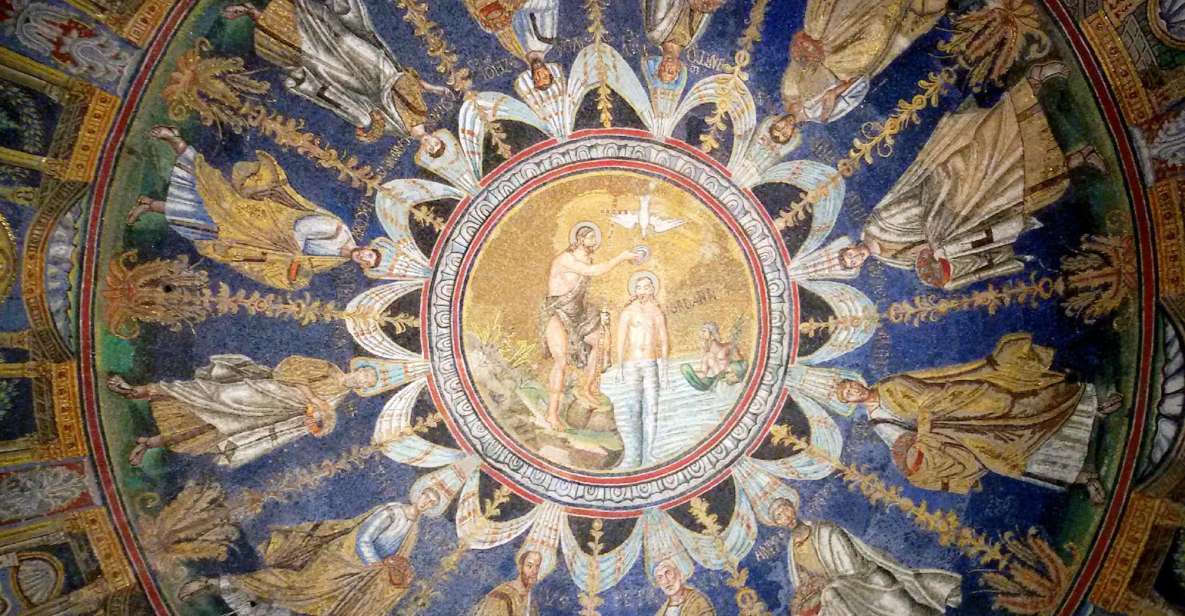
- Neonian Baptistery interior decoration: stuccos plus the mosaic of the baptism of Christ.
- San Vitale’s octagonal plan: the Old Testament scenes and the Justinian/Theodora panels.
- Mausoleum of Galla Placidia: small building, big mosaic impact near the end of the tour.
- Private guide, flexible pace: English, Spanish, French, German, or Italian, with time for questions.
Why Ravenna’s Byzantine mosaics feel different (and worth 2.5 hours)
If you’ve seen Roman ruins in Italy, you know how easily the brain switches to “ancient.” Ravenna makes you stay in a different mode. The mosaics don’t just decorate walls; they teach you how early Christians and the Eastern Roman world pictured power, salvation, and community. The guide’s job here is to make that readable without turning it into a lecture you can’t use.
This tour is built around the idea that mosaics are easiest to appreciate when you see them in sequence. You move from one major church or baptistery to the next, so the visual vocabulary starts to click: how figures are framed, how color and gold light up, and how imperial themes appear again and again in sacred settings. That continuity is what turns a list of monuments into an actual experience.
And yes, it’s practical. Two and a half hours is long enough to feel you got your money’s worth, but short enough to keep your feet from complaining too loudly. Ravenna’s center is walkable, and the stops are concentrated, which matters when you want the good stuff without wasting time.
You can also read our reviews of more tours and experiences in Ravenna.
Meeting at Sant’Apollinare Nuovo: start where the story begins
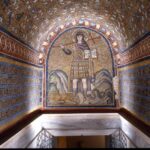
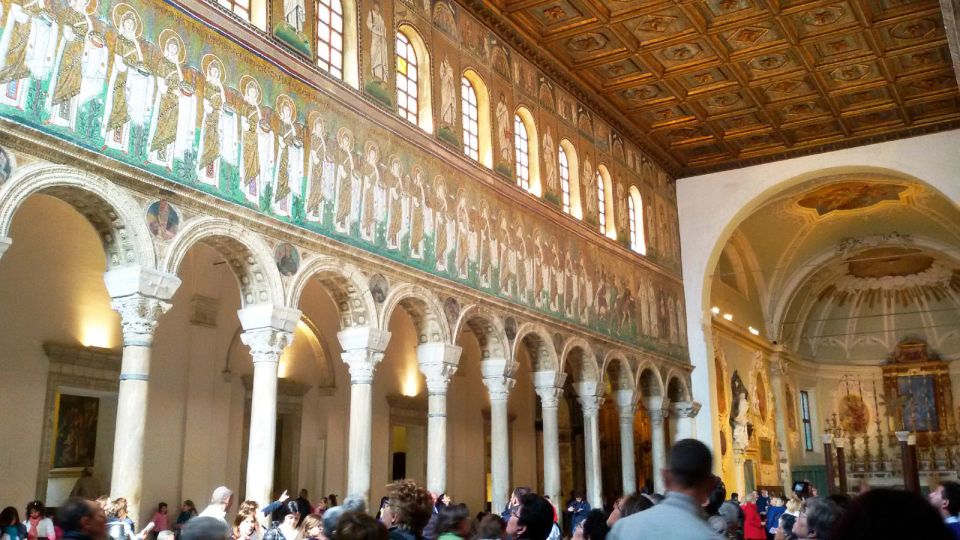
You meet at Basilica di Sant’Apollinare Nuovo, near the Palace of Theoderic, at Via di Roma 53. Getting started here is smart. This 6th-century church sets the tone because it’s early in the mosaic timeline and it gives you a “baseline” for what Ravenna’s mosaic world looks like when it’s still taking shape.
From the very beginning, expect the guide to orient you fast: where to look, how to read the layout, and what details matter more than others. With mosaics, that’s half the battle. From street level, everything can look like glittering decoration. A good guide helps you zoom in with your eyes—figures, arrangement, and the way the scene connects to the building itself.
This first stop also helps with timing. If you start at a major church, you avoid the common problem of arriving later in your day when you’re already tired and less patient with interior explanations.
The Zone of Silence and Dante’s tomb: literature in the middle of mosaics
One of the best surprises in this tour is how smoothly it connects religion and art to Ravenna’s literary fame. After Sant’Apollinare Nuovo, you walk toward the area known as the Zone of Silence, connected to the cult and memory of Dante Alighieri.
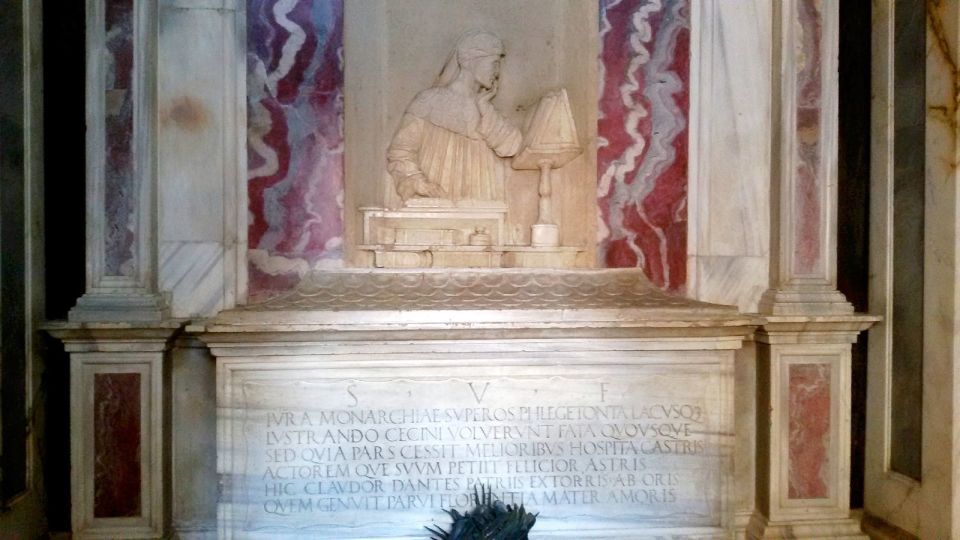
You’ll see Dante’s tomb, and beside it the Dante Museum, plus the Franciscan cloisters with statues of San Francesco and Santa Chiara. Even if you’re not a dedicated Dante reader, you’ll probably find this part effective because it adds a human layer. The guide can connect the poet’s legacy to what Ravenna wanted to remember and preserve.
The Zone of Silence is also a tonal change. After looking at sacred mosaics, you get a quieter, more reflective break where the city slows down. It’s a good contrast that keeps the experience from feeling like one long monument march.
Tip for your comfort: this section is still walking, so wear shoes that can handle uneven old-city surfaces. It’s not a strenuous hike, but it’s not all smooth pavement either.
Neonian Baptistery: where stucco and mosaic work together
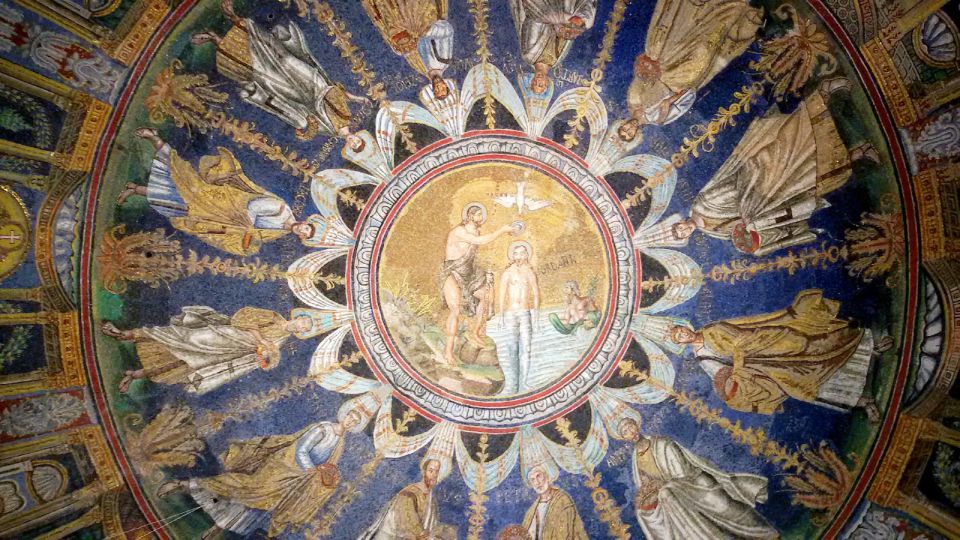
Next comes the Neonian Baptistery, and this is where you’ll likely start noticing how different Ravenna’s decoration strategies are from one site to the next. The baptistery is known for a perfectly preserved architectural structure and an interior decoration that mixes stuccos with a standout mosaic: the baptism of Christ.
What I like about this stop is how it teaches you to look at the “whole interior,” not just the centerpiece mosaic. Stuccos create a background rhythm, and the mosaic becomes the moment your eyes land and stay. If you’re visiting on a clear day, lighting can be your ally here, too—subtle shifts make mosaics look deeper and more dimensional.
A guided explanation matters most in moments like this. The difference between seeing a mosaic and understanding it is often just one sentence about symbolism and placement. With a strong guide, you come away with clear mental hooks instead of fuzzy impressions.
Piazza del Popolo and Palazzo Rasponi: a practical city shortcut
As you head between major religious sights, you pass through local streets and viewpoints that keep the walk interesting. The route includes the Palazzo Rasponi area and leads you toward Piazza del Popolo, the city’s main square.
This isn’t just a break for your legs—it’s a chance to reset your bearings. Ravenna can feel like a series of beautiful buildings that appear one after another, and having a main square in the middle helps you re-map the city. That’s useful later, especially if you want to return on your own for dinner or a second look.
It also keeps the tour from feeling like a straight line. Even if you only spend a short time there, the presence of an open square changes your sense of space, which makes the final stretch inside the greatest sites more satisfying.
San Vitale: Justinian and Theodora, framed by an octagon
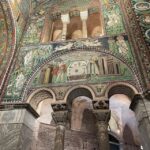
Then the tour hits its big finale territory: Basilica of San Vitale, a 6th-century church tied to the Roman-Byzantine empire. This stop is worth building your expectations around.
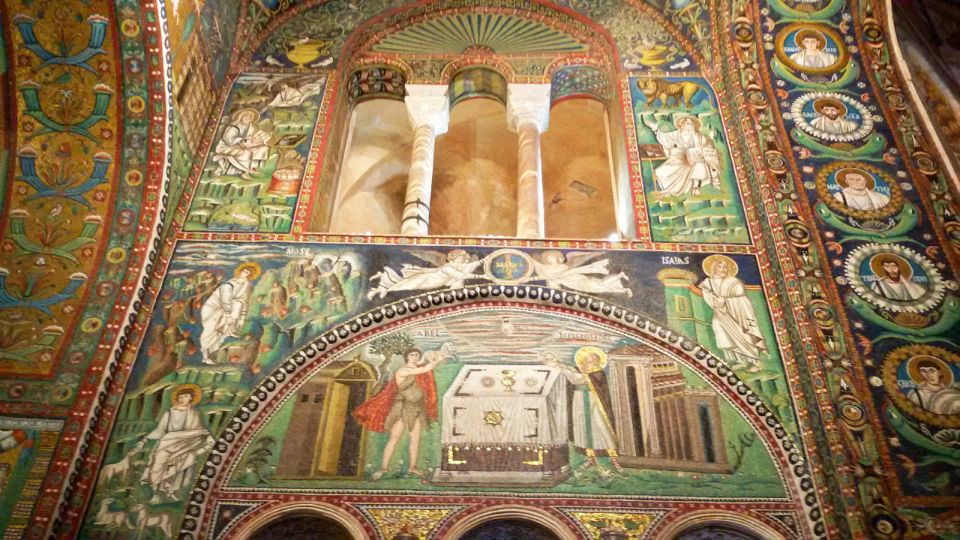
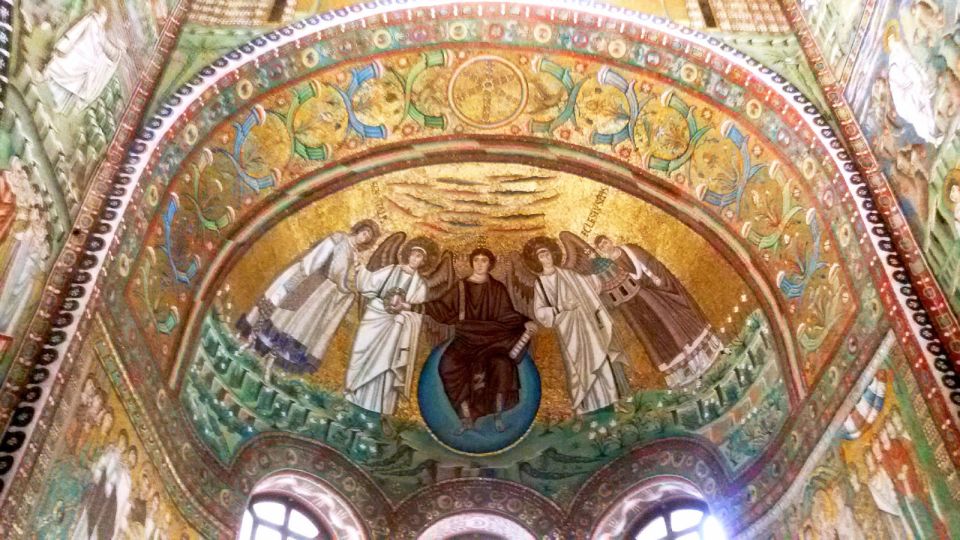
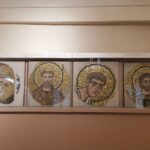
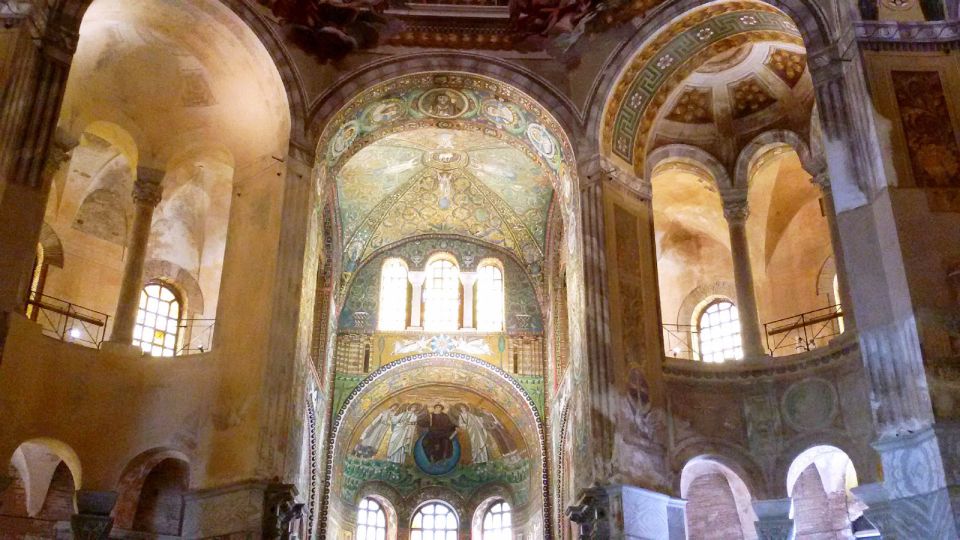
San Vitale’s octagonal central plan is part of the awe. The structure helps you understand why the decoration feels “held” in the space rather than simply applied to walls. And inside, you’ll see scenes from the Old Testament as well as famous panels featuring Justinian and Theodora—the imperial couple of the Eastern Roman world.
Here’s the value of having a licensed guide for this portion: those panels are iconic, but they’re also easy to misunderstand if you only treat them like portraits. A good guide will point out how imperial authority and sacred meaning overlap, and how the mosaics communicate status without saying it in modern political language.
This is also the place where the experience often becomes emotional. Not because you’re supposed to feel a certain way—just because the craftsmanship and the scale land all at once. Even if you’re traveling with kids, or someone in your group isn’t the “mosaic type,” the combination of architecture plus recognizable figures tends to bring everyone back into the story.
Galla Placidia’s Mausoleum: the last stop that lingers
After San Vitale, you move to the Mausoleum of Empress Galla Placidia, located next to the basilica. This is a smaller site, but don’t let that fool you. It’s known for unique mosaic decorations that stick with you because the scale is tighter and the focus is sharper.
What makes this stop work at the end of the tour is pacing. By the time you arrive here, you’ve already learned how to read mosaics in context—where to look, what details matter, and how scenes connect to the building purpose. So the mausoleum doesn’t feel repetitive; it feels like a final “chapter” with a different emotional tone.
If you want an easy personal trick: when the guide points something out, pause and really look before you start trying to take photos. In mosaics, the “meaning” usually shows up a second later, once your eyes stop hunting and start settling.
Price and logistics: what you’re really paying for
The price is $294 per group up to 15 for a 2.5-hour private walking tour. That sounds like a per-group cost because it is, and that’s where the value math changes.
If you’re traveling solo or as a couple, private guiding can still be worth it when you factor in your time savings and the quality of interpretation. Ravenna’s mosaic monuments are not the kind of sites where you benefit most from wandering aimlessly. You benefit from someone who can explain what you’re seeing in a way that makes the art “click.”
If you have a small family group, the math usually gets even better. A group price means everyone shares the guide cost, and private touring helps keep attention on the key stops instead of losing time to crowd flow. It also keeps your pace manageable, especially if you’re traveling with kids, older adults, or a mix of interests.
Two additional practical costs to plan for:
- Entrance tickets are not included.
- Headsets are not included, and for groups of more than 16, you’ll need a rental headset for €2 paid in cash to the guide.
So the true budget is the tour price plus tickets and any headset needs. Still, if you’re coming to Ravenna specifically for mosaics, you’ll likely find this structure efficient: you hit the essentials without stretching your day into something exhausting.
Who this tour suits best (and who might prefer something else)
This is a great fit if:
- You want a guided overview of Ravenna’s most important mosaic sites in one walk.
- You care about context—architecture, symbolism, and who’s depicted in the mosaics.
- You’re traveling as a small private group and want flexibility with questions and pacing.
It’s also a strong choice for mixed-age groups. The format is designed so the story keeps moving and the guide can adapt to attention levels, which matters when your group includes both art lovers and people who just want the highlights.
You might consider a different option if:
- You prefer to roam and linger for long stretches on your own without any structured route.
- You’re visiting mostly for outside views and quick photo stops. Many of the best moments here are interior, and they reward time and attention.
Should you book the Ravenna Byzantine mosaics tour?
If your goal is to understand Ravenna fast and see the core mosaic sites without turning the day into logistics, I’d book this. The route is built around the places that make Ravenna famous: Sant’Apollinare Nuovo, Dante’s tomb and the Franciscan cloisters, the Neonian Baptistery, San Vitale, and Galla Placidia. In about 2.5 hours, you get a guided story that ties sacred art and imperial power together in a way that feels coherent.
Also, the guide quality seems to be a consistent strength, with strong communication and energetic delivery from names like Rita, Alejandra, Claudia, Frederica, Sabrina, Chiara, and Rosanna in prior experiences. That matters because mosaics reward interpretation. You don’t want to spend your time just staring at gold and hoping it makes sense.
If you do book, bring comfortable walking shoes and plan to cover entrance tickets. If you have a group larger than 16, plan for the €2 headset rental paid in cash.
FAQ
How long is the Ravenna Byzantine mosaics private tour?
The tour lasts about 2.5 hours.
Where do we meet for the tour?
You meet at the Basilica di Sant’Apollinare Nuovo, near the Palace of Theoderic, at Via di Roma, 53, Ravenna RA, Italy.
Is this tour private?
Yes, it’s a private group walking tour.
Which languages are offered?
The licensed guide can conduct the tour in Spanish, English, French, German, and Italian.
Are entrance tickets included?
No. Entrance tickets are not included.
Do I need a headset?
A headset is required for groups of more than 16 people. It can be rented for €2 per person and paid in cash directly to the guide.
Is food and drink included?
No. Food and drinks are not included.