REVIEW · CATANIA
Syracuse, Ortigia and Noto walking tour from Catania
Book on Viator →Operated by EtnaTribe · Bookable on Viator
Three cities in one long Sicilian walking day. This is the kind of itinerary that strings together Syracuse’s Greek-Roman ruins and Noto’s golden baroque streets, with just enough structure to keep you oriented. You’re picked up in Catania, then dropped into a day of history, photo stops, and city wandering.
I especially like two things: first, the included entry to Parco Archeologico della Neapolis, where you pass major highlights like the Ear of Dionysius and Latomie. Second, Ortygia is treated like a real place to walk through, not just pose-for-photos space, with time near the cathedral and the market; guides such as Salvatore and Lori are praised for making the stories clear and easy to follow.
One consideration: it’s a full 8-hour day with plenty of walking, and it’s not recommended if your legs have limits. Also, in the archaeological park, the experience can feel more self-paced than you might expect, since the park’s extra in-park guidance is optional on request.
In This Review
- Key highlights at a glance
- Catania pickup to an 8-hour Syracuse and Noto loop
- Parco Archeologico della Neapolis: Greek and Roman ruins you can actually see
- Quick photo pause at Fonte Aretusa in Ortygia
- Syracuse Cathedral area and Ortygia’s old core streets
- Mercato di Ortigia: where the city smells like a real place
- Piazza Duomo and Temple of Apollo: ancient anchors in the center
- Noto: baroque color, big light, and Cattedrale di San Nicolò
- What this tour feels like: small group pacing and guide energy
- Price and value: why $129.45 can be fair for this route
- Packing tips for an 8-hour walking day (and why they matter here)
- Should you book the Syracuse, Ortygia and Noto tour from Catania?
- FAQ
- How long is the Syracuse, Ortigia and Noto walking tour from Catania?
- What is the pickup process for this tour?
- How many people are in the group?
- Is the tour offered in English?
- What major stops are included in the day?
- Is the admission ticket included for the archaeological park?
- Are there any stops with free admission?
- Is a mobile ticket used for this experience?
- Is free cancellation available?
Key highlights at a glance

- Included Neapolis entry for a concentrated route through the biggest ancient stops
- Hotel pickup and return shuttle so you’re not juggling trains or buses
- Small-group size (max 8) for less waiting and more time to ask questions
- Ortygia walking focus from cathedral area to Mercato di Ortigia
- Noto baroque in daylight with time around Cattedrale di San Nicolò
Catania pickup to an 8-hour Syracuse and Noto loop
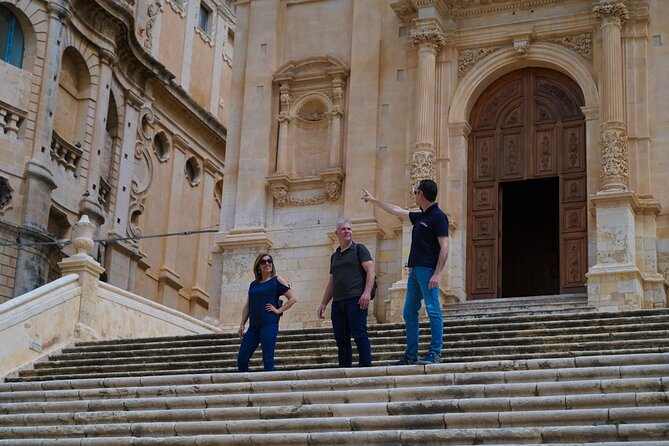
This tour is built for people who want a lot of Sicily, without planning every turn. You start at 8:45am in Catania, and pickup and drop-off happen at your hotel, then you’re shuttled between the three main areas (Syracuse/Ortygia, then Noto). The tour runs about 8 hours, which is long enough that you’ll feel it the next day, but short enough that you can still enjoy the momentum.
The group stays small (up to 8 travelers), and that matters more than it sounds. In places with narrow streets like Ortygia, a larger group turns into a slow-moving crowd. Here, the pace stays friendly: you walk together when it counts, then you get room to wander when it’s time to reset your eyes and take photos.
One more practical note: the tour is offered in English, and it uses a mobile ticket. If you’re the kind of traveler who hates digging for documents in your bag, this setup is a small win.
You can also read our reviews of more tours and experiences in Catania.



Parco Archeologico della Neapolis: Greek and Roman ruins you can actually see
The day starts with the big ancient hit: Parco Archeologico della Neapolis. You get about 1 hour, and that time is aimed at letting you see a run of standout locations instead of just staring at one area for too long. Admission to the park is included.
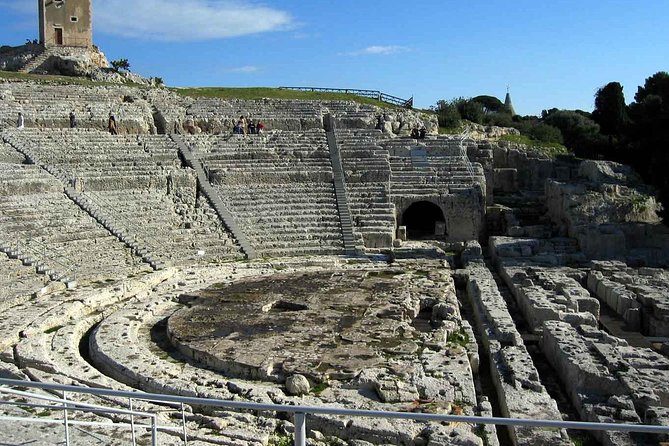
Inside the park, the route moves past a set of major ruins and features, including:
- Grotta of Cordari
- Ara ierone
- Latomie
- Necropoli
- Anfiteatro (amphitheater)
- Ear of Dionysius (Orecchio di Dionisio)
- The theater
- A cave stop (listed as a cave visit)
If you only have one day for Syracuse’s ancient side, this is the right way to do it. Instead of trying to map it all on your own, you get a guided thread through the terrain. And because you’re walking between stops, the sites start to make sense as a system: places for performances, places for civic power, and the stone spaces people lived around.
A potential snag, though: the cost includes the park entrance, but an additional park guide is listed as available only on request. In practice, that can mean you might not get the kind of deep, step-by-step narration for every single corner inside the park. If you love archaeology and want maximal interpretation, ask your guide ahead of time whether there’s an option for more guidance during the Neapolis portion.
Quick photo pause at Fonte Aretusa in Ortygia
After the archaeological start, you head into Ortygia and stop at Fonte Aretusa. The time is brief (about 10 minutes), and that’s exactly the point. Think of it as a reset moment: you step away from ruins, get your bearings in the island atmosphere, and get a scenic moment before you start walking the core streets.
Because the stop is short and admission is marked as free, it works best if you keep it simple: take a couple of photos, look around, then move on. If you try to turn a 10-minute stop into a half-hour expedition, you’ll end up stress-walking the rest of the island.
Syracuse Cathedral area and Ortygia’s old core streets
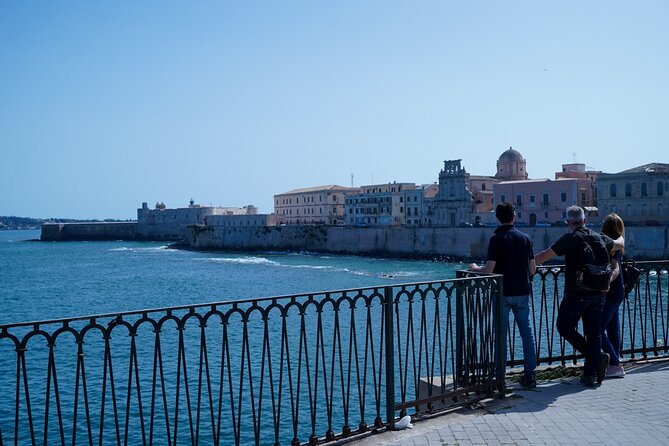
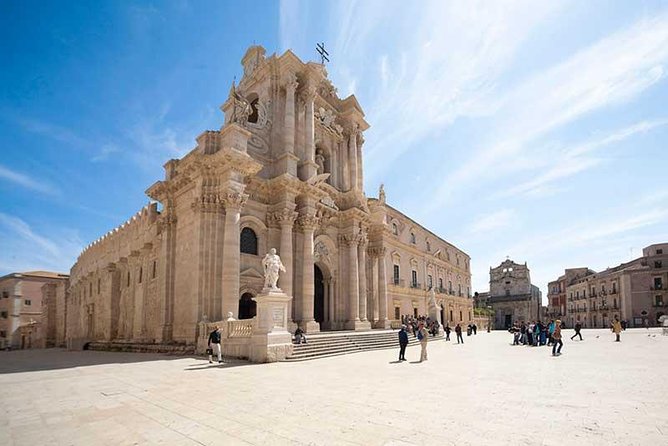
Next up is the Syracuse Cathedral stop in Ortygia, with about 15 minutes and admission included. This is the section where the tour shifts from “ancient ruins” to “living city layers.” Cathedral surroundings often feel like a crossroads: older structures, later additions, and lots of people cutting through as they go about their day.
From there, you also get time for walking around Ortygia, plus an “admire the castle” stop and additional free time in the city area. The tour doesn’t try to cram you with too many ticketed attractions in Ortygia, which is good. Ortygia rewards slow wandering: narrow lanes, sudden viewpoints, and street scenes you wouldn’t find by jumping straight from one monument to another.
If you’ve ever been on a tour where you’re rushed from door to door, this part feels more balanced. The format leaves room to follow what your guide points out, then take a breath and look longer on your own.
Mercato di Ortigia: where the city smells like a real place
You also get time at Mercato di Ortigia (about 15 minutes), and the stop is marked free. This is one of the best uses of time on the whole day because it changes the flavor of what you’re seeing.
Instead of only absorbing stone history, you’re watching everyday rhythms: vendors, shoppers, and that particular market energy that makes Ortygia feel like more than a postcard. Several guides are praised for helping you navigate the market efficiently and pointing out what to try, which can be a smart way to avoid wasting your limited time guessing.
You don’t need to turn this into a shopping marathon. Even if you just snack and keep moving, the market stop adds a human layer to the day that pure monuments can miss.






Piazza Duomo and Temple of Apollo: ancient anchors in the center
In the middle of Ortygia, you visit Piazza Duomo (about 10 minutes, free). After that comes the Temple of Apollo (Tempio di Apollo) stop (about 15 minutes, free). This sequence matters because it places the older layers right in the heart of the modern streets.
It’s the kind of contrast that makes Syracuse click. You’re not touring ruins in isolation; you’re walking where old sacred spaces still act like focal points. Even without deep technical knowledge, you’ll feel the structure: open space, big shapes, and sightlines that pull you toward the most important views.
For photo timing, aim to be flexible. If a crowd forms at one angle, shift to a side view and keep going. With small-group pacing, you can usually find a workable angle without turning the day into a traffic jam.
Noto: baroque color, big light, and Cattedrale di San Nicolò
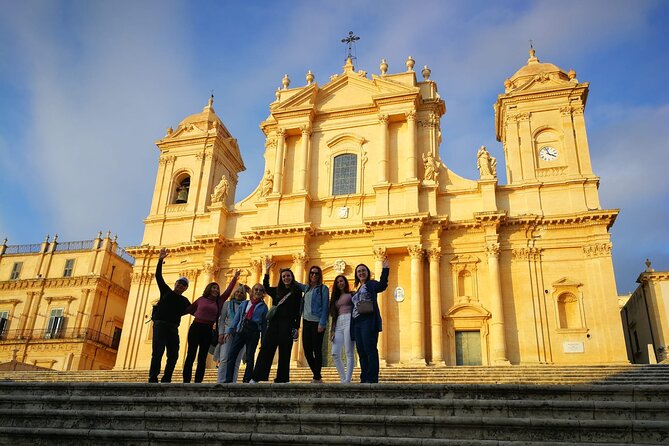
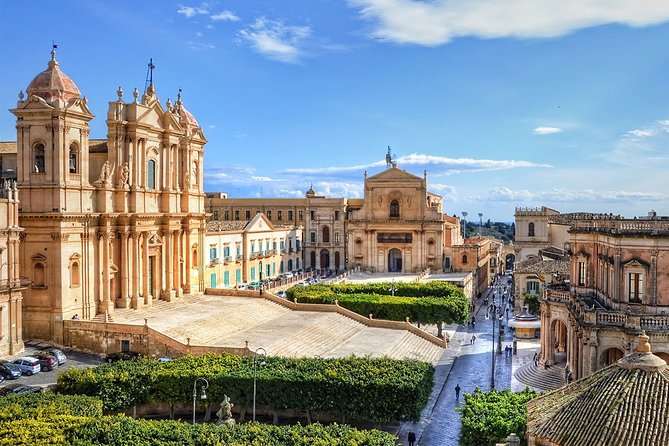
Then the tour shifts to the star in the south-east corner of the itinerary: Noto, famous for its baroque architecture. The description highlights the “golden hues,” and that’s a real reason Noto is worth a day trip even if you’ve already seen baroque elsewhere in Italy. Color hits differently on pale stone when the light is right.
Your Noto portion includes time to explore the town, with a specific stop at Cattedrale di San Nicolò (about 15 minutes, marked free). Even though the named stop time is short, the real value is that Noto is one of those places where the street itself is part of the architecture. You don’t just look at one building; you walk between them and let the façades do the work.
If you want photos, bring patience. Noto is a great place to spend a few extra minutes near the cathedral area, then step back and recompose when people move. The tour schedule is tight, but it’s not the type of tight where you feel dumped out with no guidance. The structure helps you know what to look for first.
What this tour feels like: small group pacing and guide energy
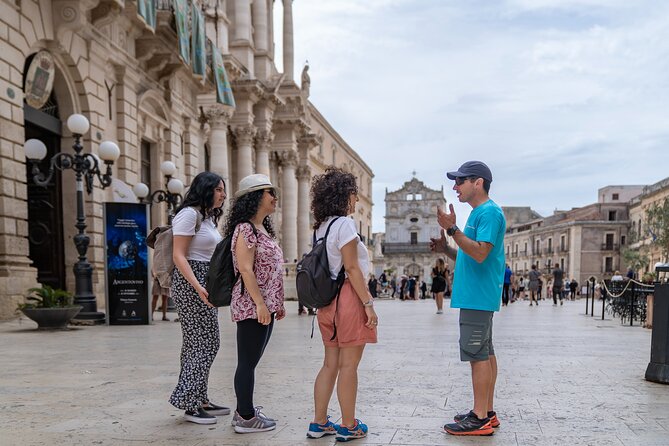
The most consistently praised aspect is the guide experience. People repeatedly call out guides who keep things organized, explain clearly, and handle the day with an easy flow. Names that come up include Salvatore, Enzo, Nando, and Lori, and the common thread is straightforward: they help you focus on the right details without turning every minute into a lecture.
Also, several notes point to the timing working well: you aren’t stuck waiting forever, and you get short windows where you can wander without losing the group. That balance is hard to get right on a day trip like this, because distances plus walking plus ticketed entrances can easily turn into chaos.
If you’re the type of traveler who likes asking questions, the small-group size makes that easier. If you’re the type who just wants to absorb scenery, you still get enough guidance to prevent the day from feeling random.
Price and value: why $129.45 can be fair for this route
At $129.45 per person, this isn’t the cheapest way to tour eastern Sicily. But it’s also not overpriced for what’s included and how the day is managed.
Here’s what you’re getting for your money:
- Pickup and return shuttle service from Catania
- A multilingual guide (English is offered)
- Entrance ticket to the Archeological Park of Neapolis (a real paid component)
- Admission included at Syracuse Cathedral
- Other stops are marked free (Fonte Aretusa, Mercato di Ortigia, Piazza Duomo, Temple of Apollo, and Cattedrale di San Nicolò)
When a day trip includes transportation plus ticketed entry to a major archaeological site, the price starts to make sense—especially with a max of 8 travelers. The alternative is often piecing it together yourself and spending extra time on logistics, which is the enemy of a one-day plan.
One small caution: Neapolis includes the ticket, but the park’s own additional guide is listed as on request. So if you’re paying for depth, confirm whether you’ll want extra interpretation during the Neapolis portion.
Packing tips for an 8-hour walking day (and why they matter here)
This is a “good shoes” tour. The itinerary includes multiple stops across steep-ish terrain and uneven surfaces, plus a full archaeological park segment. The tour notes say it’s not recommended for travelers with walking problems, so plan accordingly.
At minimum, I’d come prepared with:
- Comfortable walking shoes with solid grip
- Sun protection (the tour spends time outdoors across open-air ruins and towns)
- A water bottle and something light to snack on during free-walk gaps
Also, give yourself a mental plan: don’t expect every stop to feel equally “covered.” The value comes from seeing key highlights in a logical flow, then having short moments to linger where you care.
Should you book the Syracuse, Ortygia and Noto tour from Catania?
Book it if you want a focused way to see Syracuse’s ancient ruins, Ortygia’s core island streets, and Noto’s baroque architecture in one day without wrestling buses and timetables. It’s especially worth it for first-timers who don’t want to choose between archaeology and pretty towns.
Skip it (or at least consider alternatives) if you have limited walking ability, because this is an 8-hour itinerary with multiple on-foot sections. And if you’re a hardcore archaeology fan who needs maximum commentary inside every corner of Neapolis, you’ll want to check whether there’s an option for extra in-park guiding during that segment.
If you fit the first group, this is a strong value day trip: small group, real highlights, and guides who make the story make sense.
FAQ
How long is the Syracuse, Ortigia and Noto walking tour from Catania?
The tour runs about 8 hours.
What is the pickup process for this tour?
You can request pickup and drop-off at your hotel in Catania. The start time is listed as 8:45am.
How many people are in the group?
The maximum group size is 8 travelers.
Is the tour offered in English?
Yes, the tour is offered in English.
What major stops are included in the day?
You visit Parco Archeologico della Neapolis in Syracuse, Fonte Aretusa, Syracuse Cathedral in Ortygia, Mercato di Ortigia, Piazza Duomo, Temple of Apollo (Tempio di Apollo), and Cattedrale di San Nicolò in Noto.
Is the admission ticket included for the archaeological park?
Yes. Entrance ticket to the Archeological Park of Neapolis in Syracuse is included.
Are there any stops with free admission?
Yes. Fonte Aretusa, Mercato di Ortigia, Piazza Duomo, Temple of Apollo, and Cattedrale di San Nicolò are marked free.
Is a mobile ticket used for this experience?
Yes, the tour uses a mobile ticket.
Is free cancellation available?
Yes. Free cancellation is available up to 24 hours in advance of the experience start time for a full refund.