REVIEW · TRAPANI
Trapani: 2-Hour Salt Flats Tour
Book on GetYourGuide →Operated by Trapaniemotions · Bookable on GetYourGuide
Salt flats in Sicily are oddly fascinating.
This Trapani tour turns salt pans into a real-life lesson, with a small-group feel (max 8) and a guide who brings the whole process to life. I love the mix of working tradition and easy walking time, plus the chance to spot birds in the salt pools. One big plus for photography: you get multiple scenic stops, and the salt reflections make the light feel special. One possible drawback is that the visit is not for everyone—there’s walking on uneven ground, so wear comfortable shoes and don’t plan it if you have mobility limits.
What makes this outing work so well is the pacing. You start in Trapani, ride out by air-conditioned van, then spend time where the work happens: the salt pans, the salt museum in a renovated old mill, and the edge walks where you can really see how the flats function. If you get Alessio as your guide, expect plenty of humor and clear explanations that keep things moving. The only real consideration is time in the van—there are several transfer segments—so if you hate riding in transit, treat this as a half-day excursion, not a quick stop.
In This Review
- Key things to know before you go
- First Stop: Meet in Trapani and Get Out to the Flats
- Maria Stella Salt Pans: Watching the Salt-Making Work Up Close
- Salt Museum in a Renovated Old Mill: Tools, Samples, and Salt’s Personality
- Flamingos in the Salt Pools: When Birds Change the Whole Shot
- Nubia, Windmills, and Viewpoints: The Scenic Stops That Add Context
- The Secret Stop Food Tasting and Flavored Salt
- Value Check: Is $51.24 Worth It for What You Get?
- Should You Book This Trapani Salt Flats Tour?
- FAQ
- How long is the Trapani salt flats tour?
- Where do I meet for the tour?
- Is the tour in English?
- How many people are in the group?
- What’s included in the price?
- What should I wear or bring?
- Is it suitable for people with mobility impairments?
- Does the tour include food?
- What does it cost?
Key things to know before you go
- Maria Stella salt pans: you’ll learn how the salt-making tradition works where it still happens.
- Flamingo chances in the salt pools: keep your eyes up; these migratory birds show up around the flats.
- Salt museum inside a renovated old mill: tools, how it’s done, and samples.
- Walk the edge of the flats: it’s not just viewing from far away; you’ll get close enough to understand the setup.
- Windmills and viewpoints: you get classic Trapani countryside scenery between salt stops.
- Flavored salt tasting: yes, you can taste the difference.
First Stop: Meet in Trapani and Get Out to the Flats
Your day starts at a meeting point on Via Ammiraglio Staiti, close to the fire station. From there, you’re in an air-conditioned van (nice in warm months) and headed out toward the salt area. The ride matters more than you might think. In about 20 minutes you’re out of the city rhythm, and the changes in scenery help you understand the salt flats as part of a working ecosystem, not just a photo spot.
Before the salt focus kicks in, there’s a short guided walk in Trapani—about 10 minutes—just enough to reset your bearings. Then you’ll move again by van to the next zones, with quick breaks for short walks and viewpoints along the way. The itinerary is built for variety: you get time on foot near the flats, but you’re also spending time learning from the guide at the stops where context helps your photos and your understanding.
The group size is capped at 8 people, which keeps it from feeling like a cattle call. That small size also helps if you have questions about the process, or if you want the guide to point out birds before they fly off.
You can also read our reviews of more tours and experiences in Trapani.

Maria Stella Salt Pans: Watching the Salt-Making Work Up Close
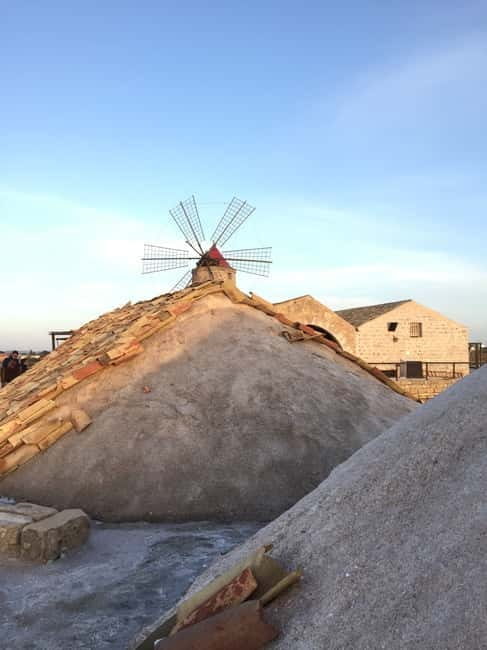
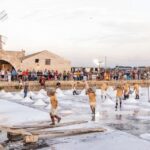
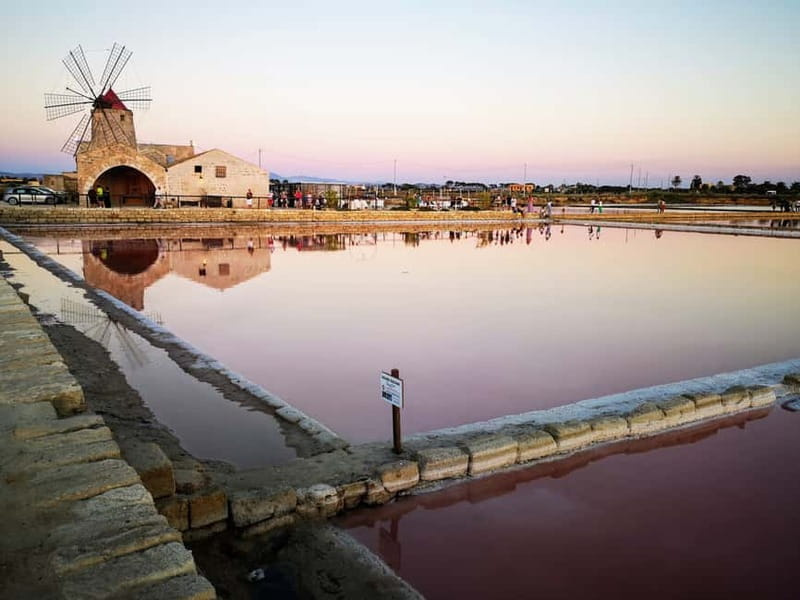
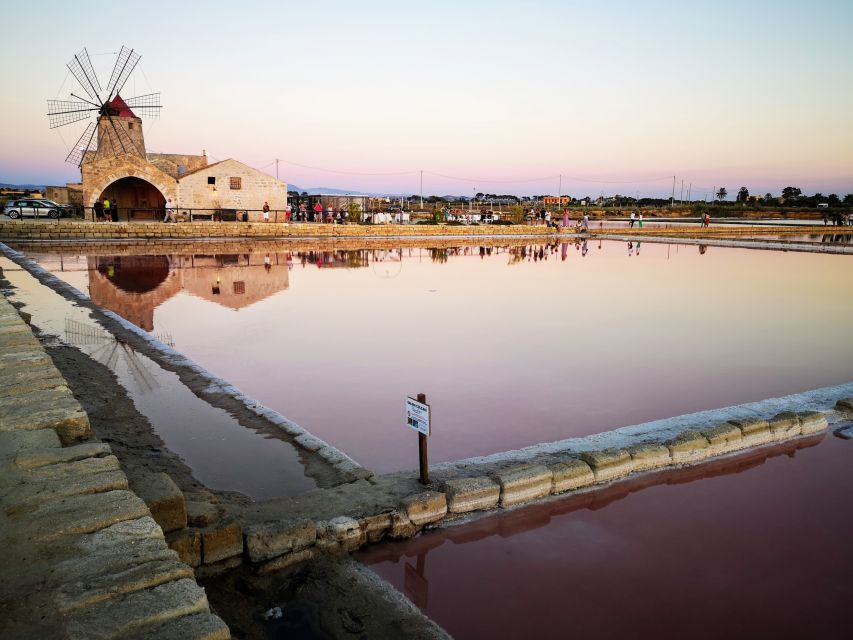
The heart of the tour is the salt-pans area, with a specific highlight at the Maria Stella salt pans. This is where the tradition stops being abstract. You’ll learn how salt is made while exploring a family-owned salt pan, and you’ll also get the practical visual of where seawater goes, how it sits, and how the whole system turns water into salt over time.
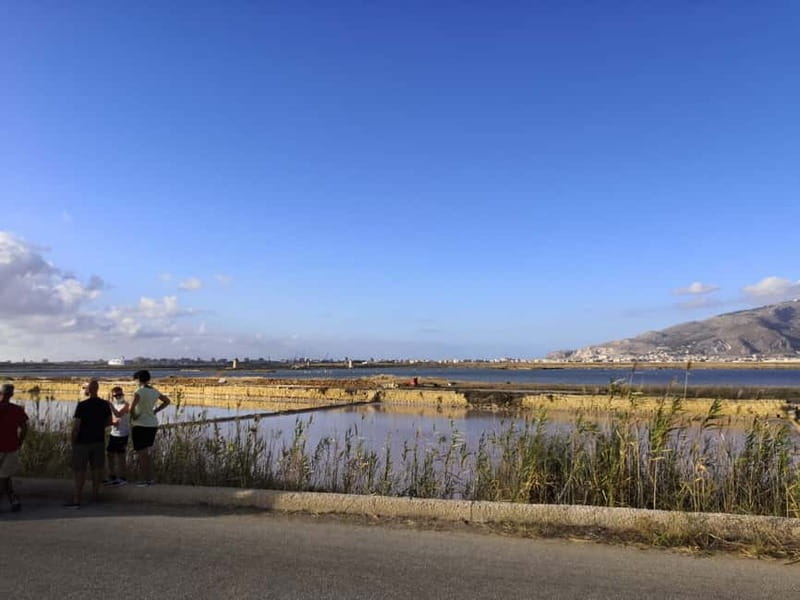
One of the best parts for me is the “edge walk” element. Walking along the boundary of the salt pans gives you a better sense of scale than looking from the roadside. You can see the flat surface patterns, understand the boundaries, and notice how the surrounding setup supports the salt production. It’s not just a field trip; it’s a guided walk where the guide explains what you’re looking at as you look at it.
This is also the point where you start thinking like a salt maker. Even if you don’t remember every step, you come away with the logic: long processes, controlled conditions, and work that depends on the land and the weather. For photographers, it helps that you’re not rushed. You have moments to pause, frame shots, and wait for birds to move.
Salt Museum in a Renovated Old Mill: Tools, Samples, and Salt’s Personality
After you’ve been outside and seen the flats, the salt museum gives you the “how it all connects” piece. The museum is inside a renovated old mill, which means the setting matches the subject. You’re in an industrial building designed for processing, and then the guide points out tools and explains the workflow behind salt harvesting.
Here’s where the tour becomes more than scenic. You get a guided tour of the museum and even try samples of flavored salt. That tasting is a smart move. Salt can be food seasoning, but flavored salt shows how tradition can turn into everyday kitchen use. The tasting also helps you remember the lesson because your senses get involved. You stop thinking of salt as just a white powder and start noticing how flavor changes depending on how it’s made and used.
If you like food, this part is a nice bridge between Sicilian agriculture and real eating. If you’re more of a science-and-process person, the tools and museum explanation give you structure. Either way, it’s a good reminder that salt production isn’t a relic—it’s still a working craft.
Flamingos in the Salt Pools: When Birds Change the Whole Shot
Trapani’s salt flats are famous for more than salt. This tour specifically sets you up for bird spotting in and around the salt pools, including flamingos. The key detail I love: these are migratory birds, and they can change color over time. That makes the whole experience feel a little dynamic. You’re not just waiting for a single moment; you’re watching for movement and gradual changes as the day goes on.
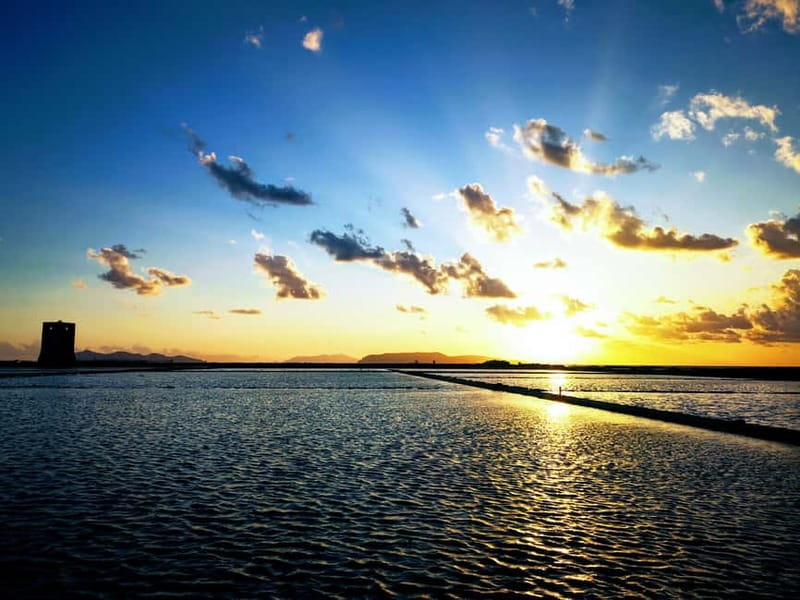
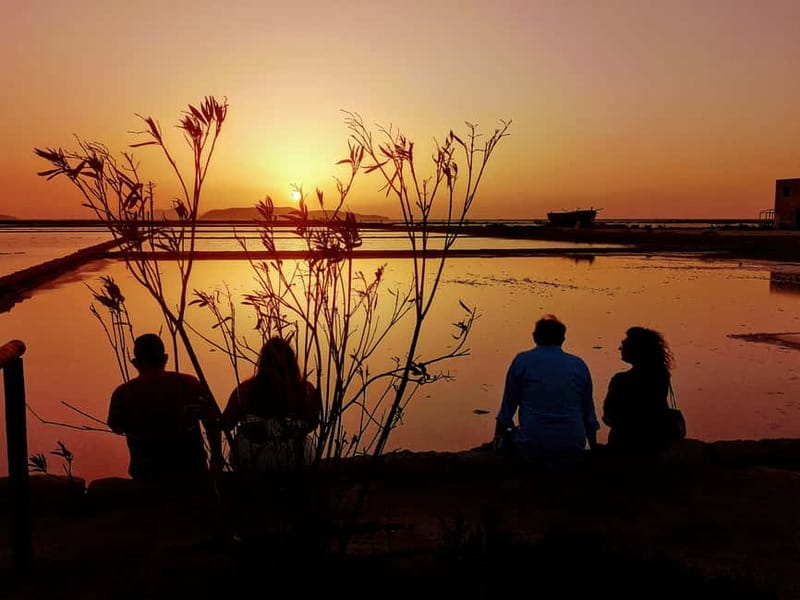
Practically, you’ll want to keep your eyes moving. Birds can be close, then suddenly farther away. The guide can help you spot them, but your best photos will come from staying patient and ready. When the light hits the pools, you can get a mirror effect that makes the whole flat look like water even though it’s salt.
There’s also a quiet advantage here: you’re out in open air. The birds’ presence turns the salt pans into a living scene rather than a static view. If you come for photos, this is what you’ll remember. If you come for education, the birds help you understand why the area supports life alongside production.
Nubia, Windmills, and Viewpoints: The Scenic Stops That Add Context
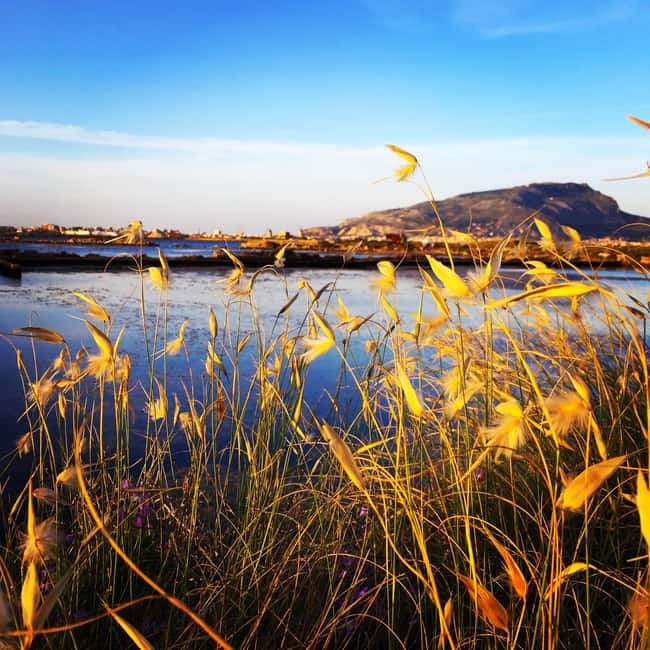
Salt flats can feel flat—literally and visually—so the tour adds in Nubia, windmills, and viewpoints along the way. Nubia includes a guided walk and some scenic views, giving you a different angle on the salt region. It helps you picture how people and land use sit side by side.
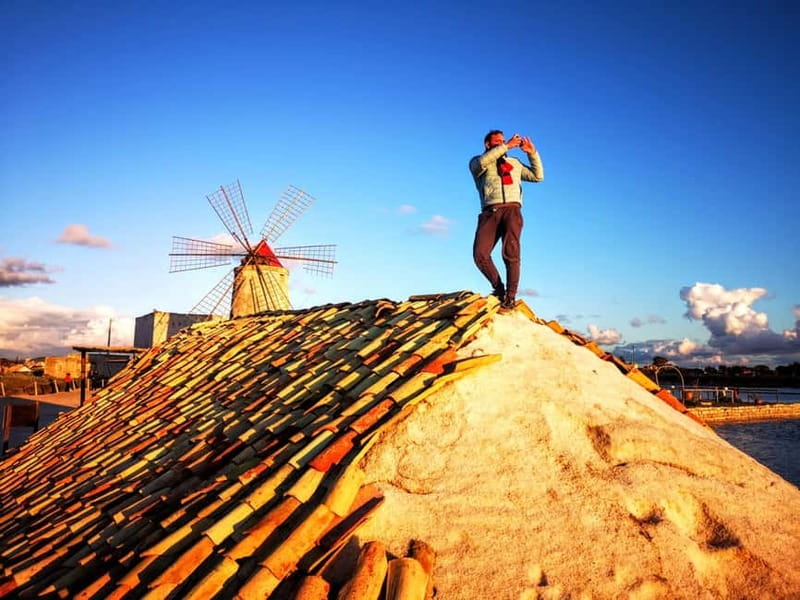
Then you get to the windmills stop, with about 30 minutes for visiting and a guided explanation. Windmills in this area are more than decoration. They’re part of the visual language of Trapani’s countryside, and the extra time means you can take photos without feeling rushed. You’ll also get a viewpoint photo stop where you can stretch your legs a bit and let the guide point out what to watch for in the distance.
One caution: these stops are short, so treat them as photo and context breaks, not “wandering time.” Wear comfortable shoes, because you’ll move in bursts, and you’ll likely be on uneven ground near the viewpoints.


The Secret Stop Food Tasting and Flavored Salt
The tour finishes with a food moment that feels local rather than touristy. There’s a “secret stop” built into the route, with about 10 minutes for a food tasting. The exact items aren’t spelled out in your tour details, but it’s part of the same idea as the salt tasting: small sample, big context. You’re getting a taste of the wider Trapanese approach to salt and flavor, not just learning about the flats in theory.
This is also why the flavored salt tasting earlier works so well. Between the museum samples and the later food stop, you get repeated chances to connect the process to real eating. Even if you only buy one thing as a souvenir, it helps you choose thoughtfully—because you’ve already tasted what different salts can do.
Don’t expect a full meal. Meals aren’t included. Plan to eat before you go or after you return, and keep this tasting as a bonus, not your dinner plan.
Value Check: Is $51.24 Worth It for What You Get?
At $51.24 per person, this tour is priced for a guided half-day with multiple parts: transport, guide time, museum admission, salt-pan access, and tastings. That matters because salt flats aren’t easy to understand without someone pointing out what you’re seeing. The combination of outdoor learning plus museum structure is where your money goes.
The included roundtrip transfer in an air-conditioned van is another real value point. You avoid the stress of arranging rides and figuring out where to park, and you can focus on the experience instead of logistics. The small group size (up to 8) also helps justify the price. It keeps the guide’s attention from splitting too thin.
Where you should be honest with yourself: this is not a long hike day. You’ll walk, you’ll photograph, and you’ll learn, but you’re also doing short segments with van rides. If you’re looking for pure physical adventure, you might want a different type of excursion.
Who tends to love this tour:
- You want a mix of Trapani culture + nature.
- You like guided history that connects to what’s still happening today.
- You enjoy birds and want a better shot at spotting them than going alone.
Who might hesitate:
- You need minimal walking.
- You dislike being in a group setting even if it’s small.
Should You Book This Trapani Salt Flats Tour?
Yes, if you want a guided, high-signal way to experience salt production and salt-pool birdlife around Trapani. The museum in a renovated old mill plus the Maria Stella salt pans walk gives you both the visuals and the explanation. Add flavored salt tasting and that “edge of the flats” access, and you get more than a quick photo stop.
If you’re on the fence, base your decision on two factors: your comfort with walking on outdoor terrain, and your interest in process. If those are a match, this tour is a strong use of time in Sicily—practical, scenic, and genuinely different from the usual sightseeing circuit.
FAQ
How long is the Trapani salt flats tour?
The duration is listed as 3 hours. Starting times depend on availability.
Where do I meet for the tour?
The meeting point is close to the fire station on Via Ammiraglio Staiti, 101. The tour ends back at the same location.
Is the tour in English?
Yes. The live guide offers Italian and English.
How many people are in the group?
This is a small-group tour limited to 8 participants.
What’s included in the price?
Included are roundtrip transfer by air-conditioned van, a local guide, entrance to the salt museum, salt tasting, and entrance to the salt pans.
What should I wear or bring?
Bring comfortable shoes since the tour involves walking.
Is it suitable for people with mobility impairments?
No. It is not suitable for people with mobility impairments.
Does the tour include food?
No full meals are included. There is salt tasting and a separate short food tasting stop.
What does it cost?
The price is $51.24 per person.