REVIEW · VENICE
Venice: 1.5-Hour Walking Tour
Book on GetYourGuide →Operated by Venice Events srl · Bookable on GetYourGuide
Saint Mark’s Square is loud, then Castello gets real. This 1.5-hour Venice walk pairs the big-ticket icons near St. Mark’s Basilica with quieter, more residential streets behind the crowds, so you get context and atmosphere in one go.
I especially like the local, fully qualified guide approach, with live commentary and a personal audio headset that keeps the story clear even when the square gets crowded. I also like that the route is designed to skip the heaviest foot-traffic by heading into calli, bridges, and lesser-known campi around Castello.
One thing to consider: it’s an external walking tour only, so you won’t be entering museums or ticketed attractions. If you’re hoping for museum time, you’ll need to plan that separately.
In This Review
- Key highlights worth your attention
- From Saint Mark’s Square to Castello: how the tour avoids the crush
- The 1.5-hour time window: enough for bearings, not enough for museums
- Starting points and the first 15 minutes that matter
- Saint Mark’s Square: the architecture lesson you actually remember
- Campo Santa Maria Formosa and San Giovanni & Paolo: Venice’s power in stone
- Campo Santa Maria Formosa
- Campo San Giovanni & Paolo and the Basilica there
- Castello calli, bridges, and canals: what “less crowded” really means
- Heading back through Mercerie: a practical end to your orientation walk
- The headset and multilingual guide: clarity beats guessing
- Price and value at $37: what you’re really paying for
- Who this walking tour fits best
- Should you book this Venice walking tour?
- FAQ
- Where is the meeting point?
- How long is the tour?
- What languages are available?
- Is the tour wheelchair accessible?
- Does it include museums or attraction entry?
- Can I cancel for a full refund?
Key highlights worth your attention
- Headsets for live commentary so you can hear the guide clearly while walking
- A “crowds out, locals in” route that shifts from St. Mark’s Square to Castello’s residential lanes
- St. Mark’s Square orientation covering symbols, traditions, and major landmarks without rushing you
- Campo Santa Maria Formosa and San Giovanni & Paolo as key stops for understanding how Venice worked
- San Marco meeting back at the square, then passing through the Mercerie pedestrian shopping connection
- Multilingual live narration (English, French, German, Spanish, with Italian also listed)
From Saint Mark’s Square to Castello: how the tour avoids the crush
Venice has two speeds: the famous slow grind near the landmarks, and the smoother local rhythm once you step into the neighborhoods. This tour is built around that idea. You start in St. Mark’s Square, where the architecture and power history are impossible to miss, and then you move into Castello, where the streets narrow, daily life returns, and the city feels lived in rather than staged.
That shift matters. In a short visit, it’s easy to only collect postcards. Here, I’d use the tour as your orientation tool: you learn what you’re looking at first, then you’re better prepared to explore afterward on your own.
And yes, the Castello portion is the practical payoff. Instead of spending all your time dodging photo lines, you get to walk through smaller squares (campi), over bridges, and along the calli—the narrow lanes that actually structure how Venice moves.
You can also read our reviews of more tours and experiences in Venice.
The 1.5-hour time window: enough for bearings, not enough for museums
This is a 1.5-hour walk. That’s long enough to cover a meaningful slice of Venice, but short enough that you won’t feel trapped by schedule fatigue. It also encourages you to keep your expectations realistic: think “guided orientation and stories,” not “complete Venice.”
The tour is exterior-only. You won’t be doing museum entry, and you shouldn’t count on attraction time. The value is in the connections the guide makes between places—how symbols, architecture, and political history connect to the Venice you can still see in the streets today.
In the real world, this format works well if you’re:
- arriving in Venice and want a first-day map of meaning
- short on time but determined to understand what you’re seeing
- traveling with kids or teens who need a guided framework (children under 5 are free)
Tip from my perspective: if you hate walking in heat, choose an earlier departure when you have the option. One review highlighted how an early start helps in summer because it’s not as hot yet.
Starting points and the first 15 minutes that matter
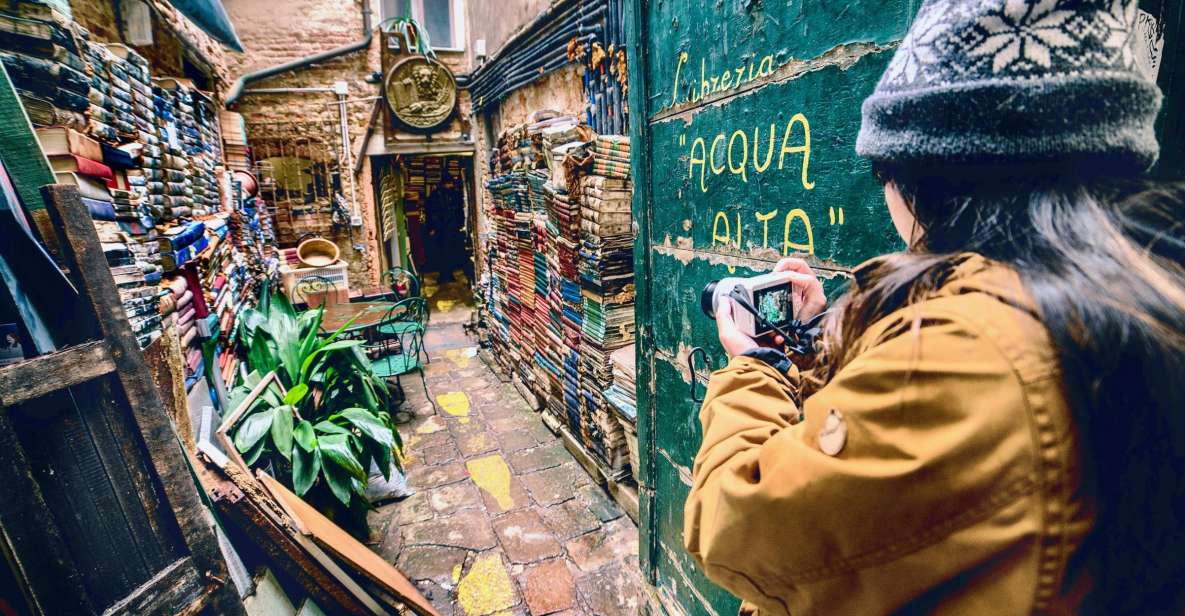
You’ll meet 15 minutes before your booked time in Calle larga de l’Ascension 30124, behind the Correr Museum, on the opposite side of St. Mark’s Basilica. You’re looking for a TURIVE assistant next to the post office San Marco.
Why the early check-in is worth it: Venice can be confusing even when you’ve studied maps. Having that buffer makes the tour start calmer for everyone, which usually means a better experience for you.
Also note that the tour is rain or shine, so bring the kind of footwear you can trust on damp stone.
Saint Mark’s Square: the architecture lesson you actually remember

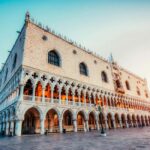
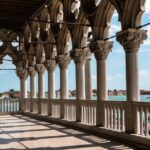
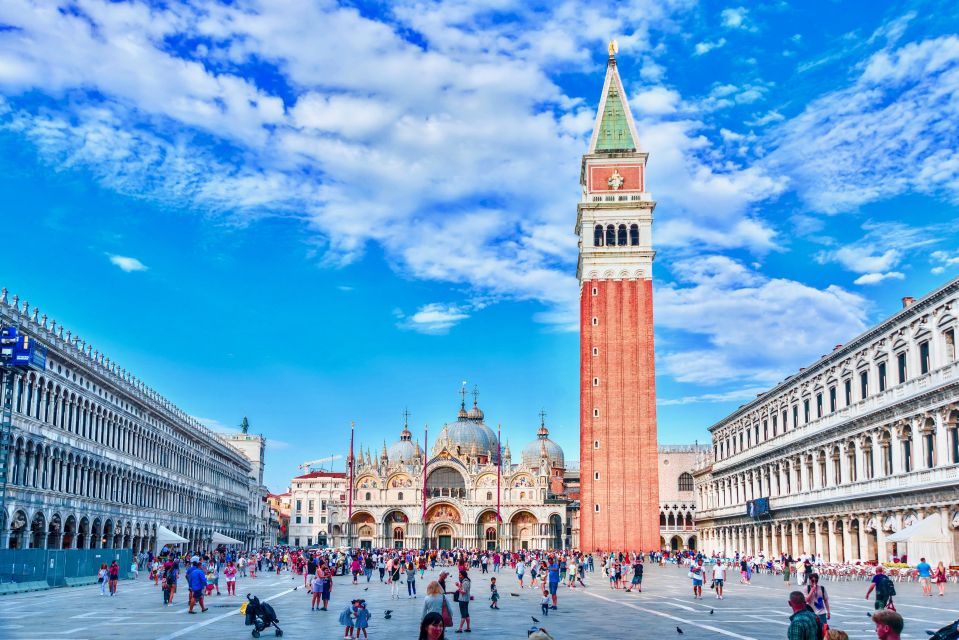
Saint Mark’s Square isn’t just “pretty.” It’s a stage where Venice showed off its identity: power, religion, trade, and civic pride all in the same view. In the first part of the walk, your guide sets the tone with a historical introduction to the square and what its key structures signal.
You’ll get oriented around:
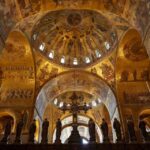
- St. Mark’s Basilica and why it’s so tied to Venice’s religious and political image
- the Doge’s Palace, described as the former seat of power for the Republic of Venice
- the Renaissance clock tower, which becomes part of the square’s meaning, not just a background feature
What I like about this approach is that it doesn’t stay in abstract history. It tells you how to read the square as a system—who held power, what Venice wanted to communicate, and how the city used grand public space to reinforce authority.
One helpful detail from reviews: guides can bring this alive with personal knowledge. A guide named Rosanna was praised for covering both ancient history and present-day Venice, especially because she was born there. Another guide, Elisabeth, was noted for sharing information you may not find in basic guidebooks or on Wikipedia.
That matters because it turns the square from a checklist into something you understand.
Campo Santa Maria Formosa and San Giovanni & Paolo: Venice’s power in stone
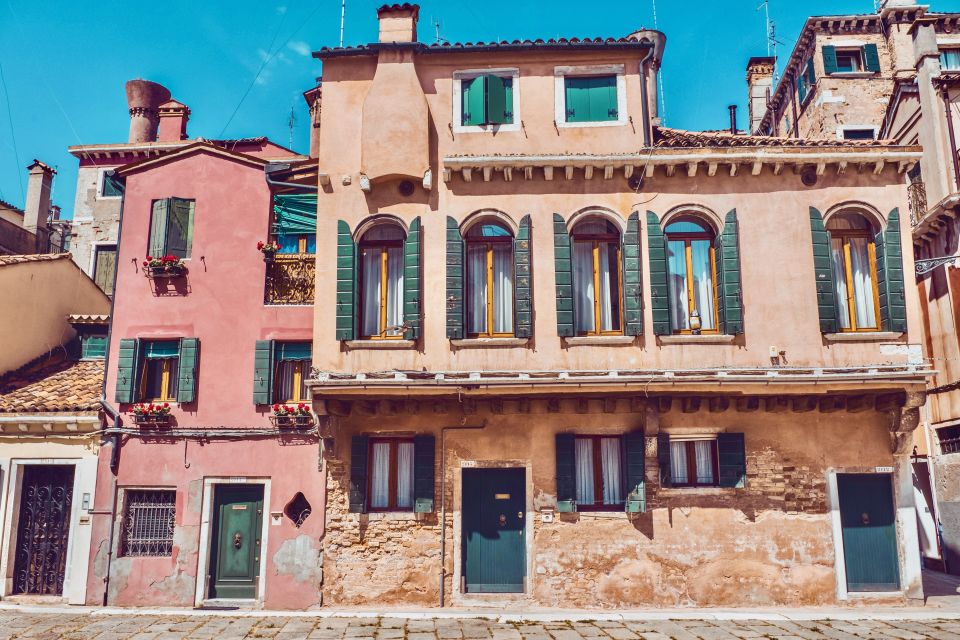
Once you leave the crush of the square, the tour starts shifting from “monumental” to “functional.” That’s where campi come in—open squares that have served as gathering spaces for centuries, and still do.
Two stops stand out in the plan:




Campo Santa Maria Formosa
This is the kind of square that feels different from the tourist magnets. It’s a reminder that Venice’s identity isn’t only about grand structures. Campi like this are where the city’s everyday social life used to happen, and where you can still sense the city’s scale and pace.
Even if you’re not a history buff, this stop helps you “reset” your eyes. You start noticing the way buildings frame space, how bridges and calli funnel movement, and how the city’s layout shapes daily routes.
Campo San Giovanni & Paolo and the Basilica there
This is a bigger anchor. You’ll visit campo San Giovanni & Paolo, where the Basilica is connected to the burial of the doges of Venice. That detail is powerful, because it ties leadership directly to place. Instead of thinking about rulers as names in books, you connect them to real structures you can stand near.
The takeaway is not just that the doges were buried there. It’s that Venice’s political and religious authority was physically organized into the city. The guide’s job is to connect those dots while you’re walking, and this stop is where that connection becomes tangible.
Castello calli, bridges, and canals: what “less crowded” really means
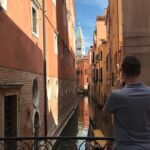
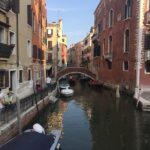
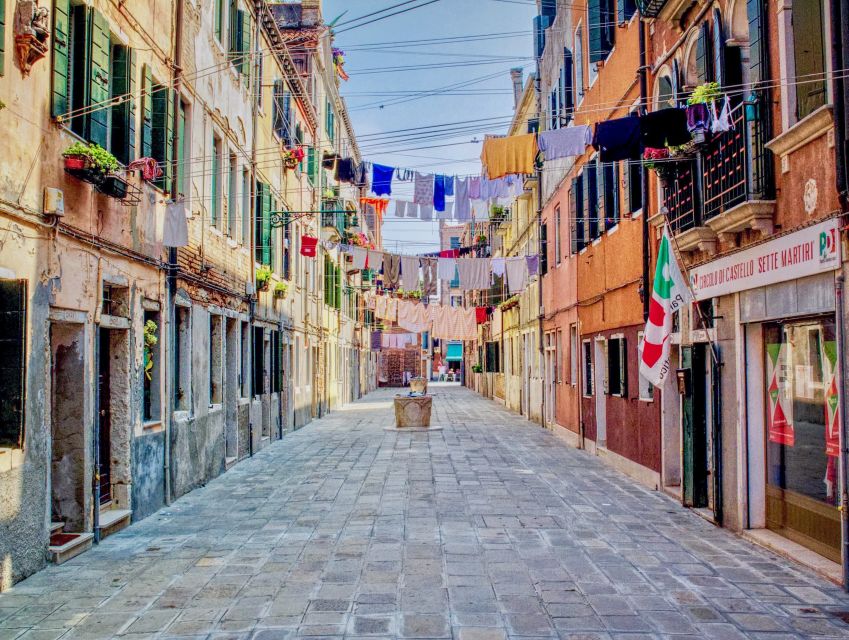
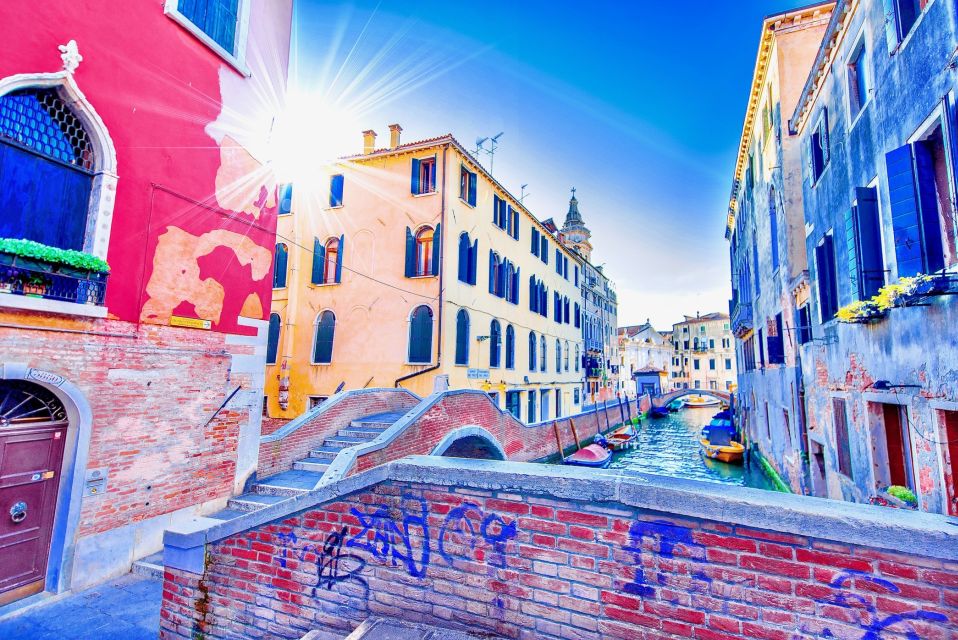
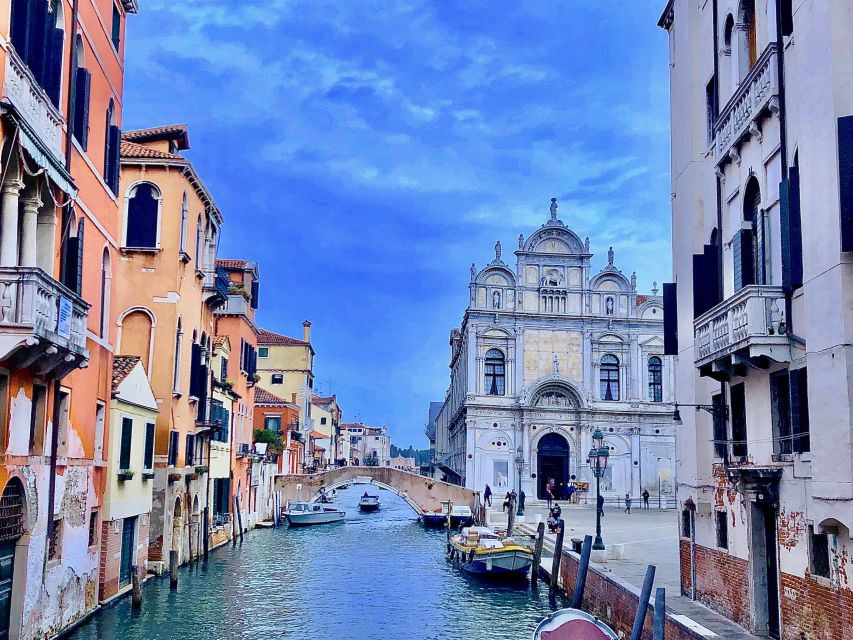
Castello is one of those Venice areas where your first thought might be, Wait, this is still Venice. It feels older and more residential. The streets are narrower. The bridges show up as practical crossings instead of photo props. And the campi seem less like stages and more like rooms in an ongoing city.
This is where the tour’s promise of escaping crowds becomes real. You’re led into:
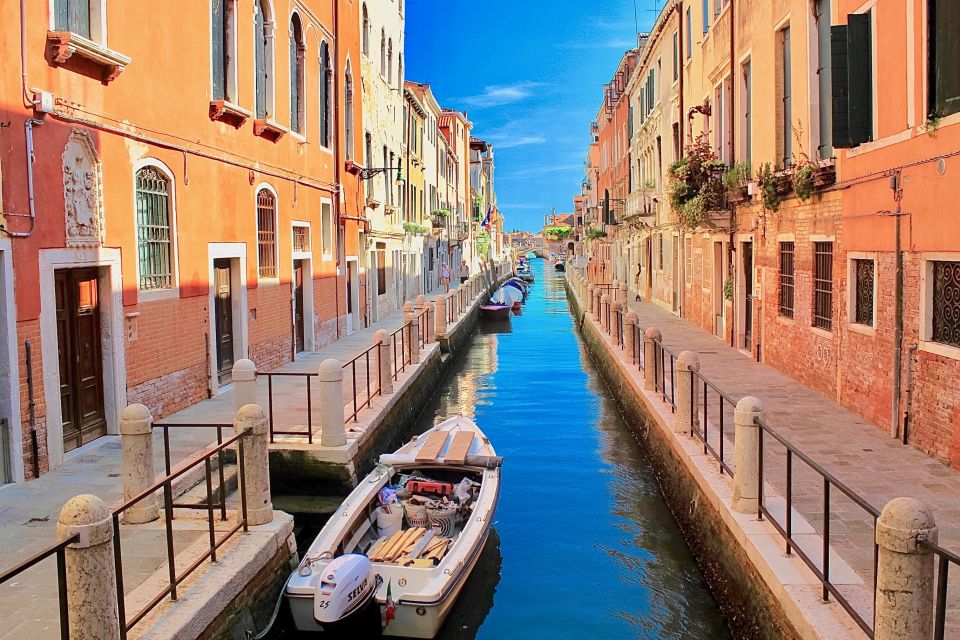
- narrow alleys called calli
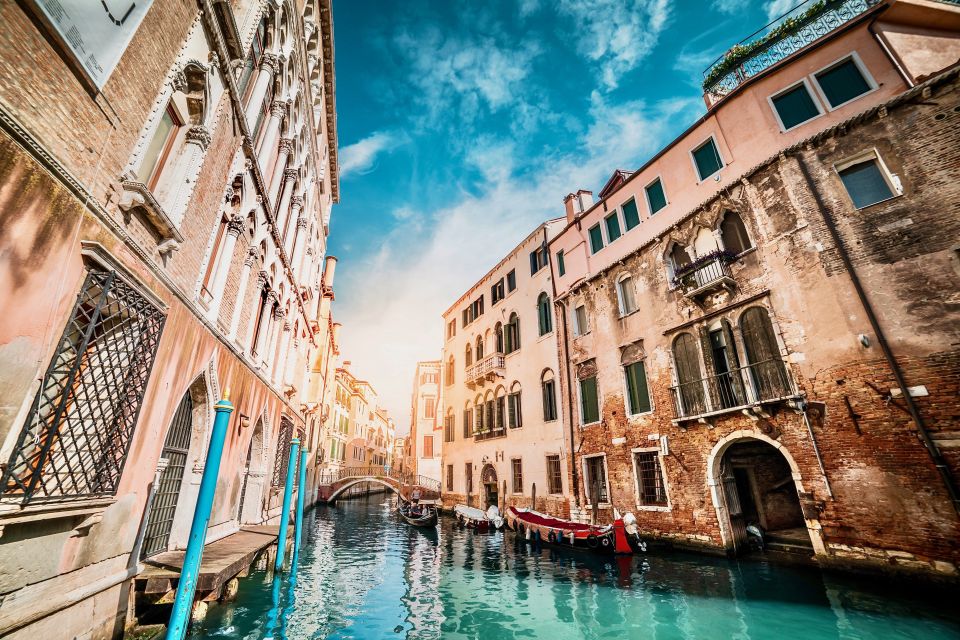
- bridges and winding canals
- wider picturesque campi that break up the walk and give you brief visual rest
I like this because it changes how you experience the city. Instead of only seeing what’s famous, you start seeing how Venice actually works as a walking system. Where the streets “want” to lead you. How neighborhoods connect. And how the city’s layout creates constant change of view.
A small, practical note: you can expect the ground and turns to be uneven. Comfortable shoes aren’t optional here.
Heading back through Mercerie: a practical end to your orientation walk
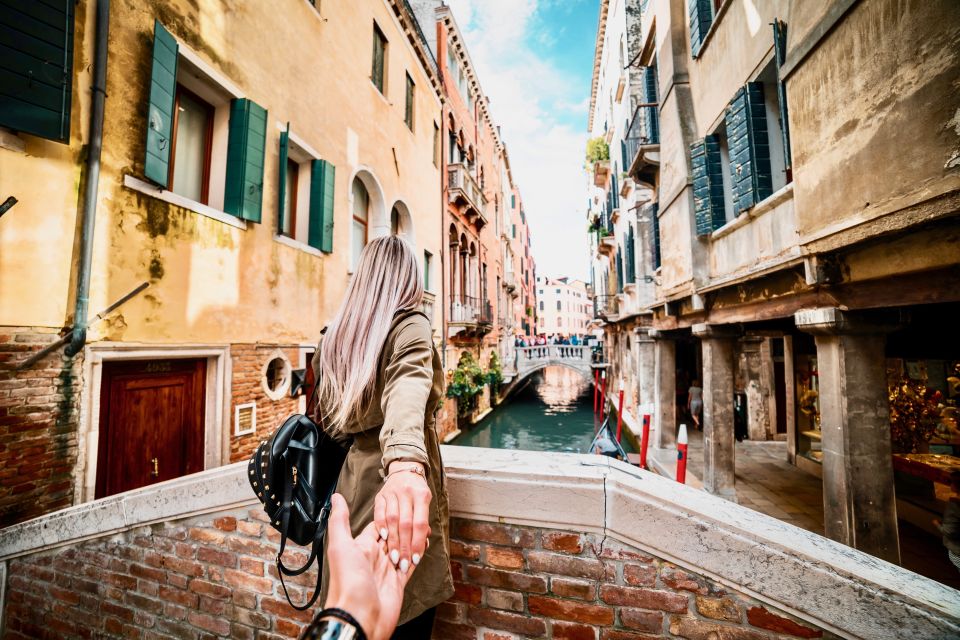
After you finish in Castello, you return with your guide back to San Marco’s Square, passing through Mercerie. This is the shopping connection street between Rialto and San Marco.
That end route is smart. It gives you a “walkable spine” of the city—so later, when you’re trying to get from sights to meals to shopping, you have a sense of which corridors actually link neighborhoods.
It’s also a reminder that Venice isn’t only canals and cathedrals. It’s daily movement: people crossing, stopping, browsing, and heading home.
The headset and multilingual guide: clarity beats guessing
One reason this tour stands out is the built-in listening setup. You get a personal audio system and headset, plus live tour commentary in multiple languages. The tour information lists English, French, German, Spanish, and Italian.
From a practical standpoint, headsets are more than a nice-to-have in Venice. Streets can be loud. People pass close by. And if you’re not standing right next to the guide, you’ll still catch the story. That makes the experience smoother and reduces the frustration of constantly trying to hear over the crowd.
Reviews also support that the guides are strong communicators. Multiple mentions highlighted guides who were professional, passionate about history, and able to explain things clearly—one review praised a Venetian-origin guide for speaking excellent French.
Price and value at $37: what you’re really paying for
At $37 per person for a 1.5-hour walking tour, you’re paying for three things:
- a qualified local guide who can connect the dots between landmarks and day-to-day Venice
- a structured route that helps you avoid wasting your limited time in the busiest streets
- a headset system so you don’t lose the narration when you’re walking or stopping
Because the tour is exterior-only, it doesn’t replace museum tickets. But it can save you time and confusion. If this is your first day—or if you’re only here briefly—paying for guidance can be a better value than wandering blindly and trying to interpret everything from scratch.
I also see value in the timing. If you pick an earlier slot, you can reduce discomfort from heat and crowds. That’s not “free,” but it’s a real quality-of-life upgrade.
Who this walking tour fits best
This is a great fit if you want:
- a guided introduction that helps you read Venice quickly
- a route that shifts from famous square to quieter Castello streets
- clear narration thanks to the headset system
- history explained in a way you can connect to what you see on the street
You might skip it if:
- you’re only interested in museum interiors or booked attractions (this tour does not include them)
- you need wheelchair access (it’s not wheelchair accessible)
Also, if you expected a tiny group, keep an open mind. One review mentioned that the group felt less small than hoped. That doesn’t mean it’s chaotic—just that the experience can vary.
Should you book this Venice walking tour?
I’d book it if you’re using Venice wisely and want a first-pass understanding of the city’s layout and symbols. It’s short, it’s structured, and it moves you from St. Mark’s Square into the more local-feeling Castello area where Venice starts to look like a living city again.
Skip it only if you specifically want museum time or you can’t do the walking. If you can walk for 1.5 hours and you’d like your Venice to come with context—not just sights—this is a solid, good-value way to start.
FAQ
Where is the meeting point?
You’ll meet 15 minutes before the tour starts in Calle larga de l’Ascension 30124, behind the Correr museum on the opposite side of Saint Mark’s Basilica. Look for the TURIVE assistant next to the post office San Marco.
How long is the tour?
The tour lasts 1.5 hours, and you should check in 15 minutes prior to the booked start time.
What languages are available?
The live tour commentary is available in English, French, German, Spanish and Italian (with the tour guide language list also including Spanish, German, English, and French).
Is the tour wheelchair accessible?
No. This walking tour is not wheelchair accessible.
Does it include museums or attraction entry?
No. It’s an external walking tour only and does not include museum or attraction access.
Can I cancel for a full refund?
Yes. You can cancel up to 24 hours in advance for a full refund.