REVIEW · POMPEI CAMPANIA
Pompeii Skip-the-Line Tour with Expert Archeological Guide
Book on GetYourGuide →Operated by WORLDTOURS S.r.l. · Bookable on GetYourGuide
Pompeii hits you fast, and this tour helps you feel it. You move through key ruins with a licensed archaeology guide, so the stones turn into stories, from everyday shop life to the tragedy of Vesuvius.
What I like most is the mix of big landmarks and small, human details: you get temples, villas, markets, and preserved brothel spaces in one focused loop. The other strong point is the guide-led pacing through the plaster casts of victims, which sets the emotional tone without turning it into a lecture.
One possible drawback: the experience can feel crowded and timing can shift with site access. Also, some people find the audio earpieces hit-or-miss, so bring patience and plan to test fit early if you’re given them.
In This Review
- Key highlights to know before you go
- Fortuna Village meetup and the start of your Pompeii loop
- Skip-the-line entry: the real payoff (and what to expect anyway)
- The emotional anchor: Vesuvius plaster casts and what they change
- First stops in the city: theatre, snack culture, and quick photo moments
- The civic core: Foro Civile di Pompeii and what public life looked like
- Pompeii homes that feel personal: House of the Vettii
- House of Menander: learning from layout and decoration
- Bathing, betting, and commerce: Forum Baths and the Macellum
- Temples of Jupiter and Apollo: fast but meaningful stops
- Cameo workshop stop: a craft break before the hardest walking
- Small group experience: when it works best (and when it doesn’t)
- Practical tips to make this Pompeii tour feel worth the money
- Who should book this Pompeii skip-the-line tour
- Should you book this Pompeii tour?
- FAQ
- What’s the meeting point for the tour?
- How long is the guided tour inside Pompeii?
- What’s included in the price?
- Which languages are available for the live guide?
- Is the tour suitable for wheelchair users or people with mobility impairments?
- Is admission free on certain dates?
- Do I need to bring ID?
- Are ear pieces provided?
- What items are not allowed during the visit?
Key highlights to know before you go
- Licensed archaeology guide: explanations stay grounded in the site, not generic facts
- Plaster casts of Vesuvius victims: a quick stop that changes how you read everything else
- Houses of the Vettii and Menander: real insight into status, decoration, and daily routines
- Forum Baths and the Macellum: you see how people ate, bathed, and traded
- Temples of Jupiter and Apollo: brief but memorable photo moments plus context
- Cameo workshop stop: a useful break and a glimpse of handcrafting before the ruins
Fortuna Village meetup and the start of your Pompeii loop
Your tour begins at the entrance area of Fortuna Village Pompei, with the guide holding a sign for easy spotting. This matters because Pompeii can be a visual maze, and getting off to a clean start saves you from stress later.
Once you’re together, you’re immediately in the mode Pompeii demands: good shoes, steady walking, and short stops for photos and interpretation. The guided portion lasts about 2 hours inside the ruins, so you’re not trying to “do Pompeii” in one go. You’re choosing a smart circuit that covers the town’s most teachable areas.
Also note the tour is not for everyone. If you have mobility limits, or you’re using a wheelchair, this one likely won’t work well. You’ll be on uneven surfaces and moving between sites where accessibility isn’t designed for comfort.
You can also read our reviews of more tours and experiences in Pompei Campania.

Skip-the-line entry: the real payoff (and what to expect anyway)
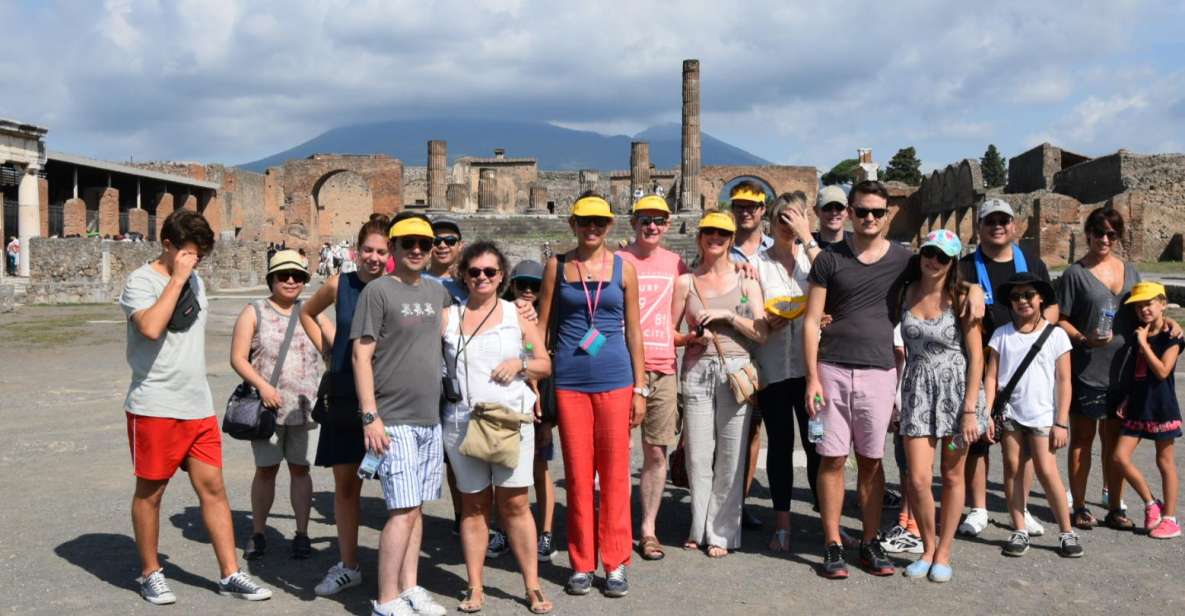
You do get skip-the-line entrance, which is a big deal in peak season. Pompeii is one of those places where waiting can eat your whole morning, and even a short delay can make the day feel less relaxed.
That said, skip-the-line usually means you avoid the main ticket queue, not every possible slow moment at entry. You might still run into a line at turnstiles or at the first choke points once inside. The upside is that you should spend more of your time learning than standing.
The other value here is timing focus. Since your time in the ruins is limited, skipping ticket hassle helps you arrive at the important spots while your brain still has room to absorb details.
The emotional anchor: Vesuvius plaster casts and what they change
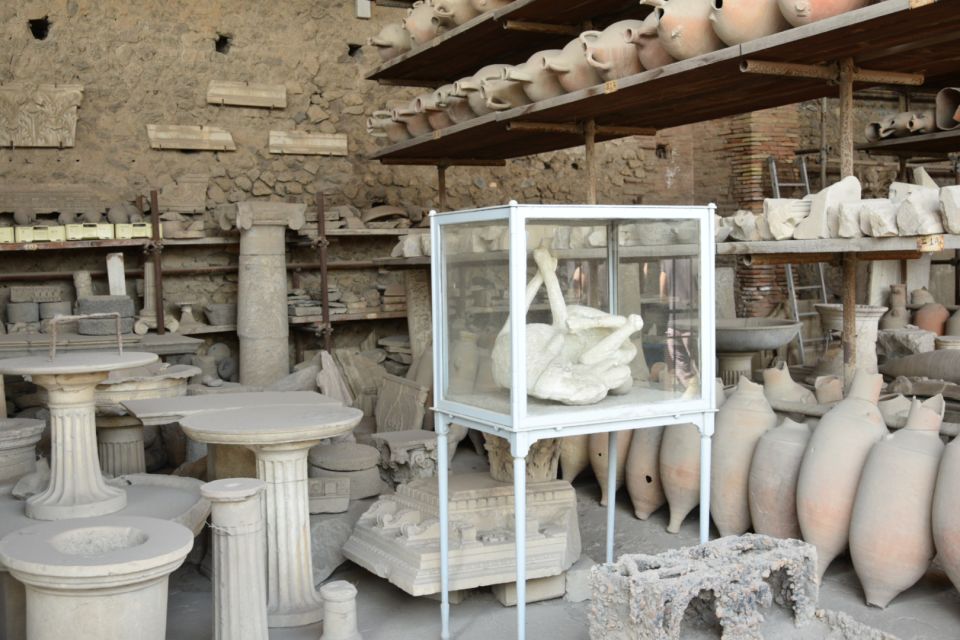
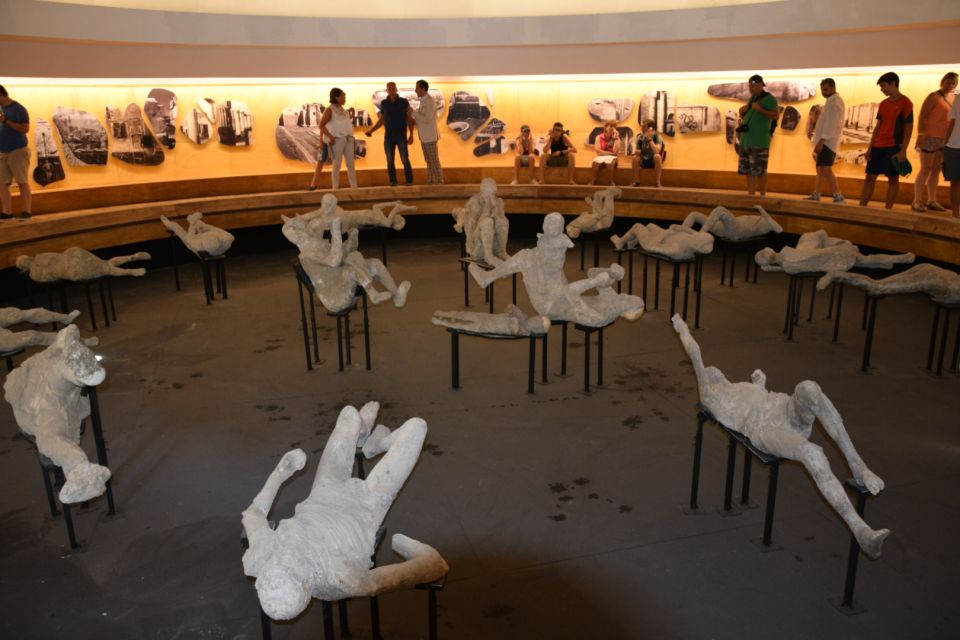
A major tone-setter on this visit is the stop for the plaster casts of victims from the 79 AD eruption. This isn’t just a dramatic headline. It changes how you interpret everything around it.
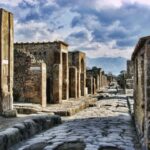
After you see the casts, the ruins stop being “ancient buildings” and start feeling like places where real people lived their final day. From that point, you’ll likely notice the built-in rhythms more: the street layout, the way homes open toward courtyards, and how commerce and religion sat side by side.
If you’re the type who likes meaning before monuments, start by letting this moment land. Then you’ll get more from the rest of the route, because the guide’s stories won’t feel like trivia. They’ll feel like context.
First stops in the city: theatre, snack culture, and quick photo moments
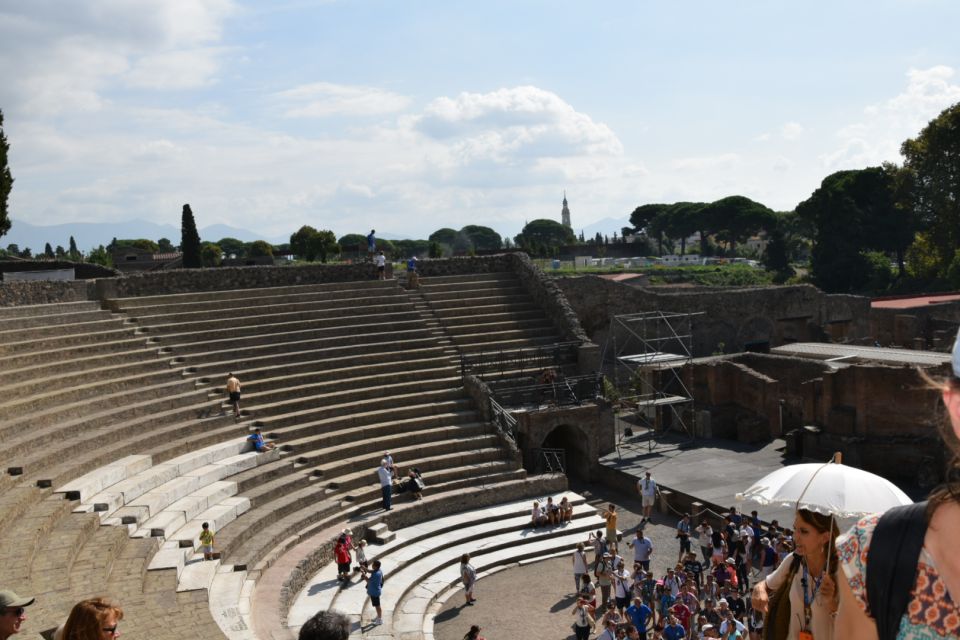
You’ll hit a couple of early points that give you a sense of Pompeii’s daily mix. There’s time for the Large Theatre for a brief visit, then a photo stop at Teatro Piccolo. Even short stops can work here because the guide’s explanations help you read what you’re looking at instead of just snapping pictures and moving on.
Then you move toward a thermopolium, which is essentially a Roman hot-food counter. This is a smart inclusion because Pompeii isn’t only temples and rich houses. It’s also people grabbing something quick, trading news, and eating where you can almost picture the line.
The drawback of early pacing: with only about 2 hours in the ruins, these stops are intentionally tight. If you’re hoping for long lingering, you’ll want to plan extra time on your own afterward.
The civic core: Foro Civile di Pompeii and what public life looked like
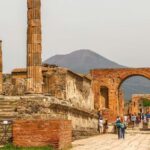
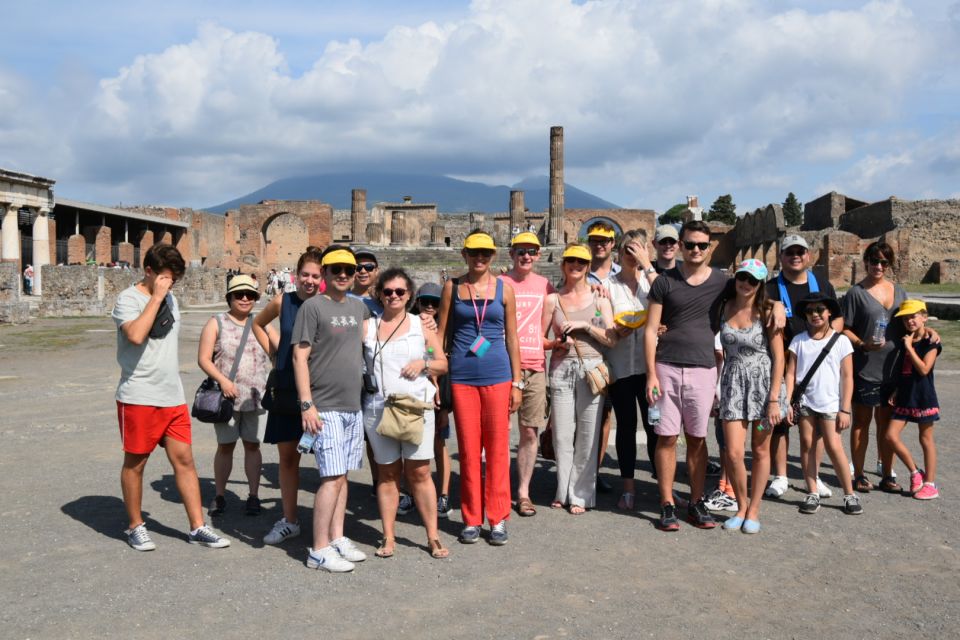
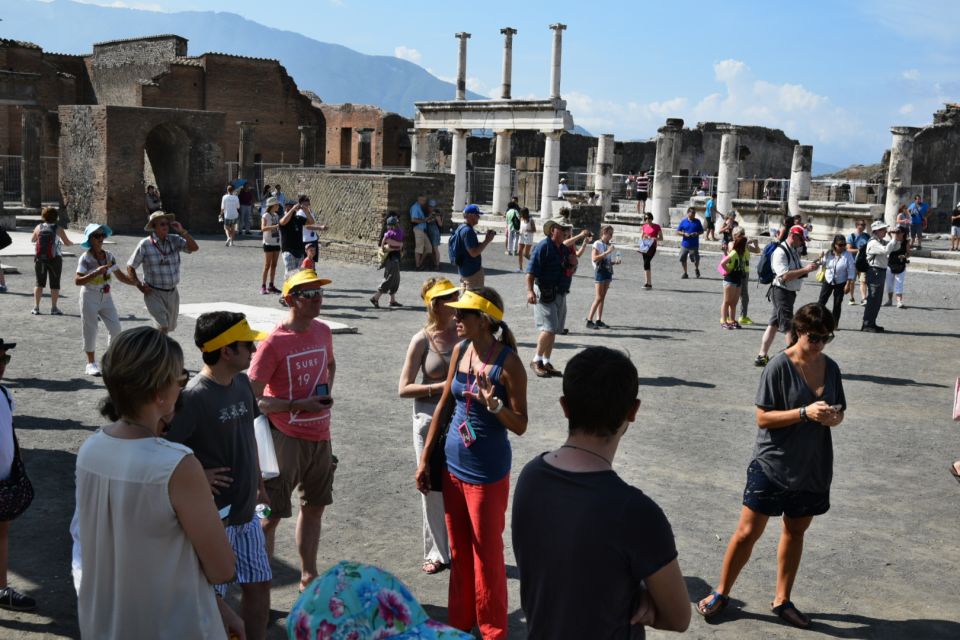
The route turns to the Forum area, where civic life happened. You’ll spend around 10 minutes here, which might sound short, but it’s long enough to connect the dots if you pay attention to what the guide points out.
The Forum isn’t just a place for speeches. It’s where power, religion, and community identity overlapped. In Pompeii, you can often see that overlap in the spaces right around you: how buildings face the public, where movement funnels, and how the layout supports gatherings.
A practical tip: when the guide explains the Forum, take a second to look for visual axes. Pompeii was designed to be read as you move. If you keep your eyes up for how buildings align, the place starts to make sense faster.



Pompeii homes that feel personal: House of the Vettii
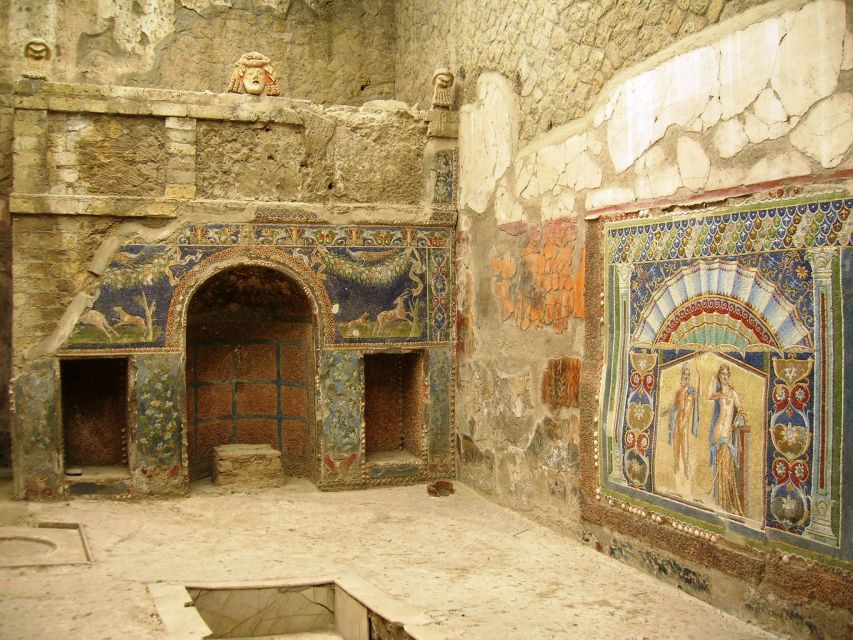
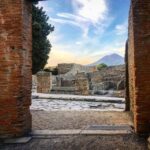
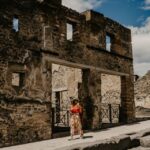
The House of the Vettii is one of the tour’s longer stops at about 20 minutes. This is where the “frozen in time” idea becomes real, because domestic spaces show you status in stone: decoration choices, layout priorities, and how private life connected to the public street.
What I like about including a house like this on a 2-hour tour is the balance. You’re not only looking at what rich people could afford. You’re also learning what that meant day to day: how people gathered in courtyards, how rooms flowed, and why ornament mattered.
If you’re sensitive to crowds, this is a good place to slow down and take your own pace. Even 10 to 15 steps in any direction can change what you notice, and the guide’s commentary should help you spot details you’d otherwise miss.
House of Menander: learning from layout and decoration
Next comes the House of Menander, also about 20 minutes. This one is useful for understanding how Roman homes weren’t one-style chambers. They were systems: entry, transition, social spaces, and private areas worked together.
Menander is also a good stop for spotting the difference between “pretty mosaics” and “this is information.” Roman decoration often signals identity, taste, and sometimes education or aspiration. With a guide, you’re more likely to understand what you’re seeing rather than just admiring it.
The only consideration: houses can feel similar if you’re rushing. That’s why timing matters. If you’re already tired, it can help to focus on two things per house: the entry sequence and the main gathering space. You’ll remember the stop more clearly.
Bathing, betting, and commerce: Forum Baths and the Macellum
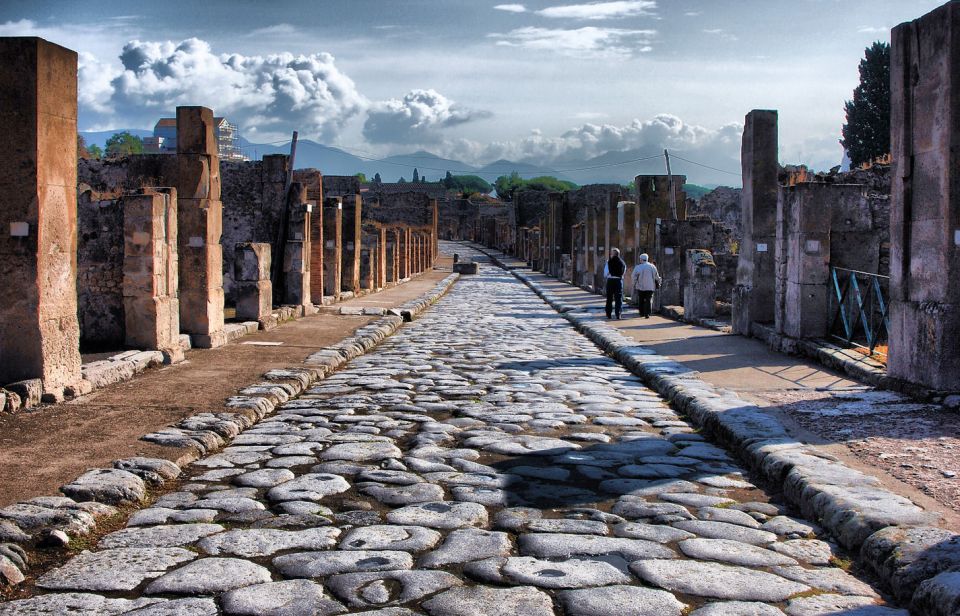
You’ll spend about 20 minutes at Forum Baths, then move to the Macellum around 10 minutes. This is a strong pairing because it shows two engines of everyday life: hygiene and food.
At the Baths, the guide’s explanations usually help you understand the purpose of the different areas. Pompeii’s bath culture wasn’t only cleanliness. It was social time, a chance to talk, relax, and keep your routine.
At the Macellum, the key is commerce: markets weren’t abstract. People came here with needs, schedules, and budgets. You’ll see how food distribution worked and why market spaces were built for movement and quick access.
If you’re a foodie or just love observing daily life, these two stops are where Pompeii feels most modern.
Temples of Jupiter and Apollo: fast but meaningful stops
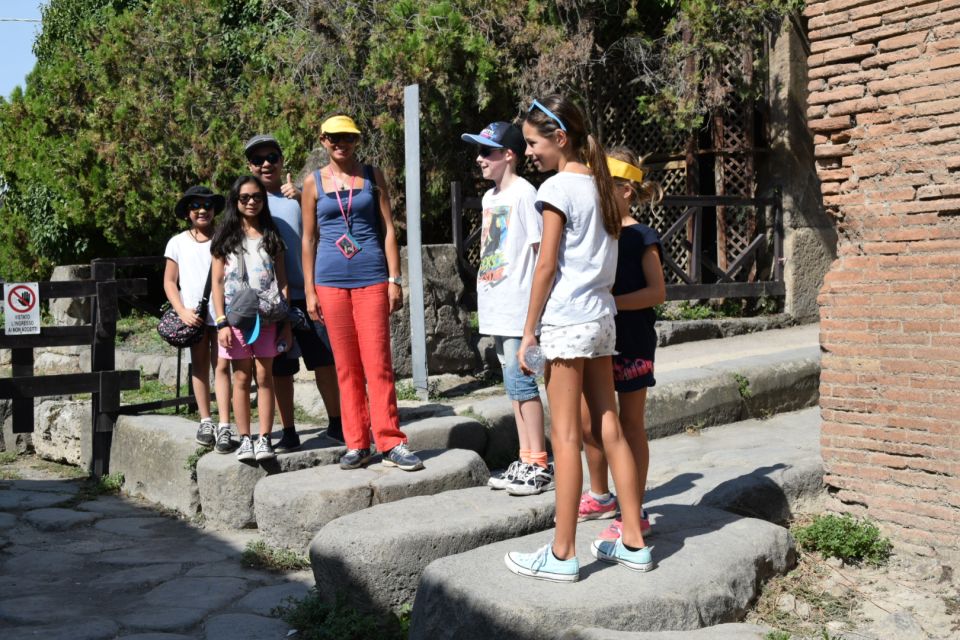
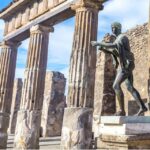
You’ll get photo time at the Temple of Jupiter and then about 10 minutes at the Temple of Apollo. These are shorter on the schedule, but they’re chosen for a reason: temples are where Roman beliefs turned into architecture you could feel.
Even with limited time, you’ll likely come away with a better sense of what a temple space was for. It wasn’t just worship. It shaped how people organized civic identity and how they understood the universe as part of their city.
A practical move: take your photos, then let the guide tell you what to look for next. Temple details are easy to miss at camera speed.
Cameo workshop stop: a craft break before the hardest walking
Before you dive fully into ruins, you’ll pause at a traditional cameo workshop, where artisans carve delicate shell by hand. This is not just a souvenir stop. It’s a quick reset from stone and a chance to see a skill that uses patience and precision.
You may also appreciate the restroom break here. That small convenience can make a big difference when you’re about to walk for real.
If you’d rather avoid market-style detours, keep expectations realistic. This stop is short, and it’s included mainly for the experience plus practical comfort on the route.
Small group experience: when it works best (and when it doesn’t)
This tour is advertised as a small group, and the guide’s role is front and center. People often praise the way guides keep explanations moving and understandable, with names like Michael and Analisa coming up for energy and clarity.
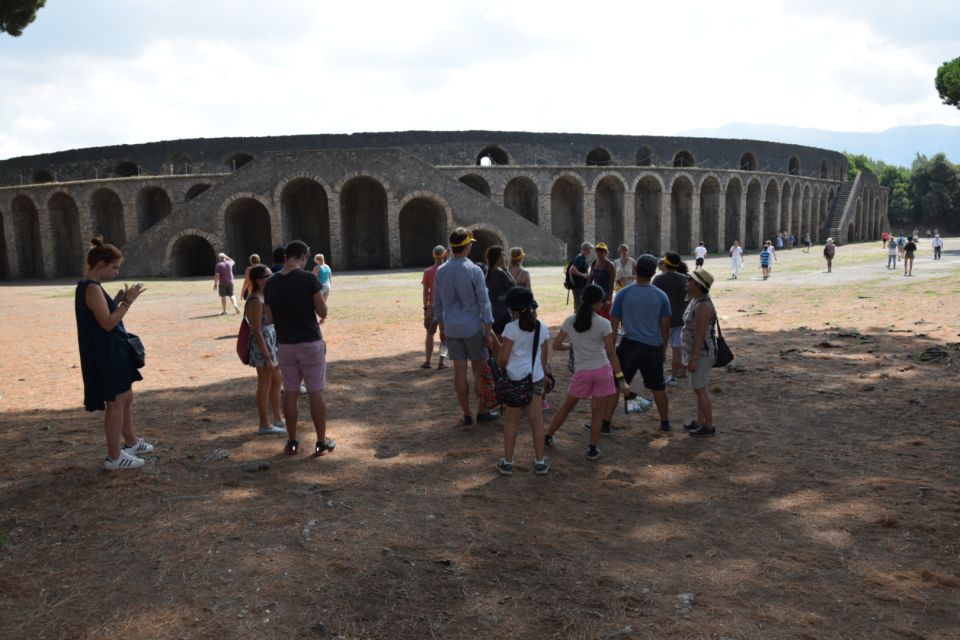
Still, a small warning based on real-world variation: sometimes group size can run larger than you expect, and that can affect how easy it is to hear or ask questions. One thing I’d do in your shoes: arrive a few minutes early so you’re close to the guide at the start, especially if audio gear is involved.
Speaking of audio gear, some visitors have complained about ear pieces that didn’t fit well. If you get offered them, check your comfort quickly and keep track of them. If audio feels weak, don’t be afraid to switch sides to hear better.
Practical tips to make this Pompeii tour feel worth the money
At $31 per person with a licensed archaeologist guide and skip-the-line entrance, you’re paying mostly for time savings and interpretation. Pompeii is too big to freestyle well if you only have a couple of hours. A guide helps you choose the right “reading order,” and that’s real value.
Here’s how to get the best return on that 2-hour window:
- Wear comfortable shoes you trust on uneven ground, then bring socks you can live with for hours.
- Bring water and keep it easy to access.
- Have your passport or ID ready, since it’s required for entry rules like reduced/free admission for some visitors.
- Bring your camera, but also pause enough to look without it. Pompeii details can be subtle.
Also, keep in mind what you can’t bring: no drones, no large bags, no walking sticks, and no pets. Pompeii is strict, and it’s better to travel light.
Who should book this Pompeii skip-the-line tour
This is a great fit if you:
- Want a guided highlight circuit instead of trying to plan Pompeii alone
- Care about Roman daily life, not only big monuments
- Prefer learning from an archaeologist-style narrative in a short time frame
- Want a small-group feel and are okay with quick stops rather than long wandering
You might want a different plan if you:
- Need wheelchair-friendly access
- Want hours inside the amphitheatre or the less-touristed corners beyond the main circuit
- Hate tight pacing and photo-stop moments
If you’re visiting on the first Sunday of the month, there’s a twist: entry to the archaeological site is free, but tickets can’t be reserved ahead, so entry isn’t guaranteed.
Should you book this Pompeii tour?
Yes, I think you should book it if you’re trying to make Pompeii manageable and meaningful. For a half-day-ish commitment, you’re getting real guide-led context in the right locations: Forum civic life, two notable houses, baths, a market, and temples, plus the Vesuvius casts that change how everything feels.
Book with extra flexibility if crowds are heavy or if you’re picky about audio comfort. And if cameo crafts aren’t your thing, use that stop for the restroom and reset your energy for the ruins.
Overall, this is a solid value choice: you pay for guidance and time savings, then you leave with a Pompeii you can actually picture.
FAQ
What’s the meeting point for the tour?
Meet the guide outside the entrance of Fortuna Village Pompei. The guide holds a sign with the company name.
How long is the guided tour inside Pompeii?
The guided tour lasts approximately 2 hours inside the ruins.
What’s included in the price?
The tour includes the meeting point in Pompeii, a Pompeii skip-the-line entrance, a licensed archaeologist guide, and the cameo factory and shop stop.
Which languages are available for the live guide?
The live tour guide is available in English, Italian, Spanish, and French. The tour may be bilingual.
Is the tour suitable for wheelchair users or people with mobility impairments?
No. This tour is listed as not suitable for people with mobility impairments and wheelchair users.
Is admission free on certain dates?
Yes. According to regional regulations, admission to the site is free on the first Sunday of each month, but entry is not guaranteed because tickets can’t be reserved ahead of time.
Do I need to bring ID?
Yes. You must bring a passport or photo ID, especially for entry rules tied to age.
Are ear pieces provided?
The tour involves guide audio equipment in some cases, but comfort can vary. If you’re offered audio earpieces, check the fit and be ready to adapt if they don’t feel right.
What items are not allowed during the visit?
Pets are not allowed. You also can’t bring luggage or large bags, drones, walking sticks, or unaccompanied minors.