REVIEW · VENICE
Venice Commissario Brunetti and Donna Leon: Walk His Beat
Book on Viator →Operated by deTourist Venice Valerio Coppo · Bookable on Viator
Brunetti’s Venice feels real. This 2-hour walk maps Donna Leon’s stories onto specific street corners and palazzi, with stops in quiet Cannaregio and an ending at the Questura green doors area. I especially like how the route keeps pulling you off the main sightseeing loops, and how the guide, Valerio Coppo, links each scene to the neighborhood you’re standing in, not just a random landmark.
One thing to plan for: you’ll be on your feet for the full stretch. Expect uneven, tight Venice streets, so it’s best if you’re comfortable with a steady walk at an old-city pace.
In This Review
- Key Things You’ll Notice on This Walk
- Following Brunetti’s Footsteps in Cannaregio
- Start at the House Door (and Get Oriented Fast)
- Church Stops That Act Like Story Sets
- Strada Nova and the Bar Scene Rhythm
- Another Cannaregio Pub Moment (Where Investigation Turns Personal)
- Rosa Salva and a Note on the Venice of Food and Routine
- San Zanipolo (Basilica dei Santi Giovanni e Paolo) as a Wayfinding Anchor
- San Francesco della Vigna and the Questura Green Door Finish
- How Much Time It Really Takes
- Price and Value: What You’re Paying For
- Who Should Book This Walk (and Who Might Skip It)
- FAQ
- FAQ
- How long is the Venice Commissario Brunetti and Donna Leon walk?
- What does it cost?
- Is pickup included?
- Where do I meet the guide?
- What language is the tour in?
- How large is the group?
- What if weather is bad?
- Is there an access fee on some days?
- Should You Book It?
Key Things You’ll Notice on This Walk
- Brunetti’s front door start point: you begin at the recognizable house door every fan looks for
- Story beats in real churches and bars: scenes unfold at places you can actually picture later
- Quiet Venice neighborhoods, not just the postcard zone: Cannaregio and nearby areas keep the crowd levels lower
- The finish at the police headquarters doors: a memorable endpoint tied to the series’
- Small group feel: capped at 15 people, which helps questions and pacing
- Valerio’s storytelling style: humor and Venice context mixed into the crime-location walk
Following Brunetti’s Footsteps in Cannaregio
This tour is built like a guided walk through a map of the series. You start in Cannaregio, and the first moment lands fast: you begin right at Brunetti’s house door. It’s the kind of detail that makes fans grin, but it also helps you understand something practical: you’re not touring Venice at random, you’re learning the city in the sequence the story uses.
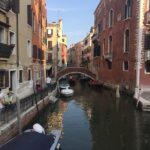
From there, the walk shifts gears into Venice’s everyday rhythm. You’ll move through spaces that feel local—small streets and working neighborhoods—where you can spot how the canals, bridges, and building layouts shape movement. That’s the big value here: the city’s geography helps you understand why these scenes work on screen and why they still feel plausible in real life.
You can also read our reviews of more tours and experiences in Venice.
Start at the House Door (and Get Oriented Fast)
The beginning is short but important. You spend about 10 minutes at the Brunetti house door, and it sets the tone for the rest of the walk. If you love the books or the TV series, this is where the references start to feel less like trivia and more like wayfinding.
Even if you’re not deep into the series, the approach helps you “read” Venice. Doorways, side entrances, and how narrow the streets are all matter here. In Venice, one turning point can change the whole feel of a scene, and that’s exactly what this start is teaching you.
Church Stops That Act Like Story Sets
A major strength of this tour is how it uses churches as chapter markers. One of the stops is the Chiesa di Santa Maria Maddalena, where the tour places you amid a crime-scene moment: masked figures flee through a side entrance and the chase unfolds with the Commissario and colleagues. One of them is caught, to Brunetti’s surprise, and turns out to be his daughter Chiara.
What you’ll like about this kind of stop is the contrast. Churches can feel still and solemn, but the story moment gives you a way to see them as part of daily life—spaces with side doors, routes of escape, and sightlines. The tour also keeps the explanations moving, so you’re not stuck listening while staring at stone for too long. The time at each stop is about 10 minutes, so you get story context without losing momentum.
Strada Nova and the Bar Scene Rhythm
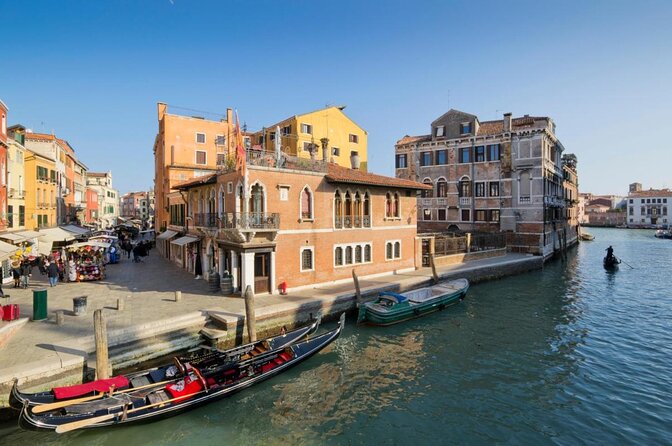
Next comes Strada Nova, where the tour ties you to a bar moment with Signora Gismondi and a tiny, human detail—two last balls of chocolate ice cream—set alongside the tension of the plot. It’s a clever reminder that crime stories don’t only happen in grand locations. They happen in the places where people actually stop, wait, chat, and make quick choices.
This stop also helps you picture how Venice neighborhoods connect. Bars and back streets create a web, and the tour uses that web to show you the city as a system, not a list of monuments. If you tend to get overwhelmed by big sights, these short, story-focused pauses are a relief.
Another Cannaregio Pub Moment (Where Investigation Turns Personal)
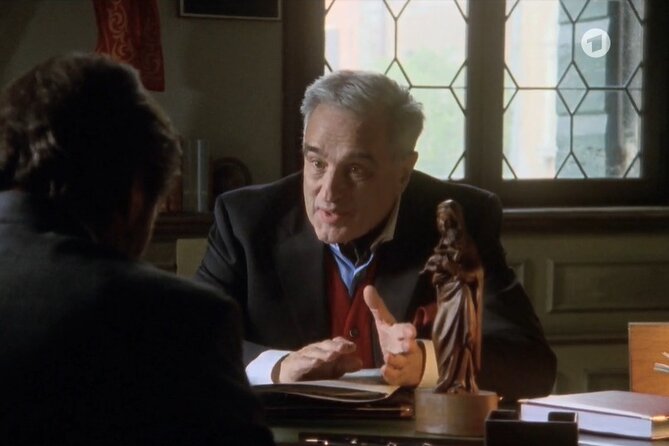
The walk returns to Cannaregio for a discussion scene after Brunetti realizes Chiara’s connection to Angelo Animale, the radical animal protection organization. The tour frames this around the murder of Professor Nava, who had been employed in the slaughterhouse, and it explains why the investigation shifts toward Chiara’s so-called animal angels.
This is the kind of storytelling that works on the street. Instead of treating the scene like a cold script recap, you get the reason behind the change in focus. That’s useful if you want to understand what you’re seeing: you learn how character connections drive where the police go next—and you feel the logic of Venice streets as a practical setting for investigation.
One small drawback: if you only skim the series, you might miss some of the relationship context. The tour doesn’t require you to know everything, but the emotional beat matters. Still, it’s a good choice even for casual viewers because the physical surroundings do the heavy lifting.


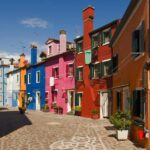
Rosa Salva and a Note on the Venice of Food and Routine
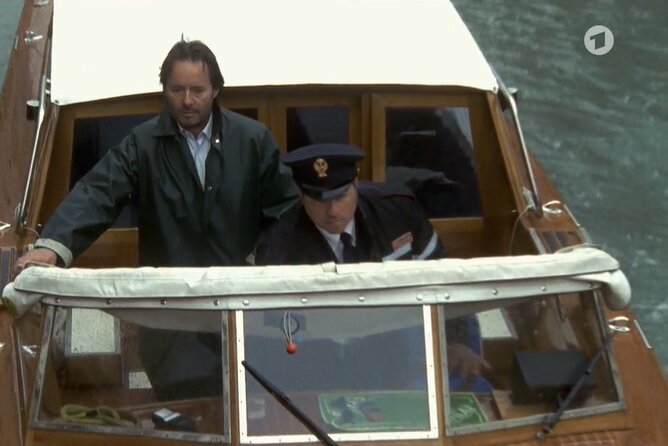
One of the stops is Rosa Salva – SS. Giovanni e Paolo, again about 10 minutes. Here, the tour places you at a bar where Vice-Questore Patta used to eat grappa too much, and where Vianello enjoys the best café in town and the delicious croissants. You’ll also hear about the kind of order an inspector might go for—panino prosciutto or a tramezzino with ham and artichoke—paired with a glass of white wine.
I like this stop because it breaks the crime-mood just enough to feel like Venice. You’re not only learning plot locations; you’re learning what people do between plot points: drink coffee, grab a sandwich, keep moving. It also gives you a practical idea for your own time in the neighborhood. If you want to extend the experience, this is a natural place to remember when you’re hungry later.
San Zanipolo (Basilica dei Santi Giovanni e Paolo) as a Wayfinding Anchor
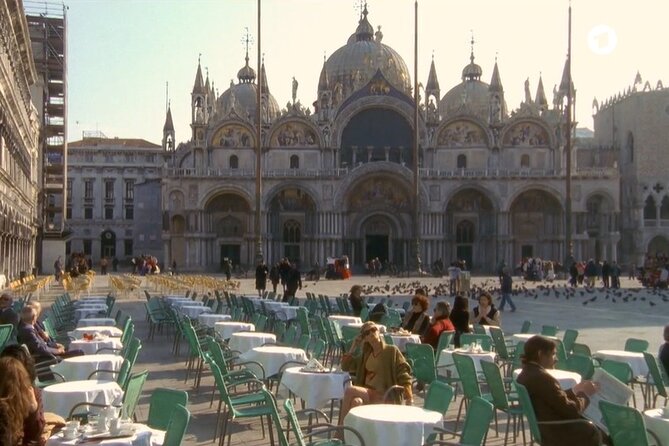
At Basilica dei Santi Giovanni e Paolo, also known as San Zanipolo, the tour focuses on the kiosk scene tied to Signora Maria. This stop helps you zoom out from the smaller streets and bars. The basilica acts like a visual anchor—big enough to orient you in your mind, yet still part of the neighborhood fabric rather than a detached tourist zone.
It’s also a smart pacing move. After several story-linked stops in tight streets, stepping into a larger landmark space helps your legs and your brain. You get a “reset” while still staying inside the story logic.
San Francesco della Vigna and the Questura Green Door Finish
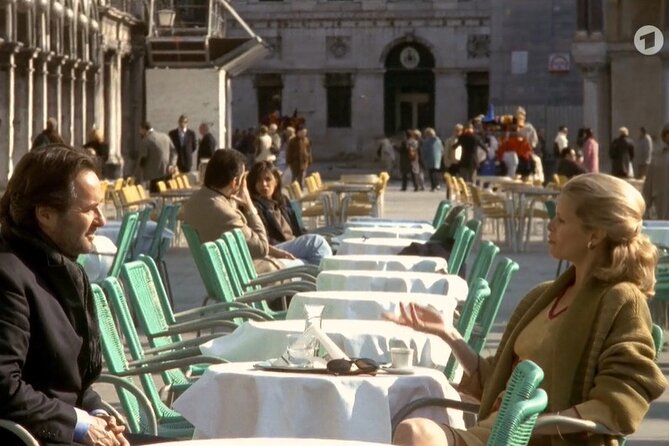
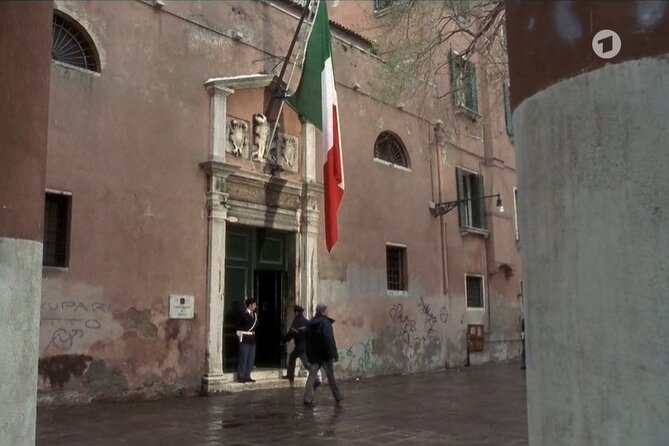
The final stop is Chiesa di San Francesco della Vigna, and this is where the tour delivers its signature payoff. You reach the striking columned hall in a campo, through which employees, visitors, and delinquents in the films hurry toward the Questura using the famous green door and a portal.
In practical terms, the finish is memorable because it’s not just a viewpoint. It’s a specific “movement” location—an arrival point that closes the story arc. Even if you’re only a casual fan, walking through to the end feels like crossing the last line in a chapter.
One caution: the Questura area itself may not look like a movie set. Some locations can look worn in real life, so don’t go expecting everything to be picture-perfect on day one. The win is that the walk still connects you to the geography of the story, and that connection often feels more valuable than how polished a façade appears.
How Much Time It Really Takes
The tour runs about 2 hours, with short stops of roughly 10 minutes each. That timing matters in Venice. You’ll cover enough ground to feel like you did something meaningful, but the stop length keeps you from burning out before the final Questura moment.
If you hate rushing, this is one of the better formats. You’ll get a clear sequence, the guide keeps it moving, and you can absorb the city in manageable bites. If you’re extremely slow-paced or easily fatigued on cobblestones, you’ll still likely manage it, but you may need to pace yourself and take extra care with your footing.
Price and Value: What You’re Paying For
At $93.16 per person for a licensed guide and a 2-hour route, this isn’t a budget stroll. But the pricing starts to make sense when you look at what you get: multiple precise story locations, a small group cap (15), and a guide who can tie street corners to plot mechanics.
The biggest value isn’t just access to famous spots. It’s the way the tour turns them into a coherent walking experience. You’re not just seeing sights; you’re learning how the city’s layout supports the drama. That’s the difference between checking boxes and actually feeling the setting.
If you already know some Venice, this tour also gives you a fresh angle. Instead of adding another monument stop, it adds context and structure to neighborhoods you might otherwise walk through quickly or skip entirely.
Who Should Book This Walk (and Who Might Skip It)
Book it if you’re a Donna Leon or Commissario Brunetti fan who wants story locations on foot, not in screenshots. You’ll also like it if you want a quieter side of Venice, with time spent in neighborhoods like Cannaregio rather than only the headline attractions.
It’s also a good fit if you enjoy guided storytelling that includes more than the plot. The tour format gives room for Venice context and practical links to places, so you can turn the walk into a better trip afterward.
Skip it only if you want a purely historical or art-focused itinerary. This is a crime-and-character walk first, Venice history second. You’ll still hear history, but it serves the story route.
FAQ
FAQ
How long is the Venice Commissario Brunetti and Donna Leon walk?
It’s about 2 hours.
What does it cost?
The price is $93.16 per person.
Is pickup included?
Pickup is offered only for private group bookings. If you have a private tour, you can ask for pickup at your hotel or another location within the historical center of Venice.
Where do I meet the guide?
You meet at Campo dei Gesuiti, 4878, 30121 Venezia VE, Italy. The walk ends at Campo San Francesco della Vigna, Campo S. Francesco, 30122 Venezia VE, Italy near the Questura green door area.
What language is the tour in?
The tour is offered in English. If you’ve booked a small group tour in German, the meeting point is Campo dei Gesuiti, at Combo, in the internal courtyard near the well.
How large is the group?
The tour has a maximum of 15 travelers.
What if weather is bad?
This experience requires good weather. If it’s canceled due to poor weather, you’ll be offered a different date or a full refund.
Is there an access fee on some days?
On certain dates, day-trippers staying outside of Venice may need to pay a city access fee. Details and exemptions are listed at https://cda.ve.it.
Should You Book It?
If you want Venice with a point of view, this is an easy yes. The walk’s strength is that it ties the series to real streets you can map in your head, starting at the Brunetti house door and ending at the green Questura door area. Add in the small group size and the fact that you’ll spend your time away from the biggest crowds, and it becomes a smart way to experience Venice beyond the obvious stops.