REVIEW · VENICE
Venice: St. Mark’s Classic Walking Tour & Bell Tower Entry
Book on GetYourGuide →Operated by CITY TOURS CO LTD · Bookable on GetYourGuide
Venice can feel like a maze. Venice’s Bell Tower at 98 meters is the moment things click: you see the whole city scale at once, and the guided stories make the sights easier to read. This 3-hour walk is built around iconic landmarks, plus backstreet detours that take you away from the loudest crush.
I also love the way the tour mixes major sights with smaller stops you’d miss alone. You’ll pass places like La Fenice Theatre and the Scala Contarini del Bovolo staircase, then end with a 3D VR Venice of the Past session that replays key moments of Venetian life.
One thing to plan for: this is a lot of walking on uneven streets and it is not suitable for wheelchair users or people with mobility difficulties.
In This Review
- Key highlights worth booking around
- Meeting in Campo San Gallo: start where the city begins
- How to think about the route
- From La Fenice to Scala Contarini del Bovolo: the quieter Venice between icons
- Getting meaning from the backstreets
- What to expect in the streets
- St. Mark’s Bell Tower: 98 meters of photos and perspective
- What you’ll spot from up there
- VR Venice of the Past: Doge’s Palace and Rialto in 3D
- How long to plan for
- Gondola ride option: a 30-minute add-on that can be great
- Price and value for $56.37: where the money actually goes
- Who should book this tour, and who should skip it
- Should you book St. Mark’s Classic Walking Tour with Bell Tower and VR?
- FAQ
- How long is the Venice St. Mark’s Classic Walking Tour?
- Where do I meet the group?
- Is the Bell Tower entry included, and do I skip the ticket line?
- What is included in the VR Venice of the Past experience?
- Is a gondola ride included?
- What languages are available for the live guide?
- Is this tour wheelchair accessible?
- What should I bring?
Key highlights worth booking around

- San Marco and Rialto with off-path calli: you get the famous names and the quieter alleys between them
- La Fenice facade and Scala Contarini del Bovolo: architecture stops that make the city feel personal
- Skip the ticket line for St. Mark’s Bell Tower: more time looking, less time waiting
- 98-meter views from the bell tower: domes, St. Mark’s Square, and the lagoon in one photo sweep
- VR Venice of the Past: VR headsets show the Grand Canal, Doge’s Palace as a fortress, and Rialto Bridge as a drawbridge
- Optional 30-minute guided gondola ride: included only if your option selects it
Meeting in Campo San Gallo: start where the city begins
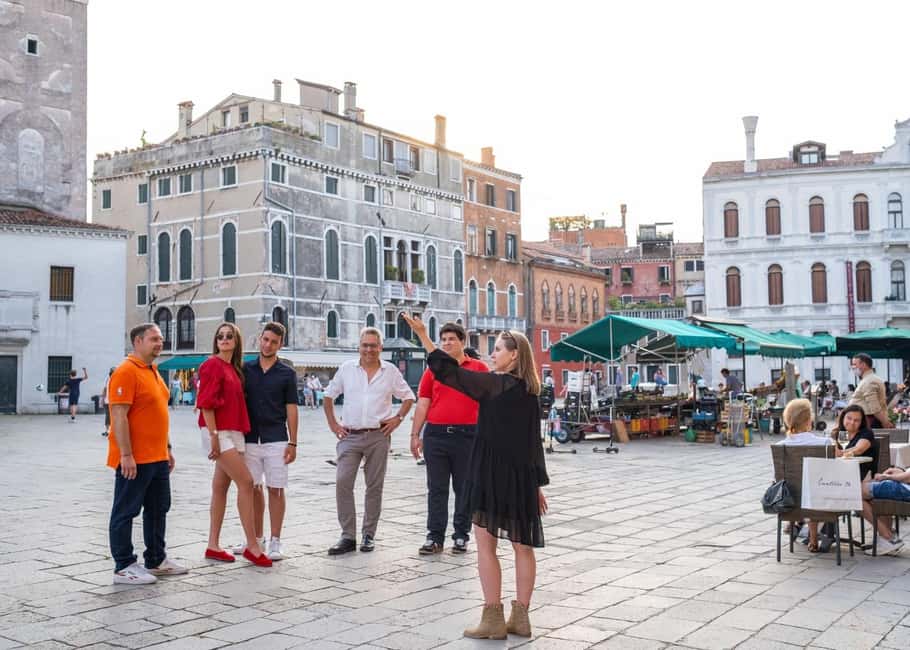
Your tour starts in Campo San Gallo, at the Venice Tours Office beside San Marco Square. If you’re facing the Basilica of San Marco with it behind you, stay on the right side of the square, go under the arches, and find the Olivetti Museum. From there, turn right, pass under the archways, cross the little bridge, and walk straight to Campo San Gallo.
I like this start because it’s close enough to the big-name sights that you won’t spend your first hour hunting. And once you’re inside the maze of calli, you stop feeling like Venice is just one long postcard and start seeing it like a city with neighborhoods, trade routes, and local routines.
Also note the practical stuff: comfortable shoes matter here. You’re walking outdoors through tight lanes and across uneven ground, and your reward is that you get to experience Venice on foot instead of only seeing it from a boat.
You can also read our reviews of more tours and experiences in Venice.


How to think about the route
This is a loop built around two ideas: first, connect San Marco to the Rialto area; second, get above street level with the bell tower. That combination is what makes the tour useful even if you’ve seen Venice before. You get both the close-up details and the big-picture view.
From La Fenice to Scala Contarini del Bovolo: the quieter Venice between icons
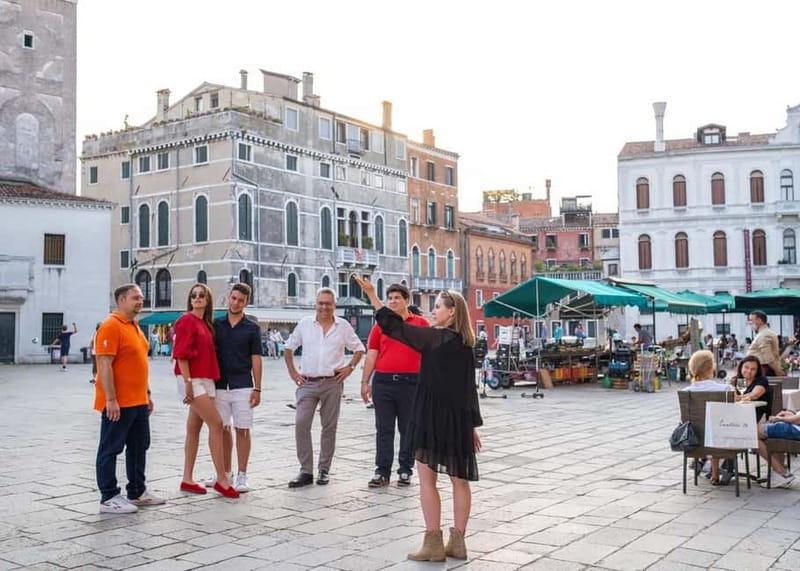
The walk begins in San Marco, where grand architecture and everyday life share the same corners. You’ll move through calli that feel narrower than the main streets, with your guide threading together the past and what you see now.
One stop I’d circle for myself is the La Fenice Theatre facade. It’s one of those places people know the name of, but you rarely slow down to notice the design choices. Having a guide point out what you’re looking at turns it from a quick glance into a real memory.
Then you’ll head toward the Scala Contarini del Bovolo, a signature spiral staircase that locals treat like a hidden landmark even though it’s right there in plain sight. This is exactly the kind of stop that makes a walking tour worth it: you’re not just moving from A to B, you’re learning how to spot the odd, clever details that give Venice its character.
Getting meaning from the backstreets
In the middle of San Marco, the tour shifts from showpiece architecture to smaller squares and lanes. That’s when you start noticing how Venice worked. The streets aren’t laid out for cars or speed. They’re laid out for movement on foot and water access nearby, with landmarks functioning like anchors.
As you continue, the mood changes as you reach the Rialto district, once Venice’s commercial hub. You’ll walk through areas where market life and centuries-old buildings still shape the feel of the neighborhood. The goal here isn’t to rewrite Venice’s whole economic history. It’s to help you understand why the city grew the way it did, and why certain buildings and streets matter.
What to expect in the streets
Because you’re walking in tight spaces, pay attention to how the pace feels. Some parts can be easier to photograph than others, depending on crowd levels. If it’s raining, hearing the guide may be harder at times, since you’re outside and moving between narrow lanes.
If you like architecture and stories that connect the dots, this is a strong fit.






St. Mark’s Bell Tower: 98 meters of photos and perspective
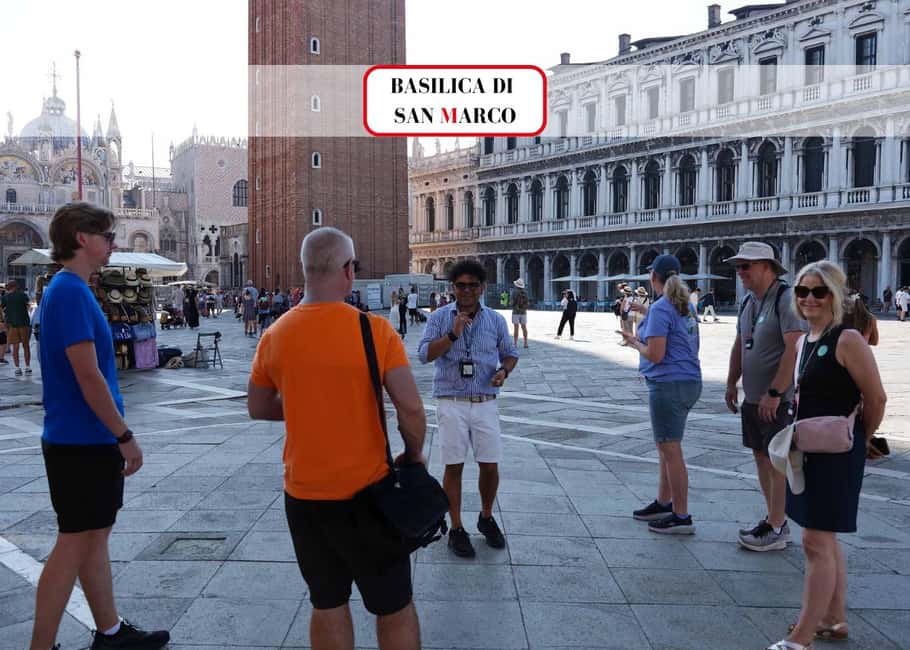
After the walking portion, you move into the bell tower experience. The big promise here is simple: views. St. Mark’s Bell Tower reaches 98 meters, which is high enough to see the lagoon and the city’s major landmarks in one sweep.
What makes this feel different from just looking at St. Mark’s Square from the ground is scale. From above, you understand the layout of rooftops, the distance between domes, and how the lagoon shapes everything around it. It turns Venice from a collection of landmarks into a connected city.
The tour also includes skip-the-ticket-line access, which I’m glad about. St. Mark’s area can turn waiting time into a mini vacation of its own. Skipping the line helps you keep your energy for actually seeing.
What you’ll spot from up there
From the bell tower vantage point, you’ll be able to admire key sights including the domes of St. Mark’s Basilica and St. Mark’s Square, plus the shimmering lagoon beyond. Even if you’ve seen these places before, being above them changes how they look and how they fit together.
This is also one of those moments where you’ll probably take more photos than you planned. That’s not a complaint. It’s the point.
VR Venice of the Past: Doge’s Palace and Rialto in 3D
After the bell tower, you’ll spend time in the History Gallery with the VR Venice of the Past experience. With VR headsets, you get a 3D look at Venice’s past moments, including:
- the Doge’s Palace as a fortress
- the Rialto Bridge in its original drawbridge form
- the 18th-century Carnival, with gondolas gliding through the canal
This part works because it fills in what the walking route can’t fully show. On foot, you see today’s Venice. In VR, you’re given a visual time jump that explains how the same places functioned centuries ago.
In my opinion, the best use of VR here is to treat it like a guided visual lesson. Watch, then look back at the real city cues you picked up earlier in the tour. You’ll likely notice details in the streets and landmarks that now feel less random.
How long to plan for
You’ll want to stay mentally flexible for this segment. VR has a way of turning into, I should take one more look, and that’s normal. It’s worth it if you enjoy history presented as a visual story rather than a lecture.
Gondola ride option: a 30-minute add-on that can be great
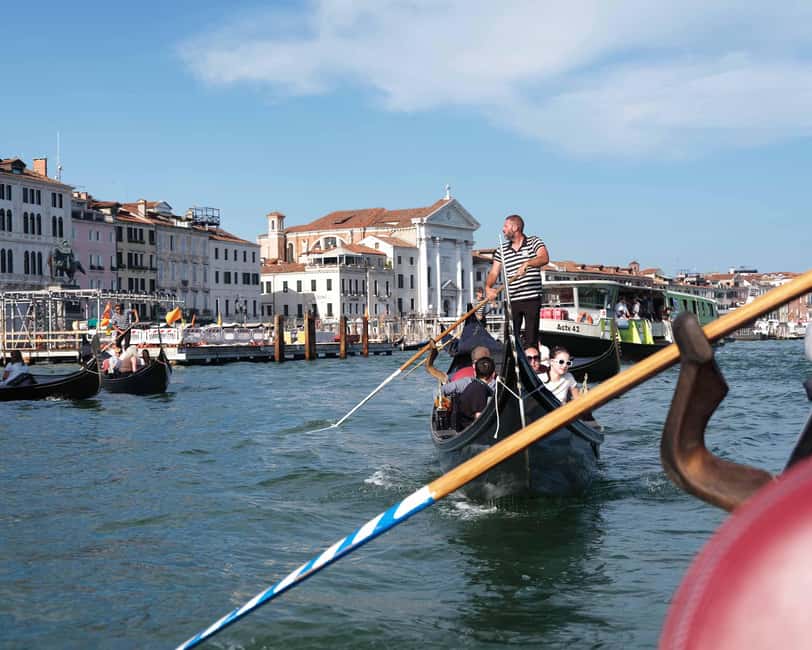
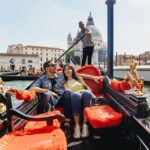
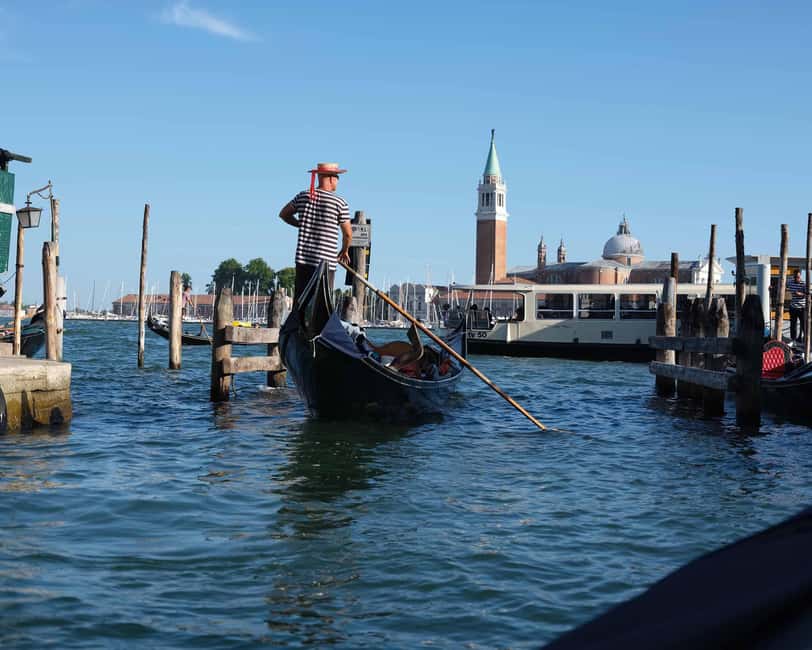
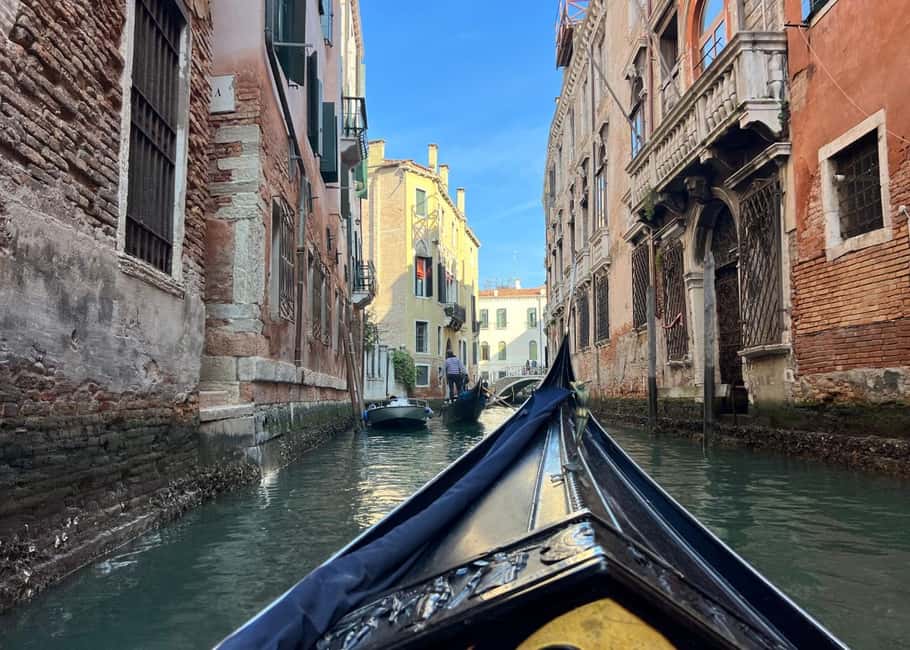
Some versions of this experience include a 30-minute guided gondola ride, while other options may not. If you do get the gondola, it’s built to round out the Venice view with water-level perspective, which is how the city is truly meant to be seen.
One practical note from real-world experience with gondola rides: boarding can turn into a waiting line situation, especially during busy periods. It’s also common for gondola staff to be focused on their own workflow rather than chatting with every passenger. If you want a calm, conversational gondola moment, manage expectations and focus on the views and the guide context you get from the tour.
Even with that caution, the gondola is a useful contrast to the walking portion. You’ve been moving close to walls and doorways all morning. On the water, the buildings change shape, and the city feels wider.
Price and value for $56.37: where the money actually goes
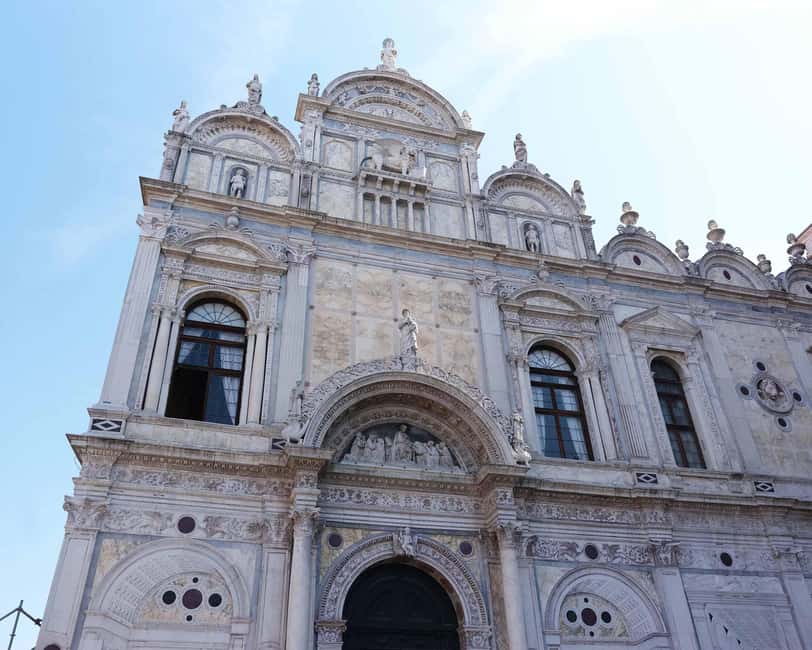
At $56.37 per person, the price lands in a middle zone for Venice. Here’s why it can still feel like good value if it matches your travel style.
You’re paying for four connected pieces that are hard to assemble yourself in one tight block:
- a guided walk through San Marco and Rialto, including specific architecture stops like La Fenice and Scala Contarini del Bovolo
- Bell Tower entry with skip-the-line access
- a VR history experience with 3D scenes of key locations
- and possibly a 30-minute guided gondola ride, depending on your selected option
If you’re trying to see the big hitters without wasting hours in ticket lines or piecing together separate activities, this format helps you move efficiently.
If you’re only chasing one thing, like the bell tower alone, then the value depends on whether you’ll actually use the VR and walking guidance. I’d book it when you want the full stack: street-level details, skyline views, and a guided time-travel session.
Who should book this tour, and who should skip it
This tour is a great match if you:
- love architecture and want help noticing details
- want a guided mix of San Marco and Rialto without feeling lost
- care about views and photo angles from above
- enjoy history told with stories, not just dates
Skip or reconsider if:
- you have mobility challenges, since it is not fully accessible and involves significant walking
- you only want one or two sites and hate guided groups
Also, if language matters, the tour can be bilingual, with guide availability in English, French, Spanish, German, and Italian.
Should you book St. Mark’s Classic Walking Tour with Bell Tower and VR?
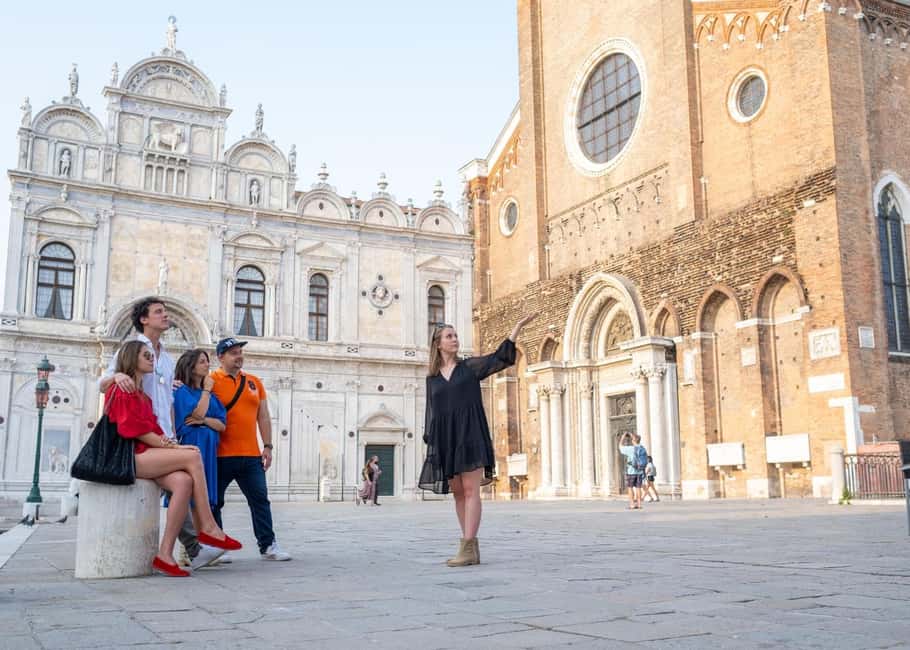
If your plan includes St. Mark’s Square and you also want to understand Rialto beyond shopping streets, I’d book this. The combination of Bell Tower views plus VR Venice of the Past is a smart pairing: you see the city now, then you see it as it functioned in older centuries.
Just go in with realistic expectations about walking and sound outdoors. Wear comfortable shoes, be ready for narrow lanes, and keep your attention on the guide’s stories so the detours feel worth it.
FAQ
How long is the Venice St. Mark’s Classic Walking Tour?
The duration is 3 hours, and starting times depend on availability.
Where do I meet the group?
Meet at the Venice Tours Office in Campo San Gallo, beside San Marco Square. The route includes staying on the right side of the square, going under the arches, finding the Olivetti Museum, and walking to Campo San Gallo.
Is the Bell Tower entry included, and do I skip the ticket line?
Yes. The experience includes St. Mark’s Bell Tower entry, and it also notes skip the ticket line.
What is included in the VR Venice of the Past experience?
With VR headsets, you’ll explore Venice’s history, including the Grand Canal, Doge’s Palace as a fortress, the Rialto Bridge in its original drawbridge form, and the 18th-century Carnival with gondolas.
Is a gondola ride included?
A 30-minute guided gondola ride is included depending on the option selected.
What languages are available for the live guide?
Live tour guide languages include English, French, Spanish, German, and Italian.
Is this tour wheelchair accessible?
No. It is not fully accessible for wheelchair users or people with walking difficulties.
What should I bring?
Bring comfortable shoes. Since it’s a walking tour outdoors, comfortable footwear matters.