REVIEW · GENOA
Genoa: Aquarium of Genoa Entry Ticket
Book on GetYourGuide →Operated by C-WAY Srl Unipersonale · Bookable on GetYourGuide
A big aquarium feels like a whole day’s worth of curiosity. Genoa’s Aquarium packs 5,000 animals from 400 species into one of Europe’s largest displays, including penguins, sharks, jellyfish, and dolphins. I love the sheer variety of sea life you can’t see in most places, and I also love the bold design payoff of the Cetacean Pavilion by Renzo Piano.
One thing to plan around: signage and navigation can feel confusing in spots, and some areas get crowded, so a calm plan helps.
In This Review
- Key highlights you can build your day around
- Entering Genoa’s Aquarium: Why This Place Works So Well
- Tickets and Timing: Skip the Line, But Don’t Miss Your Slot
- What You’ll See Inside: Penguins, Sharks, Jellyfish, and Coral Barriers
- The Cetacean Pavilion by Renzo Piano: The Dolphin Moment
- Expo ’92 Built, Conservation Working: Why It’s More Than Entertainment
- The Food Plan: Focaccia Tasting and Lunch Without Detours
- How Long to Go: A Smart Route Through 70+ Tanks
- Crowds, Heat, and Comfort: Small Tips That Matter
- Who This Fits Best: Families, Animal Fans, and Genoa Day-Trippers
- Price and Value: Is It Worth $35?
- Should You Book Genoa Aquarium Entry Tickets?
- FAQ
- What’s included with the Aquarium of Genoa entry ticket?
- Do I need to arrive at my entrance time exactly?
- What are the main animals and exhibits to look for?
- What time should I plan to enter if the hours change by season?
- Are pets allowed inside the aquarium?
- Is the aquarium wheelchair accessible?
Key highlights you can build your day around
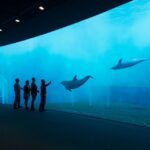
- Cetacean Pavilion by Renzo Piano with bottlenose dolphins in four open-air pools
- 70+ tanks covering Antarctic penguins, sharks, seals, jellyfish, and coral barrier fish
- Expo ’92 legacy: the aquarium was built for the Genoa Expo, and you can feel that scale
- Focaccia & lunch add-ons (focaccia tasting, sandwich with chips, street food, or ice cream, depending on your option)
- Skip-the-line entry with a timed slot you must respect to get in smoothly
Entering Genoa’s Aquarium: Why This Place Works So Well
If you want a straightforward, low-stress attraction, Genoa Aquarium is it. You’re not hunting for the “one cool thing.” You’re walking through a big, well-stocked set of exhibits built for repeated visits, with enough variety to keep adults and kids interested for hours.
I like that it’s built around scale, not gimmicks. You’re looking at more than 70 tanks, with over 5,000 animals representing 400 different species. That means you can keep moving without feeling like you’re watching the same exhibit again and again.
There’s also a design story baked into the experience. The aquarium was created for the Genoa Expo ’92, and the layout reflects that big-event thinking: lots of space, multiple levels, and a focus on keeping you inside a full circuit. If you enjoy places that feel thoughtfully engineered, this one scratches that itch.
You can also read our reviews of more tours and experiences in Genoa.


Tickets and Timing: Skip the Line, But Don’t Miss Your Slot
This is a ticketed, timed-entry experience. You choose an entrance time, and you should treat it like a real appointment—because access can be denied if you don’t show up with a valid ticket for the date and time you booked.
The big practical win is the ability to skip the ticket line. That matters in a popular harbor attraction area, where on-the-spot lines can eat into your day. Online/timed entry usually pays off when you’re visiting in peak seasons or on weekends.
One more timing detail that affects your day: last admission is 2 hours before closing, and opening hours change with the season. So if you’re thinking of “just going late,” check your date’s hours first. A too-late arrival can leave you with fewer exhibits than you expected.
What You’ll See Inside: Penguins, Sharks, Jellyfish, and Coral Barriers
The aquarium’s layout is built to give you constant visual variety. Expect a steady stream of classic aquarium stars—penguins, sharks, seals, and jellyfish—but also a lot of fish and sea life that can surprise you if you only came for the headline animals.
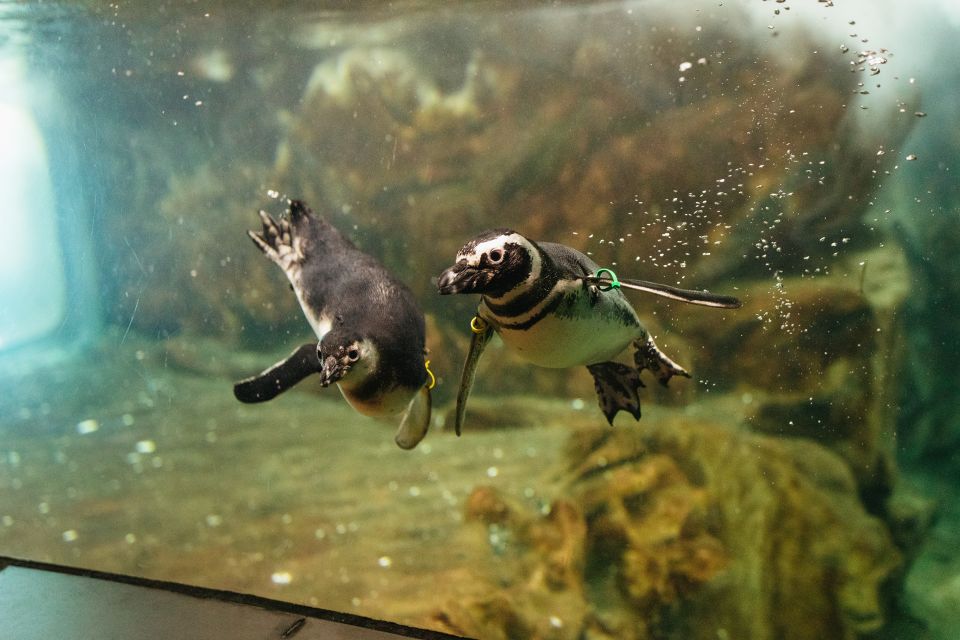
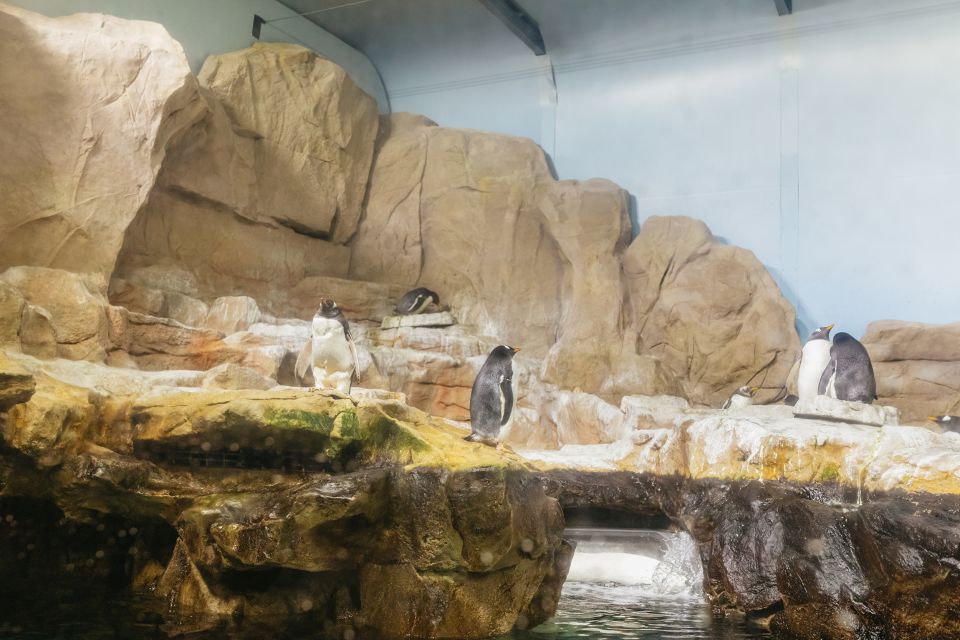
The Antarctic section is a standout idea on paper and in real life. Seeing penguins in a larger, purpose-built setting gives you more than a quick glance. It’s the kind of exhibit where people slow down, because penguins are curious and move around in ways that feel more natural than the “pose for a photo” effect you get elsewhere.
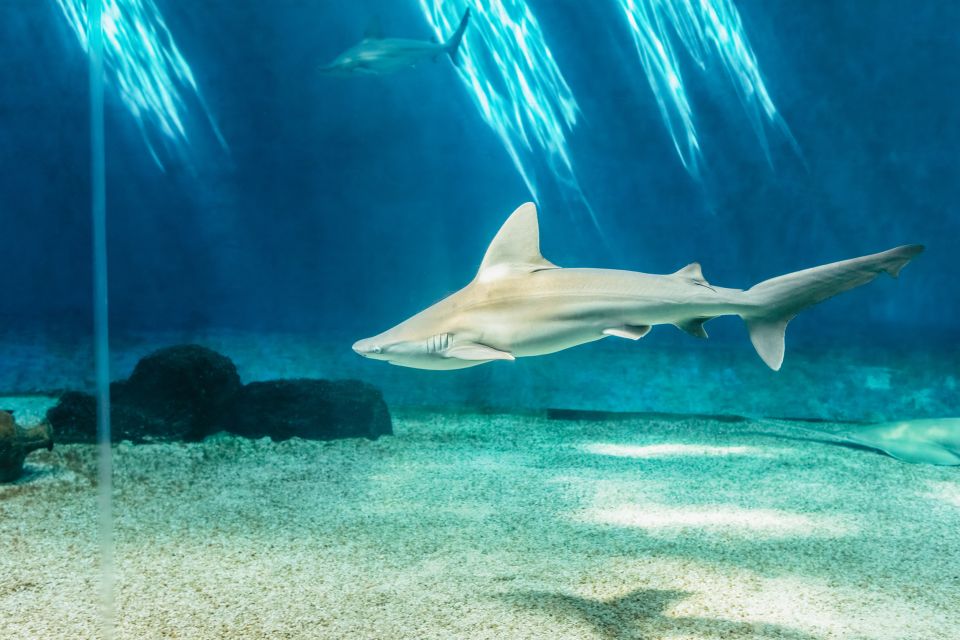
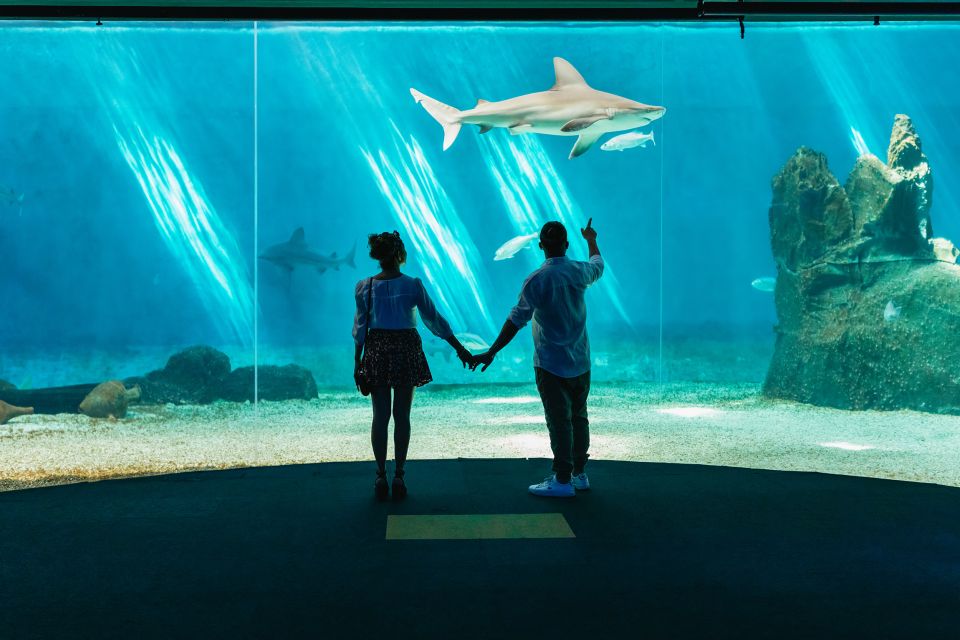
Then there are the predators. Sharks have a way of stealing attention even when you aren’t trying. The best part isn’t only spotting them—it’s being able to watch how they use space within the tank. If you’re someone who likes learning by observing, this is your zone.
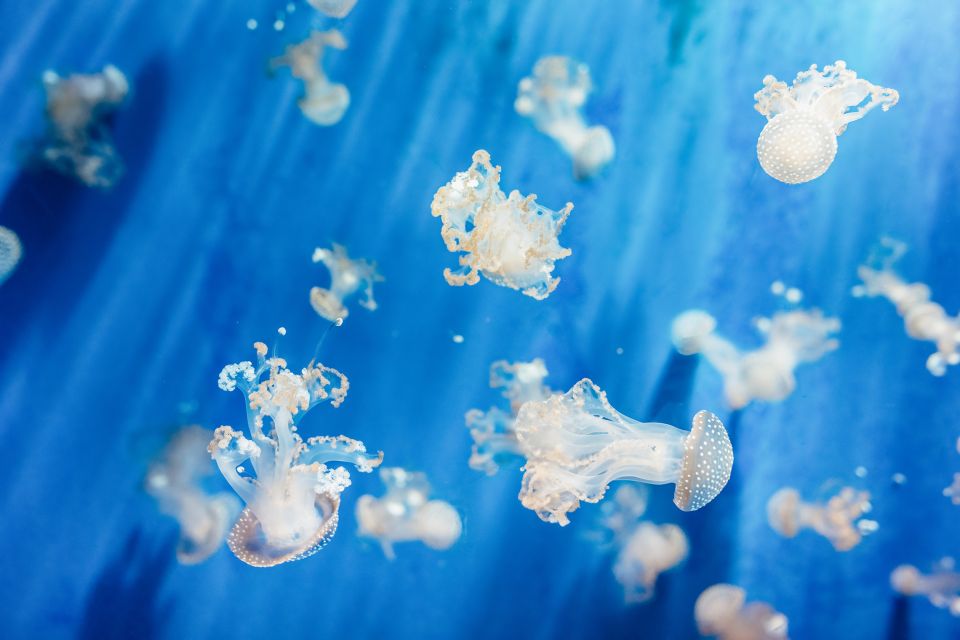
Jellyfish also make a strong impression here. They’re delicate, so the effect is different than watching a fish with a fast rhythm. You tend to notice the water movement and the slow drift patterns more.
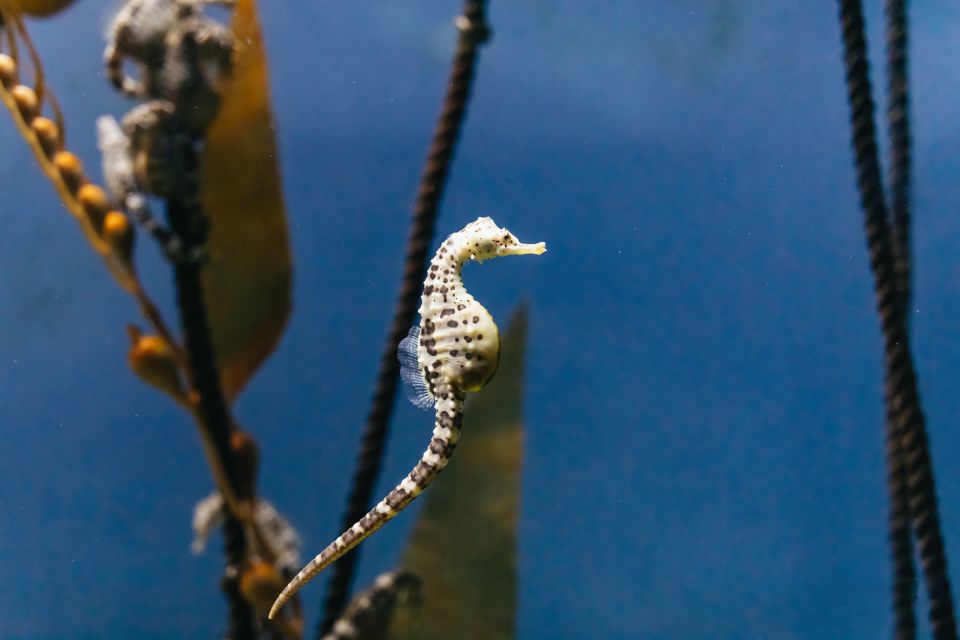
And don’t forget the colorful world of the coral barrier fish. Those sections are often where people suddenly realize the aquarium isn’t just about “cute” animals. You’re seeing whole ecosystems in miniature, with different colors, textures, and movement styles that keep your eyes from getting bored.
The Cetacean Pavilion by Renzo Piano: The Dolphin Moment

If there’s a reason you’d come even if you had low expectations, it’s the Cetacean Pavilion. It was designed by Renzo Piano, and that matters because the pavilion’s architecture makes the dolphin area feel like more than a viewing room.
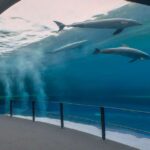
The headline is bottlenose dolphins, and they’re housed in four open-air pools. Open-air pools change the feel immediately. The light looks different, and the viewing becomes more dynamic because the space isn’t sealed like a typical indoor tank.
This is also where you should plan for your “stand and watch” time. Dolphins often reward patience. When people slow down here, they tend to spend longer than they planned because the animals move on their own schedule.
A small reality check: some visits can feel busy around this area, especially when families converge. If you want the calm viewing, aim for a less crowded entrance time when you can, and be willing to come back to the pavilion later in your route.
Expo ’92 Built, Conservation Working: Why It’s More Than Entertainment
The aquarium isn’t just “look and leave.” It was built for the Genoa Expo ’92, which set the foundation for a serious, large-scale facility. Today it’s also involved in conservation programs, which gives the visit a useful layer beyond sightseeing.
You’ll see information throughout about the animals and their environments, and the structure of the exhibits helps you connect what you’re seeing to why it matters. I don’t need a lecture to get value from a place like this, but I do appreciate when an attraction gives you context that makes the animals feel more real than just decorative.
Also, a bigger aquarium does something subtle for conservation-minded visitors: it shows variety. When you can compare many species in one trip, you start noticing patterns—different sizes, feeding styles, habitat needs—rather than treating each animal as a separate “photo moment.”





The Food Plan: Focaccia Tasting and Lunch Without Detours
Food options are where this experience becomes easy to fit into a travel day. Your entry doesn’t have to turn into a scavenger hunt for lunch.
Included options can include a focaccia tasting, plus a meal depending on what you selected:
- Sandwich lunch with chips (if that option is chosen)
- Street food lunch (if that option is chosen)
- Panera ice cream (if that option is chosen)
The focaccia tasting has a specific pickup location: Foccaccia & Dintorni, via Canneto il Curto 56R (Focacceria). The location is the kind of detail that can cost you time if you don’t pay attention, so keep an eye on the directions tied to your booking and plan a little buffer.
Here’s my practical take: lunch choices inside big attractions can be either expensive or slow. Having an included option (especially a sandwich or street food) can keep you moving and prevent the mid-visit “we’re starving, let’s quit early” problem.
Also, if you’re visiting with kids, an ice cream option can be a simple way to keep energy steady. It’s not just dessert; it’s pacing.
How Long to Go: A Smart Route Through 70+ Tanks
You’re not going to “rush” this aquarium and feel satisfied. Even if you’re efficient, it’s large enough that you need a plan.
A good target is about 2.5 to 3 hours if you want to see the highlights and keep moving. If you’re reading signs closely, taking photos, or traveling with younger kids who want extra time at the dolphin pools and penguins, you might stretch it.
Navigation is one of the main friction points. Signage can be hard to follow in spots, and you may wonder if you saw everything. That’s not a reason to skip the visit; it’s a reason to approach it with simple strategy.
My approach for a smoother route:
- Start by locating the Cetacean Pavilion and then circle back if you miss something.
- Use your “first impression” areas as your anchors, not as your final stop.
- Don’t let one confusing corridor throw off your whole plan. Backtracking is normal in big multi-level attractions.
If you’re someone who hates uncertainty, pick a time slot when you’re not racing to meet other plans afterward. Even with a ticket that’s meant to move you quickly, your enjoyment depends on time.
Crowds, Heat, and Comfort: Small Tips That Matter
This aquarium can be busy, especially around the popular exhibits and when families all arrive at once. You might feel crowding in certain areas where people block views of the glass.
You can reduce that stress with two simple choices:
- Choose a less hectic entrance time when you can. Later slots often feel calmer, and it makes photography and viewing easier.
- Keep an eye on “bottleneck zones,” especially near the most in-demand animals like dolphins and sharks.
Weather also matters. On hot days, even if the aquarium has air conditioning, some zones can still feel warm. Bring water and wear light layers. You’ll feel better for the last third of your walk.
Comfort-wise, the venue is wheelchair accessible, with elevators available. That’s a big deal in a multi-level place. If you’re managing mobility needs, plan for slower pacing and give yourself extra buffer for stairs-free routes.
One more comfort note: the aquarium is clean, and that shows. You’ll enjoy the exhibits more when walkways feel maintained and viewing areas don’t feel chaotic.
Who This Fits Best: Families, Animal Fans, and Genoa Day-Trippers
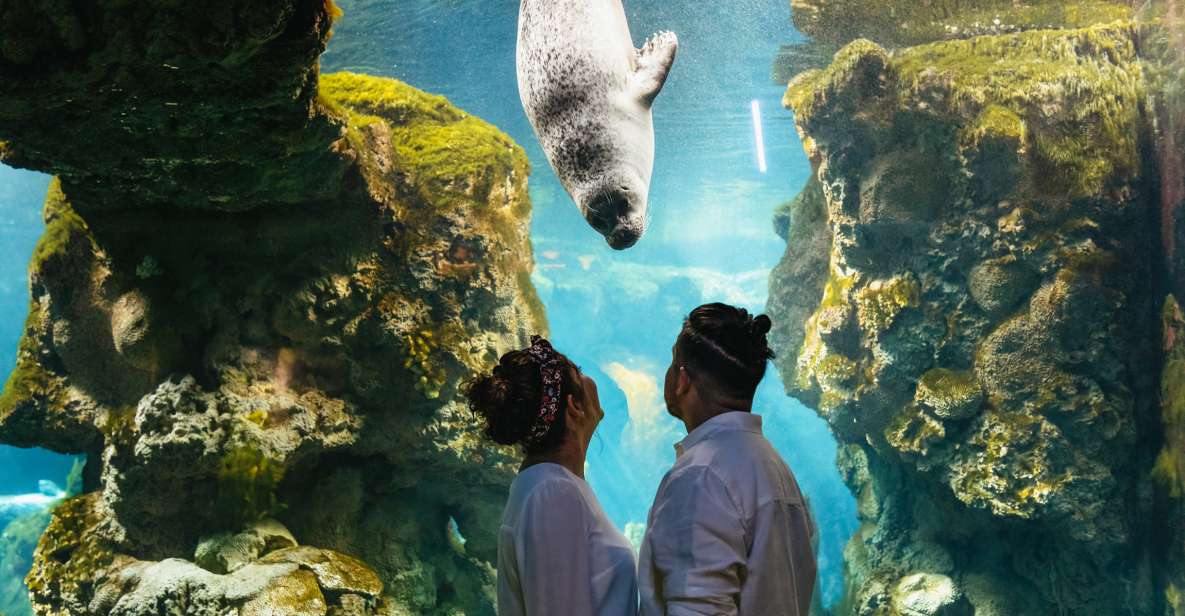
This is a great family option. Kids tend to get the dopamine hit quickly—dolphins, penguins, sharks, and seals are built for attention. Adults also get plenty of value because the aquarium’s variety isn’t just “a few big attractions.” It’s a full tour of sea life in many forms.
It’s also a good pick if you’re visiting Genoa and want something weather-proof. Rain can be annoying in port cities, and an aquarium gives you a reliable indoor option that doesn’t feel like settling.
For animal lovers, the best part is the range. If you’re used to smaller aquariums, the tank count and species spread change the whole experience. You aren’t doing a highlight reel. You’re doing an animal sampler that lets you compare how different creatures move and behave.
If you’re the kind of person who loves architecture, the Renzo Piano pavilion adds extra interest. Even if you don’t care about dolphins, the setting makes the exhibit feel like an event.
Price and Value: Is It Worth $35?
At $35 per person, the value comes from the combination of scale and extras. A typical aquarium ticket is usually just entry. Here you may also get a focaccia tasting plus lunch or ice cream depending on the option you choose.
That matters because food costs add up fast in Italy when you’re timing meals around sightseeing. If your chosen package includes lunch or an ice cream, you’re not only paying for animals—you’re buying fewer interruptions in your day.
Also, “skip the ticket line” is part of the value. Time has a real cost when you’re traveling. Avoiding a queue often matters more than saving a few euros.
The best way to think about value: if you plan to spend the full circuit and hit the Cetacean Pavilion calmly, you’re using what you paid for. If you only want a quick look at one exhibit, this might feel like too much ticket for too little payoff.
Should You Book Genoa Aquarium Entry Tickets?
Yes, if you want a high-value day activity in Genoa that works for different ages. The big reasons to book are the scale—5,000+ animals and 400+ species—and the standout dolphin viewing in the Renzo Piano pavilion.
Book with confidence if:
- you like animal variety more than just one attraction
- you want a weather-proof plan
- you’ll take time rather than rushing the visit
Skip or reconsider if:
- you hate confusing navigation and would prefer a guided tour (this ticket does not include one)
- your schedule is so tight that a strict entrance time could stress you out
If you’re on the fence, here’s my best tiebreaker: choose an entrance time that gives you breathing room. You’ll enjoy the tanks more, you’ll cope better with any crowding, and you won’t feel like you’re fighting the clock the whole visit.
FAQ
What’s included with the Aquarium of Genoa entry ticket?
Your ticket includes entry to the aquarium and a focaccia tasting. Depending on the option you select, it can also include a sandwich lunch with chips, street food lunch, or Panera ice cream.
Do I need to arrive at my entrance time exactly?
Yes. The entrance time you choose during booking must be strictly observed. Access can be denied if you don’t show a valid entrance ticket.
What are the main animals and exhibits to look for?
Plan for penguins (including Antarctic animals), sharks, seals, jellyfish, and many types of fish. Don’t miss the Cetacean Pavilion, designed by Renzo Piano, with bottlenose dolphins in four open-air pools.
What time should I plan to enter if the hours change by season?
Opening and closing times vary by season. Last admission is 2 hours before closing time, so aim to enter with enough cushion to finish your visit.
Are pets allowed inside the aquarium?
No pets are allowed, but assistance dogs are allowed.
Is the aquarium wheelchair accessible?
Yes. The aquarium is wheelchair accessible, and there are elevators for wheelchair users.