REVIEW · FLORENCE
Accademia Gallery: Michelangelo’s David and High Renaissance Art
Book on Viator →Operated by Italy Pass tours · Bookable on Viator
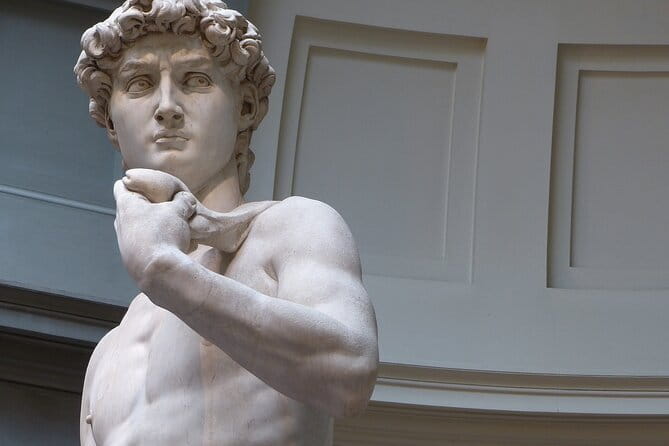
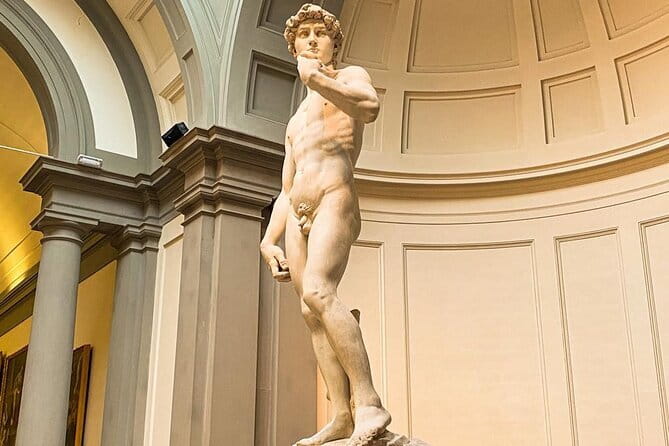
David is the star of Florence.
This Accademia visit is built around fast entry and a self-led route that lets you slow down or sprint through the rooms. You get access to one of Italy’s best-known art stops, where Michelangelo’s world-famous statue anchors everything else you’ll see.
I especially like the chance to get up close with David—not just a quick glance from far away. I also love what’s bundled into the museum experience: you can move from Michelangelo’s Slaves (unfinished figures meant for a major tomb project) to other big names and even the museum’s collection of musical instruments.
The main drawback to consider is that “skip-the-line” usually means faster ticket entry, not zero waiting. You may still hit the security checkpoint, and some people report confusion with ticket pickup timing and phone-based audio setups depending on what option you selected.
In This Review
- Key things to know before you go
- Price and ticket value: what $43.25 buys you
- Ticket pickup at Via de’ Pucci, 37: how to avoid the common hiccups
- Entering the Accademia: skip-the-line reality check
- David up close: how to spend your first 20 minutes
- The museum route that makes the most sense (and why it works)
- Michelangelo’s Slaves (Prigioni)
- Botticelli and other major painters
- Sculpture galleries beyond David
- The musical instruments area
- Guided or self-led: choosing the right level of help
- Audio on your phone: when it’s useful and when it can frustrate
- Timing, crowds, and making the security checkpoint work for you
- Who this Accademia David ticket is best for
- Should you book this self-led Accademia David experience?
- FAQ
- Where do I pick up my tickets?
- Is this a guided tour or self-led?
- What’s included in the price?
- How long should I plan for?
- Is there skip-the-line entry?
- What language is the experience offered in?
- How big is the group?
- Is it suitable for most people?
- What is the cancellation policy?
- What if the experience is canceled due to poor weather?
Key things to know before you go
- David is the anchor. Plan your eyes first, then build out the rest of the museum around him.
- Priority helps, but security still happens. Expect at least a short bottleneck at the entrance checkpoint.
- Self-led is flexible. You control pace, photo stops, and which rooms you linger in.
- Check your email and the pickup address. Ticket redemption is at Via de’ Pucci, 37, 50122 Firenze.
- The museum includes more than one highlight. The Slaves, major painters, sculpture galleries, and musical instruments all fit inside a comfortable timeframe.
Price and ticket value: what $43.25 buys you
At $43.25 per person, this is not a bargain in the strictest sense. But for Florence, that’s often what makes sense when you’re paying for admission plus faster entry rather than taking your chances in long lines. If you’re visiting during a busy season, skipping the slow part of the process is the difference between enjoying your morning and burning it.
Also, the experience runs about 1 to 3 hours, which helps the value feel more “real.” You’re not paying for a long day. You’re paying for a focused hit: get in, see David, then choose how far you want to go into the rest of the collection.
One practical point: this is offered in English, which is handy for understanding what you’re seeing and following any instructions that come with your admission flow. The group size is also small—up to 5 people—so the experience tends to feel more manageable than big bus-style museum chaos.
You can also read our reviews of more tours and experiences in Florence.
- Tuscany Day Trip from Florence: Siena, San Gimignano, Pisa and Lunch at a Winery
★ 5.0 · 21,634 reviews

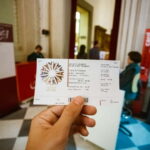
Ticket pickup at Via de’ Pucci, 37: how to avoid the common hiccups
Everything starts with redemption at Via de’ Pucci, 37, 50122 Firenze FI. That’s where you collect tickets and then make your way to the Accademia entrance process.
This is the part I’d treat with extra respect. Several issues people ran into were less about the museum itself and more about not finding the right place, arriving after the window, or expecting a different check-in flow than what their confirmation implied. You can reduce your risk quickly by doing two things:
1) Read your confirmation email carefully before you leave your hotel.
2) Give yourself buffer time to reach the redemption point and follow the instructions exactly.
If you’re using a phone for directions, save the address for later offline. Wi-Fi can be spotty in busy areas, and you don’t want to be hunting while the clock ticks.
Entering the Accademia: skip-the-line reality check
You should expect faster entry, but don’t plan for a totally line-free visit. There’s usually still a mandatory security checkpoint at the entrance, and busy hours can add minutes even when your ticket is meant to speed you up.
Here’s the mindset that helps: treat your time like this—priority handles the slow ticket part, while security handles the unavoidable screening part. If you arrive earlier than your assigned time window, you may still wait, but the delay is often shorter than the main line you’d otherwise face.
If you want the best shot at an easy entrance, go when your energy is highest. Early in the day is often calmer for security. If you’re traveling during a peak month, book ahead—this is commonly reserved roughly 19 days in advance on average, which is a signal the museum is popular.
David up close: how to spend your first 20 minutes
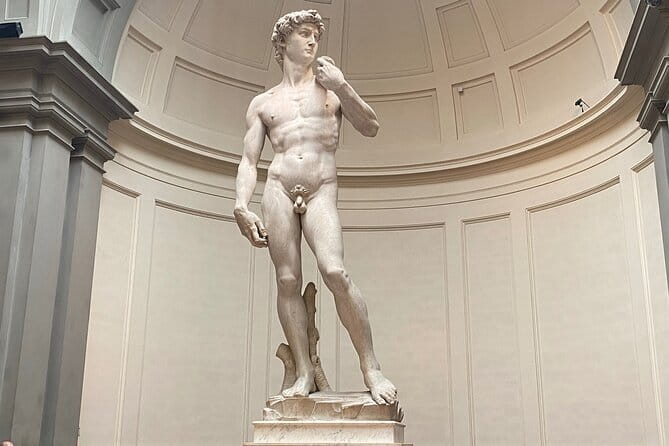
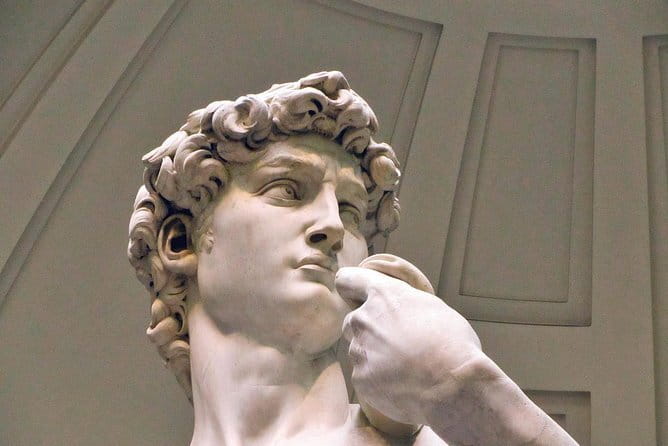
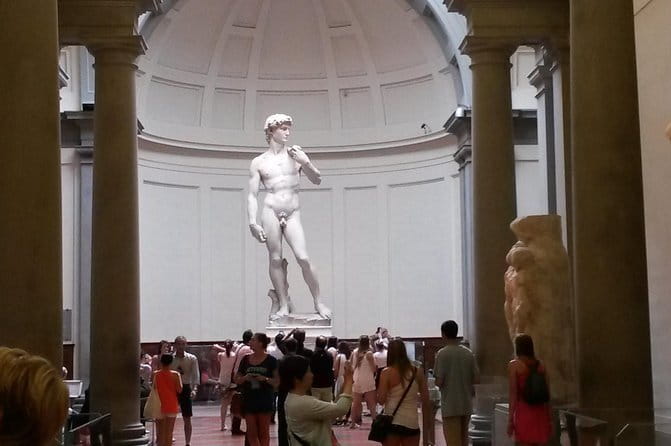
Michelangelo’s David is why you’re here, and it deserves your first attention. When you see him in person, your brain stops treating him like an image and starts treating him like a sculpture with weight, surface detail, and presence.
Spend a short window deciding what you care about most:
- the face and expression
- the stance and proportions
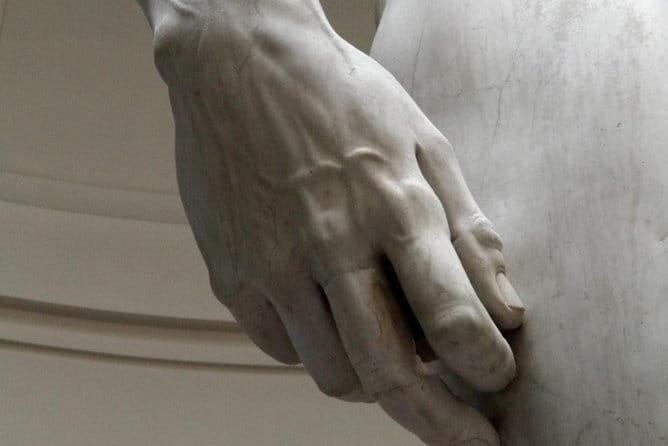
- the hands and the tension in the body
- the overall balance of the figure
Then give yourself permission to step back and view him in context. From a distance, the full composition hits differently. Up close, you’ll notice the carving choices your photos can flatten.
If you want to add one extra layer of meaning, place David against the museum’s surrounding themes—especially sculpture. The same building that lets you face this icon also holds Michelangelo’s Slaves, unfinished figures made for an ambitious tomb project. Seeing the finished masterpiece right alongside work-in-progress pieces turns your understanding from wow-factor into craft.
The museum route that makes the most sense (and why it works)
The Accademia isn’t huge compared with some mega-museums, so you can build a smart route without turning it into a marathon. A lot of people find it easier to take in more because the museum doesn’t force you into endless corridors.
A strong order is simple: follow the momentum of the highlights.
- The Best tour in Florence: Renaissance & Medici Tales – guided by a STORYTELLER
★ 5.0 · 12,316 reviews




Michelangelo’s Slaves (Prigioni)
The Slaves are often a surprise for people who expected only one famous statue. These unfinished sculptures were intended for the tomb of Julius II, and you can feel the shift between idea and execution as you move through them.
Why they’re worth your time: they make Michelangelo’s process visible. You see the pull of form even when the work isn’t fully finished, which adds a layer you can’t get from a polished, final piece alone.
Botticelli and other major painters
You’ll also encounter significant works attributed to major Renaissance names like Botticelli and Ghirlandaio. The value here is contrast. Sculpture gives you volume and physical presence, while paintings give you gesture, story, and period style in a way that changes the pace of your visit.
If you’re more focused on art craft than biography, don’t overthink it. Just take time to notice how faces, drapery, and composition work in each work, even if you don’t memorize every title.
Sculpture galleries beyond David
The collection also includes sculpture work associated with artists such as Giambologna, plus other displays in the museum. This is a good reminder that Renaissance art wasn’t only about one man or one masterpiece. The museum feels like a conversation between sculptural traditions and the artists who pushed them.
The musical instruments area
One of the most practical tips I can give you: don’t skip the museum of musical instruments. It’s not what you expect when your brain is locked on David, but it adds a change of texture and a strong sense of culture beyond just visual art.
If you’re short on time, I’d rather have you cut a lesser gallery than miss the instruments. They help your visit feel broader and more Florentine in a way that fits the city’s long relationship with music and performance.
Guided or self-led: choosing the right level of help
This specific experience includes admission tickets and is set up as a flexible, self-led visit. That’s great if you like control—you can move at your pace and spend extra minutes where your attention actually lands.
If you upgrade to a guided version or select a departure that includes a local guide, the big win is context. People have praised guides such as Fatima, Mary, Gayla, and Denisse for clear English and patient pacing. That kind of help is especially useful for understanding why certain sculptures exist in that unfinished state or how to read artistic choices without getting stuck in art-history trivia.
If you’re the kind of person who enjoys standing still and reading labels, self-led is enough. If you want story and translation in real time, a guide can be worth it. Just don’t assume you’ll automatically get a guided talk with this ticket type—double-check what your option includes before you go.
Audio on your phone: when it’s useful and when it can frustrate
Some bookings involve audio through a phone-based system, which can be excellent when it works. The advantage is that you can follow along without renting extra devices.
The caution is real: some people reported audio issues, including glitches or apps not functioning properly on their phones. Others said they had to rent equipment separately, or that the process required scanning codes and downloading content.
So here’s what I’d do before you enter, to keep the day smooth:
- Charge your phone fully and bring an external battery if you have one
- Bring wired or wireless earbuds you trust
- Download anything you can ahead of time instead of waiting until you’re inside
- If your plan depends on audio, keep your expectations flexible and be ready to rely on labels if needed
And one more practical thing: if you’re traveling with iPhone headphones or AirPods-style wireless earbuds, have them ready. Audio on phones is easiest when your ear setup is stable.
Timing, crowds, and making the security checkpoint work for you

Even with priority access, think of your visit as three layers:
1) ticket redemption
2) security screening
3) museum entry and moving to your first highlight
The security checkpoint is the wildcard. During peak moments, everyone funnels into the same bottleneck. The fix is not magic—it’s timing and calm.
If you want to reduce stress:
- Arrive a bit early to handle redemption calmly
- Keep your confirmation details accessible
- Once inside, go straight to David so you don’t let your energy fade while you wander
Also, the museum’s compact feel helps you recover. If you lose 10 minutes at security, you can still make a high-quality visit within the 1 to 3 hour window.
Who this Accademia David ticket is best for
This experience fits best if you want a focused museum visit without committing to a long structured tour.
I’d point you here if:
- David is the headline of your Florence trip and you want efficient entry
- you like setting your own pace
- you’re happy exploring major works like Michelangelo’s Slaves, painters like Botticelli, and the musical instruments collection
It may be less ideal if:
- you want guaranteed audio tech working flawlessly every time
- you strongly prefer a fully guided, step-by-step commentary from start to finish
- you’re sensitive to check-in confusion and last-minute direction changes
Should you book this self-led Accademia David experience?
If you’re coming to Florence to see Michelangelo’s David and you value fast entry more than a guided script, I think this booking is a solid choice. The museum size and the way the highlights connect in one visit make the time feel efficient, especially within a 1 to 3 hour window.
I’d only hesitate if you know you’ll have trouble with phone-based audio systems or you hate any chance of check-in friction. For most people, the payoff is simple: get in, see David up close, then spend the rest of your time choosing between sculpture, Renaissance painting, and the surprising musical-instruments area.
If you book, do one thing that makes the whole day easier: follow your confirmation instructions and arrive with buffer time at the Via de’ Pucci, 37 redemption point.
FAQ
Where do I pick up my tickets?
You redeem and collect tickets at Via de’ Pucci, 37, 50122 Firenze FI, Italy.
Is this a guided tour or self-led?
This option is self-led. Guided tours are not included.
What’s included in the price?
The price includes admission tickets to the Accademia Gallery.
How long should I plan for?
Plan for about 1 to 3 hours.
Is there skip-the-line entry?
Yes, the experience is described as skip-the-line admission, which helps you enter faster than standard admission.
What language is the experience offered in?
It’s offered in English.
How big is the group?
This experience has a maximum of 5 travelers.
Is it suitable for most people?
Most people can participate.
What is the cancellation policy?
The experience is non-refundable and cannot be changed for any reason.
What if the experience is canceled due to poor weather?
If it’s canceled due to poor weather, you’ll be offered a different date or a full refund.
You Might Also Enjoy


More Tour Reviews in Florence
- Tuscany Day Trip from Florence: Siena, San Gimignano, Pisa and Lunch at a Winery
★ 5.0 · 21,634 reviews - The Best tour in Florence: Renaissance & Medici Tales – guided by a STORYTELLER
★ 5.0 · 12,316 reviews