REVIEW · FLORENCE
The Best tour in Florence: Renaissance & Medici Tales – guided by a STORYTELLER
Book on Viator →Operated by Florence Tour-Tale · Bookable on Viator
Florence, narrated by the Medici. This 2-hour 15-minute walking tour is built for quick orientation, with a storyteller style guide who ties Florence’s big moments to one family: the Medici. I love how you cover major landmarks without getting lost in names and dates.
I also like that the pacing is tight and doable. You’ll hit a cluster of top stops (Basilica di San Lorenzo, Palazzo Medici Riccardi, the Duomo area, and Piazza della Signoria), with short guided segments and breaks that don’t feel like a sprint. Plus, the tour runs in English with a maximum group size of 30, so you can actually hear what matters.
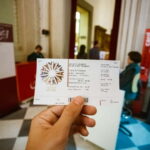
One consideration: admission tickets aren’t included for most stops. You’ll want to budget extra for entrances, and if check-in feels busy, arrive a few minutes early and keep your phone handy for final directions.
In This Review
- Key highlights you’ll feel right away
- A fast Florence reset with Renaissance storytelling
- Route at a glance: from San Lorenzo to the Uffizi area
- Basilica di San Lorenzo: where the Medici story gets religious and political
- Palazzo Medici Riccardi: the family’s headquarters energy
- Piazza del Duomo: turning cathedral views into real context
- Museo Casa di Dante (outdoors): a quick, free pause in Dante’s neighborhood
- Piazza della Repubblica to Piazza della Signoria: civic Florence in two big moods
- The short outdoor stretch before Ponte Vecchio
- Ponte Vecchio: the final 10 minutes that calm everything down
- Price and logistics: what you’re really paying for
- Guide quality is the whole point
- Who this tour is best for
- How to build a great day around it
- Should you book Renaissance & Medici Tales in Florence?
- FAQ
- How long is the tour?
- What language is the tour offered in?
- Are admission tickets included?
- Where does the tour start and end?
- What is the maximum group size?
- Can I get a full refund if I cancel?
Key highlights you’ll feel right away
- Medici-centered stories at San Lorenzo and Palazzo Medici Riccardi
- Iconic squares in one loop, from the Duomo area to Piazza della Signoria
- Outdoor, ticket-free moments around Dante’s neighborhood and Ponte Vecchio
- Small-to-medium group (up to 30) with a licensed guide in English
- Pay-as-you-wish style tipping plus separate entry ticket costs
- A meeting point near San Lorenzo and a finish by the Uffizi area
A fast Florence reset with Renaissance storytelling
If Florence is your first stop in Italy, you need two things fast: bearings and context. This tour is designed to give you both. In a little over two hours, you walk through the parts of the city that explain how Renaissance power worked in everyday life—politics, patronage, religion, and art—without turning it into a lecture.
The “storyteller” format matters here. Instead of treating each site like an isolated postcard, the guide links them. The Medici story becomes a thread you can follow as you move from church space to palace politics to civic squares. That’s what makes the tour feel practical, not just sightseeing.
And it’s built for mixed schedules. You don’t need a long day or perfect museum stamina. The stops are short, most of the time is spent outdoors, and the tour ends in a central area where you’ll be well placed for your next move.
You can also read our reviews of more tours and experiences in Florence.
- Tuscany Day Trip from Florence: Siena, San Gimignano, Pisa and Lunch at a Winery
★ 5.0 · 21,634 reviews


Route at a glance: from San Lorenzo to the Uffizi area
The tour starts near Piazza di San Lorenzo, right where Florence feels old and lived-in—perfect for easing in. It ends near the Uffizi Galleries area at Piazzale degli Uffizi, with the route described so that you’re finishing with a look toward Ponte Vecchio.
Time-wise, plan on roughly 2 hours 15 minutes. Real life matters: you’ll get a different feel depending on crowds, your group’s pace, and how much the guide expands on a point when questions pop up. But the structure stays consistent: a sequence of landmark stops with guided explanation, plus some free outdoor viewing.
Logistically, this is also an easier walk than you might think. It’s near public transportation, and the group cap at 30 helps keep things from turning into a mob. If you like your sightseeing organized but not rigid, this format fits.
Basilica di San Lorenzo: where the Medici story gets religious and political

You’ll spend about 20 minutes at Basilica di San Lorenzo with the guide’s explanation. This stop is important because it anchors the Medici narrative in place. It’s not just about who commissioned art. It’s about how faith, power, and family influence braided together in Renaissance Florence.
Expect a guided focus rather than a full church marathon. That’s helpful if you’re visiting during peak hours and don’t want to burn your whole day on one location. You’ll get the bigger picture first, then—if you want more—you can decide afterward whether you want a deeper visit.
One practical note: admission tickets aren’t included for this stop. So don’t assume you walk in automatically as part of the price. If you care about entering the basilica itself, budget time and money for it.
Palazzo Medici Riccardi: the family’s headquarters energy
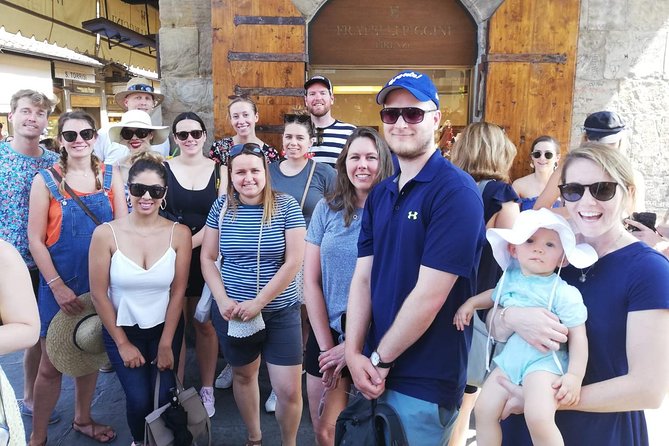
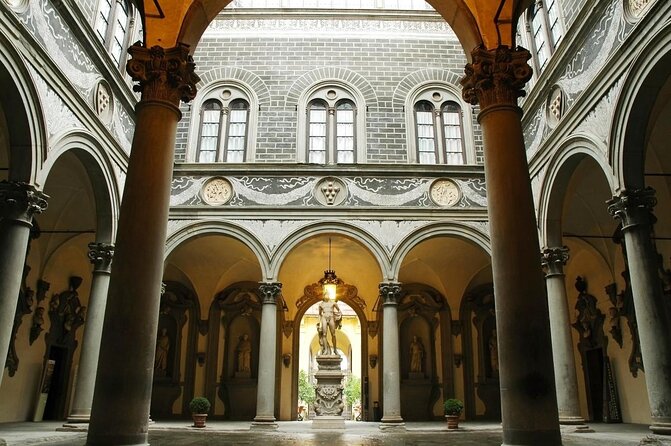
Next up is Palazzo Medici Riccardi, also with about 20 minutes guided explanation, and again admission tickets aren’t included. This is where the Medici influence shifts from spiritual spaces to “who held the leverage” territory.
A palace like this is a shortcut to understanding how Renaissance families built legitimacy. You’ll likely hear how architecture, art patronage, and public image supported power. Even if you’re not an architecture nerd, the storyteller approach helps you see why the building mattered. It’s not just stone—it’s messaging.
Because entry isn’t included, you can treat this stop as two possible experiences:
- a guided exterior orientation and context (still valuable)
- or, if you purchase admission separately, a fuller palace experience
Either way, you’ll leave with a clearer sense of why Florence repeatedly loops back to the same names.
Piazza del Duomo: turning cathedral views into real context
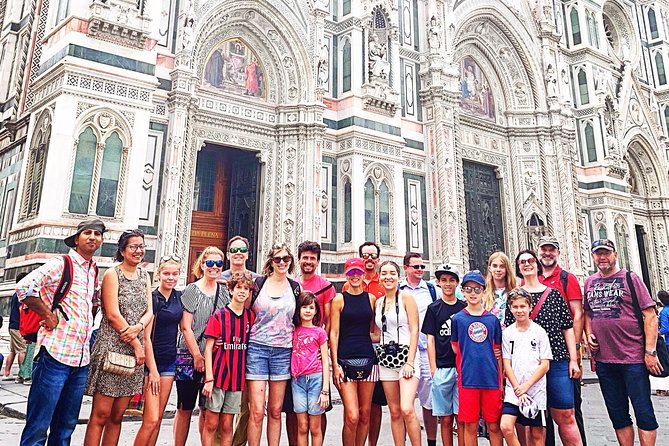
Your itinerary then moves to Piazza Del Duomo for around 20 minutes of guided explanation. This is a smart pivot. Squares help you understand the city at walking speed: where things are, how people move, and how sightlines shape what you notice.
The Duomo area can be overwhelming when you first arrive. Big buildings, heavy crowds, and everyone taking photos. The guide’s role here is to translate the space into meaning—why the cathedral square is where it is, and how it connects to the civic rhythm of Renaissance Florence.
Admission isn’t included for this stop either, so think of it as an orientation stop: you’re learning what to look for and what to remember as you move on. If you plan to return later for a museum or a paid viewpoint, this is the moment that helps you choose where to spend your attention.



Museo Casa di Dante (outdoors): a quick, free pause in Dante’s neighborhood
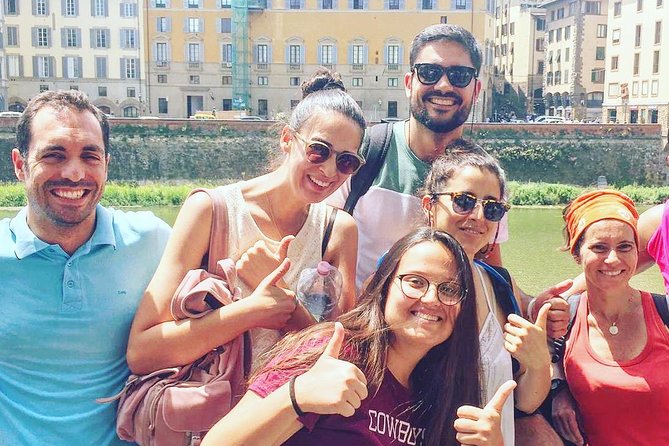
You’ll get about 5 minutes outdoors around the Museo Casa di Dante area. The big win: admission is free here, and the stop is short. That makes it easy to fit into a limited-time day without feeling like you’re rushing through a museum.
Dante’s neighborhood can feel like a different layer of Florence—less about Medici power and more about literary identity. Even in five minutes, the guide can help you place Dante in the larger Renaissance story so the area doesn’t feel random.
This is also a useful timing reset. If your feet are starting to complain, this is a quick chance to step back, look around, and re-charge without losing the tour’s momentum.
Piazza della Repubblica to Piazza della Signoria: civic Florence in two big moods
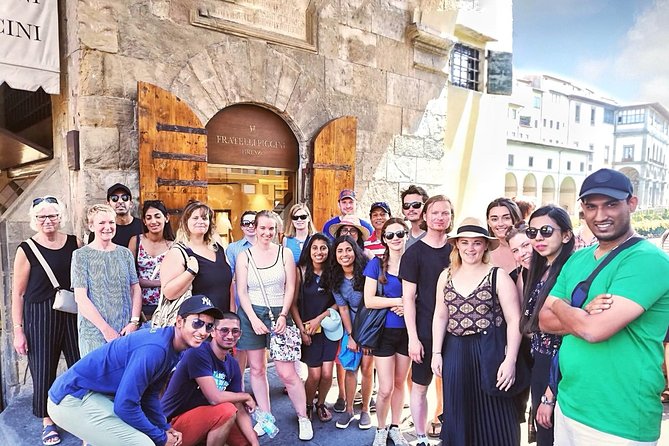
Then you’ll head to Piazza Della Repubblica for about 20 minutes and later to Piazza della Signoria for about 20 minutes. Admission tickets aren’t included for these stops, which is a plus because it keeps the experience flexible and low-friction.
Piazza della Repubblica often reads as a “gateway” space—open, structured, and easy to take in at walking speed. It helps you understand Florence’s public life as something designed and shared, not just a backdrop for monuments.
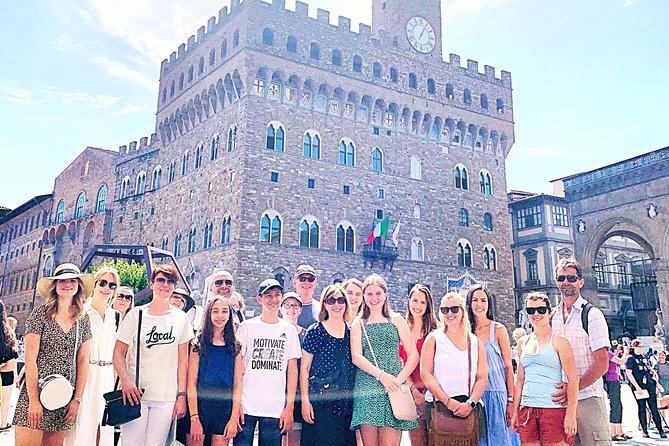
Piazza della Signoria is the more charged vibe. This is civic Florence—where power becomes visible in sculpture, planning, and symbolism. With a storyteller guide, you don’t just see statues. You learn why they’re there and what they were meant to communicate.
A small word of advice: these are also popular photo stops. So keep your pace steady. Listen first, then take photos before the group moves.
The short outdoor stretch before Ponte Vecchio
There’s an additional outdoor segment listed just before the final approach to Ponte Vecchio. The point of this kind of in-between stop is usually simple: it keeps the flow of the walk while giving you one more chance to connect the story thread to what you’ll see next.
If you’re the kind of traveler who likes “why this turn matters,” this is where the guide often ties the city layout back to power and movement. It’s also a good moment to re-check your route for the finish near the Uffizi area.
Ponte Vecchio: the final 10 minutes that calm everything down
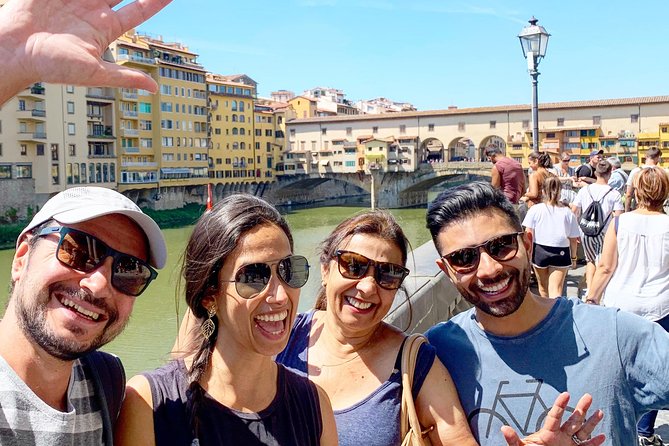
You’ll end with Ponte Vecchio for about 10 minutes, and this is free. This is a payoff stop. After church, palace, and civic squares, you get a quieter visual statement: the bridge that embodies Florence’s layers.
Even if you’ve seen Ponte Vecchio in photos, the real version is all about rhythm—shops, stone, and the way the Arno frames the scene. The guide’s explanation helps you connect what you see to how Florence has always traded on both beauty and control.
This is also the perfect place to decide your next step. Want more river views? Do you want to walk the other direction back toward your hotel? The tour ends in a central area, so you’re positioned well for follow-on sightseeing.
Price and logistics: what you’re really paying for
The tour price is shown as $3.62 per person, which sounds almost too low to be serious. Here’s the practical truth: entry tickets are not included for most stops, and your experience likely depends on whether you choose to pay for entrances on the days you want the full interior access.
On top of that, there’s a tip culture. The guidance says to pay what you want to reward your guide’s effort, and some people tip somewhere between 10€ and 50€. Another piece of practical advice from past experiences: have cash ready (at least 10€ is mentioned) if you’re using cash for tipping or small payments.
So how do you judge value? I see it like this:
- You’re paying for a guided storyline that helps you understand what you’re looking at.
- You’re also paying for time efficiency. In limited time, two hours with structure beats wandering for hours without context.
- Your “real” total cost depends on how many interior tickets you add beyond the free outdoor stops.
If you keep that in mind, the low listed price can feel like a bargain—especially if you’re a first-timer who wants a clean orientation before committing to paid attractions later.
Guide quality is the whole point
This type of tour lives or dies on the guide’s delivery. The strongest signals here are clear: licensed guides and a storyteller style that links history to street-level understanding.
The names that show up in the guide praise are memorable: Manuel, Michele, Riccardo, Chiara, Angela, and Glenda. People highlight the same pattern: accurate information, good pacing, and humor that keeps the walking group engaged. If you like your history explained like a story you can picture, this format fits that preference.
One more practical note: check-in on walking tours can get chaotic in busy areas. If you’re traveling with a tight schedule (like a cruise day), show up early, stay calm, and ask for help if timing is sensitive. The tour has a structured route, but you’ll still want slack.
Who this tour is best for
This works especially well if:
- it’s your first time in Florence and you want fast orientation
- you’re short on time but still want the city’s “why” behind the sights
- you like guided walking rather than sitting in museums all day
- you want a Medici-and-Renaissance framing you can use later while exploring on your own
It can also work for return visitors. Even if you’ve seen the landmarks before, a Medici-centered approach can make the city feel more connected, not like separate stops on a checklist.
How to build a great day around it
Because the walk ends near the Uffizi area, use the tour as your setup. Here’s a simple strategy:
- Take notes of what the guide points out as important.
- After the tour, choose one or two “follow-up” spots you care about most.
- If you’re planning paid entry sites, treat the tour as your pre-game: you’ll know what to prioritize and what you can skip.
Also, because weather is a factor (good weather is required), plan a backup mindset for your day. If the forecast looks iffy, keep your schedule flexible so you don’t feel stuck.
Should you book Renaissance & Medici Tales in Florence?
Yes, if you want a tight, story-driven introduction to Florence’s Renaissance power center. The route hits key landmarks quickly, the guide format is built for clarity, and the ending near Ponte Vecchio puts you in a great place to keep exploring.
I’d say skip or rethink if you need everything to be fully ticket-included and self-contained. Since admission tickets aren’t included for most stops, you’ll get the best value if you’re comfortable paying a bit extra when you want interior access, and if you’re ready to tip your guide appropriately.
If your goal is to get your bearings fast and understand why Florence looks the way it does, this tour is a strong bet.
FAQ
How long is the tour?
It runs for about 2 hours 15 minutes.
What language is the tour offered in?
The tour is offered in English.
Are admission tickets included?
Admission tickets are not included for most stops. A couple of parts are listed as free, including the outdoor Dante neighborhood area and Ponte Vecchio.
Where does the tour start and end?
It starts at Florence Free Tour-Tale in Piazza di San Lorenzo, and it ends near the Uffizi Galleries at Piazzale degli Uffizi, with the route finishing by looking toward Ponte Vecchio.
What is the maximum group size?
The tour has a maximum of 30 travelers.
Can I get a full refund if I cancel?
Yes. Free cancellation is available up to 24 hours in advance for a full refund.
You Might Also Enjoy


More Tour Reviews in Florence
- Tuscany Day Trip from Florence: Siena, San Gimignano, Pisa and Lunch at a Winery
★ 5.0 · 21,634 reviews