REVIEW · ASSISI
Assisi Private Walking Tour including St. Francis Basilica
Book on Viator →Operated by Umbria con Me · Bookable on Viator
Assisi tells its story best on foot. This private walk ties together St. Clare and the Basilica of St. Francis, with a guide who keeps the route flexible and tells you what you’re looking at, not just where to stand. I love the one-on-one feel and the slow, story-driven pacing that makes the saints’ world click. The catch: you’ll likely pay extra for basilica entry and the small headset fee, and the town is hilly.
You start at Piazza Santa Chiara and finish by the Papal Basilica area. I like that you get a mobile ticket, so you can keep things simple right on your phone, and the tour stays near public transport if you need to regroup. Dress code is a real factor here too: knees and shoulders must be covered.
Plan for a couple of “religious-site reality” moments. On Sundays, big Catholic holidays, and National holidays, guided tours inside the basilica are forbidden, so your guide explains from outside and you enter alone in silence; and from Feb 15 to Apr 6, 2026, access to the basilica of St. Francis is suspended because of the public display of relics, so it’s also outside-first.
In This Review
- Key Highlights You’ll Actually Feel
- Why This Assisi Walk Works (Even If You Think You Know St. Francis)
- Piazza Santa Chiara: Start Easy, Dress Smart
- St. Clare Basilica: The Story Starts With Her
- Chiesa Nuova (1615): When Francis Lore Meets Renaissance Brick
- Piazza del Comune: Rocca Maggiore, Roman Forum, and the Three Lions Fountain
- Santa Maria sopra Minerva: Roman Temple Basics You Can Actually See
- Basilica of St. Francis: The Main Event, With Extra Listening Options
- Headsets are usually worth it
- Important access rules you must know
- Price and Value: What You’re Really Paying For
- The Walkability Reality: Expect Hilly Assisi
- Who This Tour Is Best For (And Who Might Prefer DIY)
- Should You Book This Assisi Private Walking Tour?
- FAQ
- FAQ
- Is this tour private?
- Where does the tour start and end?
- How long is the walking tour?
- What language is the tour offered in?
- Do I need to pay extra for the Basilica of St. Francis?
- Are there dress code requirements?
- Can I get a guided visit inside the Basilica on Sundays or holidays?
- Will I be able to enter the Basilica during the relic display period in 2026?
Key Highlights You’ll Actually Feel
- Private guide, flexible routing, and full attention during the 2.5-hour walk
- St. Clare first, then St. Francis so the story builds instead of feeling random
- Art-and-architecture stop-by-stop (Renaissance brickwork at Chiesa Nuova, ancient temple at Santa Maria sopra Minerva)
- Roman roots in the middle of town at Piazza del Comune and the Rocca Maggiore area
- Two distinct basilica visits time-wise, plus optional headsets for inside listening
- Real access rules on Sundays/holidays and a Feb–Apr 2026 basilica access suspension window
Why This Assisi Walk Works (Even If You Think You Know St. Francis)
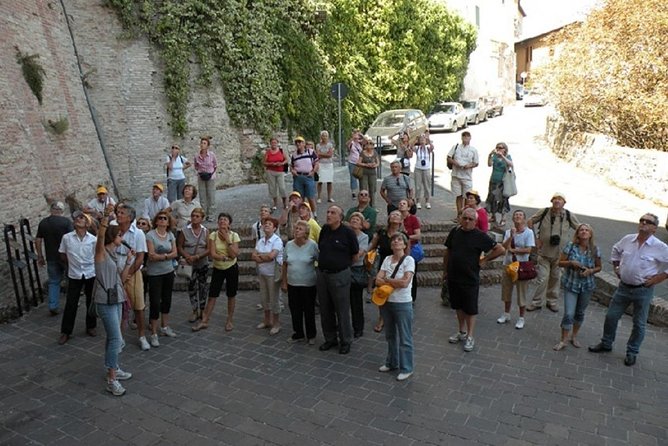
Assisi can feel like a lot if you try to do it solo with maps and screenshots. The streets curve, the viewpoints appear suddenly, and churches blur together unless someone helps you connect the dots. This is set up for that connection.
The big win is the private format. You’re not stuck in a slow-moving line where your questions get brushed off. A good guide can slow down when something matters and skip what doesn’t for your group. That’s exactly what you want in a town built around saints, orders, and symbolism.
Another plus: the route is arranged so you don’t jump straight from one church to the next like a checklist. You start with Saint Clare, then swing to other landmark churches and a Roman temple, before you spend real time in the Basilica of St. Francis. That order helps you understand why Assisi became a magnet for pilgrims and artists in the first place.
You can also read our reviews of more tours and experiences in Assisi.

Piazza Santa Chiara: Start Easy, Dress Smart
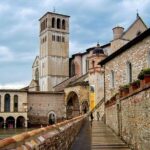
Meeting at Piazza Santa Chiara is convenient because it puts you close to the core “church belt” without forcing a long transfer. The end point is at the Papal Basilica and Sacred Convent of St. Francis area near Piazza Inferiore di S. Francesco.
Now for the part that can ruin your day if you ignore it: dress code. For places of worship and selected museums, you need covered knees and shoulders for both men and women. That means no shorts, no sleeveless tops. If you show up like it’s summer beach time, you may get refused entry.
If you want a low-stress solution, bring a light layer that covers arms and a plan for legs. Think scarf, overshirt, or a packable wrap. Assisi’s hilly streets already ask for comfortable shoes, so keep your outfit as simple as your footwear.
St. Clare Basilica: The Story Starts With Her
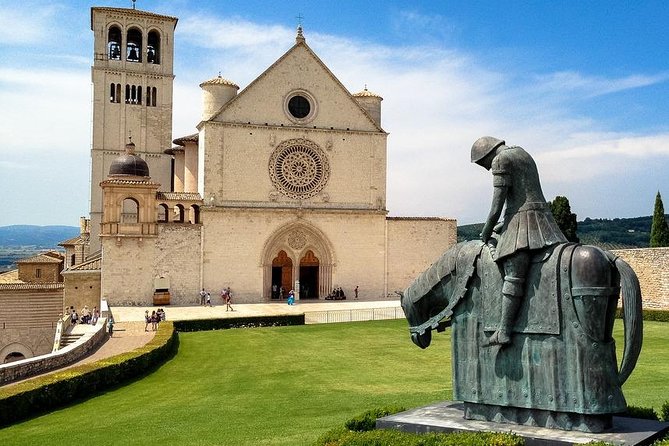
One stop early on is the Basilica of Saint Clare, tied to Saint Clare of Assisi. This church is dedicated to her and contains her remains. It’s also where her role as a follower of Saint Francis comes through clearly, plus the founding story of the Order of Poor Ladies, known today as the Order of Saint Clare.
Why this matters: most visitors remember St. Francis because he’s the headline. Clare is the thread that shows how his ideas shaped real lives, real communities, and real church spaces. Standing in front of a place tied to her remains changes the tone of the day. It goes from sightseeing to something calmer and more personal.
If you’re traveling with teens or family members who want “why should I care,” this is the moment where the guide can answer that without getting preachy. Clare’s story is human-scale: devotion, leadership, and a life lived with conviction.
Chiesa Nuova (1615): When Francis Lore Meets Renaissance Brick
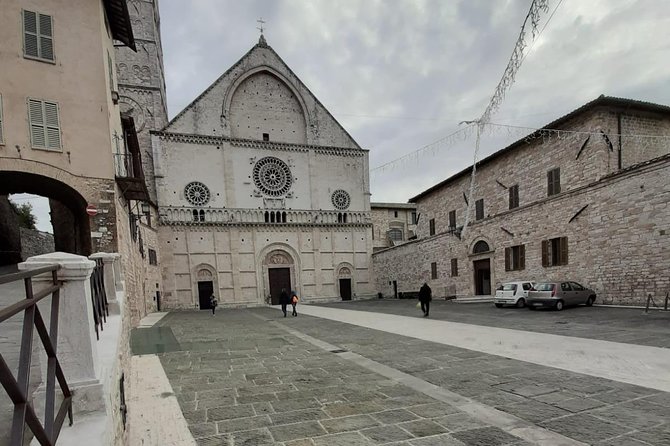
Next comes Chiesa Nuova, erected in 1615. The key detail here is that it was built on the remains of a building believed to be the home of St. Francis.
This is one of those places where a guide helps you look past the wow-factor and notice the structure. The façade is brick and divided by four pillars that support a Doric entablature. Above that, you’ll find an attic gable and then a hemispherical dome rising above it.
Admission here is free, which makes it a smart stop: you get a lot of visual payoff without an entry line. And if you care about how places were layered over earlier ones, this is a great example of how Assisi built later with traces of earlier beliefs.
Piazza del Comune: Rocca Maggiore, Roman Forum, and the Three Lions Fountain
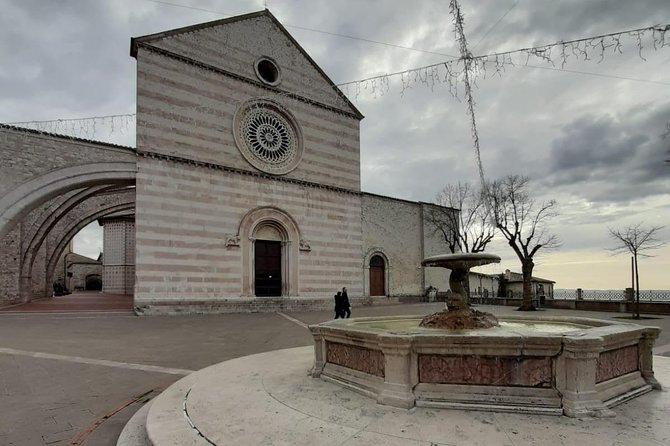
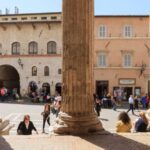
Then you step into Piazza del Comune, located where the ancient Roman Forum once stood. That Roman setting is still “in the bones” of the town, even if you’re surrounded by medieval stone and church domes.
The square is dominated by the imposing Rocca Maggiore. If you like power-and-history stories, this stop makes a strong case for how political control shaped what was built and what got preserved.
Keep an eye on the fountain on the right: the sixteenth-century fountain of the three lions, later revisited in 1762 by Giovanni Martinucci. It’s the kind of detail you’d walk past without a guide, because fountains are often treated like background. Here, it’s part of the town’s visual timeline.
Admission for this stop is free, so it’s a great breather between churches.


Santa Maria sopra Minerva: Roman Temple Basics You Can Actually See
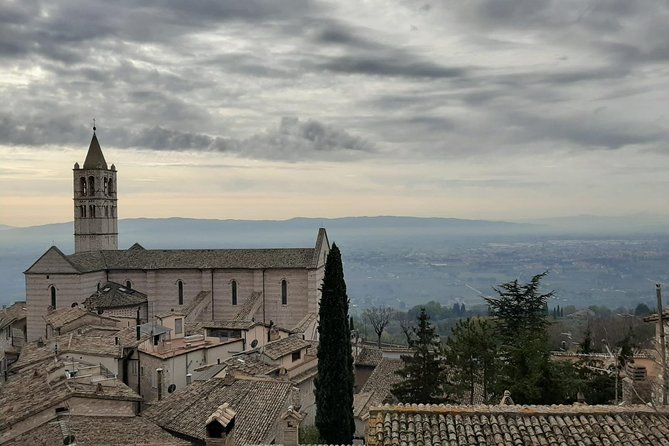
Santa Maria sopra Minerva is fascinating because it’s a church in today’s look, but it’s housed in an ancient Roman temple.
The Temple of Minerva was built in the 1st century by will of Gnaeus Caesius and Titus Caesius Priscus. These were two of the city’s quattuorviri, and they financed construction. Later, the church you visit was built in 1539 and then renovated in Baroque style in the 17th century.
Admission is free, which is always a win when you’re trying to keep the day’s costs under control.
What I’d watch for, with a guide’s help: how Roman architectural ideas survive inside later religious uses. The building becomes a physical argument that Assisi didn’t erase its past. It repurposed it.
Basilica of St. Francis: The Main Event, With Extra Listening Options
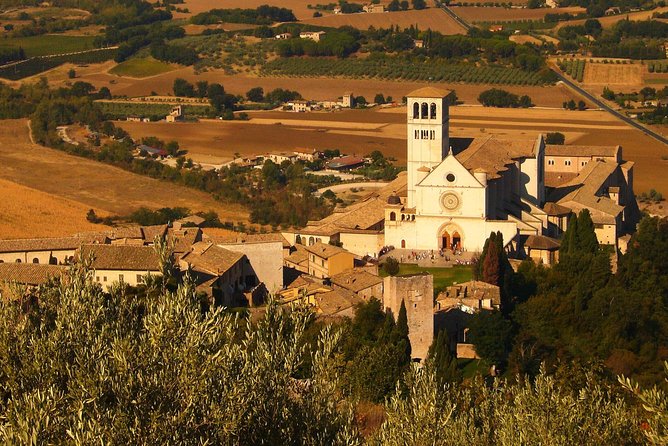
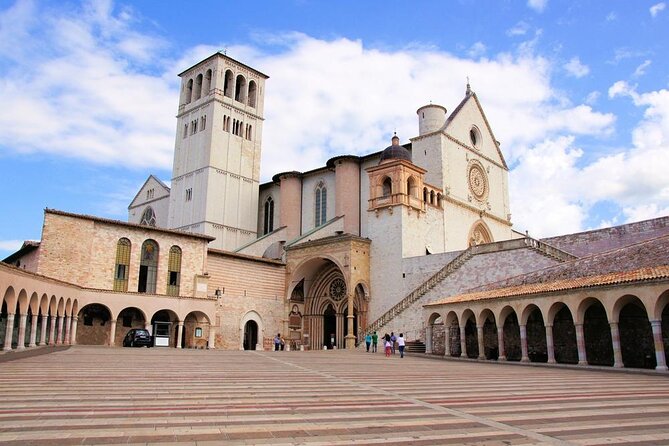
You’ll spend about two blocks of time at the Basilica Papale e Sacro Convento di San Francesco d’Assisi, around 45 minutes + 45 minutes. Tickets are not included, so you should budget for that.
This is where the architecture details start to matter, because the basilica is designed to guide your eyes upward and along a rhythm of space:
- A bright, spacious single nave with four bays
- A cross-vaulted ceiling with patterns of crosses and leaves
- A transept and a polygonal apse
- Four ribbed vaults decorated alternately with golden stars on a blue background and paintings
If you’ve seen churches that feel like blank walls, this place won’t be one of those. The guide’s role is to point out what you’re seeing and why it was done. You’ll also have time shaped around the experience, not just a fast inside check.
Headsets are usually worth it
For visiting the Basilica of St. Francis, headsets are 3 euro per person. If you care about hearing every explanation clearly, don’t skip this add-on. Church acoustics can be tricky, especially in busy spaces.
Important access rules you must know
These are the kinds of rules that change your day, so treat them as part of your planning:
- On Sundays, big Catholic holidays, and National holidays, guided tours inside the basilica are forbidden. Your guide explains from outside, and you enter alone in silence.
- From Feb 15 to Apr 6, 2026, access to the basilica of St. Francis is suspended due to the public display of relics of St. Francis. During that window, your guide explains from outside.
If your visit falls in either of these periods, you’re not getting a watered-down experience. You’re getting a different access mode. The guide can still make it meaningful.
Price and Value: What You’re Really Paying For
The price is $278.16 per group (up to 15) for about 2 hours 30 minutes. That’s not “per person” pricing, so your per-person cost depends on how many people are in your group.
Here’s the honest value picture:
- You’re paying for a private guide and the time it takes to make all these places click in the right order.
- Several stops (Chiesa Nuova, Piazza del Comune, Santa Maria sopra Minerva) are free to enter, so the day isn’t weighted entirely toward ticket costs.
- The Basilica of St. Francis entry is not included, and headsets are an extra 3 euro per person.
If you’re traveling as a couple, family, or small group, the private format can feel like a smart trade: you get more meaning per minute than you would wandering alone while trying to interpret symbolism on your own.
If you’re price-shopping, do check your dates against the access rules above. A Sunday or a holiday can shift how much time you spend inside with a guide.
The Walkability Reality: Expect Hilly Assisi
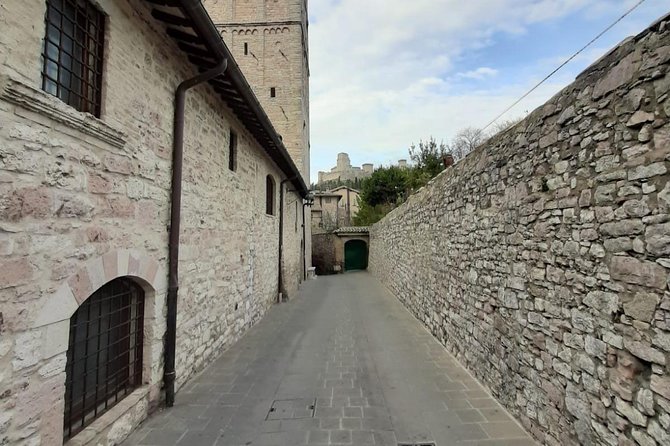
Assisi’s streets are up and down. That’s not a flaw in the tour; it’s the town’s nature. Wear shoes you trust on stone and uneven pavement.
The good news: because it’s private, you can set the tone for your pace. Guides have a track record of adjusting for different needs, including families and people who want slower movement. Still, don’t assume the day is flat.
Who This Tour Is Best For (And Who Might Prefer DIY)
This tour is a strong match if you want:
- A focused, St. Francis-centered day without the chaos of figuring it out yourself
- Clear art and architecture context at each stop, not vague “this is old” comments
- A guide who can help different group members connect to the same sites, whether that’s spirituality, art, or history
It may be less ideal if:
- You only care about being inside the Basilica of St. Francis at all costs (the access rules can change how guided inside time works)
- You hate walking on hills and stairs and don’t want to negotiate a slower pace
- You want zero extra costs beyond the tour price, since basilica entry and headsets are additional
Should You Book This Assisi Private Walking Tour?
I’d book it if you want Assisi to feel like a story instead of a scattered collection of churches. The strongest reason is the way the guide helps you connect Saint Clare and Saint Francis through the places around them—Roman roots, Renaissance building choices, and the basilica’s interior design.
Skip it only if your plan is very rigid around interior-only time, or if you’d rather spend your money on independent entry tickets and a self-guided route. Otherwise, this is one of the better ways to make a short Assisi visit feel long on meaning.
FAQ
FAQ
Is this tour private?
Yes. It’s a private tour/activity, and only your group participates. The group is up to 15.
Where does the tour start and end?
It starts at Piazza Santa Chiara, 06081 Assisi PG, Italy. It ends at the Papal Basilica and Sacred Convent of Saint Francis in Assisi, near Piazza Inferiore di S. Francesco, 2, 06081 Assisi PG, Italy.
How long is the walking tour?
The duration is about 2 hours 30 minutes.
What language is the tour offered in?
The tour is offered in English.
Do I need to pay extra for the Basilica of St. Francis?
Yes. Admission to the Basilica of St. Francis is not included. Headsets for visiting the basilica are also not included and cost 3 euro per person.
Are there dress code requirements?
Yes. You must cover knees and shoulders for places of worship and selected museums. Shorts and sleeveless tops are not allowed.
Can I get a guided visit inside the Basilica on Sundays or holidays?
On Sundays, big Catholic holidays, and National holidays, guided tours inside the Basilica of St. Francis are forbidden. The guide will explain from outside and you enter alone in silence.
Will I be able to enter the Basilica during the relic display period in 2026?
No. Access to the basilica of St. Francis will be suspended from Feb 15 to Apr 6, 2026. During that time, the guide will provide the explanation from outside.