REVIEW · ROME
Rome: Golf Cart Tour of the Eternal City
Book on Viator →Operated by Facile Tours · Bookable on Viator
Rome by golf cart keeps your feet fresh. In about three hours, you glide past Rome’s most wanted sights like Villa Borghese, the Pantheon, Trevi Fountain, and the Spanish Steps, with an English-speaking guide who keeps the pace photo-friendly. Best part: central hotel pickup helps you start without wrestling transit or street chaos.
I like that this feels built for real people, not a rushed parade. You only share the golf cart with your group (private), so questions don’t get lost, and guides such as Hadi, Francesco, and Sahar are praised for making Rome feel personal. One watch-out: depending on the cart setup, you may have trouble hearing if there’s no clear speaker or listening aid, and pickup can be less smooth if your hotel sits outside the central pickup zone.
In This Review
- Key highlights that make this worth your time
- Why this golf cart tour fits Rome when time is tight
- Price check: what $160.91 really buys
- Pickup, meeting points, and how to avoid the morning scramble
- How guides shape the whole experience (and why names matter)
- Your route through Rome: what each stop gives you
- Villa Borghese Gardens: a park reset before the monuments
- Piazza del Popolo: obelisk views and a classic Rome square
- Mausoleo di Augusto: quiet history in a calmer setting
- Via del Corso: the “in-between” street that anchors the day
- Column of Marcus Aurelius: spiral relief you can actually appreciate
- Piazza Venezia and the Vittoriano: a modern giant next to ancient priorities
- Mercati di Traiano: the Trajan Market and Imperial Fora feel up close
- Circus Maximus: ancient sport now turned into a park walk
- Giardino degli Aranci: oranges, views, and the keyhole trick
- Bocca della Verità: the legend you can try without breaking anything
- Piazza del Campidoglio: Michelangelo’s design and the Capitoline core
- Piazza Navona: fountains, artists, and easy outdoor time
- Pantheon: the engineering and the wow factor in one stop
- Chiesa di Sant’Ignazio di Loyola: the False Dome that fools your eyes
- Trevi Fountain: the postcard spot, but still worth your time
- Piazza di Spagna: the Spanish Steps for views and people watching
- What to expect from the pace and the stops
- The one concern that can change everything: hearing the guide
- Value for different types of Rome trips
- Should you book this Rome golf cart tour
- FAQ
- How long is the Rome golf cart tour?
- What does the tour cost?
- Is hotel pickup included?
- Is the tour private?
- What language is the tour offered in?
- Do I need tickets for the stops?
- Do I get a mobile ticket?
- What is the cancellation policy?
Key highlights that make this worth your time
- Private group ride so you move as one unit, not with strangers
- Central pickup that saves you time before the first stop
- English commentary with guides who connect sights to the city’s bigger story
- Short, focused stops that work well when you have limited time
- Photo-friendly pacing that keeps you from sprinting between landmarks
- Narrow-street access that helps you see more without getting stuck in traffic
Why this golf cart tour fits Rome when time is tight
Rome is a feast. The problem is the bill comes due fast. This tour solves a simple issue: it lets you see a lot of iconic places in roughly three hours while keeping your pace manageable.
The ride is open-air, and that matters. You get a breeze, you see city life around you, and you can actually look up at façades and domes without feeling like you’re playing traffic dodgeball. The tour is also described as not too fast for photos, which is exactly what you want at places like the Trevi Fountain area and the Pantheon approach.
And because it’s a private experience for your group, you avoid the common pressure of matching someone else’s schedule. Your guide can adjust the timing if you want more photos at Piazza del Popolo, or if you’re simply moving a bit slower that day.
You can also read our reviews of more tours and experiences in Rome.
Price check: what $160.91 really buys
$160.91 per person sounds pricey until you pencil it out for Rome. You’re paying for three things that are hard to get on your own in a short window:
- a local guide to connect the dots between monuments and the people who built them
- vehicle transport that helps you reach more spots without long walks
- time savings from pickup in central areas
If you only had a day or two in Rome, this type of “see the highlights, learn the context” tour can be a good use of money. If you already plan to spend most of your trip walking major sites at your own pace, you might feel less value.
Pickup, meeting points, and how to avoid the morning scramble
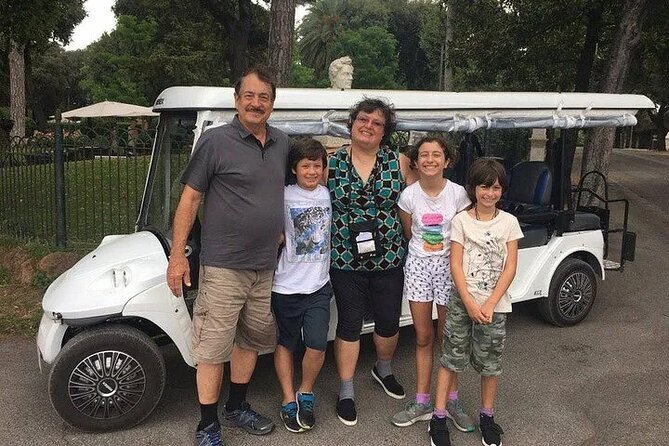
Pickup is offered from your central Rome hotel, with the driver guide waiting at the main entrance. That is a big win. You show up, you board, and you start moving.
There’s one key detail to respect: if your hotel is outside the central area, you’ll need to meet the driver at a designated meeting point (or another central location). That’s when things can go sideways fast. One unhappy experience described a last-minute hunt for the guide after the pickup didn’t line up with their hotel location.
So here’s my practical advice: before the day, confirm where your driver will find you, and keep your phone charged. If you’re staying far from the historical core, plan on arriving early at the meeting point you’re assigned.
How guides shape the whole experience (and why names matter)
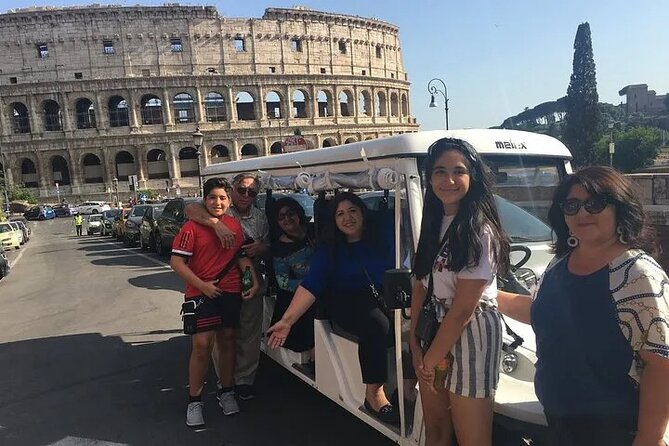
The ride quality is not just the vehicle. It’s the guide.
In the feedback, you’ll see patterns: guides like Hadi and Francesco are praised for strong explanations, clear English, and smart routes through neighborhoods you’d likely miss on your own. Others, including Sahar and Marco, are repeatedly described as friendly, helpful, and good at answering questions in a way that feels easy, not like a lecture.
A few guides also add personality in small ways. One guide used music via a Bluetooth speaker, which turned the ride into something more relaxed than sightseeing by stopwatch. Another guide helped with family photos and even offered quick help finding a taxi afterward. These may sound like extras, but they add up in a city where navigating can be exhausting.
Your route through Rome: what each stop gives you
This itinerary is built like a sampler platter: a mix of viewpoints, ancient monuments, major squares, and landmark churches. Many stops are brief, so think “look, learn, photo, move on.”

Villa Borghese Gardens: a park reset before the monuments
You start in the Villa Borghese area, a huge green space with lakes, fountains, sculptures, and several museums and galleries (including the Borghese Gallery). Even if you don’t go into a museum, the park sets the tone.
It’s a good warm-up because you’re out in open air quickly, and the scenery helps you shake off the stress of city movement. The stop is short, so you’ll want to decide fast what you want: a scenic look for photos, a quick orientation moment, or a taste of the park atmosphere before the ride turns back toward the historic core.
Piazza del Popolo: obelisk views and a classic Rome square
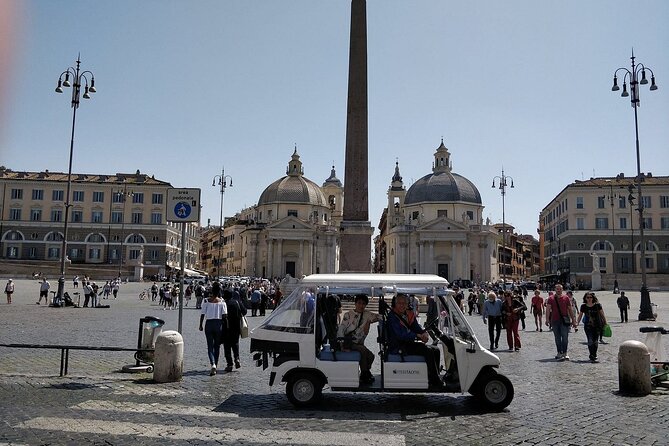
Next comes Piazza del Popolo, anchored by the Egyptian obelisk and surrounded by historic buildings. This piazza is also a natural meeting point for people watching, with nearby cafes and restaurants doing their thing later in the day.
The practical bonus here is the view access. The terrace of the Pincio hill offers panoramic city perspectives, so even a brief stop can feel like a mini break from monuments.
Mausoleo di Augusto: quiet history in a calmer setting
The Mausoleum of Augustus is an ancient tomb built in 28 BC to commemorate the first Roman Emperor. Today, you’ll see part of the original structure, with exhibits inside that connect you to Augustus’ legacy.
What I like about this stop is the contrast. Compared with the more chaotic center, the mausoleum area is described as peaceful and surrounded by greenery. That makes it a nice moment to absorb the idea of Rome as an ongoing layer cake, not a single era.
Via del Corso: the “in-between” street that anchors the day
You also pass along Via del Corso, a major shopping street running between Piazza del Popolo and Piazza Venezia. It’s useful because it’s a Rome connector: you’re not just hopping from landmark to landmark. You’re moving through the living city.
This street also gives you a chance to notice details you’d miss if you only focused on the big-ticket sites. It’s lined with shops and cafes, and it includes historic landmarks such as the Palazzo Doria Pamphilj.
Column of Marcus Aurelius: spiral relief you can actually appreciate
In Piazza Colonna, you’ll see the Column of Marcus Aurelius, carved with a continuous spiral relief depicting military campaigns. It’s about 38 meters tall, and it’s known as one of the best-preserved monuments from ancient Rome.
This stop can be more than just a photo. The column has an interior staircase for those who want to climb for city views. Even if you skip the climb, the idea of a monument that wraps history around the whole column is the kind of detail that makes your later visits feel richer.
Piazza Venezia and the Vittoriano: a modern giant next to ancient priorities
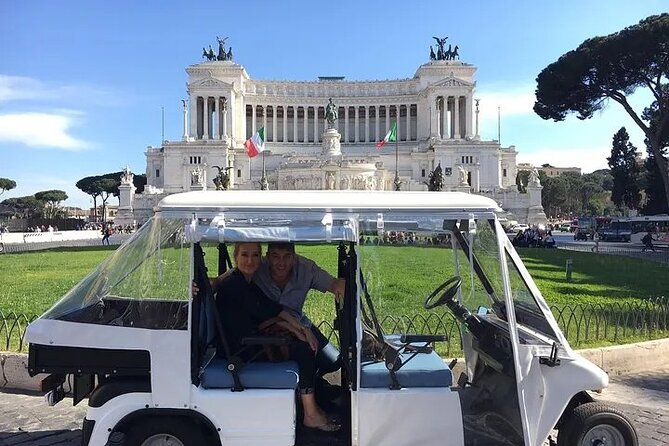
Piazza Venezia is dominated by the Vittoriano, a massive white marble monument dedicated to Victor Emmanuel II. It’s one of the most recognizable landmarks in Rome, and it’s big enough to shape how the surrounding streets feel.
You can climb for panoramic views, and you can explore museums and exhibitions inside. This stop is useful because it reminds you that Rome’s story doesn’t stop at ancient layers. The city keeps reframing its identity, often in dramatic architectural ways.
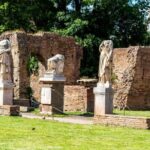
Mercati di Traiano: the Trajan Market and Imperial Fora feel up close
At Mercati di Traiano, you’ll reach the Trajan Market, a complex built during Trajan’s reign. It served as a hub of commerce and trade, with interconnected buildings, courtyards, and underground spaces.
What makes it special is the architecture. The curved façade and decorative elements are described as impressive, and the site’s restoration helps you connect what you see now to what Romans used to use it for. It’s also part of the Museo dei Fori Imperiali context, tying the ruins together instead of leaving you with scattered bits.
Circus Maximus: ancient sport now turned into a park walk
Circus Maximus was a huge chariot racing stadium that once held up to about 250,000 spectators. Even though much of it is lost, you can still appreciate the scale, and the area works as a public park.
This is a good stop if you like imagining crowds. Standing in a modern park where ancient racing once pulled massive attention makes Rome feel real, not just stone.
Giardino degli Aranci: oranges, views, and the keyhole trick
Giardino degli Aranci (Orange Gardens) sits on Aventine Hill and is famous for panoramic views toward the Vatican area, plus citrus trees and flower beds. It’s described as a peaceful oasis in the middle of Rome.
The standout detail is the keyhole in the wall. Viewed from the correct angle, it frames St. Peter’s Basilica. It’s one of those moments that feels silly until you actually line it up and see the Vatican framed like a postcard window.
Bocca della Verità: the legend you can try without breaking anything
Bocca della Verità is the Mouth of Truth, a stone disk in the portico of Santa Maria in Cosmedin. There’s a famous legend: if you put your hand inside and tell a lie, your hand gets bitten off.
Yes, it’s theatrical. But that’s why it works. The stop is quick, and the photos are instant because everyone knows what to do. Plan for some queuing at times, since it’s popular.
Piazza del Campidoglio: Michelangelo’s design and the Capitoline core
On Capitoline Hill, Piazza del Campidoglio was designed by Michelangelo. The area connects to ancient political and religious power, including the Temple of Jupiter and the seat of the Roman Senate.
You’ll also see the Marcus Aurelius statue, one of the few surviving equestrian statues from ancient Rome. This stop is valuable if you want a feeling for how power shaped the city’s geography, not just individual buildings.
Piazza Navona: fountains, artists, and easy outdoor time
Piazza Navona is famous for three fountains, including Bernini’s Fontana dei Quattro Fiumi. The surrounding churches and historic buildings make it feel like an open-air theater.
Even if your time here is brief, it’s a great place to slow down. You can people-watch, take photos around the fountains, and soak in how the square functions day-to-day.
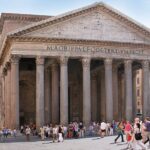
Pantheon: the engineering and the wow factor in one stop
The Pantheon is one of the best-preserved ancient buildings in Rome, famous for its dome and its oculus—the circular opening at the top that lets in natural light. It’s considered one of the greatest engineering achievements of the ancient world.
This stop tends to land with people because it’s not just pretty. The scale and proportion are the main event, and the lighting effect through the oculus adds drama even when you’re only there a short time.
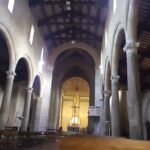
Chiesa di Sant’Ignazio di Loyola: the False Dome that fools your eyes
Sant’Ignazio di Loyola is a Baroque church known for intricate frescoes and gilded moldings. Its best-known feature is the False Dome, a painted trompe-l’oeil dome created by Andrea Pozzo.
If you like illusion as art, this stop is a standout. It’s also a nice shift from ancient Rome into later artistic tricks that turn architecture into storytelling.
Trevi Fountain: the postcard spot, but still worth your time
Trevi Fountain is iconic, and it’s hard to deny that in real life. It’s a Baroque fountain with sculptures, carvings, and a central Neptune statue. The coin-toss tradition is part of the fun—spray and coins from visitors are a constant backdrop.
It’s busy, but the point of the stop is simple: it’s the moment that matches your mental image of Rome. If you want the best photos, you’ll need patience and a willingness to wait for a clear angle.
Piazza di Spagna: the Spanish Steps for views and people watching
Finally, Piazza di Spagna and the Spanish Steps give you a classic Rome gathering spot. The steps connect Piazza di Spagna to Trinità dei Monti, with 138 steps leading to the church.
The area is also known for flowers and wide views over surrounding architecture. It’s a good wrap-up stop because you can sit, reset, and watch Rome flow while you take in the city’s layers one last time.
What to expect from the pace and the stops
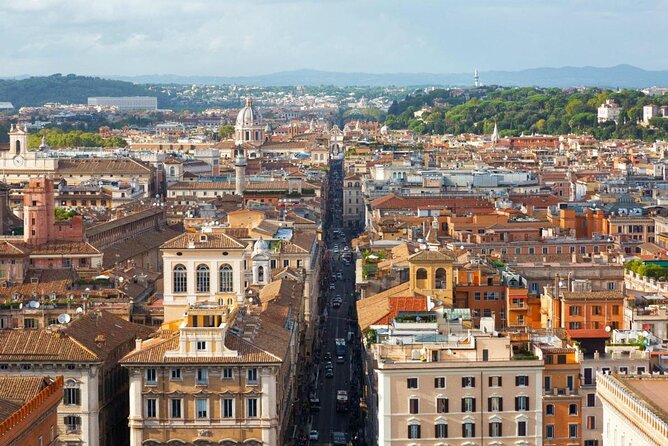
Many stops are only five to fifteen minutes. That’s not a flaw if you understand the format.
This is ideal if:
- you want an orientation tour that helps you choose what to see more deeply later
- you have limited mobility or simply want fewer long walks
- your group includes teens, older relatives, or anyone who doesn’t love marathon sightseeing
It can feel less ideal if:
- you want long time inside museums or churches
- you expect deep, slow explanations at every location
- you need audio support to follow the guide clearly
The one concern that can change everything: hearing the guide
A couple of write-ups mention an issue with hearing during the ride, especially when there weren’t clear speakers or listening devices. The guide may speak, but if your cart is too noisy or the sound doesn’t carry, you can lose the whole point of paying for commentary.
If you’re the type who hates missing details, I’d treat this as a real consideration. Ask what audio setup is used, and sit where you’ll have the best chance to hear.
Value for different types of Rome trips
This tour shines for:
- first-time Rome visitors who want a fast, guided overview
- groups who need comfort and transport without skipping the classics
- families who want a structured route that keeps everyone engaged
It’s also a smart “day one or day two” move. When you come back later for a second pass—maybe on your own—you’ll know exactly where you want to spend time.
Should you book this Rome golf cart tour
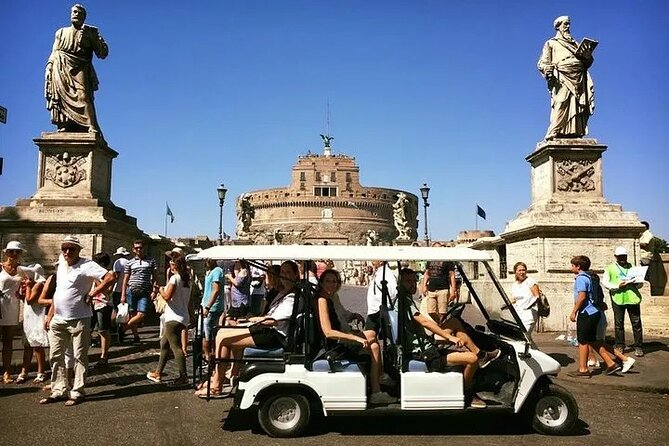
I’d book it if you want maximum Rome in limited time, and you value a local guide who can explain what you’re seeing in plain English. The private format and the hotel pickup from central areas are big practical wins, especially if you’re trying to protect energy for dinner reservations and evening wandering.
Skip it or choose a different option if you’re very sensitive to audio clarity, or if you’re the type who needs lengthy stops at each monument. Also, if your hotel is outside the central pickup zone, be extra careful to verify the exact meeting point so your day doesn’t start with stress.
FAQ
How long is the Rome golf cart tour?
It’s about 3 hours.
What does the tour cost?
The price is $160.91 per person.
Is hotel pickup included?
Pickup is offered from central Rome hotels. If your hotel is outside the central area, you’ll meet the driver at a designated meeting point or another central location.
Is the tour private?
Yes. It’s listed as private, and only your group participates.
What language is the tour offered in?
The tour is offered in English.
Do I need tickets for the stops?
The stops in the itinerary are listed with admission ticket free.
Do I get a mobile ticket?
Yes, there’s a mobile ticket.
What is the cancellation policy?
Free cancellation is available up to 24 hours in advance for a full refund.