Bologna rewards slow looking, and this tour is built for it. You’ll walk from Piazza Maggiore into quieter corners where art, politics, and food history all connect in one tight loop. The pace is brisk, but the stories are clear and practical, with Riccardo Bacchi turning architecture and paintings into something you can picture.
Two things I really like about this experience: you get a strong art-history spine (churches, frescoes, famous works, and university collections), and you also get time in the Quadrilatero market area instead of only seeing monuments. One possible drawback is that it’s a lot of ground in a few hours, so if you want long stops for photos or slow wandering, you’ll need to manage your expectations.
Quick heads-up: this is a group tour capped at 25 people, so it can feel lively in the most popular spots. If that kind of crowd energy wears you out, consider going early in the day (when your body is fresh) and bring water.
In This Review
- Key Highlights You’ll Care About
- Where You Start in Piazza Maggiore: Speaking Corners, Neptune, and Old Power
- Palazzo d’Accursio: Frescoes, a Bishop’s Chapel, and the Stairs for Horsemen
- Basilica di San Petronio: The World’s Biggest Sundial and Big-Painting Drama
- Archiginnasio di Bologna: Oldest-University Headquarters, Anatomy Theatre, and Stabat Mater Rooms
- Quadrilatero Market Maze: Medieval Trades, Guild Signs, and Food Time
- Santo Stefano Complex: From Roman Temple and Spring to Dante’s Cloister
- Santa Maria della Vita: Niccolò Dell’Arca’s Terracotta and the Theater of Emotion
- Tower Views That Feel Real: Asinelli and Garisenda from Street Level
- Finestrella Canal (UNESCO Heritage) and a 13th-Century House with Wooden Pillars
- Palazzo Comunale: Renaissance-Baroque Ceilings and Bramante’s Horsemen Stairs
- Timing, Group Size, and How to Get the Most from the Brisk Pace
- Food Tastings: What the Tasting Moment Actually Adds
- Is It Worth $175.36? Value for Art, Architecture, and a University-Grade Day
- Who Should Book This Tour (and Who Might Want to Skip)
- Should You Book This Bologna Art and History Walk?
- FAQ
- How long is the Bologna historical art walking tour?
- What does the tour cost?
- Is the tour offered in English?
- How big is the group?
- Where is the meeting point?
- Which sites include admission tickets?
Key Highlights You’ll Care About
Begin at Piazza Maggiore and work outward through Bologna’s power centers
See major art and architecture in churches tied to Bologna’s identity
Archiginnasio hits hard: anatomy theatre and rare-room details
Market time in Quadrilatero adds a real sense of daily life
Street-level views of Asinelli and Garisenda make the towers feel close
Optional tastings can add a food-history angle to the day
Where You Start in Piazza Maggiore: Speaking Corners, Neptune, and Old Power
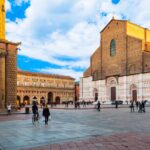
You begin on the square that anchors Bologna’s center: Piazza Maggiore. The big advantage here is timing. Start right in the open, and you quickly understand the city’s medieval layout before you start moving church to palace to market.
Riccardo’s focus in this first section is how Bologna’s main square worked as a stage. You’ll hear about the old medieval buildings around it, including the four “speaking” corners, which are a great shortcut to understanding how public life, symbolism, and message-making worked before social media. You’ll also get the rundown on the Renaissance fountain of Neptune and the facade details tied to the Council Palace’s old clock—small elements that are easy to miss if you’re just passing through.
If you’re a first-time visitor, this opening stops you from feeling lost later. You’ll finish the tour with Bologna’s “who ruled what, when” story in your head, not just a list of pretty stops.
You can also read our reviews of more tours and experiences in Bologna.

Palazzo d’Accursio: Frescoes, a Bishop’s Chapel, and the Stairs for Horsemen
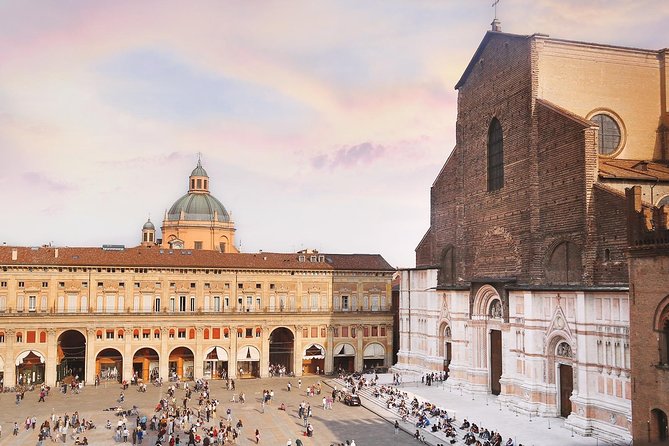
Next comes Palazzo d’Accursio, and it’s a smart pick because it sits in the middle of Bologna’s governing story. This isn’t only about beauty. It’s about how power displayed itself: noble rooms, fresco cycles, and the way important buildings were designed for ceremony and movement.
You’ll look at the noble rooms on the first and second floor, then get the story behind visual programs like the frescos and the private chapel of the bishop. One of the more unusual details is the big stairs for horses associated with Bramante. That detail matters because it tells you this wasn’t a “walk in and browse” world. People arrived on horseback, and the building was built for real, high-status access.
You’ll also see references tied to artists like Francesco Francia (including the earthquake’s virgin). The likely benefit for you: instead of treating art like separate museum objects, you start to see it as part of civic identity.
Basilica di San Petronio: The World’s Biggest Sundial and Big-Painting Drama
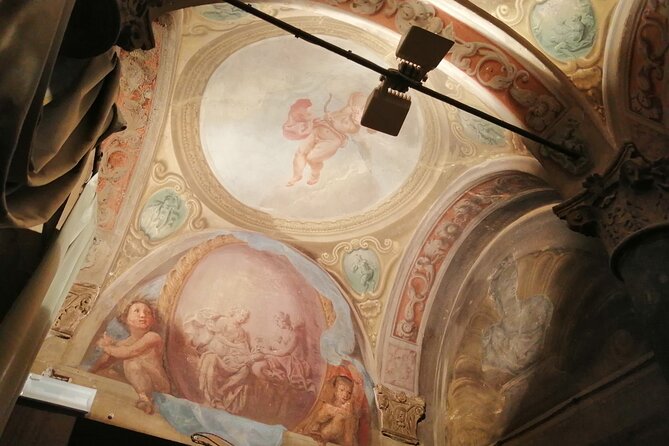
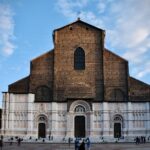
At Basilica di San Petronio, the tour shifts from civic power to religious and artistic ambition. The headline you can’t ignore is the world’s biggest sundial, which turns the church into an instrument of time and astronomy. Even if you don’t care about technical stuff, it’s an excellent way to understand why Bologna’s thinkers and artists mattered.
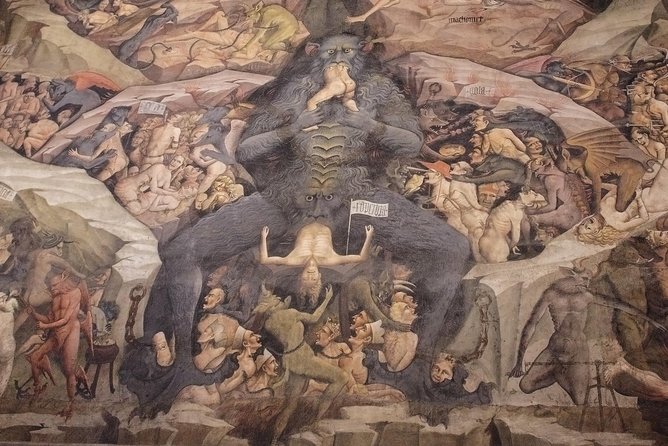
You’ll also spend time with medieval frescoes in the Cappella Bolognini, plus the four ancient crosses. Then the focus moves to famous painting names tied to Bologna’s artistic reputation—Parmigianino and Lorenzo Costa—so you’re not just standing in a big building. You’re learning how the church became a gallery for local and imported talent.
One consideration: church interiors can vary in lighting and what you can easily read from farther back. If you like taking close-up photos, consider planning your spot and angle early instead of waiting until the end.
Archiginnasio di Bologna: Oldest-University Headquarters, Anatomy Theatre, and Stabat Mater Rooms
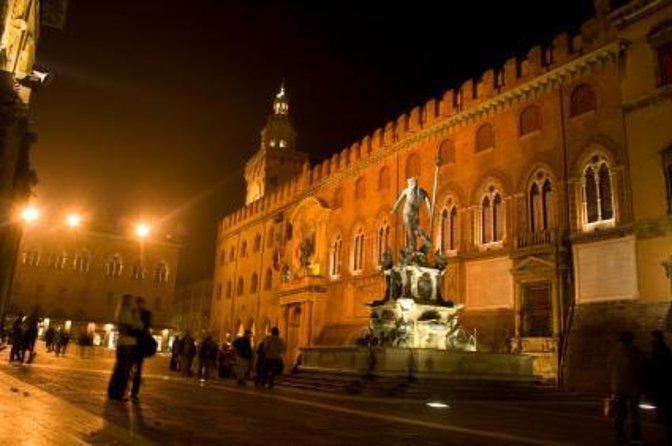
If you want a single stop that feels like a turning point, make it Archiginnasio di Bologna. This is the headquarters of Europe’s oldest university, and the tour uses that fact to connect education, science, and art.
You’ll see the renaissance palace framing a huge collection of coats of arms, which is a quick way to understand the university as a political and cultural institution, not just classrooms. Then comes the science angle: “witnesses” of secret and powerful medicine, followed by the wooden anatomical theatre. That wooden theatre detail is memorable because it makes medical study feel human-scale and theatrical—less sterile “lab,” more historic learning performance.
The tour also points you to the Stabat Mater room and precious books connected with major figures. The most eye-catching name here is Leonardo da Vinci’s “Flights of the birds.” Even if you only catch the idea, it’s a strong reminder that Bologna’s university culture fed art and ideas across disciplines.
If you love rare objects and you like tours that explain why rooms exist, this is the moment you’ll likely rate highest.
Quadrilatero Market Maze: Medieval Trades, Guild Signs, and Food Time
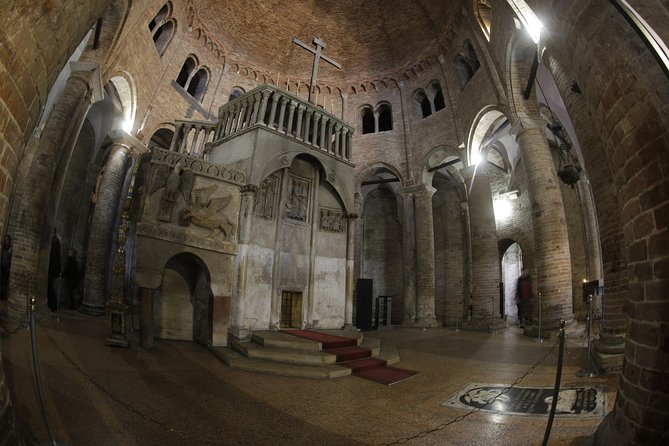
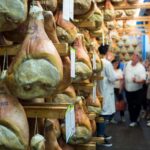
After the university and churches, you get a breath of real city life in Quadrilatero. This is the middle-age market labyrinth: stalls, old food shops, ancient coats of arms, and signs tied to guild life.
Why this stop matters is simple. Bologna’s art isn’t only painted on walls. It’s also embedded in the everyday systems that moved goods and shaped neighborhoods. Quadrilatero is where you feel how the city functioned, not just how it looked.
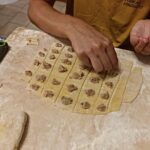
This is also where tastings can fit into the flow. The tour experience is described as having tastings tied to local tradition—like a rice cake made from a medieval recipe and local wine. If you get the chance to taste, treat it like a “history receipt.” You’re tasting the continuity of ingredients, techniques, and regional flavors rather than just sampling something sweet.
Time is shorter here, so if you want to browse beyond the tour’s path, keep your energy. You’ll likely want to return later on your own to keep looking.




Santo Stefano Complex: From Roman Temple and Spring to Dante’s Cloister
Basilica – Santuario di Santo Stefano is one of those places that makes Bologna feel layered. The tour frames it as a single complex that holds centuries—starting with a Roman temple and a natural spring, then moving forward through changes that shaped the city.
The Dante Alighieri cloister component gives it a literary hook. You’ll also see how the churches connect to the monastic world: cells for monks, and capitals topped with animal faces. That “animal faces” detail is especially useful. It’s the kind of visual motif you can use to read symbolism as you travel, not only at this stop.
A practical note: complexes like this can include quiet corners that don’t lend themselves to loud group behavior. Keep your movement respectful, and you’ll enjoy the atmosphere more.
Santa Maria della Vita: Niccolò Dell’Arca’s Terracotta and the Theater of Emotion
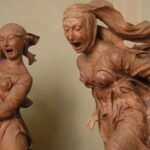
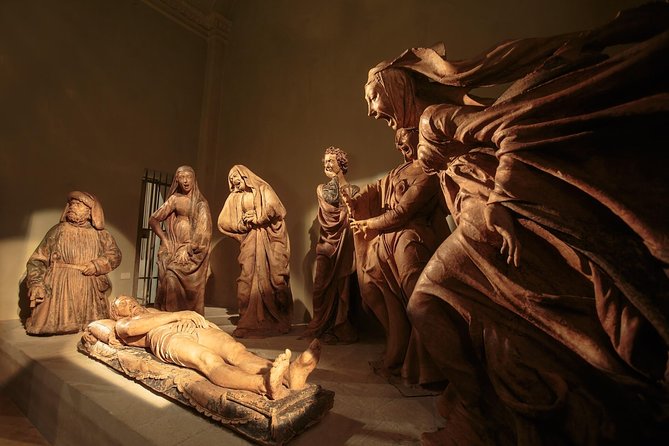
At Chiesa di Santa Maria della Vita, the tone shifts again—toward emotion and movement in sculpture. You’re there for a terracotta masterpiece sculptured in 1470 by Niccolò Dell’Arca. The tour highlights an interpretation of motion and emotion that feels almost modern in how it communicates feeling through form.
This matters because many visitors treat Renaissance and earlier sculpture like “still art.” Here, the tour explains how to look for emotion—how bodies, posture, and facial expression tell you the story even before you know the full background.
If you’re the type who likes to understand what you’re seeing (not just that it’s famous), this stop is a good match.
Tower Views That Feel Real: Asinelli and Garisenda from Street Level
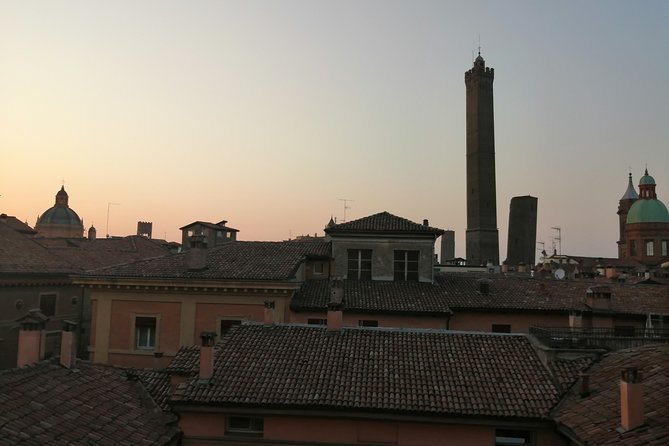
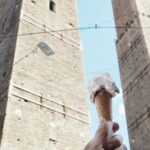
Near the middle-to-late portion of the walk, you’ll get a street-level view of Bologna’s signature towers: Asinelli and the leaning Garisenda. The key detail here is “from street level.” It makes the towers feel less like icons on a postcard and more like part of daily geography.
You’ll understand why these towers are such a symbol of Bologna’s identity—your brain connects the vertical landmark to the streets you’ve been walking. It’s a nice reset between indoor stops.
If you care about photos, bring your phone battery level up before this section. You’ll likely want to take a few angles.
Finestrella Canal (UNESCO Heritage) and a 13th-Century House with Wooden Pillars
Two of Bologna’s more unusual details come next: Finestrella and an older house preserved with original wooden structure.
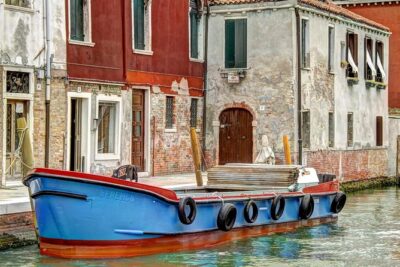
At Finestrella, the tour calls it a rare example of medieval canals designed to supply silk and hemp textile manufacture, tied to UNESCO heritage. This is one of those “how did a city work” lessons. You’re not only looking at water. You’re learning why water mattered to industry and how Bologna handled production needs long before modern utilities.
Then you’ll look at an incredible surviving example of a 13th-century house, maintaining its original wooden pillars. Even in a short time, this is a great contrast to palaces and monumental churches. You see domestic scale and construction choices—proof that Bologna’s story includes everyday engineering.
If you’re prone to moving fast, slow your pace here. These details are easy to overlook if you’re only watching the group.
Palazzo Comunale: Renaissance-Baroque Ceilings and Bramante’s Horsemen Stairs
You finish with Palazzo Comunale, which is a strong close because it gives you one more “power made visible” theme—this time through decorative art and civic space.
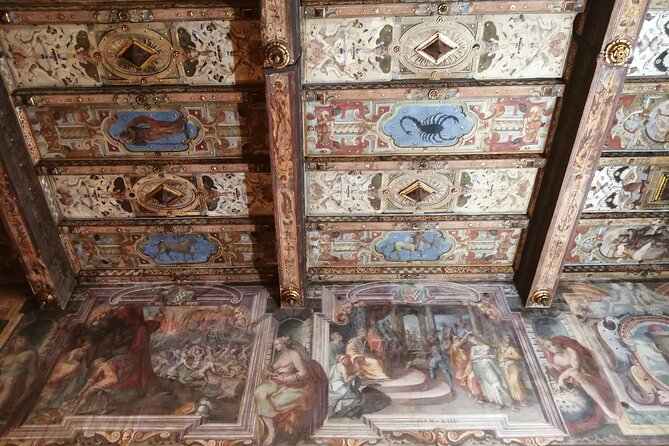
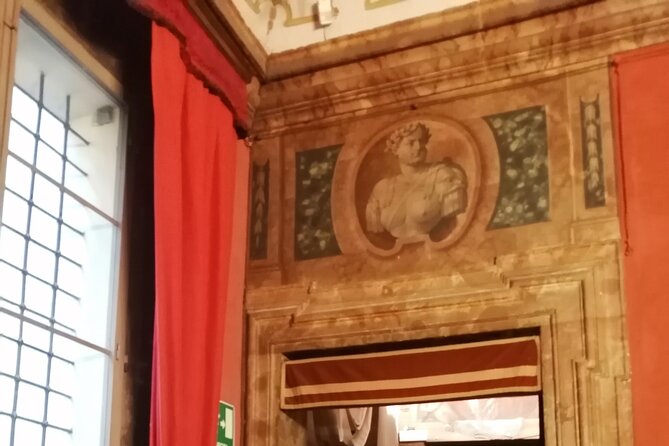
You’ll focus on renaissance and baroque ceilings, frescoes, sculptures, and the Bramante staircases for horsemen. Those horsemen stairs link back to the earlier palace section, so you start seeing a repeating idea: Bologna’s architecture repeatedly assumed status, ceremony, and movement.
A good bonus with this ending: by the time you reach it, you already understand the city’s core story. So the ceilings and decorations feel earned, not random.
Timing, Group Size, and How to Get the Most from the Brisk Pace
This tour runs about 3 to 4 hours, and it’s designed to pack a lot into walking distance. That matters because it keeps momentum, but it also means you need to stay mentally available. If you’re the type who wants to read every inscription, you might feel rushed.
The group cap is 25 travelers, which is big enough for energy but small enough that you can still ask questions when the guide pauses. Riccardo’s style—story-first with concrete details—works well in a group setting because it keeps people from drifting into “just looking.”
My practical tip: wear comfortable shoes with grip. You’ll move from square to church to market lanes, and Bologna sidewalks vary.
Food Tastings: What the Tasting Moment Actually Adds
Even though this is fundamentally an art-and-history walk, the tasting element turns it into a culture-and-lifestyle experience. The tour is described as including tastings such as a rice cake made from a medieval recipe and sampling local wine.
What this does for you: it turns history from “dates and names” into something edible and memorable. It’s also a smart reset between heavier indoor stops. If the tasting moment happens while you’re still absorbing architectural details, it helps your brain switch gears without losing the theme.
If you don’t drink alcohol, you’ll still benefit from the food side. Just pace yourself, and keep your focus on what you’re learning about ingredients and local tradition.
Is It Worth $175.36? Value for Art, Architecture, and a University-Grade Day
At $175.36 per person, you’re paying for more than entry tickets. The big value is the quality of the narrative: the tour connects Bologna’s public life, university learning, and major art works in a way that’s hard to replicate on your own without a serious guidebook plan.
Also, several stops include admission, including San Petronio, Archiginnasio, and Santa Maria della Vita. Other sections are free to enter, like Piazza Maggiore, Quadrilatero, Finestrella, and the exterior tower viewpoint. That mix helps balance the cost.
A practical reason to book early: this tour is often reserved well ahead, with an average booking lead time of about 54 days. If you want a specific day, don’t wait until “maybe.”
Who Should Book This Tour (and Who Might Want to Skip)
This works best if you:
- want a clear story route through Bologna’s art, architecture, and education
- like guides who explain why a building exists and what its details mean
- enjoy a brisk pace and want to cover major highlights without spending all day planning
You might skip or pair it with free time if you:
- want only one or two major attractions and lots of slow wandering
- feel uncomfortable in groups where the pace stays active
Should You Book This Bologna Art and History Walk?
Yes, if you’re in Bologna for a short window and you want to understand what you’re seeing fast, without missing the “why.” The combination of Archiginnasio, churches like San Petronio and Santa Maria della Vita, and the market time in Quadrilatero gives you a rounded picture of Bologna’s identity, not just its top postcards.
Book it early, wear good walking shoes, and come with curiosity. If you do, you’ll leave with Bologna’s landmarks tied together into one story you can actually retell.
FAQ
How long is the Bologna historical art walking tour?
It lasts about 3 to 4 hours.
What does the tour cost?
The price is $175.36 per person.
Is the tour offered in English?
Yes, it’s offered in English.
How big is the group?
The group size is capped at a maximum of 25 travelers.
Where is the meeting point?
Meet at Bar Vittorio Emanuele, Piazza Maggiore 1, 40124 Bologna, Italy.
Which sites include admission tickets?
Admission is included for Basilica di San Petronio, Archiginnasio di Bologna, and Chiesa di Santa Maria della Vita. Other stops listed are free or do not require admission tickets.