REVIEW · BOLOGNA
Bologna Local Pasta Cooking Class, Ragu, Spritz, Wine & Gelato
Book on Viator →Operated by Tours and the City · Bookable on Viator
Fresh pasta starts with a stopwatch and a smile. I love the hand-rolled tagliatelle you make without machines, and the Casoni spritz approach that feels local instead of generic. One heads-up: the ragù is homemade, but the full ragù prep is not done during class due to time.
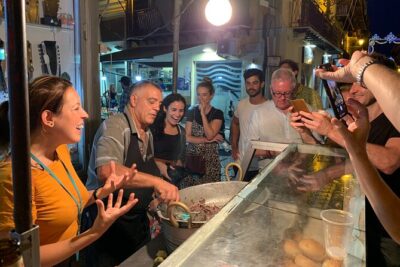
This is a small-group cooking session in Bologna’s old-town area, typically limited to about 10 people (with a maximum of 13). You meet at Piazza Galileo Galilei, and the class runs in English with a local sfoglina-style teacher who guides you from dough to plate.
At $59.26 per person for about 3 hours, it’s one of those rare experiences that mixes real skills with lots of eating and drinking, backed by a 5-star score across 527 ratings.
In This Review
- Key highlights to know before you go
- Piazza Galileo Galilei: The start point and the vibe you want
- Pignoletto aperitivo: Mortadella, piadina, and spritz culture
- Making the Casoni spritz (and how it’s not just another spritz)
- Hand-rolled tagliatelle: why rolling without machines teaches real control
- Homemade ragù, Parmigiano, and the moment everything comes together
- From wine to amaro: coffee, mystery gelato, and a proper finish
- Who this class suits best (and who should think twice)
- Price and value: what $59.26 gets you in Bologna
- Tips to get the most from your tagliatelle and spritz class
- Should you book this pasta, ragu, spritz, wine, and gelato class?
- FAQ
- How much does the Bologna Local Pasta Cooking Class cost, and how long does it last?
- Where do I meet for the class?
- Is the class offered in English?
- What will I cook during the class?
- Do you make the ragù from scratch during the class?
- What food and drinks are included?
- How large is the group?
- Can the class handle gluten-free or vegetarian requests?
- Can I get recipes after the class?
- What is the cancellation policy?
- Are children welcome?
Key highlights to know before you go
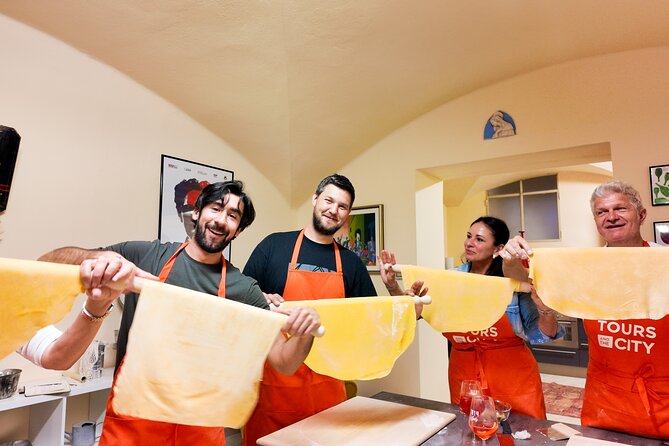
- Tagliatelle by hand, no pasta machines, guided by a local sfoglina teacher
- Casoni spritz (Emilia-Romagna style) plus a real explanation of what makes it different
- Homemade ragù served with your pasta, even though you don’t make the ragù from scratch
- A full aperitivo-to-dessert flow: Pignoletto, wine, coffee, amaro, and mystery gelato
- Small group energy, with lots of personal attention (and encouragement when dough gets messy)
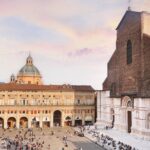
Piazza Galileo Galilei: The start point and the vibe you want
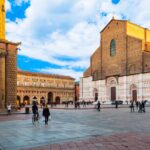
The class meets at Piazza Galileo Galilei in Bologna. It’s in the city center and near public transportation, so you won’t feel stuck hunting for parking or taxis right before cooking.
You’ll also start the evening with the most Bologna-friendly move possible: food first, stress later. Many people walk in thinking they’ll just watch, then realize they’re mixing, rolling, and cutting within minutes.
The overall vibe is relaxed but structured. You’re not performing a kitchen marathon, but you are actively learning enough to recreate this at home with confidence.
You can also read our reviews of more tours and experiences in Bologna.
Pignoletto aperitivo: Mortadella, piadina, and spritz culture
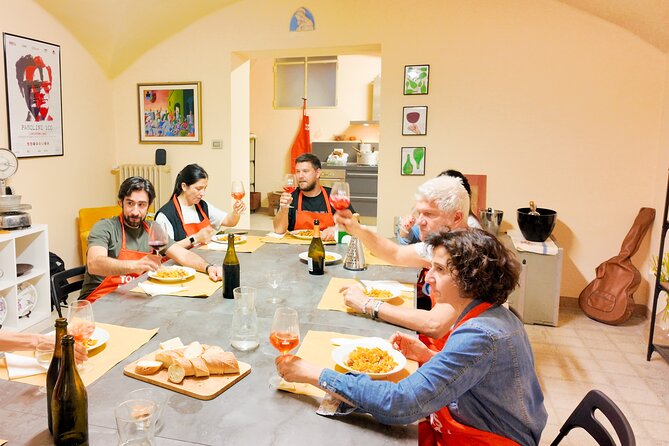
Before the flour starts flying, you begin with a local aperitivo set up to get the group chatting and comfortable. The menu includes a Pignoletto welcome wine, plus a starter featuring Mortadella, Piadina, and Spritz elements.
That opening matters more than it sounds. Bologna’s eating culture is social, and the aperitivo portion sets expectations that this won’t be stiff, lecture-only cooking.
It also gives you a reference point for what comes next. Once you’ve tasted the local rhythm of an Emilia-Romagna aperitivo, the spritz-making part feels like learning a family recipe rather than copying a drink from a bar menu.
Making the Casoni spritz (and how it’s not just another spritz)
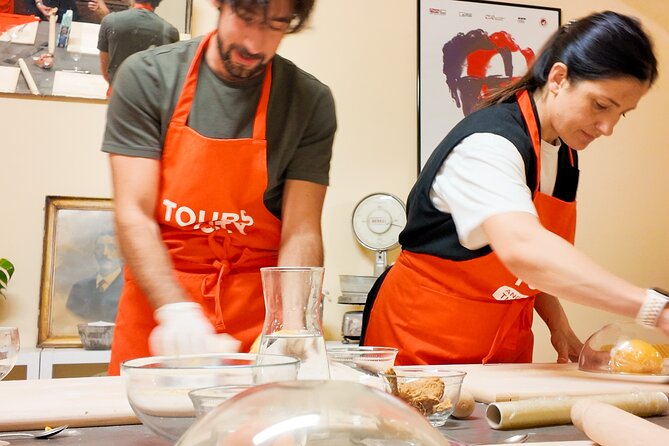
Next you’ll learn to make a Casoni spritz, an Emilia-Romagna region cocktail built around local herbs and local recipes. This is one of the best parts of the experience if you like drinks, because it’s tied to place instead of brand names.
During the class, you’ll work through what goes into your spritz and how to balance it. One review specifically mentioned tasting the difference between Campari and Aperol spritz while cooking, which is exactly the kind of practical food-and-drink knowledge that sticks.
If you’re the type who always orders spritz in Italy but never understands why one version tastes sharper or more herbal, this is the part that fixes that. You’ll leave knowing what to ask for next time.
Hand-rolled tagliatelle: why rolling without machines teaches real control
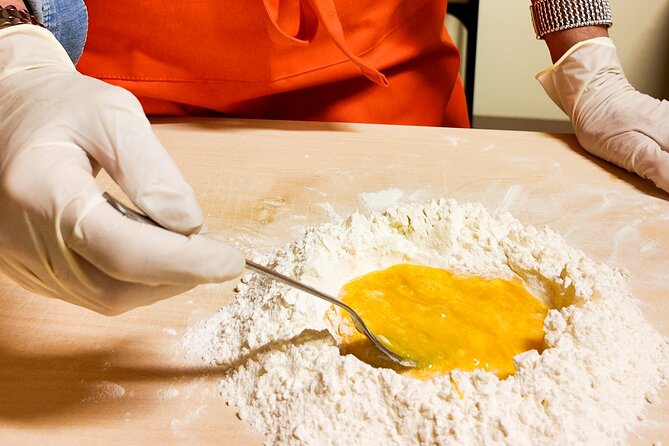
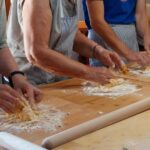
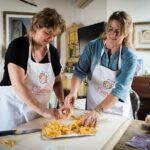
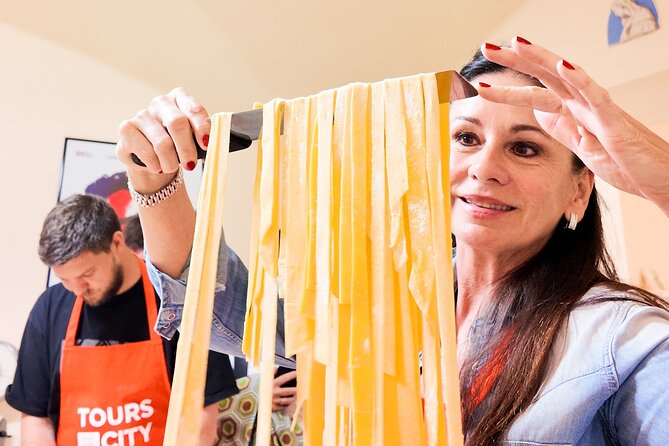
Now comes the main event: you make pasta dough by hand, and then shape tagliatelle. The class is pretty blunt about it in a good way: no pasta machine does the work for you. You’re the engine.
This section is where the hands-on teaching really earns its praise. People repeatedly mention that the instructors guide step by step and keep everyone from getting frustrated when dough feels sticky or stubborn at the start.
A practical detail from the class flow: once your pasta is dried, you cook it together. That drying-and-cooking rhythm helps the pasta behave the way fresh tagliatelle should.
Even if you’ve made pasta before, you’ll likely pick up small technique fixes—how to get the dough smooth, how to roll to the right thickness, and how to cut tagliatelle so it holds up with ragù rather than turning into mush.
Homemade ragù, Parmigiano, and the moment everything comes together
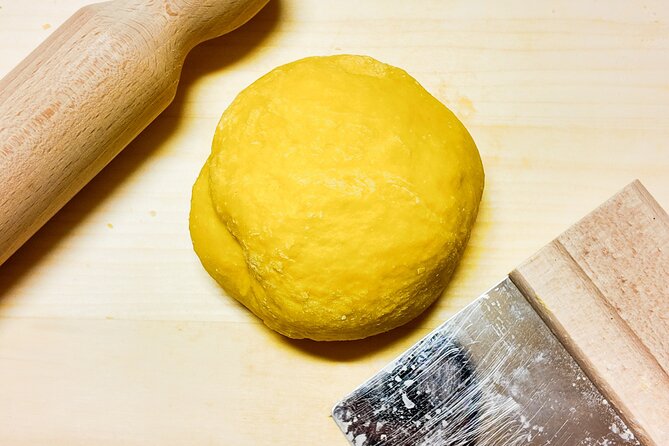
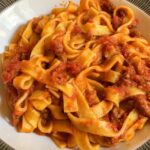
Here’s the honest structure: the ragù preparation is not included in class due to limited time, even though the ragù you eat is 100% homemade. In other words, you’re learning the pasta and assembly skills, while the sauce is handled in advance so everyone gets to cook and eat within the 3-hour window.
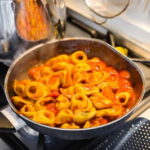
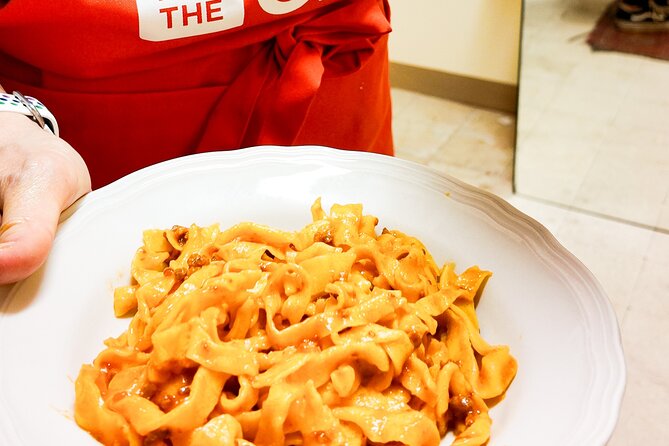
When your tagliatelle is ready, it gets paired with the homemade ragù and Parmigiano Reggiano aged 24 months. That long aging is noticeable: it brings a deeper, more complex cheese flavor that stands up to meat sauce without tasting flat.
The pairing with a red wine (San Giovese) during the meal makes the whole dish feel complete. Bologna isn’t about eating one thing at a time; it’s about building a plate that travels from starter into the main course smoothly.
One more reason this portion is valuable: you learn that pasta isn’t just a dough project. It’s timing, texture, and sauce compatibility. You’ll get a feel for how thick ragù should coat the noodles and why fresh tagliatelle carries sauce differently than dried pasta.
From wine to amaro: coffee, mystery gelato, and a proper finish
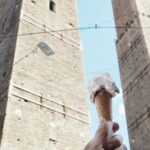
After the main course, the class keeps going with a classic Italian-style finish. You’ll have local coffee and amaro, plus a mystery gelato dessert.
The gelato part is fun because it breaks the pattern of “cooking class ends right when the plates clear.” Several reviews mention surprise touches at the end, including the idea of gelato served with something extra. One person even highlighted a drizzle of very aged balsamic vinegar from Modena alongside the gelato, which sounds exactly like Italy doing dessert with grown-up flavor.
Amaro and coffee also matter. They’re not just for decoration; they show you how Italians close a meal with something herbal and bitter-sweet, so the sugar doesn’t take over.
If you want value, this is where it shows. You’re not paying just for dough-making. You’re getting the full meal arc, including the drinks that make the kitchen time feel like a real night out.
Who this class suits best (and who should think twice)
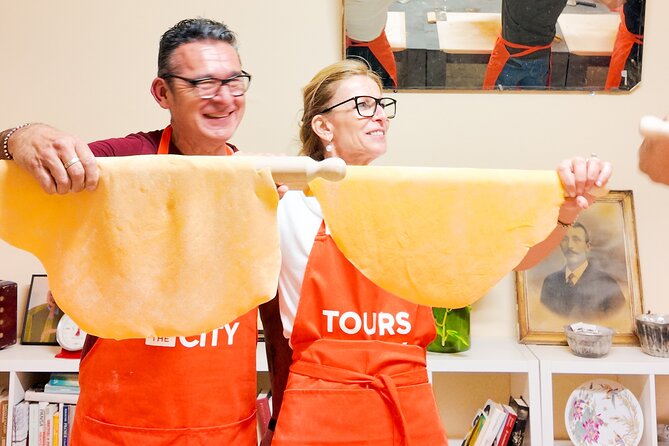
This Bologna pasta class is ideal for you if you want to learn practical home-cooking skills while also eating like a local. It’s a good fit for couples, solo diners, and small groups because the class is interactive and the group size stays manageable.
You’ll also like it if you enjoy the combination of food plus drink. The spritz lesson, the Pignoletto welcome, and the San Giovese with dinner turn this into more of an evening culinary workshop than a quick pasta demo.
Diet-wise, the class can accommodate gluten-free pasta and vegetarian sauces. But it may not be suitable for people with severe allergies or strict dietary restrictions, so you should inform the provider in advance so they can advise you properly.
Children are welcome, but the menu and the experience are designed for adults, so it’s best thought of as an adult-focused cooking evening.
Price and value: what $59.26 gets you in Bologna
For $59.26 per person, you’re paying for a rare mix: guided hand-made pasta instruction plus a structured food-and-drink menu. You’re also paying for the small-group setup, which is usually where cooking classes win or fail.
The value comes from two places. First, you’re not just tasting; you’re learning how to make tagliatelle by hand and building the skill to repeat it later. Second, the class includes multiple drinking and tasting moments—Pignoletto, spritz, San Giovese, plus coffee and amaro—and it ends with gelato.
The ragù note is the main consideration for value: you don’t do the full sauce prep. Still, the ragù is described as 100% homemade, and you get it paired properly with your pasta, which is what matters most for your final plate.
Tips to get the most from your tagliatelle and spritz class
If you want this to feel fun instead of stressful, go in hungry and ready to get your hands a little floury. Fresh pasta dough rewards calm attention, not perfection on the first try.
Be ready to ask questions during the dough and rolling stage. If something feels off—thickness, sticking, or cutting—it’s often a small adjustment, and the instructors are there to help you correct it early.
For the spritz, pay attention to the balance. If the drink seems too sweet or too bitter at the start, ask what changes should be made. That kind of practical “how to fix it” advice is what helps you recreate the drink at home.
Finally, plan to ask for the recipes. The class offers recipes delivered to you by email as PDFs upon request, which is great if you want a real reminder of measurements and steps after you leave Bologna.
Should you book this pasta, ragu, spritz, wine, and gelato class?
If your goal is an authentic Bologna-style meal plus genuine cooking skills, I think you should book it. The best sign is the consistency: it holds a 5-star rating across 527 ratings and gets strong praise for both the hands-on pasta work and the spritz-and-wine pairing.
Book it especially if you care about learning tagliatelle techniques by hand and you want a local-flavor drink lesson instead of a generic cocktail class. You’ll also enjoy it if you like social cooking in a small group that stays lively.
The only reason I’d hesitate is if you specifically want to participate in making every component from scratch. Since the ragù prep isn’t included (even though the ragù itself is homemade), you’ll get more pasta-and-assembly than full sauce production.
FAQ
How much does the Bologna Local Pasta Cooking Class cost, and how long does it last?
It costs $59.26 per person and runs for about 3 hours.
Where do I meet for the class?
You meet at Piazza Galileo Galilei in Bologna (40123).
Is the class offered in English?
Yes, the experience is offered in English.
What will I cook during the class?
You’ll learn to make tagliatelle pasta by hand and also make a Casoni spritz.
Do you make the ragù from scratch during the class?
No. The ragù preparation is not included due to limited time, but the ragù used in the meal is 100% homemade.
What food and drinks are included?
You’ll have a local aperitivo that includes Pignoletto, you’ll make and enjoy a spritz, then you’ll eat tagliatelle with ragù and Parmigiano Reggiano, paired with San Giovese red wine. Dessert includes coffee, amaro, and mystery gelato.
How large is the group?
The class is limited to a small group, typically up to 10 people, with a maximum of 13 participants.
Can the class handle gluten-free or vegetarian requests?
Yes, it can accommodate gluten-free pasta and vegetarian sauces, but it may not be suitable for people with severe allergies or strict dietary restrictions. Tell the provider in advance.
Can I get recipes after the class?
Yes. Recipes can be delivered to you as email PDFs upon request.
What is the cancellation policy?
You can cancel for a full refund if you do so at least 24 hours before the experience starts.
Are children welcome?
Children are welcome, but the menu and experience are designed for adult participation.