REVIEW · BOLOGNA
Bologna: City Center Walking Tour
Book on GetYourGuide →Operated by BOLOGNA TOUR & BEST ITALY TOUR · Bookable on GetYourGuide
Bologna’s streets turn into a story fast. This classic guided walk makes the city feel instantly legible, with the Asinelli Tower and the Basilica of San Petronio as anchor points. I love the way the guide connects towers, churches, and civic plazas into one clear narrative, and I love the stop around the Quadrilatero Market where the talk turns practical, like what to look for and where to eat next. One drawback: it involves a fair bit of walking and it’s not a fit for limited mobility.
You meet your guide near the Fountain of Neptune and follow a tight route through the centro storico for about 2–3 hours. I like that the tour is run by a certified live guide in multiple languages, and the best-reviewed guides (like Victoria or Maria) tend to be strong storytellers who keep things moving without feeling rushed—just expect to follow clothing rules for churches.
In This Review
- Key moments that make this Bologna walk worth it
- A fast way to learn Bologna’s center: towers, churches, and market lanes
- Where the tour starts: Neptune Fountain meeting points
- Palazzo d’Accursio and Piazza Maggiore: the city’s public face
- Asinelli Tower and the two towers: height with a purpose
- Neptune Fountain: the wish, the legend, and the photo moment
- Quadrilatero Market and Piazza della Mercanzia: food culture with historical framing
- Saint Petronio / Basilica of San Petronio: why this church steals the show
- Piazza Santo Stefano: a contrast stop that makes you see churches differently
- Pace, group size, and hearing the guide in crowds
- Clothing rules and comfort: the non-negotiables
- Languages and guide style: what to expect from the live storytelling
- Price and value: is $26 a good deal for Bologna’s highlights?
- Who should book this walking tour (and who should skip it)
- Should you book this Bologna City Center Walking Tour?
- FAQ
- How long is the Bologna city center walking tour?
- What is the price per person?
- Where do I meet the guide?
- Which major sights are included on the route?
- Is this tour suitable for people with limited mobility?
- What should I wear for the tour and for churches?
- Are short skirts or skirts allowed?
- What languages are the guides available in?
- Is cancellation possible, and how flexible is booking?
Key moments that make this Bologna walk worth it
- Asinelli Tower and the two towers vibe: you’re not just seeing height—you’re hearing why these towers mattered
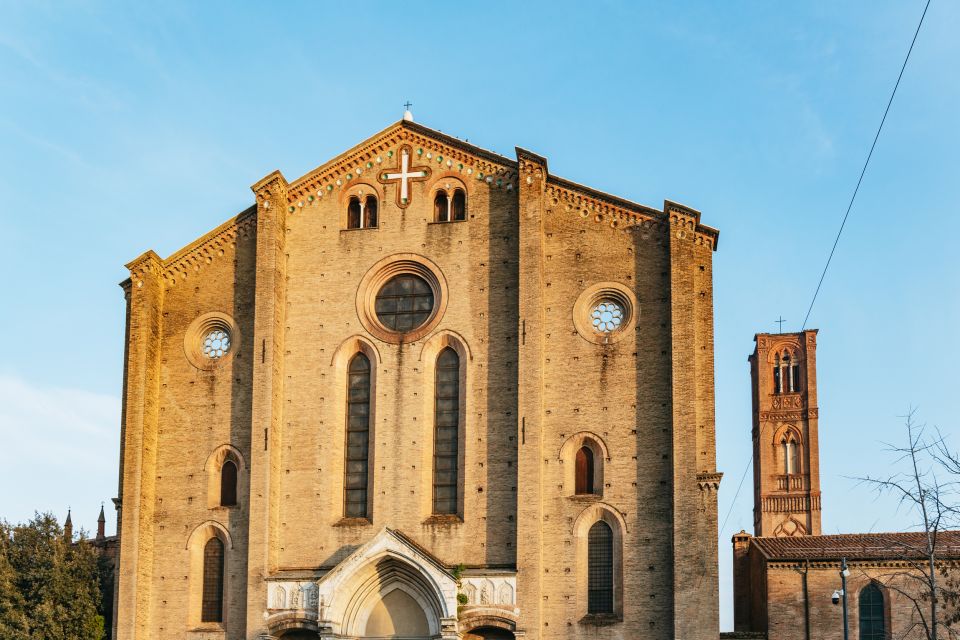
- Basilica of San Petronio inside/outside storytelling: the guide explains what makes it so important
- Quadrilatero Market wandering: the walk includes the market zone, not just a quick peek
- Neptune Fountain wish stop: a small ritual that doubles as an easy photo moment
- Piazza Santo Stefano contrast: churches in one route so you can compare styles and atmosphere
- Stops are timed for listening: multiple review comments highlight pacing that keeps the group engaged
A fast way to learn Bologna’s center: towers, churches, and market lanes
If Bologna were a book, this walk is the opening chapter. In a couple hours, you go from big public spaces to iconic religious architecture, then into the food-and-stall lanes near the Quadrilatero Market. That mix matters because Bologna isn’t just a pretty postcard city. It’s a place where buildings explain politics, pride, and everyday life.
I especially like that the tour doesn’t treat the sights like checkboxes. The guide’s job is to stitch them together. You’ll hear stories that connect why Bologna built up with towers, why civic life clustered around major squares, and why markets became central meeting points for locals.
The “two towers” portion is a big reason people book this early. It gives you a mental map of Bologna’s skyline so everything else you see later makes more sense. Same with San Petronio: it’s the kind of church that can feel overwhelming on your own. A guide helps you notice what you’d normally miss.
You can also read our reviews of more tours and experiences in Bologna.


Where the tour starts: Neptune Fountain meeting points
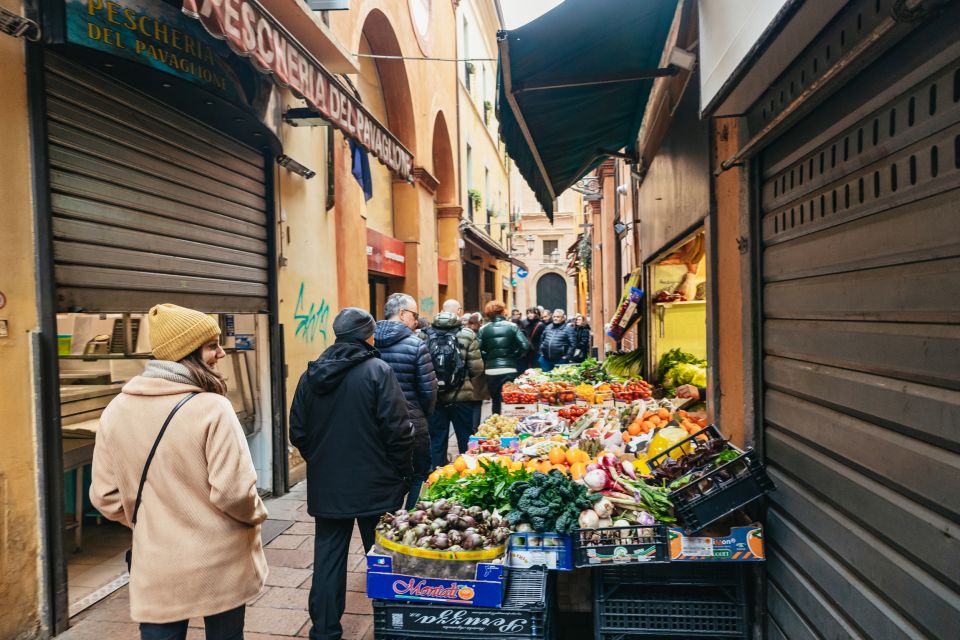
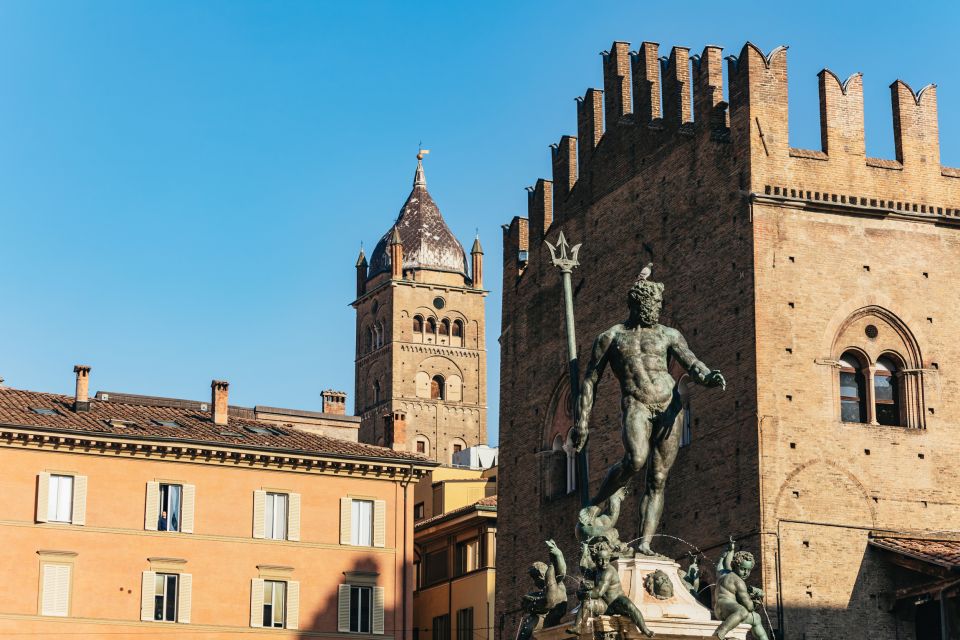
Most departures start from the Fountain of Neptune area (Fontana del Nettuno). That’s a smart anchor point because it’s central, recognizable, and easy to orient from when you’re arriving in Bologna for the first time.
Your exact meeting point can vary depending on the option booked, so don’t assume it’s always at the fountain even if you choose a similar tour. The practical move: check your confirmation the day you go, then arrive a few minutes early so you’re not searching through crowds.
Once you’re together, the route is built to keep you walking in the right direction through the old center, rather than zig-zagging. That reduces wasted time and helps you actually absorb what the guide is saying.
Palazzo d’Accursio and Piazza Maggiore: the city’s public face
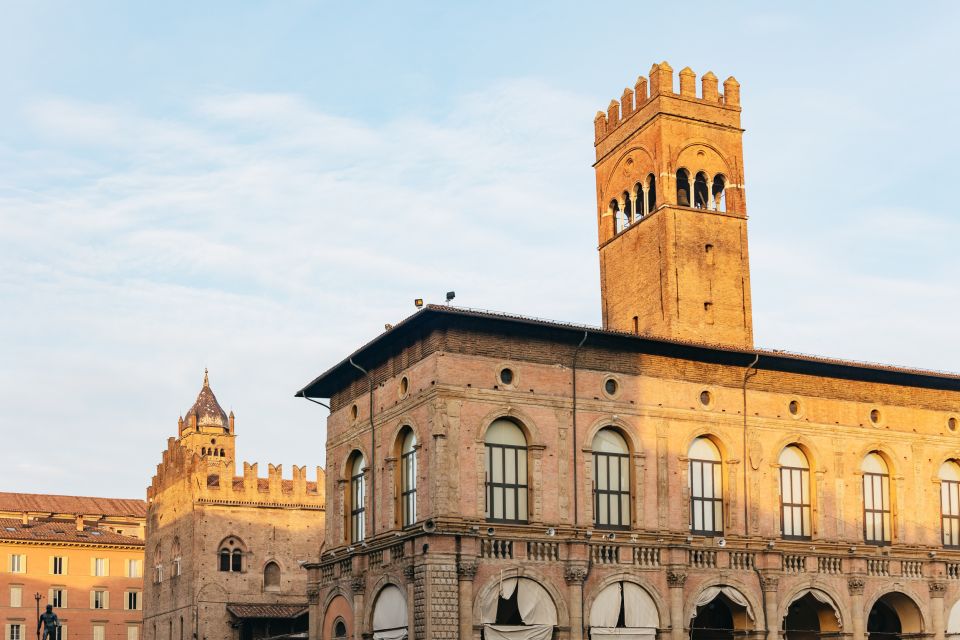
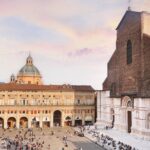
One of the first stops is Palazzo d’Accursio, followed by time around Piazza Maggiore. This is where Bologna feels most civic. Instead of jumping straight to “wow” sights, you get context: this city has long organized life around public buildings and squares.
What I like about this setup is that it gives you a framework. After you see the civic spaces, the religious stops land better. You stop treating the basilicas like isolated monuments and start seeing them as part of how Bologna organized power and community.
This segment also tends to be a good warm-up for the walking rhythm. You’ll have enough chance to settle in, then the guide gradually shifts into the more iconic vertical and sacred landmarks.
Asinelli Tower and the two towers: height with a purpose
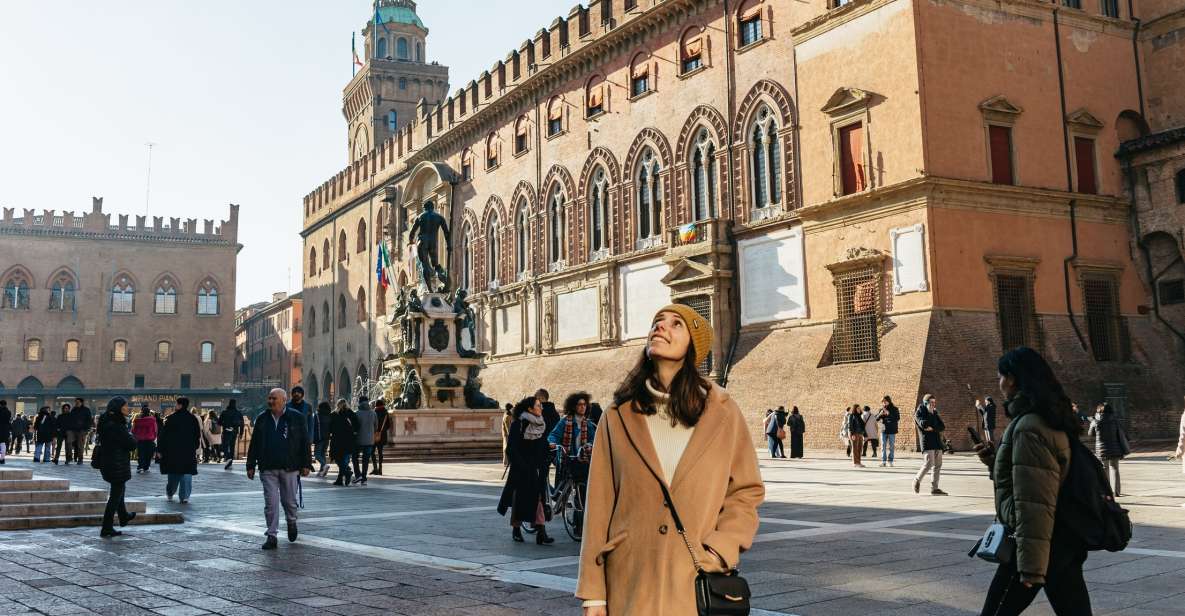
Asinelli Tower is a headline moment of this tour. You’ll also see Bologna’s towers as part of the “two towers” focus, with the guide pointing out their significance—not just their size.
Towers in Italian cities often reflect status and competition. Here, the key value is how your guide frames the idea so it doesn’t feel like random architecture. You walk away with a clearer sense of what these towers represented in Bologna’s story, and why they became one of the city’s most recognizable silhouettes.
A practical tip: wear shoes you can trust. Tower viewing often means standing still for photos while others shuffle for angle. Good footwear turns that into a relaxed moment instead of a sore-feet situation.
Neptune Fountain: the wish, the legend, and the photo moment
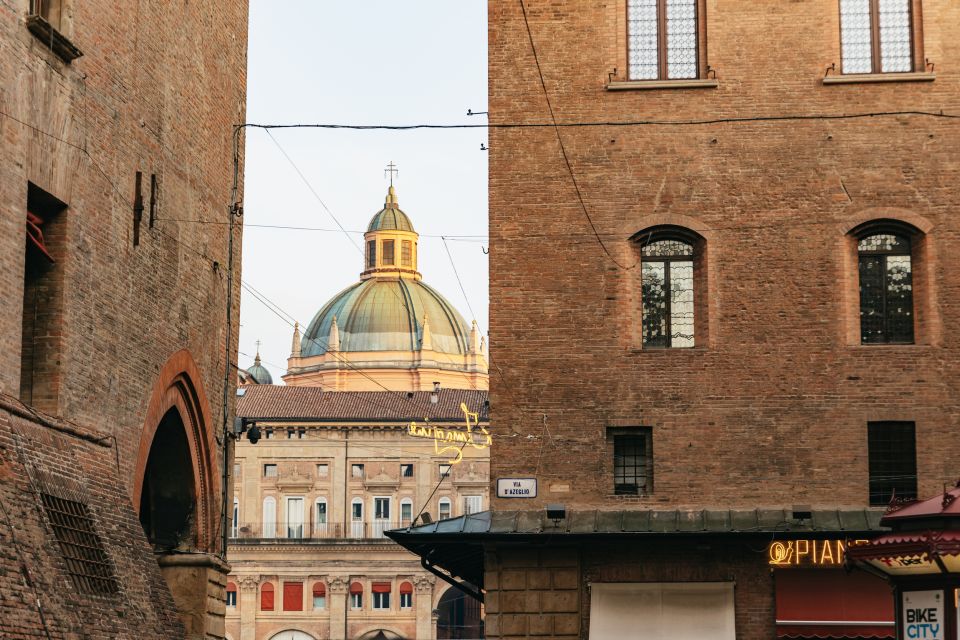
You’ll make a stop at Neptune fountain (Fontana del Nettuno). The tour includes the classic wish-at-the-fountain tradition, which is a fun way to break up the history-heavy parts of the walk.
Beyond the ritual, this is also a strategic pause. The fountain area gives you a good reset point to catch your breath, take pictures, and regroup. You can then continue on with energy toward San Petronio and the market zone.
If you’re traveling with a phone-first photo style, this is one of the easiest stops to shoot quickly. It’s a natural focus point, so you won’t spend ages hunting for the exact angle.



Quadrilatero Market and Piazza della Mercanzia: food culture with historical framing
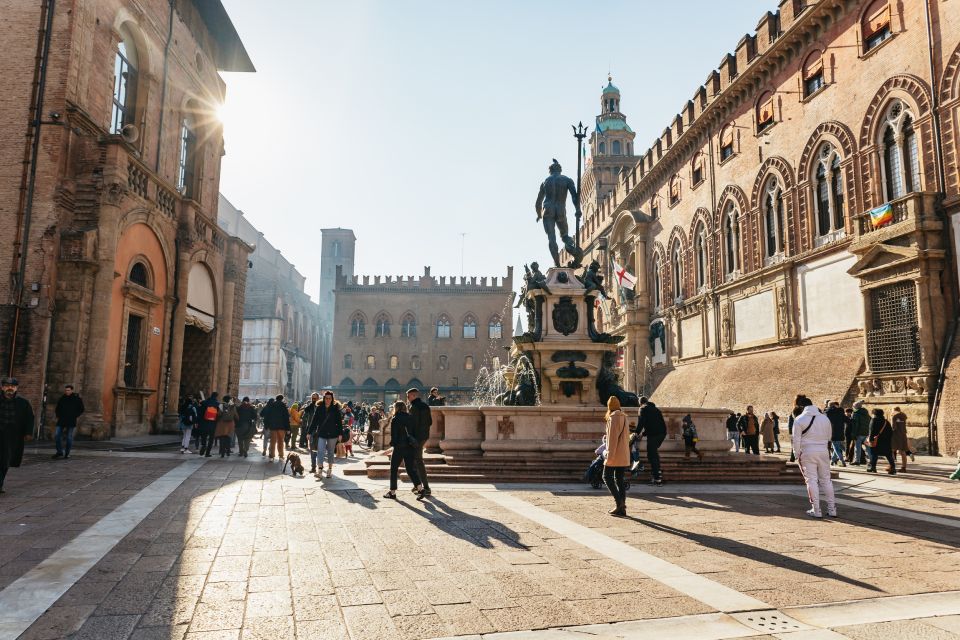
The tour includes the Quadrilatero Market area and connects it to Piazza della Mercanzia. This is where Bologna shifts from monuments to everyday rhythm.
I like that the guide doesn’t just point out shops. The market stop comes with historical facts and local context. That changes how you browse. You’re not only looking at what’s for sale; you’re learning why the market layout and the area’s role mattered over time.
You’ll also get practical guidance that’s useful even after the tour ends—ideas for where to eat, what kind of local food to seek out, and how to approach browsing in a way that feels less touristy and more local.
One small consideration: markets can be crowded, especially around peak hours. The tour pacing usually includes stops so you can listen, but you should still expect movement through busy lanes.
Saint Petronio / Basilica of San Petronio: why this church steals the show

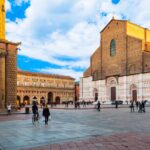
This is one of the main anchors of the tour. You’ll visit Basilica of San Petronio, and the guide shares its story while you’re there.
Why this matters for your trip: San Petronio is the kind of church that’s easy to underestimate until someone explains what to look for. On a guided walk, you learn which details are worth your attention and how the building fits into Bologna’s identity.
There’s also a real-world planning point here. The tour includes a church stop, so you’ll need to follow the dress rules:
- no vests or tops that don’t meet the requirement
- no shorts or miniskirts
And more generally: the tour asks for a long-sleeved shirt and rules out short skirts and skirts.
If you’re traveling in warm weather, bring something light but compliant. You’ll enjoy the visit more because you won’t be worried about adjusting your outfit every few minutes.
Piazza Santo Stefano: a contrast stop that makes you see churches differently
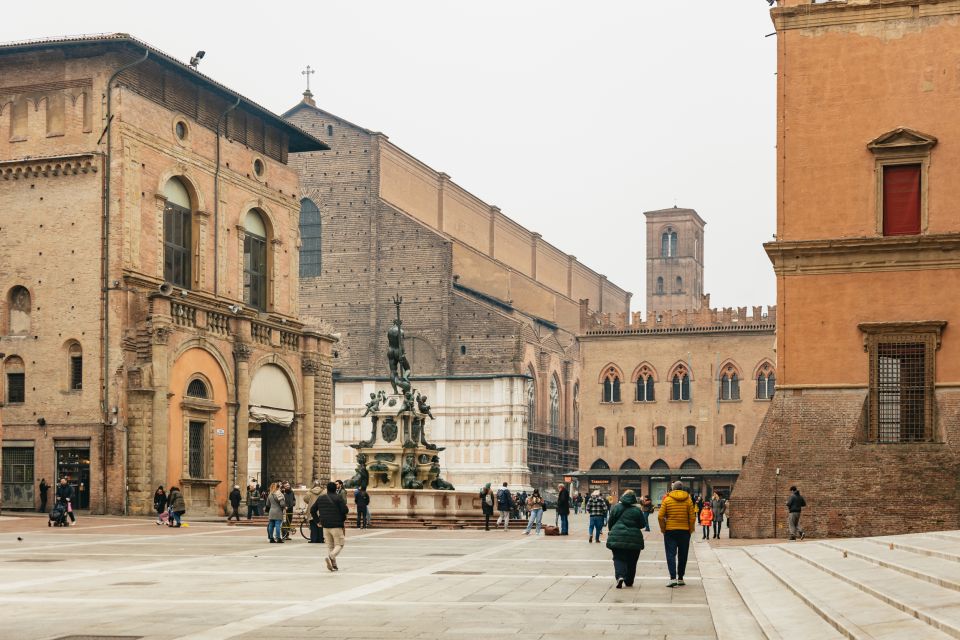
Piazza Santo Stefano appears later in the walk, and it’s a smart change of pace. After the big-name basilica moment, the route shifts to a different church atmosphere and lets you compare what Bologna’s sacred spaces feel like.
This part of the tour tends to land well because it adds variety without adding more travel time. You stay in the same walkable area and build a better mental picture of the city’s architectural language.
If you care about how different religious buildings create different moods—lighting, layout, scale—this stop helps. It’s the kind of contrast that makes the whole route feel cohesive instead of repetitive.
Pace, group size, and hearing the guide in crowds
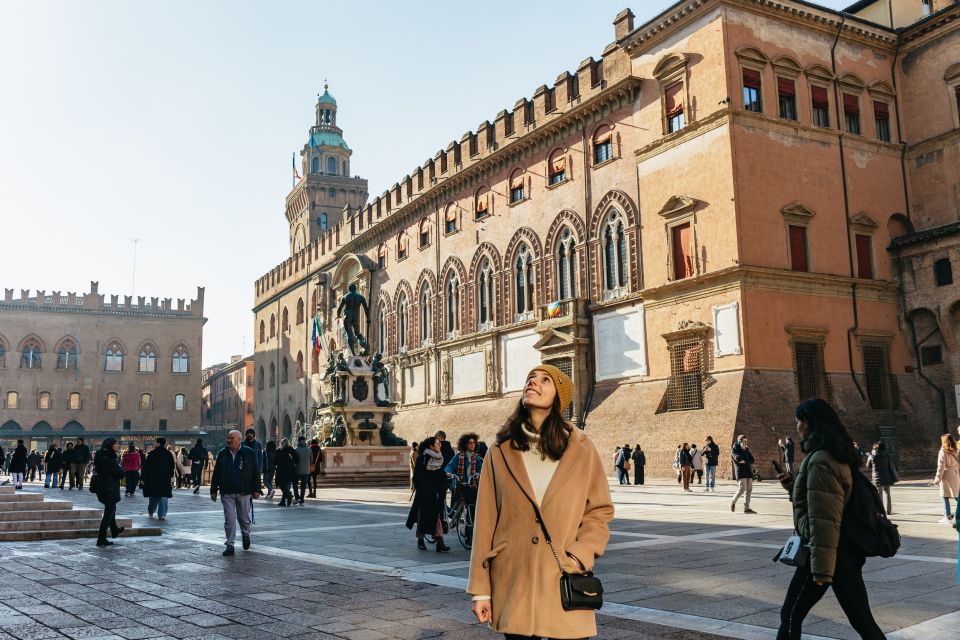
The stated duration is 2–3 hours. That range is important because it affects how many short stops you get versus how much “walking between landmarks” you’ll do.
The tour is positioned as a classic walking city-center route, not a sit-and-stare museum day. Many people like this because it works well for a first day in Bologna: you get orientation fast and you still have energy left for dinner and exploring on your own.
Group size is described as small group available, which is a plus for questions and staying close to the guide. That said, one participant reported a group size around 28, so I’d treat it as “small-ish” rather than ultra-intimate. Translation: expect crowds in the streets, and don’t plan on a lot of wide-open personal space.
One useful detail from the feedback: some groups emphasize audio support (headphones were mentioned). If your departure includes this, it can be a big deal in narrow streets where you’re tempted to tune out just because it’s loud.
Clothing rules and comfort: the non-negotiables
This tour isn’t just about what you want to see. It’s also about what you can wear comfortably while doing it.
What to bring:
- comfortable shoes (you’ll be walking)
- a long-sleeved shirt
Not allowed:
- short skirts
- skirts
And for churches:
- no vests
- no tops, shorts, or miniskirts that don’t meet the worship-appropriate requirement
Also, the tour notes it isn’t recommended for people with limited mobility and isn’t suitable for mobility impairments. Even if you’re okay with walking slowly, think about steps, crowd navigation, and time spent standing for explanations.
If that’s you, your best move is to look for an alternate Bologna experience designed for limited mobility—because this one is built around getting through the old center on foot.
Languages and guide style: what to expect from the live storytelling
The tour is offered with live guides in Italian, English, Spanish, and French. That matters because story delivery affects how much you get out of the walk. Bologna has layers, and you’ll feel it faster when the guide can explain them in your language.
From the guide names that pop up in the feedback—Victoria, Maria, Leonardo, Riccardo, Nicola, Matteo, Ludwig—there’s a clear pattern: people consistently highlight storytelling, humor, and the sense that the guide knows how to pace the walk so you can actually listen.
One more good sign: multiple comments mention that the route helps you learn Bologna in a way that feels connected. That’s exactly what you want if you’re trying to avoid leaving a city with random “I saw that” memories.
Price and value: is $26 a good deal for Bologna’s highlights?
At $26 per person for a 2–3 hour guided walk, this sits in the “high value, low commitment” category.
Here’s why the math often works:
- You hit multiple major stops (towers, basilica, market area, key squares) in one route.
- You get context while you’re standing in front of the buildings, not after you’ve moved on.
- A good guide helps you notice details you’d likely miss if you just wandered.
This is a strong choice if you’re doing Bologna on a tight schedule. It’s also a smart first-day activity because it gives you starting points for what to return to later at your own pace.
If you already plan to spend your day inside museums and you don’t care much about walking explanations, you might skip it. But if you want a clear path through the city center quickly, the price feels fair.
Who should book this walking tour (and who should skip it)
Book it if:
- it’s your first time in Bologna and you want a grounded orientation
- you like history that’s explained while you walk, not history read later
- you want both famous sights and a real market stop
Skip it or choose something else if:
- mobility is a concern (this route is not recommended for limited mobility)
- you can’t meet clothing rules for places of worship
- you hate guided group pacing and prefer total freedom
Should you book this Bologna City Center Walking Tour?
If your goal is to understand Bologna quickly—towers, big squares, San Petronio, and the market zone—then yes, this is an easy yes. The structure is tight enough to feel efficient, but it isn’t so rushed that you can’t absorb what you’re seeing.
Just go in prepared: wear good shoes, plan for walking, and pack a long-sleeve option that meets church expectations. If you do that, you’ll finish the tour with a stronger sense of where everything is and what’s worth a return visit.
FAQ
How long is the Bologna city center walking tour?
The tour lasts about 2 to 3 hours.
What is the price per person?
The price is $26 per person.
Where do I meet the guide?
The meeting point may vary depending on the option booked. One common starting point is the Fountain of Neptune in Bologna.
Which major sights are included on the route?
You’ll see highlights such as the Asinelli Tower, the Basilica of San Petronio, the Neptune fountain, and the Quadrilatero Market, along with several central squares.
Is this tour suitable for people with limited mobility?
This tour is not recommended for people with limited mobility, and it is not suitable for people with mobility impairments.
What should I wear for the tour and for churches?
Bring comfortable shoes and a long-sleeved shirt. For places of worship, appropriate clothing is required, including no vests, tops, shorts, or miniskirts.
Are short skirts or skirts allowed?
No. Short skirts and skirts are not allowed.
What languages are the guides available in?
The tour is offered in Italian, English, Spanish, and French.
Is cancellation possible, and how flexible is booking?
You can cancel up to 24 hours in advance for a full refund. You can also reserve now and pay later.