REVIEW · CHIANTI
Cooking Class on a Family Farm in Chianti with Lunch
Book on Viator →Operated by Cofferi1242 - Camilla Romoli · Bookable on Viator
A hilltop cooking class in Chianti, all homegrown. This experience gives you hands-on pasta lessons with farm ingredients and a relaxed outdoor lunch overlooking vineyards and olive trees. I also like that the host and family-style teaching feel patient and welcoming, from first-timers to kids, but you should consider that the drive up can be rough and the setting may not match glossy photos.
You’ll meet at Cofferi1242 (near Il Ferrone), then ease into the day with introductions and a short farm walk—olive grove views and even a saffron field—before you start making fresh dough. The class runs about 4 hours with a maximum of 20 people, in English, and it’s priced like a full experience because you’re not just cooking: you’re also eating what you make, with wine, in the Tuscan countryside.
In This Review
- Key highlights to know before you go
- Where you begin: Cofferi1242, introductions, and a farm stroll
- Fresh pasta basics: dough, herbs, olive oil, and real technique
- Making ravioli and tagliatelle: filling flavors you can actually repeat
- Bread and schiacciata: the versatile dough you’ll want to use again
- Building the full menu: appetizers, courses, sides, and dessert
- Wine, olive oil, and why the pairing feels part of the lesson
- Lunch outdoors in the garden: vineyards, olive trees, and calm air
- Price and value: why $175.43 feels fair for a full meal experience
- Best for: families, couples, and anyone who wants hands-on confidence
- A fair caution: the road and the setting may not match your expectations
- Practical tips so you enjoy every minute
- Should you book this Chianti farm cooking class?
- FAQ
- What time does the cooking class start?
- How long is the experience?
- Where does the tour begin?
- Is the class taught in English?
- What will I cook during the class?
- Is lunch included?
- Will there be wine?
- How many people are in a group?
- Is the experience family-friendly?
- Can I cancel and get a refund?
Key highlights to know before you go
- Small group, hands-on pace: up to 20 people means you can actually follow along and ask questions.
- Farm-to-dough focus: you use herbs from the garden plus extra virgin olive oil for pasta and breads.
- Learn classic shapes: tagliatelle, ravioli, and tortelloni, plus guidance for shaping the dough.
- Build a full meal: you make multiple courses, then sit down to an alfresco lunch when weather allows.
- Chianti-area wine included: you sip local wine (sometimes Chianti from the region) alongside your courses.
Where you begin: Cofferi1242, introductions, and a farm stroll
The day starts around 10:30 am at Via dei Cofferi 12, Loc. Il Ferrone (Cofferi1242). It’s not one of those rushed classes where you’re handed an apron and thrown into flour. Instead, you’ll start with a chance to get to know the host, talk a bit, and settle in.
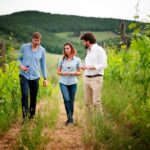
What I like here is the order of events: you get your bearings first. Then you walk the property, where you can see the olive grove and the field where saffron is grown. That quick farm context matters, because later you’re cooking with ingredients that feel connected to the place—not just shipped in for the demo.
One practical note from real-world experiences: the route to the farm can be bumpy and narrow. If you’re in a low sports car, plan for a slow, careful drive and consider bringing someone else who can handle the last stretch while you ride along.
You can also read our reviews of more tours and experiences in Chianti.
Fresh pasta basics: dough, herbs, olive oil, and real technique
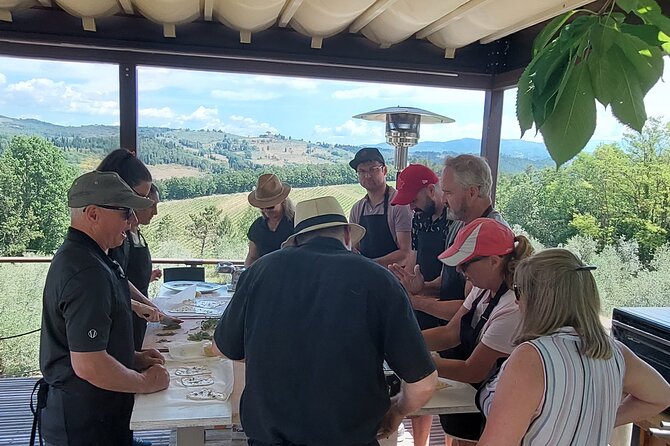
Once you’re settled, the cooking instruction turns hands-on fast. You’ll learn how to make homemade pasta dough, using herbs from the garden and extra virgin olive oil. That combination is a big part of why the food tastes distinctly Tuscan rather than generic Italian-American.
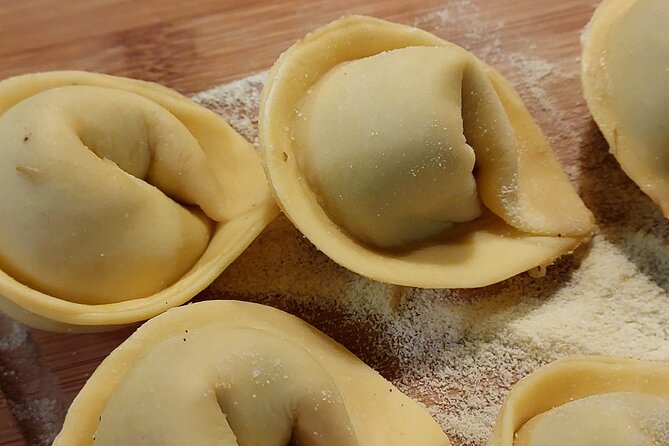
You’ll also learn how to work the dough into different pasta shapes. Two of the key shapes you can expect are tagliatelle and ravioli (with tortelloni also part of the menu). The class is structured so you’re not only copying steps—you’re understanding how the dough behaves, which helps if your first attempts aren’t perfect. Past participants often highlight how patient the teaching feels, including when the group has a wide range of ages.
And because this is a farm kitchen lesson, you’ll notice a difference in pacing. There’s time to taste, ask, and adjust. If you’ve tried making pasta at home and it turned into a sticky mess, this kind of guidance is exactly what you need to feel in control.
Making ravioli and tagliatelle: filling flavors you can actually repeat
Pasta dough is only half the story. The other half is what you put inside or on top.
For the main pasta course, the sample menu includes homemade ravioli and tortelloni served with sage butter and Parmesan. The ravioli filling is described as fresh ricotta, Parmesan, and lemon zest, seasoned with sage, Parmesan, and pepper. That flavor profile is practical because it’s not fussy. It’s also versatile: if you want to recreate it later, you can find ricotta, Parmesan, lemon zest, and sage almost anywhere.
For tagliatelle, you can expect it served with a fresh tomato sauce or a fresh courgette pesto. The point isn’t just the dish—it’s learning how to match a sauce to a noodle. Tagliatelle holds onto thicker sauces well, while a fresh pesto-style sauce coats without needing heavy cooking.
Bread and schiacciata: the versatile dough you’ll want to use again
One of the best parts of this class is that it doesn’t stop at pasta. You’ll learn how to prepare bread dough and schiacciata dough, and then understand how that same base can become different results depending on shape and finishing.
Schiacciata is the kind of Tuscan flatbread that rewards small technique choices: thickness, handling, and the way the dough is treated before baking. Even if you’ve never baked bread before, the structure of the lesson makes it approachable. And if you’ve been intimidated by yeast doughs in the past, this is the right time to learn under guidance.
Some participants also mention focaccia as part of what they made during their session. Even if your exact menu varies slightly day to day, the core idea is consistent: you’re leaving with a dough-and-shape skillset, not just recipes.
Building the full menu: appetizers, courses, sides, and dessert
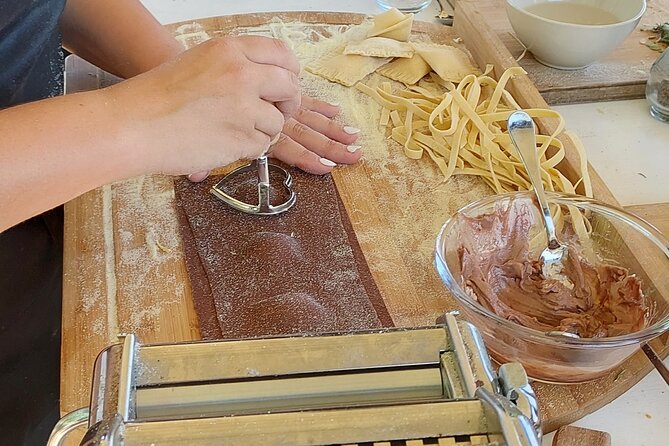
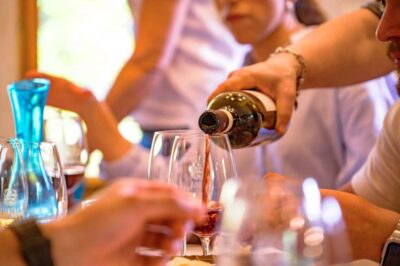
This experience is designed as a complete meal, not a quick sampling. You’ll prepare multiple parts of the menu: appetizers, first courses, second courses, side dishes, and dessert. Along the way, you’ll sip local wine, sometimes with a Chianti from the area.
One thing you should plan for: you’ll likely eat a lot. The cooking takes time, then the lunch part lets everything land. If you’re the type who wants small bites and an early exit, this probably isn’t your style. But if you want a full Tuscan dining day—where you learn and then enjoy—this format is hard to beat.
Dessert is included in the sample menu: apple pie with crumble, offered as an apple pie topped with crumble. It’s simple, familiar, and made for sharing after you’ve worked up an appetite.
Wine, olive oil, and why the pairing feels part of the lesson
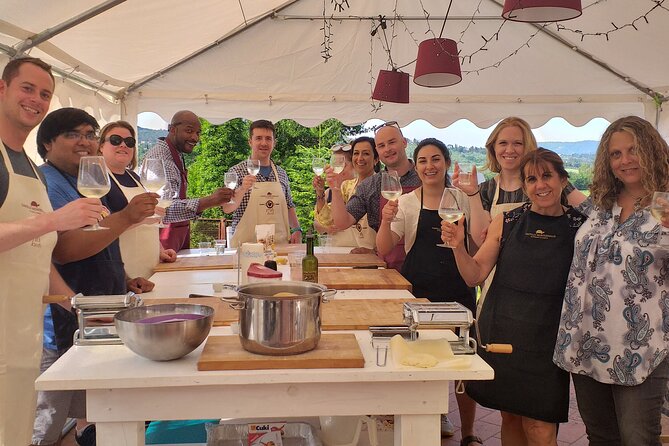
A cooking class can teach you technique and still feel disconnected from real eating. Here, wine and olive oil show up as part of the overall experience.
You’ll sip good local wine during the lesson, and the olive oil is from the farm setting. In plain terms: you’re tasting the flavors that go into cooking, not just reading about them. That’s why people come away talking about the oil and wine as much as the pasta.
It’s also a social layer. Between courses, you get the chance to chat—often with a mix of ages and backgrounds—while the host keeps things moving. If you’re traveling solo or as a couple, this is a good way to turn a day of cooking into a day of meeting people.
Lunch outdoors in the garden: vineyards, olive trees, and calm air
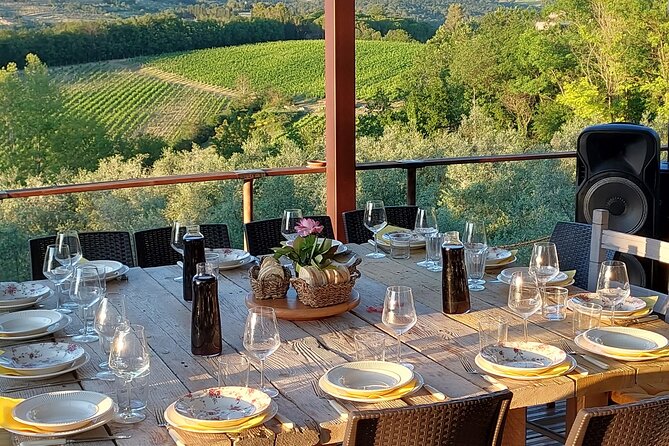
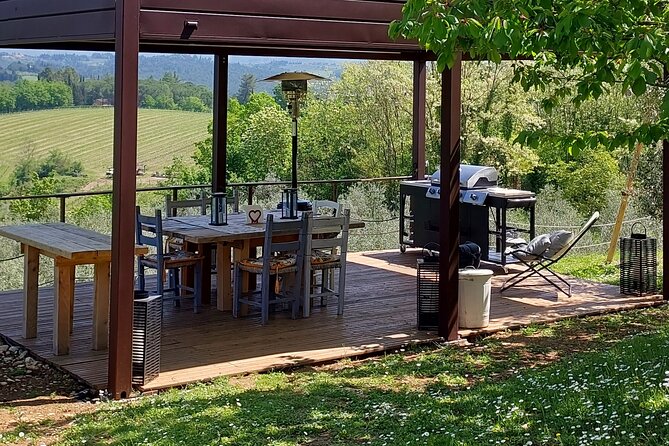
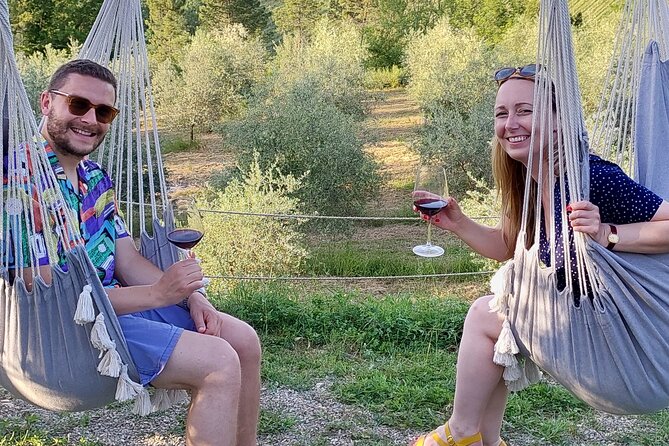
After cooking, the class moves into lunch in the garden when weather permits. The setting is described as a hilltop oasis surrounded by vineyards, olive trees, and 360-degree woods—basically, a view that makes the whole meal feel slower and more satisfying.
I think this is where the value really clicks. You’re not standing in a cramped classroom eating something you didn’t care about. You’re sitting outside with what you made, with Tuscan countryside in front of you. Even if you’re not a huge view person, the combination of fresh food, relaxed timing, and a real lunch pause is a big part of why people recommend this class so strongly.
If weather isn’t ideal, the lunch portion may shift to a more sheltered area—but the core idea stays the same: you still get to enjoy your handiwork.
Price and value: why $175.43 feels fair for a full meal experience
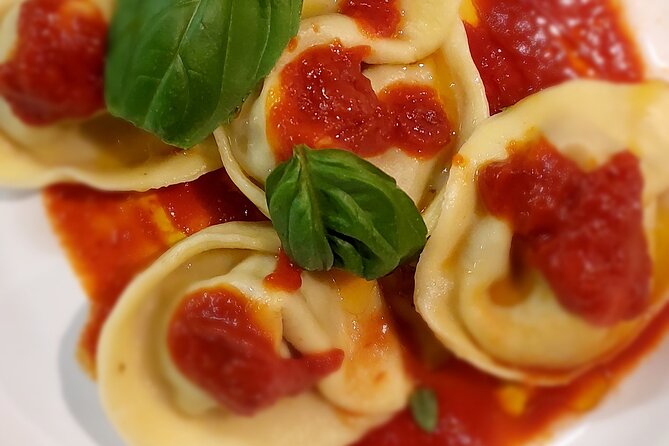
At $175.43 per person for about 4 hours, this isn’t the cheapest cooking class in Italy. But you’re also paying for ingredients, instruction time, a farm tour component, a full multi-course meal, and wine.
Here’s how I’d judge the value:
- You get a full dinner-style menu, not just one dish.
- You use farm-linked ingredients like garden herbs and extra virgin olive oil.
- You’re in a small group (max 20), so the teaching stays interactive.
- You end with lunch in a special setting, which many cooking classes skip.
If you’re looking for a quick, budget-friendly cooking demo, you’ll likely feel the price. But if you want a day that turns into a real meal plus skills you can repeat, the cost makes sense.
Also, it’s booked on average about 76 days in advance, which usually means this isn’t something you can ignore and then expect to find last minute.
Best for: families, couples, and anyone who wants hands-on confidence
This is a strong choice for families and mixed-age groups. One of the most consistent themes is the patient, friendly vibe—so much so that parents with children mention the host was comfortable working with kids while still teaching technique.
It also fits couples. A farm cooking day is an easy way to do something romantic without being overly formal. The combination of shared cooking, wine, and the garden lunch view gives you built-in conversation topics.
And even if you’re not confident in the kitchen, you’re still likely to enjoy it. People often come away proud because the steps are taught clearly, the pace feels manageable, and the results are tasty enough to make you want seconds.
A fair caution: the road and the setting may not match your expectations
Two points to keep real:
- The drive can be rough. Dirt road conditions and potholes are mentioned. Bring appropriate footwear for walking around the farm and accept slow travel time.
- The environment may feel rustic. Some people note that the exterior areas or the kitchen setup didn’t match the polished look they expected. That doesn’t mean the food or teaching is bad, but if you’re picky about cleanliness or aesthetics, go in with the right expectations.
If you want a perfectly manicured patio and a showroom vibe, you might feel disappointed. If you can enjoy learning in a real working farm space, this becomes part of the charm.
Practical tips so you enjoy every minute
- Plan extra time to find the farm and drive slowly. Double-check directions before you leave.
- Wear shoes you can stand in. Farm surfaces are not like tiled city sidewalks.
- Bring a light layer. Tuscan air can shift, especially if you’re outside near the end of the class.
- Come hungry. You’re making multiple courses and then eating them.
- Ask about the dough. The most valuable takeaway is how to handle it, not just the final shape.
- Taste the olive oil and wine deliberately. It’s part of the lesson, not just an add-on.
Should you book this Chianti farm cooking class?
If you want a cooking class that feels like a real family farm day—hands-on pasta and bread, local olive oil and wine, and then a garden lunch with views—this is an easy yes. The class format is built for people who learn best by doing, and the small group size helps the host keep things moving without shutting questions down.
I’d hesitate only if you have a low tolerance for rocky access roads or you need a polished, picture-perfect setting. Otherwise, booking Cofferi1242 with Camilla Romoli is a smart way to spend half a day in Chianti that turns into both skills you’ll use later and a meal you’ll remember.
FAQ
What time does the cooking class start?
The start time is around 10:30 am.
How long is the experience?
It lasts about 4 hours (approx.).
Where does the tour begin?
The meeting point is Cofferi 1242 – Cooking Class-Olive Oil-Saffron, Via dei Cofferi, 12 Loc, 50026 Il Ferrone FI, Italy.
Is the class taught in English?
Yes, it’s offered in English.
What will I cook during the class?
You’ll make homemade pasta (including tagliatelle and ravioli), and you’ll also learn dough for bread and schiacciata, along with preparing a full menu of multiple courses and dessert.
Is lunch included?
Yes. Lunch is included, and it’s served outdoors in the garden when weather permits.
Will there be wine?
Yes. You’ll sip local wine during the experience, sometimes including Chianti from the area.
How many people are in a group?
The maximum group size is 20 travelers.
Is the experience family-friendly?
Based on the information shared from past participants, it works well for groups that include children, and the host is described as patient.
Can I cancel and get a refund?
Yes. You can cancel for a full refund up to 24 hours in advance of the experience’s start time.