REVIEW · CHIANTI
Montefioralle Winery – Tour and Wine Tasting in Chianti
Book on Viator →Operated by Montefioralle Winery · Bookable on Viator
Vineyards and wine, without the big-winery fuss. Montefioralle Winery’s tour in Chianti focuses on the real working rhythms of a family estate, with stunning views and a guided tasting that goes beyond just handing you a glass. I like that the visit mixes vineyard scenery with a small-scale winery explanation, then pairs it with snacks made to match what you’re tasting.
The only real catch is how focused this experience is: it’s about 1 hour 15 minutes, with tasting snacks (not lunch or dinner). If you’re hungry or you want a long, multi-course food-and-wine day, plan to eat before or after.
In This Review
- Key Things to Know Before You Go
- Why Montefioralle Winery Feels Like Real Chianti
- Getting There and Finding the Start Point (Via Case Sparse)
- Stop 1: Montefioralle Winery and the Working-Process Tour
- Stop 2: The Montefioralle Moment and Why the View Changes the Taste
- The Four-Wine Tasting: What You’ll Sip (and What It Teaches)
- Chianti Classico (Traditional Blend)
- Chianti Classico Riserva (Old Vines Selection)
- IGT (A Different Expression Within the Region)
- Vin Santo del Chianti Classico (Raisins, Centuries of Process)
- Snack Pairings That Actually Make Sense
- Outdoor vs Indoor Tasting: How to Choose the Right Mindset
- Who This Tour Is Best For (and Who Should Skip It)
- Price and Value: Does $42.24 Make Sense?
- Practical Tips for a Smooth Chianti Day
- Should You Book Montefioralle Winery? (My Take)
- FAQ
- How long is the Montefioralle Winery tour and wine tasting?
- What wines are included in the tasting?
- Are snacks included?
- Where does the tour start?
- Is the tour offered in English?
- Is the tasting always outdoors?
- How big are the groups?
- Is lunch or dinner included?
- Can I cancel for a full refund?
Key Things to Know Before You Go
- Small group size (up to 15) keeps the vibe personal and the pacing relaxed
- Four-wine tasting covers Chianti Classico, Riserva, IGT, and Vin Santo
- Snacks are included and made to pair with the tasting
- You may taste outdoors or indoors, depending on the season and weather
- A working tour of the farm winery explains production from grapes to bottling
- English is available, and guides often bring the family story to life
Why Montefioralle Winery Feels Like Real Chianti
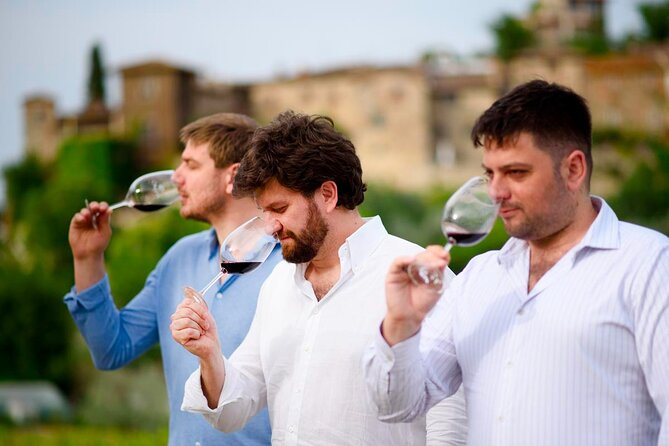
If you picture Chianti as rows of vines, hill towns, and people who still run things the old way, this tour lands right in that world. Montefioralle Winery sits at the foot of Montefioralle, and the setting matters. You’re not tucked into a big tasting hall. You’re in and around the farm, with vineyard views and a sense that the wine is part of daily life, not a staged performance.
What I especially like is the mix of styles in the tasting. You start with Chianti Classico, then step into a Riserva made from older vines, and you finish with Vin Santo, which uses raisins and a process shaped by centuries of Tuscan farming. That’s a simple format, but it teaches you a lot about why Chianti can taste both bright and deep, depending on the bottle.
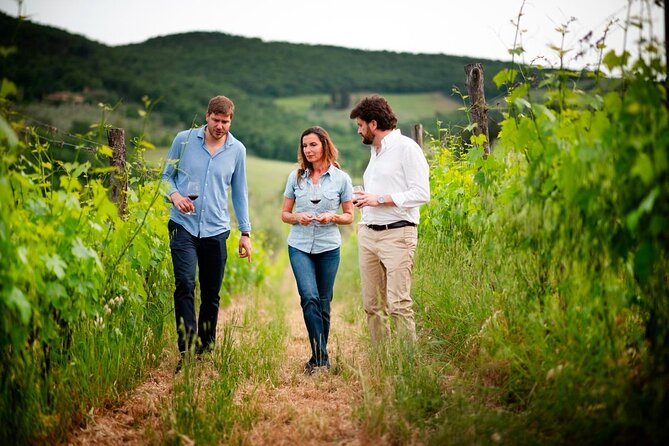
You also get more than sipping. The visit includes a tour of the vineyards and the small winery where the producer walks you through the basic steps of making wine, from mashing the grapes through winemaking, aging, and bottling. It’s practical. You’ll leave with a clearer picture of what’s happening before the wine ever reaches your glass.
You can also read our reviews of more tours and experiences in Chianti.

Getting There and Finding the Start Point (Via Case Sparse)
The tour meets at Via Case Sparse (Montefioralle), 40, 50022 Greve in Chianti FI, Italy. The address is specific, so it helps to arrive with enough time to park, walk, or coordinate your last stretch on foot.
This is also set up as a modern booking experience: you get a mobile ticket. That matters because you’re going to a working farm location, not a giant landmark with a ticket office. Having your ticket on your phone keeps things smooth.
Language note: the experience is offered in English, and the group stays small enough that questions are actually possible. In past visits, guides have included owners and also named guides like Manila and Alessia, so you may hear a personal, family-led approach rather than a script read at speed.
Stop 1: Montefioralle Winery and the Working-Process Tour
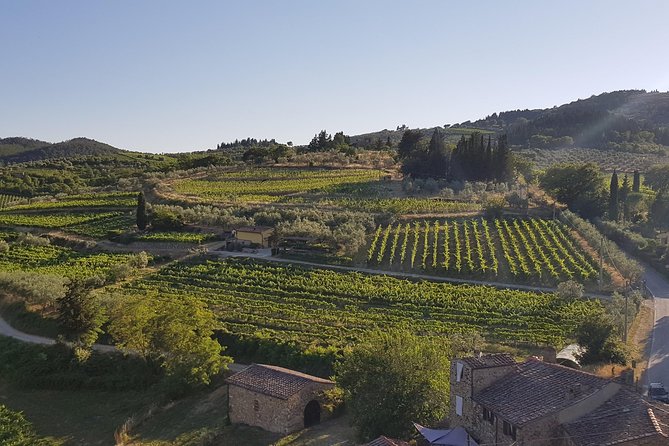
Stop 1 is the winery experience itself. This part is designed to give you a grounded view of how wine is made on a farm scale.
You’ll visit the small winery located on the property in the middle of the farm. The explanation covers the basics of the workflow: mashing the grapes, moving through winemaking and aging, and finishing with bottling. Even if you’re not a wine nerd, this is useful because it connects flavors to real choices.
In a lot of Chianti visits, you can end up with a tasting and only a vague sense of how the wine gets from vine to bottle. Here, you get the steps, and you can actually connect what you’re about to taste to how it’s made.
This stop also sets your expectations for the tasting. By the time you sit down with the wines, you’re not just comparing “red A vs red B.” You’re listening for how different selections and aging choices show up in the glass.
Stop 2: The Montefioralle Moment and Why the View Changes the Taste
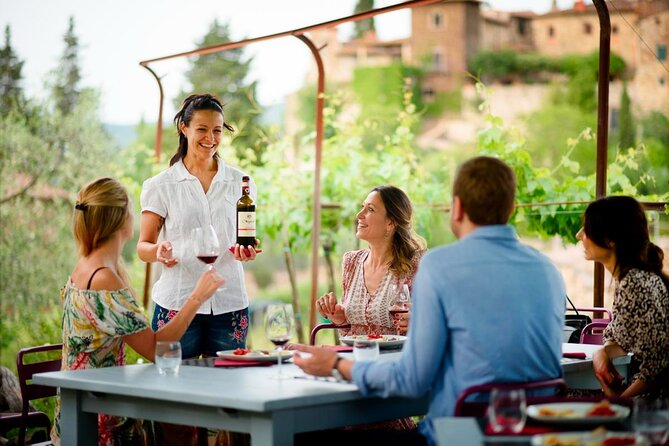
Stop 2 is Montefioralle itself. Depending on the season, your tasting setting changes. Sometimes it’s carried out in a small room above the basement. Other times, it happens outdoors in a square surrounded by vineyards, with views toward Montefioralle village and the Chianti countryside.
That matters more than you might think. Vin Santo and a serious red can feel heavy in a closed space. Outdoors, the same wines can come across lighter and more vivid because the air, the light, and the surroundings keep you connected to the land.
One of the most consistent things people love here is the combination of views and hospitality. It’s the kind of location where you’ll notice the countryside first, then suddenly realize you’re tasting with your eyes open—literally. The view frames the wine, and the wine finishes the view.
The Four-Wine Tasting: What You’ll Sip (and What It Teaches)
The tasting includes four wines, with lighter snacks served alongside. The lineup is built to show you the range inside Chianti.
Chianti Classico (Traditional Blend)
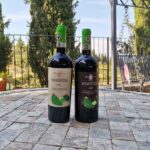
You’ll taste Chianti Classico made under traditional rules. The composition is made from Tuscan grapes: Sangioves, Canaiolo, and Colorino.
This is your baseline. It’s the “home” flavor of Chianti: earthy edges, acidity that keeps the wine lively, and a character that can run from cherry-like to more savory depending on the year.
Chianti Classico Riserva (Old Vines Selection)
Next is Chianti Classico Riserva. It uses the same grape composition as the regular Chianti Classico (Sangioves, Canaiolo, Colorino), but the producer selects only the best grapes from the oldest vines.
This is a key difference because it’s not about a totally different style—it’s about the raw material. Riserva tends to feel more concentrated, with deeper structure, and you get to compare that directly because it stays in the same family of grapes.
IGT (A Different Expression Within the Region)
You’ll also taste an IGT wine as part of the flight. The exact blend details aren’t provided here, but the point is clear: you’re not stuck inside one category. The IGT bottle adds variety to the flight so you can recognize how winemaking choices shift the profile.
If you’ve mostly had big-brand Chianti, this is often where your palate starts to wake up. You’re training it to notice differences that come from production decisions, not just labels.
Vin Santo del Chianti Classico (Raisins, Centuries of Process)
Finally, you reach Vin Santo del Chianti Classico, made from raisins. It’s described as having a complex elaboration shaped by centuries of Tuscan farmers.
This is the moment people talk about most—especially if they usually skip dessert wines. One review specifically said Vin Santo was served in a style-appropriate glass and turned out delicious even for someone who typically doesn’t like dessert wines. That’s a strong hint that the sweetness level and flavor character can feel more “wine-like” than cloying.
Also: tasting it at the end, with the same snacks and the same calm pace, helps you compare it fairly to the earlier reds. You’re not abruptly switching to something totally different without context.
Snack Pairings That Actually Make Sense
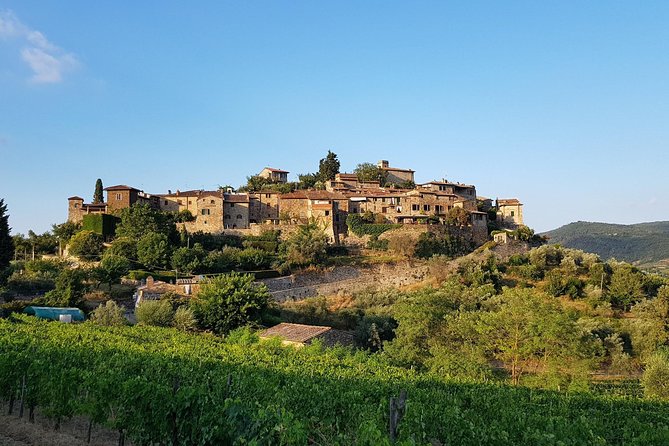
The tour includes snacks to pair with the wine. They’re described as lighter snacks, meant to work with the tasting rather than turn it into a full meal.
That pairing element is a big part of why this experience feels smoother than tastings where the food is an afterthought. You get to taste, then immediately reset your palate with something that complements the wine.
Some past visitors noted they would have loved more food variety like cheese or charcuterie. That’s a fair preference, but it also points to what this tour is best at: short, focused tastings with practical pairing, not a heavy picnic spread.
Outdoor vs Indoor Tasting: How to Choose the Right Mindset
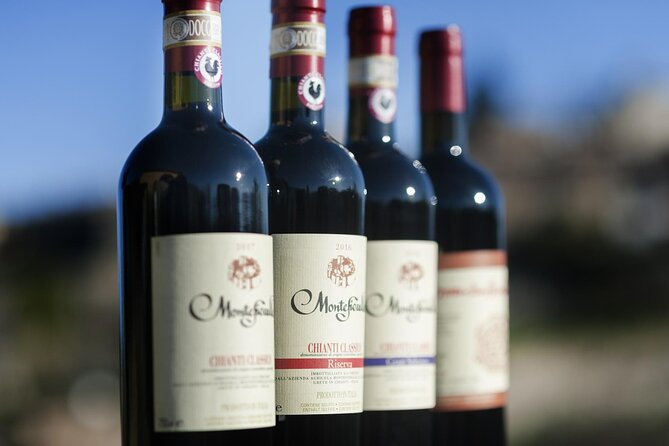
Depending on the time of year, you’ll either taste outdoors or in a small room above the basement.
- Outdoors: you get the vineyards and the view of Montefioralle village and the countryside. Great if you want a photo-friendly, open-air feel and don’t mind being at the mercy of weather.
- Indoors: you get a cozier tasting setting (in a room above the basement). Great if you want steadier comfort and less wind or sun.
Either way, the focus stays on the wine flight and the production story. The setting mainly changes the mood. In practice, the outdoor version often feels more like a “place you’re visiting” and less like “a room you’re using.”
Who This Tour Is Best For (and Who Should Skip It)
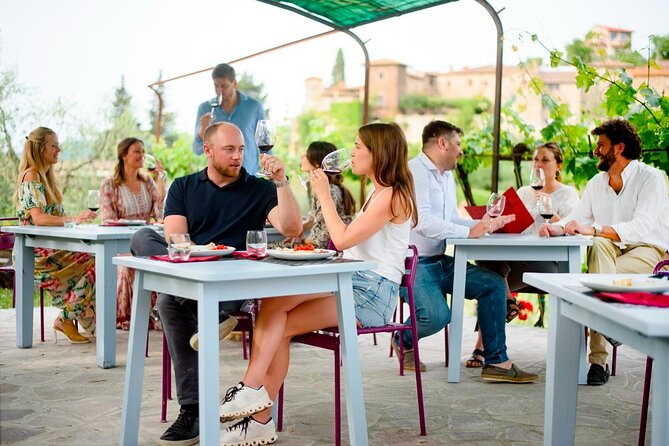
This is ideal for you if you want a small, family-run winery experience rather than a commercial production line. The tour is designed for people who like getting context: how the grapes become wine, and why that matters for taste.
It’s also a good fit for:
- couples on a relaxed day outside Florence
- first-timers who want a clear introduction to Chianti styles
- visitors who like hospitality led by the owner or family members
One review even mentioned kids enjoyed the visit, which suggests the pacing can work for families when you’re not trying to do a long day tour. Still, this is a wine tasting, so the experience is most comfortable for groups who can appreciate wine as the main event.
You might want a different type of tour if:
- you need a full meal included
- you want a very long winery visit with lots of stops and time to wander
- you’re only interested in one specific wine style and want a deeper dive (this is short and focused)
Price and Value: Does $42.24 Make Sense?
At $42.24 per person for about 1 hour 15 minutes, this tour earns its price by packing in three things you’d otherwise pay for separately: a vineyard-and-winery visit, a structured tasting of four Chianti wines, and included snack pairings.
The small group size (up to 15) also adds value. You’re more likely to get direct explanations and a more personal feel, especially when the guide is the owner. Several reviews praised the tour guide’s clarity and that you get both the story and the practical process, not just a quick pour-and-go.
Big picture: this is a good deal for people who want authentic Chianti context without turning the day into a full schedule. If you’re just hunting for a quick glass, it’s still solid. If you want a complete, guided mini-day in wine country, it’s stronger.
Practical Tips for a Smooth Chianti Day
A few real-world pointers that will help you enjoy this without stress:
- Plan your transport smartly. One past visitor booking last minute from Florence found it easy to get to the property (via Uber) and then had a tricky return. The host helped drive them down to Greve so a taxi could pick them up. That doesn’t mean every situation will be identical, but it’s a good reminder to think about how you’ll get back.
- Bring flexibility for timing and setting. Because tastings can be outdoors or indoors depending on the season, your comfort can depend on weather.
- Use the mobile ticket. Since this is a farm setting, you’ll want your ticket ready on your phone.
- If you’re sensitive to travel fatigue, consider timing. This tour ends back at the meeting point, so build in time for the transfer loop around Greve and Montefioralle.
Finally, remember the tone of the experience: it’s intimate, family-led, and tuned for good conversation. You’ll get the most out of it by slowing down and asking questions, especially during the production walkthrough.
Should You Book Montefioralle Winery? (My Take)
I’d book this if you want a genuine family-run Chianti tasting with a real working-winery explanation and the kind of views that make you stop talking for a second. The included snacks, the four-bottle flight (including Vin Santo), and the small group size make it feel like more than a basic tasting stop.
Skip it only if you need a longer, more food-heavy day, or if you’re looking for a big-scale, highly choreographed winery production. This experience works best when you’re happy with a short visit that teaches you something and leaves you with a clear sense of what Chianti tastes like when it’s made close to home.
FAQ
How long is the Montefioralle Winery tour and wine tasting?
It lasts about 1 hour 15 minutes.
What wines are included in the tasting?
The tasting includes four wines: Chianti Classico, Chianti Classico Riserva, IGT, and Vin Santo del Chianti Classico.
Are snacks included?
Yes. Light snacks are included to pair with the wine.
Where does the tour start?
The meeting point is Via Case Sparse (Montefioralle), 40, 50022 Greve in Chianti FI, Italy.
Is the tour offered in English?
Yes, the experience is offered in English.
Is the tasting always outdoors?
No. Depending on the time of year, it may be outdoors in a square surrounded by vineyards or in a small room above the basement.
How big are the groups?
The tour has a maximum of 15 travelers.
Is lunch or dinner included?
No. Lunch and dinner are not included.
Can I cancel for a full refund?
You can cancel up to 24 hours in advance for a full refund, based on the experience’s local time.