REVIEW · CATANIA
Etna Volcano: South Side Guided Summit Hike
Book on Viator →Operated by Ashàra Etna & Stromboli Guides · Bookable on Viator
Etna feels close enough to touch. This South Side guided summit hike takes you up toward the crater zone from Piazzale Rifugio Sapienza, then you’ll walk through surreal volcanic ground to get views over active Etna features with a volcanologist guide.
I love the safety setup and the way the guide explains what you’re seeing in plain language. You get helmet protection, trekking boots, poles, and help staying comfortable in wind and chill. I also like the crater-rim time: you’re not just driving past Etna, you’re getting out on the route and learning how the terrain forms.
One thing to plan for: because Etna is active, you might not reach the exact highest point if conditions are unsafe (gas/vapor and visibility can change). The hike is also truly outdoorsy and can feel hard going up and slippery on the descent, especially on loose volcanic soil.
In This Review
- Key highlights you’ll feel on this Etna hike
- South Side Etna: what the day is actually like
- Getting to the trail: cable car or 4×4 jeep ride (extra cost)
- The route in human terms: craters, Valle del Bove, and volcanic ground you can feel
- Stop 1: Itinerario Crateri Sommitali (high-crater walk)
- Stop 2: Valle del Bove (the big open volcanic valley)
- Stop 3: Mount Etna (crater views and the descent features)
- Volcanologist guidance and safety gear that actually helps
- What to pack: wind, cold, and a hiking day on lava soil
- Price and value: what you pay for, and what’s extra
- Who should book this Etna South guided hike
- Should you book the Etna South Side Guided Summit Hike?
- FAQ
- FAQ
- What’s the duration of the Etna South Side guided summit hike?
- Where do I meet for the hike?
- What time does the tour start?
- Is the tour in English?
- What’s included in the price?
- Do I need to pay extra for the cable car or 4×4 ride?
- Is bottled water or food included?
- How fit do I need to be?
- Does the route ever change on an active volcano?
- What if the weather is bad?
Key highlights you’ll feel on this Etna hike
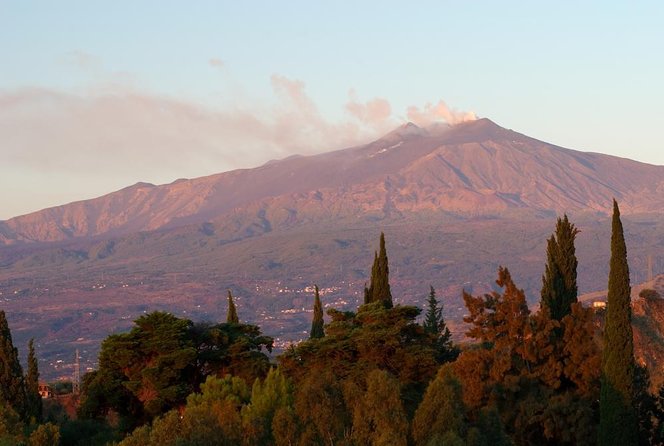
- Volcanologist guidance with real safety talk throughout the walk, not just at the start
- Crater-rim views linked to the Central Crater, with sightlines toward the Northeast and Southeast craters
- Lava-flow hiking across uneven, lunar-looking ground that rewards steady pacing
- Gear that matters: helmet, boots, trekking sticks (and typically added protection like gloves/windbreakers)
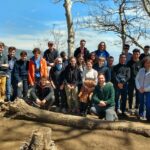
- Small group size capped at 20, so you’re not lost in a crowd
- Route flexibility for an active volcano, meaning the plan can shift for safety and conditions
South Side Etna: what the day is actually like
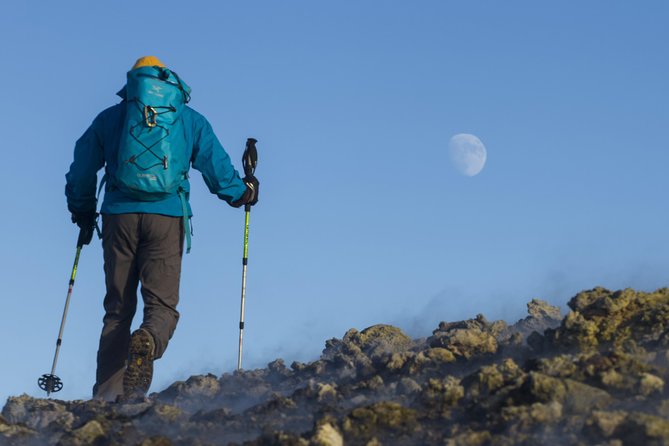
This is an approximately 6-hour hike on the south side of Mount Etna, starting at Piazzale Rifugio Sapienza (Etna South) around 8:00 am. The tour runs with a volcanology-focused guide team, in English, and keeps groups at up to 20 people. You’ll typically spend real time walking through volcanic ground rather than just posing for photos at a viewpoint.
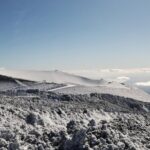
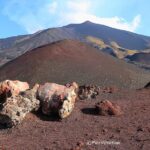
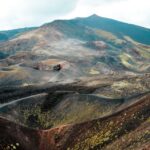
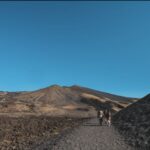
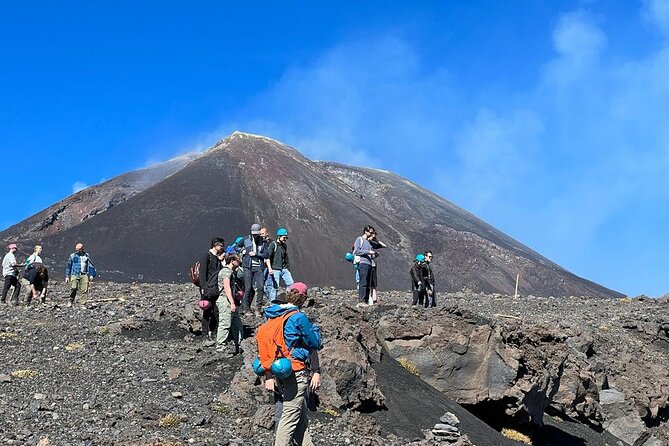
The altitude is a big part of the feel. After you get up to roughly 2,800 meters (near 2,900 meters on the access ride), you start hiking through lava flows and a moonlike setting. Expect a lot of black sand, gravel, and uneven surfaces. It’s the kind of hiking where poles help and where you’ll be grateful for slow, steady steps.
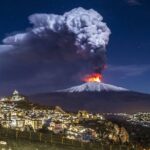
And the best part is the sensory switch you get at altitude. Etna is active, so you may notice gas emissions and the “chemistry look” of the ground—sparks of different colors from sublimation of elements, especially sulfur. You also have chances for breaks and photo stops, including views across summit craters and the broader Etna crater zone.
You can also read our reviews of more tours and experiences in Catania.
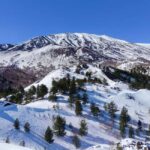
Getting to the trail: cable car or 4×4 jeep ride (extra cost)
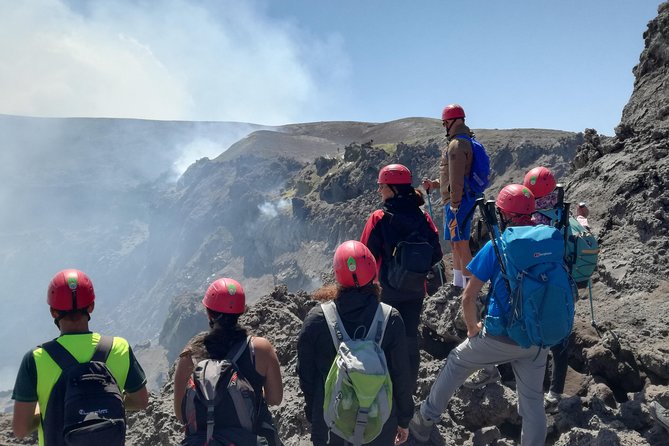
You don’t hike from the parking lot all the way up. The day usually starts by meeting at Ashàra Etna & Stromboli Guides at Piazzale Rifugio Sapienza, then using a cable car or a 4×4 jeep bus to reach the trail area at about 2,800–2,900 meters.
Here’s the practical part: the cable car/4×4 portion is not included in the main tour price, and you pay it locally (listed as 65€ per person). For most people, that’s worth it. It turns the day into a summit-crater hike instead of an all-day climb from sea level.
The tradeoff is simple: you should budget for that extra ride cost and be ready for whatever access option the day uses. Also, Etna weather can be fast-changing, so while you may know the plan, you’ll still want to be flexible with timing and safety adjustments.
The route in human terms: craters, Valle del Bove, and volcanic ground you can feel
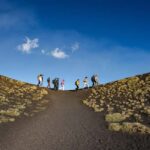
The hike is built around the summit crater zone and the volcanic features around it. The exact path can shift because the volcano is active, but the core experience stays the same: guided walking on crater terrain, crater-rim viewing, and descent through additional volcanic landscapes.
Stop 1: Itinerario Crateri Sommitali (high-crater walk)
Your day’s “wow” factor starts with the high-craters route. You’ll move through the summit-crater area and have time to look outward from the rim. A key moment is walking along the rim of the Central Crater, with sightlines toward the Northeast Crater and the Southeast Crater (noted as linked to recent impressive eruptions).
This part is less about stepping into a museum and more about learning how active systems look from the ground. You’ll be looking at gas emissions, volcanic bombs, and the ground’s color shifts tied to sulfur and other elements. Guides are there to point out what you’re seeing and what it likely means in terms of activity.
Stop 2: Valle del Bove (the big open volcanic valley)
Next comes Valle del Bove, which is the kind of place where you instantly understand why Etna dominates the region. You’ll be out in a broad, open volcanic setting with steep walls and a sense of scale you don’t get from postcards.
This segment is also a mental break. Even though you’re still hiking and the ground remains uneven, the views help you recalibrate. You’ll typically get rests along the way, and photo moments are built in, so you’re not just rushing from one “checkmark” to another.
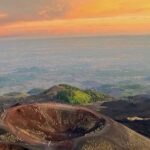
Stop 3: Mount Etna (crater views and the descent features)
As the day continues, you’ll keep moving through the Etna summit zone and the areas connected to the crater terrain. During descent, you also visit Barbagallo craters and cross a lava-flow channel. That’s a nice touch because it broadens your understanding of Etna beyond just the highest-looking points.
One more reality check: you should accept that on some days, conditions can prevent the group from going all the way up to the exact summit area. In some instances, visibility and gas/vapor conditions can make the highest route unsafe. If that happens, you’ll still be on a guided crater-and-lava hike that aims to show the best available features safely.
Volcanologist guidance and safety gear that actually helps
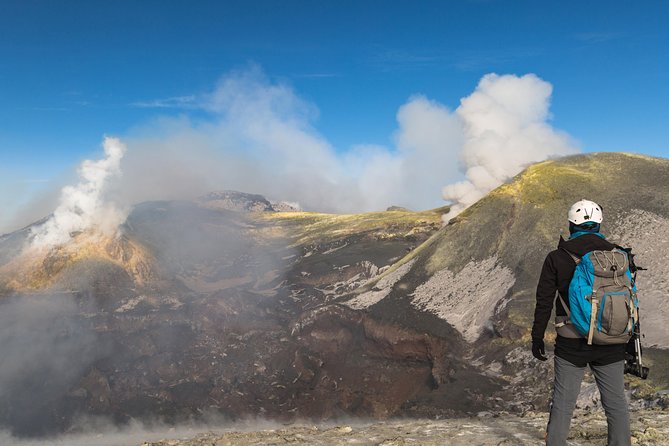
This tour isn’t “safety theater.” It’s built around being on an active volcano where the guide has to adjust to what the mountain is doing that day.
You’ll get a helmet and trekking boots, plus trekking sticks. Poles matter here. Many people find the going-up feels steep and the descent can be slippery on loose soil, even when it’s not raining. Poles help you keep balance and reduce knee stress.
You’ll also have additional protection like gloves and windbreakers provided. One thing to know from real-world experience on Etna: wind at altitude is not a minor detail. It can cut through layers and make temperatures feel much colder than you expected. That’s why the included protective items matter.
The guide’s job is also to explain what you’re seeing while keeping the group aware of danger. You might hear names like António, Max, Philippo, Massimo, or Simon tied to different guide groups. Across those styles, the common thread is professional guidance that ties the science to your footsteps: what the ground features mean, what gas emissions signal in simple terms, and why you’re being routed a certain way today.
Finally, you’re hiking in the crater area, so vertigo can be a factor for some people. If you’re nervous about heights, slow pacing and careful positioning within the group can make a big difference, and guides can help you finish the route safely and confidently.
What to pack: wind, cold, and a hiking day on lava soil
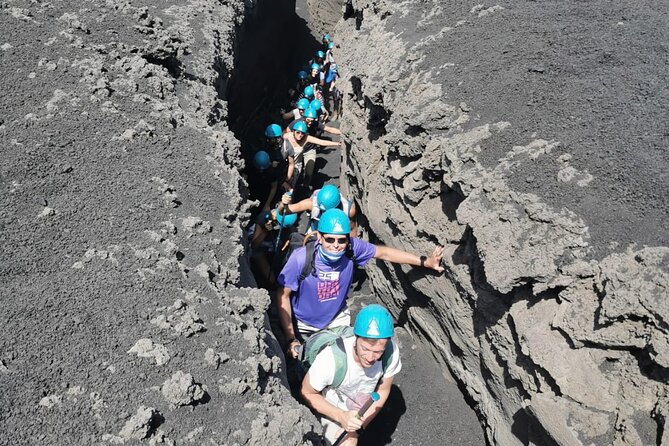
Bring the attitude of a real hike day, not a casual walk. The route involves uneven ground, steep sections, and loose volcanic surfaces. Even when the pace is controlled, the effort adds up.
Here’s what you should plan for:
- Solid hiking shoes with grip (not flimsy sneakers)
- Hiking poles if you own them (many people strongly prefer them here)
- Warm layers for the summit zone, because wind and cold can be intense
- A hat and gloves, since the higher areas can be colder than you think
- A wind jacket or at least a very wind-resistant layer (a wind jacket isn’t listed as included, even if windbreakers may be provided)
- A scarf or neck sock if you run cold
- Dark-colored clothing can help with sun comfort, since you’ll often feel the sun while standing still, then feel the cold when wind hits
Food and water are your responsibility. Bottled water and snacks are not included. You’ll want a plan for lunch as well. Some groups stop for lunch near the top, and it helps to have enough water and calories to stay steady for the final climb sections and the descent.
One last “don’t be surprised” note: conditions can get brutally cold. There are reports of days with snow on top and temperatures around -10°C. You can’t assume that will happen, but it’s a strong reminder that Etna at altitude is a real weather environment.
Price and value: what you pay for, and what’s extra
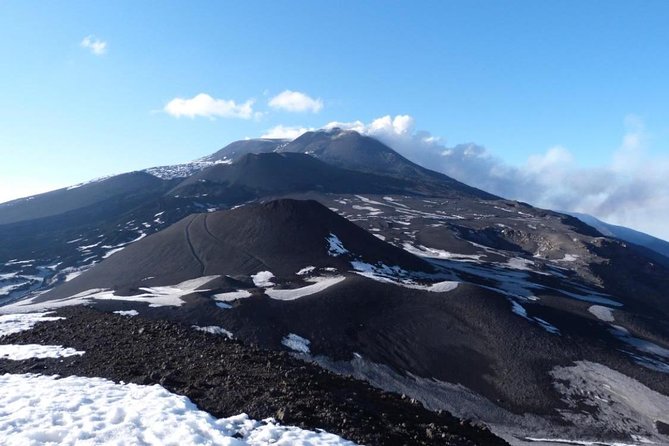
The listed price is $78.64 per person, and you’re buying the guided part: volcanological guides, insurance, and the core hiking gear (helmet, trekking boots, and trekking sticks). The tour also limits group size to a maximum of 20, which improves your chances of actually hearing explanations at crater points.
But the big add-on is the access ride from Sapienza up to the trail area. The cable car or 4×4 jeep tickets are not included and are priced locally at 65€ per person. If you’re budget-conscious, that additional cost matters. If you’re value-focused, it’s still reasonable because it turns the day into a crater hike with meaningful walking time at altitude rather than an exhausting long climb from the base.
Is this tour worth it? For me, it is when you want a guided, science-linked crater experience and you’re comfortable with a strenuous, uneven hike. It’s less ideal if you want guaranteed summit entry every time. On an active volcano, conditions can force route changes, and the highest “top-of-the-top” might be off-limits on the day you go.
Who should book this Etna South guided hike
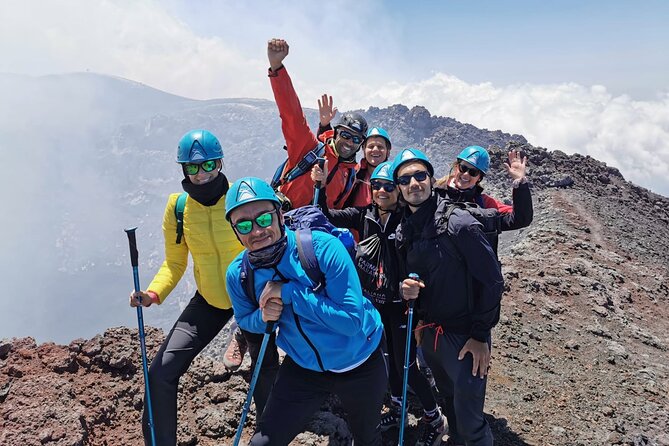
This hike fits you best if:
- You’re in medium-high physical condition and can handle steep, uneven ground
- You like learning directly from a volcanology guide while you’re walking, not only at a stop
- You’re okay with the idea that the exact route can vary for safety
- You want crater-rim views, lava terrain, and a day outdoors for real
It may not fit if:
- You’re not comfortable with steep climbs and slippery descents on loose volcanic soil
- You want an easy, flat walk (this is not that)
- Cold, wind, and long time outdoors will be a challenge
If you’re a first-time Etna hiker, you’ll still get a lot out of it because the guide’s job is to translate the mountain for you. People do come away feeling like they saw Etna from a different angle—up close, on the ground, with context.
Should you book the Etna South Side Guided Summit Hike?
Yes, if you want a volcanologist-led crater experience on the south side and you can handle a strenuous hike in wind and altitude. Book it with the mindset that you’re paying for guidance, safety, and meaningful walking on active volcanic ground—not for a guaranteed “touch the absolute summit” outcome.
Consider shopping for another option (or going on a different day) if you’re hoping for a gentle stroll, or if you’re very sensitive to heights and slippery terrain. And be sure to plan your essentials: bring layers for wind-cold, pack lunch and water since they’re not included, and budget the extra 65€ per person for the cable car/4×4 access ride.
FAQ
FAQ
What’s the duration of the Etna South Side guided summit hike?
The tour is listed as about 6 hours.
Where do I meet for the hike?
You meet at Ashàra Etna & Stromboli Guides at Piazzale Rifugio Sapienza, 95030 Nicolosi CT, Italy.
What time does the tour start?
Start time is listed as 8:00 am.
Is the tour in English?
Yes, it’s offered in English.
What’s included in the price?
Included items are helmet, trekking boots, trekking sticks, insurance, and volcanological guides.
Do I need to pay extra for the cable car or 4×4 ride?
Yes. Cable car and/or 4×4 jeep tickets are not included and are paid locally (65€ per person).
Is bottled water or food included?
No. Bottled water and snacks/food are not included.
How fit do I need to be?
You should have moderate physical fitness, and the level is described as medium-high. You also need to be in perfect physical conditions.
Does the route ever change on an active volcano?
Yes. Since Etna is active, there may be variations in the itinerary for safety.
What if the weather is bad?
This experience requires good weather. If it’s canceled due to poor weather, you’ll be offered a different date or a full refund.