REVIEW · FLORENCE
Experience Florence’s Art and Architecture on a Walking Tour
Book on Viator →Operated by Free Tour Florence – Another Florence · Bookable on Viator
Florence can feel like sensory overload. This walking tour is a fast way to get your bearings while you learn how the city’s art and architecture connect. I love that it’s an express loop through the biggest landmarks without the stress of maps, and I especially like that most stops are free to enter. The only real caution: some people report audio can be tricky in crowded spots, so aim to stay close to your guide.
You also get a human factor that changes everything. When the guide points out what to notice—sculpture details, building placement, and Medici-era power centers—you start seeing Florence instead of just walking past it. It’s also capped at 20 travelers, which helps keep the group moving as a group.
If your priority is standing inside every monument for long stretches, this is not that kind of tour. It’s designed for a morning overview—then you can come back on your own when something grabs you.
In This Review
- Key Things That Make This Florence Art Walk a Smart Choice
- Why This Florence Art Walk Works for First Timers (and Busy Schedules)
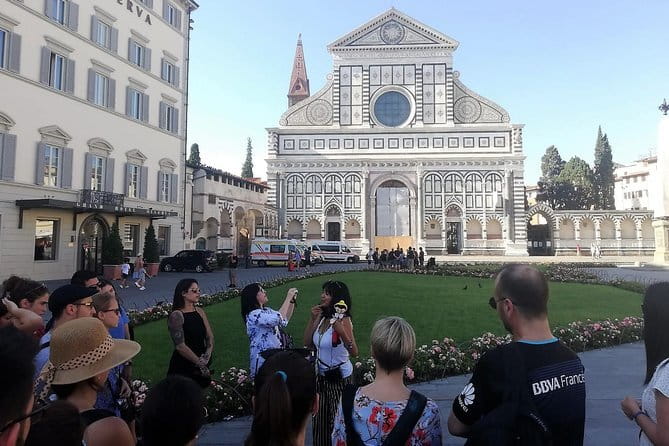
- Getting Oriented: Where You Meet at Santa Maria Novella and How the Morning Flows
- Stop 1: Basilica of Santa Maria Novella as Your Starting Point
- Stop 2: Via de’ Tornabuoni and Piazza Antinori for Architecture Plus Street Life
- Stop 3: Piazza della Repubblica and the Feel of Firenze Romana
- Stop 4: Santa Maria del Fiore Cathedral Area, Plus the Cost You Need to Plan
- Stop 5: Orsanmichele, Where Sculpture Names Do the Talking
- Stop 6: Piazza della Signoria to Ponte Vecchio Views and the Medici Moment
- Stop 7: Basilica of Santa Croce and the Monumento a Dante
- Tour Pace, Audio, and Group Size: What to Watch So You Enjoy It
- Practical Value: Price, Tips, and How to Spend Your Money Wisely
- Should You Book This Florence Walking Tour of Art and Architecture?
- FAQ
- How long is the walking tour?
- Where does the tour start and end?
- What time does the tour begin?
- Is the tour in English?
- Do I need to pay for admission during the tour?
- How big are the groups?
- What if weather is poor or I need to cancel?
Key Things That Make This Florence Art Walk a Smart Choice
- A short, high-impact route: 2 hours 15 minutes covering major art-and-architecture stops across central Florence
- Most entries are free, with only the Duomo complex requiring extra admission
- A small group (max 20) keeps pace manageable and questions possible
- Stop choices match different eras, from Firenze Romana to Medici power spots in Piazza della Signoria
- Orsanmichele is all about sculpture names you’ll recognize, from Donatello to Ghiberti and beyond
- You’ll get local wayfinding tips, including where to find shade on hot days and how to plan next visits
Why This Florence Art Walk Works for First Timers (and Busy Schedules)
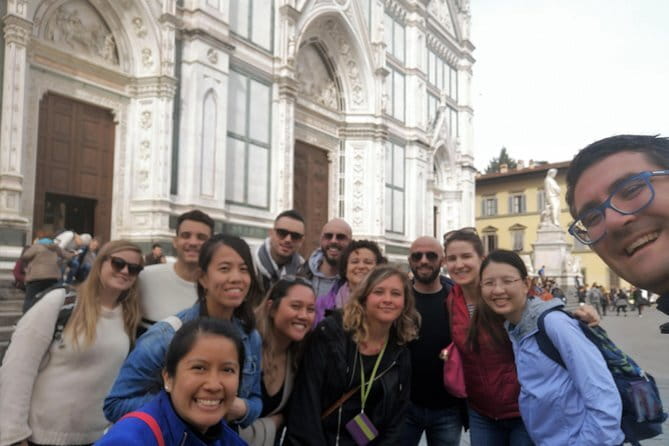
This is the kind of Florence tour you do early. Not because you need permission to enjoy the city, but because orientation changes what you notice later. In just a couple of hours, you get the big geometry of central Florence: where major churches sit, how viewpoints line up, and how the center “reads” as a story.
I also like the practical focus. Instead of asking you to decode street signs and museum hours, you follow a leader who handles the flow. You get a guided route through top sights, plus the kind of street-level commentary that helps you understand why Florence looks the way it does.
One more thing: this is priced low enough that you can afford to take it and still spend your money on actual entries you care about. Then you’re not stuck deciding between a tour and seeing things.
You can also read our reviews of more tours and experiences in Florence.
- Tuscany Day Trip from Florence: Siena, San Gimignano, Pisa and Lunch at a Winery
★ 5.0 · 21,634 reviews

Getting Oriented: Where You Meet at Santa Maria Novella and How the Morning Flows
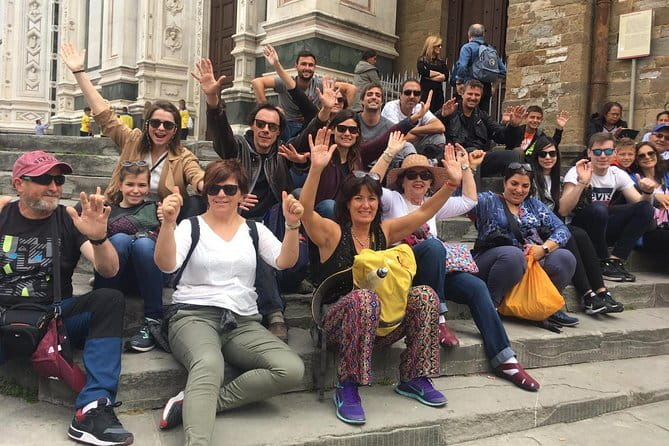
The tour starts at P.za di Santa Maria Novella, 4n and ends at Piazza di Santa Croce, 18R. Start time is 10:30 am, and the experience runs about 2 hours 15 minutes.
That start/end pairing is handy. Santa Maria Novella puts you right in the thick of central Florence, and ending near Santa Croce helps if you want to keep going on your own that afternoon. If you like building a route you can repeat, this one gives you two anchors: the north-center launch point and a finish that’s easy to navigate afterward.
You’ll also have a mobile ticket, which is convenient in a city where paper can get lost fast. The group size is kept small (max 20 travelers), and the tour operates in English.
Stop 1: Basilica of Santa Maria Novella as Your Starting Point
The morning begins at the Basilica of Santa Maria Novella. This first stop is smart because it sets the stage immediately. You start with a major church right away, so your “Florence sense” wakes up fast—what kind of building scale you’re dealing with, how the façades sit on the street, and what details are worth pausing for.
Admission here is free, so you can treat this stop like a warm-up rather than a financial decision. Even if you only spend about 10 minutes before moving on, the value is in learning what to look for as you continue.
Practical tip: don’t rush the first photo. The guide’s early pointers tend to train your eye for later stops.
Stop 2: Via de’ Tornabuoni and Piazza Antinori for Architecture Plus Street Life
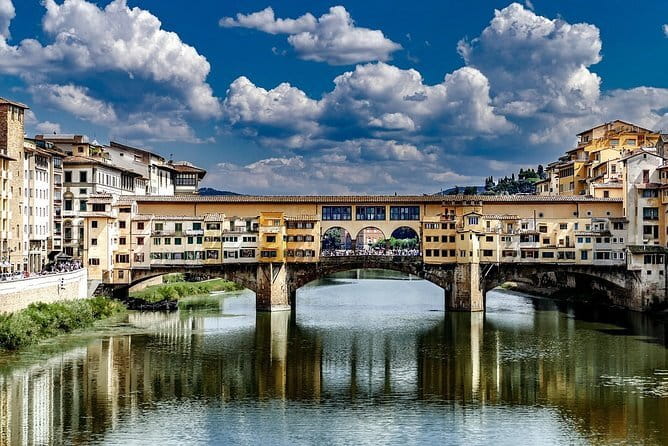
Next you move to Via de’ Tornabuoni, passing spots like Piazza Antinori and heading toward areas that connect to shopping streets and major civic buildings. This section matters because Florence isn’t just monuments—you’re walking through the “between” spaces where the city’s style shows up.
Along the way, you’ll also pass by Palazzo Strozzi and Piazza Santa Trinita. The point isn’t to turn this into a museum circuit; it’s to help you understand how noble architecture sits among everyday city movement. You’ll get a sense of how Florence blends art, politics, and commerce on the same streets.
Admission at this stage is listed as free, and the time is about 10 minutes. Think of it as a visual warm-up for the bigger plazas later.
Stop 3: Piazza della Repubblica and the Feel of Firenze Romana
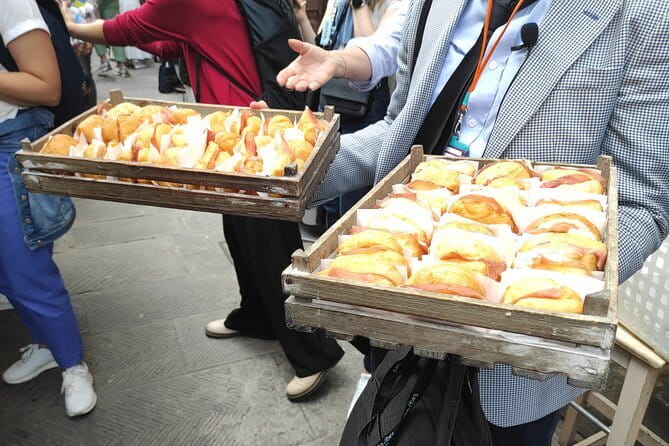
Then comes Piazza della Repubblica, with a focus on Firenze Romana. This stop is short (about 5 minutes), but it can be useful if you tend to wonder how Florence got from ancient roots to Renaissance glamour.
Even without lengthy entry time, a good guide can point out the “layering” feeling—how a modern plaza still signals earlier city life. It’s the kind of moment that makes the rest of the morning click.
Admission is free here too, so you’re not paying for a brief glance. You’re paying for context and connections.
- The Best tour in Florence: Renaissance & Medici Tales – guided by a STORYTELLER
★ 5.0 · 12,316 reviews



Stop 4: Santa Maria del Fiore Cathedral Area, Plus the Cost You Need to Plan
The tour’s big centerpiece area is Santa Maria del Fiore—including the Battistero, Giotto’s Campanile, and Brunelleschi’s Cupola. You’ll spend around 10 minutes here, which is just enough time to take in the whole complex as one visual unit.
This stop is the one you should watch for in your wallet. The Cathedral/area admission is not included. In other words, you’ll see the sights as part of the walk, but if you want to go inside, you’ll likely need to budget extra.
Why this stop works even when admission is extra: it trains your eye. Once you’ve seen the whole cathedral cluster from the outside, you can decide later if you want to pay to enter. If you’re trying to do Florence on a tight schedule, that decision-making clarity is a win.
Stop 5: Orsanmichele, Where Sculpture Names Do the Talking
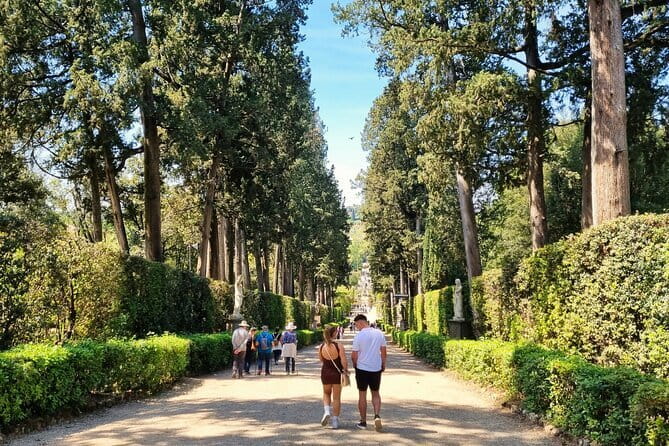
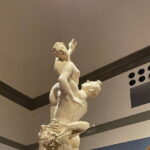
At Orsanmichele, the tour shifts from grand buildings to art you can actually recognize. You’ll be shown major sculpture names associated with the site, including Donatello, Ghiberti, Giambologna, Brunelleschi, Verrocchio, Sangallo, Orcagna, and more.
This stop is powerful because it turns famous names into something you can see in context. Instead of reading about sculptors later and forgetting half of it, you get a guided “spotting practice” right on the street-level approach.
Admission here is free and the time is about 10 minutes. That means you won’t get stuck in long entry lines, which helps keep the tour’s pace realistic for a morning overview.
One consideration: if you’re sensitive to crowds or noise, this is an area where you might want to position yourself well for hearing your guide clearly.
Stop 6: Piazza della Signoria to Ponte Vecchio Views and the Medici Moment
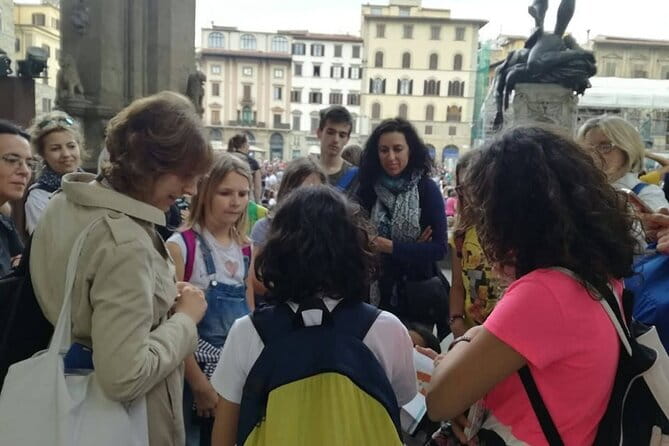
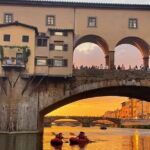
Next is Piazza della Signoria—one of Florence’s defining political-and-art spaces. In this stretch you’ll pass Palazzo Vecchio, see the Uffizi area from the outside, and head toward Ponte Vecchio views.
The guide also covers the Loggia de’ Lanzi and highlights sculptures and civic symbols tied to Medici history, including David, Marzocco, Cosimo de’ Medici, and Perseo, as well as Cellini. This is where a tour earns its value: it helps you understand why these statues and names matter in the city’s power story, not just why they look good for photos.
You’ll spend about 15 minutes here, which is longer than earlier stops. That extra time is telling. Piazza della Signoria is dense—there’s a lot to notice, and a good guide can help you separate “pretty” from “important.”
Admission along this part is free, making it ideal if you want big payoff without extra tickets.
Stop 7: Basilica of Santa Croce and the Monumento a Dante
The last stop is Basilica of Santa Croce and a focus on the monument to Dante. You’ll get about 10 minutes here, and the entry is free.
This is a fitting ending because Santa Croce feels like a “memory” stop. It shifts the tone from Renaissance power back toward human story—famous figures, legacy, and the way Florence keeps names in public view. After the heavy architecture and sculpture moments, Dante can land like a reset.
If your day has more museums later, this ending helps you know what to chase next. If your day is mostly wandering, it gives your wandering a theme.
Tour Pace, Audio, and Group Size: What to Watch So You Enjoy It
This tour runs about 2 hours 15 minutes and is capped at 20 travelers. That small size is genuinely helpful in Florence, where crowds can flatten experiences. When the group stays together, the guide can keep momentum and your questions don’t get swallowed.
Still, audio can be a weak spot. Some people report it can be hard to hear in busy places, even when a small sound device is used. My practical advice: stand close enough to see your guide’s face and gestures, not off to the side. If you’re the kind of person who struggles with hearing in crowds, position yourself early rather than waiting until mid-tour.
Heat and timing matter too. One guide approach praised in past groups is actively finding shade during hot weather. On a sunny Florence morning, that can make the difference between “nice walk” and “I’m counting minutes.”
Practical Value: Price, Tips, and How to Spend Your Money Wisely
The listed price is $3.63 per person, which is strikingly low for a guided walking tour. In practical terms, you’re buying organization, context, and a leader to steer your attention across major sites—most entries included.
Because this is a low-cost tour, I’d also plan to follow the local norm of tipping your guide if you enjoyed it. A few comments about tip expectations show up in the broader experience patterns for this type of tour. When the content is strong and the pace works, a tip feels like the right way to match value to effort.
What I’d do with your budget:
- If you feel uncertain about spending inside the cathedral complex, commit only if it’s a priority for you.
- Use the tour to choose your “return targets.” After a morning like this, you’ll have a short list.
- Keep a little cash for snacks or a quick drink, since you end near Santa Croce where you can keep the momentum going.
In short: this is a value move. You get a morning orientation and enough art-and-architecture context to stop guessing.
Should You Book This Florence Walking Tour of Art and Architecture?
Book it if:
- It’s your first day or your first time in Florence and you want a fast sense of the city’s key sites.
- You like guided walking that explains what you’re looking at—especially sculpture names and Medici-era references.
- You want mostly free-entry stops and a route that ends at a convenient location for continuing your own day.
Skip it or reconsider if:
- You need deep time in each monument (this is a highlights loop, not a slow museum crawl).
- You’re very sensitive to hearing in crowds and you know you might struggle if audio is imperfect. If that’s you, go early, stand close, and plan to supplement with later independent visits.
If you’re trying to get maximum Florence for a limited schedule, this tour is a smart starter. It helps you see the city’s major art-and-architecture threads in one morning—then lets you follow your favorite thread on your own.
FAQ
How long is the walking tour?
The tour runs about 2 hours 15 minutes.
Where does the tour start and end?
It starts at P.za di Santa Maria Novella, 4n, 50123 Firenze FI, Italy, and ends at Piazza di Santa Croce, 18R, 50122 Firenze FI, Italy.
What time does the tour begin?
The start time is 10:30 am.
Is the tour in English?
Yes, the tour is offered in English.
Do I need to pay for admission during the tour?
Admission is free for several stops. The Cathedral of Santa Maria del Fiore area is listed as admission not included, so you may need to purchase entry if you want to go inside.
How big are the groups?
The tour has a maximum of 20 travelers.
What if weather is poor or I need to cancel?
The experience requires good weather. If it’s canceled due to poor weather, you’ll be offered a different date or a full refund. You can also cancel for a full refund up to 24 hours in advance of the start time.
You Might Also Enjoy


More Tour Reviews in Florence
- Tuscany Day Trip from Florence: Siena, San Gimignano, Pisa and Lunch at a Winery
★ 5.0 · 21,634 reviews - The Best tour in Florence: Renaissance & Medici Tales – guided by a STORYTELLER
★ 5.0 · 12,316 reviews