REVIEW · FLORENCE
Florence: Accademia Gallery David Entry & Audio Guide App
Book on GetYourGuide →Operated by Tours About · Bookable on GetYourGuide
If you’re craving one sculpture that matters, this is it. With timed entry and a fast pass through a separate entrance, you’ll spend less time stuck in line and more time facing Michelangelo’s David. I also like that you’re not stuck in a single room: you move through the main hall, the Gipsoteca, Medici-era musical instruments, and the painting galleries. One thing to plan around: the audio guide setup depends on your phone and internet, and there can be some waiting outside when crowds surge.
The Accademia can feel overwhelming at first, but the flow here helps. You start with David and even Michelangelo’s unfinished works, then shift into the plaster models (original pieces in the Gipsoteca) and the Medici musical collection, including instruments made by Stradivarius. The possible drawback is practical: you need to bring your own headphones, and if your phone doesn’t download smoothly before you arrive, the experience can become more stressful than it needs to be.
Your arrival is also part of the deal. You meet the host outside the Carrefour Express supermarket on Via Ricasoli 115, and you’ll exchange your GetYourGuide voucher for a physical ticket in a spot clearly marked by a staff member holding a white flag that reads Enjoy Rome. The POP GUIDE audio app is included, but you must download it ahead of time, and you’ll need your charged smartphone (and ideally internet) to get it going once you’re there.
In This Review
- Key highlights to clock fast
- Timed entry at the Accademia: why it changes your day
- Meeting the host on Via Ricasoli 115 (and what to look for)
- Inside the main hall: spotting David (and not missing the unfinished works)
- The Gipsoteca: why plaster models are a big deal
- Medici musical instruments and the Stradivari moment
- Painting galleries: Giotto, Botticelli, and the style shift you can actually see
- The top floor altarpieces: finishing strong
- POP GUIDE audio app: how to use it without frustration
- Price and value: what $38 buys you here
- Who this works best for (and who should do something else)
- Book it or skip it? My decision checklist
- FAQ
- Where do I exchange my voucher for a ticket?
- Is the ticket timed, and how do I choose a starting time?
- What’s included with this experience?
- Do I need headphones?
- Will I completely avoid lines?
- What do I need to bring?
- Is there free cancellation?
Key highlights to clock fast
- Timed entry + separate entrance to reduce the usual Accademia crush
- Michelangelo’s David plus related unfinished works in the main hall
- Gipsoteca with original plaster models by Florentine sculptors
- Medici musical instruments, including multiple Stradivarius pieces
- Painting galleries spanning Medieval to Renaissance, with painters like Giotto and Botticelli
- Top-floor altarpieces to close out the story of the museum
Timed entry at the Accademia: why it changes your day
The Accademia is one of those Florence must-sees where the museum can be worth your time even if you don’t consider yourself an art person. The issue is access. Lines can be chaotic, and entry times are enforced, so arriving on schedule matters.
This version uses a pre-reserved timed ticket, plus a special entrance meant to shorten your wait. That’s the biggest value: it protects your morning (or afternoon) from getting eaten alive by ticketing queues. In practice, you still may have a short wait outdoors if the museum is controlling the number of people inside, but the entry process is generally smoother than going without a reserved slot.
If you’re the type who likes to actually enjoy the main event (instead of watching the clock), timed entry is the right move here. David is fantastic, but the museum is also big enough that you’ll want the energy to wander.
You can also read our reviews of more tours and experiences in Florence.
- Tuscany Day Trip from Florence: Siena, San Gimignano, Pisa and Lunch at a Winery
★ 5.0 · 21,634 reviews

Meeting the host on Via Ricasoli 115 (and what to look for)
Your day starts outside the museum zone, at a clear, easy-to-find meeting point: in front of the Carrefour Express supermarket at Via Ricasoli 115. You exchange your GetYourGuide voucher for a physical ticket, and the staff member should be holding a white flag that says Enjoy Rome.
A small detail that makes a difference: don’t show up at the last second. I’d aim to arrive a bit early so you can locate the host, trade vouchers calmly, and get yourself moving toward the entry queue without adding stress.
One name that came up in the experience details is Awesome Sakila. If your group gets matched with someone like him, you’ll likely find the handoff is friendly and the directions are clear.
Inside the main hall: spotting David (and not missing the unfinished works)
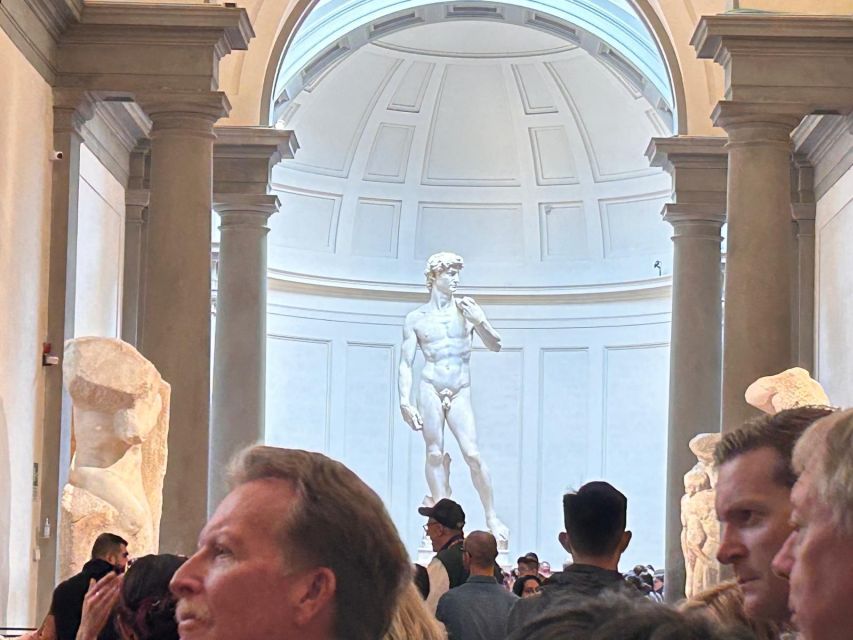
Once you’re in, your focus point is immediate: Michelangelo’s David. Even if you’ve seen photos, the sculpture hits differently in real life. You can feel the scale, and you get a better sense of how the work captures tension—especially if you take a few minutes to look closely at the expression and the details around the figure.
What I like about this museum experience is that it doesn’t end at the “one statue” moment. You’ll also see Michelangelo’s unfinished works in the main hall. That makes your visit more interesting because it changes your perspective: you’re not only looking at the final masterwork, you’re watching how the process itself matters.
Tip: pace yourself. David is so famous that you’ll probably feel tempted to rush through the rest. Try to give yourself a short, deliberate look first, then let your eyes adjust before you move on. The museum becomes more rewarding when you’re not sprinting.
The Gipsoteca: why plaster models are a big deal
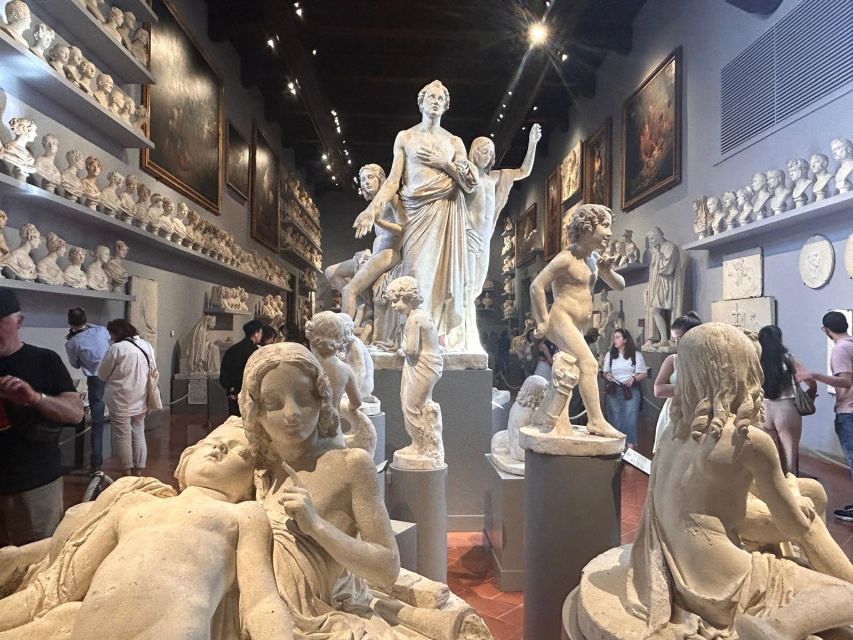
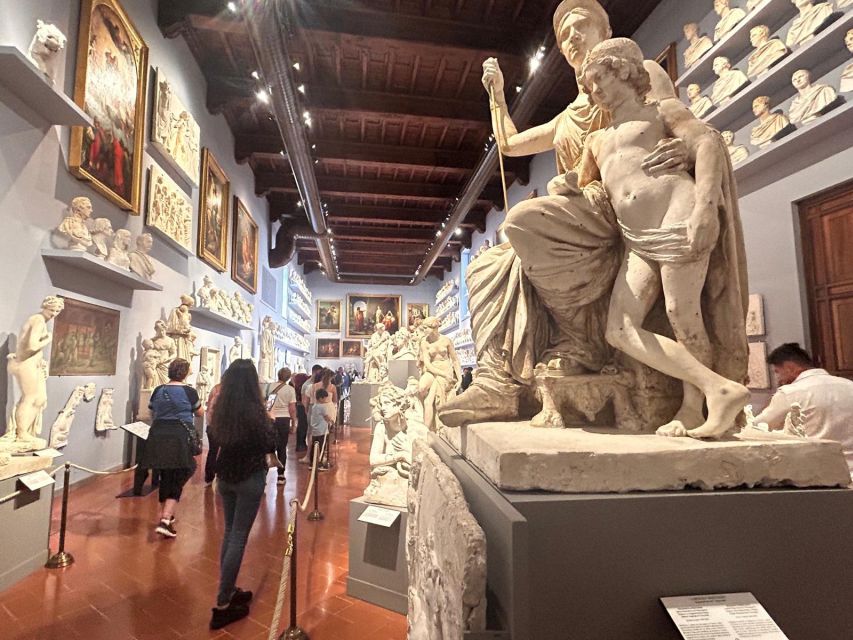
From the main hall, you head toward one of the Accademia’s best “wait, that’s cool” stops: the Gipsoteca. Here, you can see original plaster models made by 19th-century Florentine sculptors. These aren’t just random craft items. They’re the kind of objects that show how sculpture is taught, studied, copied, and refined.
This section is valuable because it explains something museums often skip: art-making is a skill built through repetition and technique. Even if you don’t read every label, the models help you understand why the final sculptural look you admire has a long road behind it.
Drawback to note: the visit involves some walking, and Florence can feel hot fast in the warm months. Bring water if you can and plan on taking your time in shaded breaks when you find them.
Medici musical instruments and the Stradivari moment
One of the most surprising parts of the Accademia experience is the musical collection connected to the Medici. You’ll see original instruments from the Medici collection, including multiple Stradivarius pieces.
This is a smart inclusion if you like culture that crosses categories. Yes, this is an art museum. But hearing how different disciplines sit inside the same story of Florence—wealth, patronage, craftsmanship—makes the museum feel more lived-in.
Also, this section gives you a mental reset. After staring at sculpture and paintings, the instruments offer variety. It’s a reminder that Renaissance Florence wasn’t just painters and statues. It was also music, performance, and objects built for sound.
- The Best tour in Florence: Renaissance & Medici Tales – guided by a STORYTELLER
★ 5.0 · 12,316 reviews



Painting galleries: Giotto, Botticelli, and the style shift you can actually see
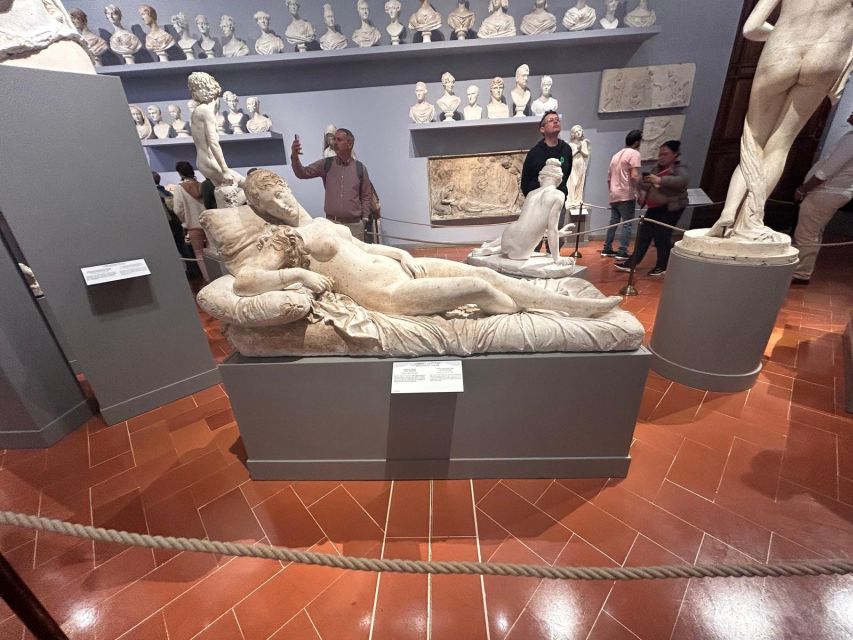
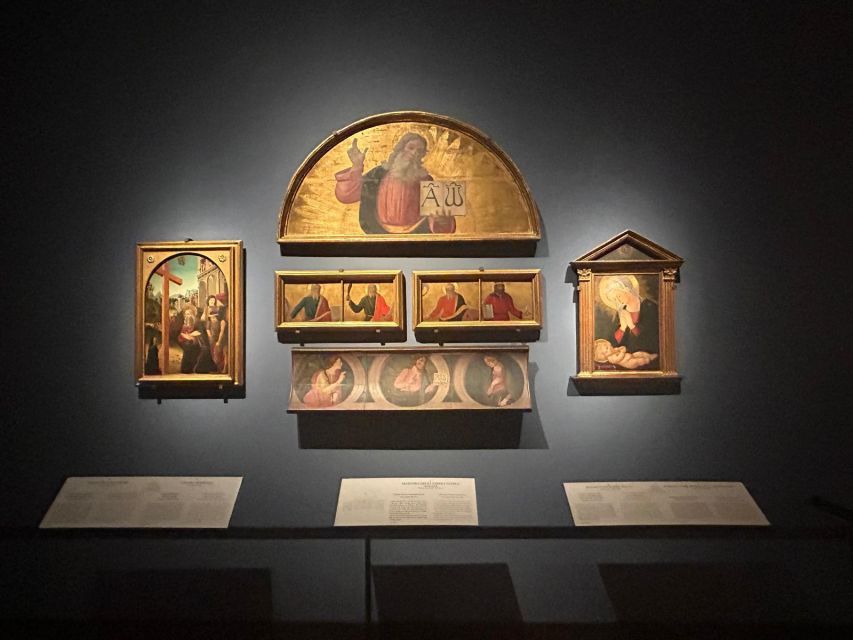
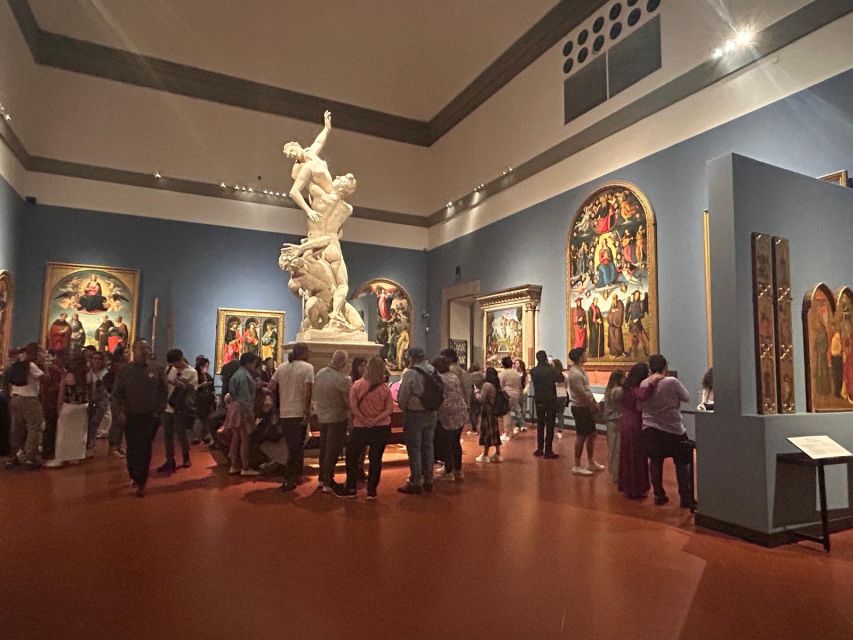
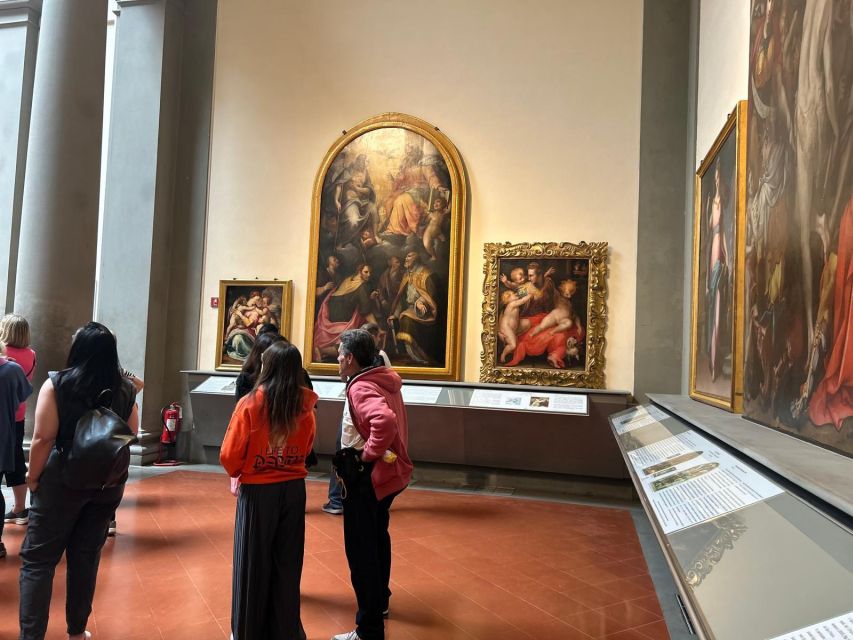
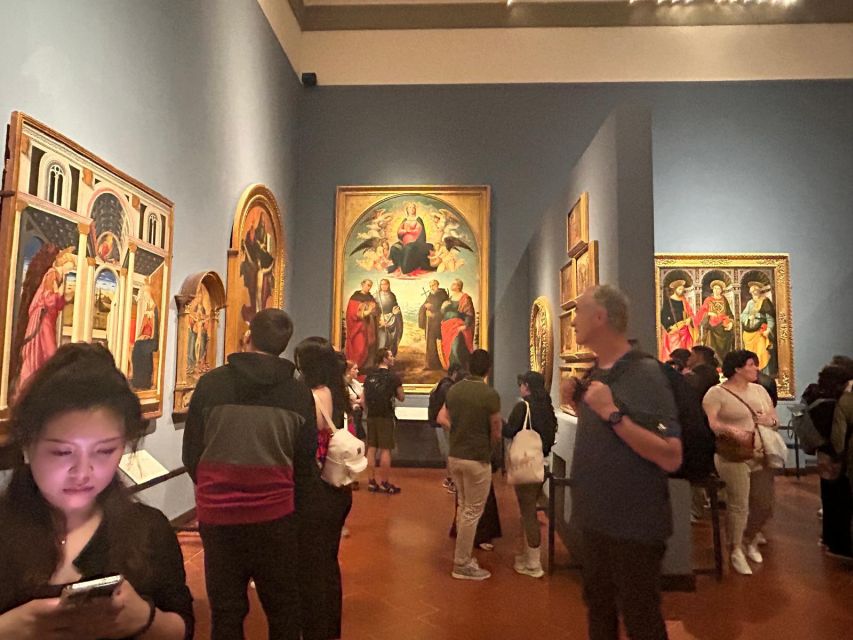
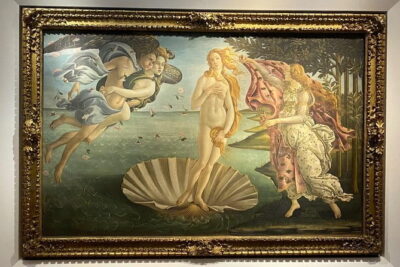
Next come the painting galleries, where the museum transitions from “famous single moments” to a larger sweep of Medieval and Renaissance art. This is where you’ll see paintings by artists like Giotto and Botticelli, and you’ll get the chance to compare styles across time.
Here’s why this part is worth your attention: it’s not just about names. You’ll likely notice changes in how figures are represented, how space is suggested, and how emotion and drama land on the page. If you take your time, the movement from Medieval to Renaissance becomes visible instead of abstract.
Even without a live guide, the museum’s structure helps. You move through sections and can compare what you’ve seen before. If you’re an art lover who wants to understand the “how” and “why,” this gallery time is where you’ll feel the most payoff.
Practical note: don’t assume every room will be quiet. The Accademia can be crowded, and sometimes your best strategy is to pause for a moment, let a crowd pass, and then look at the paintings for real.
The top floor altarpieces: finishing strong
At the end of your visit, you go to the top floor for altarpieces. This last section tends to feel more elevated—literally and emotionally—because altarpieces are big statements meant for religious spaces.
If you’ve spent your earlier time admiring David’s genius and the craft behind sculpture, altarpieces can bring a different kind of scale and drama. It’s a good way to close the visit without abruptly ending on your least interesting stop.
If you’re short on time, don’t cut this part automatically. It’s often the difference between a “saw David” trip and a “understood the museum” visit.
POP GUIDE audio app: how to use it without frustration
The audio experience here is built around the POP GUIDE audio app. It’s included, and the system also uses login credentials provided at the meeting point. But you need to be ready: you’re told to download the app before you arrive, and the experience data specifically calls out internet access and a charged smartphone.
That matters because one of the most common points of stress is tech. If you arrive without data access, the audio setup can fail. Some people also found that the app doesn’t behave like it’s fully offline. Translation: don’t count on downloading only once you’re inside.
What I recommend:
- Download the POP GUIDE app before you head out.
- Bring your own headphones (they’re not included).
- Make sure your phone is charged and you have a workable internet connection before you start the process.
There’s also a hopeful note. In at least one case, a host provided wifi access so the app could download. That’s the kind of help that saves your visit if your connection is weak.
A small style heads-up: the audio may be more like guide content you play on your phone rather than exhibit-style audio triggers. That can be fine if you like a steady narrative while you walk, but it’s not the same as tapping into audio tied to each artwork.
Price and value: what $38 buys you here
At around $38 per person, this isn’t the cheapest way into the Accademia. So I’d look at value in terms of time protection and mental energy.
You’re paying for:
- A reserved timed entry that’s meant to cut down the usual entry chaos
- A pre-arranged experience setup with a host meeting point
- The POP GUIDE audio app, included with your ticket
If you were to show up without this kind of help, you could spend a lot of time in lines and lose momentum. For many people, that time cost is the real expense, especially in peak season.
On the other hand, keep expectations grounded. A separate entrance helps, but crowd control can still affect when you get inside. And if the audio app doesn’t download smoothly, you might not get the full value of the included guide content.
So my verdict on value is simple: pay it when you care about pacing and want to see David plus more than just the highlights, without turning the visit into a logistics project.
Who this works best for (and who should do something else)
This setup is a good match if you:
- Want to see David without gambling on long, unpredictable lines
- Prefer flexible pacing rather than being tied to a group tour schedule
- Like structure: David → sculpture process (Gipsoteca) → unusual detours (Medici instruments) → painting galleries → altarpieces
You might consider a different option if you:
- Really want a licensed, in-person guide who can answer questions on the spot
- Don’t want any phone dependence for your audio experience
- Are prone to stress about app downloads and limited internet
Also, plan for walking. This isn’t a “sit and look” museum. You’re moving through multiple rooms and levels.
Book it or skip it? My decision checklist
I’d book this timed entry with the audio app if your goal is to maximize museum time and keep your day from collapsing into lines. It’s especially worth it if you’ll actually use the audio content and take your time comparing Medieval and Renaissance styles, not just snap a photo and leave.
Skip or rethink it if:
- You know your phone often struggles with app downloads or you’ll arrive without reliable data
- You’re only in Florence for a very tight window and need absolute certainty about zero waiting (even timed entry can be affected by crowd control)
- You’d rather pay extra for a live guide experience that fully explains each artwork as you stand in front of it
If you do book, you can make the experience smoother by downloading POP GUIDE ahead of time, bringing headphones, and showing up a bit early at Via Ricasoli 115.
FAQ
Where do I exchange my voucher for a ticket?
Meet your host in front of the Carrefour express supermarket at Via Ricasoli 115. Look for a staff member holding a white flag that says Enjoy Rome.
Is the ticket timed, and how do I choose a starting time?
Yes. You reserve a timed entry, and starting times depend on availability. Check available start times when you book.
What’s included with this experience?
You get an Accademia Gallery entrance ticket and the POP Guide audio guide app.
Do I need headphones?
Yes. Headphones are not included, and the experience notes recommend bringing your own headset for the best experience.
Will I completely avoid lines?
The experience is designed to skip the line through a separate entrance, but there can still be extended waiting times and slight postponements when the museum controls access.
What do I need to bring?
Bring a charged smartphone, internet access, and plan to download the POP GUIDE app before arriving. Children may need a passport or ID card, depending on ticket discount eligibility.
Is there free cancellation?
Yes. Free cancellation is available up to 24 hours in advance for a full refund.
You Might Also Enjoy

More Tour Reviews in Florence
- Tuscany Day Trip from Florence: Siena, San Gimignano, Pisa and Lunch at a Winery
★ 5.0 · 21,634 reviews - The Best tour in Florence: Renaissance & Medici Tales – guided by a STORYTELLER
★ 5.0 · 12,316 reviews