REVIEW · FLORENCE
Florence: E-Bike Tour with Michelangelo Square
Book on GetYourGuide →Operated by My Green Tour srl · Bookable on GetYourGuide
Piazzale Michelangelo without the slog. This 2-hour Florence e-bike tour is a smart way to cover more ground than walking, while still feeling relaxed thanks to electric assist. I especially loved the chance to ride through the historic center with an expert guide and then cash in on the big panoramic views from Michelangelo Square.
What I also like: you don’t just stick to the postcard stops. You roll past major landmarks tied to Renaissance power and creativity, including the Medici Palace area, and you get a guided storyline that connects squares and churches as you go. One heads-up: the route isn’t designed for limited mobility, and if weather turns rough it switches to a walking tour.
In This Review
- Key highlights at a glance
- Why Florence’s e-bike route feels like cheating (in a good way)
- Getting on the electric bike: the part that decides if you’ll enjoy it
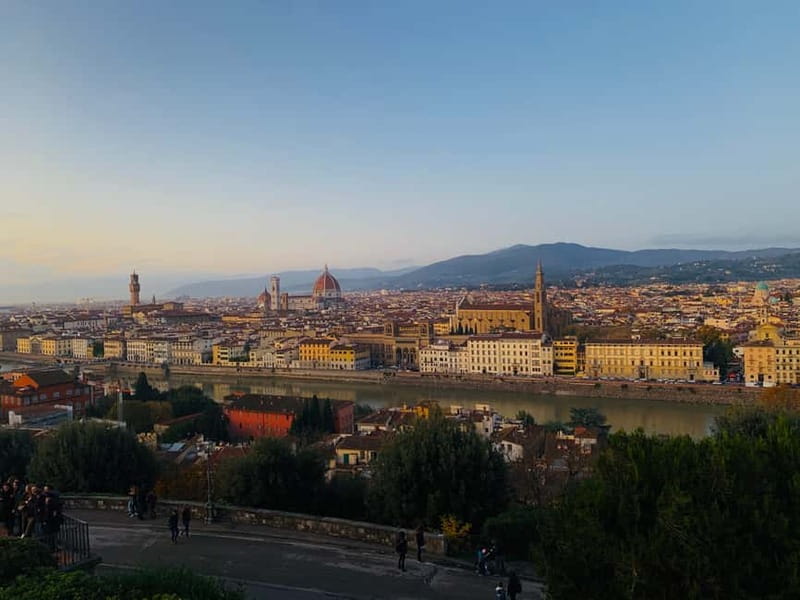
- Piazzale Michelangelo: the view you ride to, not just stare at from afar
- Medici Palace area and the Renaissance names you actually remember
- Santa Maria Novella, Pitti, and the city’s power corridors
- The church stops: Santo Spirito, Santa Croce, and San Lorenzo
- Off-the-beaten-path streets and staying sane in crowded Florence
- Group experience, guide languages, and what makes the stories land
- Practical tips that make the ride easier and the photos better
- Weather changes and who should (not) book this ride
- Should you book the Florence E-Bike Tour with Michelangelo Square?
- FAQ
- How long is the Florence e-bike tour?
- What is included in the price?
- Where does the tour start and end?
- Do I need to have previous e-bike experience?
- Which landmark is the main viewpoint stop?
- What sights will the guide cover during the ride?
- What languages are available for the guide?
- Is this tour private or group-based?
- Who should avoid this tour?
Key highlights at a glance
- Michelangelo Square panoramic views with a viewpoint climb that’s easier than it looks
- E-bike comfort for a 2-hour loop, so you spend energy on enjoying Florence, not grinding uphill
- Renaissance sights tied to the Medici and workshop names you’ll recognize in art and learning
- Church and civic landmarks like Santa Maria Novella and San Lorenzo on the ride
- Off-the-beaten-path detours that help you see more than the busiest core
- Multiple start points near Via de’ Martelli, so you’re not always fighting the first bottleneck
Why Florence’s e-bike route feels like cheating (in a good way)
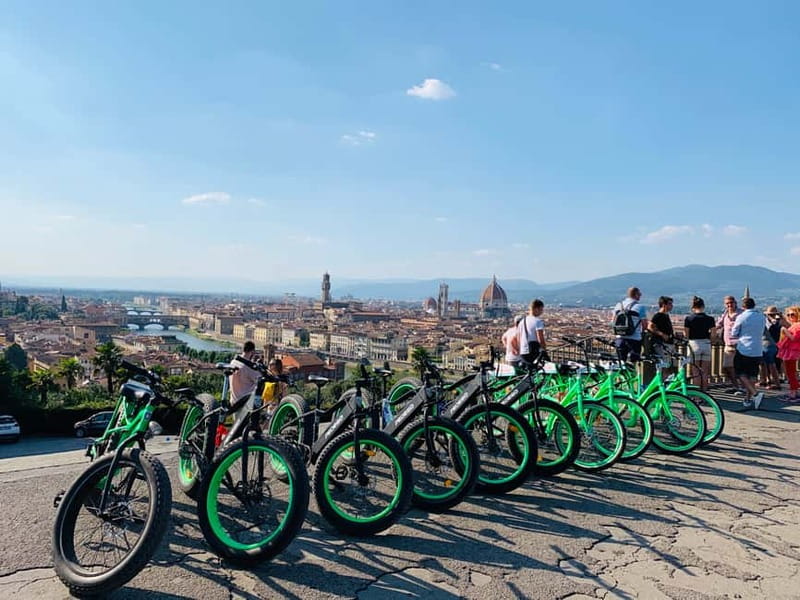
Florence can be a dream and a slog in the same hour. Streets are tight, crowds show up fast, and the city’s hills have their own opinions. This e-bike tour is designed for exactly that problem: you still get the culture, but you’re not spending your legs on every curb cut and incline.
For me, the biggest advantage is control. Electric assist doesn’t mean you’re blasting around like a scooter. It means you can keep a steady pace with the group, take photos without sprinting, and arrive at the viewpoints feeling like you earned them. The tour also includes a free luggage deposit, which matters more than you’d think when you’re trying to explore hands-free.
At about $43.67 per person for a 2-hour guided ride, it’s not a bargain in the “take it for $10” sense. But it is good value for what you get: a guide, a bike, a structured route, and the key highlight at Piazzale Michelangelo without spending half your day just moving between sights.
You can also read our reviews of more tours and experiences in Florence.
- Tuscany Day Trip from Florence: Siena, San Gimignano, Pisa and Lunch at a Winery
★ 5.0 · 21,634 reviews

Getting on the electric bike: the part that decides if you’ll enjoy it
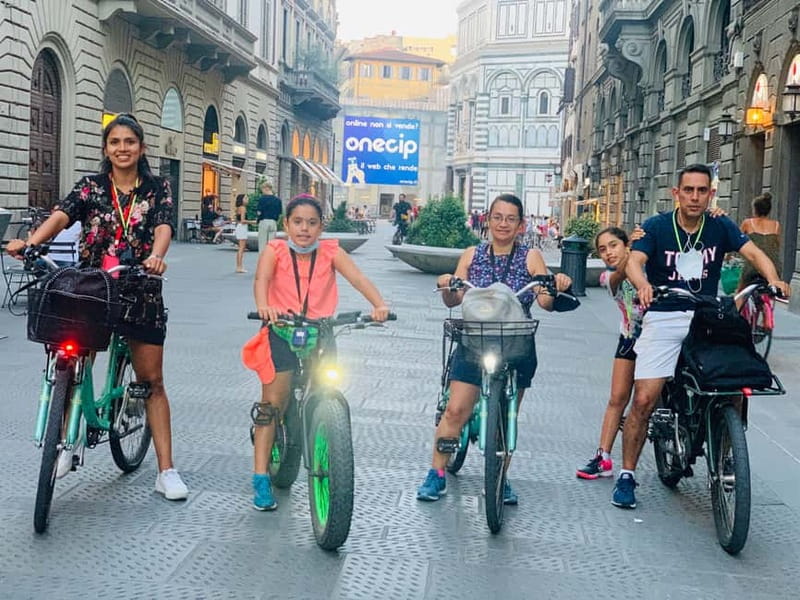
The tour is built around one simple idea: ease of movement. You’ll be riding an electric bike through Florence’s historical center, and the guide leads the group through the route while telling stories along the way.
Here’s the practical bit: e-bikes can feel quicker than your first instinct. I recommend you take a minute to get comfortable before you start the main route. One rider even advised practicing briefly because the assist can feel fast until you adjust your expectations. If you’re even slightly unsure, say something early to the guide and ask for a quick confidence check.
Also, pay attention to road behavior. Florence traffic rules can be less predictable than you want on a bike. The good news is that your guide stays with the group and helps you manage the flow. You’ll still feel the city’s energy, but you won’t be figuring everything out alone.
Piazzale Michelangelo: the view you ride to, not just stare at from afar
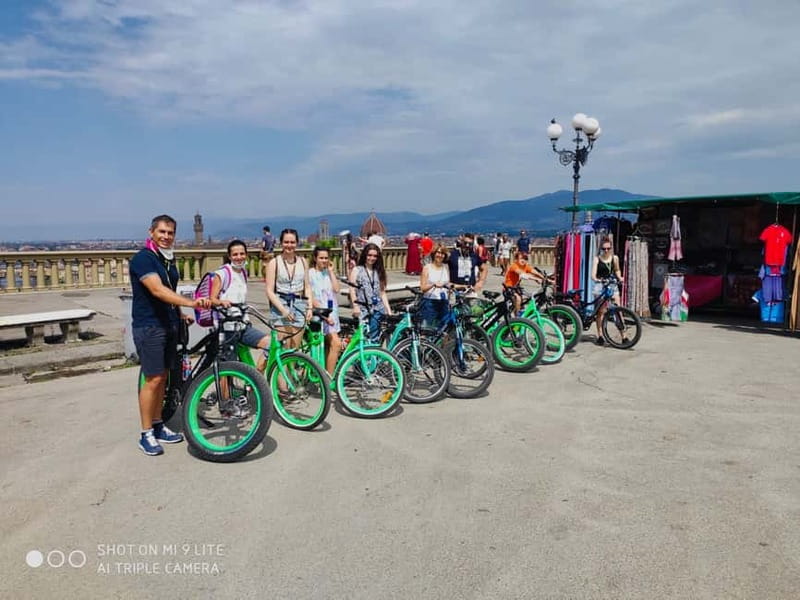
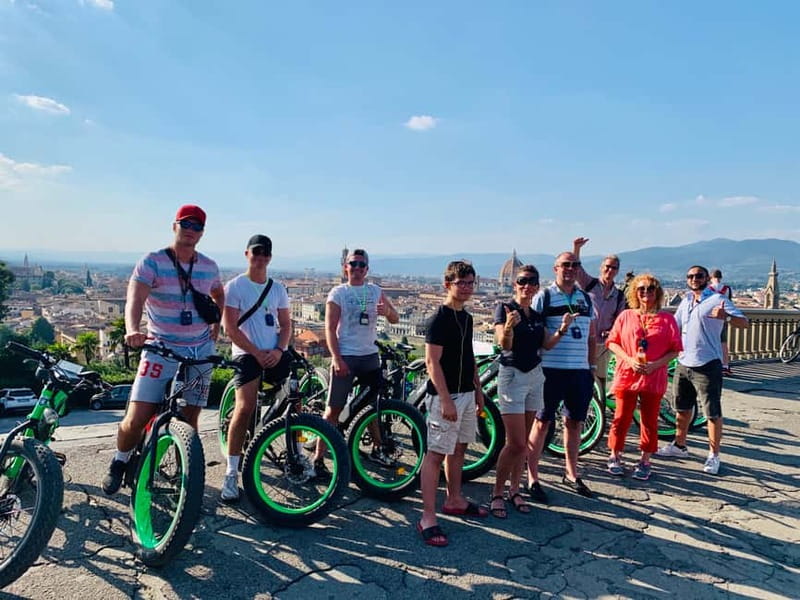
Let’s talk about the stop that anchors the whole experience: Piazzale Michelangelo. This is where the climb (and the reward) come together. The tour is structured so you spend your highlight time at the viewpoint rather than half-way up the hill getting tired.
From the square, you get the classic, wide panorama of Florence. The perspective is different from what you see at street level or through museum windows. It helps you understand the city’s layout: where the major hills rise, how the river bends through, and how the historic center connects visually.
Even if you’ve seen photos before, this is still one of those “okay, now I get it” moments. The difference is that you experience the view as part of a moving route—photos are easier because you can position yourself, and you’re not rushing through the area with everyone who arrived just to snap one picture.
Medici Palace area and the Renaissance names you actually remember
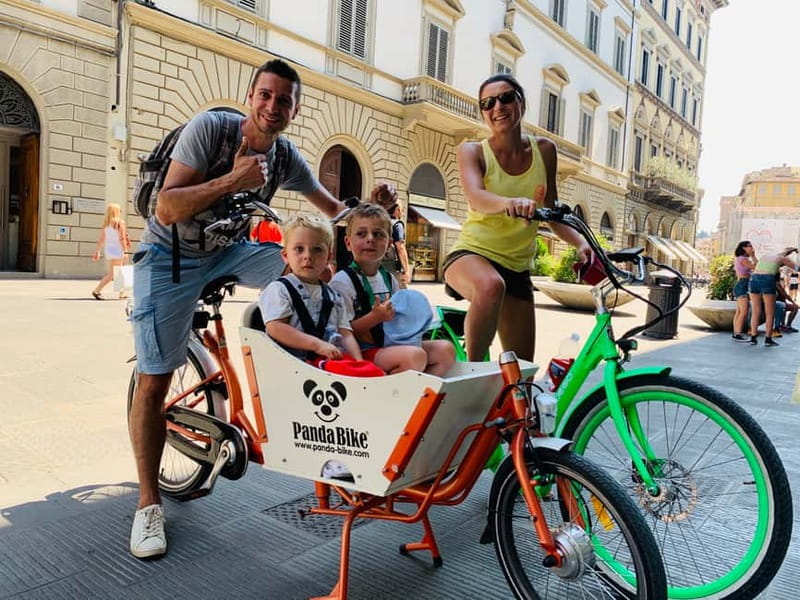
One of the best parts of this tour is that it ties Florence’s landmarks to recognizable people and work. You’ll discover the Medici Palace area—associated with Cosimo the Elder—and you’ll hear how Florence functioned as a meeting place for artists, thinkers, and power.
The tour also mentions the workplace connections of major figures like Donatello, Michelangelo, and Botticelli. Even if you don’t know every detail about their lives, hearing these names in context makes the city feel less like a list of monuments and more like a creative engine.
What you’ll appreciate: the guide doesn’t treat these stops like trivia. The stories connect squares and streets so you begin to see Florence’s “why.” Why certain families mattered. Why certain neighborhoods became centers for art and learning. Why the city’s layout supports its cultural identity.
The trade-off is that you’re seeing this in motion. You won’t have the time for a deep museum-style visit at every stop. If you want to spend hours inside buildings, you’ll still need to plan separate museum time. But as a first-time or refresher experience, this route gives you a framework that makes future visits click faster.
Santa Maria Novella, Pitti, and the city’s power corridors
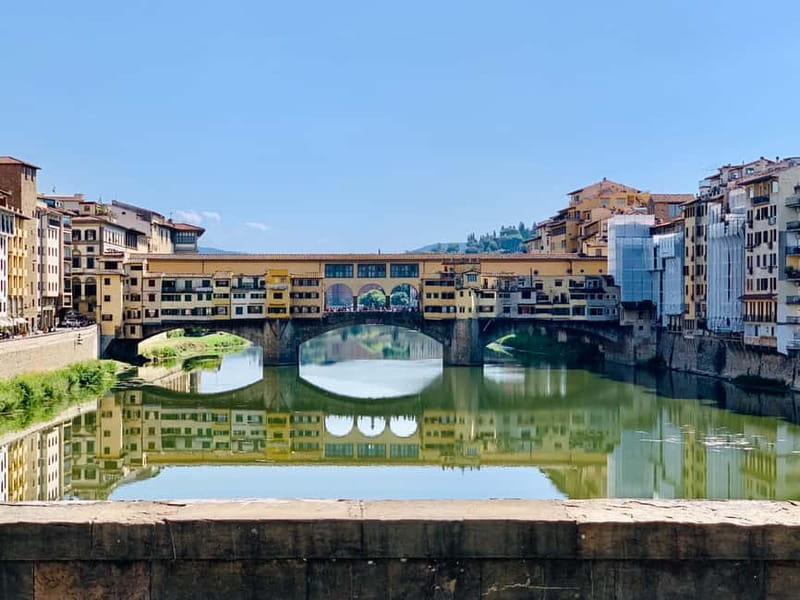
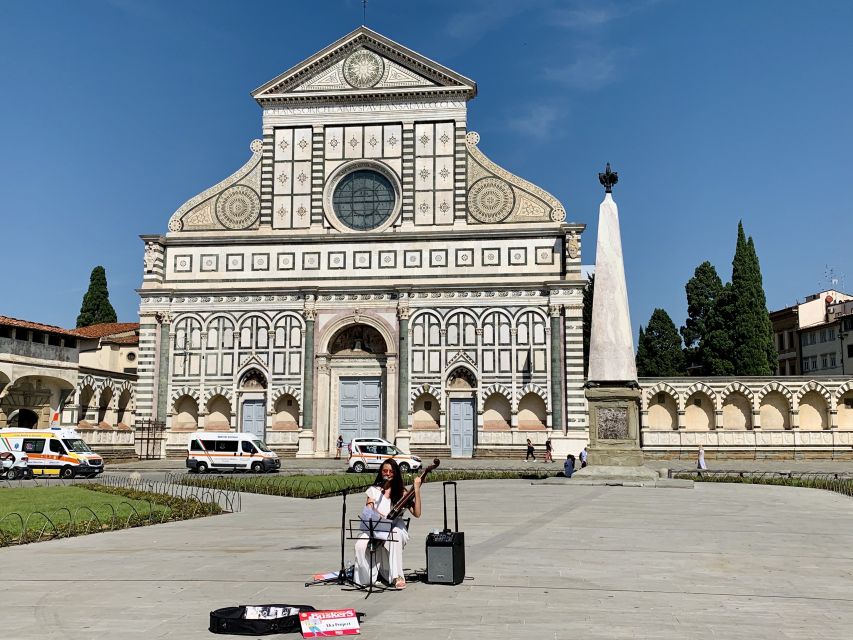
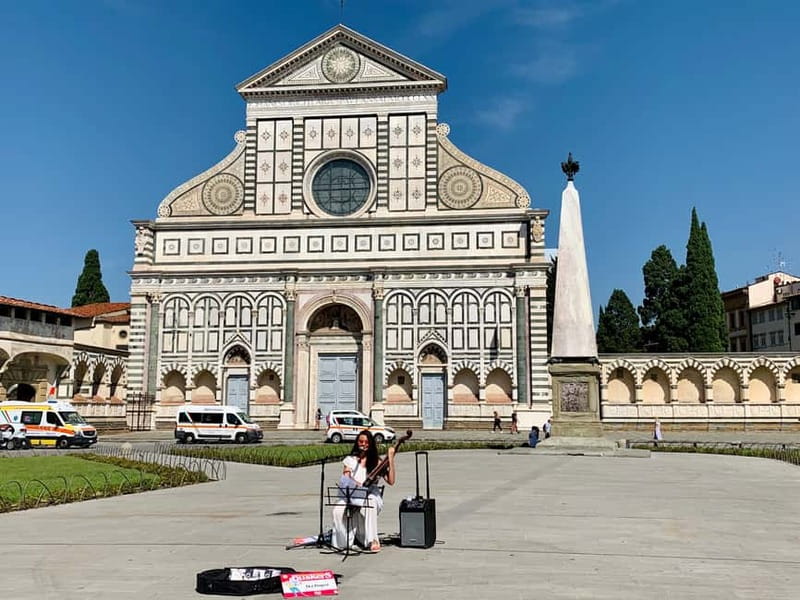
As you ride, you’ll come across landmarks that help explain Florence’s mix of religion, government, and art. Santa Maria Novella is one of those anchor points. It’s the kind of place you’ll hear referenced constantly in Florentine travel, but the tour experience helps you place it on the map—not just in your itinerary.
You’ll also get Pitti Palace in the mix. This matters because Pitti is tied to how Florence’s political and cultural life expanded beyond the earliest centers. Seeing it from the bike route gives you a sense of scale and proximity. It’s easier to connect Pitti to other areas you’ll later walk yourself.
The route also includes major squares and landmark stops that shape how Florence feels day-to-day. This is where the guide’s narration becomes more than sound bites. You start to notice patterns: why certain areas became fashionable, why churches and civic spaces sit where they do, and how the city’s identity evolved over time.
- The Best tour in Florence: Renaissance & Medici Tales – guided by a STORYTELLER
★ 5.0 · 12,316 reviews



The church stops: Santo Spirito, Santa Croce, and San Lorenzo
Florence’s churches are not only beautiful; they’re story engines. This tour includes stops or passing points connected to Santo Spirito, Santa Croce, and San Lorenzo. Even if you don’t step inside every one, you’ll get explanations that make their presence feel purposeful rather than random.
Here’s what works well for me about bundling churches into a guided ride: you don’t get overwhelmed by details. You get a flow. The guide can connect art, patronage, and civic life as the group moves from one area to the next.
One more reason these stops feel meaningful: they help you see Florence as a living city. Religious landmarks aren’t dead backdrops. They still shape streets, neighborhoods, and routines. That’s especially true when your route includes areas off the busiest tourist grid.
Off-the-beaten-path streets and staying sane in crowded Florence
Florence can be dense with pedestrians. If you’ve ever tried to walk to a major square when a tour group wave hits, you know the feeling. This is why I like that the tour is built to include places off the beaten path and routes that can keep you away from the worst crowd pressure.
Instead of treating the city like one long parade of the same three stops, you’ll experience a broader slice of Florence. You also get the benefit of guide pacing—moving as a group when traffic and pedestrian flow make sense, and pausing when the city lets you catch your breath.
Some riders also mention that the tour helps them access viewpoint time without wasting energy on repeated uphill climbs. That matches the tour concept: the highlight is the view, not the workout. Still, it’s not a flat ride. Expect hills, plan your energy, and you’ll be fine.
Group experience, guide languages, and what makes the stories land
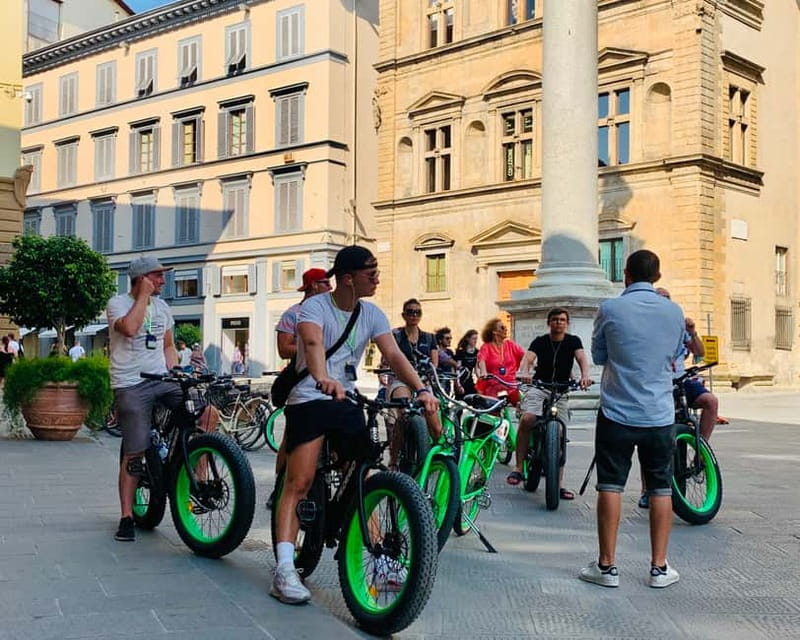
This tour is led by a live guide, with language options including Portuguese, Italian, Spanish, English, French, and German. That’s a big deal if you want the details. You’ll get a continuous flow of narration while cycling through the significant squares that define Florence’s look and history.
What I like about how this is set up: the guide is there to connect dots between locations. You hear stories as you pass places like Medici-linked landmarks, major squares, and prominent religious sites. The city starts to feel like one coherent story rather than separate photo stops.
Guide names that come up in the experience include Rebecca, Luigi, Andrea, Daniele, Dimitri, and Nefset. The common thread is how they manage the ride while explaining what matters. If you’re lucky enough to get one of the guides who keeps the group engaged, the tour can feel like Florence has a friendly narrator—without turning into a lecture hall.
Practical tips that make the ride easier and the photos better
A smooth ride comes down to a few basics. First: wear shoes that can handle uneven stone streets. E-bike rides are still on real city surfaces. Second: keep your hands free for balance and follow the guide’s instructions closely around turns and narrow spots.
For enjoyment, plan to bring your curiosity more than your “must-see list.” The best value of this tour is that it helps you understand how Florence works in layers—Renaissance power, artistic workshop connections, and civic-religious landmarks all in one loop.
Photo tip: treat Michelangelo Square as your main photo target. The rest of the stops are about orientation and story. If you try to photograph everything equally, you’ll rush. If you pick the viewpoint as your anchor, the rest becomes supporting context.
Weather changes and who should (not) book this ride
This is where you should be honest with yourself. The tour is not recommended for people with limited mobility, and it also isn’t suitable for pregnant women or for people under 3 ft 9 in (120 cm). If you have any doubts about physical fit, it’s worth choosing a different Florence format that matches your needs.
Also, the route adapts. If weather is unfavorable, the experience automatically turns into a walking tour. That means the biking part can become less of an advantage when it matters most, like during rain or uncomfortable cold.
If you want the e-bike benefit—easier hills, faster transitions, and a relaxed pace—go when the weather looks friendly. If you’re okay walking, then you can treat the walking fallback as a normal backup plan.
Should you book the Florence E-Bike Tour with Michelangelo Square?
If you want a quick, high-impact overview of Florence with a guide and a real viewpoint payoff, this is a strong choice. The route is built around the two things that matter for most first-timers: smart coverage and Michelangelo Square. Add the Medici-linked storytelling and church landmarks, and you get more than a simple scenic ride.
Book it if:
- You’d rather spend your time taking in Florence than calculating how to get from one hilltop to the next
- You like guided context while you move, not just wandering alone
- You want a legible first pass at major areas like Santa Maria Novella, Pitti, and San Lorenzo
Skip it if:
- You need a low-effort, flat route for comfort or mobility reasons
- You’re looking for museum-depth time inside buildings rather than an on-the-streets narrative
My take: for $43.67 and a 2-hour guided format, it’s good value—especially because it puts the big-view moment at the center of the experience and keeps you moving through Florence with less stress.
FAQ
How long is the Florence e-bike tour?
The tour lasts 2 hours.
What is included in the price?
You get an electric bike, a 2-hour guided tour, and free luggage deposit.
Where does the tour start and end?
The meeting point may vary depending on the option booked. The tour ends back at the meeting point.
Do I need to have previous e-bike experience?
The tour includes an e-bike ride for participants, and the guide provides instruction during the experience. If you’re new, expect to spend a moment getting comfortable before you set off.
Which landmark is the main viewpoint stop?
A key stop is Piazzale Michelangelo, where you can enjoy panoramic views of Florence.
What sights will the guide cover during the ride?
The tour route includes the Medici Palace area and landmarks such as Santa Maria Novella, Pitti Palace, Santo Spirito, Santa Croce, and San Lorenzo, plus Michelangelo Square.
What languages are available for the guide?
The live guide may speak Portuguese, Italian, Spanish, English, French, or German.
Is this tour private or group-based?
A private group option is available.
Who should avoid this tour?
It is not suitable for pregnant women, and it’s not recommended for people with mobility impairments or limited mobility. It is also not suitable for people under 3 ft 9 in (120 cm).
You Might Also Enjoy



More Tour Reviews in Florence
- Tuscany Day Trip from Florence: Siena, San Gimignano, Pisa and Lunch at a Winery
★ 5.0 · 21,634 reviews - The Best tour in Florence: Renaissance & Medici Tales – guided by a STORYTELLER
★ 5.0 · 12,316 reviews