Florence rewards curiosity fast, and this private walk helps you aim it. In just two hours you’ll pass the big names like the Duomo and Ponte Vecchio, plus the quieter streets that connect them, with a live guide guiding your eye.
I love that the route gives you fast orientation. You start in the Bargello/Tribunale area, sweep through Santa Croce and Piazza della Signoria, cross the river, then circle back toward the Duomo through Via Tornabuoni.
One possible drawback: the visit is exteriors only. So if you’re hoping for full interior time in museums or churches, you’ll want to plan separate tickets for those next.
In This Review
- Key things I think you’ll like
- Why this 2-hour private walk works in Florence
- Meeting point and what to bring (so you don’t waste energy)
- Starting in the Bargello and Tribunale zone: get your bearings fast
- Santa Croce stop: why this church matters beyond its walls
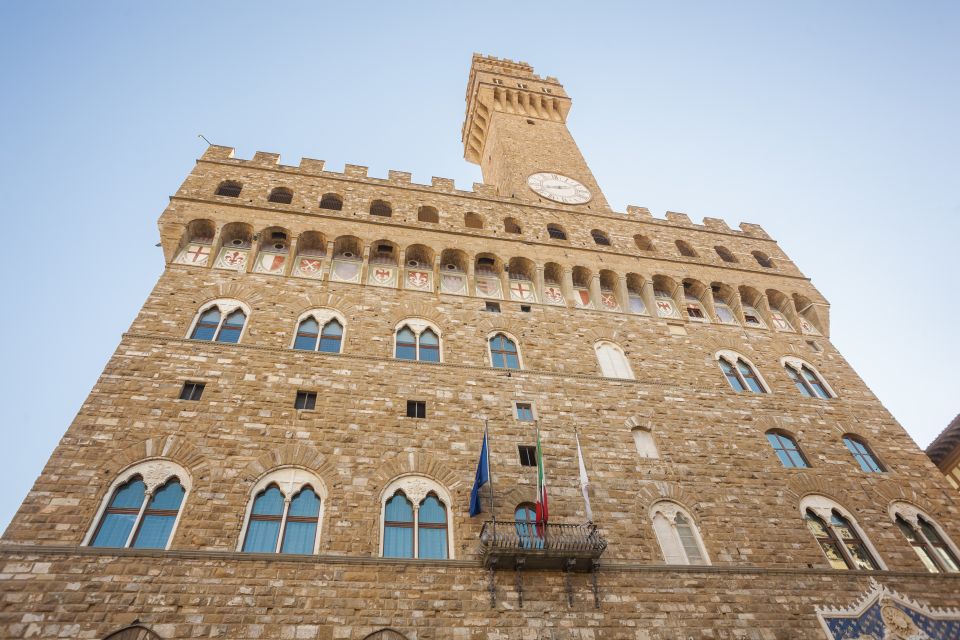
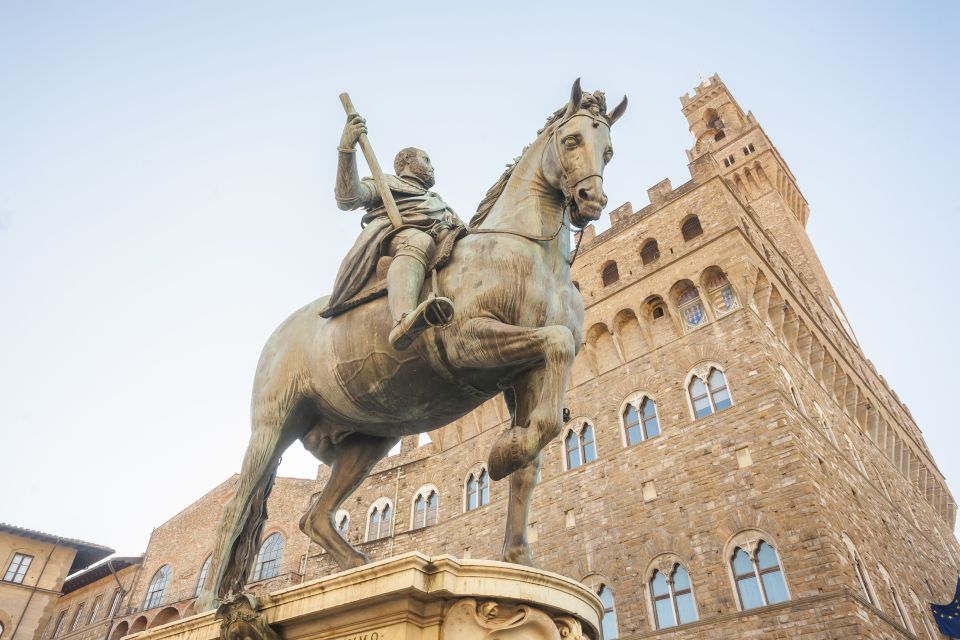
- Piazza della Signoria and Palazzo Vecchio: power in plain sight
- Ponte Vecchio to Pitti Palace: the river as Florence’s connector
- Via Maggio, Ponte Santa Trinita, and Via Tornabuoni: the city shifts tone
- Strozzi Palace: Renaissance architecture you can spot quickly
- Piazza della Repubblica and the Florence Duomo complex: finish with the wow
- The guide is the difference: how stories land on the street
- Timing and expectations: what you will and won’t get
- Who this private Florence walking tour is best for
- Should you book it? My honest take
- FAQ
- How long is the Florence private walking tour?
- Where do I meet my guide?
- Are interior visits included, or are these exterior views?
- Can I enter the Florence Cathedral on this tour?
- Is the tour private, and what languages are offered?
- Is there a photo stop?
- Is it wheelchair accessible?
- Can I cancel and get a full refund?
Key things I think you’ll like
- A tight “center-of-center” route that links Florence’s most famous squares and bridges without wasting time
- Architecture and symbolism explained on the spot so facades and statues make sense
- Neptune’s Fountain built in with a dedicated photo stop
- Medici territory on both riverbanks, from Pitti Palace toward the historic core
- Via de’ Tornabuoni fashion street stops, a nice contrast to the heavy art-and-politics theme
- A sweet finish sometimes happens (gelato vouchers and café breaks show up in past experiences, though acceptance can vary)
Why this 2-hour private walk works in Florence
Florence is gorgeous, but it’s also a lot. Streets are narrow, crowds bunch up, and it’s easy to spend an hour “looking” without really seeing. This tour is built to keep you moving while still making stops that connect one landmark to the next.
Because it’s private, you get a steadier pace than you would on a crowded group bus-style tour. You also get more chances to ask your guide why something was built, who paid for it, and what you’re looking at when you glance up.
Best of all, you’re not trying to do everything. You’re doing the right overview first, so your next visits feel less random and more intentional.
You can also read our reviews of more tours and experiences in Florence.
- Tuscany Day Trip from Florence: Siena, San Gimignano, Pisa and Lunch at a Winery
★ 5.0 · 21,634 reviews

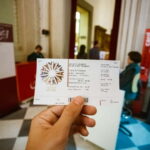
Meeting point and what to bring (so you don’t waste energy)
The meeting point is Door number 8 at Accord Tours. Coordinates are listed as 43.774654388427734, 11.252745628356934, and there’s a note that the plan can vary depending on the meeting point.
Wear comfortable shoes. Even if the total time is only two hours, Florence’s center includes cobblestones and a few uphill-feeling stretches, especially as you work toward the Duomo area.
One more practical point: the cathedral area has a dress rule. It’s prohibited to enter the cathedral in shorts or a sleeveless top. Even if this tour keeps visits outside, you’ll still benefit from dressing appropriately if you decide to go in afterward on your own.
Starting in the Bargello and Tribunale zone: get your bearings fast
You begin in the Piazza San Firenze area, known for the Bargello and the Tribunale Fiorentino. Even from the street, this starting point matters because it places you near the legal and cultural pulse of Florence—power, institutions, and civic identity all in one neighborhood.
A good guide will help you “read” what you’re seeing: why certain buildings face the square, how streets funnel toward key sites, and why Florence’s architecture feels like it’s speaking to you across distances.
If you’re arriving in Florence for the first time, this is the moment to lock in a mental map. After this, the rest of your walk feels connected instead of random.
Santa Croce stop: why this church matters beyond its walls
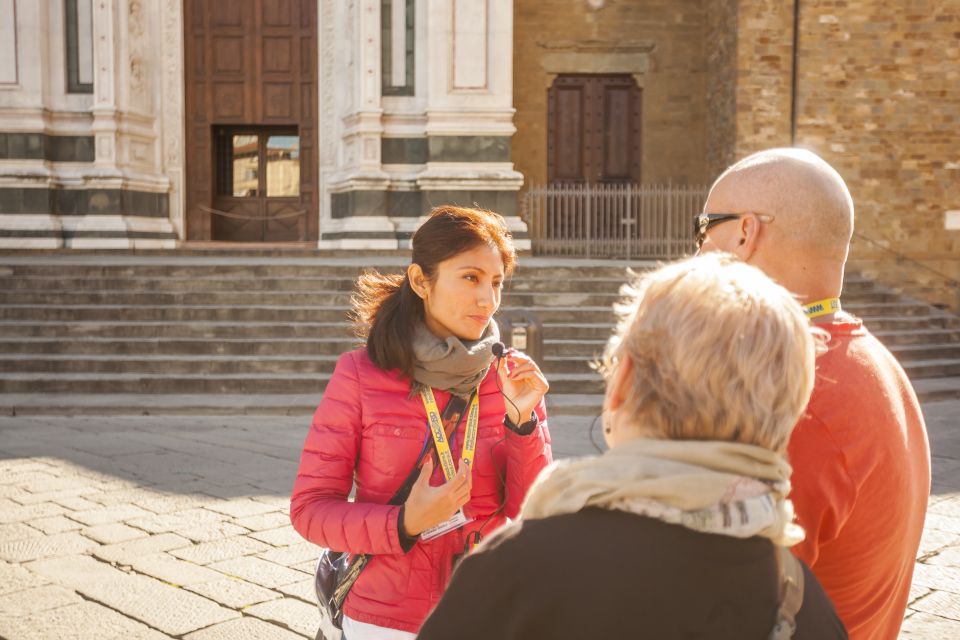
Next you head to Santa Croce, a major church tied to famous art and burial of important Italians. You’re not just looking at a pretty exterior here. You’re stepping into a place that signals how Florence treated identity—through faith, through art, and through honoring major figures in one complex.
This stop is useful even if you’ve never heard of the chapel details. Your guide can point out how Santa Croce fits into the broader Renaissance mindset: Florentine pride expressed through built form and public memory.
If you like your sightseeing with meaning attached, this is a strong early anchor stop.
Piazza della Signoria and Palazzo Vecchio: power in plain sight
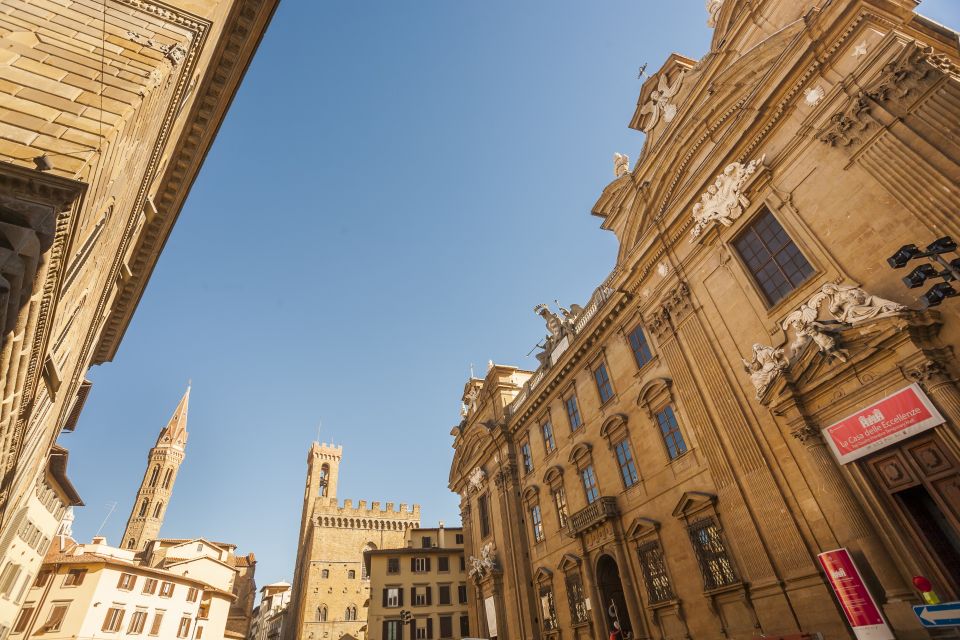
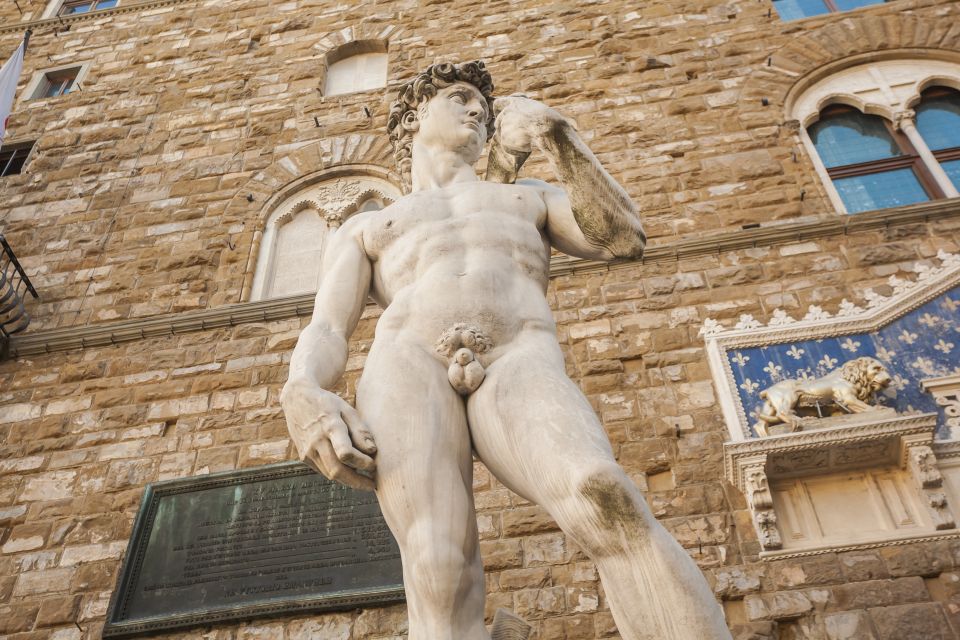
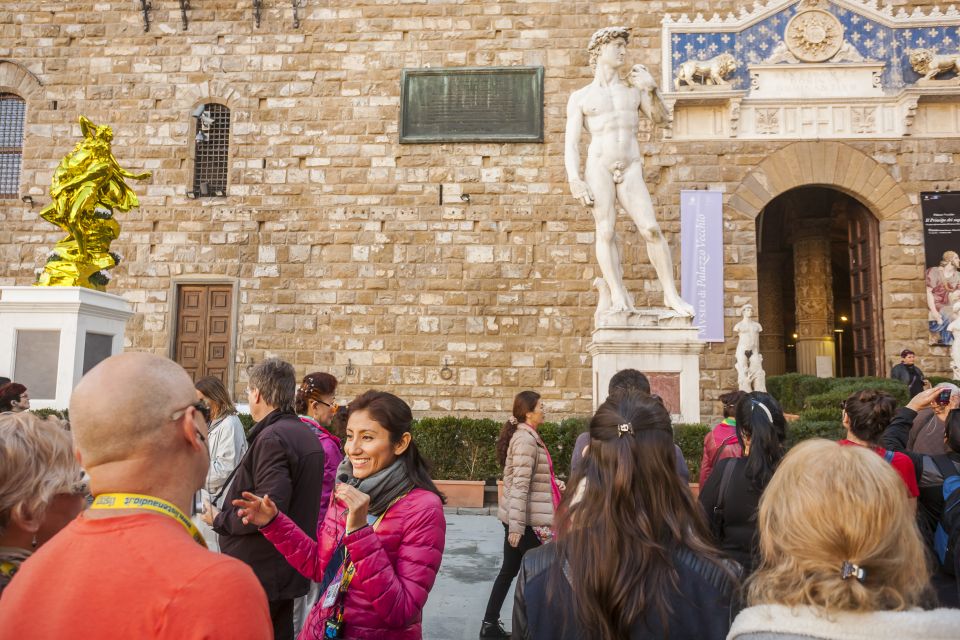
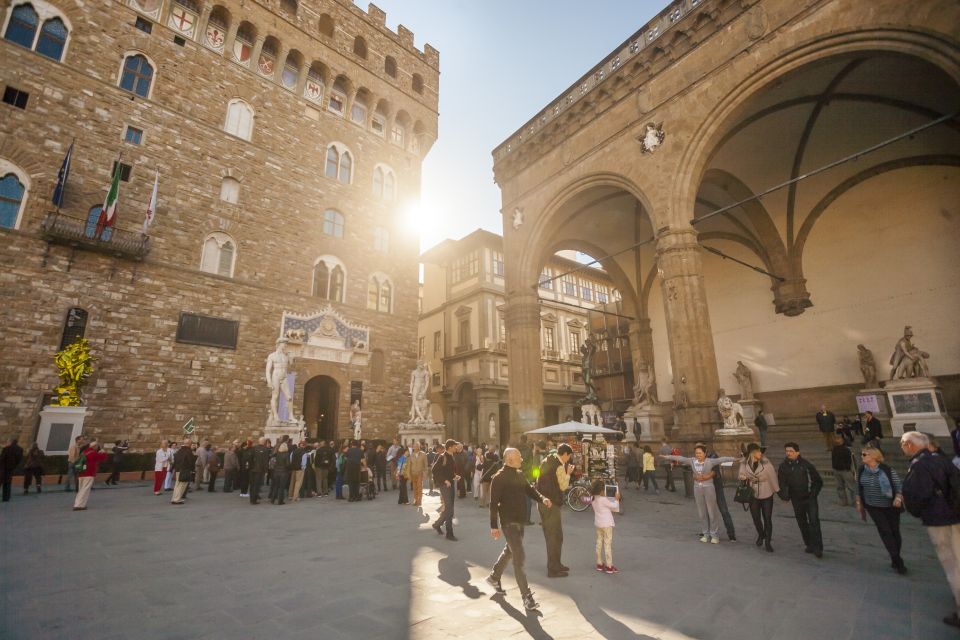
Piazza della Signoria is one of those places where it’s hard not to look up. The square brings together political drama, public art, and the kind of storytelling statues do without using words.
From here you’ll see Neptune’s Fountain and get a photo stop. Neptune isn’t just a pretty sculpture—your guide can help you understand why myth and symbolism show up so often in civic spaces.
You also pass Palazzo Vecchio, a core Medici-era (and pre-Medici) statement building. Even from outside, it’s easy to see why it became a “center of gravity.” It’s designed to look like authority, not just architecture.
One more payoff: this is where you start to notice how Florence reuses ideas. Squares, façades, and monuments all seem to respond to one another across sight lines.
- The Best tour in Florence: Renaissance & Medici Tales – guided by a STORYTELLER
★ 5.0 · 12,316 reviews




Ponte Vecchio to Pitti Palace: the river as Florence’s connector
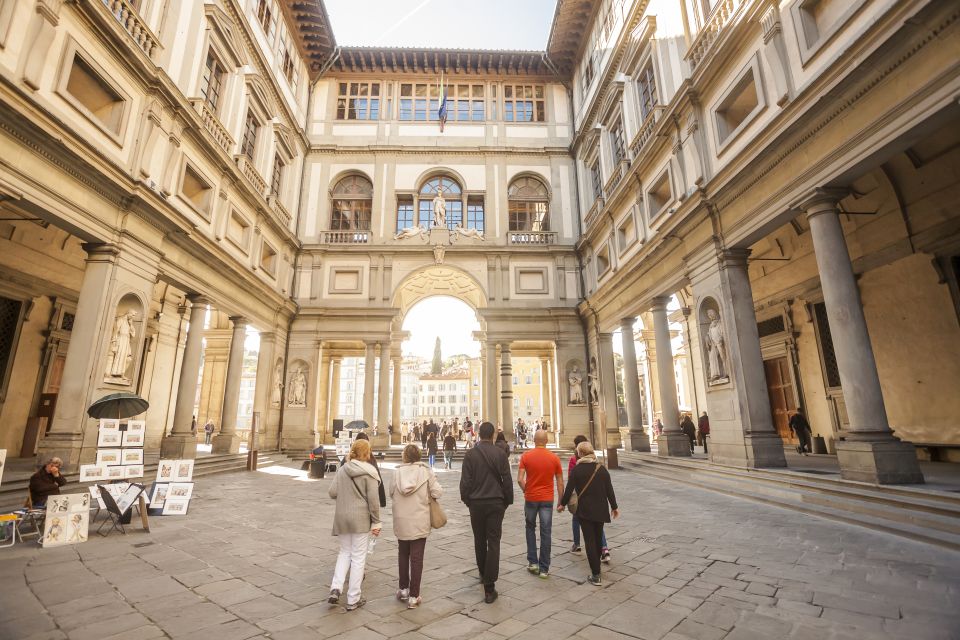
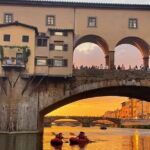
Crossing Ponte Vecchio is part museum, part postcard, and part street-life theater. The medieval stone bridge is famous for the gold jewelry shops lined along it, and it’s one of the easiest places to feel how Florence mixes commerce with beauty.
As you move across, you’ll be shifting from the civic and artisan center toward the Medici side of the city. That change matters. It helps you understand why the Medici built their influence where they did—and how that influence shaped Florence’s look.
Then you arrive at Pitti Palace, described as a former Medici residence. Even if you’re only viewing from outside, you’ll get a strong sense of scale and intent. This is a palace that’s meant to feel like a seat of power, not a private home.
If your brain likes cause-and-effect, this is a great stretch: bridge to palace becomes Medici-to-everyday-life, all in one walk.
Via Maggio, Ponte Santa Trinita, and Via Tornabuoni: the city shifts tone
After the river crossing, the walk turns back toward the historic center along Via Maggio and Ponte Santa Trinita. This portion is valuable because it’s not just “more famous stuff.” It shows you how Florence’s major sites connect through real streets people actually move along.
Then comes Via de’ Tornabuoni. This is where the tour adds a modern contrast: you’ll spot top fashion boutiques, which makes the Renaissance atmosphere feel less like a museum and more like a living city layered over older foundations.
If you’re the type who enjoys texture in travel—different neighborhoods with different vibes—this segment gives you that.
Strozzi Palace: Renaissance architecture you can spot quickly
You stop at the Strozzi Palace, described as a prototype of Renaissance architecture. That matters because it gives you a “before you go inside somewhere” way to recognize design choices.
A guide can point out what Renaissance meant in practical terms: proportion, rhythm, and the confidence of a style that wanted to look rational and intentional. You’ll come away seeing façades as designs with rules, not just pretty surfaces.
This is also a nice moment to slow down slightly. It sits in the middle of the route and gives your eyes a different job than they had at the loudest squares.
Piazza della Repubblica and the Florence Duomo complex: finish with the wow
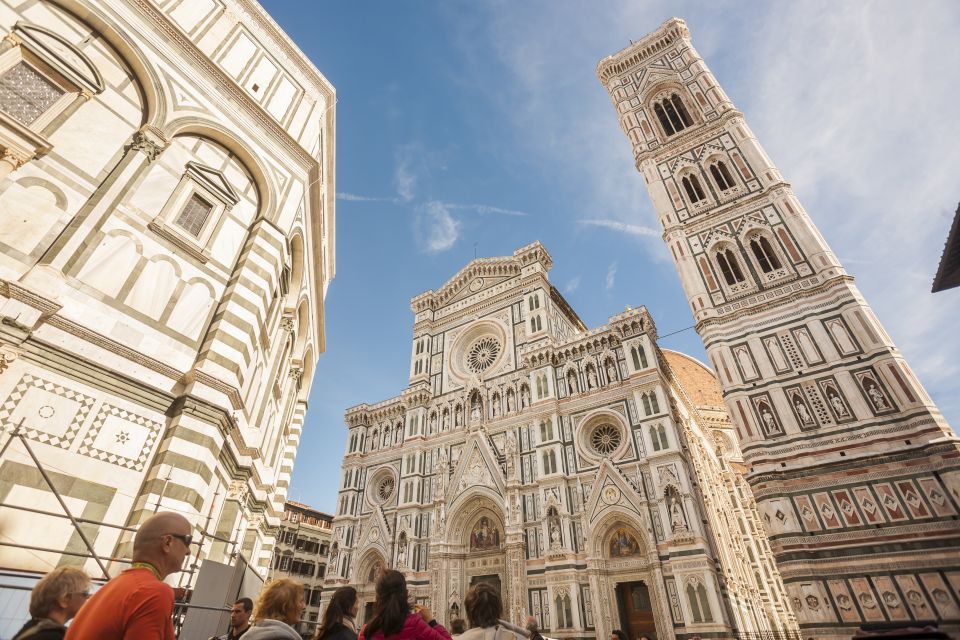
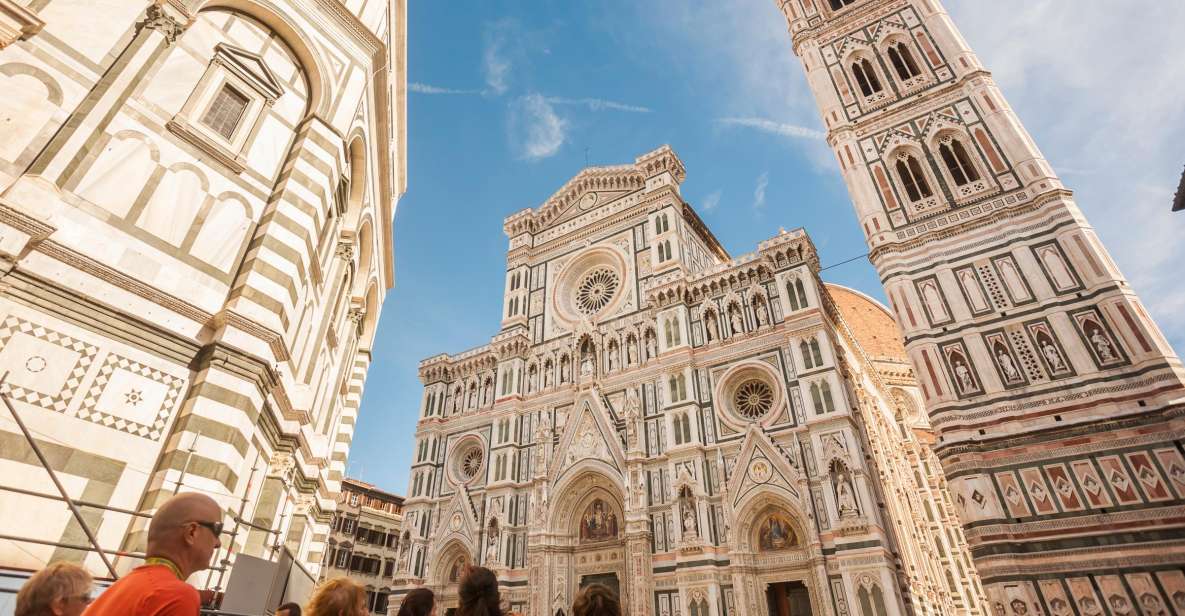
You wrap up at Piazza della Repubblica, then head to the Florence Cathedral area (the Duomo complex). This is one of the best ways to end a walk like this: you finish with the kind of architecture that makes you stop without being told.
The tour highlights the Duomo’s magnificent presence as a UNESCO World Heritage Site. Even from the street, the scale and detail are hard to ignore, and the exterior viewing approach means you can enjoy the mass of the cathedral without needing special entry time.
Two practical notes help you get the most out of this finish:
- Plan your clothing if you might want to enter the cathedral afterward (no shorts, no sleeveless tops).
- Stay flexible with your pace. Two hours goes fast, and the Duomo area is where it’s worth giving your eyes extra time.
The guide is the difference: how stories land on the street
This experience lives or dies by the guide. Past guides have leaned into clear explanations, easy communication, and the ability to keep the tour interesting the whole way.
You’ll see this in the variety of guide styles that still share the same goal: turning architecture into understandable context. Names that have come up include Giacomo, Claudia, Ilaria, Marco, Antonella, and Giulio. Different voices, same result: you walk past famous sights and actually learn what to look for.
One sweet element that shows up in some experiences is gelato. Some guides provide vouchers or time a café-style finish, and one person noted it was not a tourist-trap stop. Still, keep your expectations realistic: a voucher can fail if the shop’s policy changes, like one account described. Treat it as a bonus, not the main event.
If you travel with kids, you may also appreciate how some guides have directed attention to younger guests, keeping them engaged while still covering the core sights.
Timing and expectations: what you will and won’t get
This walk is 2 hours, built around quick guided stops that focus on what you can see from outside. The info provided for the monuments notes exteriors only, so don’t plan on long interior visits as part of this exact experience.
There are also occasional pacing considerations. One experience mentioned the tour felt a bit slow at times, and another mentioned audio equipment picking up too much surrounding noise, making the guide harder to follow. Those are not guaranteed issues, but they are worth knowing if you’re sensitive to audio clarity or you prefer a faster walking pace.
Also, remember your guide may adjust the route based on the meeting point. The overall monuments stay in the same orbit, but small swaps can happen.
Who this private Florence walking tour is best for
This tour fits you if you want:
- A first-day overview that helps you plan what to do next
- Architecture and art that makes sense through explanation, not just viewing
- A manageable walk that covers major Florence landmarks in a tight loop
- A private format where you can ask questions and slow down when something catches your eye
It’s also a good match for couples and solo travelers who like structure without feeling herded. If you’re traveling with older kids, the story-driven approach can work well because it connects places you’d otherwise only recognize from photos.
Two care points to keep in mind:
- The activity is listed as wheelchair accessible, but it also says it is not suitable for people with mobility impairments. That’s a sign you should confirm your specific needs with the provider before booking.
- Since it’s mostly about walking and exterior viewing, it’s less ideal if you need frequent stops or step-free, short-distance access.
Should you book it? My honest take
Book this if your goal is to get oriented and educated fast—without spending half your day in ticket lines or museum corridors. You’ll see the Duomo area, Ponte Vecchio, Pitti Palace, and the big civic squares, and your guide will help you connect why these places matter.
Skip it or pair it with something else if you specifically want interior time. Because the stops are framed around exteriors, you’ll still need separate plans for churches, museums, and galleries if you want to go in.
My recommendation: treat this as your Florence “map with meaning.” If you do that, two hours can set up a much better rest of your trip.
FAQ
How long is the Florence private walking tour?
It lasts 2 hours.
Where do I meet my guide?
The meeting point is Door number 8 at Accord Tours, with coordinates 43.774654388427734, 11.252745628356934. There’s also an alternate listed starting location option, and the route may vary depending on which meeting point you use.
Are interior visits included, or are these exterior views?
The visit includes exteriors only.
Can I enter the Florence Cathedral on this tour?
The tour includes the Duomo complex area, but access rules for entering the cathedral are noted. It is prohibited to enter the cathedral in shorts or a sleeveless top.
Is the tour private, and what languages are offered?
Yes, it’s a private group tour. The live guide is available in English and Italian.
Is there a photo stop?
Yes. There’s a 5-minute photo stop at Neptune’s Fountain.
Is it wheelchair accessible?
The activity is listed as wheelchair accessible, but it also notes it is not suitable for people with mobility impairments. If that applies to you, you should check details before booking.
Can I cancel and get a full refund?
Yes. Free cancellation is available up to 24 hours in advance for a full refund.
You Might Also Enjoy

More Tour Reviews in Florence
- Tuscany Day Trip from Florence: Siena, San Gimignano, Pisa and Lunch at a Winery
★ 5.0 · 21,634 reviews - The Best tour in Florence: Renaissance & Medici Tales – guided by a STORYTELLER
★ 5.0 · 12,316 reviews