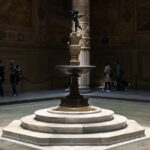
Want to get Florence figured out fast? This small-group walking tour is a practical hit-list of Florence’s must-sees, built to help you understand the city’s layout in about 2.5 hours.
I like that it covers the big landmarks without making you wrestle with a map, and you get a guide-led route that connects the dots between neighborhoods. I also love the local food and sight tips you can pick up along the way, with guides such as Armando, Elizabeth, and Manuel mentioned for adding restaurant ideas and useful on-the-ground guidance.
One possible drawback: if the group uses a microphone/speaker, sound quality can be an issue on some days, so come ready for short chunks of louder streets and keep an ear out early.
In This Review
- Key Things to Know Before You Go
- Price and What You’re Actually Buying
- Where the Walk Starts (and Why That Matters)
- A Route Built for Orientation: From Medici Power to River Views
- San Lorenzo and the Medici Stops: Power in Stone
- Duomo Cathedral and the Baptistery Area: The Center of the Glow
- Orsanmichele, Repubblica Square, and Porcellino: Civic Florence in Motion
- Signoria Square and the Uffizi External View: Art Meets Politics
- Ponte Vecchio and the River Crossing: Florence’s Most Photographed Stretch
- Santa Croce Square: A Final Florence Mood Check
- What the Small Group Size Changes for You
- Timing, Pacing, and When to Slot This Into Your Trip
- Booking Smart: Who This Tour Suits Best
- Should You Book This Florence Walking Tour?
- FAQ
- How long is the Florence walking tour?
- What’s the meeting point for the tour?
- Does the tour include paid admission tickets?
- Is the tour in English?
- What is the group size?
- Is a mobile ticket used?
- Does the tour run in all weather?
- Is cancellation free?
- Are service animals allowed?
Key Things to Know Before You Go
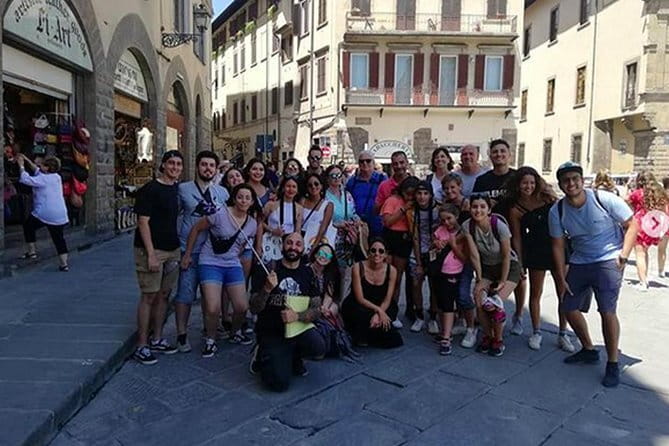
- Micro-group size (max 4): you’re not swallowed by a crowd.
- 2.5 hours, mostly walking: ideal for an arrival-day orientation.
- Low-cost with a tip model: the listed price is tiny, with a voluntary tip at the end.
- See famous places without museum pressure: including the Uffizi from the outside.
- Mobile ticket: easier for day-of meeting.
- Good weather matters: this is a weather-dependent outing.
Price and What You’re Actually Buying
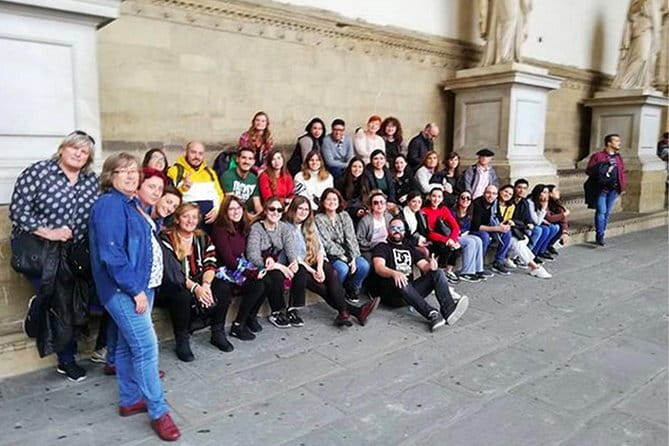
At about $3.63 per person, this tour feels almost too cheap for what you get: a guided introduction to Florence’s core sights, done on foot and paced for a quick orientation. It’s not the kind of experience that tries to sell you add-ons every ten minutes, which makes it a smart first pass through the city.
The real value is in the structure: you’re not just walking past famous spots—you’re getting a guide to explain how they connect. When you’re new to Florence, that “where am I, and why is this here?” feeling can drain an entire afternoon. This tour is built to prevent that.
Also, the tour model includes a voluntary tip at the end, so you can treat the price as the entry fee for orientation rather than a full museum-ticket day.
You can also read our reviews of more tours and experiences in Florence.
- Tuscany Day Trip from Florence: Siena, San Gimignano, Pisa and Lunch at a Winery
★ 5.0 · 21,634 reviews

Where the Walk Starts (and Why That Matters)
You’ll meet at Piazza dell’Unità Italiana, 50123 Firenze FI, Italy, and the tour ends in a different location. That end point detail is important because it changes how you plan the rest of your day—so I’d set up dinner plans nearby (or plan a simple walk back) rather than something far away.
Piazza dell’Unità Italiana is a convenient jump-off spot if you’re using public transportation, and the tour is described as being near public transit. In practice, that’s a big deal in Florence, where taxis can be slow and parking is its own full-time job.
Since you’ll only be out for about 2 hours 30 minutes, starting where you can easily reach—and ending where you can easily continue—helps you keep the day relaxed.
A Route Built for Orientation: From Medici Power to River Views
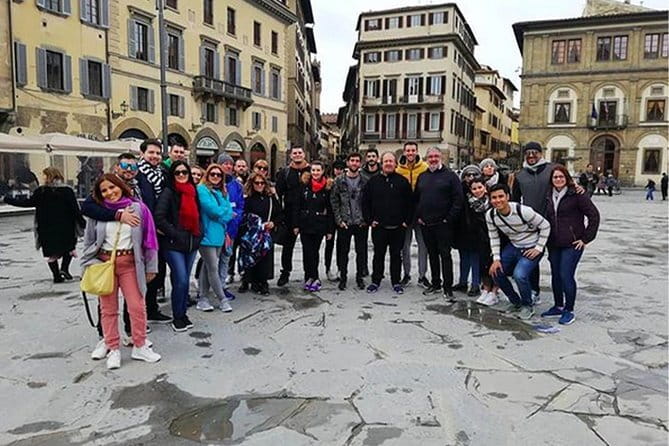
This is a “lay of the land” tour, and it hits a carefully connected set of landmarks: Medici-era sites, the Duomo/Baptistery area, major squares, and the Arno river corridor with Ponte Vecchio. The stop sequence matters because each area answers a different question about Florence—power, religion, civic life, and the dramatic riverfront.
You’ll start in the San Lorenzo / Medici zone, then move into the core religious and civic center, and finish with the classic walk towards Ponte Vecchio and Santa Croce Square. It’s the kind of route that helps you later choose which neighborhoods to revisit without wandering.
San Lorenzo and the Medici Stops: Power in Stone
Early on, you’ll see Medici Chapel, San Lorenzo Market, Medici Riccardi Palace, and San Lorenzo Church. Even if you don’t go inside everything, these stops help you understand Florence’s big recurring theme: political power wearing religious and artistic clothing.
Here’s what I’d watch for as you walk:
- San Lorenzo Market tells you how daily life sits right alongside grand buildings.
- Medici Riccardi Palace is a reminder that this city’s art patronage wasn’t random—it was tied to influence.
- Medici Chapel and San Lorenzo Church give you context for how religious sites and elite families overlapped.
Practical note: these are active areas, so expect crowds and street noise. Because the tour is only 2.5 hours, the guide usually keeps moving, then pauses for the most “you’ll remember this later” points.
Duomo Cathedral and the Baptistery Area: The Center of the Glow
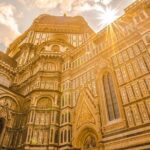
Next you’ll reach the Duomo Cathedral and The Baptistery. This is the part of Florence that visually shocks people—in the best way. The guide’s job here is to help you see past the postcard angle and notice the patterns, the symbolism, and why this area became the city’s gravitational center.
A tip if you want to get the most from this section: slow down when the group slows down. The best explanations usually land right in front of the details the guide is pointing out. If you rush ahead, you’ll miss the “why that matters” part.
Also, this tour includes Repubblica Square and nearby landmarks like Orsanmichele Church, so you’ll feel the shift from religious focus to civic space and city-scale life.
- The Best tour in Florence: Renaissance & Medici Tales – guided by a STORYTELLER
★ 5.0 · 12,316 reviews
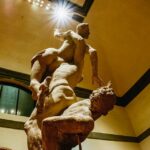




Orsanmichele, Repubblica Square, and Porcellino: Civic Florence in Motion

You’ll pass through Repubblica Square, Orsanmichele Church, and Porcellino. This trio is useful because it shows Florence as a working city, not just a museum hallway.
Orsanmichele is one of those places that can feel confusing from the street, but a good guide turns it into a story about devotion and civic identity—Florence didn’t separate “city” and “belief” neatly.
Then there’s Porcellino, the famous boar statue. It’s small compared to the grand architecture around it, but it’s perfect for learning how locals and visitors use symbols and traditions to make places feel personal. Even if you’re just there for the photo, it’s a moment that breaks up the heavier monuments.
Signoria Square and the Uffizi External View: Art Meets Politics
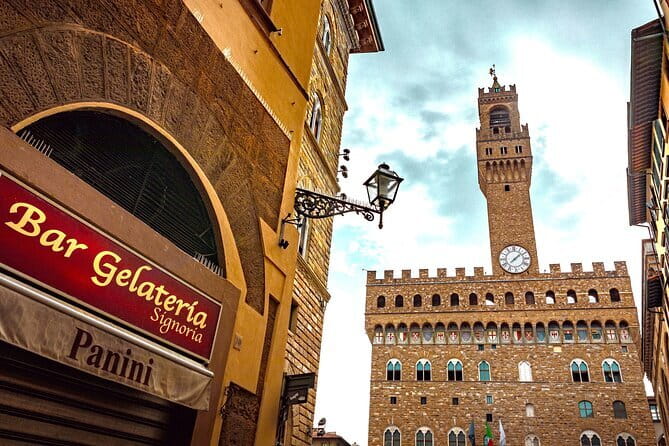
Signoria Square is next, followed by an external view of the Uffizi. This is a smart move for a walking tour because it gives you the big context without demanding museum stamina.
What to do here:
- Look at the open civic feel of the square—this is where Florence’s public life happens.
- Let the guide connect the dots between power, art, and public display.
- Enjoy the Uffizi from the outside as a “save it for later” teaser.
If you plan to visit Uffizi inside during your trip, this external moment is the right warm-up. You’ll know where you are and what you’re looking for when you do commit to tickets.
Ponte Vecchio and the River Crossing: Florence’s Most Photographed Stretch
The route includes Ponte Vecchio, and honestly, it’s hard to overstate how much the river changes the mood. Even if the walk is short, getting to this point helps you understand Florence as a city shaped by trade, movement, and the drama of the Arno.
This segment also tends to give the tour a lighter feel. Reviews highlighted that guides often mix history with laughs and local storytelling, and that fits the vibe shift you’ll feel approaching the river.
If you’re aiming for photos, don’t set everything up early and miss the guide’s points. Ask where to stand for the best view, then grab photos quickly. The tour moves, and the best explanations happen while you’re actually in the moment.
Santa Croce Square: A Final Florence Mood Check
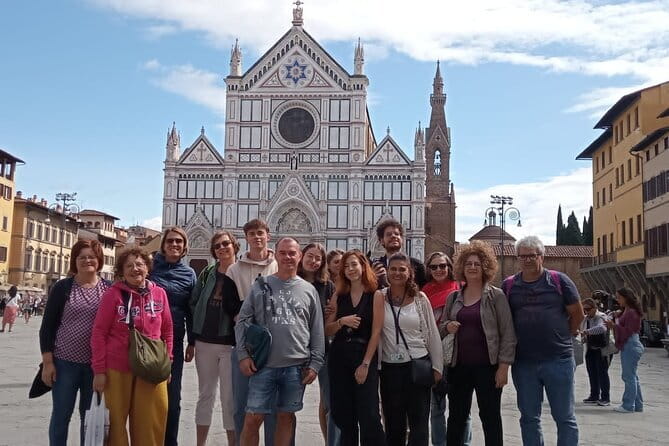
Santa Croce Square closes out the main arc of the walk. Santa Croce is the kind of stop that gives you a different flavor of Florence—one that’s less about the immediate “wow” of the cathedral zone and more about civic memory and cultural identity.
Even without long stops, the guide’s explanation here helps you decide what kind of Florence you want next:
- If you want more religious-and-architectural focus, you’ll know where to head.
- If you prefer art and civic stories, you’ll have a clearer mental map.
- If you want something more local-feeling, the square makes a good anchor.
By the end, you’ll have the feeling of having stitched together Florence into a coherent route, not a list of random famous points.
What the Small Group Size Changes for You
The group cap is max 4 travelers, which can change the whole feel. You’re less likely to be one face in a line, and it’s easier for the guide to answer personal questions about what you should do next.
That matters because the best tours don’t just inform; they help you choose. Many of the guides mentioned in the feedback—like Armando, Deb, Simone, and Gino—are described as offering practical suggestions for dining and sightseeing, sometimes even pointing out details like when places are open or where to find public restrooms.
If you’re traveling with limited time in Florence, that “what next” help can be worth more than another stop.
Timing, Pacing, and When to Slot This Into Your Trip
This is about 2 hours 30 minutes, and it’s ideal early in your stay. The tour is built for orientation—so if you go on your first day, you’ll return later with more confidence about what’s worth your time and what you can skip.
If you’re the type who loves to plan a little but still wants the city to surprise you, this tour is a great first layer. It gives you a route you can break apart later, returning to the spots that match your taste—cathedral views, plaza scenes, riverfront walking, or the Medici storyline.
One more timing tip: aim to arrive at the start point a bit early. It keeps stress low, especially in a place where streets can look similar and meeting spots can be busy.
Booking Smart: Who This Tour Suits Best
This is a strong match for:
- First-time Florence visitors who want a quick city orientation.
- People on a tighter schedule who still want the major highlights.
- Those who prefer walking with a guide and conversation beats, rather than a self-guided audio tour.
It’s less ideal if you:
- Want a long, sit-down museum day packed with interior access to every stop.
- Get annoyed when sound systems (if used) make voices harder to catch.
- Need a flexible plan that ignores weather. This outing requires good weather.
Still, even with those caveats, it’s a well-aimed introduction to Florence’s layout and major landmarks.
Should You Book This Florence Walking Tour?
I think you should book it if you want a fast, low-stress way to understand Florence before you go deeper. The price-to-time ratio is excellent, and the route covers the most important anchors: Medici/San Lorenzo, the Duomo/Baptistery area, the civic squares, the Uffizi connection, Ponte Vecchio, and Santa Croce Square.
If you’re ready to treat it as an orientation tool—and not a full deep-dive museum day—you’ll get real value. And if you like guides who mix history with practical tips (food ideas, where to go next, how to move around), this tour format is exactly the right starting point.
FAQ
How long is the Florence walking tour?
It runs for about 2 hours 30 minutes.
What’s the meeting point for the tour?
The tour starts at Piazza dell’Unità Italiana, 50123 Firenze FI, Italy.
Does the tour include paid admission tickets?
The tour notes that admission ticket is free for the experience.
Is the tour in English?
Yes, it’s offered in English.
What is the group size?
The tour has a maximum of 4 travelers.
Is a mobile ticket used?
Yes, the tour uses a mobile ticket.
Does the tour run in all weather?
No. The experience requires good weather, and if it’s canceled due to poor weather, you’ll be offered a different date or a full refund.
Is cancellation free?
Yes. Free cancellation is available, and you can cancel up to 24 hours in advance for a full refund.
Are service animals allowed?
Yes, service animals are allowed.
You Might Also Enjoy

More Tour Reviews in Florence
- Tuscany Day Trip from Florence: Siena, San Gimignano, Pisa and Lunch at a Winery
★ 5.0 · 21,634 reviews - The Best tour in Florence: Renaissance & Medici Tales – guided by a STORYTELLER
★ 5.0 · 12,316 reviews