REVIEW · NAPLES
From Naples: Herculaneum Skip-the-Line Guided Tour
Book on GetYourGuide →Operated by WORLDTOURS S.r.l. · Bookable on GetYourGuide
Herculaneum is small, but it hits hard. This Naples-to-Ercolano tour saves you time with skip-the-line entry and pairs it with an expert-led walk through streets preserved from the 79 AD eruption.
I really like two things here: the archaeologist-led commentary that makes the ruins make sense, and the fact that you get a curated look at the site’s biggest set pieces, from the House of the Deer to the Forum areas. One watch-out: the whole outing is tight on time, and if audio equipment or pickup timing misfires, you’ll feel it fast.
In This Review
- Key points before you go
- From Naples to Ercolano: the part you’ll notice most
- Priority entry at Herculaneum: why the crowds matter less
- Your archaeologist guide: what they help you see
- The walking route: Houses, baths, and the Forum areas
- House of the Deer
- Forum Baths
- House of Neptune and Amphitrite
- Gymnasium and Forum areas
- The eruption story: what preserved details change
- 3 hours from Naples: timing that works, and timing that doesn’t
- Price and what you’re really buying for $63
- Comfort, sound, and the small-group reality
- Who this tour is best for (and who it isn’t)
- Should you book this skip-the-line Herculaneum tour?
- FAQ
- How long is the Naples to Herculaneum tour?
- What’s included in the $63 price?
- What languages are available for the tour?
- Where does pickup and drop-off happen in Naples?
- Do I need to bring a passport or ID?
- What should I bring for the visit?
- Is there food or drinks provided?
- Is the tour suitable for wheelchair users?
Key points before you go
- Skip-the-line entry means less queue time at Herculaneum and more time walking the site.
- Archaeologist guidance for about 1 hour 30 minutes helps you connect details to daily Roman life.
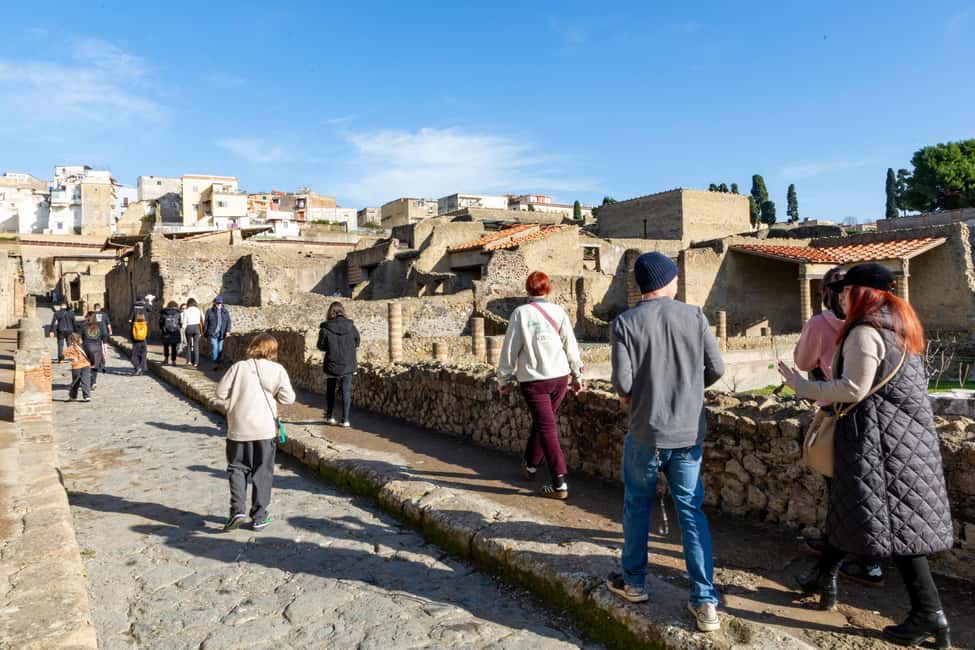
- Signature stops include the House of the Deer, Forum Baths, House of Neptune and Amphitrite, plus Gymnasium and Forum areas.
- Naples pickup options cover the port and major hotels, including the Molo Beverello area.
- Sound systems can be hit-or-miss on some departures, so sit closer to the guide if you want clearer narration.
- Comfort matters: good walking shoes are essential, and bus seating can feel snug for taller folks.
From Naples to Ercolano: the part you’ll notice most
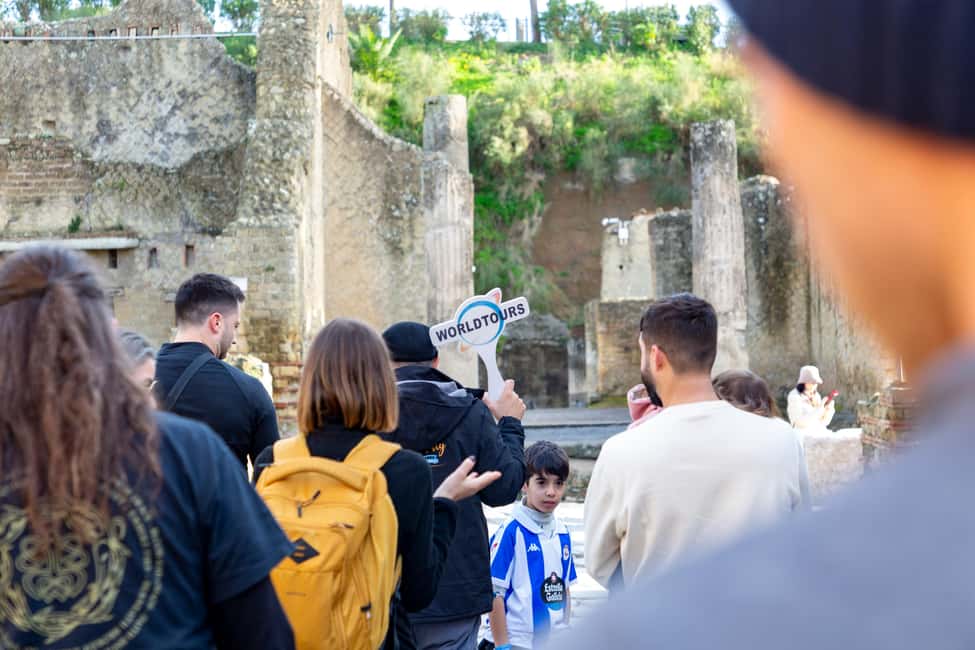
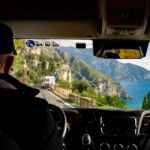
This is set up for a half-day rhythm: you leave Naples by minibus/coach, head about 30 minutes to the Herculaneum area (often called Ercolano), then return the same way. If you’re starting from the cruise-port side, the pickup options are a big deal—Molo Beverello and Stazione Marittima show up on the list, along with hotel pick-ups like Palazzo Caracciolo Napoli and the Royal Continental Hotel.
Why this matters: Herculaneum is not hard to reach, but doing it on your own means juggling trains, buses, or taxis plus the ticket line. Here, the transport is built into the plan, so your “time tax” is lower.
One practical note I’d take seriously: the van may not reach every door. In that case, the meeting point is adjusted to the nearest accessible stop. Also, keep an eye on your email for timing updates, because pickup windows can shift by season.
You can also read our reviews of more tours and experiences in Naples.


Priority entry at Herculaneum: why the crowds matter less
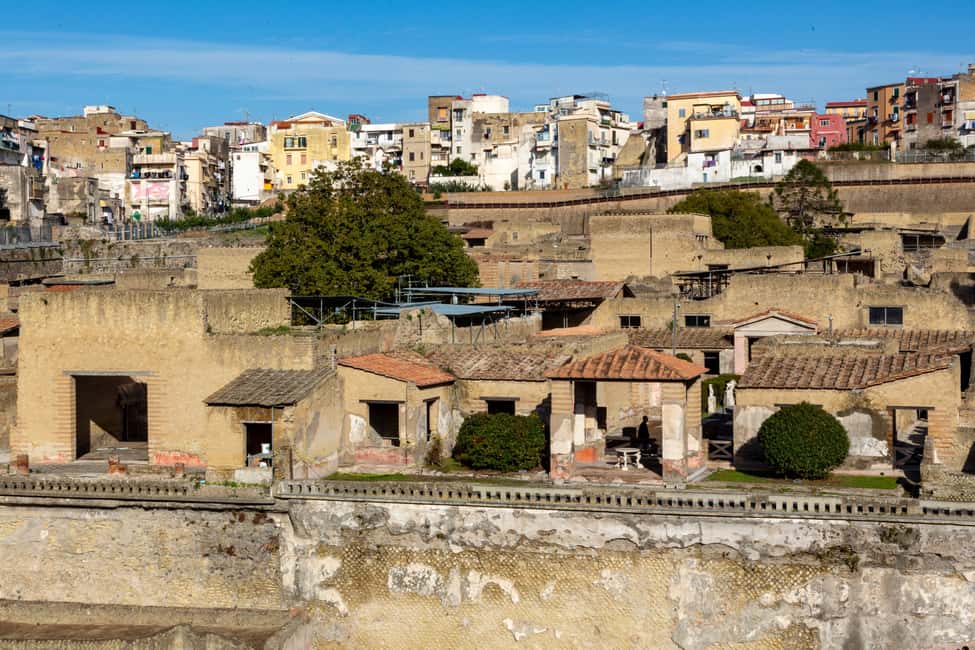
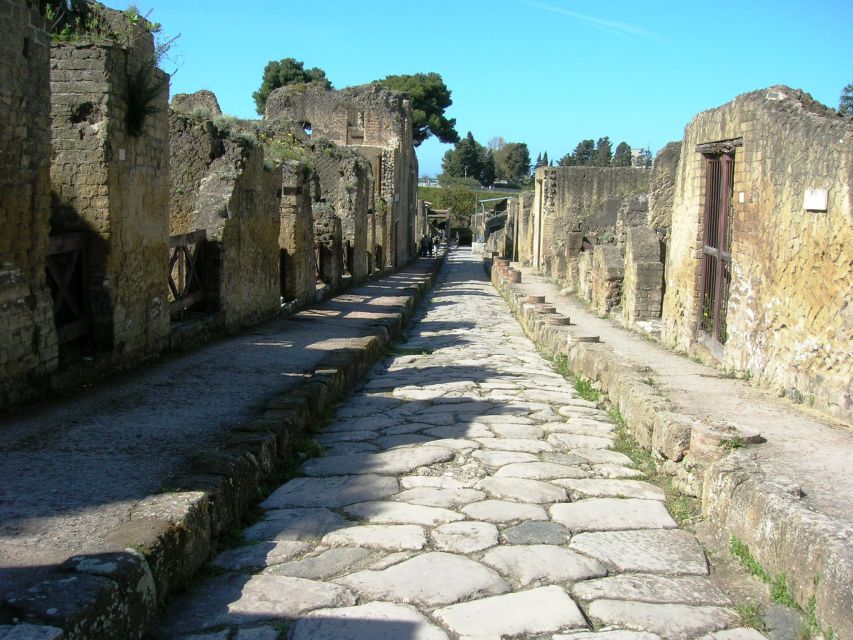
Herculaneum is famous because it survived in a way Pompeii didn’t. After the eruption of Mount Vesuvius on October 24, 79 AD, the town was buried, and later rediscovered in the 18th century. Today, the preservation is a big part of the thrill: you’re not just looking at walls—you’re seeing mosaics, fresco fragments, ceramics, and even charred organic materials.
Skip-the-line access is valuable because the site can get busy, and your guided window is only about 1.5 hours. If you lose 30 minutes waiting at the ticket checkpoint, your tour starts to feel like a slideshow instead of a walk. With priority entry, you typically get straight into the route and let your guide do the heavy lifting.
Also, the story here isn’t abstract. As you move around the town, you’ll encounter reminders of what the eruption caught: remains of people who tried to flee toward the sea, plus visible traces of sudden disaster—often described with references to charred wood and preserved paintwork.
Your archaeologist guide: what they help you see
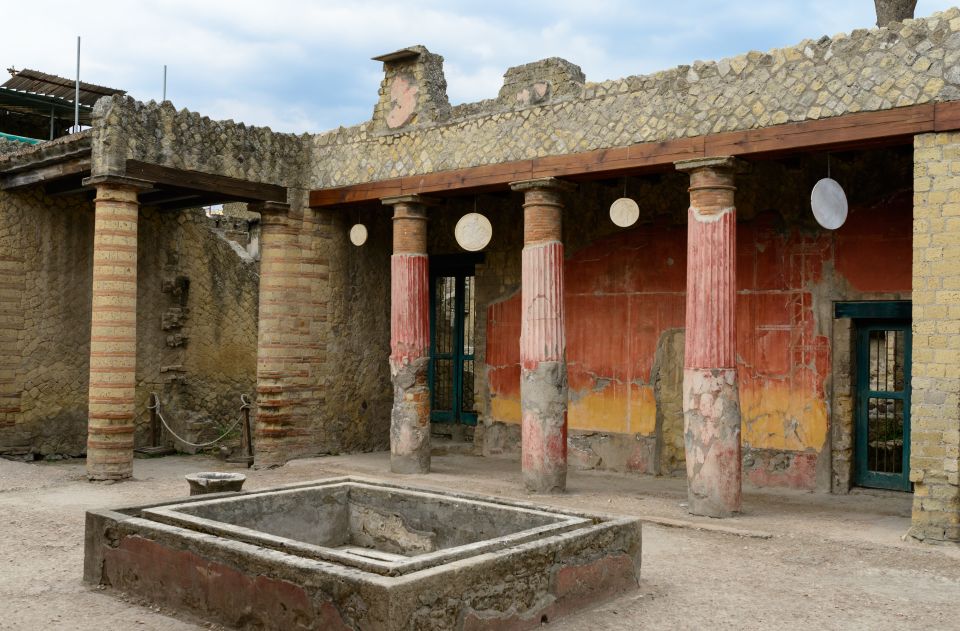
This tour is built around an archaeologist guide (about 1 hour 30 minutes on site) who gives the explanation you might struggle to pull from signage alone. The route is specific, and the commentary is what ties it all together: what a space was used for, who likely lived there, and how the town worked day to day.
You’ll also notice the guide structure is designed to handle multiple languages. The tour operates with English, Italian, and Spanish speaking guides, and it can be bilingual. In low season, there’s a change in how live guiding works inside Herculaneum: a live guide is provided for each language only when you hit a minimum number of participants per language; otherwise, you use audioguides.
From past departures, I’ve seen names like Tomas, Salvatore, Alessio, and Gelsomina connected with the on-site guiding, plus bus coordination support from people such as Carmela and others on board. That variety matters less than the result: you should come away with a clearer mental map of Roman spaces, not just pretty ruins.
The walking route: Houses, baths, and the Forum areas
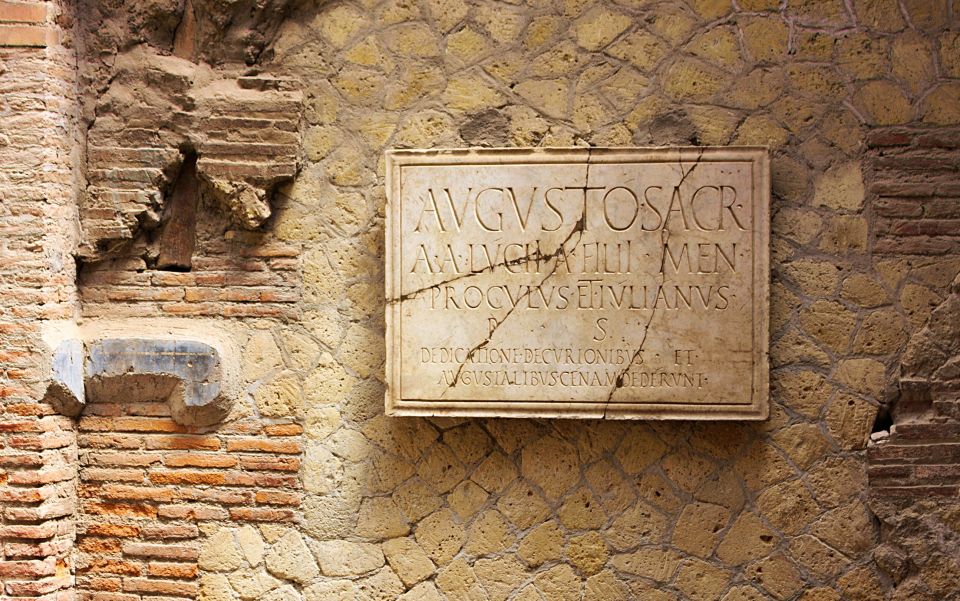
Your time on foot is structured, and that’s a good thing. You’re not meandering—you’re moving through a sequence of key spaces so the town’s social life becomes understandable.
Here’s what you’ll get, in the style of the tour:
House of the Deer
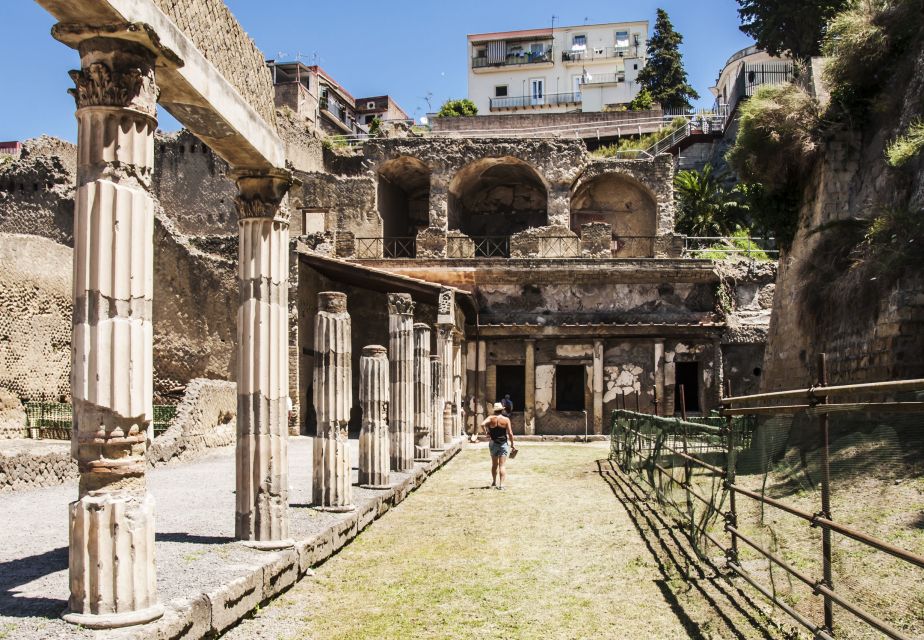
This is one of the highlights for a reason: it’s the kind of home where you can picture daily routines and status. In Herculaneum, domestic areas can feel more intimate than in Pompeii because of how much detail has survived. Your guide should point out how rooms, decoration, and layout signal what mattered to the household.


Forum Baths
The baths are where Roman life becomes practical. You’ll get a sense of how people handled hygiene, conversation, and leisure in a space designed for flow and routine. If you’ve ever wondered why Romans built so much around public bathing, this stop is the answer in stones and layout.
House of Neptune and Amphitrite
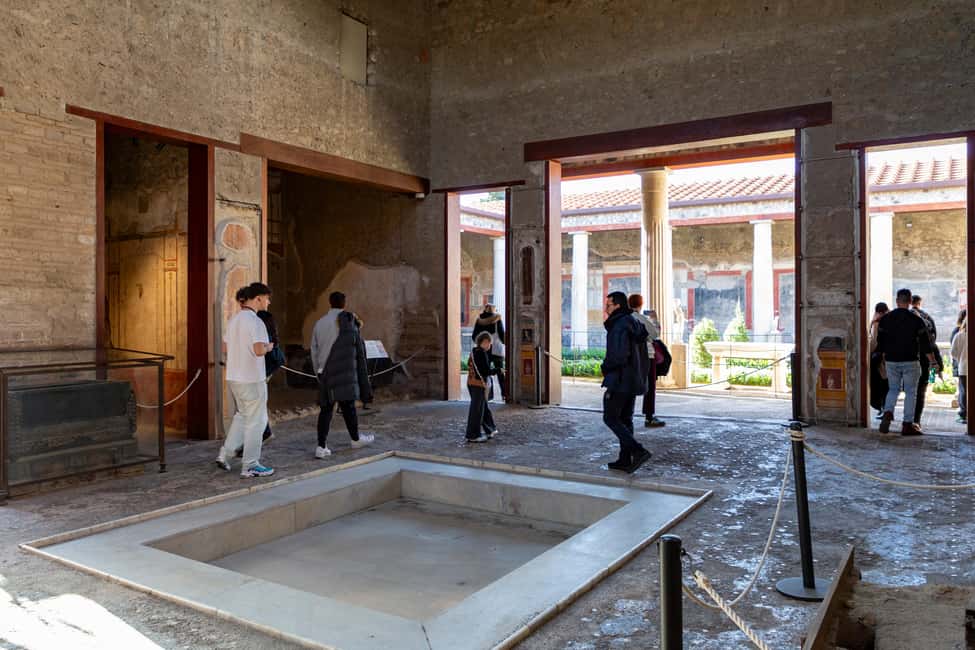
This home connects directly to the “people lived here” feeling. You’ll likely spend time on decoration and surviving artworks—mosaic and fresco fragments show up in a way that makes the houses feel inhabited rather than museum-still.
Gymnasium and Forum areas
These are your public-life anchors. The Gymnasium connects to education, training, and social behavior, while the Forum areas pull you toward the political and civic heartbeat of the town. Together, they help you see Herculaneum as a complete community, not just a set of pretty buildings.
A small caution: the guided walk can feel a bit compressed. Some departures report moments where the group got held up waiting for another language group, which can reduce your time in a spot you’d rather linger in. If you’re the type who likes questions and slow looking, pick one or two moments to ask your guide to slow down for you.
The eruption story: what preserved details change
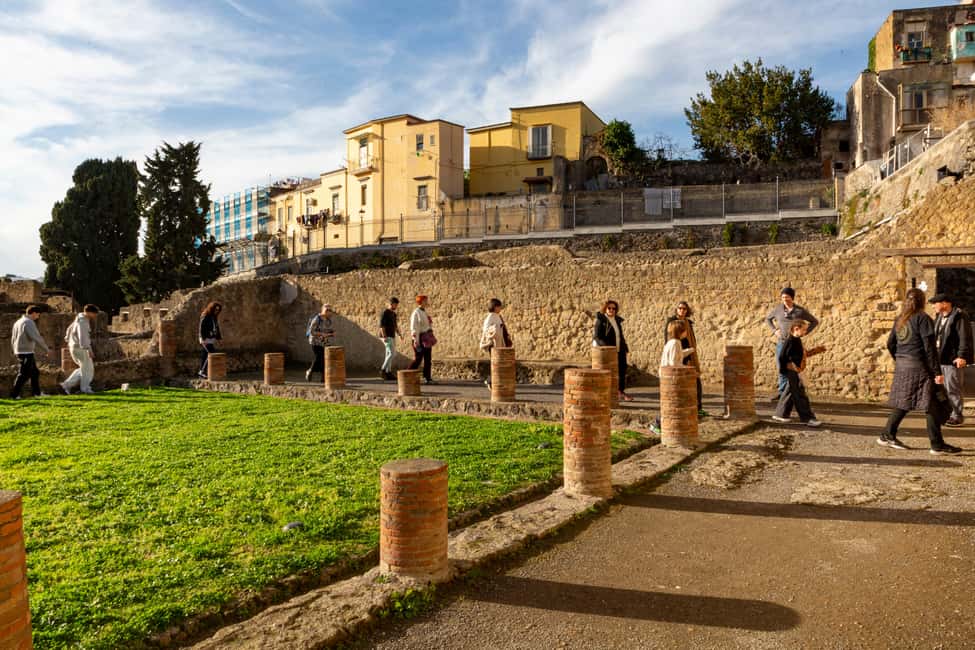
The tragedy of 79 AD is the emotional spine of the visit. The tour doesn’t treat it like a movie plot. It treats it like evidence—how disaster freezes everyday life into something you can still study.
You’ll see references to people who tried to flee, including the remains connected to an escape attempt toward the sea. You’ll also encounter charred wood and surviving artifacts like paintings, mosaics, and ceramics. That combination is what makes Herculaneum feel so vivid: you’re looking at art and household objects alongside the disaster fingerprints.
If you know Pompeii already, you’ll likely find the comparison unavoidable. Herculaneum tends to feel more personal because the preservation often keeps interior-life details closer to what lived there. That means you can understand the town as a place where people ate, cleaned, socialized, and hosted—not just as an archaeological site.
3 hours from Naples: timing that works, and timing that doesn’t
The full outing is about 3 hours. In practice, it’s a short travel day: a coach ride out, around 1.5 hours guided on site, then the return.
This format is great if you’re on a tight schedule—like a first-time Naples stay, a cruise day, or simply wanting to avoid turning your vacation into a full-day bus marathon. One of the nice things is that some departures are designed with port timing in mind, so you’re not stuck hunting for late transport after your ruin time.
The downside is simple: Herculaneum is small, but it deserves more breathing room than 1.5 guided hours for many people. Some participants have said they wanted an extra 1–2 hours in the site. If you’re the kind of visitor who reads every panel and wants to walk slowly through every corner, this tour might feel fast.
Weather can also change the experience. One departure ran in pouring rain, and the ruins still worked as a guided option—just expect your comfort to depend heavily on what shoes and clothes you chose.
Price and what you’re really buying for $63
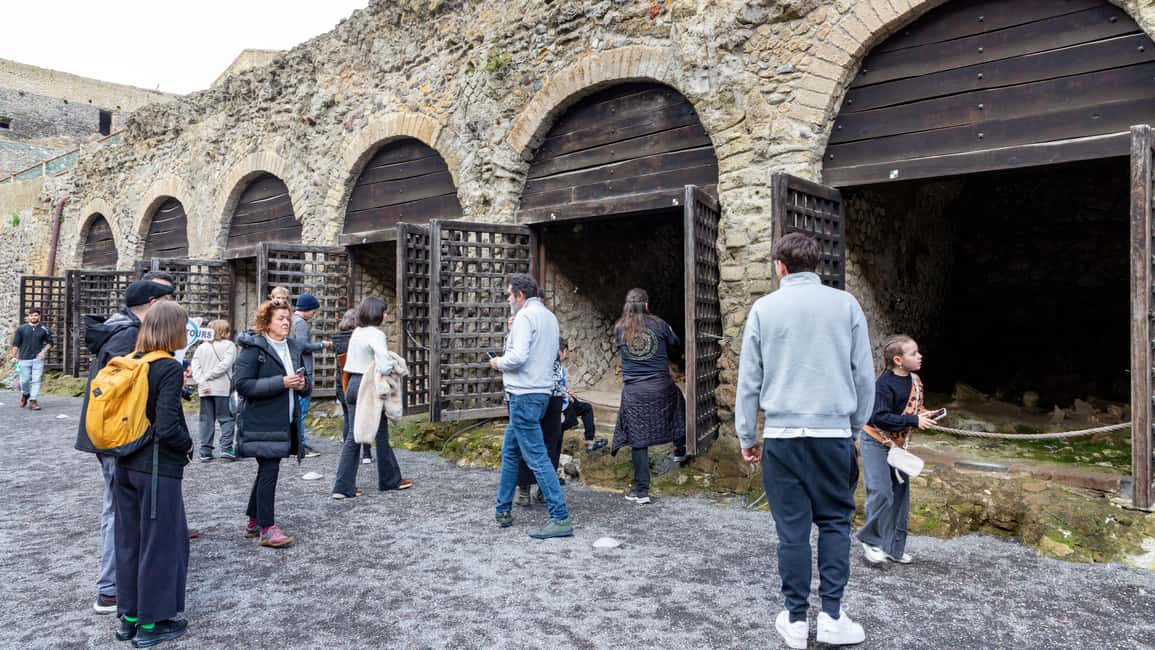
At about $63 per person, this isn’t “budget,” but it also isn’t priced like a private driver-plus-guide setup. The value is in the bundle:
- Skip-the-line entry (so you don’t waste your short visit)
- Pickup and drop-off in Naples
- Guided tour with an archaeologist for about 1 hour 30 minutes
- On-board commentary during the drive
Food isn’t included. That’s normal for a half-day. Bring water in your day bag anyway, because the tour notes specifically suggest it, and you’ll be walking.
There’s also a small seasonal price note worth knowing: the price is discounted on the first Sunday of each month because Pompeii’s entrance is free. The Herculaneum visit itself still stands on its own, but it’s a good time to grab a better deal if your dates line up.
If you were doing this independently, you’d still be paying for entry and getting to Herculaneum. What you’re paying for here is less friction and less guesswork—especially helpful if you don’t want to deal with Naples transit and lines on your own.
Comfort, sound, and the small-group reality
A lot of this tour succeeds because it moves as one group. Small group size is offered, and many people like having enough room to ask questions without feeling swallowed by a crowd.
Still, there are two things you should be ready for:
1) Audio and microphone quality.
Some departures describe muffled bus commentary or headset issues with crackles and feedback, and a few people couldn’t hear well from farther back. My practical advice is straightforward: sit closer to the front when possible, and don’t assume every device will perform perfectly.
2) Bus comfort.
One common complaint is that seats can be tight for people over about 6 feet. That’s not a reason to skip, but it’s a reminder to dress for comfort—because even a short ride can feel longer if you’re cramped.
On the positive side, many drivers are described as smooth, safe, and attentive. One person even noted extra friendliness and ongoing narration from the driver on the way out. So think of it as: usually fine, but not a sterile guarantee.
Who this tour is best for (and who it isn’t)
This is a strong pick if you want a guided introduction to Herculaneum without spending your day on transport logistics. It’s also a good fit for cruise passengers when pickup and drop-off land near the port area.
It’s not a fit for everyone. The tour is not suitable for people with mobility impairments and it’s also not suitable for wheelchair users. If walking pace and terrain access could be an issue for you, you’ll want to consider a different format.
It also has rules that affect packing: pets aren’t allowed, and you can’t bring luggage or large bags. There’s no food or drinks allowed in the vehicle, and smoking is not allowed.
Should you book this skip-the-line Herculaneum tour?
Yes, if you want a guided, time-efficient visit where priority entry and an archaeologist explain what you’re seeing. Book it if you like structured walks, want to cover the main highlights (House of the Deer, baths, Forum areas), and you’d rather spend your energy on Roman life than on transit and ticket logistics.
Skip it or rethink your plan if you need extra time on site. A 1.5-hour guided walk is short, and some visitors specifically wished they had more room to linger. Also be sure you’re comfortable with walking, since the tour isn’t designed for wheelchair users or mobility-impaired visitors.
If your schedule is tight, your biggest win is simple: you get in faster and you learn more per minute.
FAQ
How long is the Naples to Herculaneum tour?
The total duration is about 3 hours, including transport time and roughly 1 hour 30 minutes of guided time at Herculaneum.
What’s included in the $63 price?
Pickup and drop-off in Naples are included, along with a skip-the-line entrance ticket to Herculaneum and a guided tour with an expert archaeologist (about 1 hour 30 minutes). There is also commentary on board during the trip.
What languages are available for the tour?
The live tour guide is available in English, Italian, and Spanish.
Where does pickup and drop-off happen in Naples?
Pickup and drop-off are offered at multiple Naples locations, including options such as Royal Continental Hotel, Palazzo Caracciolo Napoli (MGallery), and Stazione Marittima near Molo Beverello (Port of Naples). The exact options vary by the route you select.
Do I need to bring a passport or ID?
Yes. You should bring a passport or ID card. You’ll also need a valid passport if you’re claiming the under-18 free entrance, since the tour notes that admission for people under 18 is free with valid identification.
What should I bring for the visit?
Bring comfortable shoes, sunglasses, a hat, a camera, and water. Comfortable clothes help too.
Is there food or drinks provided?
No. Food and drinks are not included.
Is the tour suitable for wheelchair users?
No. The tour is not suitable for people with mobility impairments and it is also not suitable for wheelchair users.