REVIEW · NAPLES
From Naples: Pompeii & Herculaneum with Archaeologist Guide
Book on GetYourGuide →Operated by Askos Tours · Bookable on GetYourGuide
Pompeii and Herculaneum feel like two different stories from the same disaster. I like this tour for the archaeologist guide angle and the way the day is planned so you actually see key places without getting stuck in line hell.
You’ll also get a comfortable transfer in a modern minibus with an English-speaking driver, plus skip-the-line tickets that keep the day moving. The one real catch: there’s a lot of walking on uneven ground and plenty of stairs, so it’s not a great fit if you have mobility limits.
In This Review
- Key Highlights You’ll Care About
- Why Pompeii and Herculaneum Together Actually Makes Sense
- Meet at Starhotels Terminus, Then Off to Ercolano by Minibus
- Herculaneum: The Mud-Buried City With Preserved Paint and Wood
- A practical note on the Herculaneum walk
- The Pompeii Walk: Marina Gate, the Forum, and the Houses People Actually Watched
- Skip-the-Line Tickets: More Time for Ruins, Less Time for Waiting
- Pace, Breaks, and What You Should Plan for in a 7-Hour Day
- What the Archaeologist Guide Adds (Beyond Facts on a Placard)
- Price and Value: $168.79 for Two Sites, Tickets, and a Tight Plan
- Should You Book This Pompeii and Herculaneum Tour?
- FAQ
- How long is the Pompeii and Herculaneum tour from Naples?
- Where do I meet for the tour?
- Is the tour in English?
- Is skip-the-line entry included?
- Do I need to buy entrance tickets separately?
- What does the tour include for transportation?
- Are meals included?
- What’s the main schedule during the day?
- What should I bring?
- Is this tour suitable for people with mobility limitations?
Key Highlights You’ll Care About
- Archaeologist guide explanations that connect ruins to daily life, not just dates and names
- Small group (up to 20) so questions don’t vanish into the crowd
- Herculaneum’s preserved details like mosaics, paintings, and even carbonized wooden finds
- Skip-the-line entry at both sites, which matters on busy days
- A focused Pompeii route through major public spaces and famous houses in about two hours
Why Pompeii and Herculaneum Together Actually Makes Sense
Seeing Pompeii and Herculaneum on the same day is smart because they were hit by Vesuvius in different ways—and that changes what survives. Pompeii was buried under volcanic ash, so you get huge swaths of the city laid out like a frozen street map. Herculaneum was covered by mud from a landslide, which helped preserve more delicate material. That contrast is the whole point.
I also like that the tour plan doesn’t just toss you from site to site. You start with Herculaneum first, then move to Pompeii with your brain already in Roman-mode. By the time you walk Pompeii’s Forum, you’re better at spotting patterns: where people gathered, how water moved, what daily business looked like.
And yes, you’ll still get the shock factor. Herculaneum’s beach tied to mass death (more than 300 skeletons were found there) is not easy to process, even if you’re ready for the topic. That said, a good guide helps you see it as a human story, not a horror headline.
You can also read our reviews of more tours and experiences in Naples.


Meet at Starhotels Terminus, Then Off to Ercolano by Minibus
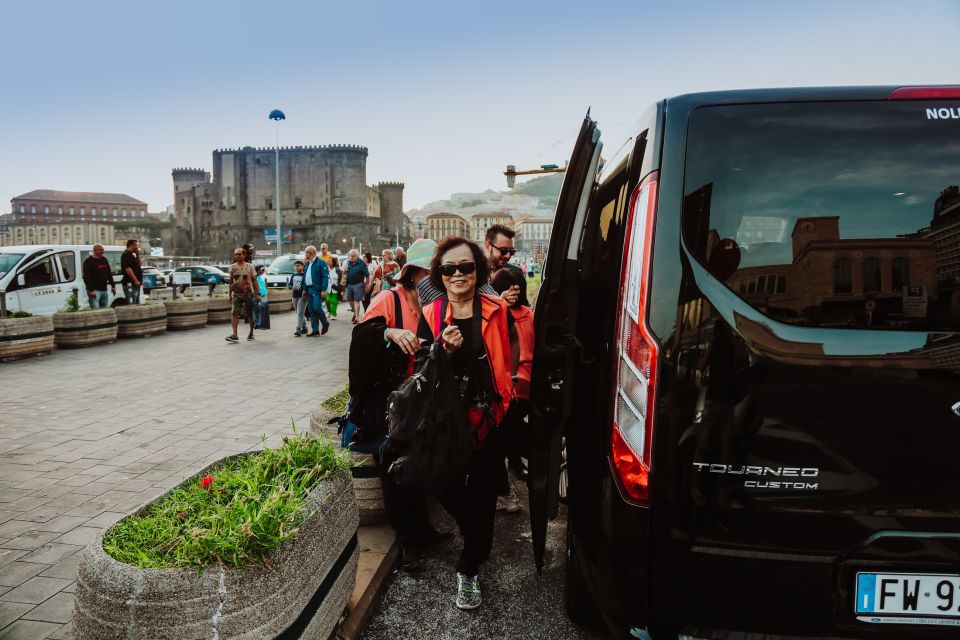
The day kicks off at Starhotels Terminus, right in front of the entrance across from the station. Look for the guide holding an ASKOS TOURS sign. From there, you ride by shared minibus to Herculaneum (about 45 minutes).
Here’s what I think this logistics choice gets right. You’re not wasting your morning figuring out local buses, and you’re not stuck riding a big coach with nowhere to breathe. The group stays small, and the driver handles the timing so you can focus on the ruins.
At Herculaneum, you get about two hours with your guide. After that, there’s a transfer to Pompeii (around 30 minutes). You’ll then have a lunch/break window before the guided Pompeii walk.
One small thing to plan around: you can’t bring luggage or large bags. So pack light. You’ll want space in your day pack for water, a rain layer, and your phone charger if you’re the type who takes photos every five minutes.
Herculaneum: The Mud-Buried City With Preserved Paint and Wood
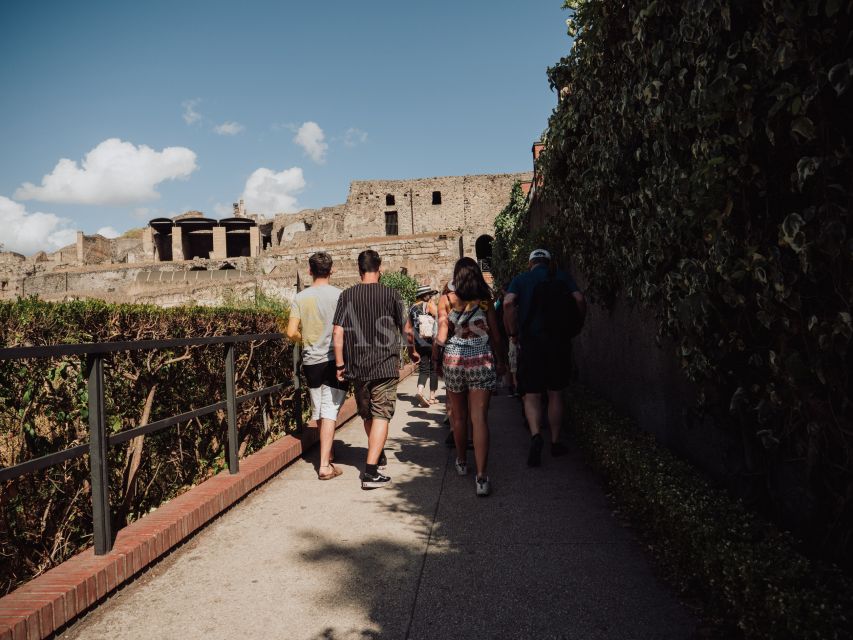
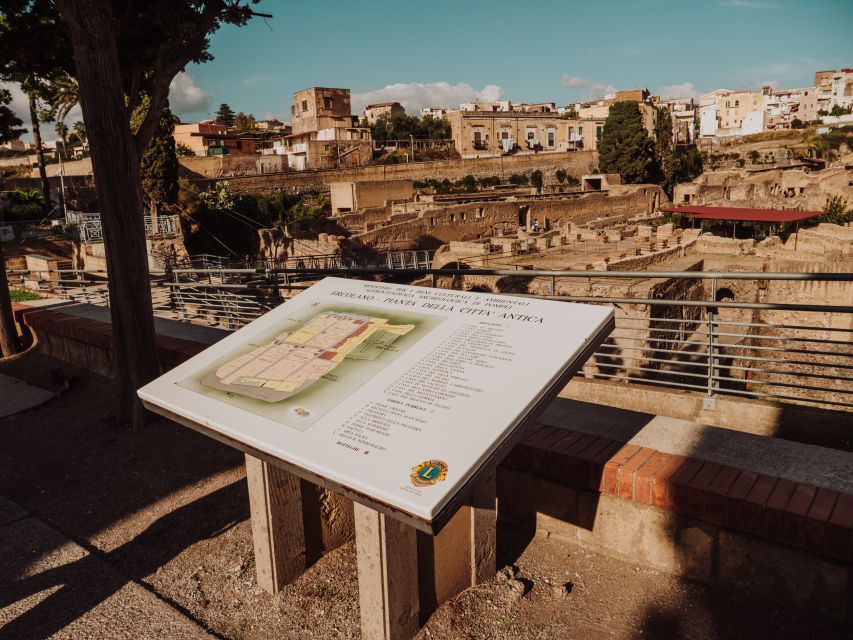
Herculaneum (Ercolano) is where the tour earns its name as an archaeologist-led experience. It’s not just a ruin field—it’s a site famous for preservation. Your guide sets the scene: buried under roughly 20 meters of mud after a landslide, it kept conditions stable enough that you can still see details that Pompeii often doesn’t hold onto as well.
During the two-hour visit, you’ll focus on major landmarks and the best-preserved features. Expect stops tied to both everyday life and the sites that bring home what the eruption meant for real people.
Temple of the Augustali is one of those “pay attention” spots. Even if you’re not a religion-history person, your guide will help you connect temple space to power, status, and community ritual. It’s the kind of structure that’s easy to miss if you’re rushing.
Then come the parts that stick with you. There’s a beach area where more than 300 skeletons were found. It’s heavy material. A strong guide will guide you through the story without turning it into spectacle, and you’ll walk away with a clearer sense of panic, geography, and how fast everything changed.
You’ll also see the Thermal Baths and other public areas like the Forum, plus more domestic stops such as the Samnite House and places like the Gymnasium and the House of the Dears. One reason I enjoy this site on a guided day is that the guide can point out little things that explain the layout: where people would gather, where circulation happened, and why certain rooms mattered.
And yes, this is where you hear about carbonized finds—like carbonized wooden objects—along with intact paintings and mosaics that still feel startlingly close to the original look. That preservation is a big part of why Herculaneum should be on your shortlist even if Pompeii is already calling your name.
A practical note on the Herculaneum walk
Herculaneum is compact, but you’re still dealing with uneven ground and stairs. This tour isn’t recommended for limited mobility, and I’d take that seriously. If your body doesn’t like steps, you might spend more time managing fatigue than taking in the details.
The Pompeii Walk: Marina Gate, the Forum, and the Houses People Actually Watched
After Herculaneum, you move to Pompeii and get a break first (about 45 minutes). Then comes your guided Pompeii portion, about two hours focused on the major highlights.
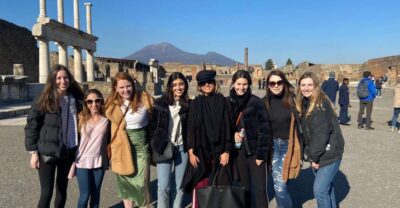
Pompeii’s big lesson is the scale of a real Roman city. The ash burial from Mount Vesuvius in 79 AD preserved street systems and building clusters, so you can see how public life and private life interlock. You’ll learn how the town was laid out and how Romans lived day to day.
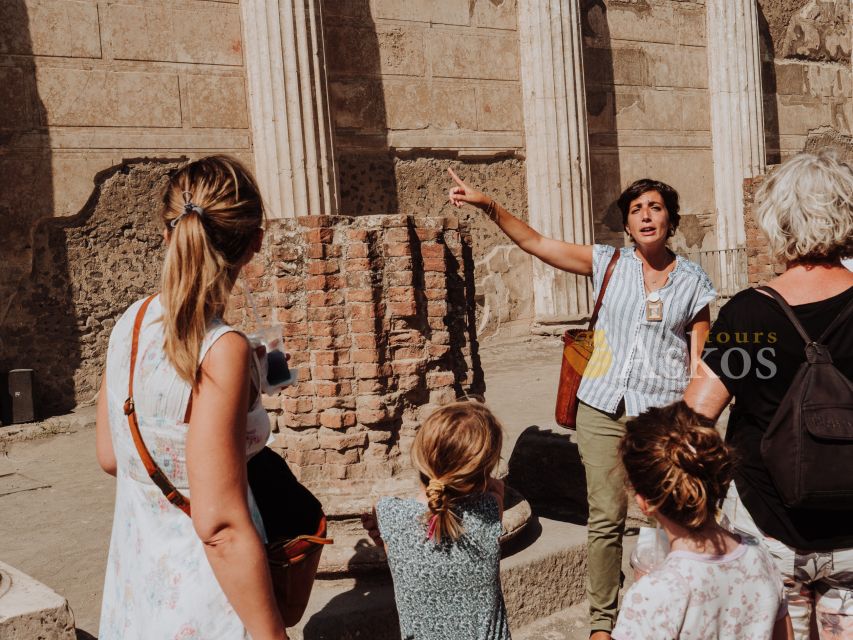
The walk typically starts around the Marina Gate, then heads into the city’s core with stops like the Basilica and the Forum. These aren’t just impressive backdrops. When a guide points out what functions happened there, the Forum turns from a “big open area” into a working hub—trade, announcements, movement, and authority all in one place.
You’ll also hit spots like the Forum Baths and then shift to some of Pompeii’s most famous tells of everyday culture. The Lupanar (brothel) is one of those stops that makes people look up from their phones. It’s not for everyone, but it’s part of how people understood the city and its social economy. Your guide should frame it in context, not just shock value.
Other Pompeii highlights on the route include the Bakery, the Termopolium Capuano (a type of Roman snack bar/takeaway-style place), and houses like the House of Faun. If you’re a “show me where the wealth lived” person, you’ll appreciate these stops.
One of the most interesting elements on a guided Pompeii route is the plaster casts. They’re a way to visualize what ash burial did to bodies and space. It’s emotionally intense, but it’s also an educational tool that helps you understand the physical story of the site.
Finally, you’ll see the House of Tragic Poet and more key points that help you grasp Pompeii as a whole, not just random rooms.



Skip-the-Line Tickets: More Time for Ruins, Less Time for Waiting
This tour includes skip-the-line entry at both Pompeii and Herculaneum, plus entrance tickets tied to their service. On paper, that’s just a convenience. In real life, it’s often the difference between a good day and a rushed one.
Both Pompeii and Herculaneum can get crowded. When the group is small (up to 20), time losses matter more, because you have fewer opportunities to “make it up later.” By getting you inside faster, the guide can spend more time on the parts that need interpretation—why a room is shaped the way it is, what you’re looking at when you see mosaics and paintings, and how the eruption changed the city’s rhythm.
I also like that the tour structure doesn’t pretend you’ll see everything. It targets the major highlights, then uses the extra saved time for guide-led context instead of standing in a queue while your day evaporates.
Pace, Breaks, and What You Should Plan for in a 7-Hour Day
The schedule is designed to fit a full day without turning it into a two-site marathon. You’re out about seven hours total.
- Transfer to Herculaneum: around 45 minutes
- Guided Herculaneum: around 2 hours
- Transfer to Pompeii: around 30 minutes
- Pompeii break/lunch time: about 45 minutes
- Guided Pompeii: around 2 hours
- Return to Starhotels Terminus: timed for onward train plans
That 45-minute break is the tricky part. Meals aren’t included, so you’ll need to decide what you want to do for food. One reviewer noted that restaurant pricing can add up quickly, and suggested bringing your own food if you don’t want to spend more once you’re already at the site. I’d take that advice if you’re on a budget or you have dietary needs.
Also, remember this is rain or shine. Bring a raincoat. You’ll be on your feet either way, and soggy cobblestones are a perfect recipe for sore ankles.
Footwear matters too. Even when the tour is well organized, you’re still walking on historic surfaces. Comfortable walking shoes beat stylish shoes every time.
What the Archaeologist Guide Adds (Beyond Facts on a Placard)
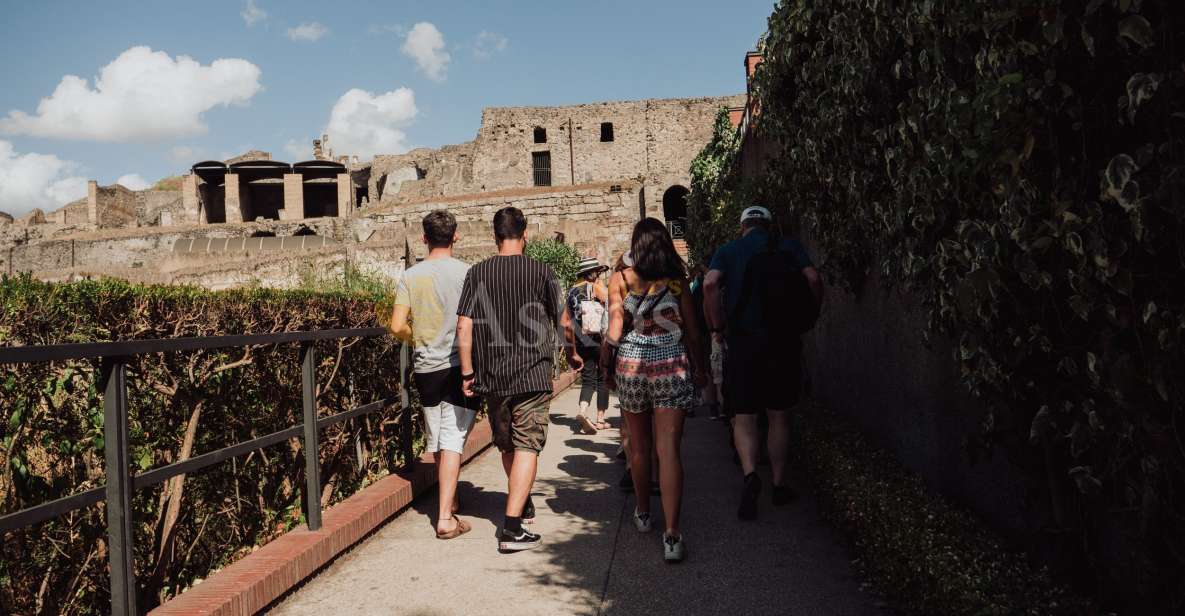
Let’s be real: you can wander Pompeii and Herculaneum without a guide. But the difference on a guided day is that your eyes get trained.
Your archaeologist guide is there to connect buildings to life. In Herculaneum, that means explaining how preservation tells you more than just what’s broken. You’ll hear about why mosaics and paintings still matter, what carbonized wooden objects can suggest, and how public spaces worked with daily routines.
In Pompeii, the guide helps you understand the town as a functioning organism—public buildings like the Basilica and Forum, social spaces like the Lupanar, and commerce spots like the Bakery and Termopolium Capuano. You’ll also get context for the plaster casts, and why certain houses like the House of Faun or House of Tragic Poet are meaningful.
From the guide names shared in participant feedback, this tour can feature archaeologist-guides such as Raphael, Giarno, Michele, Vito, Roberta, Julia, Gennaro, Michael, and Juliano. I can’t tell you which guide you’ll get, but I can tell you the role matters. When your guide is also a subject-matter expert, you get faster, cleaner explanations and more confidence that you’re not learning the wrong story.
Price and Value: $168.79 for Two Sites, Tickets, and a Tight Plan

At about $168.79 per person, this is not a cheap day trip. But the value comes from what’s bundled: shared minibus transport, skip-the-line entry, entrance tickets (Herculaneum is listed as €16 each in the included items), and an archaeologist guide. Tolls and parking are included too.
When you compare it to DIY travel plus paid entry plus the time you’d spend trying to coordinate two sites, the price becomes easier to justify. You’re paying for a whole system: timing, access, and interpretation.
Also, the small-group size (up to 20) helps. Big tours can feel like a conveyor belt. A smaller group usually means the guide can slow down when questions pop up, and you can actually hear the explanation instead of shouting over other groups.
Meals are not included, so plan for that separately. But with the itinerary time limits, having a structured break is still better than trying to guess when to eat.
Should You Book This Pompeii and Herculaneum Tour?
Book it if you want a high-impact day: two major sites, strong guide-led context, and less time losing to lines. It’s also a good choice if you’re visiting for the first time and you want the major highlights without committing to a multi-day excavation marathon.
Skip or rethink it if you have mobility issues. The tour isn’t recommended for wheelchair users or people with limited mobility, and the walking plus stairways are part of the experience.
If you do book, do a couple things to make the day smoother: pack light (no large luggage), wear shoes you can trust on uneven ground, and bring a rain layer. For food, consider snacks or a packed option if you don’t want your budget to get eaten by restaurant prices during that short lunch break.
FAQ
How long is the Pompeii and Herculaneum tour from Naples?
The tour duration is listed as 7 hours.
Where do I meet for the tour?
Meet in front of the STARHOTEL TERMINUS entrance, opposite the station. Look for the guide holding an ASKOS TOURS sign.
Is the tour in English?
Yes, the live tour guide provides the tour in English.
Is skip-the-line entry included?
Yes. Skip-the-line entry tickets are included for the Pompeii and Herculaneum sites.
Do I need to buy entrance tickets separately?
No. Entrance tickets are included as part of the tour, including an entrance ticket for Pompeii and Herculaneum (Herculaneum is listed as €16 each).
What does the tour include for transportation?
You get transportation by shared minibus, plus tolls and parking expenses.
Are meals included?
No. Meals are not included.
What’s the main schedule during the day?
You’ll travel to Herculaneum first for guided time, then transfer to Pompeii for a break/lunch period and a guided walk.
What should I bring?
Bring a passport or ID card.
Is this tour suitable for people with mobility limitations?
It is not recommended for people with limited mobility, and it is not suitable for wheelchair users or people with mobility impairments.