REVIEW · NAPLES
Herculaneum – Small Group Tour
Book on Viator →Operated by Pompeiify · Bookable on Viator
Herculaneum is the quieter sibling of Pompeii. In just 2 hours, this small-group guided tour in Ercolano helps you connect the ruins to real daily life, from private homes and Roman shops to the eerie seafront. You get a route that hits the big moments without turning your afternoon into a scavenger hunt.
I really like the small-group size and the fact that you’re not stuck passively reading stones. Guides such as Francesco are repeatedly praised for clear, engaging explanations (including in cases where they don’t rely on a microphone), plus the tour pace leaves room for questions. I also like that the focus is practical: you see the most prominent houses and major public areas, then leave with a map in your head of how the city worked.
One thing to plan for: admission tickets aren’t included, and the site can be hot because there’s limited shade. If you’re visiting in warmer months, bring a hat and water, and don’t assume you’ll be comfortable the whole walk.
In This Review
- Key highlights to look for on this Herculaneum tour
- Why Herculaneum feels easier to understand than Pompeii
- The Parco Acheologico di Ercolano start: small group, big clarity
- The two-hour route: private houses and the city’s everyday rhythm
- The showpiece homes: how wealth lived next door to normal life
- Roman shops, baths, and the main street: the social engine of town
- A tour pace that still leaves you with places to look back at
- The beach stop: skeletons and a preserved wooden boat
- Herculaneum vs Pompeii: how your guide makes the comparison useful
- Price and value: what you’re paying for (and what you still need to buy)
- Timing, heat, and how to stay comfortable for the full two hours
- Who should book this small-group Herculaneum tour
- Make your Herculaneum visit smarter after the guide
- Should you book this Herculaneum small-group tour?
- FAQ
- How long is the Herculaneum small-group tour?
- What’s included in the tour price?
- Are admission tickets included?
- What language is the tour offered in?
- What’s the maximum group size?
- Do I receive a mobile ticket?
- Can I choose a morning or afternoon time?
- Are service animals allowed?
- What happens if I need to cancel?
Key highlights to look for on this Herculaneum tour
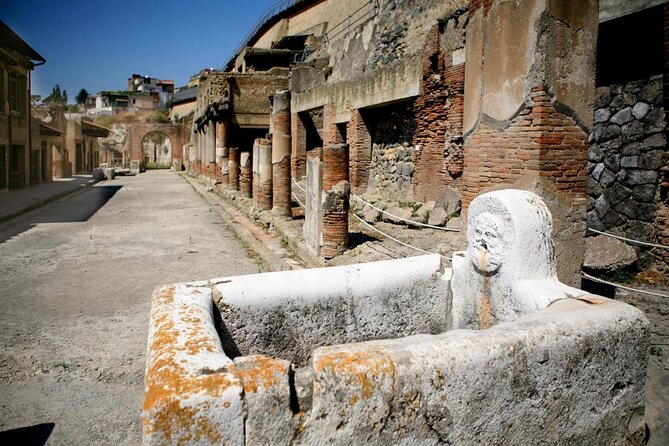
- A tight two-hour route that still covers private houses, shops, baths, and the main street
- Named stops including the House of the Deer, House of the Wooden Partition, House of Neptune and Amphitrite, and the House of the Bicentenary
- The seafront drama: skeletons sheltered in buildings and a wooden boat preserved on the beach
- A guide licensed by Regione Campania, with time for questions in a group up to 15
- Built-in contrast with Pompeii, since your guide explains how the eruption’s impact differed
Why Herculaneum feels easier to understand than Pompeii
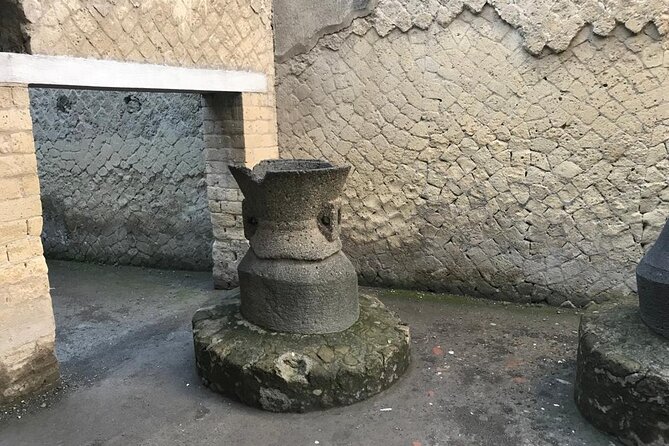
Herculaneum’s power comes from how readable it can be. You’re not just staring at walls and columns; you’re walking through a town layout that still helps you picture how people moved, shopped, bathed, and relaxed. And because the scale is smaller and the route is focused, you can actually absorb it all in a short visit.
I also like that the tour naturally sets you up to compare Herculaneum with Pompeii. Even if you’ve already planned a Pompeii day, this helps you notice differences in what survived and how the disaster played out. Your guide’s explanations make the contrast stick, so later, when you see Pompeii, you’ll have something specific to look for.
The key takeaway: the site becomes more than a checklist. It becomes a story you can follow from the city’s main street to the wealthy homes overlooking everyday life.
You can also read our reviews of more tours and experiences in Naples.


The Parco Acheologico di Ercolano start: small group, big clarity
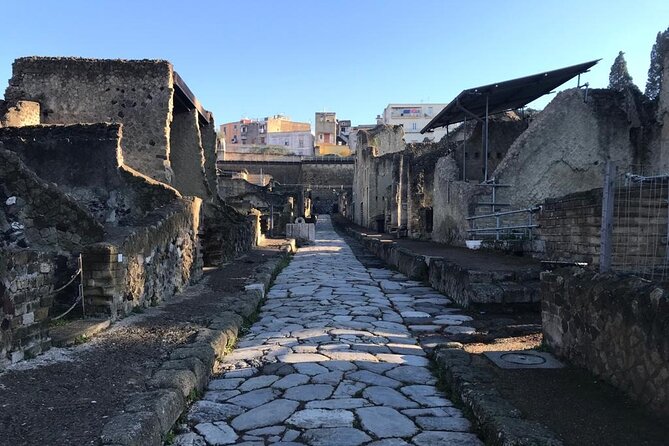
This is a small-group tour with a maximum of 15 people, which is exactly the right size for ruins. Big groups mean missed questions and less attention to detail. Here, you’re more likely to hear answers clearly and keep up with the route without feeling rushed.
You’ll also be with a guide licensed by Regione Campania. That matters because Herculaneum can be frustrating on your own: there aren’t always obvious explanations for what you’re looking at. A good guide acts like an interpreter between you and the past—pointing out what each building likely was and how it connected to neighborhood life.
A practical plus: this tour uses a mobile ticket, and it’s set up for easy access. It’s also listed as near public transportation, which is helpful if you’re staying in Naples or mixing this with another plan in the area.
The two-hour route: private houses and the city’s everyday rhythm
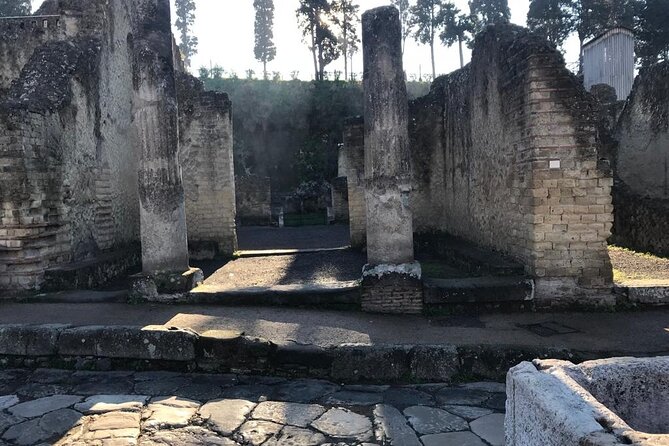
The heart of the experience is the guided walk through the most prominent parts of the ancient city. The tour is designed to cover major highlights fast, but not in a way that feels like you’re sprinting.
Here’s what this route is built to do for you:
The showpiece homes: how wealth lived next door to normal life
You’ll visit several notable private houses, including:
- House of the Deer
- House of the Wooden Partition
- House of Neptune and Amphitrite
- House of the Bicentenary
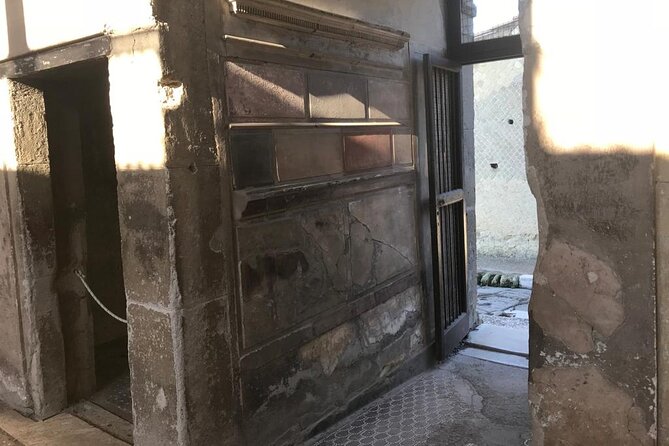
What I like about starting with homes is that you quickly learn what “Roman house” actually means. The guide helps you read the layout, so you understand where people gathered, how spaces were arranged, and why certain areas mattered. Even the house names are useful as anchors—once you know what to look for, the ruins stop feeling like random rooms.
Also, Herculaneum’s preservation makes these houses especially telling. When you can see enough of the structure and layout, the city feels closer to a lived place instead of just archaeology.
Roman shops, baths, and the main street: the social engine of town
After the homes, you move into the parts of the city people would recognize as part of daily life:
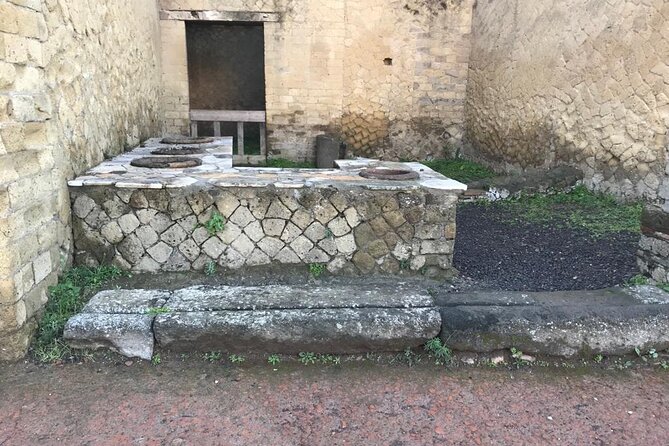
- typical Roman shops
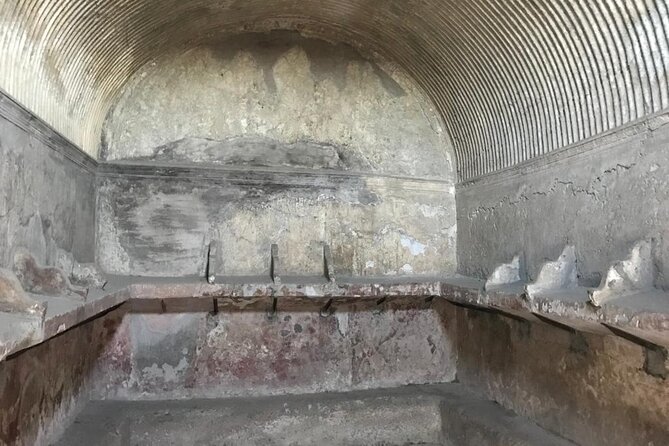
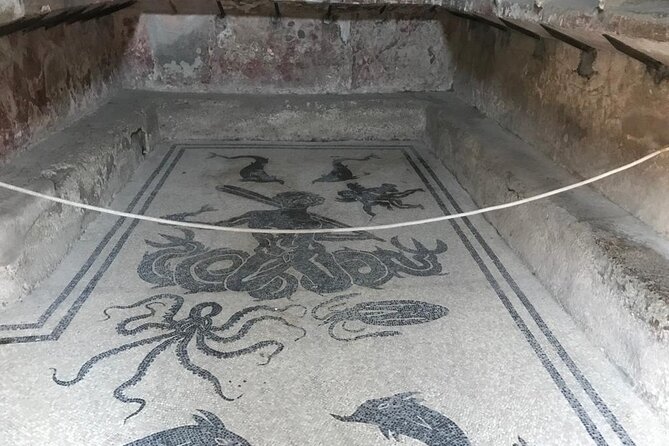
- public baths
- the main street and major public buildings
This is where you stop thinking of Herculaneum as a set of mansions and start seeing it as a working city. Baths and main streets are great because they connect lots of different lives. You don’t need a special background to get it; the guide explains how these spaces shaped community routines—who would go where, and why these were the “meeting points” of their world.



A tour pace that still leaves you with places to look back at
The tour itself is about 2 hours. Many people end up enjoying the guided part most because it gives them the right questions. Once you get your bearings, you can slow down in remaining areas and focus on details the guide pointed out.
If you add time after the tour, you’ll likely appreciate seeing more of the park at your own pace and possibly checking what’s available in the on-site museum area, depending on your admission ticket.
The beach stop: skeletons and a preserved wooden boat
If there’s one moment that changes the whole emotional tone of the visit, it’s the seafront. The tour includes the ancient beach, plus the shocking context of skeletons found where people sheltered in buildings along the seafront.
You’ll also see the wooden boat found on the beach, described as still perfectly preserved. That detail matters because it’s not just architecture and pottery. It’s something made of organic material surviving in a way that instantly grabs your attention.
I recommend mentally preparing for this stop. It’s powerful. You may want to pause, take a beat, and let the guide finish the explanation before you rush ahead. The best ruins photos happen after you understand the scene, not before.
Herculaneum vs Pompeii: how your guide makes the comparison useful
One of the most repeated strengths of these tours is that the guide doesn’t treat Pompeii as a separate universe. Instead, they help you understand the eruption’s effects and why the two sites feel different when you’re standing in them.
So what do you do with that information? You use it while you’re there, and you use it later. In Herculaneum, your focus shifts toward how the city’s spaces and structures remained legible. Later, when you visit Pompeii, you’ll know what kinds of differences to look for instead of just thinking bigger means better.
If you’re doing both cities on the same trip, this tour is also a confidence booster. It gives you a framework, so Pompeii doesn’t feel like chaos when you arrive.
Price and value: what you’re paying for (and what you still need to buy)
The tour price is listed at $50.81 per person, and it’s easy to assume that includes everything. It doesn’t. Admission tickets are not included.
So is it still good value? In my view, yes—if you want a guided route that saves you from guessing. Here’s why:
- Herculaneum can be hard to interpret without help, because buildings aren’t always clearly labeled in the way you might expect.
- You’re paying for a structured visit with a licensed guide, not just access to a park.
- The route is tight and complete for a short window, so you’re not paying for wasted time.
The practical approach is simple: budget for the tour plus the site admission. Once you do, the guided portion starts to feel like the part that actually makes the ruins click.
Timing, heat, and how to stay comfortable for the full two hours
This is a choose-your-slot tour, with options for morning or afternoon. That’s helpful because Herculaneum’s ground reality is weather. In warmer months, humidity and heat can make every stone walk feel longer.
A few planning reminders based on what people consistently mention:
- There’s limited shade, so bring a hat
- Wear shoes that handle uneven surfaces
- Bring water and keep snacks light if you’re also doing other Naples activities
Some guides are careful about keeping the group comfortable when they can. Still, you shouldn’t count on shade to save you. If your schedule allows it, I usually suggest choosing the time of day when you’ll be most comfortable walking in open areas.
Also, this tour is designed to run right around the stated length. Many people report it starts on time and lasts exactly about 2 hours, which is great if you’re on a tight itinerary.
Who should book this small-group Herculaneum tour
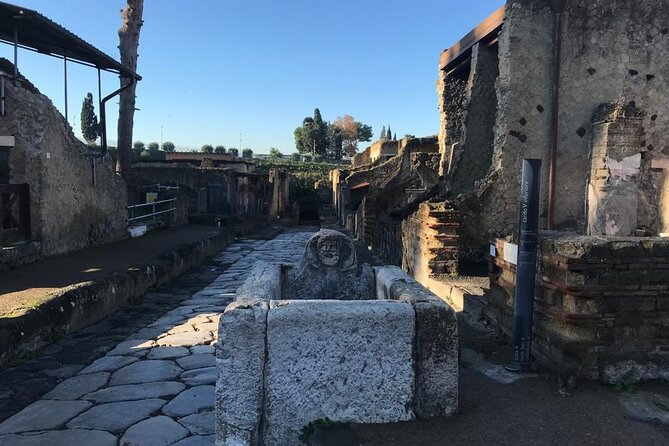
This tour fits best if you want guided interpretation without committing to a full-day excavation marathon.
It’s especially good for:
- First-timers who want the best parts without getting lost
- Families and mixed-age groups (people have mentioned teenagers staying engaged, and adults appreciating the pacing)
- Anyone planning to see Pompeii later and wanting a meaningful comparison
- Travelers who prefer interaction and questions in a group up to 15
It may also work well if you need some practical help while walking, since guides can be attentive to the needs of different group members. That said, Herculaneum is a real ancient site, so you should still plan for uneven ground and steps.
Service animals are allowed, and the tour is positioned as accessible to most participants.
Make your Herculaneum visit smarter after the guide
Think of the two-hour guided tour as your training wheels. The guide gets you oriented and explains what matters. Then you can explore the park with better instincts.
A few ideas to get more from your time on site:
- After the tour, spend extra moments re-looking at the homes and street areas the guide highlighted
- If you’re interested in more artifacts, check what’s available in the on-site museum area with your admission (since museum time may require your separate ticket)
- Use what you learned to identify “city life” sections versus “private home” sections as you walk around
This is how a short tour becomes a longer-lasting memory. You don’t just see ruins. You learn how to read them.
Should you book this Herculaneum small-group tour?
If you want a focused, high-value guided introduction to Herculaneum (Ercolano), I’d book it. The combination of a licensed guide, a small group up to 15, and a two-hour route that hits the major private homes, baths, main street, and the seafront wooden boat makes it an efficient way to make the site understandable.
Skip it only if you’re traveling with a very specific goal that requires more time than two hours, or if you strongly prefer touring ruins entirely on your own without a structured path. And if you’re visiting in summer, plan your comfort first—bring a hat and water, because shade isn’t guaranteed.
FAQ
How long is the Herculaneum small-group tour?
It’s approximately 2 hours.
What’s included in the tour price?
You get a visit with a licensed tour guide from Regione Campania.
Are admission tickets included?
No. Admission tickets are not included.
What language is the tour offered in?
The tour is offered in English.
What’s the maximum group size?
The tour has a maximum of 15 travelers.
Do I receive a mobile ticket?
Yes, the tour offers a mobile ticket.
Can I choose a morning or afternoon time?
Yes, you can choose either a morning or an afternoon tour.
Are service animals allowed?
Yes, service animals are allowed.
What happens if I need to cancel?
You can cancel for free up to 24 hours in advance for a full refund. If the tour is canceled due to not meeting the minimum number of travelers, you’ll be offered a different date/experience or a full refund.
If you want, tell me your travel month and whether you’re also doing Pompeii, and I’ll suggest the best time slot strategy for comfort and scheduling.