REVIEW · FLORENCE
Florence: Timed Entry Ticket to Michelangelo’s David & eBook
Book on GetYourGuide →Operated by Florence Specialists Small Group Tours · Bookable on GetYourGuide
David is the reason to come.
This timed-entry ticket gives you reserved access to Michelangelo’s David at the Accademia, plus a downloadable PDF eBook so you can make sense of what you’re seeing as you walk. The biggest win is practical: you’re not stuck in the ticket chaos for hours, and the self-guided format lets you go at your own pace. One thing to watch is simple but important: if you show up late, you can lose that priority entrance window and end up in the general admission line.
I also like that this isn’t just David on repeat. You’ll move through other sculpture spaces (including unfinished works), then you’ll get painting galleries on top, with artists such as Giotto and Botticelli. It’s a compact museum visit, but it’s packed with Renaissance and Medici-era details that make the ticket feel like more than a one-sculpture stop.
In This Review
- Key points worth knowing
- David Without the Grind: Redeeming Your Timed Tickets at the Florence Specialists Office
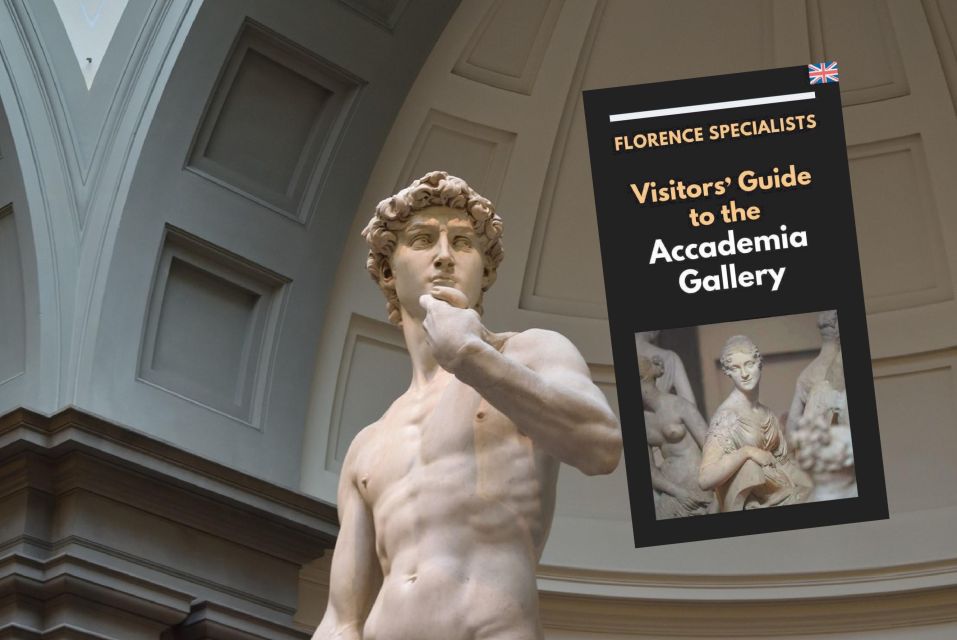
- First Stop: Michelangelo’s David and the Chisel-Marked Main Hall
- Unfinished Masterpieces and the Gipsoteca Plaster Models
- Medici Musical Instruments: The Stradivarius Detail You Might Not Expect
- Painting Galleries on the Way Up: Giotto, Botticelli, and Medieval Altarpieces
- How Much Time You Need and the Order That Works in Real Life
- Value for Money Around $37: When Priority Entry Is Worth the Upsell
- Who This Ticket Fits Best (and Who Might Want Something Else)
- Should You Book This Ticket?
- FAQ
- How do I use this timed entry ticket?
- Does this ticket include a tour guide?
- Can I skip the line at the Accademia?
- What should I bring for children?
- Is the Accademia visit wheelchair accessible?
- Are pets allowed inside?
Key points worth knowing
- Separate entrance, timed access: your slot helps you bypass the worst lines.
- PDF guide in multiple languages: use it to orient yourself room by room.
- Unfinished Michelangelo works: look for chisel marks and the creative process, not just the finished statue.
- Gipsoteca plaster models: original workshop-style models help explain how sculpture was made.
- Medici musical instruments (including Stradivarius): a surprising detour that’s worth the time.
- Crowd control is real: you may still wait a bit depending on capacity inside.
David Without the Grind: Redeeming Your Timed Tickets at the Florence Specialists Office
Your day starts before you ever reach the Accademia doors. You don’t just walk in with a digital ticket; you exchange your voucher for a paper ticket at the Florence Specialist Office (the listed meeting point can vary by option). At that same meeting point, you’ll download the ebook PDF, which matters because it turns a crowded museum visit into a directed one.
Once you’ve got your ticket, the whole point is the bypass. The timed entry includes access through a separate entrance, so you’re not joining the main ticket office crush. In high season, that difference is huge. Even when priority speeds things up, it’s normal to still have a short wait for security or regulated entry, especially when the museum is managing crowd numbers.
Two practical tips make this smoother:
- Arrive on time. Your reserved priority entrance is only valid for the selected time, and late arrivals can be pushed into the general admission flow.
- Use the luggage storage. If you’ve got a day bag or small suitcase, you can store it before you start. That keeps you from feeling trapped by space constraints inside the gallery.
Also, this experience is wheelchair accessible, and pets aren’t allowed. If you’re traveling with mobility needs, it’s worth planning for tighter circulation in some rooms, since the Accademia can feel packed even when you enter quickly.
You can also read our reviews of more tours and experiences in Florence.
- Tuscany Day Trip from Florence: Siena, San Gimignano, Pisa and Lunch at a Winery
★ 5.0 · 21,634 reviews
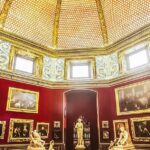

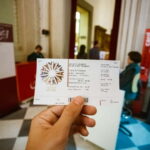
First Stop: Michelangelo’s David and the Chisel-Marked Main Hall
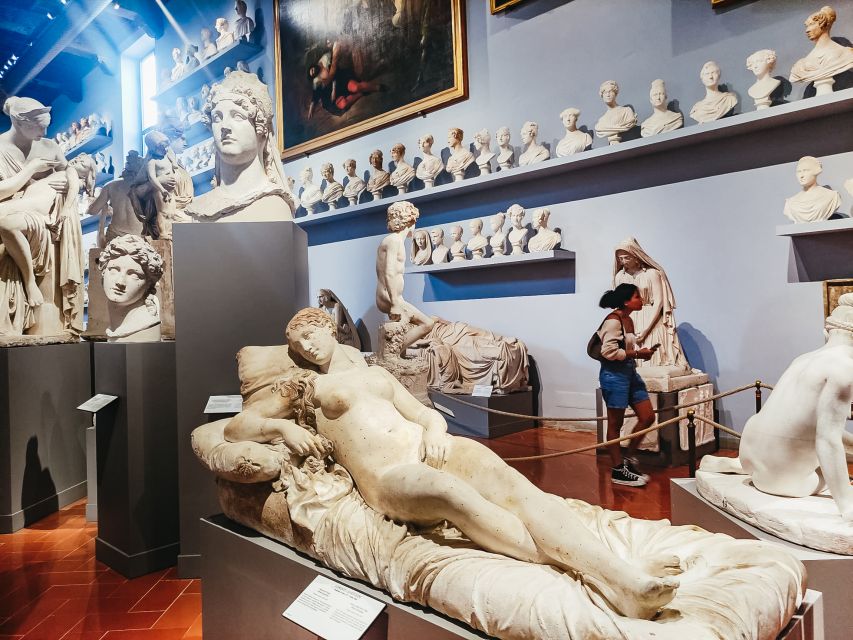
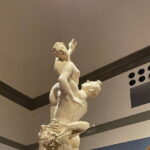
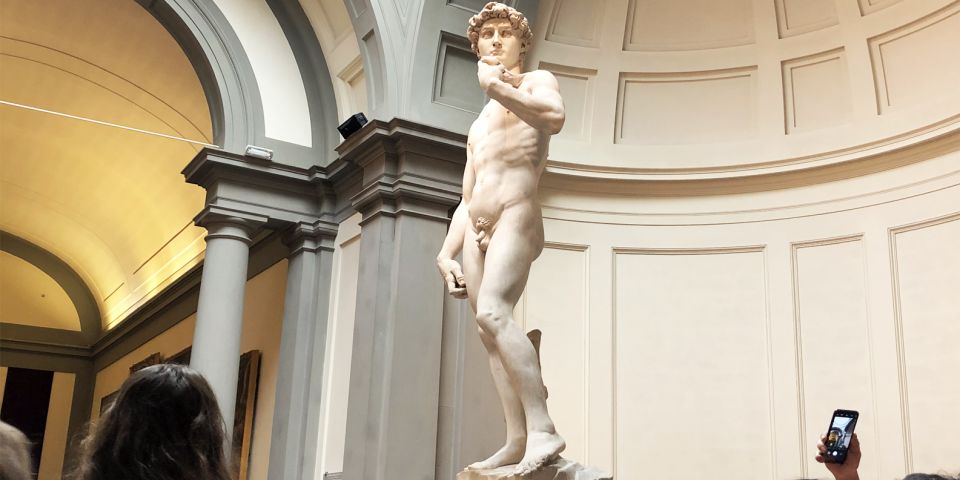
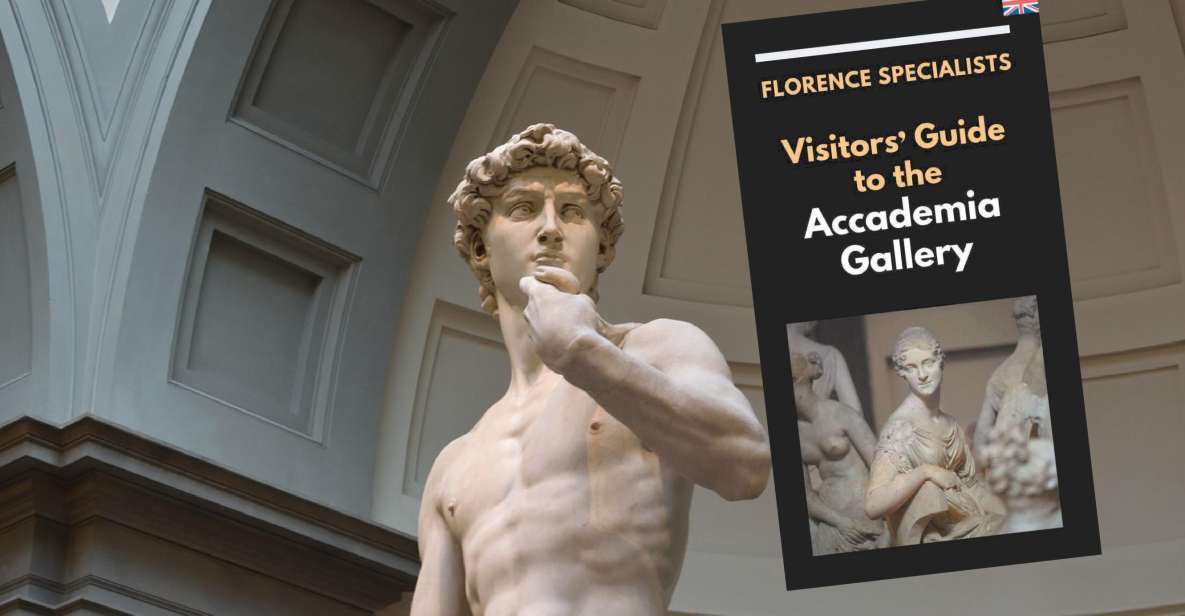
When you enter the museum, your main mission is straightforward: see Michelangelo’s David. The statue is the headline for a reason. It’s not just famous. It’s dense with muscle tension and carved detail that makes your brain slow down, even if you’ve seen photos for years.
What I find especially compelling is how the gallery setup changes how you notice the sculpture. David sits in a way that lets you view from below and at angles where you can catch expression changes across the face. If people are crowded in front, don’t fight them. Step sideways and let your eye travel across the torso and hands. You’ll still get the impact without standing shoulder-to-shoulder the whole time.
Right near the David space, the museum keeps the story moving by showing other works connected to Michelangelo. The key is that you’re not only looking at a finished icon. You’re also seeing pieces that still carry the texture of the sculptor’s process. The idea is simple: you’re meant to recognize that Renaissance genius wasn’t magic in a vacuum. It was work—measured, revised, and carved.
That means your visit can be more than a quick photo stop if you’re willing to linger for 10 minutes where the details are strongest. In a crowded room, your best move is to give yourself permission to stay longer than you planned and let the statue reveal new angles.
Unfinished Masterpieces and the Gipsoteca Plaster Models
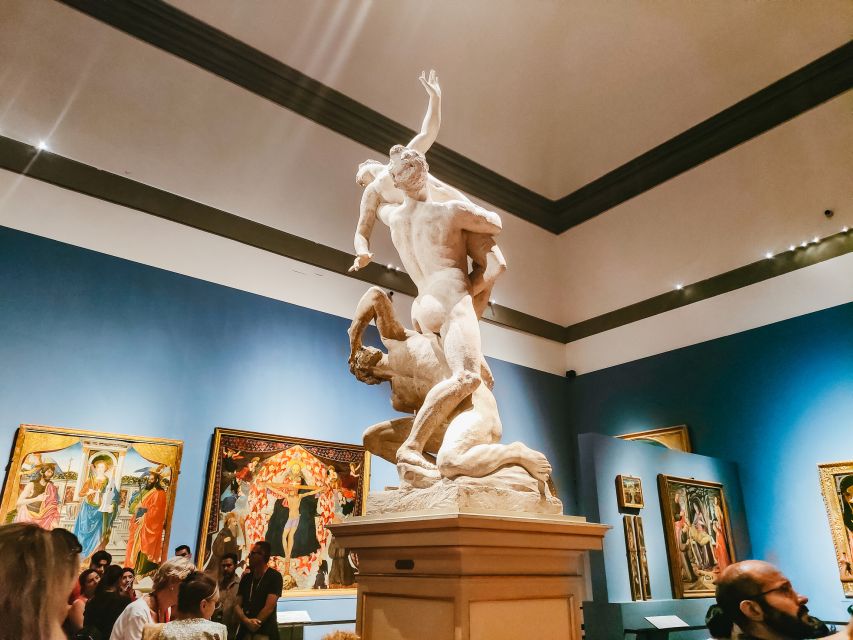
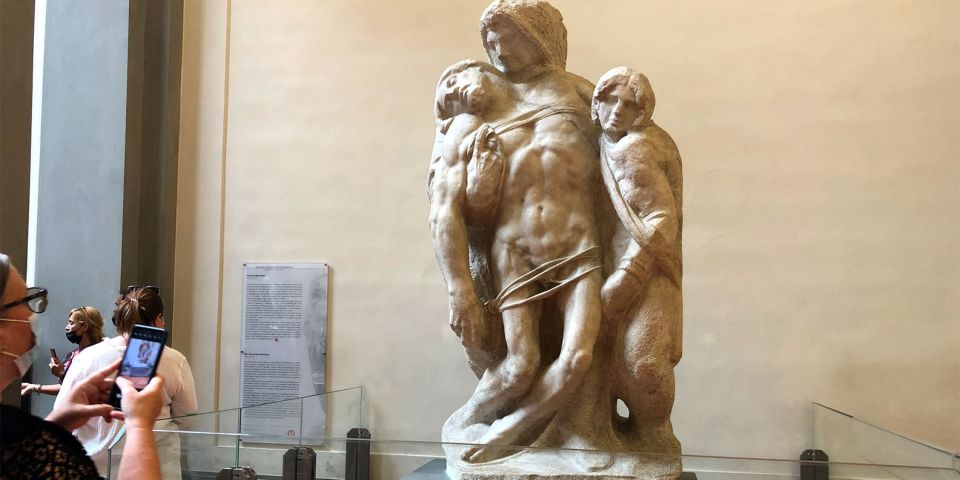
After David, you’ll get the part many people rush past, even though it’s where the museum can feel most educational. The gallery includes Michelangelo’s other unfinished masterpieces, and you’ll notice the difference right away. Instead of polished final surfaces, you can spot chisel work patterns and the “in-progress” character of sculpture-making.
This is also where the Accademia starts doing something valuable for your understanding. Finished art is easy to admire. Unfinished art shows you the thinking. You see how the sculptor treated form as a series of decisions—what to refine, what to adjust, and where the work still needed time.
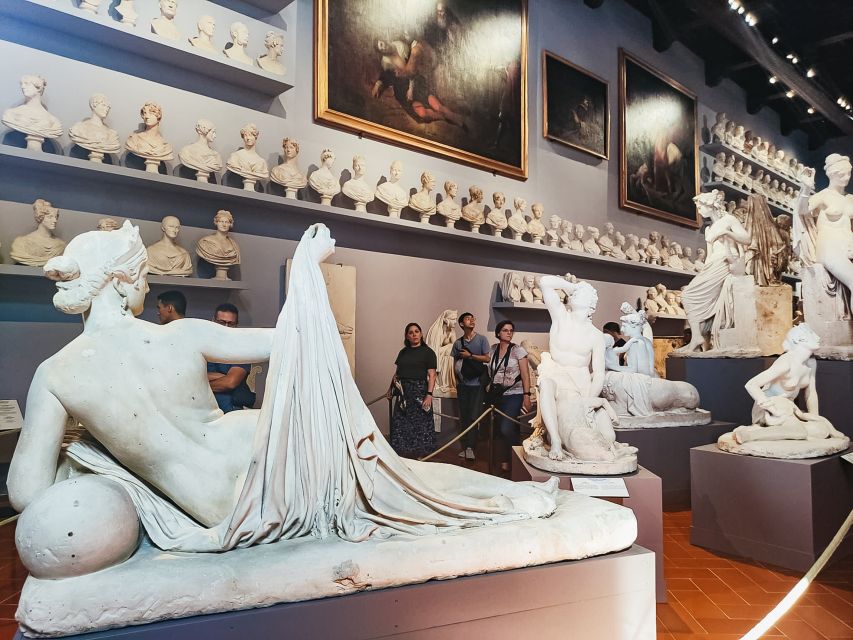
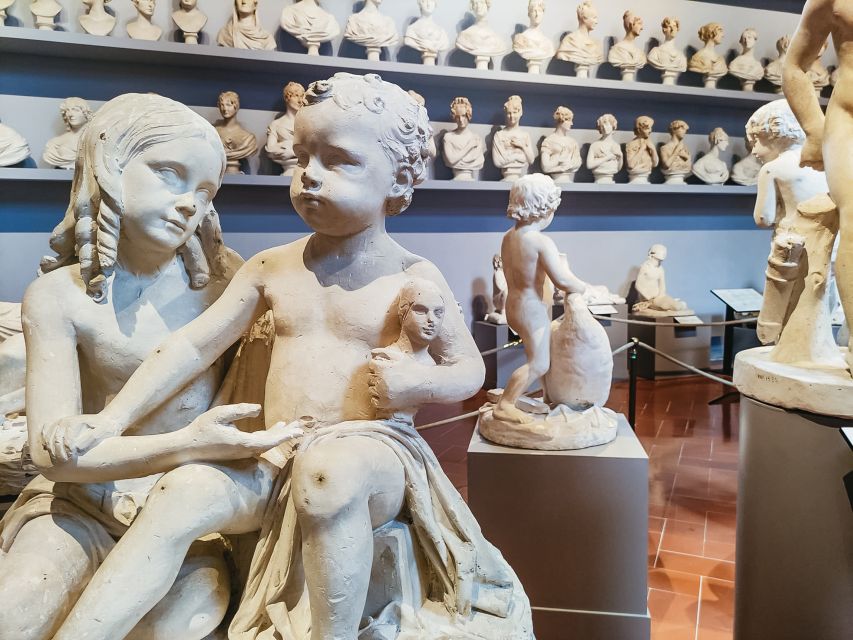
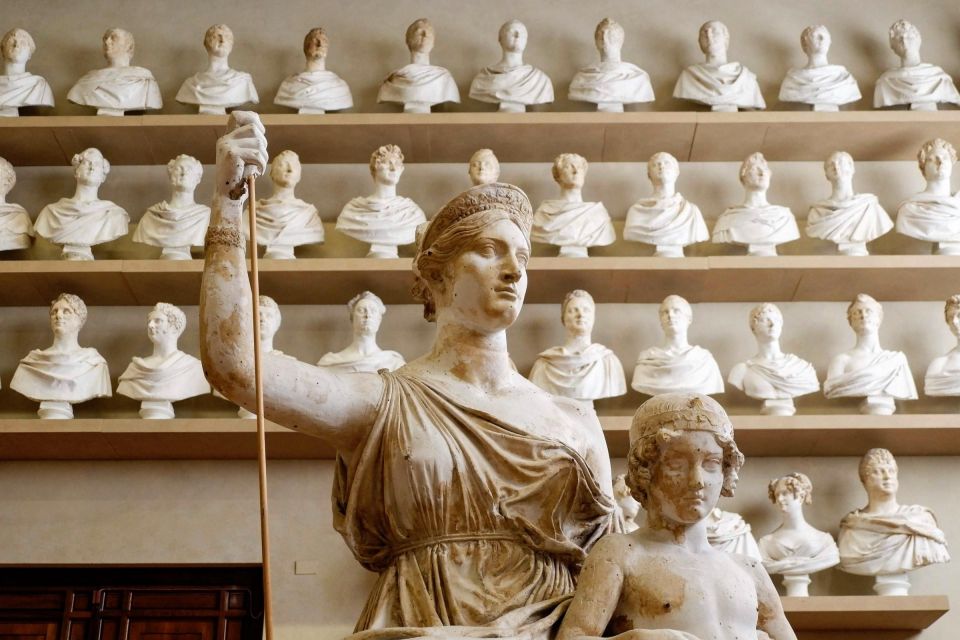
Next up, don’t miss the Gipsoteca, the section with plaster models. These are original models made by 19th-century Florentine sculptors, and they help connect the dots between design, materials, and the labor behind major works. If you like art that explains its own construction, this room can be a real payoff because it shifts you from looking at an object to understanding a method.
A practical note: plaster-model rooms can be less crowded than the David hall. That’s your chance to slow down and read. Even with the PDF guide, give yourself time to stop and compare what you’re seeing to the context notes.
Medici Musical Instruments: The Stradivarius Detail You Might Not Expect
Most visitors plan their day around David, and that makes the museum’s Medici musical instruments area a pleasant surprise. You’ll see instruments tied to Medici collections, including three made by Stradivarius. It’s a totally different kind of craftsmanship than sculpture, but it belongs to the same Florence world: power, patronage, and artisans who treated their work like a science.
If you love details, treat this section like a mini exhibit rather than a detour. The instruments don’t take over the building the way David does, but they reward patience. Look closely at what’s conserved and how the museum frames these items as part of court culture and prestige.
Even if music isn’t your thing, this stop is a useful reminder. Renaissance art wasn’t isolated to painting and marble. Court life included sound, engineering, and luxury objects. The Accademia quietly connects those dots while you’re moving through the building.
Painting Galleries on the Way Up: Giotto, Botticelli, and Medieval Altarpieces
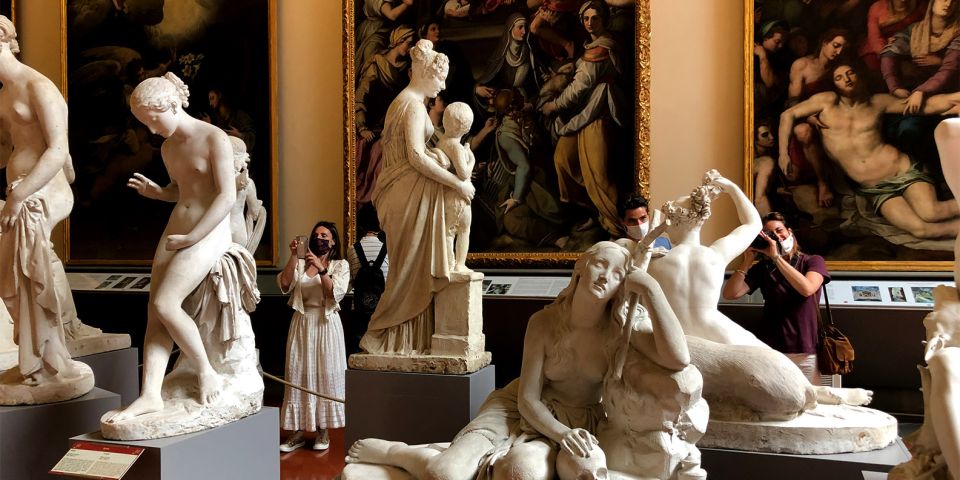
Once you’ve covered the sculpture side, the Accademia shifts into painting. You’ll find galleries with medieval and Renaissance painters, including Giotto and Botticelli. This is where the museum stops feeling like a one-artist museum and starts reading like a broader Florentine collection.
Then comes the top-floor payoff. Go upstairs to see the huge medieval altarpieces. Even if your day is running tight, this is worth making time for. Big altarpieces are easier to respect than to interpret on the fly, because they’re designed to dominate space. Let yourself stand back and take in scale first, then come closer and scan details.
Crowds can make painting galleries feel slower. People naturally gravitate back toward the sculpture highlight. That can be good for you. When you reach the painting rooms, you may find slightly better breathing room, letting the art speak without the immediate pressure of the David rush.
If you’re using the PDF guide, don’t feel forced to read every line. Skim, then stop at the works it points out. The value is not turning your visit into homework. It’s getting your bearings fast so you can spend your attention on what’s actually in front of you.
- The Best tour in Florence: Renaissance & Medici Tales – guided by a STORYTELLER
★ 5.0 · 12,316 reviews



How Much Time You Need and the Order That Works in Real Life
This museum visit can be short. Many people manage it in roughly 1–2 hours, with some even quicker if they focus tightly on highlights. At the same time, the Accademia can feel crowded, and that can slow you down. Your best strategy is to plan for a focused route rather than trying to see everything equally.
Here’s an order that keeps the day efficient:
- David first (arrive ready to pause and look)
- Unfinished works and the Gipsoteca
- The Medici musical instruments area
- Paintings downstairs, then upstairs altarpieces to finish strong
Timing matters. If you can choose an earlier entrance slot, do it. You’ll reduce the chance of intense bottlenecks and you’ll likely enjoy more space while you move. Some visitors have also reported that if they arrive a bit early, the staff may help adjust timing rather than forcing them to wait.
One more realism check: timed entry helps, but it doesn’t erase crowding. Security checks and capacity limits can still regulate entry. The goal is still the same: you should spend less time standing in line and more time looking at art.
Value for Money Around $37: When Priority Entry Is Worth the Upsell
At about $37 per person, this ticket is not the cheapest way to enter the Accademia. One common tradeoff is that it can cost more than buying directly from the official route. In some cases, the difference can be noticeable.
So when does it make sense?
- When official time slots are sold out: this is often your practical rescue option.
- When you care about timing flexibility: you’re choosing a slot instead of gambling on walk-up access.
- When line time steals your Florence day: if your schedule is tight, skipping the worst queues can be the difference between enjoying Florence and feeling stressed.
Even with priority entry, you may still have a short wait during regulated entry. But you’re typically avoiding the kind of line that eats an afternoon. If David is on your Florence must-see list, that saved time is real value.
Also, the included PDF eBook guide adds worth. It’s not a replacement for a human guide, but it helps you navigate and understand what you’re looking at without guessing. The PDF is available in multiple languages, which is useful if you’re traveling with someone who prefers something other than English.
Who This Ticket Fits Best (and Who Might Want Something Else)
This self-guided, timed-entry ticket fits best if you want a confident plan with minimal fuss. It’s especially good for:
- First-time Florence visitors who mainly want David and a solid highlights route
- Travelers who dislike crowded group tours and want to set their own pace
- Families who can handle a museum visit but don’t want a long, scripted narration
- Anyone who likes structure without being locked into a guide’s schedule
It may be less ideal if you’re looking for a deep, hour-by-hour explanation delivered by a specialist. This ticket does not include a tour guide. You’re on your own with the PDF and your own curiosity. If you want interpretive storytelling the whole way through, you might look for a guided option instead.
Should You Book This Ticket?
If you’re prioritizing Michelangelo’s David and you want to reduce your time lost to lines, I’d book it. The timed entry plus separate entrance is exactly the kind of practical upgrade that protects your Florence itinerary. The added PDF guide also makes the visit feel smarter, not just faster.
I would only hesitate if you’re traveling in a period where you’re comfortable waiting and you’re set on buying from the official site to avoid extra cost. Otherwise, think of this as paying to buy back your time and stress—then spending that time where it matters, in front of the sculpture and the stories behind it.
FAQ
How do I use this timed entry ticket?
You exchange your voucher for a paper ticket at the Florence Specialist Office meeting point. You’ll also download the ebook guide at that same location.
Does this ticket include a tour guide?
No. This includes timed entrance and the reservation, plus the PDF museum booklet. A tour guide is not included.
Can I skip the line at the Accademia?
Yes. Your timed entry lets you access through a separate entrance, helping you avoid the main ticket office line.
What should I bring for children?
For ages 6–17, you must show valid photo ID with date of birth to receive a reduced ticket (a digital copy is accepted). Children 5 and under do not require a ticket.
Is the Accademia visit wheelchair accessible?
Yes, this experience is wheelchair accessible.
Are pets allowed inside?
No, pets are not allowed.
You Might Also Enjoy




More Tour Reviews in Florence
- Tuscany Day Trip from Florence: Siena, San Gimignano, Pisa and Lunch at a Winery
★ 5.0 · 21,634 reviews - The Best tour in Florence: Renaissance & Medici Tales – guided by a STORYTELLER
★ 5.0 · 12,316 reviews