REVIEW · MILAN
Milan: Pasta and Tiramisu Small Group Cooking Class with Wine
Book on Viator →Operated by The Roman Food Tour - Food Tour Rome · Bookable on Viator
Milan smells like fresh pasta. In a central restaurant, you’ll get a welcome glass of Prosecco, peek behind the kitchen scenes, and then roll up your sleeves to learn real pasta-making steps. I loved the small-group size and the fact that you’re not stuck watching from the sidelines.
What I enjoyed most was getting practical technique, not just a demo—things like choosing the right flour and understanding the difference between pasta fresca and pasta secca. I also liked that you end with a proper meal, with wine to sip while you eat the pasta and tiramisu you helped make.
One consideration: the final eating setup can vary, and in some cases the kitchen may serve a shared end product rather than every person getting exactly their own portion. If that matters to you, ask the host at the start so expectations are clear.
In This Review
- Key takeaways before you go
- Where this class happens: a central Milan kitchen you can actually find
- Prosecco welcome and the kitchen walkthrough
- Fresh pasta workshop: flour choice, fresca vs secca, and building fettuccine
- Tiramisu workshop: making the dessert you’ll actually want to eat
- Lunch or dinner with wine: what you eat and why it feels like part of the lesson
- Practical group size and language: what to expect if you’re traveling solo or with family
- Price and value: is $83.44 fair for 3 hours in central Milan?
- The little things that make the class easier
- Should you book this Milan pasta and tiramisu cooking class?
- FAQ
- How long is the pasta and tiramisu cooking class in Milan?
- What’s included in the price?
- Is it a small group?
- What language is the class taught in?
- Where does it take place?
- What is the cancellation policy?
Key takeaways before you go
- Central Milan restaurant, easy to reach: near public transportation and in the middle of the city.
- Max 12 people, hands-on stations: small-group cooking means you get time with the dough.
- Prosecco welcome plus wine at the meal: you’ll be drinking along the way, not just at the end.
- Learn the basics of fresh pasta: flour choice and the fresco vs secco concept.
- Tiramisu instruction, step by step: you’ll build the dessert and understand the method.
- Real payoff at the table: pasta and tiramisu over lunch or dinner.
Where this class happens: a central Milan kitchen you can actually find
This class runs out of a restaurant in central Milan, which is the kind of detail that matters more than people think. If you’re juggling Duomo sightseeing, canals, and day trips, the last thing you want is a long transit slog just to get to a cooking lesson. The meeting point is straightforward: you step inside, receive your welcome drink, and then you move behind the scenes.
The vibe is also very “workable,” in a good way. You’re not in a huge auditorium. The group cap is 12 travelers, so instructors can actually see what you’re doing and catch mistakes early—especially when you’re working with dough, flour, and timing. And yes, the class is offered in English, which makes the techniques easier to follow without you translating in your head.
From the names that have led sessions in past runs, you might meet chefs like Francesco, Memmo, Alba, or Mimo—and the common thread is clear, patient teaching. Even if your cooking skills start at beginner level, you’ll likely get the kind of step-by-step guidance that keeps you moving forward.
You can also read our reviews of more tours and experiences in Milan.


Prosecco welcome and the kitchen walkthrough
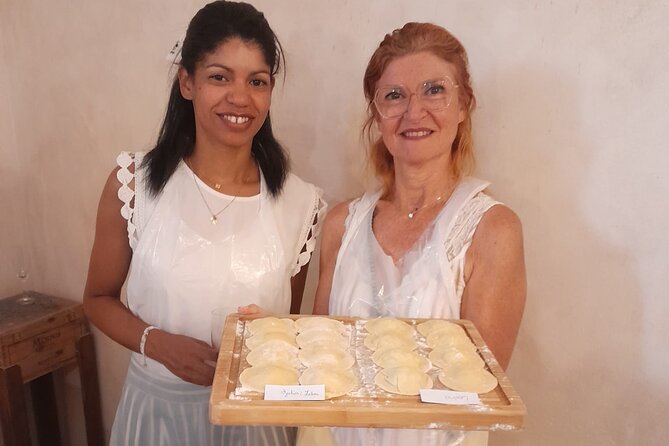
Your experience begins right away, not with a long lecture in the lobby. After you arrive, you’ll step inside and get a glass of Prosecco. Then you’ll go behind the scenes to see how an authentic Italian restaurant functions day-to-day—what’s happening in the kitchen, how stations work, and how the service rhythm fits around cooking.
That walkthrough is more than a nice touch. It sets context: you understand that what you’re learning is tied to the way restaurants actually operate, not just a staged performance. It also helps you settle into the pace. Cooking classes often feel rushed or chaotic when people are still orienting. Here, you get a calmer on-ramp before you start kneading and rolling.
It’s also a social moment. Small groups loosen up fast with a welcome drink and a quick look around. It’s a good setup if you’re traveling solo, going on a couple’s trip, or bringing older kids who can handle a busy room.
Fresh pasta workshop: flour choice, fresca vs secca, and building fettuccine
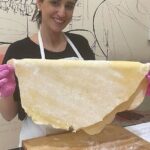
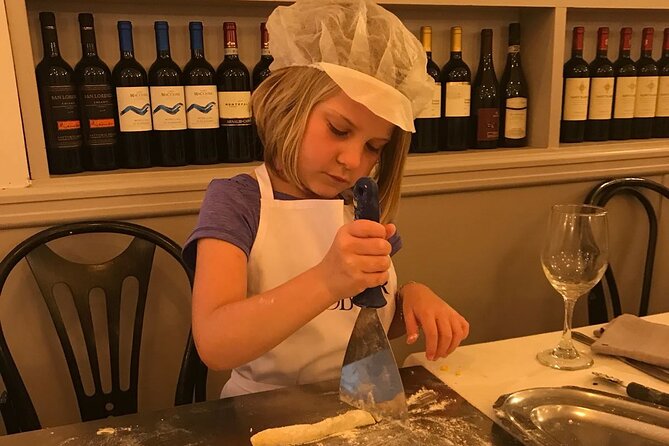
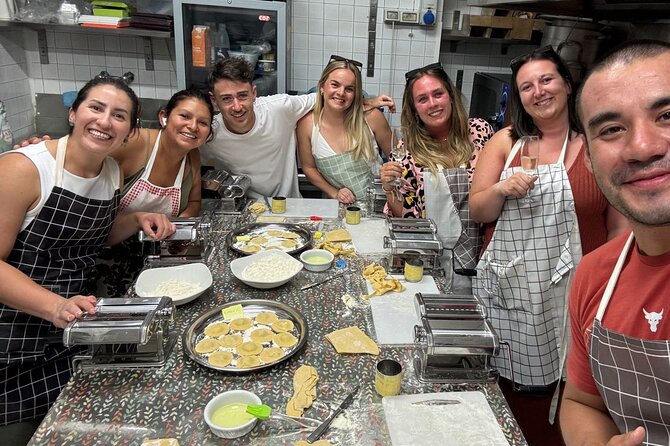
Once everyone is settled, you’ll get your apron and head to your workstation. The core focus is fresh pasta, with hands-on instruction you can take home and repeat.
Here’s what you’re set up to learn:
- how to prepare the perfect pasta dough
- what type of flour to use
- the difference between pasta fresca and pasta secca
- how to shape the pasta at your station
That flour conversation is one of those details that pays dividends. In Italy, fresh pasta quality often comes down to the right flour and handling. Even if you’re not making pasta every week at home, knowing why the dough behaves the way it does helps you troubleshoot next time—too dry, too sticky, tearing, or not rolling evenly.
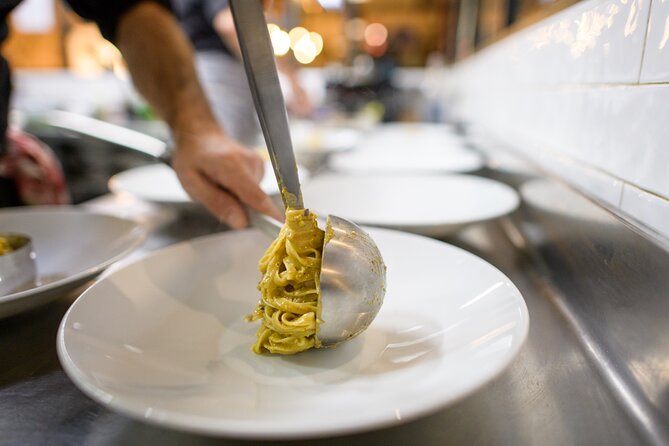
You’ll work toward pasta recipes you’ll serve and eat later. The class menu includes fettuccine with tomato sauce, and it also covers ravioli with ricotta and spinach, finished with butter and sage. That’s a smart combo because it shows two flavors of pasta work: one that’s rolled/cut into noodles and another that involves filling and shaping.
One practical note: fresh pasta is timing-sensitive. If you get distracted or let dough sit too long, it changes. You’ll likely hear the instructor’s advice about managing the dough while other parts of the class are moving along. This is where small-group size helps again—your instructor can correct in real time.
If you’re worried that the class will be too fast, you’re usually in good hands. Chefs like Memmo and Francesco have been praised for patience and clear technique, and that lines up with what you need when the dough is the main challenge.
Tiramisu workshop: making the dessert you’ll actually want to eat
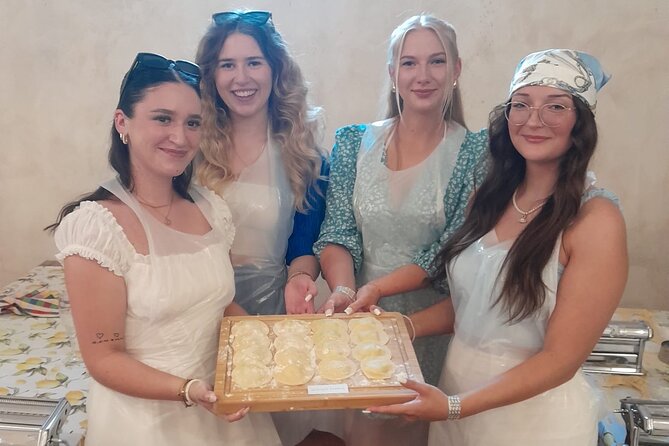
After the pasta work, the rhythm changes to dessert. You’ll learn how to prepare tiramisu with step-by-step guidance. This part matters because tiramisu is one of those desserts people try to “wing” at home, then end up with layers that are either too loose or too firm, or sponge that’s soaked in the wrong way.
In the class setup, you’re not just watching someone else assemble it. You’re guided through the process so you understand what each step is doing.
In practical terms, you’ll learn how to assemble the components and build the layers that give tiramisu its texture contrast. If you’ve ever had tiramisu that tastes great but feels heavy, you know why technique matters. When you understand the method, you can reproduce the balance at home—especially when you’re using quality ingredients like you can find in Italy.
Also, the dessert lesson pairs nicely with the pasta lesson. Together, they teach you two very different types of cooking precision: pasta is about dough handling and shape; tiramisu is about timing and layering. It’s a good pairing for a 3-hour class because it keeps you engaged instead of repeating one skill the whole time.
Lunch or dinner with wine: what you eat and why it feels like part of the lesson
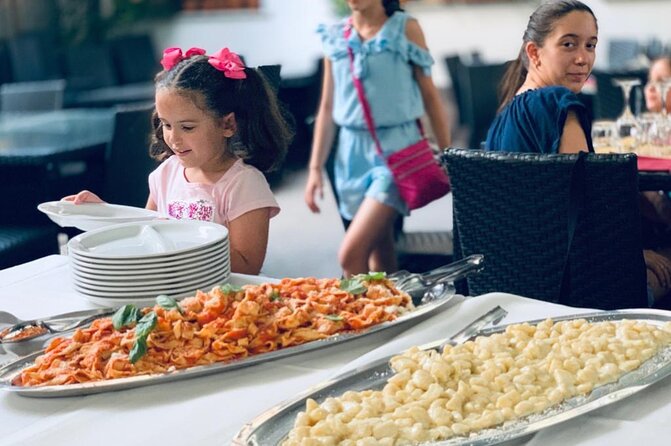
At the end, you sit down together for lunch or dinner, with wine that pairs with the meal. The class includes lunch pasta and tiramisu, and it includes wine plus soft drinks.
Your drink list isn’t vague either. The menu indicates options including prosecco, plus red wine and white wine, along with non-alcoholic beverages. That range is helpful if you’re deciding what to sip while you eat your pasta—some people want bubbly first, others want to settle into red with sauce.
And the food itself is concrete:
- fresh pasta dishes (fettuccine with tomato sauce; ravioli with ricotta and spinach, finished with butter and sage)
- tiramisu for dessert
This is one of the best parts for first-time visitors. You get a “full circle” experience: you make it, then you eat it in the same setting. It’s not just an activity that happens before dinner plans.
That said, keep one consideration in mind. The final serving can be arranged so the restaurant’s workflow stays smooth. One reported concern was that you might not eat strictly your own individual portion. Even if that’s the case sometimes, you’ll still eat pasta and tiramisu from the class menu, and the main value is the method and skills you learn.






Practical group size and language: what to expect if you’re traveling solo or with family
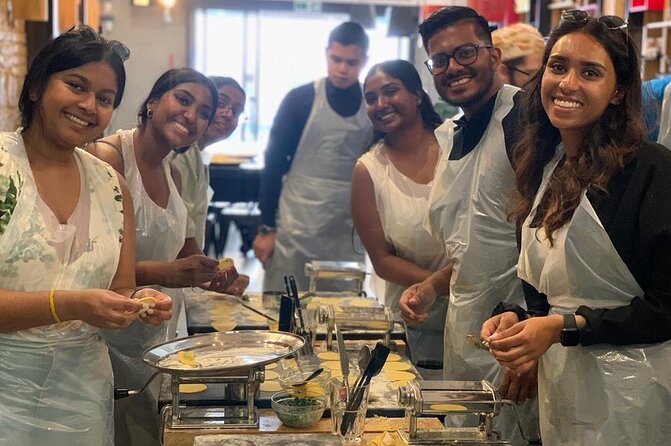
This class works for a lot of travel styles because the structure is simple: hands-on stations, clear guidance, and a shared meal at the end. The group cap of 12 people is especially friendly for solo travelers. You can join without feeling like you’re watching strangers cook from the other side of a room.
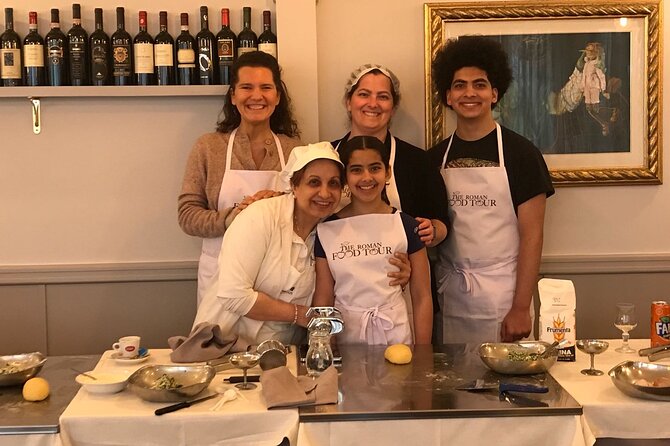
It also tends to work well for families. The experience has been described as great for kids (including younger ages) because children can take part at the station level. If your kids are old enough to follow instructions and handle kitchen tools safely, they usually do fine.
Couples and friend groups also like this format. You share the same steps, then sit together to eat. The social piece isn’t forced; it just happens because everyone is in the same small space, working on the same dough.
Language-wise, it’s English, which reduces friction. You’ll still pick up Italian food vocabulary naturally (flour types, pasta terms, dessert names), but the main instruction won’t be a guessing game.
Price and value: is $83.44 fair for 3 hours in central Milan?
At about $83.44 per person for roughly 3 hours, the value comes from what’s included. You’re not paying only for the cooking lesson. You’re also getting:
- hands-on instruction for fresh pasta and tiramisu
- Prosecco at arrival
- lunch or dinner with the pasta and dessert
- wine (and soft drinks)
When you break it down, that’s the key: you’re buying a coordinated experience that includes both the class and the meal, in a central location. Cooking classes can get pricey when they’re mostly a demonstration or when the food isn’t included. Here, the food and drinks are part of the package.
Tips are not included, so factor that in if you’re the tipping type. But even with that, the overall feel is that you’re paying for a full evening (or midday) activity, not just a quick workshop.
If you’re trying to compare value, look for three things: small group size, real hands-on time, and inclusion of the meal. This class checks all three.
The little things that make the class easier
If you want your experience to run smoothly, keep these practical points in mind:
- Show up on time. You’ll start with the welcome drink and a kitchen walkthrough. Being late can throw off the pacing of the dough work.
- Wear something comfortable. You’ll be at a workstation working with dough and food prep basics.
- Ask quick questions early. The flour and dough guidance is the heart of the class. If something feels off, fix it early.
- Plan for a wine-and-meal finish. This isn’t a class that ends and sends you back to snack bars. You’ll sit down and eat with wine.
- If you care about portions, ask. Since final serving can vary, it’s fair to ask how your meal will be plated.
A final practical tip: if you enjoy repeating recipes, this class is one of the better options because the techniques you learn are transferable. You’re not just collecting a list of ingredients; you’re learning how dough and tiramisu should behave.
Should you book this Milan pasta and tiramisu cooking class?
I’d book it if you want a hands-on Milan experience that mixes local food culture with a real meal at the end. The small group size, the central restaurant location, and the fact that you learn both pasta dough work and tiramisu assembly make it feel like more than a one-off activity.
Skip it (or ask extra questions first) if you’re very sensitive about getting exactly your own prepared portion on the plate. Also, if you’re the type who hates any pace change—because wine, food service, and classroom flow happen together—then you’ll want to confirm how the kitchen manages the serving during busy dining periods.
For most first-timers, families with older kids, couples, and solo travelers who want something fun that still teaches you real skills, this is a solid choice. You leave with two recipes you can actually attempt at home, plus the satisfaction of having done it in the middle of Milan.
FAQ
How long is the pasta and tiramisu cooking class in Milan?
The class is approximately 3 hours.
What’s included in the price?
The price includes lunch (pasta and tiramisu) with wine and soft drinks.
Is it a small group?
Yes. The class has a maximum of 12 travelers.
What language is the class taught in?
The class is offered in English.
Where does it take place?
It happens at a convenient central Milan restaurant, and it’s near public transportation.
What is the cancellation policy?
You can cancel for a full refund up to 24 hours before the experience starts. Tips are not included.