REVIEW · NAPLES
Naples: National Archaeological Museum Tour & Digital Guide
Book on GetYourGuide →Operated by inStazione · Bookable on GetYourGuide
Your phone becomes your museum guide. At Naples’ National Archaeological Museum (MANN), I love how the building feels like a serious world-class museum, and I also like the smart digital guide that carries you room to room. You’ll spend the day moving through major highlights, from the Farnese collection to the famous finds from Herculaneum and Pompeii. One catch: the experience depends on you downloading the audio content ahead of time, because Wi‑Fi and mobile signal can be spotty inside.
If you want a museum day that still feels free and flexible, this works well. I especially enjoyed the way the audio tour points you toward big-name moments like the Temples of Concordia, Juno, and Zeus (for photo-worthy valley views) and the more unusual Secret Cabinet. The only real decision you’ll make is how fast you want to go.
In This Review
- Key points to know before you walk in
- MANN Naples: a museum that rewards your pace
- Priority entry + the phone-based audio guide (how it really works)
- Starting strong: Farnese Collection statues and why they matter
- Herculaneum and Pompeii: frescoes, mosaics, and the human side
- Egypt comes next: Section highlights and temporary exhibition flexibility
- The Secret Cabinet: what you’ll see and how to handle it
- Photo-friendly panoramic views: temples of Concordia, Juno, and Zeus
- Price and value: what you’re actually paying for at $40
- Practical tips that keep the day smooth
- Who this museum audio tour is best for
- Should you book this Naples MANN digital guide tour?
- FAQ
- How long is the Naples National Archaeological Museum tour?
- How much does this experience cost?
- What’s included with the tour?
- Are earphones included?
- Is this visit self-paced?
- How do I receive tickets and the digital guide instructions?
- Do I need to download the audio guide before arriving?
- Is the tour refundable?
- FAQ
- Is the museum tour wheelchair accessible?
- Are pets allowed?
- What should I bring to the visit?
- What if my reservation is late in the day?
- Is there a cancellation policy I should be aware of?
- What language is the tour audio in?
- Is there free Wi‑Fi during the visit?
- Do I need my own guide?
Key points to know before you walk in

- Priority entrance ticket helps you start smoothly without waiting as long at the door
- Smart smartphone digital guide keeps you moving at your own pace, without a group schedule
- Farnese Collection masterpieces give you the backbone of the museum’s sculpture story
- Herculaneum and Pompeii highlights bring everyday objects to life through frescoes, mosaics, and statues
- Egyptian Section plus temporary exhibitions mean you can follow your curiosity, not just a checklist
- Secret Cabinet stops add an extra layer of context to ancient customs
MANN Naples: a museum that rewards your pace

The National Archaeological Museum in Naples is one of Italy’s heavyweight cultural stops. It’s big on purpose: you come here to see how Greek and Roman worlds were collected, curated, and preserved over centuries. The building’s size and layout can feel intimidating at first, but the design is part of why this museum is so satisfying. You don’t just look at objects. You navigate a kind of historical maze, and the payoff is knowing what you’re seeing as you go.
What I like most about this specific tour format is that it’s built for independent exploration. You’re not stuck in a long guided line. Instead, you use a smartphone audio guide while you wander. That’s great if you want to linger with a statue, hop to mosaics, or circle back when something grabs you.
It’s also great if you’re traveling with mixed interests. One person may want sculpture; another may want frescoes. With a self-paced plan, you can both spend time where you care most, instead of forcing one pace onto everyone.
You can also read our reviews of more tours and experiences in Naples.



Priority entry + the phone-based audio guide (how it really works)

This is a 1-day museum visit with two key inclusions: your ticket entrance and the smartphone digital guide app. The priority entrance ticket is valuable because MANN can be busy. Even if you still need to go through museum security, you typically waste less time standing around and more time actually looking at art and artifacts.
The audio guide is the engine of the experience. It’s described as a smart digital guide with voice narration, and the idea is simple: you follow the audio, stop when you want, and keep moving without needing a human guide to translate every room. For me, that’s the right mix of structure and freedom.
But here’s what you must take seriously: offline access. You’ll get the tickets and instructions in advance, and the tour stresses that you should download all the guide contents before your visit. The reason is practical—there’s no free Wi‑Fi in the museum, and coverage isn’t always reliable.
So do this before you leave Naples:
- Make sure your phone is charged (they specifically ask for a charged smartphone).
- Download the audio guide content on Wi‑Fi you trust.
- Bring your own earphones, since they aren’t included.
If you rely on streaming audio, you’re risking the whole experience. Think of the download step as part of the tour itself.
Starting strong: Farnese Collection statues and why they matter
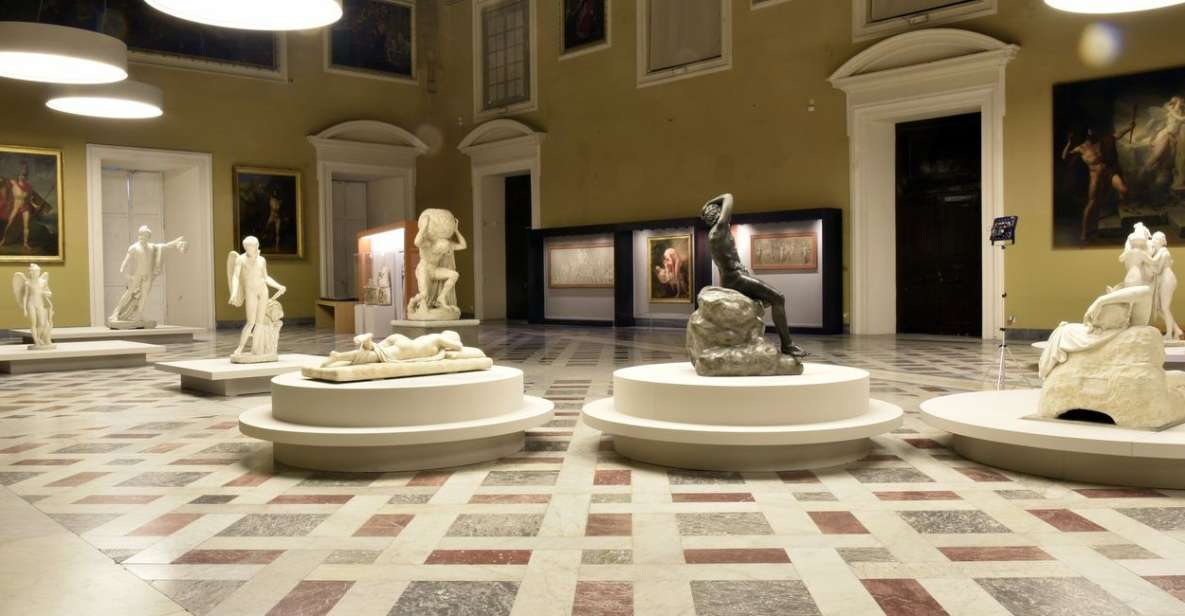
One of the best-known attractions here is the Farnese Collection. In this museum, that collection isn’t just a random set of sculptures—it’s presented as a major legacy the Bourbons inherited. That context matters. When you hear what the collection represents, the statues feel more connected to a bigger story of collecting, display, and power.
In the Farnese rooms, you’ll be surrounded by masterpieces, including sculpture that shaped how later collectors and artists understood classical beauty. Even if you’re not a sculpture superfan, you’ll feel the impact. These are works people have studied for a long time, and the museum places them so you can actually take them in without rushing.
A smart strategy is to choose one or two statues to focus on like you would in a gallery: walk around the work, notice the proportions, then use the audio guide for the historical framing. When you do that, the whole section stops being a blur of marble and becomes a set of stories.
Herculaneum and Pompeii: frescoes, mosaics, and the human side
If the Farnese collection is the museum’s backbone, the finds from Herculaneum and Pompeii are the emotional center. These sites matter because they weren’t just cities of monuments. They were places with rooms, objects, walls, and daily life.
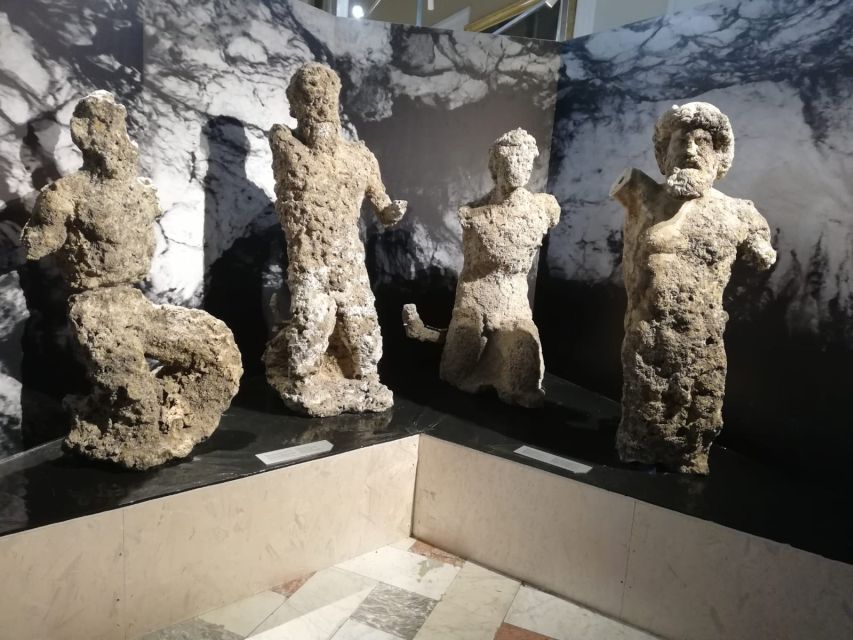
This tour highlights what you’ll actually want to look for: splendid frescoes and mosaics, plus statues and both precious and everyday objects. That everyday piece is the key. When you see objects that weren’t made to be priceless decoration, you start to understand how real people lived—and how their tastes, routines, and homes got frozen in time.
The audio guide format helps here. You can pause where your eye wants to go. Want to focus on a mosaic detail? Stop. Want a quick overview first? Play the relevant section. You’re not waiting for someone else’s pace, and that makes a huge difference in museums where attention is everything.
If you’re short on energy, aim for a handful of strong moments rather than trying to see everything. In a museum like this, depth beats speed.
Egypt comes next: Section highlights and temporary exhibition flexibility
The tour also includes the Egyptian Section, plus the chance to catch temporary exhibitions during your visit. That combination is a practical win. Egypt is one of those areas where a museum can either feel overwhelming or oddly specific. Having a dedicated section means you can find your entry point without guessing where to start.
Temporary exhibitions are a bonus because they give you a reason to adjust your route on the fly. You might come for Pompeii and end up spending extra time on something that’s only here this season. With a self-paced audio guide, you can do that without derailing a fixed itinerary.
My advice: build your day around the core highlights first (Farnese, Pompeii/Herculaneum), then use your remaining time to wander. That way you don’t end up disappointed if a temporary show doesn’t grab you.






The Secret Cabinet: what you’ll see and how to handle it
One of the more memorable stops mentioned is the Secret Cabinet. This is where the museum welcomes finds considered obscene, described as testimony of ancient customs in terms of eroticism.
That doesn’t mean the visit is only about shock value. It’s about context. Art and artifacts can look different through time, and the cabinet is basically the museum’s way of acknowledging that ancient life included sexuality and coded humor, too. If you’re the kind of traveler who likes understanding how cultures worked (not just what they built), this is the part that can stick with you.
If you’re sensitive to explicit material, plan your emotional pacing. Don’t force yourself to “push through” immediately. Use the audio guide to understand what you’re looking at, then decide how long you want to stay.
Photo-friendly panoramic views: temples of Concordia, Juno, and Zeus
You’ll also have a chance for panoramic views tied to the ancient temples of Concordia, Juno, and Zeus. Since the tour’s highlights mention these specifically, you should treat that as a built-in break for looking up from artifacts and out toward the broader setting.
Even if you’re not sure how the museum connects to those temples geographically, the practical point is still the same: you’ll get moments to take photos and reset your eyes. Museums can exhaust you. A view helps you feel the world beyond the display cases.
Price and value: what you’re actually paying for at $40
At $40 per person for 1 day, you’re buying two things: museum entry and a smartphone digital guide you use during your visit. Earphones and a human guide aren’t included, which matters for practical planning.
So the value depends on you:
- If you like self-paced museum time and you can handle phone-based audio, $40 can be a solid deal. You’re not paying for a seat on a bus or for a long live group lecture. You’re paying for access plus a plan.
- If you need a live guide to answer questions, you may feel under-served. This isn’t that kind of tour.
Also factor in the hidden costs of going digital. You need your phone charged, and you’ll want earphones so you can listen comfortably. If you show up without those, you might lose the main benefit you’re paying for.
Practical tips that keep the day smooth
This experience is straightforward on paper, but museums can be messy on the ground. Here are the practical moves that will help.
First: bring ID (passport or ID card). Second: keep your phone ready to go. The tour explicitly requests a charged smartphone, and the audio depends on you downloading content before entering.
Second: expect limited connectivity. The museum and ruins don’t have free Wi‑Fi, and mobile coverage isn’t always good. That’s why the download step is so important.
Third: double-check your access before the day arrives. There’s an important real-world lesson here: in at least one case, a reservation PDF looked more like reservation info than an actual ticket, and the digital guide email didn’t include a working login code. The situation was resolved through museum staff using reservation information. The takeaway for you is simple—before you rely on anything at the entrance, make sure you have both your ticket instructions and whatever access details the provider sends. If something looks missing, contact the provider quickly while you still have time.
Finally: remember the time rule for late reservations. Requests arriving after 6 p.m. are processed the following morning after 8 a.m. If you’re arriving late in the day, don’t count on same-day setup.
Who this museum audio tour is best for
This is a strong fit if you:
- Want a one-day plan in Naples that lets you roam
- Like big-name archaeology without being locked into a group pace
- Prefer learning through audio while you stop and look
- Travel with someone who wants different parts of the museum
It may be less ideal if you:
- Want constant live Q&A from a person
- Struggle with phone tech or offline downloads
- Rely on Wi‑Fi to access content
Wheelchair access is listed as available, and pets aren’t allowed, so plan accordingly.
Should you book this Naples MANN digital guide tour?
I’d book this if you want a flexible, structured museum day with the world-class collections of MANN—and you’re willing to do the one tech step that matters: download the guide content before you arrive. At $40, you’re paying mainly for entry plus an on-phone explanation system, which is a good value if it matches how you like to travel.
If you’re the type who gets frustrated when instructions are confusing, do a quick check before heading out: confirm you have your ticket details and the access needed for the app. When the digital setup works smoothly, this tour turns MANN into a guided walk without the pressure of keeping up. When it doesn’t, you risk losing the very thing you came for.
FAQ
How long is the Naples National Archaeological Museum tour?
It’s valid for 1 day. You can check availability to see starting times.
How much does this experience cost?
The price is $40 per person.
What’s included with the tour?
You get the ticket entrance plus a smartphone digital guide that you download directly to your phone.
Are earphones included?
No. Earphones are not included.
Is this visit self-paced?
Yes. The experience is designed so you can explore history at your own pace.
How do I receive tickets and the digital guide instructions?
A team member contacts you a day before via WhatsApp or email, sending your tickets and instructions for downloading the audio guide to your phone.
Do I need to download the audio guide before arriving?
Yes. You’re asked to download all content before the visit because free Wi‑Fi isn’t available and mobile coverage can be unreliable inside the museum.
Is the tour refundable?
No. This activity is non-refundable.
FAQ
Is the museum tour wheelchair accessible?
Wheelchair accessibility is listed for the activity.
Are pets allowed?
No, pets are not allowed.
What should I bring to the visit?
Bring your passport or ID card and a charged smartphone.
What if my reservation is late in the day?
Reservations arriving after 6 p.m. are processed the following morning after 8 a.m.
Is there a cancellation policy I should be aware of?
The activity is non-refundable, so plan dates carefully.
What language is the tour audio in?
The provided information does not specify languages for the audio guide.
Is there free Wi‑Fi during the visit?
No. The ruins and museums don’t have free Wi‑Fi.
Do I need my own guide?
A human guide is not included. You’ll use the smartphone digital guide instead.