REVIEW · ROME
Borghese Gallery Small-Group Tour with Canova’s Masterpieces
Book on Viator →Operated by Walks - Italy & Spain · Bookable on Viator
Few museums run on such tight lines.
This small-group Borghese Gallery tour gives you a reserved entry window so the rooms stay calm, and an art historian guide to translate what you’re seeing into story, symbols, and why these works ended up here. I also like that you get a focused hit of the museum’s top masterpieces in about 1 hour 30 minutes. One thing to consider: this is a gallery-first experience, so if you want extra time for the gardens, you’ll need to plan that after the tour.
The Villa Borghese setting helps too. You meet near the museum’s double staircase, step into an opulent, historically curated space (once for royals and dignitaries), and then move room to room without the chaos you often get at Rome’s biggest sights. And because groups are kept to a maximum of 15, your questions actually get heard.
Wear comfy shoes. This is a walking tour at a moderate pace, and you’ll want to come ready to handle museum rules about bags and what you can bring inside. If you’re using a wheelchair or need mobility support, the tour can accommodate—just email the Guest Experience team ahead of time.
In This Review
- Key highlights you’ll feel right away
- Villa Borghese calm: what timed entry really buys you
- Meeting at the museum: where to start and what to do before you go in
- The route inside: how a 90-minute highlight tour works
- What to expect in the first moments after entry
- The masterpieces you’ll see (and what to listen for)
- Bernini’s drama: sculpture that feels alive
- Caravaggio’s intensity: light, belief, and realism
- Canova’s elegance: myth and power in refined form
- Raphael’s storytelling: composition you can feel
- Why Cardinal Borghese’s collection feels personal
- The building itself: more than a container for art
- Pacing and what you might miss in a 90-minute format
- Guides that really bring it to life
- Practical value: does a $65.33 ticket make sense?
- Who this tour is best for
- If you have extra time: your best next move
- Should you book this Borghese Gallery Small-Group Tour?
- FAQ
- How long is the Borghese Gallery small-group tour?
- Is the tour offered in English?
- Where do I meet for the tour?
- Is admission included in the price?
- What’s included besides the admission ticket?
- Do I get hotel pickup or drop-off?
- How big is the group?
- Is the tour difficult to walk?
- Can wheelchair users join?
- What’s the cancellation policy?
Key highlights you’ll feel right away
- Timed entry that keeps the gallery calm, thanks to the museum’s controlled group slots
- Art historian guidance that connects sculpture and painting to the people who commissioned them
- Top-name artists in one focused route, including Canova, Caravaggio, Raphael, and Bernini
- A small maximum group size (15) that makes it easier to ask questions
- Headsets (when groups exceed 6) so you can hear clearly without crowding in
- A good “first visit” structure, so you know what matters before you wander on your own
Villa Borghese calm: what timed entry really buys you
Rome is famous for lines. The Borghese Gallery is famous for being different—because it limits who gets in and when. Your ticket is pre-reserved with a scheduled entry time, and the museum’s policy spaces groups at set intervals, which helps keep the gallery from turning into a moving crowd.
In plain terms, you get to look. You’ll notice details you normally miss when you’re elbow-to-elbow. And you also get a better rhythm: your guide can pause in the right spots, explain what you’re seeing, then let you take a few minutes to look without the “next room” pressure taking over.
This is also why the small-group format matters. With a maximum of 15 (and headsets for groups over 6), you can actually hear the guide and still keep your eyes on the artwork.
You can also read our reviews of more tours and experiences in Rome.

Meeting at the museum: where to start and what to do before you go in
You’ll meet at Galleria Borghese, Piazzale Scipione Borghese 5, 00197 Roma. The tour begins at the museum area near the double staircase. That’s a good landmark—use it to orient yourself fast, especially if you’re arriving on foot.
Before you enter, plan for museum screening rules. One practical heads-up from real-world experiences: you may need to check bags, and bringing items like a water bottle might be restricted depending on what the museum is enforcing that day. If you want this to be painless, travel light.
If your confirmation includes any voucher steps, double-check your instructions before you arrive. There have been cases where visitors needed to exchange a voucher for tickets at a counter. Arriving a touch early helps you deal with that without stress.
The route inside: how a 90-minute highlight tour works
This tour runs about 1 hour 30 minutes and ends back at the meeting point. It’s not designed to be a do-it-all marathon. Instead, it’s built around the museum’s most famous works—so you leave with a strong mental map of what’s where and why it matters.
The guide’s job here is important. They don’t just point at statues and paintings. They explain the context: who collected the art, what the collection was trying to show, and how the building itself shaped the experience of viewing.
Because the group is small, you can ask questions without feeling like you’re interrupting a classroom full of people. That changes how you experience the museum. You stop being a passive viewer and start being a curious one.
What to expect in the first moments after entry
Right after you step inside, you’ll likely slow down. This gallery is housed in a former cardinals’ residence and collection, with opulent decoration and an atmosphere that feels more like a carefully kept private home than a modern museum. The contrast helps: the art feels intimate because the room scale is more human.
The masterpieces you’ll see (and what to listen for)
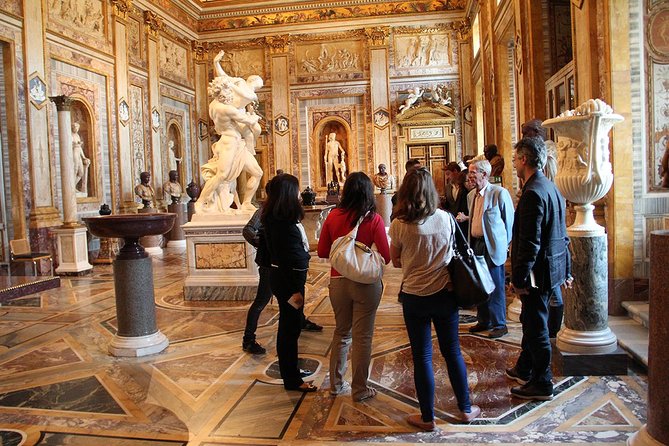
The Borghese Gallery’s big draw is that the works feel close enough to read. Your guide focuses on major pieces across the museum—often in an order that makes the stories easier to follow.
Here are the types of works you can expect to encounter on this tour:



Bernini’s drama: sculpture that feels alive
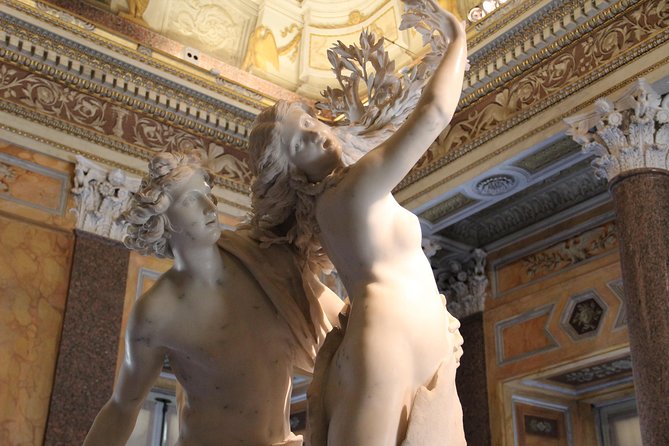
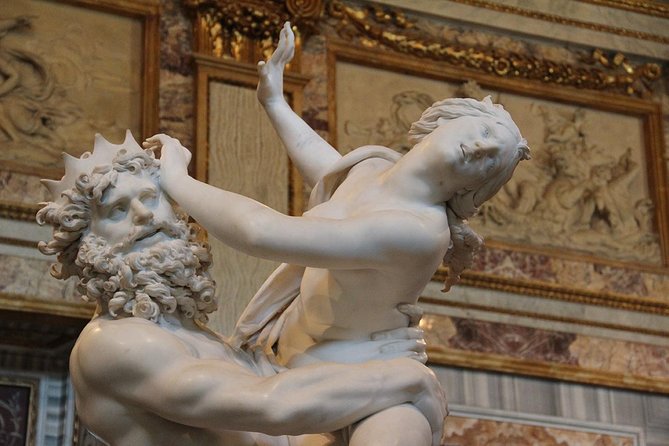
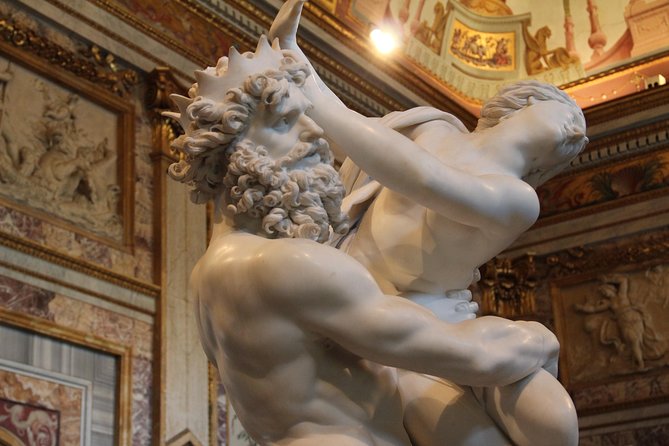
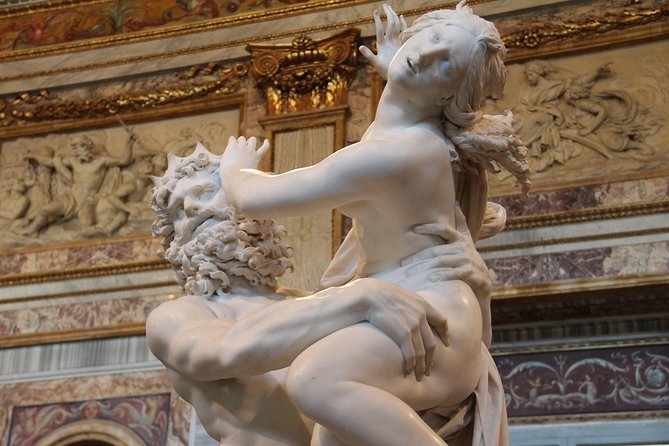
You’ll see Bernini pieces such as The Rape of Proserpina and other celebrated sculpture highlights. Bernini is motion. It’s not just carved stone—it’s frozen tension, expression, and myth.
When the guide explains Bernini here, listen for two things:
- how the composition guides your eyes through the figures
- how the myth is turned into emotion you can read from across the room
If your guide is one of the art-storytellers people mention most often—like Marta or Emily—you’ll likely get extra emphasis on how Bernini’s sculptural technique sells the drama.
Caravaggio’s intensity: light, belief, and realism
You may see Caravaggio works including John the Baptist (and other major works in the gallery). Caravaggio is about immediacy. The faces, the shadows, and the sense that a moment is happening right now.
With an art historian guiding you, you’ll get more than a label like “famous painting.” You’ll learn the kind of details that make Caravaggio different from other painters—especially how he uses realism and light to turn religious subjects into something sharply personal.
Canova’s elegance: myth and power in refined form
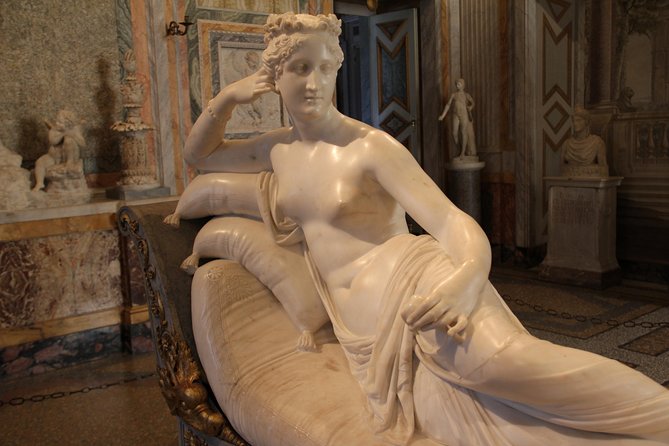
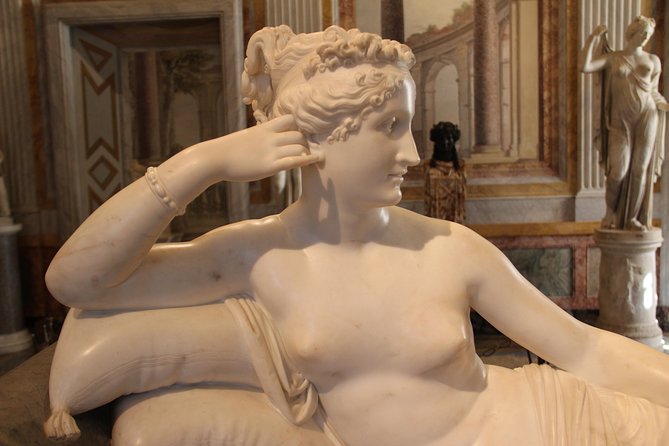
This gallery is also where you’ll encounter sculpture by Antonio Canova, including Pauline Bonaparte. Even if you’re not a “sculpture person,” Canova is a bridge: it’s classical in style, but it carries a direct relationship to power and status.
A good guide helps you notice the in-between—how a historical figure is treated like a classical subject, and how that affects the tone of the whole room.
Raphael’s storytelling: composition you can feel
You might see Raphael’s The Deposition. Raphael’s strength is structure—how the figures are arranged so your eyes move through the emotional arc.
When the guide talks about a work like this, focus on composition. That’s the secret behind why Raphael feels so balanced and readable, even when the scene is emotionally heavy.
Why Cardinal Borghese’s collection feels personal
One of the most enjoyable parts of this kind of tour is learning that this wasn’t a public museum project. This collection grew out of the tastes, personality, and ambitions of a single powerful collector—Cardinal Scipione Borghese.
Your guide explains:
- how the building and the collection are connected
- how the cardinal’s preferences influenced what you see
- how some works were commissioned specifically for this kind of space
That matters because it changes how you view the art. You start noticing not just individual masterpieces, but the “why this pairing?” logic behind the collection. You’ll feel the curatorial thinking, even though it’s from centuries ago.
The building itself: more than a container for art
Villa Borghese isn’t just pretty scenery. It affects your viewing. When art is placed in rooms like this, the scale, lighting, and layout shape what you notice and how long you can comfortably look.
Your guide will also cover some background on the building, so the museum doesn’t stay as an abstract place. It becomes a lived-in story—one tied to status, display, and the collector’s agenda.
This is where the tour earns its value. Without a guide, you might admire the art and the opulence. With a guide, you understand the logic behind both.
Pacing and what you might miss in a 90-minute format
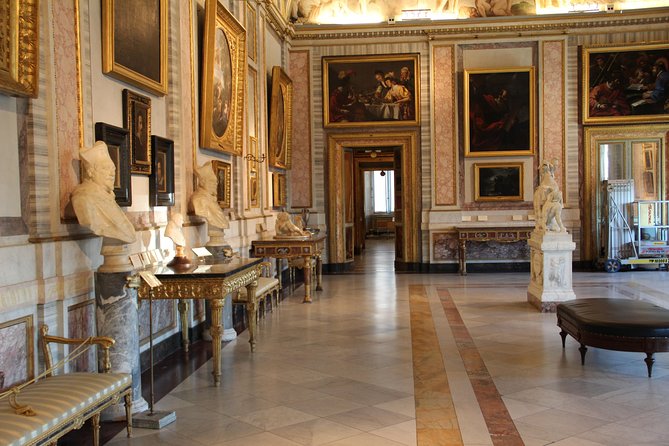
This tour is built for highlights, not every corner. That’s not a flaw—it’s a design choice. In some museum conditions, certain sections can be closed for renovations or limited access, which can change what you see within your time.
So here’s the practical expectation: if you only have a short window in Rome, this tour is a great way to get the essentials and understand them. If you’re hoping for a full self-guided marathon, plan extra time after.
One more pacing thought: different guides emphasize different works based on what’s open and how your group responds. That’s normal. But if you’re the type who wants every single gallery room, you may wish you had more time in the building beyond this structured highlight visit.
Guides that really bring it to life
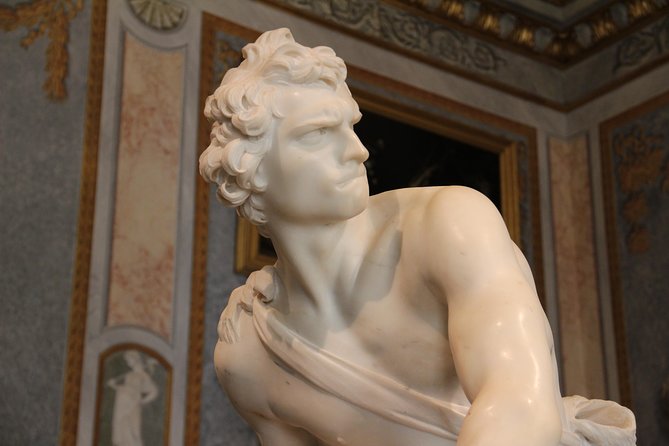
The names you might hear in this tour include Marta, Emily, Francesco, Laura, Ambra, Angela, and Siri. Across those different guides, the consistent pattern is storytelling: history tied to symbolism, and explanations that make sculpture and painting feel less like homework.
If you want the most value, ask a question early—something simple like what to focus on first in a particular work. In a group of up to 15, a good guide can flex to your interests instead of running a rigid script.
Practical value: does a $65.33 ticket make sense?
At $65.33 per person, you’re paying for three things:
- Timed entry to a museum that limits how many people can enter
- An expert, English-speaking guide (art history explanations, not just “follow me”)
- Headsets when groups are larger than 6, which helps you actually hear the commentary
If you tried to do the same trip on your own, you’d still face the challenge of timed access and the reality that Borghese’s masterpieces can blend together unless you have a framework. With this tour, you get that framework in 90 minutes.
So yes, the price can feel like a splurge—but for many visitors, it’s one of the best-priced “time-saver + meaning-maker” experiences in central Rome.
Who this tour is best for
This is a smart choice if:
- you want a first visit to the Borghese Gallery and don’t want to guess what matters
- you enjoy art history when it’s told with stories, not just dates
- you prefer a calmer museum where you can look and ask questions
It may be less ideal if:
- you want to spend most of your day in galleries without a set route
- you expect gardens time to be built into the schedule (this tour ends back at the start, so plan gardens separately)
If you have extra time: your best next move
The Villa Borghese grounds and gardens are part of why this area works so well. If you finish the tour with energy, you can often enjoy the gardens on your own after. Aim for that “slow Rome” pacing—walking, looking at views, then grabbing a coffee nearby.
Also, if you’re the type who likes to return to what caught your eye, you’ll have an advantage. After the guide’s route, your second look becomes much more focused because you already know what you’re searching for.
Should you book this Borghese Gallery Small-Group Tour?
Book it if you want the Borghese Gallery at full value: timed entry, a small group, and an art historian guide who helps you understand the big masterpieces without wasting time figuring things out alone.
Skip it (or add a different plan) if you’re traveling with strict time limits and only want a self-paced wander, or if you’re mainly interested in the gardens rather than the art inside. The tour is designed for art-first viewing.
My take: for most visitors, this is one of those Rome experiences where you pay for both convenience and comprehension. You get to see major works, and you leave knowing what you just saw and why it mattered.
FAQ
How long is the Borghese Gallery small-group tour?
It runs for about 1 hour 30 minutes.
Is the tour offered in English?
Yes. The tour is in English.
Where do I meet for the tour?
Meet at Galleria Borghese, Piazzale Scipione Borghese, 5, 00197 Roma RM, Italy. The tour meets near the museum’s double staircase.
Is admission included in the price?
Yes. The all-inclusive ticket for Galleria Borghese is included.
What’s included besides the admission ticket?
You get an expert English-speaking guide, an expert-guided walking tour, and headsets for groups over 6.
Do I get hotel pickup or drop-off?
No. Hotel pickup and drop-off are not included.
How big is the group?
The tour maximum is 15 travelers.
Is the tour difficult to walk?
It is a walking tour at a moderate pace. Most travelers can participate.
Can wheelchair users join?
The tour can accommodate guests with mobility impairments or wheelchairs, but you should email the Guest Experience team at the time of booking to arrange properly.
What’s the cancellation policy?
You can cancel for a full refund if you cancel up to 24 hours in advance of the experience start time.