REVIEW · NAPLES
Naples: Veiled Christ & Santa Chiara Cloister Small Group Tour
Book on Viator →Operated by Askos Tours · Bookable on Viator
Naples gets under your skin fast. This 2.5-hour small-group walk lines up the Cristo Velato in Sansevero Chapel with the quiet majolica courtyard of Santa Chiara, while you also pass through the city’s big faith and street-level history.
I love that the route feels practical: you’re not just staring at sights, you’re getting the why behind them, from UNESCO-era Neapolitan landmarks to the stories tucked into narrow Spaccanapoli lanes. One thing to plan for is that photos inside the Sansevero Chapel are forbidden, so bring your good eyes, not your camera instincts.
In This Review
- Key Things You’ll Notice on This Walk
- Starting in the Piazza: Where You First Feel Old Naples
- Piazza del Gesù Nuovo and the Church Hops That Set the Tone
- Sansevero Chapel and Cristo Velato: The Stop You Shouldn’t Rush
- Santa Chiara Cloister and Majolica Tiles: The Calm Part of Naples
- Spaccanapoli Squares, Naples Faith, and St. Gennaro at the Duomo
- San Gregorio Armeno, the Nile Statue, and a Quick Neapolitan Coffee Break
- Price and Small-Group Value: What You’re Actually Paying For
- Should You Book This Naples Walk?
- FAQ
- How long is the Naples Veiled Christ and Santa Chiara tour?
- Is the tour in English?
- What is included in the price?
- What is not included?
- Are photos allowed inside Sansevero Chapel?
- Can I bring a pet?
- Is Santa Chiara Cloister open every day?
Key Things You’ll Notice on This Walk

- Cristo Velato (Veiled Christ) is the star stop, with a clear explanation of its 18th-century marble trick.
- Santa Chiara’s cloister delivers a peaceful pause, especially for the majolica tilework.
- Small group size stays under 30, which makes it easier to hear the guide and move as a unit.
- Spaccanapoli gives you that classic Naples feeling: narrow, central, and full of everyday life.
- Duomo di Napoli and St. Gennaro add real-world devotion to the tour’s art-and-architecture mix.
- San Gregorio Armeno is the workshop street for nativity scenes—perfect if you like arts-and-crafts Naples.
Starting in the Piazza: Where You First Feel Old Naples
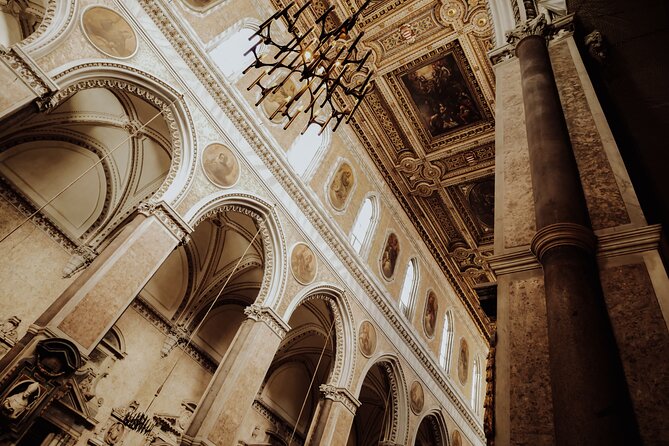
You begin at Chiesa del Gesù Nuovo, right in the Piazza del Gesù Nuovo area, a good launch pad because this part of town is busy without being chaotic. From the start, the guide ties the street scene to the big story of Naples’ old center.
One of my favorite early touches is the UNESCO plaque in the piazza. It’s a small marker, but it sets your mindset fast: this isn’t just sightseeing, it’s a world-recognized historic core that’s been shaping European city life for centuries. Then you roll into nearby church stops, which keeps the walking tour from feeling like one long “line up at the next building.”
If you like having a guide who can turn a square or alley into a timeline, you’ll feel that right away. Guides named Maria, Nicolette/Nicoletta, and Carlo have a pattern in feedback: they make the city readable with stories, not just dates.
You can also read our reviews of more tours and experiences in Naples.



Piazza del Gesù Nuovo and the Church Hops That Set the Tone
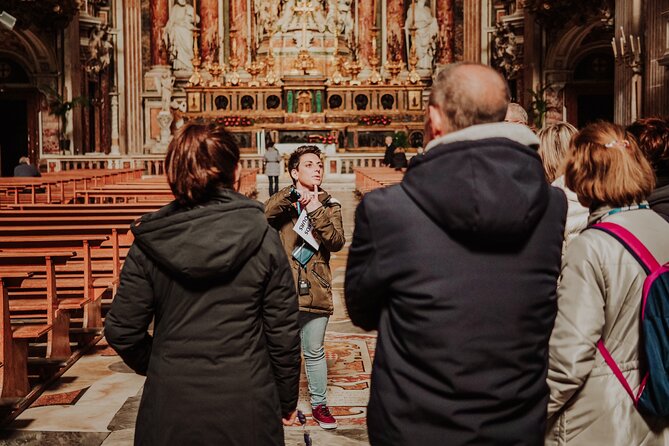
Before you reach the heavier-hitters, you get a sequence of church visits that helps Naples’ religious art click. You’ll stop at Santa Chiara’s monumental complex—a building that’s built in Gothic style and then dressed up later with Baroque decoration. That mix matters because Naples often does this: it layers eras rather than choosing one look.
Next comes Chiesa del Gesù Nuovo, a 16th-century stop that’s often remembered for its beauty and the way it breaks up the walk. These “in-between” moments are valuable. They’re the part of the tour where you start noticing details—edges, facades, and symbolism—that you’d miss if you only cared about the top attraction.
Practical note: most stops in this stretch are admission ticket free, so you’re spending your money where it counts—on the chapel and cloister entries later on. That makes the tour feel balanced instead of turning into constant pay-to-enter stops.
Sansevero Chapel and Cristo Velato: The Stop You Shouldn’t Rush

The heart of the experience is Museo Cappella Sansevero and the statue Cristo Velato (the Veiled Christ). This is the moment when the tour earns its name. You’ll spend time here that isn’t just “look and go,” because the guide explains why this marble work is famous: a dead Christ covered by a veil, sculpted in 18th-century style, and wrapped in legend about turning something real into something marble.
Expect the atmosphere to feel different from the street. You’re in a controlled indoor environment, and your time matters because the rule is clear: photos inside Sansevero Chapel are forbidden. So I’d treat your phone like it’s on standby. Instead, use your eyes, and let the guide’s explanation do the heavy lifting.
This is also where the tour can feel like good value. Your entry fee to Sansevero is included, and it’s the one place where you truly want context. If you love art that mixes illusion, faith, and craft, this stop will justify the cost by itself.
Santa Chiara Cloister and Majolica Tiles: The Calm Part of Naples
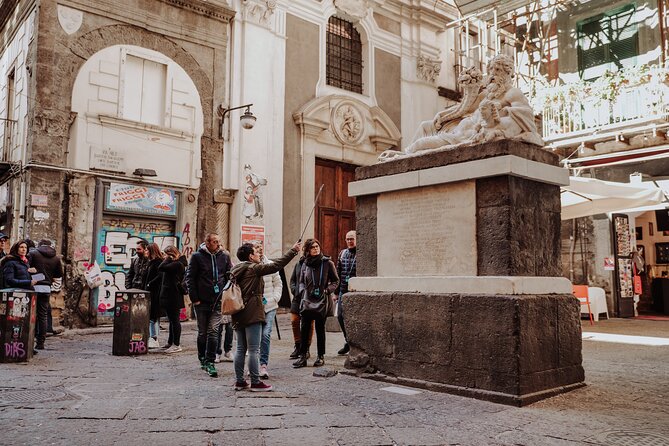
After Sansevero’s intense focus, you head toward Santa Chiara again, this time emphasizing the cloister and its celebrated majolica artwork. This is your breathing space. The cloister has that slow, quiet rhythm that feels like a reset button after the buzzier parts of the old center.
You’ll be there long enough to actually appreciate the tilework, not just photograph it (and not fight a crowd). The entry fee for Santa Chiara Cloister is included, so you’re not paying extra on top of the tour price just to see the courtyard.
One caution: on Sunday afternoon, the cloister is closed. In that case, your booking may shift to an option focusing on entrance to Sansevero Chapel instead. If Sunday is your travel day and Santa Chiara’s courtyard is a must for you, double-check the wording before you go, so you know what you’ll get that afternoon.
Spaccanapoli Squares, Naples Faith, and St. Gennaro at the Duomo

Now you hit Naples in motion. The tour threads through Spaccanapoli, the famous long, narrow street that splits old Naples into two halves. It’s exactly the kind of street where you understand why walking is the point: you catch glimpses of chapels, side streets, and daily life without needing a car or bus.
You also stop at Piazza St. Gaetano, known as the city’s oldest square, with Greek and Roman layers of meaning behind it. Then you continue toward other church squares, including San Domenico Maggiore, where architectural styles overlap in a way you can see with your own eyes.
The tour ends at the Duomo di Napoli (Cathedral of Santa Maria Assunta), where you’ll learn about the devotion around Saint Gennaro. The key idea you’ll hear is the Miracle of St. Gennaro: the blood of the patron saint is believed to liquefy. Even if you’re not religious, the cultural impact is real. The cathedral sits at the center of Neapolitan identity, so it gives the walk emotional grounding, not just visual variety.




San Gregorio Armeno, the Nile Statue, and a Quick Neapolitan Coffee Break

Between big monuments, you get the side streets that make Naples feel lived-in. One stop is San Gregorio Armeno, famous for its nativity scene workshops. If you like crafts, carving, and custom workmanship, this is a great angle on Naples beyond churches.
You’ll also spot Statua del Dio Nilo, an ancient Roman marble statue connected to the Nile river, likely Hellenistic in origin, dated to the 2nd or 3rd century. It’s the kind of odd, fascinating detail that makes a walking tour smarter than a bus ride. You’ll start noticing how often Naples mixes everyday streets with old-world artifacts.
And yes, there’s a short pause built in: a typical Neapolitan coffee break. It’s timed as a small reset so you can keep going without turning the last hour into leg fatigue.
Price and Small-Group Value: What You’re Actually Paying For

The price is $58.65 per person for about 2 hours 30 minutes, and what makes it feel fair is the mix of included admissions and guided routing. You get:
- expert local guidance
- Cappella Sansevero entry
- Santa Chiara Cloister entry
- a small group up to 30
Many tours in big cities look cheap until you add admissions. Here, the expensive pieces are included up front. You’re also walking in a compact old-town zone, so the guide’s route planning is doing real work.
The biggest practical watch-out is still the walking. This is old Naples—narrow lanes, lots of corners, and time spent indoors at major sites. If you’re someone who likes to linger for long stretches, build in the understanding that your time is guided and paced.
If you want to see first-rate sights without handling tickets and timing alone, this format fits. And if you like a guide who can pull stories out of small details, you’ll likely enjoy it—names like Eduardo, Carlos, and Jasmine show up in feedback for exactly that kind of energetic storytelling.
Should You Book This Naples Walk?

Book it if you want a smart first look at central Naples with two high-impact sites locked in: Cristo Velato and Santa Chiara’s cloister. It’s especially worth it if you like art plus context, and you want your religious and historical stops connected instead of scattered.
I wouldn’t pick it as your only Naples plan if you’re chasing a slower, beachy vacation mood. This tour is focused and a bit “route-driven.” Also, if you’re traveling on a Sunday afternoon, make sure you understand the Santa Chiara cloister closure situation for your specific day.
FAQ
How long is the Naples Veiled Christ and Santa Chiara tour?
It runs about 2 hours 30 minutes.
Is the tour in English?
Yes. It’s offered in English.
What is included in the price?
Your tour includes guidance by a local expert, admission to Cappella Sansevero, admission to Santa Chiara Cloister, and it runs as a small group (maximum 30 people per guide). It also uses a mobile ticket.
What is not included?
Meals and drinks are not included.
Are photos allowed inside Sansevero Chapel?
No. Photos inside Sansevero Chapel are forbidden.
Can I bring a pet?
No pets are allowed inside Sansevero Chapel and Santa Chiara Cloister. You’ll need to wait outside during those visits.
Is Santa Chiara Cloister open every day?
The cloister is closed on Sunday afternoon. If you’re going then, the visit may shift to an option focusing on entrance to Sansevero Chapel instead.