REVIEW · NAPLES
Naples Walking Tour: Old Town and Spaccanapoli
Book on Viator →Operated by Napoli Official Tour · Bookable on Viator
The streets of Naples are a living museum. This walk strings together Greek and Roman relics, street-food energy, and real neighborhood life around Spaccanapoli. I like that it keeps moving without rushing, and you get a guide plus headsets so the story stays clear even in tight alleys.
You’ll also like the practical pacing: short stops at key landmarks, then longer segments where you can simply look, orient, and connect the dots. And the included food tasting (sweet or salty) is a nice payback for all that standing and craning your neck. One consideration: with religion and local culture topics sometimes coming up in a way that can feel personal to some people, your comfort level with the guide’s style may matter.
In This Review
- Key highlights at a glance
- Entering Old Town: Piazza Dante to Port’Alba
- Piazza Bellini and the tufa-block walls of Greek Neapolis
- Via dei Tribunali (Decumano Maggiore): the main artery of Naples
- Via San Gregorio Armeno: nativity scenes as street culture
- Spaccanapoli (Decumano Inferiore): walking real Naples
- Piazza del Gesù Nuovo: finishing at a strong historic anchor
- Value for money: what you get for $30.25
- What’s included: guide, headsets, and a sweet or salty bite
- Guide style matters: Rosa, Ines, Georgia, and Giorgia
- Timing and weather: a 4:00 pm Old Town stroll
- Who this tour is best for (and who might want something else)
- Should you book this Naples walking tour?
- FAQ
- How long is the Naples Walking Tour: Old Town and Spaccanapoli?
- What time does the tour start?
- Where does the tour begin and end?
- How much does the tour cost?
- Is the tour offered in English?
- What is included in the price?
- Is there an admission fee for the stops?
- What is the maximum group size?
- Does the tour run in all weather?
- Is free cancellation available?
Key highlights at a glance
- Ancient street grid in motion: follow the decumani, including Via dei Tribunali (Decumano Maggiore) and Spaccanapoli (Decumano Inferiore).
- Big story, small route: you cover major historic stops in about two hours.
- Headsets for clarity: especially helpful for group sizes over 6.
- Included tasting: a sweet or salty bite is part of the experience.
- Most stops have no extra ticket noted: admission ticket-free at the listed sights.
- Guides praised by name: Rosa, Ines, Georgia, Giorgia, and Giovanni are mentioned in top-rated experiences for passion and communication.
Entering Old Town: Piazza Dante to Port’Alba
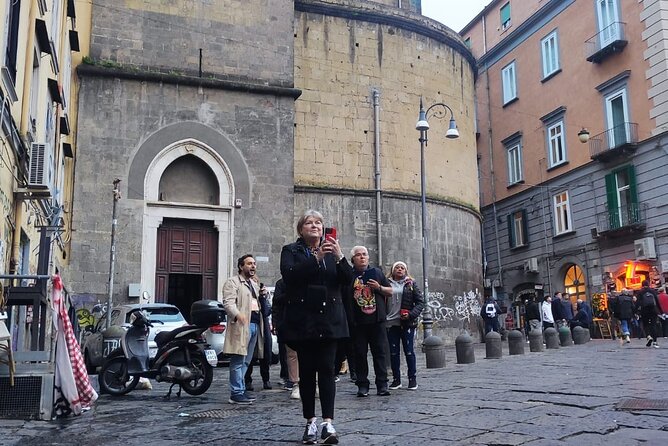
I always like an Old Town tour that starts with orientation, and this one begins at Piazza Dante. From here, you’re walking into Neapolis—ancient Naples—where the street layout helps you understand why certain corners feel like “centers” even today. Expect a guided walk that connects the present-day alleys to Greek and Roman time.
Piazza Dante also works because it’s an easy launch point to start building context. You’re not just seeing stones; you’re learning how the city’s layers fit together. The route begins with a short stop where the guide sets the stage, so later landmarks don’t feel random.
Then comes Port’Alba, one of the old city gates. It’s not a big, showy “attraction” like some fortress gates elsewhere, which is exactly why it’s valuable. You get a sense of the historic center being introduced like a gateway into the denser urban core, not treated as a separate theme park.
Practical note: this area can feel busy around the square, so if you want photos without crowds, do them between group stops rather than trying to pose at every move.
You can also read our reviews of more tours and experiences in Naples.

Piazza Bellini and the tufa-block walls of Greek Neapolis
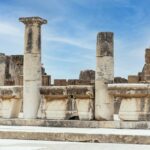
Next, you reach Piazza Bellini, where you can actually admire remains of Greek-era defenses. The highlight here is the detail: a fortification system made of compact tufa blocks, with the walls dated roughly to the second half of the 4th century BC. That’s the kind of fact that changes how you see a “small patch of walls”—suddenly it’s a timeline.
This stop is brief, but it’s useful. You’re learning the idea that Naples didn’t just build homes and churches; it fortified itself when it needed to. The guide’s framing matters here, because street-level ruins can look like leftovers until someone tells you what they were doing.
If you’re the type who loves structure and dates, you’ll appreciate this more. If you’re more of a “show me the views and skip the theory” traveler, it may feel like a quick history hit—but it sets you up for what comes next along the main arteries.
Via dei Tribunali (Decumano Maggiore): the main artery of Naples
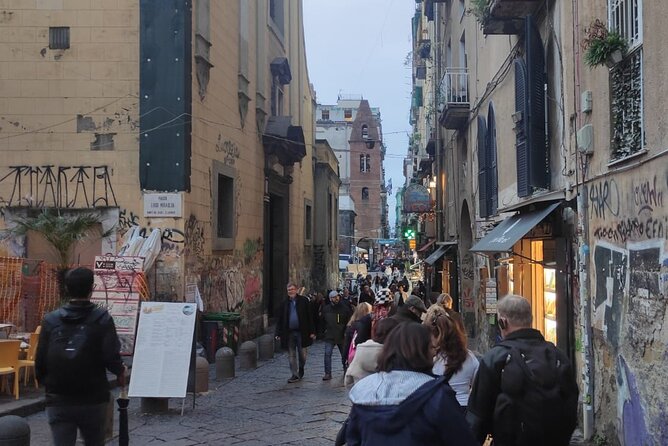
After the quieter ancient-wall moment, you step into the heart of the historic center on Via dei Tribunali, also called Decumano Maggiore. This is the stretch where the city’s past and daily life overlap. You’ll pass historic businesses, including some of the well-known Neapolitan pizza names, and you’ll also see monuments concentrated along the route.
Why this section is so worth it: a “main street” in an old city isn’t just for traffic. It’s where stories pile up—trade, religion, gossip, and revolutions all shared the same sidewalks. Walking it with a guide helps you read the city like a diagram: which lanes branch off from the main artery, and why those side streets feel like their own little worlds.
You’ll also get a preview of where the tour is going: from this decumanus, other historic alleys radiate. One of the most famous is Via San Gregorio Armeno, the street closely tied to nativity scenes. Even if you’re not buying anything, just seeing the street’s role in Naples culture makes the next stop click.
One consideration: this is a busy walking corridor in the daytime and early evening. If your group pace is slower, you may want to step to the side while the guide speaks, so you don’t end up “touring through people” rather than sightseeing.
Via San Gregorio Armeno: nativity scenes as street culture
Now you hit Via San Gregorio Armeno, the famous street of nativity scenes. This is one of those places where Naples culture shows up in everyday form—craft, tradition, and local pride turned into something you can walk through.
The tour’s style here is practical: you don’t just get a photo opportunity. You get the context for why this street matters, and you’ll be able to look past the shopfronts and notice what’s actually being celebrated. Even if you skip shopping (totally fair), you’ll still leave understanding how deeply the city links seasonal tradition to identity.
Time is short here, so I’d treat it like a taste. If you want more than a quick look, you can circle back later on your own—this is the kind of place where extra browsing rewards curiosity.
Spaccanapoli (Decumano Inferiore): walking real Naples
The big mood shift comes with Spaccanapoli, the long, iconic street that runs from the Quartieri Spagnoli toward Forcella, dividing the city in the direction of the Decumano Inferiore. The tour frames it as a walk into the real Naples—churches, apartments where locals live, older buildings, and small bars you’d otherwise miss.
This is the section that makes the whole experience feel grounded. You stop treating Naples like a museum and start seeing it as a functioning neighborhood. Even when you’re looking at historic architecture, you’re also watching daily rhythms: people going about their day, doors opening into courtyards, small storefront life continuing along the same axis for generations.
Why it works especially well for first-time visitors: Spaccanapoli is easy to recognize later, so once you learn it on foot, you can navigate the old center with more confidence. You’ll also understand the city’s street logic—how the decumani help define where the “center of gravity” feels like it is.
Practical tip: bring comfortable shoes. Spaccanapoli is a long, continuous walking stretch, and Naples sidewalks can be uneven in spots. If you’re prone to blisters, add a little padding now rather than later.


Piazza del Gesù Nuovo: finishing at a strong historic anchor
The tour ends at Piazza del Gesù Nuovo, a major historic square in the center. It’s surrounded by landmarks that help you keep your mental map intact: the church of the same name, the Basilica of Santa Chiara, and a cluster of characteristic restaurants.
This ending is smart because it’s not a “nowhere finish.” You land somewhere you can realistically linger. If you still have energy, you can turn dinner into a continuation of the walk’s themes—old buildings, street life, and that Naples sense of turning even square corners into social space.
For photo lovers: this is a good place to stop and frame wider shots. Earlier stops are about detail and context; this one lets you step back.
Value for money: what you get for $30.25
At $30.25 per person for about two hours, the value comes from three things: a tight route, guided interpretation, and included extras. The route covers multiple major anchors—Piazza Dante, Port’Alba, Piazza Bellini, Via dei Tribunali, Via San Gregorio Armeno, Spaccanapoli, and the Piazza del Gesù Nuovo finish—without turning the experience into a whole-day commitment.
Small-group format matters too. The cap is 20 travelers, which usually means better movement through crowded streets and a higher chance your questions won’t get lost. You’re also paying for direction that helps you connect sights that might otherwise look like separate stops.
The included food tasting is a quiet but real value add. When you walk a dense route, you’re burning time and energy; one sweet or salty bite helps make the effort feel like it paid off. It’s also a simple way to sample something local without committing to a full meal right in the middle of sightseeing.
What’s included: guide, headsets, and a sweet or salty bite
This tour includes a local guide and, for groups from 6 participants, headsets so you can hear clearly while walking. In Naples’ narrow streets, that headset detail is more important than it sounds. Without it, you constantly lose the guide to street noise and turning corners.
You also get the mobile ticket, which is handy if you want to travel light and skip paper confirmations. The tour is listed as offered in English, with confirmation sent at booking.
Food tasting is included and described as sweet or salty, so you can expect a small local snack rather than a full tasting menu. It’s the right size for a walking tour: enough to break the rhythm for a minute, not enough to slow you down for the rest of the route.
Guide style matters: Rosa, Ines, Georgia, and Giorgia
One of the clearest themes from the strongest experiences is guide communication. Names like Rosa, Ines, Georgia, and Giorgia come up alongside feedback about passion, clear explaining, and good attention. If you like a guide who can connect history with street-level life, you’re likely to enjoy the energy.
At the same time, not every guiding style lands well for everyone. One negative note described a guide who felt rude and wouldn’t welcome questions, plus remarks that came off as insensitive for some visitors. The lesson for you: decide what you want from the guide—facts only, or more commentary—and set your expectations early.
If you’re the kind of traveler who enjoys asking questions, pick a time when you can speak up confidently. If you’re mostly there to walk and absorb, you can relax and let the guide’s flow carry you.
Timing and weather: a 4:00 pm Old Town stroll
The start time is 4:00 pm, and the tour runs about two hours. That late-afternoon timing is a practical sweet spot in a walking-heavy city: the worst heat is often behind you, and the light can be nicer for street scenes.
One other reality check: the experience notes that it requires good weather. If rain hits hard, plans can change. If you’re scheduling multiple outdoor activities, keep a buffer so your day doesn’t feel brittle.
Also, this is a walk in a dense historic center, so it’s smart to plan for real sidewalk time. Stop durations are listed as short segments, so you won’t be waiting around for long breaks.
Who this tour is best for (and who might want something else)
This tour suits you if you want a quick, organized way to understand the structure of Naples’ historic core. It’s especially good for first-time visitors who want to learn the names and logic of major streets—Decumano Maggiore and Decumano Inferiore—and then explore on your own afterward.
It also fits well if you want a local feel rather than only famous monuments. Spaccanapoli is described as a walk through places where locals live, plus churches and small bars, which makes it feel less like a staged “tour route.”
If you’re traveling with kids or you prefer very slow pacing, keep in mind the tour is only two hours but still covers multiple streets. Comfortable shoes and patience for city crowds are the real requirements.
If you need extra religious neutrality from a guide’s commentary, do a quick reality check when you start. Guiding approach can be personal, and your comfort matters.
Should you book this Naples walking tour?
Book it if you want a smart orientation walk through Old Town that links Greek and Roman remains to the street life you’ll still see hours later. The $30.25 price makes sense when you factor in the guide, headsets, and included tasting, plus a route that covers the biggest “connective tissue” streets in a manageable time.
Consider skipping or switching options if you strongly prefer a no-opinion, strictly factual narration style, or if you know you might bristle at cultural or religious commentary. Also consider your weather day—this one depends on it.
If you’re planning your first Naples evening, this is a solid choice. You’ll leave with street names, clear mental geography, and the kind of context that makes the rest of the city feel less confusing.
FAQ
How long is the Naples Walking Tour: Old Town and Spaccanapoli?
The tour lasts about 2 hours.
What time does the tour start?
It starts at 4:00 pm.
Where does the tour begin and end?
It begins at Piazza Dante and ends at Piazza del Gesù Nuovo.
How much does the tour cost?
The price is $30.25 per person.
Is the tour offered in English?
Yes, it is offered in English.
What is included in the price?
The tour includes a local guide, headsets (for groups of 6 and on), and a food tasting (sweet or salty).
Is there an admission fee for the stops?
The listed stops are marked as admission ticket free.
What is the maximum group size?
The tour has a maximum of 20 travelers.
Does the tour run in all weather?
No. It requires good weather.
Is free cancellation available?
Yes. You can cancel up to 24 hours in advance for a full refund.