REVIEW · FLORENCE
Pitti Palace, Palatina Gallery and the Medici: Arts and Power in Florence.
Book on Viator →Operated by FlorencePass · Bookable on Viator
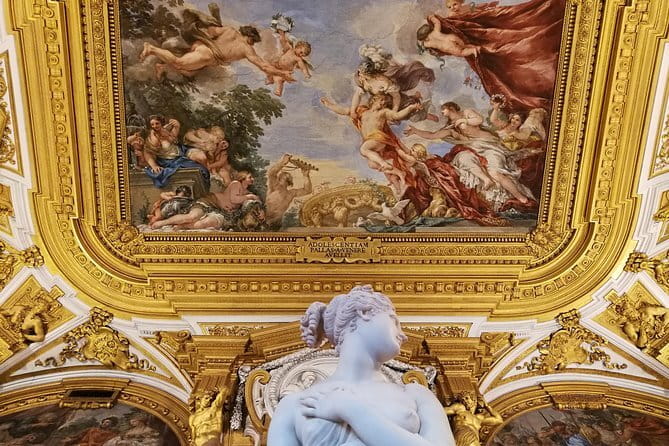
Medici power lives in every room. This Pitti Palace experience pairs a fast entrance with a guide who turns the Palatine Gallery into a real story—how the Medici used art to show authority, taste, and control. You’ll walk room to room, hearing what matters behind the scenes, from the palace itself to the artists whose paintings still command attention.
I particularly love the way the tour connects artworks to technique and drama, not just names on labels. Seeing major artists like Raphael, Caravaggio, Titian, Pietro da Cortona, and Rubens up close, with focused explanations, makes it feel less like wandering and more like watching a play. The main drawback to plan around: this tour is strongly art-centered, and Boboli Gardens aren’t part of the visit, so if gardens are your priority, you’ll want to add them separately.
In This Review
- Key moments worth circling
- Starting at Piazza Pitti: get your Florence bearings fast
- Getting into Pitti Palace without the wait
- Palatine Gallery layout: art-first, not chronological storytelling
- The Medici angle: power, collecting, and how ruling shows up on walls
- Art highlights you’ll actually remember: Raphael, Caravaggio, Rubens
- Views through the windows: Santo Spirito and Boboli without the extra ticket
- Small-group comfort: earsets help you hear the guide
- How long it lasts (and how to plan your day)
- Price and value: why $82.27 can still make sense
- Should you book this Pitti Palace and Palatine Gallery tour?
- FAQ
- How long is the tour?
- How many people are in the group?
- Is the tour offered in English?
- Does the tour include timed entry into Pitti Palace and the Palatine Gallery?
- Are earsets provided?
- Is Boboli Gardens included in this tour?
- What ID do I need for entry?
- Can I cancel for a refund?
Key moments worth circling
- Skip-the-line timed entry into Pitti Palace so you waste less time waiting.
- Small group (max 14) with earsets when groups are larger, which keeps the guide’s voice clear.
- Aesthetic room layout, not chronological order, so the guide helps you follow the meaning.
- Medici history in context, especially how they took over and ruled from this palace.
- Major highlights across centuries, including work by Raphael and Caravaggio.
- Views from the windows toward Santo Spirito and Boboli Gardens after you’ve soaked in the art.
Starting at Piazza Pitti: get your Florence bearings fast
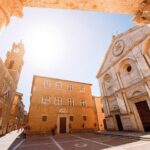
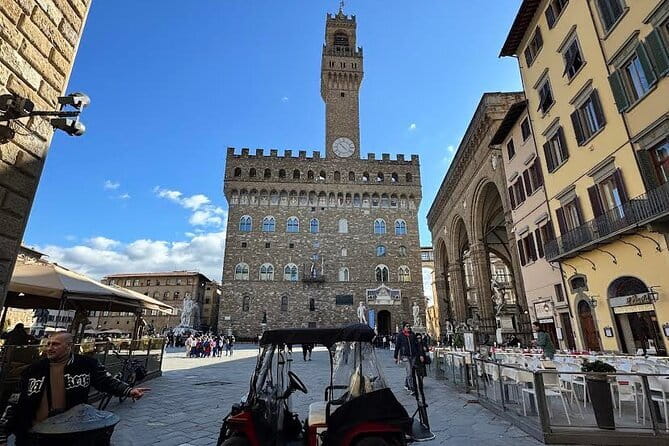
Your tour begins at the front of Pitti Palace, in Piazza de’ Pitti. Even if you’ve seen Florence’s big-picture highlights, this is a smart opening because it gives you a sense of scale. Pitti is a “power palace” kind of place, not a cute side street stop. Standing there, you’ll understand why it mattered that the Medici controlled something this grand.
A short orientation in the piazza helps you set expectations for what’s inside. From the outside, Pitti can look like a serious block of stone. Inside, though, it becomes a maze of opulent rooms where art and politics overlap. That contrast is part of the fun.
If you’re the type who likes to understand where you are before you enter a museum, you’ll appreciate this quick “place first” start. It also helps reduce the usual Florence problem: you arrive, you’re overwhelmed, then you drift. Here, you’re guided right away.
And since the meeting point is easy to reach with public transportation, you can build the rest of your day more confidently. Florence is walkable, but it’s also easy to overschedule. Starting at Pitti means you can plan a Museum day and still have energy left.
You can also read our reviews of more tours and experiences in Florence.
- Tuscany Day Trip from Florence: Siena, San Gimignano, Pisa and Lunch at a Winery
★ 5.0 · 21,634 reviews

Getting into Pitti Palace without the wait
One of the practical wins here is timed entry that helps you bypass the main entrance lines. In a city where famous museums can turn into waiting games, this matters. You’re paying for guidance, sure—but you’re also buying time and momentum.
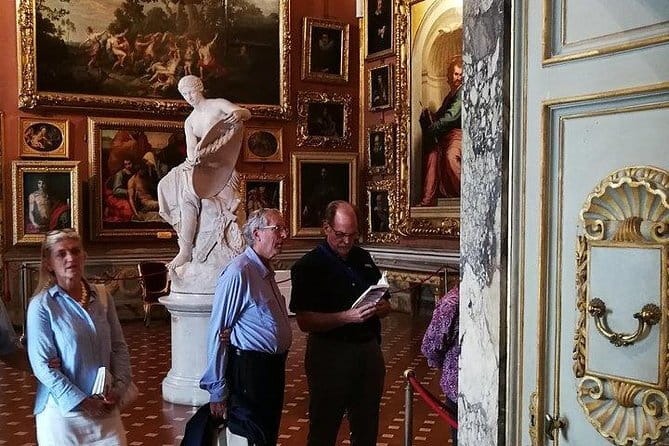
The tour uses that timed ticket to get you inside and moving. Once you’re in, your guide sets the pace: you’re not just pushed through rooms. You’re given a reason to look closely—where your eyes should land first and why certain works were collected in this specific setting.
The palace itself can feel like an experience with friction if you do it solo. Paintings everywhere, rooms with different vibes, and not a lot of “start here” signage in your head. With a guide, you turn that confusion into a guided route.
If you’re sensitive to crowds, you’ll also like that the group stays small—up to 14 people. That makes it easier to hear your guide and easier to pause without blocking the people behind you.
Tip: bring your patience for the palace flow. Even with timed entry, galleries inside have their own rhythm. The guide will keep things moving, but you’ll still want to slow down when a painting grabs you.
Palatine Gallery layout: art-first, not chronological storytelling
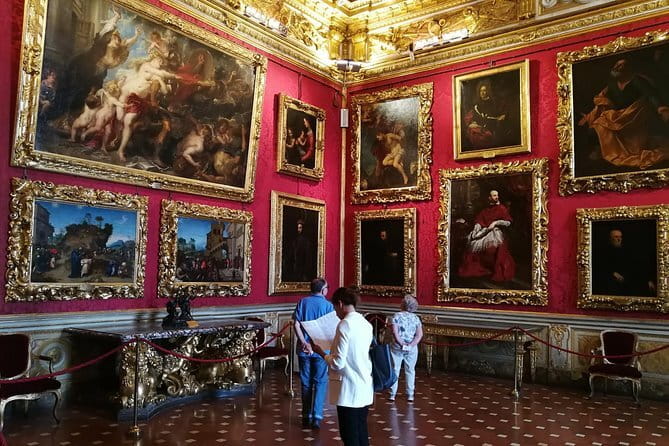
Inside, the focus is the Palatine Gallery, where the rooms are arranged for aesthetic effect rather than a strict timeline. That’s a key detail. If you were hoping for a neat “renaissance to baroque” ladder, the gallery won’t behave that way.
Instead, the tour helps you read the display like a curated argument. You’ll notice how different schools of art sit together and how the Medici collection showcases status through variety. Your guide explains why the rooms feel the way they do, and what that says about the owners’ priorities.
Expect to spend most of your time inside the gallery, moving from room to room while learning the palace story in parallel. You’ll hear how the Medici took over the palace in the 16th century, then later lost power in the 18th century. That arc gives the art a political backdrop. The paintings aren’t only beautiful objects. They’re tools: tools for collecting prestige, shaping reputation, and signaling taste.
This is where the best guides make a real difference. A great guide doesn’t just point at famous names. They explain what to look for—composition, color choices, the emotional cue in a face or gesture, and what technique might be behind the effect.
If you enjoy the craft side of art (how a work is made and how it works), you’ll likely find the explanations especially satisfying. And if you love drama, the Medici context helps too. The palace is basically a stage set for power.
The Medici angle: power, collecting, and how ruling shows up on walls
The tour doesn’t treat the Medici like a footnote. It uses them as the lens. You’ll learn how the family’s rise connected to this palace and how their collecting habits helped reinforce their standing.
One thing I appreciate is the balance: you get Medici history, but you’re not trapped in a lecture. The story stays connected to what you’re seeing. That matters, because the Medici were not only patrons—they were decision-makers. The collection reflects choices: what to acquire, what to display, and how to turn wealth into lasting cultural authority.
This also explains why you’re in the Palatine Gallery rather than a more “timeline museum.” The point isn’t just to learn facts. It’s to understand how taste functions as power.
Here’s a consideration, based on what people often want: if you come expecting a tour that feels like walking through the Medici home with lots of original furnishings, you might be disappointed. The rooms are largely about art display. You may hear how they used the palace, but the experience is still fundamentally a museum experience centered on paintings.
That’s not a flaw—it’s just a mismatch to watch for. If your goal is mainly to see how the Medici lived day to day, look for other add-ons that focus on domestic life. If your goal is to understand how the Medici used art to project power, this tour fits like a glove.
Art highlights you’ll actually remember: Raphael, Caravaggio, Rubens
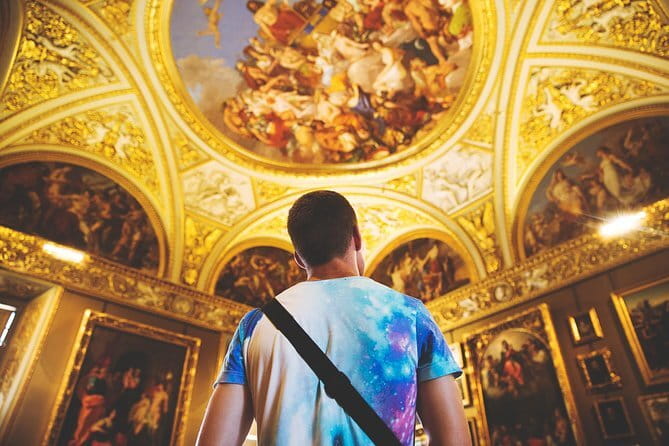
This gallery is full, and that can be a problem for solo visitors. There’s too much to process. The tour solves that by guiding your attention.
You’ll see works by major figures including Raphael and Caravaggio, plus artists like Titian, Pietro da Cortona, and Rubens. The guide’s job is to stop the “famous painting blur” and make each work feel readable.
What I like most about the way this is presented is that the guide talks about the story and the technique. That turns a painting from an image you pass by into something you can decode. You’ll hear why a scene was composed the way it was, what kind of emotional impact the artist aimed for, and how that style ties back to broader artistic trends.
In the reviews, you’ll see names like Camilla, an art restoration artist who brings technical insight and answers questions with depth. You may also get guides like Cristiano, known for decades of experience, or guides such as Sarah, who did an excellent job explaining the palace setting along with the art. The common thread is that the guide doesn’t treat this as a checklist.
If you’re the kind of person who enjoys learning about restoration, brushwork, and what makes a painting hold your attention, this is a strong match. If you’re hoping for lots of free time to wander without guidance, remember the tour is guided for a reason.
And yes, it’s a lot of art in about two hours. If you’re prone to museum fatigue, plan a lighter afternoon after. Florence will still be there. Your brain might not.
- The Best tour in Florence: Renaissance & Medici Tales – guided by a STORYTELLER
★ 5.0 · 12,316 reviews





Views through the windows: Santo Spirito and Boboli without the extra ticket
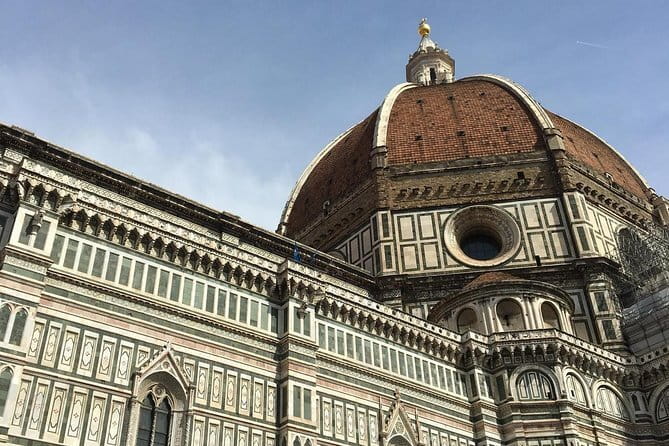
Don’t rush past the moments near the windows. While the tour is mostly about the interior galleries, you’ll get views toward Brunelleschi’s Santo Spirito Basilica and the Boboli Gardens.
That’s a smart payoff because it links the museum world to Florence outside. You see how this palace looks outward—toward the city and toward the gardens that many people associate with Medici grandeur. It’s like getting a preview of what you could explore next.
But here’s the practical caution: the gardens themselves aren’t included as a full stop in this experience. Some people assume that the mention of Boboli means you’ll walk through them during the tour. If gardens are a priority, don’t assume this ticket covers them. You’ll likely need a separate visit.
That said, those window views can still make the palace feel bigger and more connected to Florence as a whole. It’s one of those little “okay, now I get it” moments that helps everything click.
Small-group comfort: earsets help you hear the guide
The small-group size is a major quality-of-life factor. With max 14 participants, the flow is manageable. You’re close enough to the guide to ask questions, but not packed in like a human paintbrush.
The tour also provides earsets for groups of 4+. That means you don’t need to play museum speaker-off with the person behind you. For a tour inside rooms where voices can bounce around and people naturally talk softly, earsets make a big difference.
Practical tip: if you’re prone to losing earbud cases, bring a small zip bag. You’ll handle the headset quickly, but keeping it together saves stress.
In a city known for art, sound matters. If you can hear the guide clearly, you can actually follow the explanation. That turns your time into learning, not just looking.
How long it lasts (and how to plan your day)

The tour runs about 2 hours. That’s a good length for Pitti and Palatine Gallery because you get meaningful coverage without feeling like you have to live inside the museum all day.
You also end inside the gallery space, which is useful. You can continue exploring on your own afterward if you want. That open-ended finish means you can return to the works that caught your eye during the guided route.
To plan well, pair this tour with a lighter second activity. Think of it like a mental workout. Raphael and Caravaggio can be emotionally intense. It’s better to follow with a walk, a café break, or another short stop than to stack a second major museum right away.
Also, consider which day of the week you go. You’ll be in good shape if you book with enough advance notice. This experience is commonly reserved ahead, so securing a slot earlier helps you avoid last-minute compromises.
Price and value: why $82.27 can still make sense
At $82.27 per person, the price isn’t “impulse cheap.” But value isn’t only the ticket price. What you’re buying is:
- A timed entry approach that saves you time at the entrance
- A licensed English-speaking guide
- Small-group attention (max 14)
- Earsets when the group size calls for it
- Focus on the Palatine Gallery, where you’d otherwise need to spend extra time figuring out what to see and why
Also, there’s an entry cost component connected to Palazzo Pitti access (listed as €19). When you add that to the cost of a guided, time-saving route, the total starts to look more reasonable.
The key question for you is your motivation:
- If you want the art experience with context and you like explanations that connect technique to meaning, this price likely feels fair.
- If you want a quick look only, you might decide you’d rather self-tour and spend the money elsewhere.
That’s the honest tradeoff. A guided tour helps most when you feel you don’t want to spend your energy sorting details on your own.
Should you book this Pitti Palace and Palatine Gallery tour?
Yes, if you want a guided, art-focused visit that helps you understand what you’re seeing. I’d especially recommend it if you:
- love big-name painters like Raphael and Caravaggio
- want Medici context tied directly to artworks
- prefer small groups and clear audio (earsets)
- would feel overwhelmed trying to organize the palace on your own
I’d reconsider or adjust expectations if:
- you’re mainly hunting for a heavy Medici “how they lived” experience with lots of original furnishings
- you also want Boboli Gardens included as part of the same visit (it isn’t part of this tour focus)
- you personally hate long explanations and could find it too detailed
If you’re in the first group, book it. This is one of those Florence stops where a good guide changes the whole thing from sight-seeing into understanding.
FAQ
How long is the tour?
It’s about 2 hours (approximately).
How many people are in the group?
The group is limited to a maximum of 14 participants.
Is the tour offered in English?
Yes. The tour is offered in English.
Does the tour include timed entry into Pitti Palace and the Palatine Gallery?
Yes. Timed entry tickets for Pitti Palace Palatine Gallery are included.
Are earsets provided?
Earsets are included for groups of 4 or more.
Is Boboli Gardens included in this tour?
Boboli Gardens are not part of the tour visit. You can see them from the palace windows, but the tour focuses on the Palatine Gallery inside Pitti Palace.
What ID do I need for entry?
You’ll need a valid passport or ID document that matches the name provided when booking. The full names of all travelers must be provided; otherwise, entry may be denied.
Can I cancel for a refund?
Yes, you can cancel for a full refund if you cancel up to 24 hours in advance of the experience start time.
You Might Also Enjoy



More Tour Reviews in Florence
- Tuscany Day Trip from Florence: Siena, San Gimignano, Pisa and Lunch at a Winery
★ 5.0 · 21,634 reviews - The Best tour in Florence: Renaissance & Medici Tales – guided by a STORYTELLER
★ 5.0 · 12,316 reviews