REVIEW · POMPEII ARCHAEOLOGICAL SITE
Pompeii: Entry Ticket with Optional Audio Guide
Book on GetYourGuide →Operated by GetYourGuide Tours & Tickets GmbH · Bookable on GetYourGuide
Pompeii turns a normal day into time travel. This reserved entry ticket gets you into one of Italy’s most famous UNESCO sites, and the audio guide helps you make sense of streets, homes, baths, and temples as you wander at your own speed. I especially like the clear split between Pompei Express (city-only) and Pompei+ (city plus villas), and how the audio experience can function like a quick on-the-ground orientation tool. One possible drawback: entry and audio pickup can feel a bit confusing at first, and the audio system may not always match your exact spot in every room.
You’ll walk through a Roman city preserved under volcanic ash, and you’ll actually see the kinds of details that make the story stick: mosaics in the public baths, the market where people grabbed lunch, and major stops like the amphitheater and the Villa of the Mysteries. Consider the optional villas carefully, because Pompeii is large and a full Pompeii+ route means more walking and a tighter last-entry cutoff by season.
In This Review
- Key highlights that make this ticket worth considering
- Pompeii Express vs Pompei+: which option fits your wish list
- Pompei Express: the city core
- Pompei+: city plus the suburban villas
- Price and value: is $26 a fair deal?
- Getting your voucher and entering: where people lose time
- Porta Marina Superiore audio desk: how to avoid audio-guide headaches
- Pickup and return location
- The headphone reality check
- ID deposit
- Languages
- How well does it work for navigation?
- How to pace Pompeii for a full day (without burning out)
- Plan for walking, not just sightseeing
- Use luggage storage so you can move
- Build your day around “anchors”
- Ancient streets you’ll actually understand: forum life to baths mosaics
- Market and lunch culture
- Public baths and mosaics
- Temples and religious spaces
- Villas and the House of the Faun: where Pompeii gets personal
- Villa of the Mysteries (especially with Pompei+)
- Villa of Diomedes and Villa Regina + Antiquarium
- House of the Faun
- Amphitheater, temples, and the best photo moments
- The amphitheater: imagine the audience
- Temples: Venus, Apollo, Jupiter
- Vesuvius in the background
- The furthest parts and the petrified bodies: stamina and strategy
- Practical on-site tips that make the day run smoother
- Who should book this Pompeii audio-ticket experience?
- You’ll love it if…
- You might want extra help if…
- Should you book Pompeii Entry Ticket with Optional Audio Guide?
- FAQ
- How long is the Pompeii ticket valid?
- What’s the difference between Pompei Express and Pompei+?
- Do I need an audio guide to enjoy Pompeii?
- Where do I pick up and return the audio guide?
- Are Bluetooth headphones compatible with the audio guide device?
- Is the audio guide included in the price?
- What languages are available for the audio guide?
- What do I need to bring with me?
- Is Pompeii wheelchair accessible?
- Is free cancellation available?
Key highlights that make this ticket worth considering
- Pompei Express vs Pompei+: choose city-only or add suburban villas like the Villa of the Mysteries
- Phone voucher + reserved entry: you’re not stuck line-waiting as long at the ticket moment
- Official audio guide pickup at Porta Marina Superiore: you’ll get the device at the park’s audio desk
- Free luggage storage: less stress while you hike through the site
- Major Pompeii anchors: amphitheater, public baths mosaics, temples, and famous villas
Pompeii Express vs Pompei+: which option fits your wish list
This is one ticket with two different levels of what you’ll get to see, and that choice matters more than you’d think.
You can also read our reviews of more tours and experiences in Pompeii Archaeological Site.



Pompei Express: the city core
Pompei Express includes the ancient city of Pompeii, meaning you focus on the dense, center-city archaeology. The listing is very clear that suburban villas are not included on this option. If you’re short on time, or you prefer to stay mainly among the streets and public buildings, Pompei Express is the smarter pick.
Pompei+: city plus the suburban villas
Pompei+ includes the ancient city of Pompeii and also suburban villas:
- Villa of the Mysteries
- Villa of Diomedes
- Villa Regina in Boscoreale, plus the Antiquarium
This option is for you if the big reason you booked Pompeii is the standout villas and frescoed spaces. Just note the extra walking, and the fact that last entry time is set for Pompei+ by season. In winter (Nov 1 to Mar 31), the last entry time is 3:30 p.m. In summer (Apr 1 to Oct 31), last entry time is 5:30 p.m. Plan around that so you don’t end up rushing the places you most care about.
Price and value: is $26 a fair deal?
At $26 per person, this is priced like a solid baseline for a self-guided UNESCO site. You’re paying for three things that usually add cost separately when you’re in Italy:
- Reserved entry (so you’re not relying on same-day ticket lines)
- An official audio guide option (which is especially helpful at Pompeii, where the ruins cover a huge area)
- The ability to go at your pace (which matters because Pompeii isn’t a quick walk-through)
Also, you can book flexible. If your schedule might shift, you can reserve and pay later, and you can cancel up to 24 hours in advance for a full refund. That reduces the risk of committing too early.
Is it cheap compared to a private guide? Yes. But you’re also giving yourself structure. If you want Pompeii facts without paying for a full guided tour, this audio option is the middle ground.
Getting your voucher and entering: where people lose time

The flow here is simple in theory: you show your ticket at the door and start exploring your reserved entry timed slot. In practice, the experience gets better if you plan for the site’s setup.
You can collect your voucher on your phone, but you still need to get to the correct entry setup. One tip that consistently saves time: when you arrive, walk toward the correct entrance if you see a long line at the first one. Pompeii is busy, and queues can build fast for people without a smooth entry plan.
If you’re wondering what to bring: bring a passport or ID card. You’ll need it both for identity checks and because the audio device uses ID as a deposit.






Porta Marina Superiore audio desk: how to avoid audio-guide headaches

The official audio guide part has its own rules, so this is where you want to be a little methodical.
Pickup and return location
You can only pick up and return the audio guide at the park’s official audio guide desk in Porta Marina Superiore, near the ticket office area. Don’t assume you can grab it randomly once you’re inside.
The headphone reality check
This is important: Bluetooth headphones don’t work with the audio guide device. The ticket doesn’t include headphones, so bring your own. Plan on non-Bluetooth wired headphones so you’re not stuck trying to improvise at the last minute.
ID deposit
A valid ID is required as a deposit to rent the audio guide device. This is another reason to have your passport or ID with you. If you don’t, you risk losing time right when you want to start walking.
Languages
The audio guide languages depend on the format. The listing states digital audio guide availability in English, German, French, Italian, and Spanish. It also lists optional audio guide languages including English, Italian, Chinese, Japanese, Portuguese, Russian, German, and French. Either way, you’ll get an official language track without needing to chase a separate device or app.
How well does it work for navigation?
Think of the audio guide as your storyline plus a location hint, not a perfect GPS replacement. You may occasionally need to reposition to match what the audio is describing, especially in houses where the viewpoint matters. If you’re the type who likes to read signs while standing exactly in the right spot, you might still want to use the park’s map and take a slower approach at the more detailed stops.
How to pace Pompeii for a full day (without burning out)

Pompeii is big enough that timing becomes your biggest decision, not your ticket.
Plan for walking, not just sightseeing
This isn’t a place where you stroll for an hour and leave with a complete experience. A full day works well if you want to cover the city streets plus major monuments. If you choose Pompei+ and add suburban villas, set yourself up for extra walking and keep an eye on the seasonal last-entry cutoff.
Use luggage storage so you can move
You get free luggage storage. That’s a practical detail that makes a difference: you can drop bags, then wander without feeling slowed down. It also helps if you’re traveling light but still have a daypack.
Build your day around “anchors”
Pompeii is easier when you treat it like neighborhoods with anchor sights. You’ll likely want to hit:
- the amphitheater area for scale and atmosphere
- the public baths for mosaics and everyday Roman life
- the villas for art and domestic luxury contrasts
Once you’ve visited the anchors, fill in the streets between them. Trying to hit everything in one go can turn the day into a checklist that you rush through.
Ancient streets you’ll actually understand: forum life to baths mosaics

One of the best things about a self-guided audio visit is that it turns general ruins into daily life.
Market and lunch culture
As you walk, you’ll pass where Romans would have stopped for daily needs. The audio experience helps you picture people getting food in the marketplace, not just staring at stone walls. Even if you only catch a few audio segments at the right spots, the effect is stronger than you might expect.
Public baths and mosaics
The baths are a key highlight. You’ll see well-preserved mosaics, and the audio guide helps connect what you’re seeing to how public bathing fit into social life. It’s one of those areas where the ruins reward patience.
Temples and religious spaces
Look out for temple areas tied to major gods—Venus, Apollo, and Jupiter are specifically mentioned as highlights. These aren’t just “old buildings.” They’re places that explain why Roman cities were designed around more than commerce and housing.
Villas and the House of the Faun: where Pompeii gets personal

If you only treat Pompeii like sightseeing, you’ll miss the emotional punch. The villas are where the city feels human.
Villa of the Mysteries (especially with Pompei+)
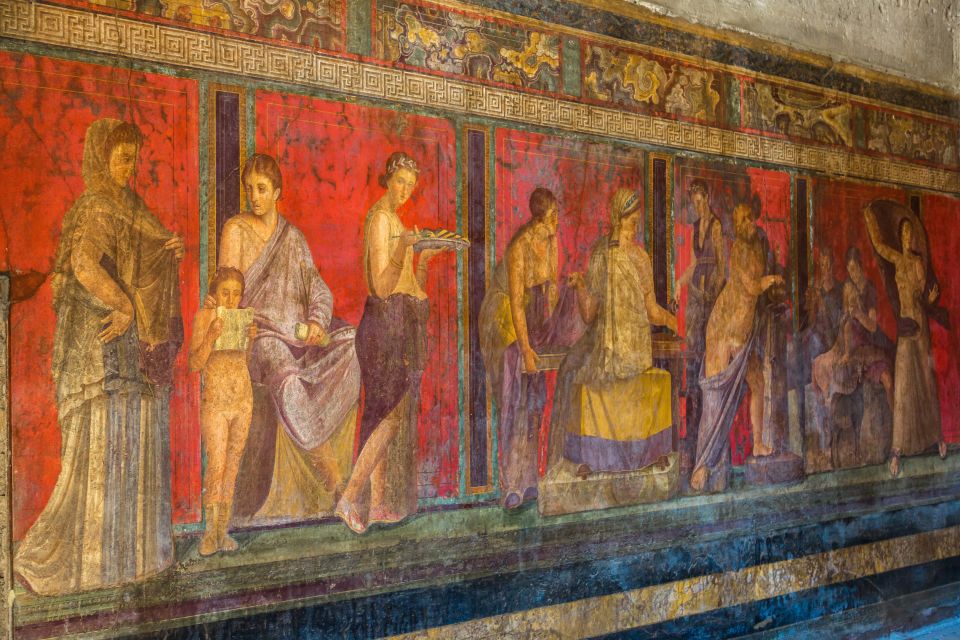
If you choose Pompei+, the Villa of the Mysteries is a headline stop. You’ll come for it for the frescoed rooms and preserved detail, and it’s one of the best reasons to spend extra time beyond the city core. This is also a place where you’ll benefit most from the audio guide, since room-by-room context makes the art feel less random.
Villa of Diomedes and Villa Regina + Antiquarium
Pompei+ also includes:
- Villa of Diomedes
- Villa Regina in Boscoreale, with the Antiquarium
Even if you’re not an art specialist, the audio narration can help you understand how these suburban properties fit into Pompeii’s life—how wealth and lifestyle spread beyond the main city grid.
House of the Faun
The House of the Faun is called out as a notable Hellenistic place. This is a good stop to slow down at because Pompeii’s story isn’t only Roman. You see layers of cultural influence, and the audio guide helps you connect the dots as the ruins shift from public to domestic spaces.
Amphitheater, temples, and the best photo moments

Pompeii’s biggest monuments can feel overwhelming at first. The trick is to time them so you don’t rush.
The amphitheater: imagine the audience
The amphitheater is a major highlight, and it’s one of the places where your brain does the work: sit, picture the crowd, then look at the stone and openings. The audio guide segments help you frame the space so it doesn’t become just a big ruin.
Temples: Venus, Apollo, Jupiter
Temple areas connect the city’s layout to religion and public identity. If you like architecture, treat these as short stops where you focus on columns, layouts, and how people would have moved through the sacred spaces.
Vesuvius in the background
You can often capture Pompeii with Vesuvius looming in the background. That visual context is more than a postcard shot—it’s part of why Pompeii hits so hard. The volcanic setting turns the ruins into a frozen moment, not a distant time period.
The furthest parts and the petrified bodies: stamina and strategy

There’s a practical snag to plan for: some of the most dramatic moments sit farther into the site.
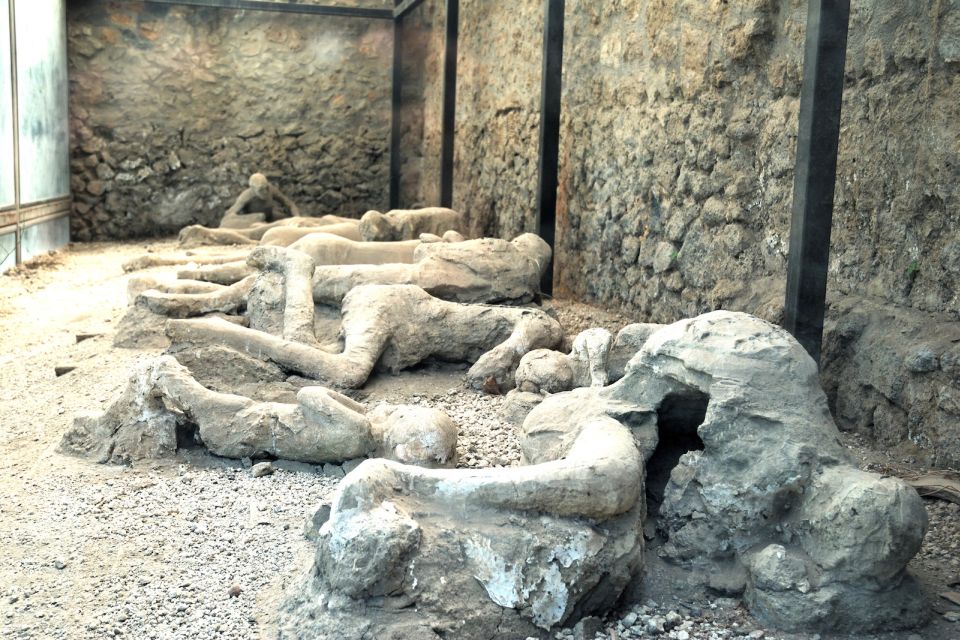
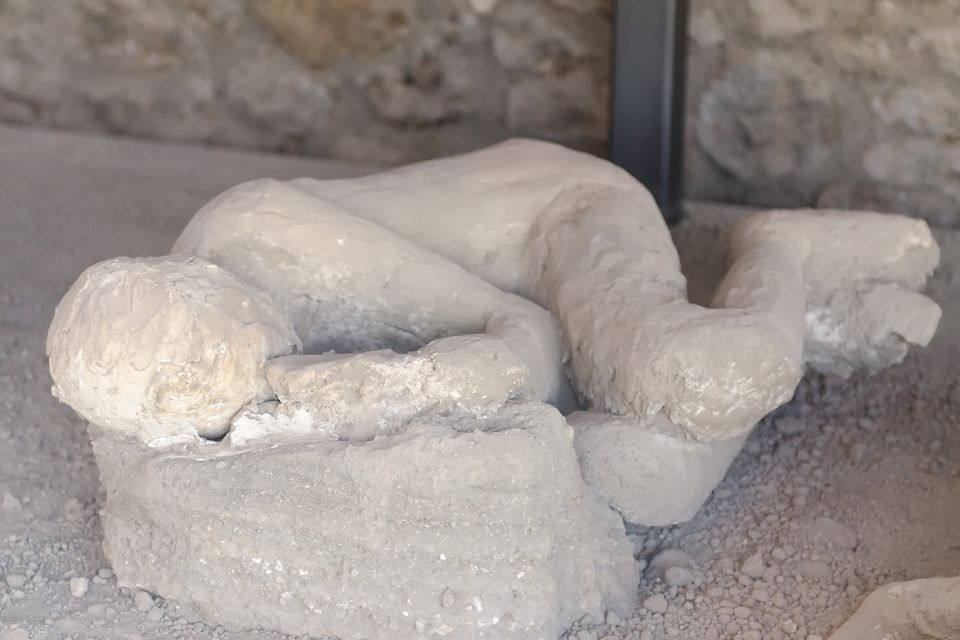
The listing and on-site guidance point to attractions like the amphitheater and the market, but at least one major review-based tip is worth taking seriously: the petrified bodies are at the furthest part of the site. Translation: if you start late, you may reach them after fatigue has already set in.
My advice is simple:
- If you truly want the petrified bodies, aim to reach that far end before you’re mentally done.
- If you’re traveling with kids or anyone with limited stamina, consider your route early so you don’t turn the last portion into a sprint.
Also remember: some buildings tied to audio stops may not be open at all times. If you hear narration for a building you can’t access, don’t assume the guide is wrong. It may be pointing to an area that’s temporarily not visible.
Practical on-site tips that make the day run smoother
Pompeii can be confusing at entry, so use these to reduce friction.
- Follow Porta Marina Superiore for the audio desk and plan your day so you aren’t running across the site to pick up the device.
- Watch for signposting issues. You may be directed through multiple nearby points before landing at the right one. Give yourself extra patience at the start.
- Use the map. Toilets are available across the grounds, and maps help you track what you’ve already seen so you don’t backtrack unnecessarily.
- Wear comfortable shoes and expect real walking. Even if you only do the city, the spread between major areas is not small.
- Pack water. The site is outdoors and you’ll be walking for hours.
Who should book this Pompeii audio-ticket experience?
This ticket works best for travelers who want freedom, not a rigid schedule.
You’ll love it if…
- you want a self-guided way to learn Roman life without hiring a private guide
- you like seeing major ruins like the amphitheater, baths, and villas on your own timing
- you prefer a structured audio storyline to wandering without context
You might want extra help if…
- you get overwhelmed easily without a guide pointing out exactly where to stand
- you want more detailed interpretation at every stop
- your group has limited mobility and you want someone to plan an efficient route (even though the site is listed as wheelchair accessible)
Should you book Pompeii Entry Ticket with Optional Audio Guide?
Book it if you want the best value for a top-tier UNESCO site and you’re okay doing the walking. With Pompei Express, you can focus on the city ruins. With Pompei+, you get the suburban villas that many visitors consider the emotional peak of the Pompeii story.
Skip it only if you’re strongly committed to a guided experience that calls out every detail step-by-step, or if you know you won’t handle the audio setup rules (ID deposit, the Porta Marina Superiore pickup point, and the fact that Bluetooth headphones won’t work).
If you do book, go in prepared: bring your ID, bring the right headphones, and plan your route so the far end of the site doesn’t become your last-minute sprint.
FAQ
How long is the Pompeii ticket valid?
The ticket is valid for 1 day. You’ll need to check availability to see the starting times.
What’s the difference between Pompei Express and Pompei+?
Pompei Express covers only the ancient city of Pompeii. Pompei+ includes the ancient city plus suburban villas, including the Villa of the Mysteries, Villa of Diomedes, and Villa Regina in Boscoreale with the Antiquarium.
Do I need an audio guide to enjoy Pompeii?
No. The entry ticket includes reserved access, and the audio guide is optional. You can explore at your own pace either way.
Where do I pick up and return the audio guide?
Audio guides can only be picked up and returned at the official audio guide desk in Porta Marina Superiore.
Are Bluetooth headphones compatible with the audio guide device?
No. Bluetooth headphones do not work with the audio guide device.
Is the audio guide included in the price?
The reserved entry ticket is included, and the audio guide is included only if you select the audio guide option. The listing also states a digital audio guide is available in multiple languages.
What languages are available for the audio guide?
The listing includes English and other languages depending on the format. Digital audio guide availability is listed as English, German, French, Italian, and Spanish, and the optional audio guide list also includes English, Italian, Chinese, Japanese, Portuguese, Russian, German, and French.
What do I need to bring with me?
Bring a passport or ID card.
Is Pompeii wheelchair accessible?
Yes, the activity is listed as wheelchair accessible.
Is free cancellation available?
Yes. You can cancel up to 24 hours in advance for a full refund.