REVIEW · POMPEII ARCHAEOLOGICAL SITE
Pompeii: Exclusive Tour with Archaeologist and Entry Tickets
Book on GetYourGuide →Operated by Grand Tour Experience · Bookable on GetYourGuide
Pompeii, minus the queue. You start at Porta Marina and walk into a city frozen by the 79 AD eruption of Vesuvius, with an expert pushing you toward what matters most. I especially like the skip-the-line entry and the included express ticket, because it helps you spend time looking, not waiting.
The other big win is the human factor: you get an archaeologist and a proper guide setup with headsets so you can actually hear in a loud, crowded site. I also like how the route mixes major landmarks with lesser-seen corners, so you don’t leave with only the postcard version.
One consideration: this is not set up for mobility impairments or wheelchair users, and electric wheelchairs aren’t allowed. If you need step-free access, you’ll want to choose a different option.
In This Review
- Key things I’d bet on before you book
- Getting to Porta Marina and Starting Fast at Pompeii
- Why a Licensed Archaeologist Makes Pompeii Feel Real
- Walking Pompeii’s Civic Core: From Porta Marina to the Forum
- Temples and Public Spaces: Jupiter, Venus, Apollo
- The Macellum Market and Plaster Casts: Human Stories, Not Just Objects
- Roman Baths and the Art of Status: Forum Baths to Big Houses
- The House of the Vettii and House of the Faun: What to Look For
- Thermopolium Taverns, Lupanare, and the Theatre District
- Value at $50 for 2 Hours: When It’s a Smart Spend
- Tips so the 2-Hour Tour Actually Hits
- Should You Book This Pompeii Archaeologist Tour?
- FAQ
- Where is the meeting point for the tour?
- How long is the tour?
- Are entry tickets included?
- Is there a headset so I can hear the guide?
- What languages are available?
- Is this a small group or can I book private?
- What happens with ticketing rules and my name?
- What should I bring with me?
- Is the tour suitable for wheelchair users or people with mobility impairments?
- Is food or transportation included?
Key things I’d bet on before you book
- Skip-the-line + express admission so you get moving quickly
- Archaeologist / licensed guide who can explain what you’re seeing and why
- Headsets for clear listening at Pompeii’s noisy hotspots
- A tight 2-hour route built around big sites plus quieter pockets
- Art and human stories: frescoes, mosaics, and plaster casts tied to the eruption
Getting to Porta Marina and Starting Fast at Pompeii
Your tour begins outside Pompeii’s Porta Marina entrance, right in front of the train station area: Pompei Scavi – Villa dei Misteri on the Circumvesuviana line. The guide will hold a sign reading Pompei VIP, so you’re not left wandering with your map app open and your patience evaporating.
This meeting point is a practical choice. If you’re arriving by train, you can keep things simple: get off, find the gate, and meet the group right there. And since Pompeii is a big, spread-out place, being on time matters more than usual. Two hours is long enough to feel the site’s story, but not long enough to lose time at the start.
The express ticket angle is the real time-saver. Even when you’re fit and motivated, Pompeii’s lines and crowding can steal the best part of your day. Here, you’re designed to walk in and start learning immediately.
You can also read our reviews of more tours and experiences in Pompeii Archaeological Site.

Why a Licensed Archaeologist Makes Pompeii Feel Real
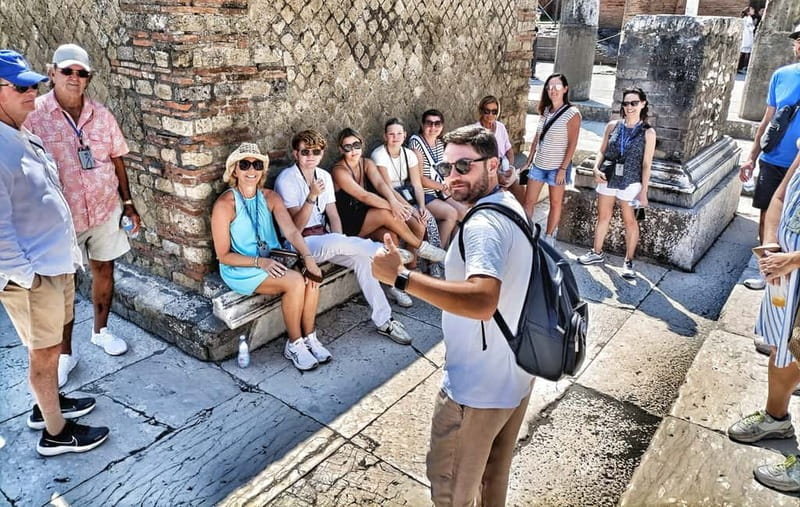
Pompeii isn’t just ruins. It’s everyday life stopped in mid-sentence. What changes with a guide who’s an archaeologist (and licensed) is the level of interpretation you get as you walk. You’re not only told what something is—you’re shown what it suggests about daily routines, social status, and how archaeologists read the evidence.
The tour also uses headsets, which sounds like a small detail until you’re standing near a crowd trying to listen over wind, footsteps, and other groups. Headsets mean you can keep your eyes on the buildings and artwork while still following the story.
I’ve noticed a pattern in the praise for guides by name—people mention guides like Livio, Antonio, Ricardo, Ivan, Raffaelle, Loredana, Rafael, and Pierluigi for being engaging, organized, and quick to answer questions. Even if you don’t catch the same guide, the point holds: you’re paying for a professional who can turn stones into scenes.
Walking Pompeii’s Civic Core: From Porta Marina to the Forum

Once you pass through Porta Marina, you’re entering Pompeii through one of the older Roman gate lines. From there, your route pivots toward the city’s civic heartbeat: the Basilica and the Foro Civile di Pompei (Forum area). This is where Pompeians would have handled public business and made political noise—real life, in a real place.
Here’s what I like about starting with this section on a guided visit. The Forum areas give you a framework. After you see the spaces tied to public life, the rest of Pompeii makes more sense: markets feel busier, temples feel more intentional, and the houses don’t read like random mansions.
A drawback of Pompeii in general: you’ll see a lot quickly. This tour tries to fix that by selecting key stops and pacing the information. You’ll have photo moments, but the goal isn’t to stand around hunting for angles. The guide’s job is to keep you oriented so you don’t miss what makes each spot important.
Temples and Public Spaces: Jupiter, Venus, Apollo
From the civic core, you move toward the religious landscape, including temples dedicated to Jupiter, Venus, and Apollo. These names aren’t trivia. They’re a way to understand what people believed in and what they wanted from the gods—protection, prosperity, and order.
If you’ve ever walked through a historic site and thought, I’m looking at rocks, not meaning, temples are your antidote. They bring the culture into focus: who mattered, what was celebrated, and how religion sat inside public life rather than being hidden away.
This section also helps you understand how Pompeii functioned as a city. It’s not only about private rooms and art panels. There’s a public rhythm—civic business, worship, and the hustle of commerce—running all through the layout.
The Macellum Market and Plaster Casts: Human Stories, Not Just Objects
The Macellum (market) is one of the strongest emotional stops on this tour. Markets were Pompeii’s social nerve endings: people gathered, browsed, negotiated, and ate. Seeing the space with context helps you picture more than commodities—it helps you picture conversations.
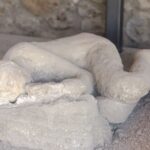
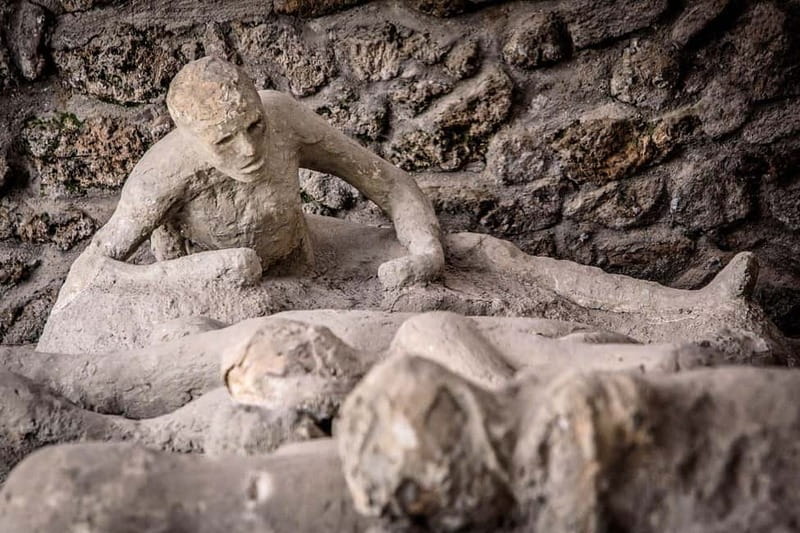
Then comes the part that hits hardest: the haunting plaster casts of victims. These aren’t meant to be scenic. They’re meant to communicate loss and evidence. The tour’s archaeologist framing matters here because it keeps the experience grounded: you’re seeing what the eruption preserved and what excavation work helped interpret.
If your goal is an “I can’t stop thinking about this” visit, this is where that happens. You leave the market zone with a jolt of empathy, not just amazement.




Roman Baths and the Art of Status: Forum Baths to Big Houses
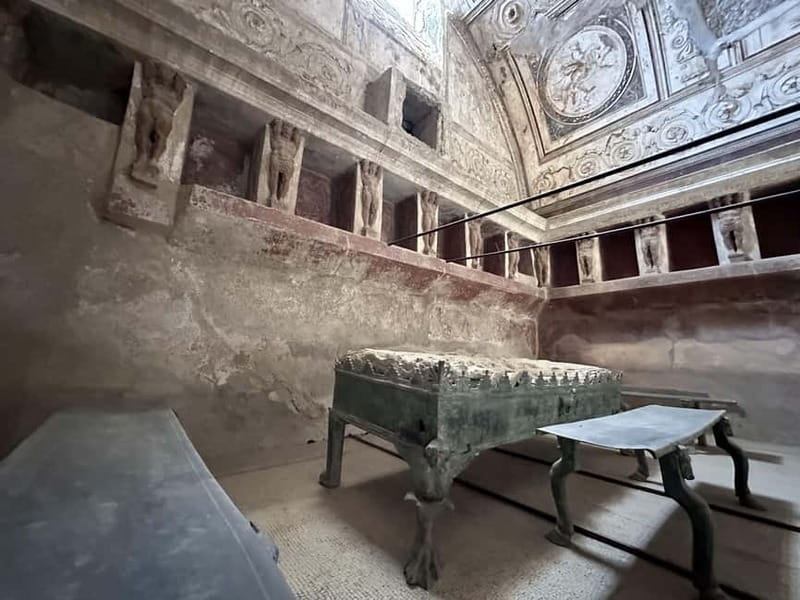
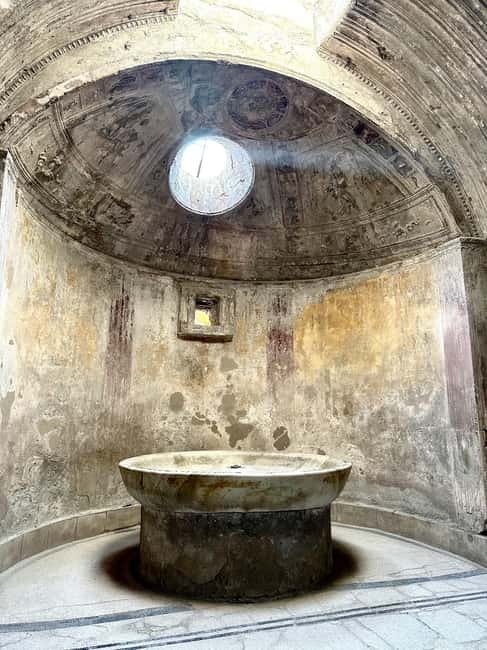
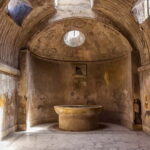
Next, you shift from communal spaces to the visual language of wealth and taste. The Forum Baths show how comfort, routine, and architecture went together. Roman baths weren’t just washing; they were social time. You’re walking through a place designed for daily routines that feel almost modern in their logic.
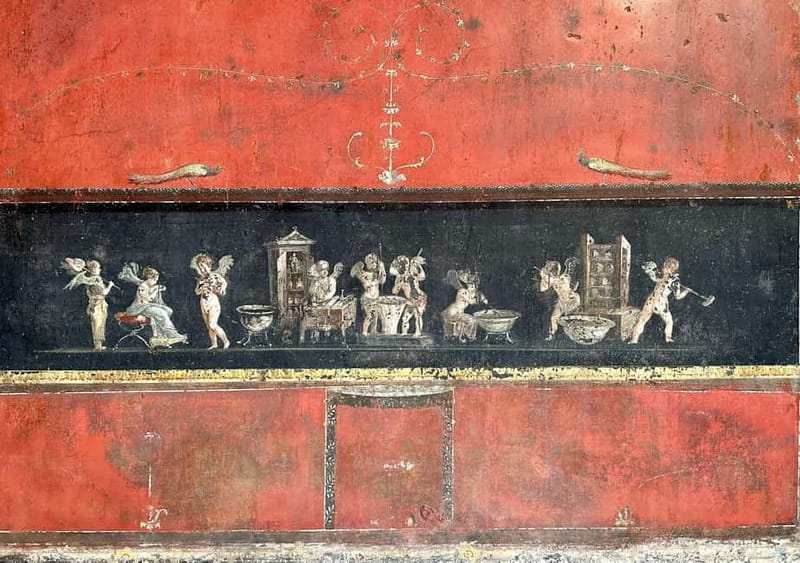
Then you get into the houses, including the House of the Vettii and the House of the Faun. These are where the famous frescoes and mosaics make the visit feel alive. You’re not looking at a single art piece—you’re seeing how art marked identity, education, and social rank.
A practical way to enjoy these stops: don’t try to stare at everything at once. Follow the guide’s cues about what details to notice. Fresco scenes and mosaic floors can be dizzying if you’re rushing. With a timed tour, it’s better to understand a few key features clearly than to “see” everything vaguely.
The House of the Vettii and House of the Faun: What to Look For
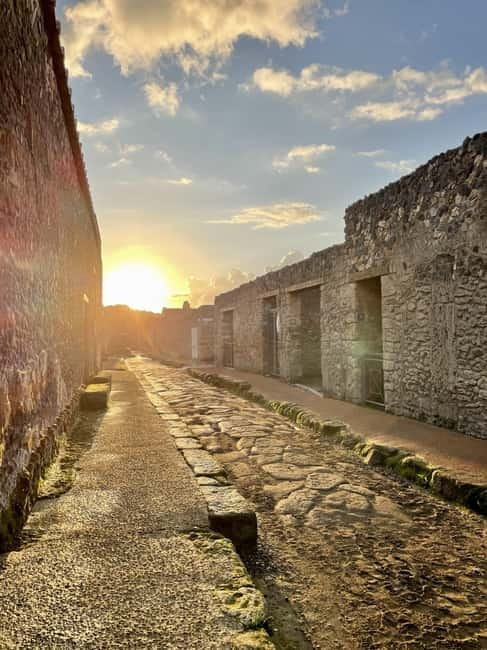
In a short, high-impact visit, the houses work best when you know what to pay attention to. For me, the House of the Vettii stands out because it’s the kind of place that reveals how display and daily life blended. You can sense that the art wasn’t only decoration. It was messaging.
The House of the Faun brings the mosaic-and-scale factor. Even if you aren’t an art scholar, you’ll get the point: these weren’t plain residences. Pompeii’s wealthy wanted visitors and neighbors to feel their place in the world.
You’ll also likely get context about how archaeologists interpret the physical layout and wall decoration. The guide is there to explain what you might not notice at first glance, including how excavation adds missing pieces over time.
Thermopolium Taverns, Lupanare, and the Theatre District
Pompeii isn’t all temples and formal baths. You also walk past places tied to everyday food culture, including thermopolium taverns and ancient bakeries. A thermopolium is basically a quick-eat spot, often with a public-facing counter setup. It’s the kind of stop that makes the city feel less like a museum and more like a place where real people grabbed food and kept moving.
Then there’s the Lupanare, which is a reminder that Pompeii’s street life included complicated realities. The tour’s framing helps keep this from turning into sensational sightseeing. You’re guided back to how the space functioned in the city.
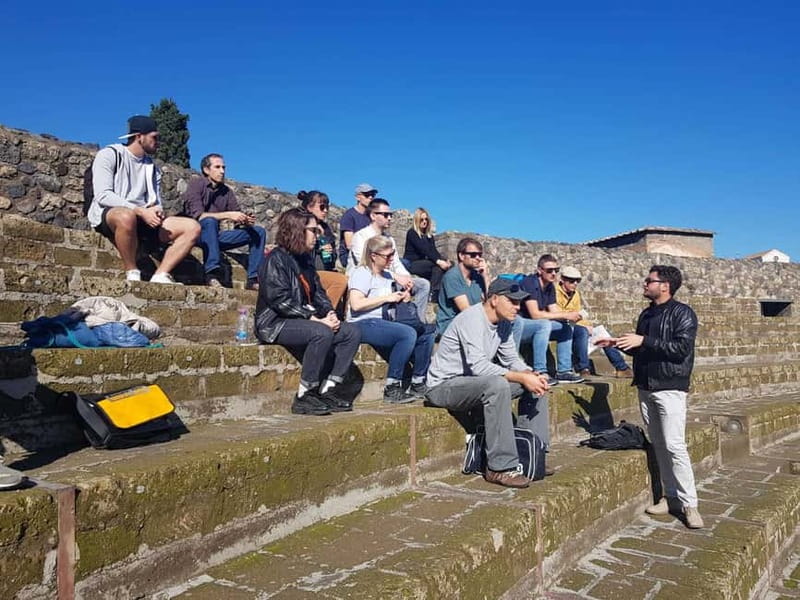
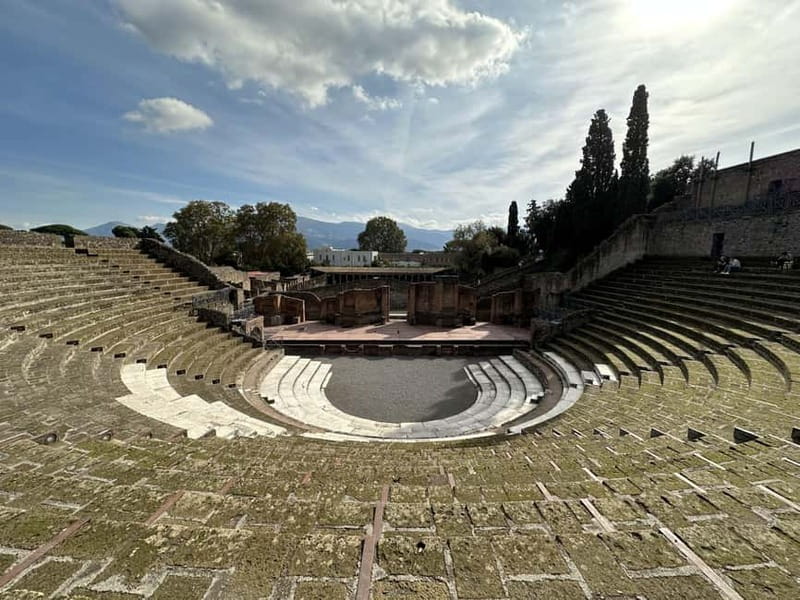
The tour also includes the Large Theatre. Even when you can’t hear a performance anymore, you can feel how a theatre shaped community life. It was entertainment, yes, but it was also a gathering space—another layer of how Pompeii’s public identity worked.
Because the tour is just two hours, you won’t do everything in one go. Instead, you’re getting a guided sampler that makes it easier to return later on your own and choose a longer path.
Value at $50 for 2 Hours: When It’s a Smart Spend
At $50 per person, the math works best when you care about two things: (1) saving time and (2) getting interpretation. This tour bundles skip-the-line entry tickets and Pompeii’s admission Express ticket, so you’re not left juggling entry problems while the clock ticks.
You’re also paying for a small-group approach (with the option for private slots) and the headsets. Those details sound minor until you’re in the thick of it, trying to listen and look at the same time.
If you’re the kind of traveler who hates wasting time standing in lines, this is the version of Pompeii that respects your energy. If you prefer to wander without someone steering you, you might feel the schedule is “just enough.” For most people, though, Pompeii’s scale is exactly why a curated walk with a pro is worth it.
Tips so the 2-Hour Tour Actually Hits
To make this tour feel smooth, plan like Pompeii is where the schedule goes to be dramatic.
- Wear comfortable shoes. The ground is uneven in places, and you’ll be walking constantly.
- Bring water, especially because the tour is active and you can’t rely on snacks being part of the plan.
- Bring a passport or ID card. Pompeii’s ticketing rules require your full name and surname on the ticket, and you may need to provide participant ages through messaging.
- Leave time to find your guide at Porta Marina before the group moves.
Also, respect the park rules: no pets, no alcohol or drugs, and the tour isn’t designed for electric wheelchairs. If you fall into that category, it’s worth checking other options before you commit.
Should You Book This Pompeii Archaeologist Tour?
I’d book this if you want Pompeii to feel like a place, not a checklist. The express entry, the headset setup, and the archaeologist-led pacing make it a strong fit for first-timers. It’s also great for families or mixed-interest groups because the stops range from civic life to art to the eruption’s human impact.
I’d think twice if you need wheelchair-friendly routing or step-free access, since the tour isn’t suitable for that. And if you’re planning to spend all day at Pompeii anyway, you might still book this as an orientation—then come back later with more freedom.
Final thought: this is the kind of tour that helps you understand what you’re looking at in real time. Pompeii is impressive on its own. With a trained guide holding the thread, it becomes personal.
FAQ
Where is the meeting point for the tour?
The meeting point is outside Pompeii’s Porta Marina entrance, in front of the train station area (Pompei Scavi – Villa dei Misteri on the Circumvesuviana line). The guide will hold a sign with the tour name Pompei VIP.
How long is the tour?
The tour lasts 2 hours.
Are entry tickets included?
Yes. The tour includes Pompeii’s admission Express ticket and skip-the-line entry tickets.
Is there a headset so I can hear the guide?
Yes. Headsets are included for better listening throughout the visit.
What languages are available?
The live tour guide is available in English, Italian, French, and Spanish.
Is this a small group or can I book private?
Both options are available. You can choose a sharing small group or a private slot/group.
What happens with ticketing rules and my name?
You need to provide the full name and surname of all participants, along with ages, via the messaging system so the ticketing matches new park requirements.
What should I bring with me?
Bring a passport or ID card, comfortable shoes, and water.
Is the tour suitable for wheelchair users or people with mobility impairments?
No. The experience is not suitable for people with mobility impairments or wheelchair users, and electric wheelchairs aren’t allowed.
Is food or transportation included?
No. Food and drinks aren’t included, and transportation to Pompeii is also not included.