REVIEW · NAPLES
Pompeii & Herculaneum Guided Tour – High Speed Train from Rome
Book on Viator →Operated by Askos Tours · Bookable on Viator
A frozen-in-time city can feel unreal. This day trip strings together Pompeii and Herculaneum with fast rail, guided highlights, and real context for the tragedy of 79 AD. I especially love the time-saver of the high-speed train plus private-driver pickup in Naples, and the way the tour uses skip-the-line entry so your day starts inside the ruins, not in queues.
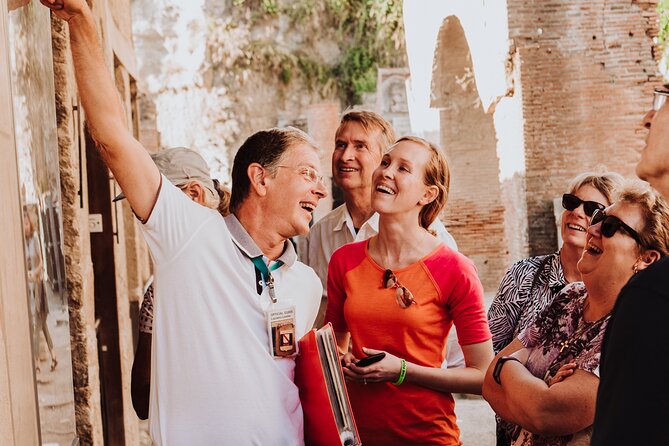
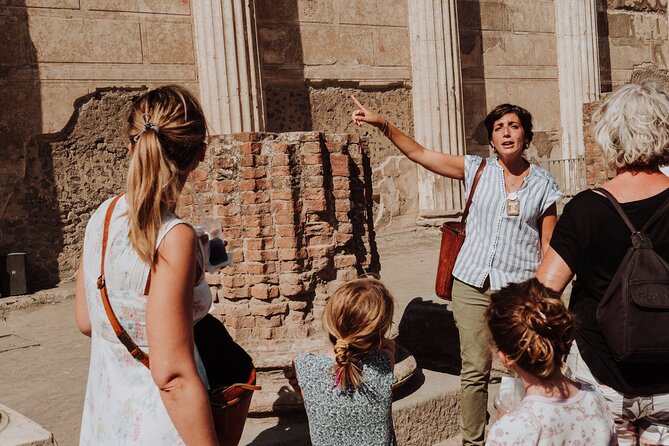
What I like most on the ground is the archaeologist-led pacing. You walk through streets and rooms with commentary tied to daily life and excavation, and headsets help you keep up as the group moves. For some people, the drawback is simple: it’s a long day and a lot of walking, so you’ll want good shoes and realistic expectations about how much of Pompeii you can cover.
In This Review
- Key things I think are worth your attention
- Rome to Naples by high-speed rail: how the day really starts
- Naples pick-up at Starhotels Terminus: easy, but be punctual
- Getting into Pompeii through Porta Marina and starting with the city’s layout
- Via dell’Abbondanza to the House of Menander: what the streets teach you
- Stabian Baths and the Lupanar: public life, hygiene, and reality
- The House of the Faun, Odeon, and Teatro Grande: big public spaces, big emotions
- Maximall Pompeii is the break that makes the schedule work
- The second Pompeii stretch: Deer, Balbo terrace, and the Augustales
- Herculaneum’s two-hour window: smaller, preserved, and easier to feel
- Herculaneum stops you’ll recognize on the map
- Back to Naples and the Rome train: don’t cut it close
- Price and value: what $204.38 includes
- Who this Pompeii and Herculaneum tour fits best
- Should you book this day trip from Rome?
- FAQ
- Do I need to meet the guide at Rome Termini?
- Where do I meet the group in Naples?
- Are Pompeii and Herculaneum entrance tickets included?
- How long is the visit to Herculaneum?
- Are meals included?
- Is this tour suitable for visually impaired guests?
Key things I think are worth your attention
- High-speed train from Rome Termini plus minibus transfers keeps the day tight and efficient
- Skip-the-line entry for both Pompeii and Herculaneum means less queue time
- Archaeologist guide-led route through standout houses, baths, theaters, and public spaces
- Small group size (max 20) makes questions feel possible instead of chaotic
- A planned break at MaxiMall Pompeii with a welcome kit and discount card
- Herculaneum as the preservation bonus where mosaics and frescos can still be seen
Rome to Naples by high-speed rail: how the day really starts
The biggest win here is how you travel: roundtrip high-speed train between Roma Termini and Naples. You don’t need to hunt down a meeting place in Rome at the crack of dawn, because the train tickets are sent to you one day before. Your job is simple: board the train on your own, then join the group in Naples.
One practical detail matters: the guide does not meet you at Rome Termini. You travel independently from Rome, which reduces waiting around, but it also means you need to follow the instructions you’re given and be on time for the Naples arrival.
The ride itself is the easy part of the day. Most of the pressure is what happens after you land in Naples: meeting the driver, getting into the minibus, and moving to Pompeii while everyone is still together.
You can also read our reviews of more tours and experiences in Naples.


Naples pick-up at Starhotels Terminus: easy, but be punctual
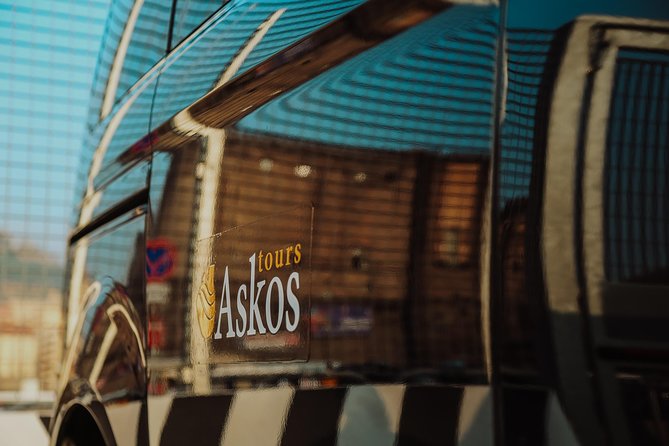
Once you arrive in Naples, the group comes together at Starhotels Terminus, on Piazza Giuseppe Garibaldi, across the street from Naples Central Station. This is where you meet the local guide and the Askos Tours driver who handles the transfers to the archaeological sites.
Your tour start point is listed as P.za Giuseppe Garibaldi, 91, 80142 Napoli, which lines up with the Starhotels Terminus area. If you’re using transit, you’ll also find this location convenient because it’s close to the station hub.
If you’re traveling with suitcases, plan ahead. The tour notes that not all minibuses have luggage compartments, so storing bags at a luggage deposit near the station (or wherever you choose) can save stress.
Getting into Pompeii through Porta Marina and starting with the city’s layout

In Pompeii, you access the site through Porta Marina, then your guided walk begins. This matters because Porta Marina is one of the important gateways, and starting there gives you a sense of where people entered and moved into the ancient city. It also helps you connect the dots between streets, public buildings, and homes rather than treating the ruins like random photo stops.
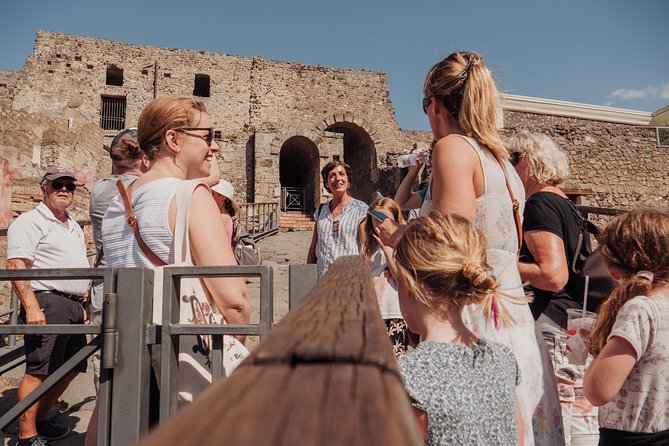
Expect your archaeologist guide to explain Pompeii’s urban layout and daily life before getting deep into specific sights. In feedback tied to this tour style, guides named Michele and Alfredo come up often, and the common thread is interpretation: why these buildings were where they were, and how people used them.
You’ll also want your listening gear. Headsets are included, and they’re helpful when the group is moving and you’re trying to catch the explanation over ambient noise.
Via dell’Abbondanza to the House of Menander: what the streets teach you
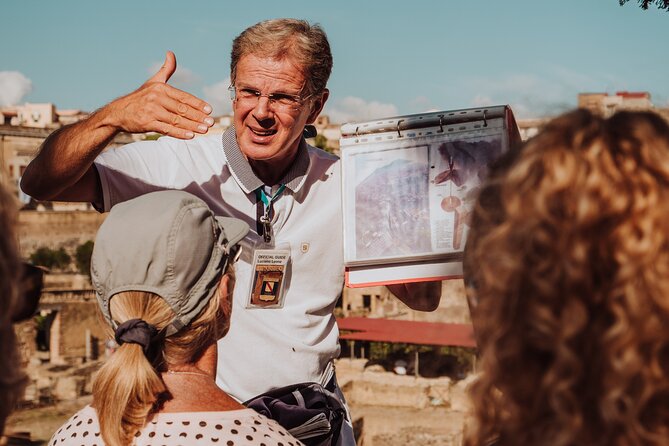
One of the most memorable parts of Pompeii is walking the streets you’ve seen in photos, but hearing how they worked. Your route includes Via dell’Abbondanza, a key street that gives you that “this is a real city” feeling instead of a museum-floor vibe.
From there, you’ll stop at the House of Menander. House tours here aren’t just about pretty mosaics. The guide’s job is to translate how rooms functioned, what visitors would have seen, and how wealth and status showed up in a home’s layout and decoration.
Then you continue toward the Granaries of the Forum. Even in a ruin, storage buildings can tell a story. Granaries help you understand the economic engine behind the city center and why grain supply mattered so much.
Stabian Baths and the Lupanar: public life, hygiene, and reality
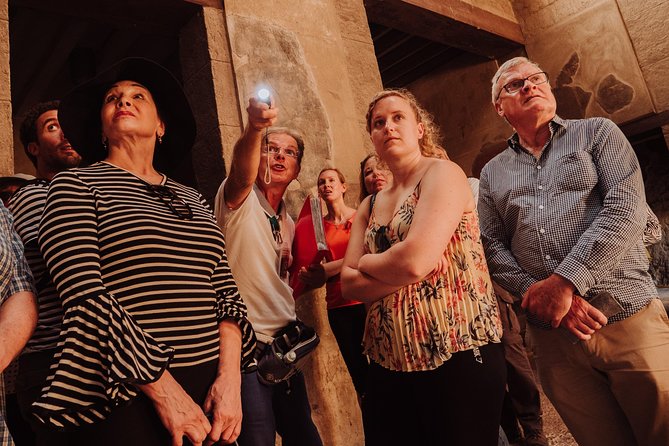
Next comes the Stabian Baths (Terme Stabiane). Baths were social spaces as much as they were for cleanliness, and your guide’s explanation can make the architecture feel practical. You’re not just looking at walls; you’re picturing routines.
Then there’s the stop at the Lupanar, the famous brothel of Pompeii. This can be an intense stop for first-timers, but it’s also one of the quickest ways to make the ancient world feel human. Expect the guide to frame it in the context of everyday life, not shock value.
If you’re sensitive to adult subject matter, mentally flag this as part of the route. It’s brief, but it’s real, and the tour doesn’t shy away from it.



The House of the Faun, Odeon, and Teatro Grande: big public spaces, big emotions
The House of the Faun is a major highlight, and it fits the route well because it shifts you from street-level city function into elite residential space. Even if you’ve visited ruins before, Pompeii’s homes tend to hit harder because they’re tied to a specific street fabric.
Then your route moves into entertainment and public gathering spaces: the Odeon (Teatro Piccolo) and the Teatro Grande. The theaters remind you that Pompeii wasn’t only commerce and housing; it was culture, events, and public spectacle.
One practical reality: you are doing a lot of short stops. That can be a plus if you want variety in one day, but it also means you won’t linger like you would on a self-guided visit.
Maximall Pompeii is the break that makes the schedule work
At MaxiMall Pompeii, you get about 50 minutes for a break. This is the tour’s pressure release valve: bathrooms, a place to sit, and time to reset before the second half of the day.
The tour also includes an exclusive welcome kit and a discount card for MaxiMall. You don’t need to shop, but it’s there if you want deals in the stores.
Also consider the reality of Pompeii conditions. One review notes Pompeii has very little shade, and that matches what you’ll feel on site. Use the break time wisely and pace yourself for sun and heat, since you’re covering a lot of ground.
The second Pompeii stretch: Deer, Balbo terrace, and the Augustales
After the mall break, you continue with more targeted stops:
- House of the Deer
- La Terrazza di M. Nonio Balbo
- College of the Augustales
These picks matter because they round out the story of the city. The terrace stop, for example, gives you a different kind of viewpoint than street-level walking. It helps you imagine social space, views, and how architecture framed daily routines.
The College of the Augustales brings in the religious and social side of Pompeii. It’s a reminder that public identity and civic life weren’t separate from private living.
This is also where the “long day” drawback can show up. Some visitors feel Pompeii can feel rushed for the cost, because the city is enormous. If you want a slow, exhaustive Pompeii day, this tour’s structure may not fully satisfy that craving.
Herculaneum’s two-hour window: smaller, preserved, and easier to feel
Then you shift to Herculaneum, where the tour includes about 2 hours in the archaeological park. Herculaneum is smaller than Pompeii, and that changes the experience. You don’t fight the same scale, and the preservation often makes the ruins feel more intact.
One standout detail from feedback: mosaics and frescos still exist here. That’s a huge deal for your imagination. You’re not just reading stone structures; you’re seeing decoration that makes domestic spaces feel lived-in.
Your guide helps you move through a set of houses and buildings that cover both living quarters and public elements. It’s the kind of selection that gives you variety without claiming you’ll see everything in one visit.
Herculaneum stops you’ll recognize on the map
As you tour Herculaneum, you’ll see:
- Partem Domus lignea – Casa del Tramezzo di Legno (the house with wooden partition)
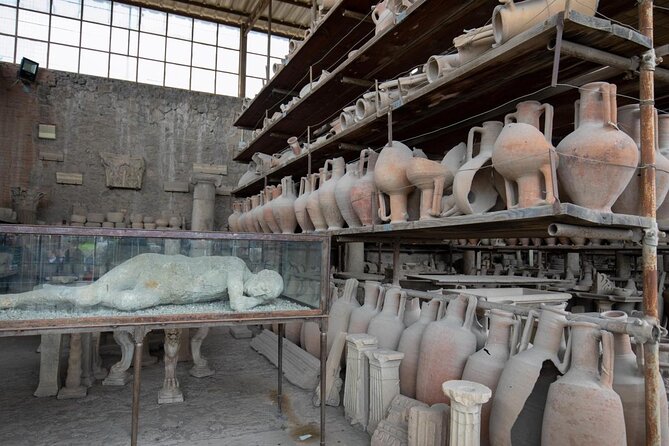
- House of the Skeleton
- Central Thermae
- Casa del Rilievo di Telefo
- Casa Sannitica
- Casa del Bel Cortile
- House of the Grand Portal
- House of the Black Salon (Salon of Nero)
A few of these are especially strong for first-time visitors. House of the Skeleton is emotionally heavy because it connects directly to the disaster story. Central Thermae brings you back to the public rhythm of bathing and gathering. Casa del Rilievo di Telefo and the more decorated homes are where the visuals can hit hardest, especially when you’re seeing frescoes and mosaics.
If you’re doing Pompeii and Herculaneum in one day, I find this approach helps: Pompeii gives you scale and street life, while Herculaneum gives you preservation and domestic detail.
Back to Naples and the Rome train: don’t cut it close
After finishing Herculaneum, you’ll be driven back to Naples near Naples Central Station. The transfer is about 30 minutes, and then you head to your platform on your own for the high-speed return to Roma Termini.
Your day ends back at Rome Termini. The tour is designed to protect the train schedule, which is smart. The trade-off is that your time at the sites follows the needs of getting everyone safely to the station.
If you’re the kind of traveler who likes last-minute wandering after a tour, keep your expectations realistic. The timing is built around the trains, and the route is planned for a full day rather than an open-ended one.
Price and value: what $204.38 includes
At $204.38 per person, this isn’t a bare-bones excursion. It bundles a lot of expensive-to-coordinate pieces for a one-day trip from Rome:
- Roundtrip high-speed train tickets Roma Termini ↔ Naples
- Minibus transfer to and from the Naples station area
- Guidance in Pompeii and Herculaneum by an archaeologist
- Pompeii Express entry tickets plus Herculaneum ruins entry tickets
- Headsets
- A MaxiMall Pompeii welcome kit and discount card
You can also map the baseline entry fees from the provided info: Pompeii is listed at €20 for an adult and Herculaneum at €16 for an adult, and both are included. So a chunk of the price is effectively covering admissions and the logistics that connect two sites in one day.
Is it worth it? It tends to be when you want:
- guided interpretation (instead of wandering)
- time savings from high-speed rail
- the chance to see both Pompeii and Herculaneum without building your own transport plan
It may feel less worth it if you’re chasing an exhaustive Pompeii experience, because the schedule can feel short in that huge site.
Who this Pompeii and Herculaneum tour fits best
This tour fits best if you want a structured day and you like learning from the ruins themselves. The route works well for Roman history fans who want daily life explained clearly, plus the contrast between Pompeii’s scale and Herculaneum’s preservation.
It also fits families in the sense that the day is organized and the pacing is spread into site blocks with breaks. One review specifically praises it as good for families, noting the pacing can work even with little kids.
Two cautions:
- Walking load: Pompeii is tough underfoot and Herculaneum can involve uneven ground. One review calls it strenuous on the feet, so if you have leg or knee issues, take that seriously.
- Mobility and vision limits: It’s not recommended for visually impaired guests unless accompanied by a dedicated personal assistant.
If you get motion-sick, or you hate being herded along, you may find the schedule tight. But if you like moving as a group with an expert guide, this format is a good match.
Should you book this day trip from Rome?
Book it if you want the practical win: Rome to Naples by fast train, two major archaeological sites in one day, and an archaeologist guiding the route so you’re not stuck piecing stories together on your own. I’d especially recommend it if you’re visiting for a short trip and you don’t want to spend half your vacation managing transport between cities.
Skip it (or adjust expectations) if you’re hoping for a slow, deep Pompeii day with lots of free wandering. Pompeii is huge, and this route prioritizes highlights, not a full circuit.
If you decide to go, plan for the real-world parts: bring valid ID/passport, wear shoes that handle uneven ancient stone, and accept that the day is designed around the train timetable. Done with the right mindset, it’s one of the most efficient ways to see both Pompeii and Herculaneum from Rome.
FAQ
Do I need to meet the guide at Rome Termini?
No. You travel independently from Rome Termini, and your high-speed train tickets are sent to you one day before the tour. You join the group in Naples when you arrive.
Where do I meet the group in Naples?
You meet the guide and driver at Starhotels Terminus near Piazza Giuseppe Garibaldi, 91, across from Naples Central Station.
Are Pompeii and Herculaneum entrance tickets included?
Yes. Entrance fees are included via Pompeii Express entry tickets and Herculaneum ruins entry tickets.
How long is the visit to Herculaneum?
The time included at Herculaneum is about 2 hours.
Are meals included?
No. Meals and drinks are not included.
Is this tour suitable for visually impaired guests?
It is not recommended for visually impaired guests unless accompanied by a dedicated personal assistant.