REVIEW · NAPLES
Pompeii: Skip-the-Line Entry Ticket with Audio Guide or Tour
Book on GetYourGuide →Operated by Vox City International · Bookable on GetYourGuide
Pompeii is a time machine you can walk through. This skip-the-line ticket gets you into the UNESCO ruins fast, with an audio guide and digital map so you can explore on your own—or upgrade to an art historian-led route. It’s one of those experiences where the place does most of the talking, and your job is to show up prepared.
I particularly like the fast-track entry (you’re not stuck fighting the main ticket queue), and I like that the audio guide uses location-based stops so the information matches where you are. For a huge site, that combination helps you spend your energy on the ruins instead of logistics.
The main drawback to keep in mind is practical: your experience depends on your phone and audio setup. You’ll want headphones and a charged smartphone, and the audio app experience can be a little temperamental if your phone GPS or autoplay doesn’t cooperate.
In This Review
- Key Things to Know Before You Go
- Fast-Track Entry at Piazza Esedra: Where Your Pompeii Visit Starts
- Skip the Lines, Then Choose Your Pace: How the 2-Hour Plan Really Works
- Audio Guide on Your Phone: Getting Value From the Map Stops
- What can go wrong with the app
- One more tip: choose “high-signal” time
- Pompeii’s Biggest Hits You’ll Want to Time Right
- The Forum and Temple Areas (with Vesuvius in the background)
- Homes you can almost hear: House of the Faun and Sirico’s House
- Baths and mosaics: the public life details
- Theater stops and aqueduct/water traces
- The Vino clue: Vesuvinum jars
- Plaster casts of victims: the “you can’t look away” moment
- Optional Art Historian Tour: When It’s Worth Paying for a Human Guide
- What You Don’t Get: Suburban Villas Are Excluded
- How Much Time Should You Budget on Arrival?
- Value for $37: Is This Skip-the-Line Package a Smart Buy?
- Pair It With Naples: Museum Visits vs. In-Site Details
- Should You Book This Pompeii Ticket?
- FAQ
- Where do I pick up my ticket?
- Do I need headphones?
- What do I need to download the audio guide?
- Does this ticket include the suburban villas?
- Is there a guided tour option?
- How long is the visit?
- Can I cancel?
Key Things to Know Before You Go

- Fast-track pickup at Piazza Esedra: exchange vouchers at the Vox City info point in front of Hotel Vittoria.
- Audio guide + digital map on your phone: scan the QR code before you arrive, then follow the stops as you walk.
- Big sights in a short window: temples, villas, baths, theaters, and forum areas fit well into a 2-hour visit.
- Optional art historian tour: worth it if you want context that ties the stones to Roman daily life.
- No access to suburban villas: Villa of the Mysteries, Villa of Diomedes, and Villa Regina are excluded.
Fast-Track Entry at Piazza Esedra: Where Your Pompeii Visit Starts
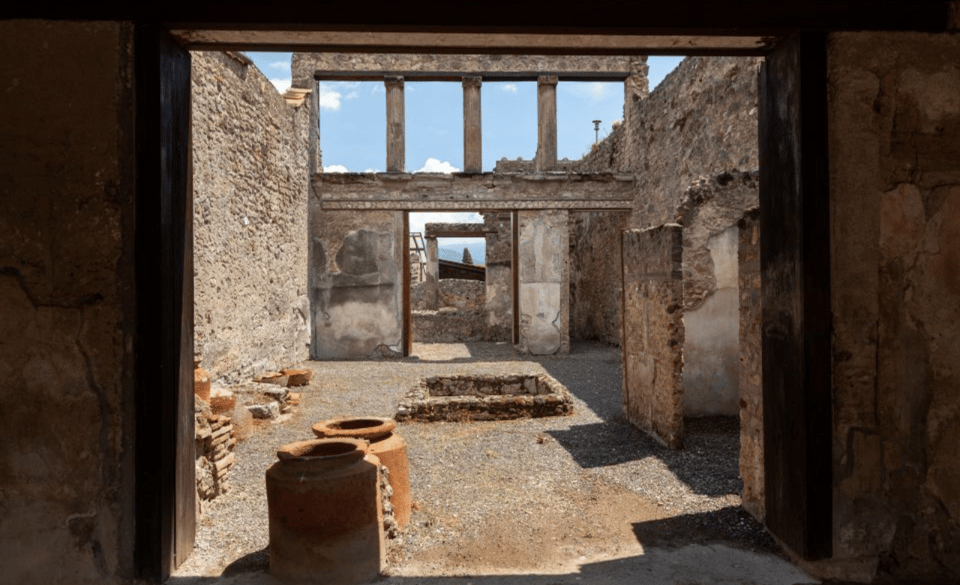
Your first step is simple: go to Piazza Esedra, in front of Hotel Vittoria, and find the Vox City info point. You exchange your voucher there for the official entry tickets—so you’re not trying to sort out paperwork at the gate when crowds are peaking.
If you add the guided-tour option, you’ll also meet your guide at that same Vox City spot and depart at your booked time. I’d treat this like a “show up a little early” situation—build in a few minutes so you can settle your headphones, double-check your language, and avoid that last-minute scramble.
The location matters more than you’d think. Piazza Esedra is right in the thick of the action, so once you’re in the ticket-exchange flow, you’re close enough to get moving quickly rather than burning time crossing town or hunting down directions.
You can also read our reviews of more tours and experiences in Naples.



Skip the Lines, Then Choose Your Pace: How the 2-Hour Plan Really Works
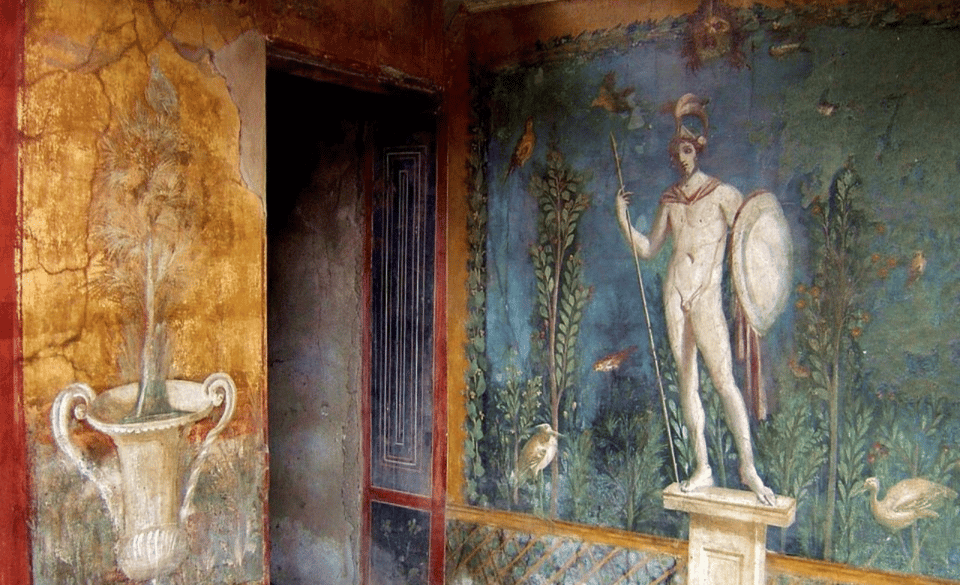
This ticket is built around a 2-hour visit window, but Pompeii isn’t the kind of place you can “do” in a sprint. The ruins cover a large area (you’ll hear both 44 square hectares and about 50 hectares, depending on how it’s described), and even if you have a timetable, your feet will slow you down.
What I love about this format is the flexibility. You get enough structure from the audio guide and map to keep moving, but you’re not locked into a rigid path. That’s ideal if you want to linger at a mosaic, stare a bit too long at a wall painting detail, or pause for a Mount Vesuvius photo when the light hits right.
It also makes the visit more realistic. Many people end up spending 2 to 4 hours in Pompeii, and some stretch it longer if they’re enjoying the flow and the weather cooperates.
If you’re the type who gets overwhelmed by big sites, the 2-hour structure is a help, not a limit. If you’re the type who hates missing anything, you’ll likely want a longer day—but this ticket is still a solid start.
Audio Guide on Your Phone: Getting Value From the Map Stops
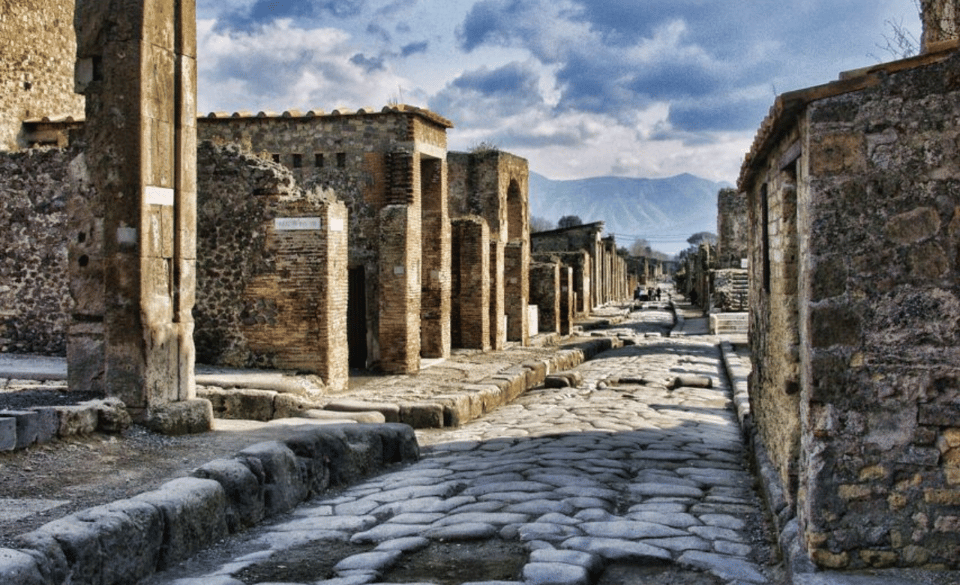
You get an audio guide with a digital map, plus multilingual commentary (English, French, Spanish, German, and Italian listed for the audio). Before arrival, you scan the QR code on your voucher to download the audio guide, and you activate it on-site.
Here’s the practical part: bring headphones and a charged smartphone. This is not one of those “audio works even if your phone is at 5% battery” setups. If your phone dies mid-walk, you’ll still see everything—but the experience loses a big chunk of its usefulness.
Also, plan to use the map function in whatever way it’s set up on the app. The better you understand how the app marks your current point, the easier it is to jump from one major site to the next without wandering.
What can go wrong with the app
Some people report the audio guide not autoplaying when they reach a point of interest, or that GPS/location playback can be inconsistent. Translation: don’t assume it will always start automatically. If it doesn’t, you may need to manually select the next stop based on where you are.
That’s why I strongly recommend you download and test the audio guide before you walk far—ideally while you’re still near the pickup area.
One more tip: choose “high-signal” time
The audio guide is helpful, but it can be too easy to spend your entire attention on one building and miss the next. If you’re short on time, I’d treat the audio like a prompt: use it to understand what you’re looking at, then move on to the next highlight.






Pompeii’s Biggest Hits You’ll Want to Time Right
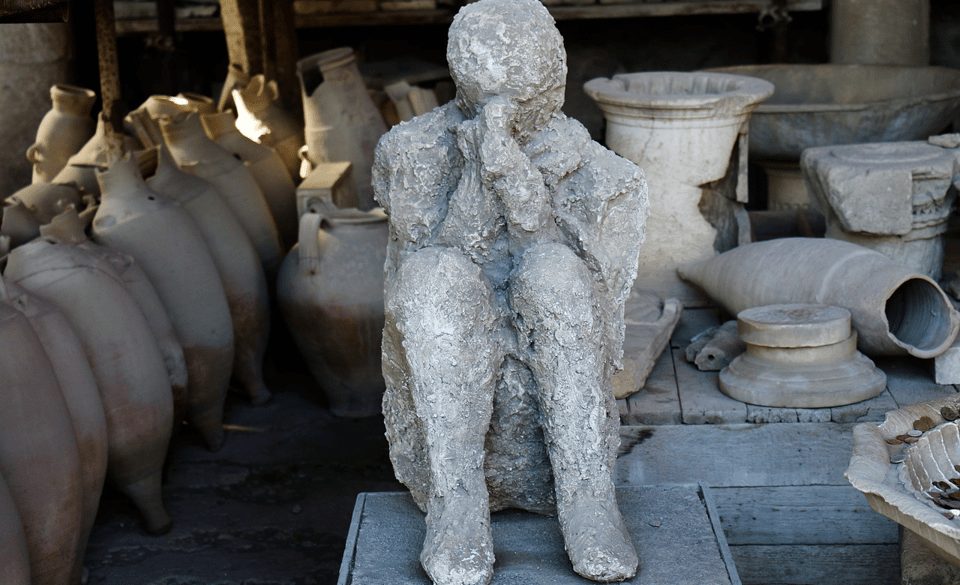
Pompeii is famous for preservation, but it’s the specific places that make it feel real. With this ticket, you can hit the core Roman highlights without building a complicated itinerary from scratch.
The Forum and Temple Areas (with Vesuvius in the background)
One of the most rewarding moments is when you find the Forum area with Vesuvius watching from the backdrop. It helps you picture the setting—an active city landscape that ended abruptly and was then protected by volcanic ash.
In the temple zone, you’ll come across dedications tied to major Roman gods: Venus, Apollo, and Jupiter. These aren’t just “pretty old buildings.” When you pair them with what the audio guide tells you, they start to read like living landmarks—places where public life, worship, and power intersected.
Homes you can almost hear: House of the Faun and Sirico’s House
Pompeii’s private spaces are where the tragedy becomes personal. The House of the Faun is one of the standout residences you’ll likely pass or explore, and it’s an easy place to understand how wealth showed up in design.
You may also encounter the story of inscriptions in Sirico’s house—notes associated with the phrase Salve lucru, meaning welcome, profit. Details like that are why Pompeii feels less like a museum and more like a street you could step back into.
Baths and mosaics: the public life details
Don’t skip the public bath areas if your time is limited. You’ll see intricate mosaics in the baths, and those visuals are a fast way to grasp Roman taste and daily routines.
Even if you’re not a mosaic person, these spaces help you understand how people relaxed, socialized, and kept the city functioning.
Theater stops and aqueduct/water traces
As you move through the city, you’ll also find the grand theater area and remnants related to water systems—aqueducts, fountains, and how homes connected to supply.
I like these stops because they remind you Pompeii wasn’t just art and architecture. It was infrastructure, maintenance, noise, and crowds—an actual place that required constant work.
The Vino clue: Vesuvinum jars
One fun, very human detail is the wine storage references you may see in labeled jars—Vesuvinum, a witty blend pointing to both the volcano and wine. It’s the kind of local touch that makes the city’s people feel clever, not just doomed.
Plaster casts of victims: the “you can’t look away” moment
You’ll likely encounter plaster casts of victims—figures that preserve the moment of the eruption’s aftermath. It’s heavy, but it’s also one of the clearest ways Pompeii teaches you what happened, not just when it happened.
Plan your pace here. If the emotional weight hits hard, stop for a minute, step aside, and let your brain catch up before continuing.
Optional Art Historian Tour: When It’s Worth Paying for a Human Guide
If you choose the option with a professional art historian, you’ll get a live English/Spanish/Italian tour. This is a good upgrade if you tend to get more from explanations than from apps.
A human guide can do two valuable things an audio map can’t always do:
- tie multiple buildings into a single story
- help you spot what matters, faster
Some guides associated with this operator are reported as strong, friendly, and quick on their feet—names mentioned include Grace, Maria, and Mario. If you get a guide like that, you’ll feel the city’s logic: where people gathered, why certain art and design choices mattered, and how the eruption changed everything.
If you’re the self-guided type, you may still prefer the audio-only plan and save the extra cost. But if Pompeii is your “big one” on this trip, the guided option can turn it from impressive to meaningful.
What You Don’t Get: Suburban Villas Are Excluded
This ticket does not include access to the suburban villas, specifically: Villa of the Mysteries, Villa of Diomedes, and Villa Regina. That matters because those villas are often on people’s wish lists.
So if suburban villas are your priority, check whether you need a different ticket package. With this one, you can focus on the core Pompeii city areas covered by your self-guided route and audio stops.
How Much Time Should You Budget on Arrival?
Even with a 2-hour duration on the ticket, you should plan for a longer real-world window if you can. The information provided with the experience says visitors typically spend 2 to 4 hours inside.
Weather can shrink that fast. If it rains hard, you may cut the visit short—one common pattern is sticking it out for around 2 hours and then calling it before visibility and comfort get worse.
I’d also factor in battery time. Between GPS, photos, and audio, phones drain. Bring a power plan: dim brightness, limit background apps, and consider a small backup battery if you’re the type who takes lots of pictures.
And yes, you might see cats. Pompeii has a reputation for feline residents, and if you’re animal-friendly, it can make the walk feel a bit more alive.
Value for $37: Is This Skip-the-Line Package a Smart Buy?
At around $37 per person, this option is mostly about buying time and reducing friction. Pompeii can be crowded, and the official ticket line can cost you real minutes. For many people, skipping that queue is the whole point.
One shopper noted the official entry ticket was around 19€ on Pompeii’s site, while this package price can be higher once you factor in skip-the-line service and the audio experience. I’d use that comparison to decide what you’re paying for:
- If you’re happy to explore on your own and want audio help, you’re paying for convenience plus interpretation.
- If you’d rather save money and don’t mind waiting, you might choose a cheaper self-arranged approach.
- If you’re doing a short stop between other Naples sights, paying for less hassle usually makes sense.
For me, the best value is when you combine the skip-the-line entry with the audio guide you actually use. If you show up with a half-charged phone and no headphones, the value drops—fast.
Pair It With Naples: Museum Visits vs. In-Site Details
Pompeii is spectacular, but some of the most significant finds are displayed elsewhere. One helpful note: many major archaeological artifacts aren’t kept inside Pompeii buildings; you’ll often find them in the Archaeological Museum of Naples.
So if you love objects—statues, mosaics, and everyday items—pairing Pompeii with Naples museum time can make the story click into place. Even if you don’t do the museum, Pompeii still gives you the big “where and how people lived” picture.
Should You Book This Pompeii Ticket?
Book it if you want an efficient entry and a guided-feel experience without locking yourself into a long group tour. This is especially smart if you’re going during busy hours, traveling in a couple or family group, or you don’t want to spend your precious time figuring out what you’re looking at.
Skip the audio-heavy approach if you’re determined to rely on photos only, because a chunk of the experience here is interpretation delivered through the app. And if suburban villas are a must for you, plan a different ticket—this one won’t take you there.
If you want my simple rule: get this ticket when Pompeii is your main event, and you’d rather spend your time inside the ruins than in lines or app troubleshooting.
FAQ
Where do I pick up my ticket?
You exchange your voucher at the Vox City info point in Piazza Esedra, in front of the Hotel Vittoria.
Do I need headphones?
Yes. Headphones are not included, so you’ll need to bring your own.
What do I need to download the audio guide?
You should scan the QR code on your voucher to download the audio guide prior to arrival, and you’ll need a charged smartphone.
Does this ticket include the suburban villas?
No. Access to the suburban villas (Villa of the Mysteries, Villa of Diomedes, Villa Regina) is not included.
Is there a guided tour option?
Yes. There’s an optional guided tour in English, Spanish, or Italian, led by a professional art historian.
How long is the visit?
The duration is listed as 2 hours. Pompeii visits commonly run longer, and the site is large.
Can I cancel?
Free cancellation is offered up to 24 hours in advance for a full refund.