REVIEW · VENICE
Private Best of Venice Walking Tour with St Mark’s Basilica
Book on Viator →Operated by Avventure Bellissime · Bookable on Viator
St Mark’s without the line. This Venice walking tour is interesting because you get an expert guide to frame Piazza San Marco fast, then step straight into St Mark’s Basilica to see the mosaics and domes before crowds swallow your time. I love the mix of big-name sights and off-the-radar streets, and I also like the smart pacing for first-timers. The main drawback: your time inside the basilica is capped, so if you want a long, linger-in-every-chapel visit, you’ll feel the limit.
You start at Giardini Reali near Piazza San Marco and end back in the square, which is perfect if you’re on a tight schedule. I also like that the tour runs rain or shine and uses radio headsets when the group gets larger, so your guide’s stories stay clear. Just pack your patience for days when the basilica can’t be entered due to religious functions or high-water disruptions.
In This Review
- Key highlights worth your attention
- The real value: a short tour that doesn’t feel rushed
- Stop 1: Piazza San Marco’s layout and the Venice power story
- St Mark’s Basilica: how the skip-the-line helps your time
- Santa Maria Formosa: a calmer church stop with Renaissance context
- Calle Paradiso and lesser-known palazzos: where the tour gets fun
- How long you’ll walk, and why group size matters
- Practical reality check: dress code, bags, ID, and Venice closures
- Price and value: why this tour costs what it does
- Who should book this St Mark’s walking tour
- Should you book? My practical recommendation
- FAQ
- How long is the Venice walking tour?
- What do I need to enter St Mark’s Basilica?
- Does the tour include skip-the-line tickets for St Mark’s Basilica?
- Are radio headsets provided?
- What if the basilica is closed or there is high water?
- What’s the dress code?
Key highlights worth your attention
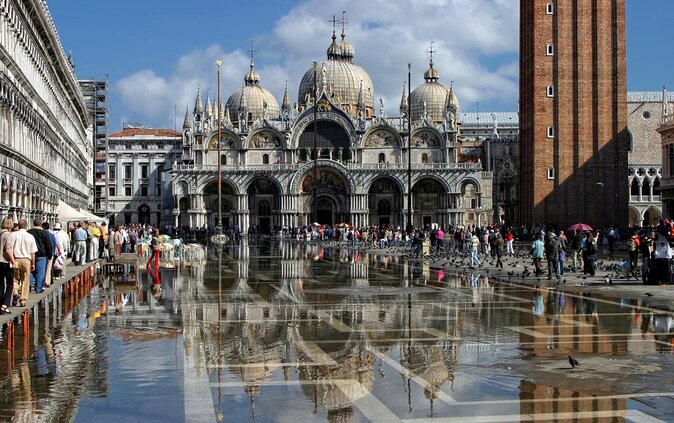
- Skip-the-line St Mark’s entry is the big time-saver, especially in peak months
- Piazza San Marco explained with the political and maritime story behind Venice
- A capped Basilica visit that’s still packed with the domed ceiling, gold mosaics, and altars
- Santa Maria Formosa stop for Renaissance context and a calmer reset
- Calle walking route that trades the main crush for quieter alleys and palazzo views
- Radio headsets when groups exceed 8 people, helping you hear every detail
The real value: a short tour that doesn’t feel rushed
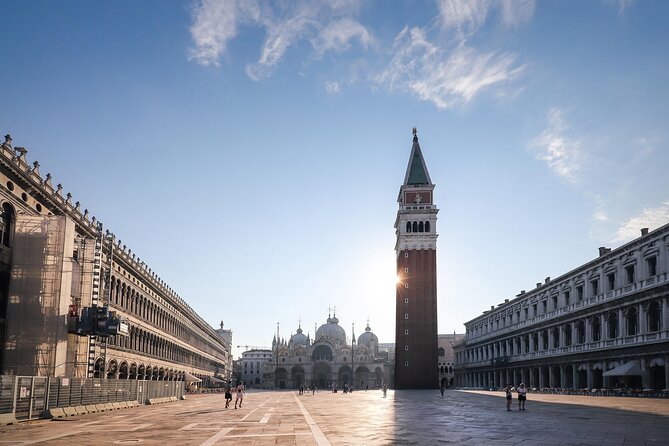
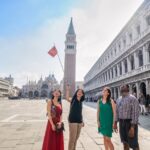
This is the kind of Venice tour you pick when you have limited time but still want more than a camera-stop march. The route is built around St Mark’s Square first, so you get orientation right away: where you are, why Venice became powerful, and what you’re actually looking at when you turn your head toward the basilica and the bell tower.
I also like that this tour aims to keep you moving through the city with a purpose. You get the headline monument, then you’re guided into narrower lanes and smaller squares where everyday Venetian life and architecture show up in smaller, more human ways.
The duration is about 2 hours, so it won’t replace a full-day Venice plan. But it can absolutely help you make the most of a day when you’re fitting in other things too.
You can also read our reviews of more tours and experiences in Venice.

Stop 1: Piazza San Marco’s layout and the Venice power story
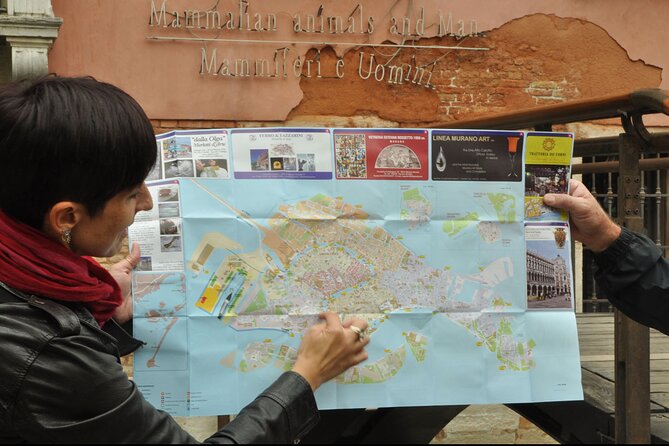
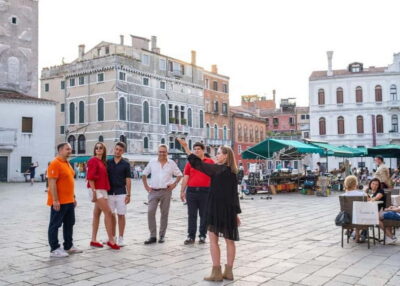
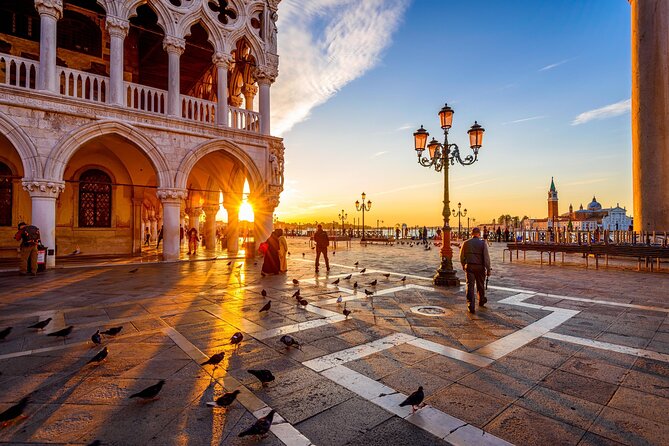
The walk begins at Giardini Reali by Piazza San Marco. From the start, your guide sets the stage with the cultural and political forces that turned Venice into a medieval maritime powerhouse. That matters more than it sounds. If you don’t understand what Venice was competing for—trade, influence, prestige—you’ll just see pretty stone. With the context, the square becomes a map of ambition.
You’ll circle the square and learn how the key buildings relate to each other. You also get a sense of the layout so you can return later on your own and recognize details without needing a guide.
This stop is short (around 15 minutes), which is exactly right for a time-pressed visit. The trade-off is that you won’t get a deep architectural lecture here; you’re getting the framing so the rest of the tour lands better.
St Mark’s Basilica: how the skip-the-line helps your time
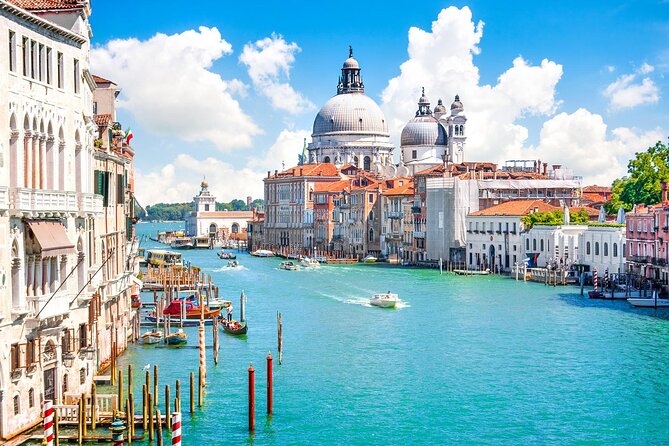
After Piazza San Marco, you head to Basilica di San Marco. The most practical win is the skip-the-line ticket. In Venice, waiting can eat a huge chunk of your day, and St Mark’s is a top magnet. When the line is long, moving up faster is not a luxury; it’s the difference between seeing the basilica today versus hearing about it later.
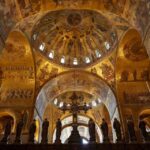
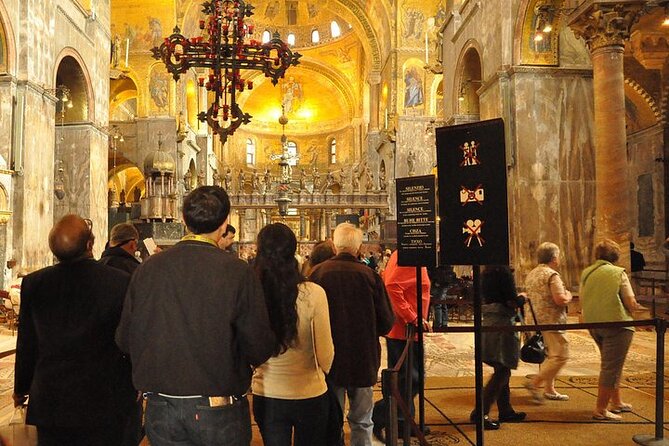
You’ll spend about 30 minutes for the basilica portion, and you’ll see the classic interior highlights: the soaring domed ceiling, ornate altars, and the famous glimmer of gold mosaics across surfaces. Even the marble floors are part of the show, with intricate inlaid patterns that reward a slower look—but you won’t have unlimited time.
Here’s the key consideration to plan around: access rules can limit how long you can stay inside. The tour format is designed around those time limits, so the experience is informative, not leisurely. If you want to sit with every chapel, you might need a longer private basilica visit instead.
Still, for a first-timer or a quick Venice stop, this is one of the most efficient ways to experience St Mark’s without losing your day to queues.
Santa Maria Formosa: a calmer church stop with Renaissance context
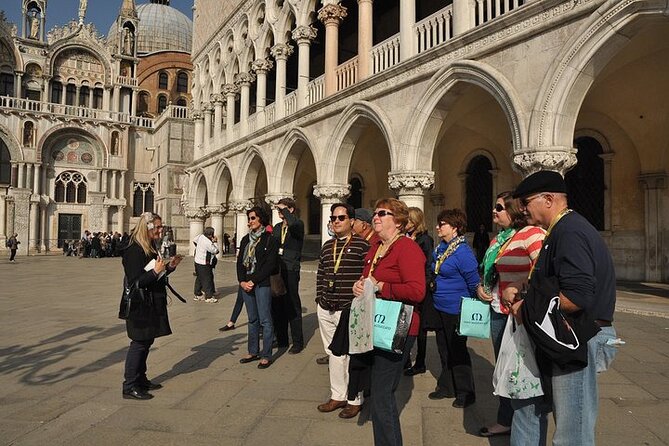
Next you’ll visit Campo Santa Maria Formosa, with a stop by the church Santa Maria Formosa. This isn’t about being the biggest name on a postcard. It’s about breaking the rhythm after St Mark’s and giving you a different architectural lens.
You’ll learn about the church’s connection to the Holy Virgin and hear why the place is called Santa Maria Formosa. You’ll also pick up the Renaissance angle—helpful because Venice’s mix of styles can feel like a blur if you only focus on the most famous sites.
This stop is brief (about 5 minutes), so think of it as a “reset and recharge” moment, not a full church immersion. The value is context: it teaches you how to look at the city’s layers, not just its tallest icons.
Calle Paradiso and lesser-known palazzos: where the tour gets fun
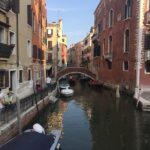
After the major monuments, the tour shifts into Venice’s narrow-world mode: walking along calle (alleys), passing picturesque squares, and looking at palazzos with Gothic and Renaissance touches. This is where you often feel the Venice magic most—because you’re not stuck in the main crush.
The route includes viewpoints near hidden spots like the Santa Maria Formosa area and the Calle Paradiso style lanes, plus other smaller palaces where daily life of Venetian nobility shaped the buildings around them. Even when you’re not stopping at every facade, you’ll learn what to notice: architectural cues, design clues, and the idea that Venice’s wealth wasn’t abstract. It showed up in doors, balconies, and the way families displayed status.
One of the best things I like about this approach is that you spend less time walking past crowds just to say you did. You’re shown a reason for each section of the walk, so the “wandering” feels guided, not random.




How long you’ll walk, and why group size matters
This is capped at a maximum of 20 travelers, which keeps the group manageable for a dense city. When the group is larger than 8, you’ll get radio headsets, so you don’t have to compete with street noise. That’s a big deal in Venice, where conversations, footsteps, and water sounds can drown out a normal guide voice.
The pace is designed for seeing a lot in a short window: a quick orientation at the square, a structured basilica visit, then a guided walk through quieter alleys toward the end back in St Mark’s Square.
You’ll also be glad the tour is rain or shine. Weather can hit Venice hard, but at least the plan keeps moving. If it’s pouring, the walking might feel more intense, but you still get the basilica highlight and the city context without dropping the whole day.
Practical reality check: dress code, bags, ID, and Venice closures
Before you go, check the rules that affect your experience the most.
Dress code: For places of worship and selected museums, you need knees and shoulders covered. No shorts. No sleeveless tops. If you show up dressed wrong, you risk being refused entry, so plan your outfit around this rule rather than hoping for flexibility.
Bags: Large bags are not allowed inside St Mark’s Basilica. That’s easy to overlook if you’re also doing other shopping during the day. Keep what you bring minimal.
ID needed: You must bring your ID card or passport to enter inside St Mark’s Basilica. Yes, this is one of those “don’t forget it” rules that can ruin your day if you leave it in your hotel.
Closures and high water: Sometimes entry to the basilica may not be possible due to religious functions, and high water can keep the skip-the-line entrance closed. These are beyond anyone’s control, so it’s smart to have a backup plan for the rest of your St Mark’s Square time if conditions change.
Price and value: why this tour costs what it does
The price is $242.05 per person, and that number makes sense only if you think about what you’re buying:
- Time saved at the basilica with skip-the-line entry, especially when it’s compulsory in April to October due to visitor volumes
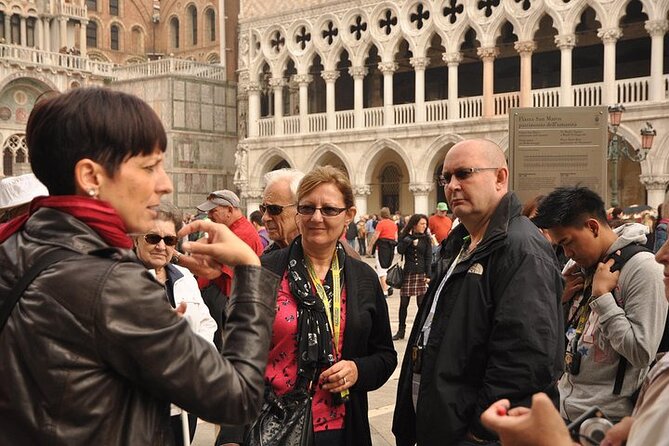
- A professional English-speaking guide for context you wouldn’t easily piece together on your own in a short time
- Headsets for larger groups, so the guide’s explanations are actually usable
- A route that balances major sights with quieter lanes, which helps you avoid the Venice version of aimless wandering
This isn’t a cheap stroll. But it is a smart purchase if your day in Venice is limited and you want your time to feel productive rather than spent in lines.
One more value note: the experience can offer a more personal private setup as an upgrade. If you’re traveling with family or you want more direct conversation with the guide, that extra privacy can make the overall experience feel more tailored.
Who should book this St Mark’s walking tour
Book it if you:
- Have a short day in Venice and want St Mark’s done efficiently
- Like learning context, not just taking photos
- Want a route that includes quieter calles and small squares, not only the most famous angles
- Appreciate clear guiding, especially with radio headsets in larger groups
Skip it or consider another option if you:
- Want an extended, slow, chapel-by-chapel basilica experience
- Hate walking in weather (even though the tour runs rain or shine, your comfort will depend on conditions)
- Forget essentials like ID or show up without the correct dress coverage
Should you book? My practical recommendation
If you’re doing Venice for the first time and you only have a couple hours you can count on, I think this is a strong booking. You get the big-ticket interior of St Mark’s Basilica with skip-the-line entry, plus the explanation that makes the square and architecture click. The walk after St Mark’s is also the payoff for many people: you move through narrower lanes where Venice feels more lived-in than postcard-famous.
Just go in knowing the basilica visit is time-limited by access rules, so you’re choosing efficiency and context over a long, slow stay inside. If that trade fits your style, this tour is a very solid way to spend a half-day in Venice without getting stuck waiting in line.
FAQ
How long is the Venice walking tour?
The tour runs about 2 hours (approx.).
What do I need to enter St Mark’s Basilica?
You must follow the dress code (no shorts or sleeveless tops; knees and shoulders covered) and bring an ID card or passport. Large bags aren’t allowed inside.
Does the tour include skip-the-line tickets for St Mark’s Basilica?
Yes. It includes skip-the-line tickets for St Mark’s Basilica, and from April to October this is compulsory due to visitor numbers. In off-peak periods, St Mark’s does not offer fast entry in the same way.
Are radio headsets provided?
Yes, radio headsets are included when the group has more than 8 participants.
What if the basilica is closed or there is high water?
At certain times, religious functions can prevent entry, and high water can keep the basilica skip-the-line entrance closed. These situations are beyond the operator’s control.
What’s the dress code?
For places of worship and selected museums, you need knees and shoulders covered. Shorts and sleeveless tops aren’t allowed, and you may be refused entry if you don’t comply.