REVIEW · FLORENCE
Renaissance & Medieval Florence Guided Walking Tour plus mobile App
Book on Viator →Operated by CAF Tour and Travel · Bookable on Viator
Florence makes sense faster on foot. This guided Renaissance and Medieval walking tour strings together the big names and the big places, from Medici power to Brunelleschi’s dome views, with a guide who keeps the story moving. I especially liked the way the route builds Medici context as you walk through San Lorenzo, and I liked that the included VOX City audio guide helps you keep going after the group ends.
One caution: the experience can run a bit slower if your group ends up mixing languages, so plan for extra waiting in crowded spots.
In This Review
- Key Highlights You’ll Actually Feel on This Walk
- San Lorenzo First: Where the Medici Story Gets Real
- Basilica di San Lorenzo and the Brunelleschi Cloister Reset
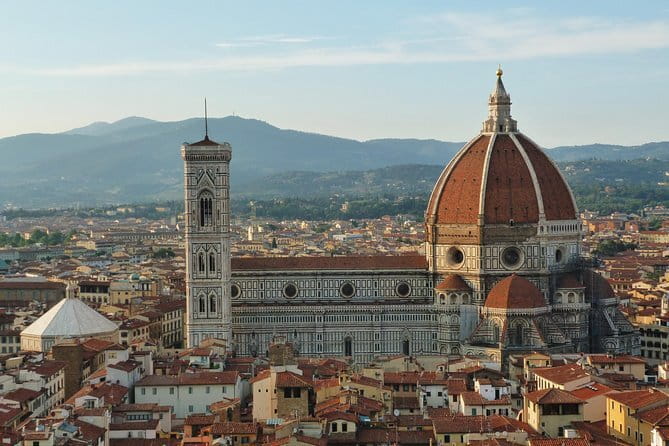
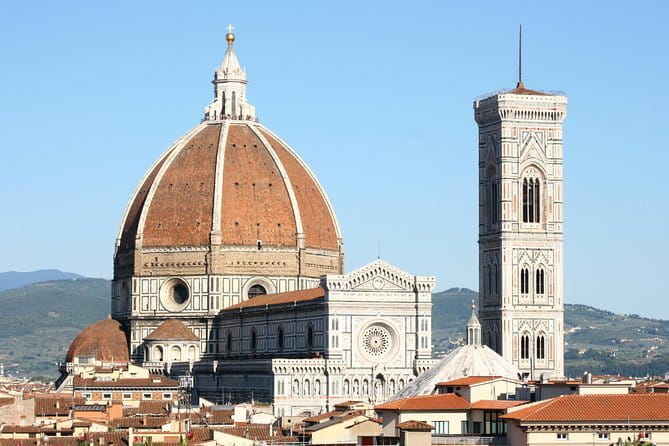
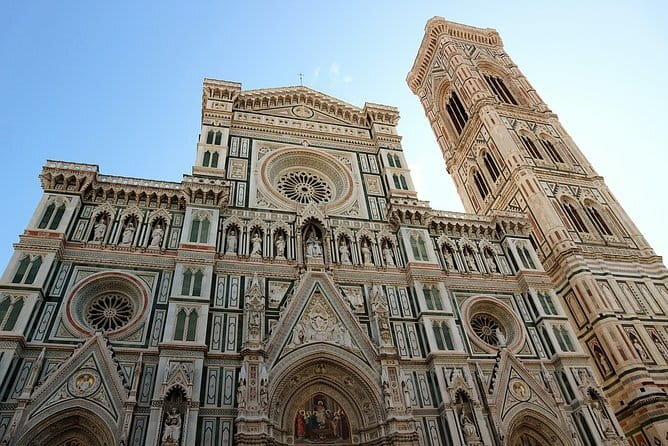
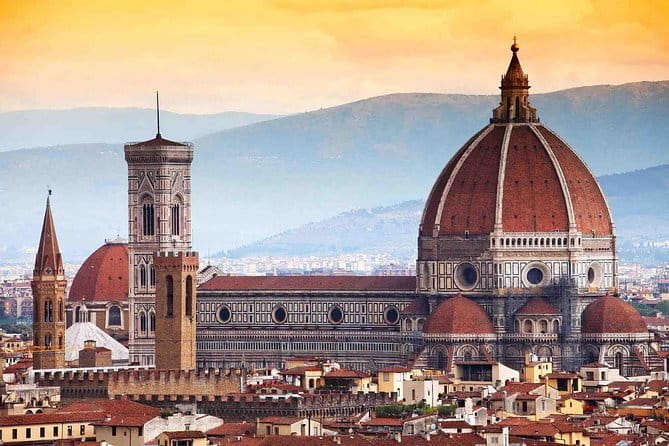
- The Duomo Complex: Brunelleschi, Giotto, and a Quick Architecture Cheat Sheet
- Fontana del Porcellino: A Small Stop With a Big Local Habit
- Piazza della Signoria: When Florence Turns Into an Outdoor Sculpture Museum
- Following the Vasari Corridor Clues Toward the Uffizi Courtyard
- Ponte Vecchio: The Famous Bridge You’ll Understand Better
- Pitti Palace From the Outside and Into Medieval Florence
- The Mobile App (VOX City): Use It Like a Second Guide
- Price and Value: What $30.04 Buys You in Florence Time
- Pacing, Crowd Reality, and Language Mixing
- Who This Tour Fits Best (and Who Should Skip It)
- Should You Book This Renaissance & Medieval Florence Walking Tour?
- FAQ
- How long is the Renaissance & Medieval Florence Guided Walking Tour?
- Is this tour offered in English?
- Where does the tour start and end?
- What’s included in the price?
- Do I need my own headphones?
- Are attraction entry tickets included?
- How big is the group?
- Is confirmation provided after booking?
- Is it easy to reach the meeting point using public transport?
- Can I cancel for a full refund?
Key Highlights You’ll Actually Feel on This Walk
- San Lorenzo + Medici connections: start where Florence’s Renaissance money and taste took root
- Duomo Complex orientation: dome, Baptistery, and Giotto’s bell tower explained as one architectural set
- Piazza della Signoria as an open-air gallery: Palazzo Vecchio and major sculptures in one stop
- Ponte Vecchio route with Vasari Corridor clues: see the bridge and understand what you’re looking at
- Cloister time at Basilica di San Lorenzo: a calm pause designed by Brunelleschi
- Mobile app follow-up: use VOX City self-guided audio after your walk
San Lorenzo First: Where the Medici Story Gets Real
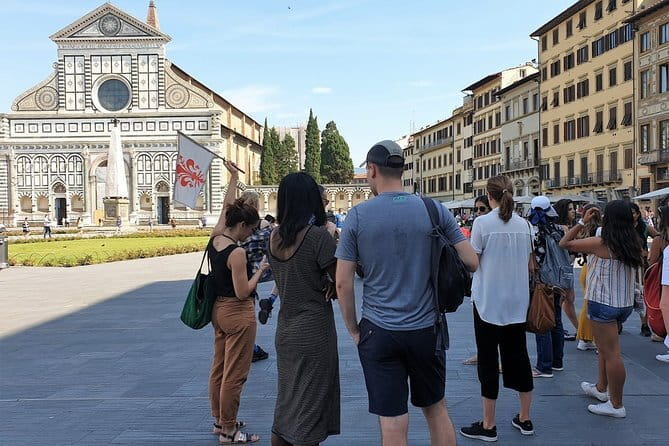
If you’re arriving in Florence and want your bearings fast, this tour starts in a smart place: the San Lorenzo neighborhood. It’s busy, like much of central Florence, but that’s the point. You’re not just collecting landmarks—you’re getting the political and artistic “why” behind them.
This walk gives you a strong Medici through-line. The Medici were banking power with a taste for turning influence into visible art and buildings. In San Lorenzo, you’re positioned close to the institutions that reflect that rise. You also get a chance to take in the area’s everyday feel, including the open-air market atmosphere in the broader neighborhood—useful if you’re trying to blend sightseeing with real city life.
One stop that really helps is the Basilica di San Lorenzo area and its cloister designed by Brunelleschi. Even if you only get a short look, it’s the kind of space that changes your pace. It’s a “green oasis” concept in the middle of a packed district, and it’s a good way to shift from street noise to visual focus.
And if you get a guide like Marta, Helena, Larisa, Sylvia, or Maximilian (names that have come up with this tour), you’ll likely notice a consistent style: they connect the art to the people, and the buildings to the decisions.
You can also read our reviews of more tours and experiences in Florence.
- Tuscany Day Trip from Florence: Siena, San Gimignano, Pisa and Lunch at a Winery
★ 5.0 · 21,634 reviews

Basilica di San Lorenzo and the Brunelleschi Cloister Reset
This is one of the tour’s best value moments because it gives you a calm, legible interior architectural pause. The plan includes time at the Basilica di San Lorenzo area, with the cloister designed by Brunelleschi. That matters because many Florence tours rush through churches like they’re just photo backdrops.
Instead, you’re given a reason to look: the Medici connection. The itinerary also points you toward the area designed for Cosimo de’ Medici by Michelozzo di Bartolomeo, so you can understand the Medici family’s role as patrons, not just famous names you’ve heard in passing.
Practically, this stop is also a “timing win.” The schedule keeps things tight—about 15 minutes here. That’s long enough for meaning, not long enough to bore you or waste daylight.
Tip for comfort: wear shoes that handle stone floors and frequent standing. Even “short” church stops add up over 90 minutes.
The Duomo Complex: Brunelleschi, Giotto, and a Quick Architecture Cheat Sheet
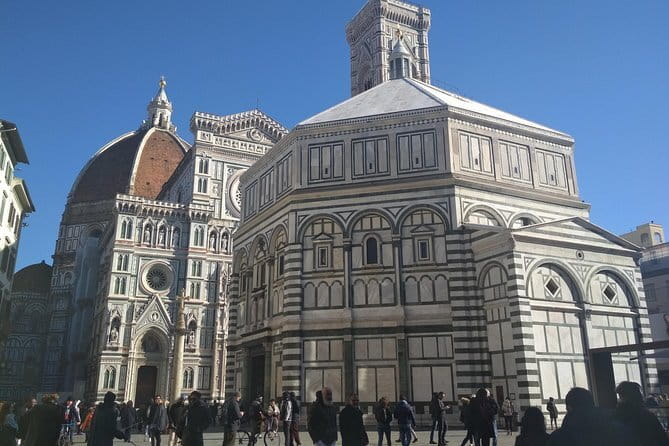
Next comes the Piazza del Duomo area—also called Piazza del Duomo/duomo complex territory on most maps. This is where Florence screams its visual identity. The key is that you get help sorting it out fast.
The tour focuses on:
- the Duomo with Brunelleschi’s dome
- Giotto’s bell tower
- the Baptistery of San John, including the famous Gates of Paradise reference
This is great if you’ve seen photos but can’t yet “read” the space in front of you. When you walk through the square with the guide, it clicks: you’re not just looking at buildings, you’re looking at a timeline of design choices.
The time for this stop is listed around 20 minutes, which is ideal for first-time visitors. You’ll likely spend enough time noticing details (without trying to memorize everything) and still be ready for the next parts of the route.
One consideration: the Duomo area can be crowded and windy. If you’re doing this in cooler months, bring a layer. One common complaint has been feeling cold while standing around during explanations.
Fontana del Porcellino: A Small Stop With a Big Local Habit
After the Duomo, you hit the Fontana del Porcellino, the bronze piglet near the Mercato della Paglia (straw market). This stop is only around 10 minutes, but it earns its place.
Why it’s worth it: it’s a tradition stop. The piglet has a long association with luck—people rub the nose as a superstition. You’ll get that background, and the location also helps you understand the market zone you’re walking through. It’s one of those Florence details that feels local, not museum-y.
If you like quick symbolism that you can carry into later sightseeing, this is a fun moment. If you’re trying to minimize crowds, keep your expectations realistic: the area is popular.
Piazza della Signoria: When Florence Turns Into an Outdoor Sculpture Museum
Then the route swings into Piazza della Signoria, where Florence does the “public art as political statement” thing in a big way. The square is dominated by Palazzo Vecchio, and you’re surrounded by famous sculptures and strong photo angles.
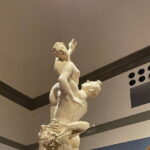
The standout named item here is Giambologna’s Rape of the Sabine Women. That sculpture is one of those works that always looks better once you see the scale and context in person. Here, it’s not trapped inside a museum wall. It sits in a square where everyday life keeps happening around it.
This stop is another short one—about 10 minutes—but it’s timed well. It gives you the “main square” feel without turning your tour into a long pause in the middle of the busiest part of town.
If you’re prone to picture-taking, you’ll love this spot. Just be prepared for the light and crowd conditions to make photos tricky.
- The Best tour in Florence: Renaissance & Medici Tales – guided by a STORYTELLER
★ 5.0 · 12,316 reviews




Following the Vasari Corridor Clues Toward the Uffizi Courtyard
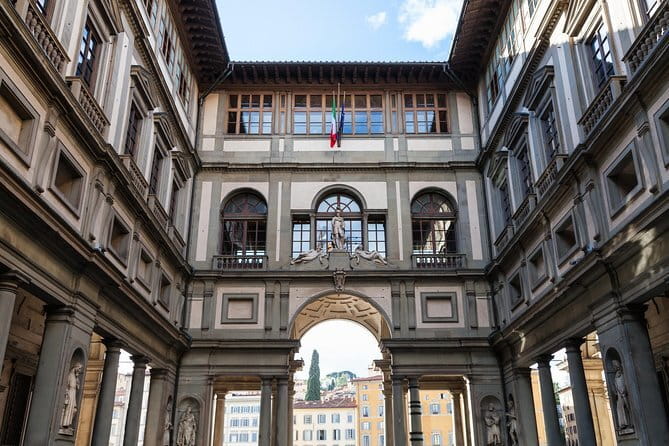
After Piazza della Signoria, the tour takes you toward a visual idea that’s easy to miss if you’re touring independently: the path of the Vasari Corridor. The key detail is that you follow it from the outside, including passing by the Uffizi Gallery courtyard area.
That’s a smart approach for two reasons:
- You learn what you’re seeing, instead of just noticing corridors and thinking, what is that?
- You keep your time for walking and orientation, rather than losing it to ticket rules or long museum lines
The tour continues the story by moving you toward the Arno River and the bridge area.
This section tends to work well for “first-day” planning. Once you understand where the corridor concept runs, you’ll feel more connected to the city’s layout when you later choose which museum or neighborhood to spend extra time in.
Ponte Vecchio: The Famous Bridge You’ll Understand Better
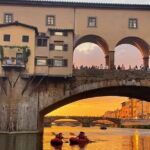
Next up: Ponte Vecchio, the “jewels bridge” and one of the oldest bridges in Florence. The tour provides about 15 minutes here.
Seeing Ponte Vecchio with a guide helps because you’re not only taking in the bridge shape. You’re also learning why it matters—its place in the city’s story and how it connects the areas across the Arno.
Also, the pacing matters. You’re crossing with the route structured so you’re not just standing there guessing where to go next. The end of your tour is actually at Ponte Vecchio, so you finish right where many people want to continue exploring.
Practical note: bridges are slow. Expect the crowd flow to influence your pace more than your guide’s words.
Pitti Palace From the Outside and Into Medieval Florence
After the river, the tour reaches the Pitti Palace area externally. You get the visual anchor of this side of the city without turning it into a long museum excursion.
Then comes the transition into the “medieval quarters” feel of Florence. The itinerary points to:
- Dante Alighieri’s area (he lived in Florence)
- Badia Fiorentina
- Bargello Palace
This is an important difference in tour value. A lot of Florence tours get stuck in Renaissance-only highlights. This one explicitly shifts toward the older layers of the city, which helps you understand that Florence wasn’t created in one creative century. It accumulated.
The walk is still guided, so you’re not just wandering cobblestones without context. You learn what these places represent, even if you don’t have time for deep entry tickets.
Also, the tour notes the order of visits may change. That’s normal with Florence walking routes, especially around timing and crowd patterns. Still, the main “big blocks” remain: Medici zone, Duomo complex area, Signoria, river/bridge, and the medieval stops.
The Mobile App (VOX City): Use It Like a Second Guide
One of the most useful “extras” here isn’t an attraction—it’s the follow-on support. The tour includes access to the self-guided mobile city guide, powered by VOX CITY.
Here’s what you should plan for:
- You use your own smartphone and your own headphones.
- Smartphone headphones are required to enjoy the app after the guided tour.
- You’ll receive the credentials from the assistant before starting the walking tour.
Also, the tour includes multilingual audio commentary of the itineraries and points of interest. Even if you only care about Florence basics, this helps you turn your phone into a low-friction companion for the hours after the group ends.
How I’d use it: after your walk, don’t try to “cover everything.” Pick one or two stops you liked most—maybe the Medici area, the Duomo complex, or the Signoria sculptures—and use the app to guide your next 60 to 90 minutes independently.
That way you get both:
- the shared context from the guide
- the flexible pacing you control on your own
Price and Value: What $30.04 Buys You in Florence Time
At about $30.04 per person for roughly 1 hour 30 minutes, the real question is value. And the answer depends on your goal.
This is a strong buy if you want:
- a clear orientation loop through the center
- story context around Medici influence and Renaissance architecture
- an easy handoff to self-guided exploring afterward
It’s a weaker buy if you expect long time inside major attractions. The tour plan focuses on walking, explanation, and key external sights. The tour is also clear about what isn’t included: entry to attractions isn’t part of the deal.
On the other hand, some stops are marked as free-entry in the plan (like Basilica di San Lorenzo and the Duomo complex square). Even when you’re not entering museums, avoiding ticket lines and spending that time walking can be a big deal in peak-season Florence.
Group size is also on your side: there’s a maximum of 20 travelers. That’s usually enough to keep things from feeling chaotic, but small enough that you can ask questions when the guide is in the right flow.
Pacing, Crowd Reality, and Language Mixing
Let’s talk about the one downside pattern that can affect your enjoyment.
Even though the tour is offered in English, some departures can include other language groups or mixed handling in a way that slows the pacing. If the guide needs to cover multiple languages, you may feel like you’re spending extra time waiting while explanations get repeated.
You might also feel exposed to cold during longer standing segments. One helpful approach is simple: dress for the weather and expect that you’ll be standing at scenic points more than you would in a museum line.
And if you ever can’t locate your guide quickly, don’t panic. Arrive early enough to find the meeting spot, and make sure you can confirm you’re on the right group at the start.
Who This Tour Fits Best (and Who Should Skip It)
This tour is best for:
- first-time visitors who want the center of Florence mapped with meaning
- history-minded travelers who like their art tied to politics and patrons
- people with limited time who want a coherent route rather than random wandering
- anyone who likes the idea of finishing at Ponte Vecchio so they can keep exploring independently
It’s less ideal if:
- you hate standing in crowds for short explanations
- you want only English-only narration and strict pacing
- you’re primarily after museum interior time (since entry to attractions isn’t included)
If you fall into the first group, it’s a very practical way to start your Florence days.
Should You Book This Renaissance & Medieval Florence Walking Tour?
Book it if you want a guided “starter circuit” that connects the Medici, the Duomo complex, Signoria, and the bridge into a single story you can walk through. The included VOX City app support is also a nice bonus: you’ll have a way to keep exploring with audio help after the group ends.
Skip it if you’re expecting deep museum entry or a perfectly English-only flow with zero waiting. In Florence, crowd timing happens. If your main priority is long indoor time, you may be better off choosing tours focused on one attraction category.
FAQ
How long is the Renaissance & Medieval Florence Guided Walking Tour?
It’s listed at about 1 hour 30 minutes.
Is this tour offered in English?
Yes, it’s offered in English.
Where does the tour start and end?
It starts at Via de’ Martelli, 50, 50122 Firenze FI, Italy, and ends at Ponte Vecchio, 50125 Firenze FI, Italy.
What’s included in the price?
You get local professional guides, access to the VOX City self-guided mobile city guide, multilingual audio commentary, and assistance at the meeting point.
Do I need my own headphones?
Yes. You’ll need your own smartphone and headphones to enjoy the app self-guided itineraries after the guided part.
Are attraction entry tickets included?
No. Entry to attractions is not included.
How big is the group?
The tour has a maximum of 20 travelers.
Is confirmation provided after booking?
Yes, confirmation is received at the time of booking.
Is it easy to reach the meeting point using public transport?
The start location is listed as near public transportation.
Can I cancel for a full refund?
Yes. You can cancel up to 24 hours in advance for a full refund.
You Might Also Enjoy
More Tour Reviews in Florence
- Tuscany Day Trip from Florence: Siena, San Gimignano, Pisa and Lunch at a Winery
★ 5.0 · 21,634 reviews - The Best tour in Florence: Renaissance & Medici Tales – guided by a STORYTELLER
★ 5.0 · 12,316 reviews